
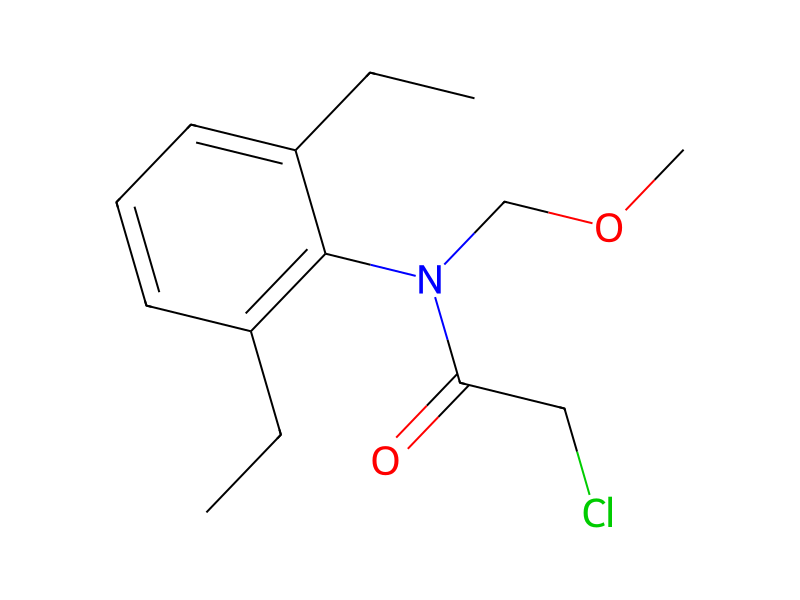
Grundinformationen
- Standard-SMILES
CCc1cccc(CC)c1N(COC)C(=O)CCl- InChIKey
XCSGPAVHZFQHGE-UHFFFAOYSA-N- Summenformel
- C14H20ClNO2
- Durchschnittliche Molmasse
- 269,77 g/mol
- Monoisotopische Masse
- 269,11825656
Überblick
Alachlor can cause cancer according to an independent committee of scientific and health experts.
Namen und Bezeichner
- Bevorzugter Name
- Alachlor
- IUPAC
- 2-chloro-N-(2,6-diethylphenyl)-N-(methoxymethyl)acetamide
- Lokaler Name
- Alachlor (ISO)
- Englischer Name
- Alachlor
- Summenformel
- C14H20ClNO2
- Molmasse
- 269.77
Namen und Synonyme
alachlor15972-60-8LasagrinMetachlorMethachlorAlanex2-chloro-N-(2,6-diethylphenyl)-N-(methoxymethyl)acetamideAlochlorPillarzoLassoAlachloreLAZO
Weitere Namen anzeigen
CDMALa20NudorLariatAlaganCURFEWCATTCH
ChimiclorAlanoxLasso micro-techAlatox 4802-Chloro-2',6'-diethyl-N-(methoxymethyl)acetanilideDTXSID1022265CP 50144Bullet
Datenbank-Bezeichner
- CAS
1246817-91-3、15972-60-8- PubChem CID
- 2078
- DTXSID
DTXSID1022265- ChEMBL
CHEMBL1414154- ChEBI
CHEBI:2533- UNII
- 24S2S61PXL
- EC Number
- 110-976-0、240-110-8
- Nikkaji
- J3.136D
Eigenschaften
Berechnete Struktureigenschaften
- XLogP
- 3,5
- Polarare Oberfläche (TPSA)
- 29,5 Ų
- H-Brücken-Donoren
- 0
- H-Brücken-Akzeptoren
- 2
- Frei drehbare Bindungen
- 6
- Schwere Atome
- 18
- Formalladung
- 0
- Komplexität
- 248
Experimentelle und physikochemische Eigenschaften
SpringerMaterials PropertiesFusion temperature
Pesticides
Pesticides
Pesticide -> EPA IRIS
Agrochemicals -> Pesticide active substances
Active substance -> EU Pesticides database: Not approved
Pesticides -> Herbicides, Chloracetanilide
Environmental transformation -> Pesticides (parent, predecessor)
LogP
log Kow = 3.52
3.52
3.5
2.95
OdorOdorless
Density
1.133 at 25 °C/15.6 °C
1.1 g/cm³
1.133
Color/Form
Colorless to white crystalline solid
Cream to wine-red colored solid
Colorless to yellow crystals
Solubility
Soluble in diethyl ether, acetone, benzene, chloroform, ethanol, ethyl acetate; sparingly soluble in heptane
In water, 240 mg/L at 25 °C
0.24 mg/mL at 25 °C
Solubility in water, g/100ml at 25 °C: 0.02 (very poor)
CorrosivityNO CORROSION TO NUMBER 316 & 304 STAINLESS STEEL, ALUMINUM & HERESITE; CORROSIVE TO STEEL & BLACK IRON
Flash Point
137 °C c.c.
278.6 °F (closed cup)
Endocrine DisruptorsPotential endocrine disrupting compound
Boiling Point
100 °C at 0.02 mm Hg; 135 °C at 0.3 mm Hg
at 101.3kPa: >400 °C
212 °F at 0.02 mmHg
DecompositionWhen heated to decomposition it emits very toxic fumes of /hydrogen chloride and nitrogen oxides/.
Physikochemische Eigenschaften
- Schmelzpunkt
- 39 · 39-42°C
- Siedepunkt
- 100 °C · 100°C (0.02 mmHg)
- Dichte
- 2515.6 · d2515.6 1.133
- Brechungsindex
- 1.5388 · 1.5388 (estimate)
- Flammpunkt
- -18 °C · -18 °C
- storage temp.
- 2 · 2-8°C
- Löslichkeit
- 30 mg/ml,DMSO: · DMF: 30 mg/ml,DMSO: 30 mg/ml
- pka
- 1.2 · 1.20±0.50(Predicted)
- Wasserlöslichkeit
- 0.024 g/100 · 0.024 g/100 mL
- Merck
- 13 · 13,201
- BRN
- 2944476 · 2944476
- Henry's Law Constant
- 6.7 · 6.7×102 mol/(m3Pa) at 25℃, Muir et al. (2004)
- Major Application
- agriculturecleaning productscosmeticsenvironmentalfood and beveragespersonal care
- InChI
- 1S/C14H20ClNO2/c1-4-11-7-6-8-12(5-2)14(11)16(10-18-3)13(17)9-15/h6-8H,4-5,9-10H2,1-3H3
- InChIKey
- XCSGPAVHZFQHGE-UHFFFAOYSA-N
- SMILES
- CCc1cccc(CC)c1N(COC)C(=O)CCl
- CAS Datenbank
- 15972 · 15972-60-8(CAS DataBase Reference)
- NIST chemische Informationen
- Alachlor(15972-60-8)
- EPA chemische Informationen
- Alachlor (15972-60-8)
Sicherheit und Regulatorisches
GHS-Klassifizierung
GHS Classification
Warning
H302: Harmful if swallowed [Warning Acute toxicity, oral]
P203, P261, P264, P270, P272, P273, P280, P301+P317, P302+P352, P318, P321, P330, P333+P317, P362+P364, P391, P405, and P501 (click each P-code to see the statement)
Warning
H302 (100%): Harmful if swallowed [Warning Acute toxicity, oral]
P203, P261, P264, P270, P272, P273, P280, P301+P317, P302+P352, P318, P321, P330, P333+P317, P362+P364, P391, P405, and P501 (click each P-code to see the statement)
Gefahrenhinweise
Regulatory Information
Hazard Traits - Carcinogenicity; Hepatotoxicity and Digestive System Toxicity; Ocular Toxicity; Other Toxicological Hazard Traits
06/966/EC
Alachlor: Does not have an individual approval but may be used under an appropriate group standard
The New Jersey Worker and Community Right to Know Act requires public and private employers to provide information about hazardous substances at their workplaces. (N.J.S.A. 34:5A-1 et. seq.)
Other Safety InformationIMAP assessments - Acetamide, 2-chloro-N-(2,6-diethylphenyl)-N-(methoxymethyl)-: Environment tier I assessment
DOT LabelPoison
Fire Hazards
Excerpt from ERG Guide 151 [Substances - Toxic (Non-Combustible)]:
Combustible. Gives off irritating or toxic fumes (or gases) in a fire.
Health HazardsExcerpt from ERG Guide 151 [Substances - Toxic (Non-Combustible)]:
Hazards Summary
Allergic contact dermatitis rarely reported in farmworkers; [Kanerva, p. 1746] The following herbicides have an oral LD50 of >1 gm/kg and have little or no acute toxicity in humans: Alachlor, Amitrole, Ammonium sulfamate, Atrazine, Dalapon, Dicamba, Glyphosphate, Monuron, Oryzalin, Picloram, Propanil, Simazine, etc. [LaDou, p. 613] Alachlor is a Restricted Use Pesticide that is classified as slightly toxic. In chronic feeding studies of experimental animals, it causes injury to the liver and kidneys. [EXTOXNET] A dermal sensitizer; [ACGIH]
Reactive GroupAmides and Imides
EC ClassificationSymbol: Xn, N; R: 22-40-43-50/53; S: (2)-36/37-46-60-61
UN ClassificationUN Hazard Class: 9; UN Pack Group: III
Special Reports
US EPA; Cumulative Risk from Chloroacetanilide Pesticides. U.S. Environmental Protection Agency Office of Pesticide Programs Health Effects Division, 74 p (March 8, 2006).
USEPA/Office of Pesticide Programs; Reregistration Eligibility Decision Document - Alachlor. p.27 (December 1998). This Reregistration Eligibility Decision Document (RED) addresses the reregistration eligibility of the pesticide alachlor, 2-chloro-N-(2,6-diethylphenyl)-N-(methoxymethyl)acetamide, an herbicide used for weed control on corn, soybeans, sorghum, peanuts, and beans.[Available from, as of January 30, 2007: http://www.epa.gov/pesticides/reregistration/status.htm]
European Chemicals Bureau; IUCLID Dataset, Alachlor (15972-60-8) (2000 CD-ROM edition). Available from the database query page: http://ecb.jrc.it/esis/esis.php?PGM=ein&DEPUIS=autre as of January 30, 2007
Call DJ et al; Toxicity, bioconcentration, and metabolism of five herbicides in freshwater fish. (1983) EPA-600/3-83-096 Acute and early life-stage toxicities were determined for the herbicides alachlor, bromacil, dinoseb, diuron, and propanil with the fathead minnow (Pimephales promelas). Uptake, bioconcentration potential, and elimination of (14)C-labeled herbicides were studied in the same species, and in vivo metabolism of radiolabeled herbicides were determined with rainbow trout (Salmo gairdner) and fathead minnows. In vitro metabolism was studied with the rainbow trout liver homogenates.
Junk GA et al; Degradation of Pesticides in Controlled Water-soil Systems. ACS Symp Ser 259: ISS Treat Disposal Pestic Wastes 37-67 (1984). A review with 42 references of degradation pathways of 6 pesticides, including alachlor in controlled water-soil systems.
FIFRA Requirements
Tolerances are established for the combined residues of the herbicide alachlor (2-chloro-2',6'-diethyl-N-(methoxymethyl) acetanilide) and its metabolites (calculated as alachlor) in or on the following raw agricultural commodities: [Table#2684]
Section 4(g)(2)(A) of FIFRA calls for the Agency to determine, after submission of relevant data concerning an active ingredient, whether products containing the active ingredients are eligible for reregistration. The Agency has previously identified and required the submission of the generic (i.e. active ingredient specific) data required to support reregistration of products containing alachlor as an active ingredient. The Agency has completed its review of these generic data, and has determined that the data are sufficient to support reregistration of all products containing alachlor.
As the federal pesticide law FIFRA directs, EPA is conducting a comprehensive review of older pesticides to consider their health and environmental effects and make decisions about their future use. Under this pesticide reregistration program, EPA examines health and safety data for pesticide active ingredients initially registered before November 1, 1984, and determines whether they are eligible for reregistration. In addition, all pesticides must meet the new safety standard of the Food Quality Protection Act of 1996. Alachlor is found on List A, which contains most food use pesticides and consists of the 194 chemical cases (or 350 individual active ingredients) for which EPA issued registration standards prior to FIFRA, as amended in 1988. Case No: 0063; Pesticide type: herbicide; Registration Standard Date: 11/20/84; Case Status: OPP is reviewing data from the pesticide's producers regarding its human health and/or environmental effects, or OPP is determining the pesticide's eligibility for reregistration and developing the Reregistration Eligibility Decision (RED) document.; Active ingredient (AI): Alachlor; Data Call-in (DCI) Date(s): 08/28/91, 10/13/95; AI Status: The producers of the pesticide has made commitments to conduct the studies and pay the fees required for reregistration, and are meeting those commitments in a timely manner.
Reactivity Profile
A halogenated acetamide. Organic amides/imides react with azo and diazo compounds to generate toxic gases. Flammable gases are formed by the reaction of organic amides/imides with strong reducing agents. Amides are very weak bases (weaker than water). Imides are less basic yet and in fact react with strong bases to form salts. That is, they can react as acids. Mixing amides with dehydrating agents such as P2O5 or SOCl2 generates the corresponding nitrile. The combustion of these compounds generates mixed oxides of nitrogen (NOx).
Sicherheit und Schutzausrüstung
Fire Fighting
Excerpt from ERG Guide 151 [Substances - Toxic (Non-Combustible)]:
Use water spray, foam, powder, carbon dioxide.
First Aid Measures
Fresh air, rest. Refer for medical attention.
Remove contaminated clothes. Rinse skin with plenty of water or shower.
Rinse with plenty of water for several minutes (remove contact lenses if easily possible).
Rinse mouth. Do NOT induce vomiting. Refer for medical attention .
First AidExcerpt from ERG Guide 151 [Substances - Toxic (Non-Combustible)]:
Safe StorageProvision to contain effluent from fire extinguishing. Separated from strong oxidants and incompatible materials. Keep in a well-ventilated room. Store only in original container. Store in an area without drain or sewer access.
Fire Fighting Procedures
This chemical is not flammable, but may support combustion. Stay upwind of fire. Use dry chemical, carbon dioxide, water spray, or foam extinguishers. Poisonous gases are produced in fire including nitrogen oxides and chlorine. If material or contaminated runoff enters waterways, notify downstream users of potentially contaminated waters. Notify local health and fire officials and pollution control agencies. From a secure, explosion-proof location, use water spray to cool exposed containers. If cooling streams are ineffective (venting sound increases in volume and pitch, tank discolors, or shows any signs of deforming), withdraw immediately to a secure position. If employees are expected to fight fires, they must be trained and equipped in OSHA 1910.156. If employees are expected to fight fires, they must be trained and equipped in OSHA 1910.156.
Storage Conditions
Minimum storage temperature: 32 °F. Incompatible materials for storage: mild steel, PVC. Keep locked up and out of the reach of children. Keep away from living quarters. Keep away from food, drink and animal feed. Keep only in the original container. Keep away from sources of ignition (sparks, flame, etc.). Keep container tightly closed in a cool, well-ventilated place. Protect from frost. ... If frozen, place in warm room and shake frequently to put back into solution. /INTRRO/
DO NOT STORE NEAR HEAT OR OPEN FLAME.
Store in original container only. Do not contaminate water, seed or feed by storage. ... Keep away from children.
Cleanup Methods
Accidental Release Measures. Personal precautions. Use personal protection recommended /for this product/. Environmental precautions. Minimize spread. Keep out of drains, sewers, ditches and water ways. Notify authorities. Methods for cleaning up. Absorb in earth, sand or absorbent material. Dig up heavily contaminated soil. Collect in containers for reclamation or disposal. ... Wash spill area with detergent and water. Minimize use of water to prevent environmental contamination. /INTRRO/
Nonfire Spill ResponseExcerpt from ERG Guide 151 [Substances - Toxic (Non-Combustible)]:
Disposal Methods
SRP: The most favorable course of action is to use an alternative chemical product with less inherent propensity for occupational exposure or environmental contamination. Recycle any unused portion of the material for its approved use or return it to the manufacturer or supplier. Ultimate disposal of the chemical must consider: the material's impact on air quality; potential migration in soil or water; effects on animal, aquatic, and plant life; and conformance with environmental and public health regulations.
Spillage Disposal
Personal protection: particulate filter respirator adapted to the airborne concentration of the substance. Do NOT let this chemical enter the environment. Sweep spilled substance into covered containers. Carefully collect remainder. Then store and dispose of according to local regulations.
Preventive Measures
Handling. Good industrial practice in housekeeping and personal hygiene should be followed. Avoid contact with eyes, skin and clothing. Avoid breathing vapor or mist. Do not taste or swallow. When using do not eat, drink or smoke. Wash hands thoroughly after handling or contact. Wash contaminated clothing before re-use. Thoroughly clean equipment after use. Do not contaminate drains, sewers and water ways when disposing of equipment rinse water. Emptied containers retain vapor and product residue. Follow labelled warnings even after container is emptied. Do not cut, drill, grind or weld on or near this container. /INTRRO/
AGRICULTURE USE REQUIREMENT: Use this product only in accordance with its labeling and with the Worker Protection Standard, 40 CFR part 170. ... Do not enter or allow worker entry into treated areas during the restricted-entry interval (REI) of 12 hours. Exception: if the product is soil-injected or soil incorporated, the Worker Protection Standard, under certain circumstances, allows workers to enter the treated area if there will be no contact with anything that has been treated. PPE required for early entry to treated areas that is permitted under the Worker Protection Standard and that involves contact with anything that has been treated such as plants, soil, or water is: coveralls, chemical-resistant gloves, made of any waterproof material, and shoes plus socks. /INTRRO/
FIRST AID MEASURES: Eye contact. If in eyes, hold eye open and rinse slowly and gently for 15-20 minutes. Remove contact lenses, if present, after first 5 minutes, then continue rinsing. Skin contact. Take off contaminated clothing. RInse skin immediately with plenty of water for 15-20 minutes. Calll a poison control center or doctor for treatment advice. Sensitized persons should avoid further contact and reuse of contaminated clothing. Inhalation. If inhaled, move person to fresh air. If person is not breathing, call emergency number or ambulance, then give artificial respiration ... . Ingestion. Call poison control center or doctor immediately for treatment advice. Have person sip a glass of water if able to swallow. Do not induce vomiting unless told to do so by the poison center or doctor. Do not give anything by mouth to an unconscious person. Advice to doctors. This product may pose an aspiration pneumonia hazard. Contains petroleum distillates. Probable mucosal damage may contra-indicate gastric lavage. /INTRRO/
This product may not be mixed or loaded within 50 feet of perennial or intermittent streams and rivers, natural or impounded lakes and resevoirs. This product may not be mixed/loaded or used within 50 feet of all wells, including abandoned wells (unless the well has been properly capped or plugged), drainage wells, and sink holes. Operations that involve mixing, loading, rinsing, or washing of this product into or from pesticide handling or application equipment or containers within 50 feet of any well are prohibited unless conducted on an impervious pad constructed to withstand the weight of the heaviest load that may be positioned on or moved across the pad. Such a pad shall be designed and maintained to contain any product spills or equipment leaks, container or equipment rinse or washwather, and rain water that may fall on the pad. Surface water shall not be allowed to either flow over or from the pad ... /INTRRO/
Flush eyes with water. Wash skin with plenty of soap and water.
Isolation and EvacuationExcerpt from ERG Guide 151 [Substances - Toxic (Non-Combustible)]:
Toxikologische Informationen
Target OrgansHematologic
Health EffectsARDS/acute lung injury, burns of the esophagus or gastrointestinal tract can result from acetochlor poisoning (T36).
Ecotoxicity Values
LC50 Cyprinus carpio (Carp, 1 yr old, weight 10 g) 7.14 mg/L/48 hr at 18-20 °C, pH 6.9
LC50 Cyprinus carpio (Carp, 1 yr old, weight 10 g) 4.60 mg/L/96 hr at 18-20 °C, pH 6.9
LD50 Procambarus acutus (Crayfish) 19.5 ppm in 96 hr
LC50 Phasianus sp (Pheasant) oral greater than 10000 ppm (8 day feeding)
For more Ecotoxicity Values (Complete) data for ALACHLOR (35 total), please visit the HSDB record page.
Environmental Fate
TERRESTRIAL FATE: Based on a classification scheme(1), Koc values ranging from 120 to 2,138(2,3) indicate that alachlor is expected to have high to low mobility in soil(SRC). Volatilization of alachlor from moist soil surfaces is not expected to be an important fate process(SRC) given a Henry's Law constant of 8.2X10⁻⁹ atm-cu m/mole(4). Alachlor is not expected to volatilize from dry soil surfaces(SRC) based upon a vapor pressure of 2.20X10⁻⁵ mm Hg(5). When incorporated into soil samples, alachlor degraded 22 to 39% following 8-hour exposure to 8 hr sunlight, the rate of degradation being enhanced by low pH and low soil organic matter(5). Alachlor applied at 2 ppm to silt, loamy sand, and silt loam soils incubated in the dark at 25 °C and 75% field moisture capacity for 175 days degraded with estimated half-lives ranging from 2-3 weeks(6). The four major degradates identified were alachlor DM-oxanilic acid, alachlor oxanilic acid, alachlor ESA, and 2'6'-diehtyl-2-hydrodroxy-N-methoxymethylacetanilide; nine other degradates were also identified, and all 15 were at less than or equal to 10% of the applied alachlor(6). A first-order degradation rate of 0.14/day measured using an anaerobic sludge from a municipal sewage treatment plant inoculum(7) suggests that the compound may degrade rapidly under anaerobic conditions(SRC).
TERRESTRIAL FATE: The persistence of alachlor was studied using lab and field experiments. Half-lives in sandy loam soil incubated at 25 °C were 23.0, 8.3, 7.4 and 5.7 days at 6, 9, 12 and 15% moisture (w/w), 16.5 days at 15 °C and 12% w/w moisture, 38.6 days at 5 °C and 12% moisture w/w(1). Persistence of the five acetanilide herbicides studied were in the order: propachlor less than alachlor which was equal to dimethachlor which was less than metazachlor and metazachlor was less than metolachlor. An increase in temperature by 10 degrees reduced the half-life by a factor of 1.9-2.5. The Arrhenius activation energy for alachlor was 57.0 kJ/mol(1). Under field conditions (1.0 kg active ingredient/hectacre on vegetation-free plots of sandy loam soil), days required for 50% and 80% loss in experiments prepared on June 8, 1981 were 24 and 48, respectively; on April 24, 1982, 27 and 37 days, respectively; on June 8, 1982, 11 and 21 days respectively(1).
Terrestrial fate: The half-life of alachlor in soils was found to be 7 to 14 days. Four major metabolites of alachlor were observed but only two were identified: 2-chloro-2',6'-diethylacetanilide and 1-chloro-acetyl-2,3-dihydro-7-ethylindole.
AQUATIC FATE: Based on a classification scheme(1), Koc values ranging from 120 to 2,138(2,3), indicate that alachlor may adsorb to some suspended solids and sediment(SRC). Volatilization from water surfaces is not expected(3) based upon a Henry's Law constant of 8.32X10⁻⁹ atm-cu m/mole(4). Alachlor is stable to hydrolysis and photolysis in water(5). A 1% degradation in 135 minutes of alachlor in aqueous solution irradiated with light from 300 nm sunlamps suggests that photolysis in water is a slow environmental fate process(10). According to a classification scheme(6), a BCF of 6(7), suggests the potential for bioconcentration in aquatic organisms is low(SRC). Degradation of alachlor water is not an important environmental fate process(SRC) as suggested by a remaining 88.8% of applied to non-sterile lake water after 30 days(5); microorganisms in sewage and eutrophic lake water transformed 10-21% of alachlor to 4-6 unidentified products in 6 weeks(10). However, first-order degradation rate of 0.14/day measured using an anaerobic sludge from a municipal sewage treatment plant inoculum(8) suggests that the compound may degrade rapidly under anaerobic conditions(SRC). In a model ecosystem, 98.2% of alachlor transformed to 8 unidentified products in 33 days(9).
ATMOSPHERIC FATE: According to a model of gas/particle partitioning of semivolatile organic compounds in the atmosphere(1), alachlor, which has a vapor pressure of 2.20X10⁻⁵ mm Hg at 25 °C(SRC), determined from a fragment constant method(2), will exist in both the vapor and particulate phases in the ambient atmosphere. Vapor-phase alachlor is degraded in the atmosphere by reaction with photochemically-produced hydroxyl radicals(SRC); the half-life for this reaction in air is estimated to be 8.5 hrs(SRC), calculated from its rate constant of 1.85X10⁻¹⁰ cu cm/molecule-sec at 25 °C(3). Particulate-phase alachlor may be removed from the air by wet or dry deposition(SRC). Alachlor does not absorb at wavelengths >290 nm(4) and therefore is not expected to be susceptible to direct photolysis by sunlight(SRC).
Food Survey Values
The Food and Drug Administration's regulatory monitoring program detected alachlor in raw agricultural commodities collected in the United States during 1978-1982(1). However, neither the commodities that contained alachlor nor the levels in these commodities were reported(1). In 1989, the California Dept. of Food and Agriculture analyzed string beans, lima beans, blackeye beans, pop corn and sweet corn for alachlor residue(2). At a detection limit of 0.2 ppm, alachlor was not detected in any of these commodities(2).
Adverse EffectsOccupational hepatotoxin - Secondary hepatotoxins: the potential for toxic effect in the occupational setting is based on cases of poisoning by human ingestion or animal experimentation.
Exposure Routes
The substance can be absorbed into the body by ingestion and by inhalation of its aerosol.
oral (L922) ; dermal (L922)
Toxicity Summary
Its mode of action is elongase inhibition, and inhibition of geranylgeranyl pyrophosphate (GGPP) cyclisation enzymes. It is also know to inhibit biosynthesis of fatty acids, lipids, protein, isoprenoids, flavonoids, and gibberellins. (L921, L923).
Ecotoxicity Excerpts
/BIRDS and MAMMALS/ Avian reproduction studies were conducted with bobwhite quail and mallard ducks in which the birds were exposed to dietary concentrations up to 1,000 ppm for 22 and 24 weeks, respectively. Bobwhite: There was no statistically significant effect on egg production or eggshell thickness at any dietary concentration. There was a significant reduction in reproductive performance and offspring body weight at the highest dietary concentration of 1,000 ppm alachlor. Reduced reproductive performance resulted from significant reductions in embryo viability and offspring survival. Mallard: There was no statistically significant effect of dietary Alachlor exposure on egg production or eggshell thickness observed at any dietary concentration. There was a significant reduction in reproductive performance and offspring body weight at the highest dietary concentration of 1,000 ppm. Reduced reproductive performance at this level primarily resulted from a statistically significant reduction in embryo viability. Non-statistically significant reductions in hatchability of 3-week embryos and egg production contributed to the lowered reproductive performance. There was no effect on reproductive performance at the mid dietary level of 150 ppm. There was a reduction in offspring body weights on the day of hatching at 150 ppm; however, this was no longer evident by day 14 post-hatch.
/BIRDS and MAMMALS/ Signs of intoxication /in male mallards 3 mo of age admin orally more than 2000 mg/kg, acute/: ataxia, goose stepping ataxia, imbalance, slowness, and tenseness. Signs appeared as soon as 25 min and persisted up to 2 days after treatment. /Sample purity 88.5%/
/AQUATIC SPECIES/ The effects of a single pulse, 21-day exposure of the commonly used herbicide alachlor (2-chloro-2', 6'-diethyl-N-methoxymethyl acetanilide) on an algal community from a typical agricultural stream in Nebraska were studied using 18 stream microcosms located in a greenhouse, at six alachlor concentrations (0, 1, 10, 30, 100, and 1,000 ug/L). Effects of alachlor exposure at 1.0 ug/L were not significant (p<0.05); however, at all other concentrations, alachlor had a significant negative effect on algal biomass. Differential taxonomic responses were observed, with approximately half the dominant algal taxa affected at levels >10 ug/L. Some taxa recovered from exposure by day 7, while others took longer or did not recover. A shift in the dominant algae was observed at higher concentrations (30, 100, 1,000 ug/L), and after 21 days these streams exhibited total algal cell densities significantly lower than the control and 1.0-ug/L-level streams.
/AQUATIC SPECIES/ ... Embryos at midblastula to early gastrula stages of a locally abundant African clawed frog Xenopus laevis were used as test organisms. The embryos were exposed to the test chemicals for 96 hr in each experiment. Alachlor is more embryotoxic (the concentration causing 50% embryo lethality, 96-hr LC50 = 23 uM [6.1 mg/L]) and teratogenic (teratogenic index [TI] = 1.7) than metolachlor (96-hr LC50 = 48 uM [13.6 mg/L], TI = 0.2). The degradation products of alachlor and metolachlor, respectively, 2,6-diethylaniline (96-hr LC50 = 13 uM [19.4 mg/L], TI = 2.1) and 2-ethyl-6-methyaniline (96-hr LC50 = 509 uM [68.8 mg/L], TI = 2.7), are less embryotoxic but more teratogenic than their parent compounds. The most common teratogenic effects observed were edema for alachlor as opposed to axial flexures and eye abnormalities for 2,6-diethylaniline and 2-ethyl-6-methylaniline.
For more Ecotoxicity Excerpts (Complete) data for ALACHLOR (13 total), please visit the HSDB record page.
Plant Concentrations
In a laboratory greenhouse experiment, azalea leaves (Azlea indica) absorbed 2.85X10+5 times higher concentration of alachlor than present in the vapor phase at equilibrium(1). Plant uptake of alachlor from soil via root was found to be proportional to the water volume transpired by the plants(2). The uptake of alachlor in corn was 12.5% of that applied to a plot(2).
Signs and Symptoms
Redness. Pain.
Redness. Pain.
Alachlor is mildly irritating to the skin and eyes. Exposure to metalaxyl often results in such nonspecific symptoms as headache, dizziness, weakness, and nausea. Alachlor poisoning can produce an allergic hypersensitivity dermatitis or asthma with bronchospasm and wheezing with chronic exposure (T36).
Acute Toxicity LinkChemical: ALACHLOR
Regulatorische Informationen
FIFRA Requirements
Tolerances are established for the combined residues of the herbicide alachlor (2-chloro-2',6'-diethyl-N-(methoxymethyl) acetanilide) and its metabolites (calculated as alachlor) in or on the following raw agricultural commodities: [Table#2684]
Section 4(g)(2)(A) of FIFRA calls for the Agency to determine, after submission of relevant data concerning an active ingredient, whether products containing the active ingredients are eligible for reregistration. The Agency has previously identified and required the submission of the generic (i.e. active ingredient specific) data required to support reregistration of products containing alachlor as an active ingredient. The Agency has completed its review of these generic data, and has determined that the data are sufficient to support reregistration of all products containing alachlor.
As the federal pesticide law FIFRA directs, EPA is conducting a comprehensive review of older pesticides to consider their health and environmental effects and make decisions about their future use. Under this pesticide reregistration program, EPA examines health and safety data for pesticide active ingredients initially registered before November 1, 1984, and determines whether they are eligible for reregistration. In addition, all pesticides must meet the new safety standard of the Food Quality Protection Act of 1996. Alachlor is found on List A, which contains most food use pesticides and consists of the 194 chemical cases (or 350 individual active ingredients) for which EPA issued registration standards prior to FIFRA, as amended in 1988. Case No: 0063; Pesticide type: herbicide; Registration Standard Date: 11/20/84; Case Status: OPP is reviewing data from the pesticide's producers regarding its human health and/or environmental effects, or OPP is determining the pesticide's eligibility for reregistration and developing the Reregistration Eligibility Decision (RED) document.; Active ingredient (AI): Alachlor; Data Call-in (DCI) Date(s): 08/28/91, 10/13/95; AI Status: The producers of the pesticide has made commitments to conduct the studies and pay the fees required for reregistration, and are meeting those commitments in a timely manner.
State Drinking Water Guidelines
(AZ) ARIZONA 0.15 ug/l
(ME) MAINE 7 ug/l
(MN) MINNESOTA 5 ug/L
(MN) MINNESOTA 70 ug/L /Alachlor-ESA (ethane sulfonic acid)/
(MN) MINNESOTA 70 ug/L /Alachlor-OXA (oxanilic acid)/
Federal Drinking Water StandardsEPA 2 ug/l
Sicherheitsdaten
- wgk
- 3
- ridadr
- UN 3077
- RTECS-Nr.
- AE1225000
- risk_code
- 22-40-43-50/53-67-65-38-11-52/53-39/23/24/25-23/24/25-51/53
- Toxizität
- LD50 orally in rats: 1200 mg/kg (Evans)
- hazard_code
- Xn;N,N,Xn,F,T
- safety_code
- 36/37-46-60-61-62-45-16
- hazard_class
- 9
- packing_group
- III
- Speicherklasse
- 11 - Combustible Solids
- Giftige Stoffe Daten
- 15972-60-8(Hazardous Substances Data)
- Hazard Classifications
- Acute Tox. 4 OralAquatic Acute 1Aquatic Chronic 1Carc. 2Skin Sens. 1
Chemie und Industrie
Pharmakologische Informationen
Mechanism of Action
Mode of Action /in target species/: Chloroacetamides are known to inhibit biosynthesis of fatty acids, lipids, protein, isoprenoids, flavonoids, and gibberellins.
The mechanism of thyroid hyperplasia and carcinogenicity of alachlor in the rat is based on the induction of T4/T3 glucuronic acid transferase (UDPGT) in the liver. Due to the enhanced glucuronidation of T4 and T3 and subsequent biliary excretion of the conjugates, the plasma concentrations of T4 and T3 are decreased. To compensate for this change, the pituitary produces more thyroid-stimulating hormone (TSH) to enhance T4 production by the thyroid. Continuous stimulation of the thyroid by increased plasma TSH levels leads to hyperplasia of the follicular epithelium and subsequently to tumor formation. The occurrance of thyroid follicular tumors following induction of hepatic UDPGT is a well-known phenomena in rats and is generally considered to be of little to no relevance for human risk assessment. Alachlor does not bind to human thyroid hormone receptor, human thyroid binding globulin or human transthyretin.
Acetochlor, Alachlor and Butachlor may be grouped together based on a common end-point (nasal turbinate tumors in rats) and a known mechanism of toxicity for this endpoint. All three compounds produce tumors of the nasal olfactory epithelium in rats by way of a non-linear, non-genotoxic mode of action that includes cytotoxicity of the olfactory epithelium, followed by regenerative cell proliferation of the nasal epithelium that can then lead to neoplasia if cytotoxicity and proliferation are sustained. Acetochlor, Alachlor and Butachlor may also be grouped together based on an common end-point and a known mechanism of toxicity (UDPGT induction). All three compounds produce tumors of the thyroid follicular cells in rats by way of a non-genotoxic mode of action that includes UDPGT induction, increased TSH, alterations in T3/T4 hormone production and thyroid hyperplasia. The FIFRA Science Advisory Panel noted in /1997/, additionally, that even though the evidence illustrated that a common mechanism could be used to group certain chemicals for the development of thyroid tumors, it was recommended that this endpoint not be used in combining margins of exposure because the toxic effects were noted at doses above the Maximum Tolerated Dose (MTD).
...there is ample evidence ...that the development of nasal olfactory epithelium tumors in rats dosed with chloroacetanilides involves the following sequence of steps,: 1) Acetochlor conjugates with glutathione (GSH) and is excreted in the bile. 2) The conjugate is biotransformed to a series of sulfur-containing products. Enterohepatic circulation of these products creates a pool of metabolites that are delivered to the nose. 3) Biotransformation to tissue-reactive and toxic metabolites. Metabolism by nasal enzymes, results in formation of a benzoquinoneimine, an electrophile and redox-active molecule. 4) Binding of toxic metabolite to cellular proteins plus possible generation of oxidative stress . 5) Cytotoxicity 6) Regenerative cell proliferation. 6) Sustained cytotoxicity and cell proliferation that results in neoplasia. The following three events are considered key events for formation of nasal olfactory epithelium tumors by the proposed non-linear, non genotoxic mode of action (MOA): Quinone imine- formation (protein binding) goes to cytotoxicity goes to cell proliferation.
For more Mechanism of Action (Complete) data for ALACHLOR (9 total), please visit the HSDB record page.
Biological Half-Life
Metabolism studies in Sprague Dawley rats found that an oral dose of 7 or 700 mg/kg of alachlor was mainly eliminated in urine and feces, and that 89% of the dose was eliminated in 10 days (minimal alachlor was found in the expired CO2). The elimination was considered to be biphasic; the initial rapid phase had a half life of 0.2 to 10.6 hours, which then slowed to a half life of 5 to 16 days.
In this study, male and female CD-1 mice (10/sex) received a single oral dose of radiolabeled alachlor in corn oil (890 mg/kg for male mice, 819 mg/kg for female mice). Urine and feces were collected daily for up to 7 days post-dose ... Half life for urinary elimination was reported as 0.88+/-0.11 days in males, and 1.18+/-0.16 days in females. Half-life for fecal elimination was reported as 0.90+/-0.06 days in males, and 1.11+/-0.05 days in females.
Metabolism/Metabolites
Another metabolism study was conducted on male and female Long Evans rats. This study consisted of seven groups of rats. Both oral dosing studies using corn oil as the vehicle and intravenous administration studies using propylene glycol as the vehicle were performed. ... The study is considered to be the definitive study for understanding how the rat metabolizes alachlor. Oral administration of alachlor was studied using female Long-Evans Crl:CD(LE)BR rats six to nine weeks of age in five dose groups. Groups 1, 2, and 3 each consisted of 33 rats. Each group received single oral doses of radiolabeled alachlor (uniformly labeled in the phenyl ring with 14-C, and enriched with 13-C at the C-2 carbon) at target doses of 7 (Group 1), 70 (Group 2), or 700 (Group 3) mg/kg. Group 4 consisted of 21 rats which received 15 consecutive daily doses of radiolabeled alachlor at 700 mg/kg/day. Group 5 consisted of 6 rats which received a single oral dose of radiolabeled alachlor at 700 mg/kg for the purpose of obtaining plasma samples at 2, 4, and 6 hours post-dosing. Long Evans rats (5/sex/dose) were used to study the disposition and metabolism of alachlor following intravenous administration at 7 (Group 6) or 70 (Group 7) mg/kg. ... In urine, the sec- amide hydroxymethyl sulfone metabolite (metabolite F5) of alachlor was the predominant urinary metabolite after oral and intravenous administration, ranging from 2.1-7.4% of the dose. Repeated oral dosing resulted in the appearance of several additional metabolites, but it is not known whether these additional metabolites are unique to repeated oral administration of alachlor. In feces, the tert-amide mercapturic acid and the disulfide appeared to be the major metabolites after single oral doses of alachlor. Increasing the dose appeared to increase the percentage of these 2 metabolites in feces.
In this study, male and female CD-1 mice (10/sex) received a single oral dose of radiolabeled alachlor in corn oil (890 mg/kg for male mice, 819 mg/kg for female mice). Urine and feces were collected daily for up to 7 days post-dose for analysis of excreted radioactivity and for identification of metabolites. ... Pooled urine and fecal samples representing the 0-48 hour collection time for urine and the 0-96 hour collection time for feces, were analyzed for metabolites of alachlor in male and female CD-1 mice. In feces, at least 10 metabolites were isolated: ... /tert-amide mercapturic acid, disulfide conjugate, sec-amide mercapturic acid, tert-amide thioacetic acid, tert-amide hydroxy sulfone, tert-amide dihydroxysulfone, benzyl glucuronide and tert-amide cysteine conjugate +NCH20-glucuronide. Seven urinary metabolites were characterized in the mouse: tert-amide cysteine conjugate, NCH2O glucuronic acid, cysteine sulfoxide (proposed), sec-amide dihydroxysulfone, sec-amide hydroxy sulfoxide, sec-amide hydroxy sulfone and para-amino sulfate./ While metabolism of alachlor utilizes the same metabolic pathways in mice as in rats, there are quantitative differences between mice and rats in the metabolite profile present. Mouse feces were found to contain greater amounts of mercapturic acid conjugate and lesser amount of disulfide conjugate than in rat feces. The number of urinary metabolites observed in mouse urine was greater than in rat urine. Mouse urine was found to contain greater amounts of glucuronic acid conjugates and cysteine conjugates than the rat, but a lesser amount of phenolic (hydroxylated) metabolites.
From a metabolism study in Rhesus monkeys, five urinary metabolites were identified after intravenous injection. One of these metabolites, (also found in rat and mouse urine, N-[2-ethyl-6-(1-hydroxyethyl)-phenyl]-N-(methoxymethyl)-2(methylsulfonyl)acetamide), tested positive in the Ames test with Salmonella typhimurium, with and without activation. This metabolite was an HEEA metabolite not previously identified in the monkey. Of the metabolites found in the above two metabolism studies, only two urinary metabolites were common to both the rat and monkey (secondary and tertiary mercapturic acid conjugates). Side chain hydroxylation and sulfate conjugation metabolites were not found in monkey urine as they were in rats.
In the rat, alachlor is metabolized and eliminated as conjugates of mercapturic acid, glucuronic acid, and sulfate in the urine and feces
For more Metabolism/Metabolites (Complete) data for ALACHLOR (6 total), please visit the HSDB record page.
Alachlor has known human metabolites that include S-(alachlor)glutathione, 2-Chloro-N-(2,6-diethylphenyl)acetamide, and 2,6-Diethyl-N-(methoxymethyl)aniline.
MeSH Pharmacological ClassificationPesticides used to destroy unwanted vegetation, especially various types of weeds, grasses (POACEAE), and woody plants. Some plants develop HERBICIDE RESISTANCE.
Absorption, Distribution and Excretion
Three pharmacokinetic studies on Rhesus monkeys were performed: an intravenous route of administration study, dermal application of alachlor emulsifiable concentrate (EC), and a dermal application of alachlor micro-encapsulate formulation (Mcap). In all three studies, the levels of radioactivity were monitored in the blood for 7 days, and urine and feces for 9 to 14 days. The purpose of the intravenous study was to determine the pharmacokinetics of alachlor distribution and elimination. Two monkeys/sex/dose were given single doses of 0.24 or 2.4 mg/kg/day. Alachlor was rapidly distributed in the blood (whole, plasma, and red blood cells) within the first 15 minutes, and rapidly eliminated in urine primarily within the first 24 hours. Approximately 93.3% of the low dose and 99.6% of the high dose were eliminated in excreta during the 10-day study period. The majority of this elimination was via the urine (82.1% low dose, and 91.4%, high dose). In both the EC and the Mcap dermal studies, the formulations were tested undiluted and diluted (1:29 for EC and 1:17 for Mcap) with water, 2 monkeys/sex/formulation or dilution/EC or Mcap. The dosages (EC: 32 Fg/cm2 and 300 Fg/cm2; and Mcap 10.8 Fg/cm2 and 217 Fg/cm2) were applied to a 40 cm2 skin area and were left on the skin for 12 hours before removal. For the EC the rate of alachlor absorption was slow and reached a peak in the blood after 24 hours. The total dermal absorption in the low dose animals (32 Fg/cm2), estimated from excretion of radiolabel and retention of label in tissues, was 6-7% in males and 12-13% in females, uncorrected. However, calculation of the actual amount of test material absorbed through the skin was complicated by the fact that recovery of radiolabelled test material in this test group was poor, ranging from 21 to 77% of the nominal amount applied. Data were submitted demonstrating that up to 40% of the applied dose could apparently evaporate from skin (under conditions simulated in vitro) and that application error could result in application of up to 20% less than the nominal value. In the face of these uncertainties, values for excretion and absorption were calculated based upon the amount of radiolabel that was recovered. Using these correction factors, absorption was 10-24 % (low dose) in males and 16-20% (low dose) in females. For the EC, recovery of radiolabel was better in the high dose animals (300 Fg/cm2), and application of a correction factor had little effect. Absorption was 4-9% in males and 10-11% in females. It is also possible to estimate a percent dermal absorption by using a ratio of the corrected percent radiolabel excreted in urine after dermal application to the average percent radiolabel excreted in urine after intravenous administration, which is 87%. Using this ratio, the dermal absorption estimates for the low dose EC group were 9.2-24.8% for males and 16-21.8% for females. For the high dose EC group, the dermal absorption estimates were 4.7-8.9% for the males and 10.7-11.4% for the females. Thus, similar estimates of dermal absorption were obtained by either method of calculation. For the Mcap, the total dermal absorption for the low dose (10.8 Fg/cm2) ranged from 3-23% in males and 6-7% in females. For the high dose (217 Fg/cm2) the total dermal absorption ranged from 2-4% in males and 3-4% in females. Percent dermal absorptions were also estimated using the ratio specified in the discussion of the EC group. Using this ratio, the dermal absorption estimates for the low dose Mcap group were 3.2-23.4% for males and 6.7-7.1% for females. For the high dose Mcap group, the dermal absorption estimates were 2-3.8% in males, and 2.2-3.9% in females. Again, similar estimates of dermal absorption were obtained by either method of calculation.
Another metabolism study was conducted on male and female Long Evans rats. This study consisted of seven groups of rats. Both oral dosing studies using corn oil as the vehicle and intravenous administration studies using propylene glycol as the vehicle were performed. ... The study is considered to be the definitive study for understanding how the rat metabolizes alachlor. Oral administration of alachlor was studied using female Long-Evans Crl:CD(LE)BR rats six to nine weeks of age in five dose groups. Groups 1, 2, and 3 each consisted of 33 rats. Each group received single oral doses of radiolabeled alachlor (uniformly labeled in the phenyl ring with 14-C, and enriched with 13-C at the C-2 carbon) at target doses of 7 (Group 1), 70 (Group 2), or 700 (Group 3) mg/kg. Group 4 consisted of 21 rats which received 15 consecutive daily doses of radiolabeled alachlor at 700 mg/kg/day. Group 5 consisted of 6 rats which received a single oral dose of radiolabeled alachlor at 700 mg/kg for the purpose of obtaining plasma samples at 2, 4, and 6 hours post-dosing. Long Evans rats (5/sex/dose) were used to study the disposition and metabolism of alachlor following intravenous administration at 7 (Group 6) or 70 (Group 7) mg/kg. In the oral studies, absorption at the 7 or 70 mg/kg dose levels was essentially complete, with a slight decrease in absorption at the 700 mg/kg dose level. Repeated oral dosing at 700 mg/kg had no significant effect on absorption. Residual radioactivity did not exceed 5% of the administered dose at any of the dose levels in this study. On a ug/g basis, the residual radioactivity in the non-glandular stomach was higher than in the glandular stomach except at 4 hours post-dose at the 700 mg/kg dose level. Decreasing the dose decreased the percentage of the dose in the non-glandular stomach but not in the glandular stomach. Nasal turbinates showed a secondary peak of radioactivity at 8 hours post-dose at the 700 or 70 mg/kg dose levels in contrast to other tissues. Excretion of alachlor derived radioactivity was approximately equivalent between urine and feces, with between 30-47% excreted in urine and 41-45% excreted in feces at single oral doses of 7, 70, or 700 mg/kg. Intravenous dosing at 7 or 70 mg/kg resulted in a similar excretion profile. Repeated oral dosing at 700 mg/kg resulted in a slight increase in fecal excretion of radioactivity...
In this study, male and female CD-1 mice (10/sex) received a single oral dose of radiolabeled alachlor in corn oil (890 mg/kg for male mice, 819 mg/kg for female mice). Urine and feces were collected daily for up to 7 days post-dose for analysis of excreted radioactivity and for identification of metabolites. In urine, 18.4+/-3.9% and 23.6+/-4.1% of the dose was excreted in male and female mice, respectively. In feces, 66.5+/-6.9% and 53.6+/-3.6% of the dose was excreted in male and female mice, respectively. Total recovery of radioactivity was 85.5+/-3.7% for male mice, and 79.4+/2.7% for female mice. (The low recoveries may be due to the fact that the mice were housed in pairs in units larger than those normally used for a mouse.) Analysis of blood at seven days post-dose showed 0.095+/-0.016% of the dose in males, and 0.075+/-0.017% of the dose in females. ... The data in this study show that in contrast to the rat, feces is the major route of excretion for alachlor derived radioactivity in CD-1 mice. The high percentage of fecal excretion could be the result of poor absorption of test chemical or extensive biliary excretion in the mouse.
...The in vivo percutaneous absorption of alachlor in rhesus monkeys was 17.3 +/- 3.3, 15.3 +/- 3.9, and 21.4 +/- 14.2% for 24-hr skin exposure to Lasso formulation diluted 1:20, 1:40, and 1:80, respectively. In vivo, there was no support for increased alachlor skin absorption with water dilution, as previously reported for in vitro absorption. The average in vivo absorption of 18% applied dose over 24 hr (0.75%/h) was similar to the maximum in vitro rate of 0.8%/hr using human skin and human plasma as receptor fluid. Dose accountability in vivo was 80.6-95.2%. (14-14C)Alachlor in Lasso diluted 1:20 with water was placed on rhesus monkeys at concentrations of 23 micrograms/10 microliters/cm2. Skin decontamination at 0 h with soap and water (50% Ivory liquid 1:1 v/v with water) removed 73 +/- 15.8% (n = 4) of the applied dose with the first wash; this increased to a total of 82.3 +/- 14.8% with two additional washes. Decontamination after 1 h removed 87.5 +/- 12.4% with three successive washes. After 3 h decontamination ability decreased, and after 24 h only 51.9 +/- 12.2% could be recovered with three successive washes. Using water only, at 0 h 36.6 +/- 12.3% alachlor was removed with the first wash and the total increased to 56.0 +/- 14.0% with two additional washes. At 24 h the total amount decreased to 28.7 +/- 12.2% for three successive washes. Alachlor as Lasso in field-use rate (11 micrograms/cm2) and undiluted (217 and 300 micrograms/cm2) proportions were left on rhesus monkey skin for 12 h and decontaminated with soap and water (10% Ivory liquid v/v with water). Continual successive washes (6-8 in sequence) recovered 80-90% of the skin-applied alachlor. These results suggest that simple washing with soap and water is appropriate for removing some chemicals from skin. Decontamination with only water was less effective than with soap and water.
The elimination of the product in both male and female rats is approximately equally distributed between the urine and feces. Nearly 90% of the administered dose is eliminated in 10 days. ... Radioactivity in rat tissues was concentrated in the highly perfused organs such as spleen, liver, kidney, and heart. Additional relatively high levels of radioactivity were found in the eyes, brain, stomach, and ovaries.
Cellular LocationsMembrane
Verwendung und Herstellung
Uses
Used as a systemic herbicide; [EXTOXNET] Used as a pre-emergent herbicide to control grasses and broadleaf weeds; [ACGIH] Used in corn, soybeans, dry beans, cotton, sorghum, sunflowers, peanuts, and other crops; [Krieger, p. 1753]
Restricted Use Pesticide (purchased & used only by certified applicators);
Farming (Pesticides) [Category: Industry]
For alachlor (USEPA/OPP Pesticide Code: 090501) ACTIVE products with label matches. /SRP: Registered for use in the U.S. but approved pesticide uses may change periodically and so federal, state and local authorities must be consulted for currently approved uses./
Restricted use pesticide. For retail sale to and use only by Certified Applicators or persons under their direct supervision and only for those uses covered by the Certified Applicator's certification. /Intrro, Lariat, Microtech, Bullet/
Chloroacetanilide pesticide
U.S. Exports(1972) 1.36X10+9 GRAMS
U.S. Production
(1972) 1.09X10+9 GRAMS
(1975) 3.7X10+10 GRAMS (CONSUMPTION)
Consumption Patterns
57% as a selective herbicide for grass & broadleaf weeds on corn & sorghum; 43% as a selective herbicide for grass & broadleaf weeds on soybeans; less than 1% as a selective herbicide for grass & broadleaf weeds on peanuts, cotton, vegetables, & forage crops (1974)
Methods of Manufacturing
Successive reaction of 2,6-diethylaniline with formaldehyde, chloroacetyl chloride, and methanolic ammonia.
Reaction of chloroacetyl chloride with azomethine or 2,6-diethylaniline and formaldehyde, followed by treatment with methanol.
Preparation: NL 6602564 (1967 to Monsanto), CA 67,99832r (1967)
Formulations/Preparations
LASSO HERBICIDE /Also called INTRRO/ Active Ingredient 45.1% Alachlor
LASSO 94% STABILIZED TECHNICAL Active Ingredient 94.0% Alachlor
LARIAT HERBICIDE Active Ingredient 16.0% Atrazine, 27.2% Alachlor
MICRO-TECH HERBICIDE Active Ingredient 41.5% Alachlor
For more Formulations/Preparations (Complete) data for ALACHLOR (7 total), please visit the HSDB record page.
Household ProductsInformation on 3 consumer products that contain Alachlor in the following categories is provided:
Use Classification
Environmental transformation -> Pesticides (parent, predecessor)
Herbicides
HERBICIDES
General Manufacturing Information
The WHO Recommended Classification of Pesticides by Hazard identifies Alachlor (technical grade) as Class III: slightly hazardous; Main Use: herbicide.
... Effects of light intensity on the toxicity of alachlor to cucumber, corn, & oats revealed that herbicidal activity in corn & cucumber increased with increase in light intensity from 60-1600 ft-candle. ... Little effect on herbicidal activity ... For oats.
/Alachlor has/ similar action to propachlor but with a longer residual action, lasting some 70-84 days.
Susceptible weeds include brachiaria species, goosegrass, crowfoot grass, panicum species, barnyard grass, crabgrass, the foxtails, downy brome, wild oat, cheat grass, pigweed, kochia, purslane, seedling johnsongrass and nutsedge. Rates of application have ranged from 1/2-4 lb active per acre. Crop safety has been demonstrated using both pre-emergence & post-plant soil incorporation techniques.
Compatible with water of 1000 ppm hardness or less; usually compatible with sprayable fluid fertilizers.
Anwendungen
BeschreibungAlachlor is a herbicide. Occupational contact dermatitis was rarely observed in agricultural workers.
VerwendenAlachlor is used pre- or early post-emergence to control annual grasses and many broadleaved weeds mainly in maize, but also in cotton, brassicas, oilseed rape, peanuts, radish, soy beans, and sugar-cane.
Vor- und nachgelagerte Produkte
Vorgelagerte Rohstoffe
Nachgelagerte Produkte
Ergänzende Hinweise
DefinitionChEBI: An aromatic amide that is N-(2,6-diethylphenyl)acetamide substituted by a methoxymethyl group at at the nitrogen atom while one of the hydrogens of the methyl group has been replaced by a chlorine atom.
Zugehörige Reaktionen
21


Verknüpfte Notizen
Wird geladen…