
Hydroxylammoniumchlorid
Hydroxylamine HCl
Daten werden ergänzt – lade die Seite später neu, um den aktuellen Stand zu sehen
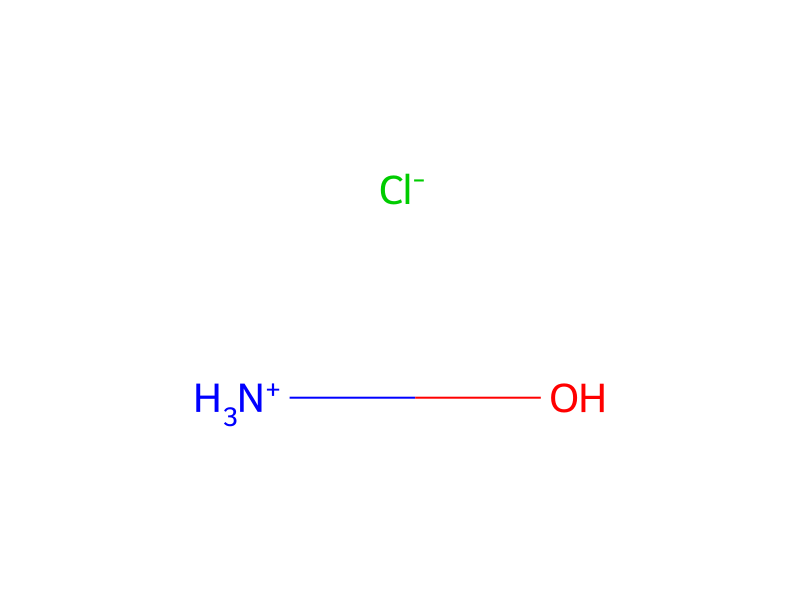
Grundinformationen
- CAS
5470-11-1- Standard-SMILES
[Cl-].[NH3+]O- InChIKey
WCYJQVALWQMJGE-UHFFFAOYSA-M- Summenformel
- ClH4NO
- Durchschnittliche Molmasse
- 69,49 g/mol
- Monoisotopische Masse
- 68,99814143
Überblick
See also: Hydroxyamine hydrochloride (annotation moved to).
Namen und Bezeichner
- Bevorzugter Name
- Hydroxylamine HCl
- IUPAC
- hydroxyazanium chloride
- Lokaler Name
- Hydroxylammoniumchlorid
- Englischer Name
- Hydroxylamine hydrochloride
- Summenformel
- NH2OH·HCl
- Molmasse
- 69.49
Namen und Synonyme
RefChem:1087060Hydroxylamine HCl(N H3 (O H)) ClhydroxylammoniumchloridH4ClNOHydroxylaminhydrochloridHydroxylammoniumchloridehydoxylammonium chloridehydroxy ammonium chloridehydroxy-ammonium chloridehydroxyl ammonium chloridehydroxyl-ammonium chloride
Weitere Namen anzeigen
HYDROXYLAMMONIUM CHLORIDEHYDROXYLAMINE HYDROCHLORIDhydroxyaminehydrochlorideHYDROXYAMMONIUM CHLORIDEHydroxylamine hydrocOXAMMONIUM HCLOXAMMONIUM HYDROCHLORIDEHA HCLOxammionium
UNII-5X4ZA62Z4QCCRIS 4323EINECS 226-798-2Tox21_202970AKOS024256075NCGC00260516-01CAS-5470-11-1AI3-08779
Datenbank-Bezeichner
- CAS
5470-11-1- PubChem CID
- 21645
- DTXSID
DTXSID7025425
Eigenschaften
Berechnete StruktureigenschaftenWird ergänzt
- Polarare Oberfläche (TPSA)
- 47,9 Ų
- H-Brücken-Donoren
- 2
- H-Brücken-Akzeptoren
- 2
- Frei drehbare Bindungen
- 0
- Schwere Atome
- 3
- Formalladung
- 0
- Komplexität
- 2
Experimentelle und physikochemische Eigenschaften
CosmeticsAntioxidant
Physikochemische Eigenschaften
- Schmelzpunkt
- 155 · 155-157 °C (dec.)(lit.)
- Dichte
- 1.67 g/mL · 1.67 g/mL at 25 °C(lit.)
- Dampfdruck
- 0.054 Pa · 0.054 Pa (50 °C)
- storage temp.
- 15 °C · Store at +15°C to +25°C.
- Löslichkeit
- 470 g/l · 470g/l
- Aggregatzustand
- Liquid
- Farbe
- White to off-white
- PH
- 2.5 · 2.5-3.5 (25℃, 50mg/mL in H2O)
- Wasserlöslichkeit
- 560 g/L · 560 g/L (20 ºC)
- Merck
- 14 · 14,4828
- BRN
- 3539763 · 3539763
- Stabilität
- 115 C · Substances to be avoided include strong oxidizing agents. Heating above 115 C may cause explosion; do not store above 65C. Moisture and air sensitive.
- Kosmetik-Inhaltsstoffe Funktionen
- ANTIOXIDANT
- InChI
- 1S/ClH.H3NO/c;1-2/h1H;2H,1H2
- InChIKey
- WTDHULULXKLSOZ-UHFFFAOYSA-N
- SMILES
- Cl.NO
- LogP
- -0.81 · -0.810 (est)
- CAS Datenbank
- 5470 · 5470-11-1(CAS DataBase Reference)
- EPA chemische Informationen
- Hydroxylamine hydrochloride (5470-11-1)
Sicherheit und Regulatorisches
Sicherheitsangaben dienen nur zur Orientierung und ersetzen weder das Sicherheitsdatenblatt (SDB) des Lieferanten noch geltende Vorschriften oder eine fachliche Bewertung.
Sicherheitsdaten
- F
- 21
- wgk
- 3
- tsca
- TSCA listed
- ridadr
- UN 2923 8/PG 2
- hs_code
- 28251000
- RTECS-Nr.
- NC3675000
- risk_code
- 22-36/38-43-48/22-50-40-21/22-2
- Toxizität
- LD50 orally in mice: 408 mg/kg (Riemann)
- hazard_code
- Xn,N,E
- safety_code
- 22-24-37-61-36/37
- hazard_class
- 8
- packing_group
- III
- Speicherklasse
- 4.1A - Other explosive hazardous materials
- Hazard Classifications
- Acute Tox. 4 DermalAcute Tox. 4 OralAquatic Acute 1Aquatic Chronic 2Carc. 2Eye Irrit. 2Met. Corr. 1Skin Irrit. 2Skin Sens. 1STOT RE 2 Oral
Chemie und Industrie
Verwendung und Herstellung
Use ClassificationCosmetics -> Antioxidant
Anwendungen
BeschreibungHydroxylamine hydrochloride is a reducing agent that is routinely used for the deacetylation of SATA to form free sulfhydryls (Figure 1), for cleavage of protein cross‐linkers that contain carbonyl groups (i.e. EGS) and for mutagenesis of plasmid DNA.Hydroxylamine converts aldehydes and ketones (carbonyls) to their oxime derivative in weak bases, therefore cross‐linkers and other compounds with carbonyl groups are cleavable with Hydroxylamine hydrochloride.SATA and SATP are modification reagents that add a sulfhydryl group to primary amines on biomolecules. The initial modification results in the addition of an acetyl‐protected sulfur enabling storage of the biomolecule. To generate a free sulfhydryl the biomolecule is treated with hydroxylamine to remove the protecting acetyl group (see figure).EGS and sulfo‐EGS are homobifunctional, succinimidyl ester, amine reactive crosslinkers that are resistant to cleavage by denaturants used in SDS‐PAGE conditions, but may be cleaved with hydroxylamine.
VerwendenHydroxylamine hydrochloride is a monomoamine oxidase inhibitor. It is used to prepare oximes and hydroxmic acids in organic synthesis. It acts as a copolymerization inhibitor. It can be used to remove bromine and polybromide from a solution during extraction of lignin from lignocellulosic biomass. It is key starting material for the preparation of pharmaceuticals and agrochemicals. It plays a vital role in rubber and plastic industries as an antioxidant, a vulcanization accelerator and a radical scavenger. It is also used as a color stabilizer and emulsion additive in color films.
Darstellung
synthetischeHydroxylamine hydrochloride is prepared by electrolytic reduction of ammonium chloride. Or by the action of nitromethane with hydrochloric acid and water to obtain hydroxylamine hydrochloride.
Vor- und nachgelagerte Produkte
Vorgelagerte Rohstoffe
Nachgelagerte Produkte
Ergänzende Hinweise
DefinitionChEBI: Hydroxylamine hydrochloride is an organic molecular entity. It is a colorless inorganic compound (HONH2) used in organic synthesis and as a reducing agent, due to its ability to donate nitric oxide.
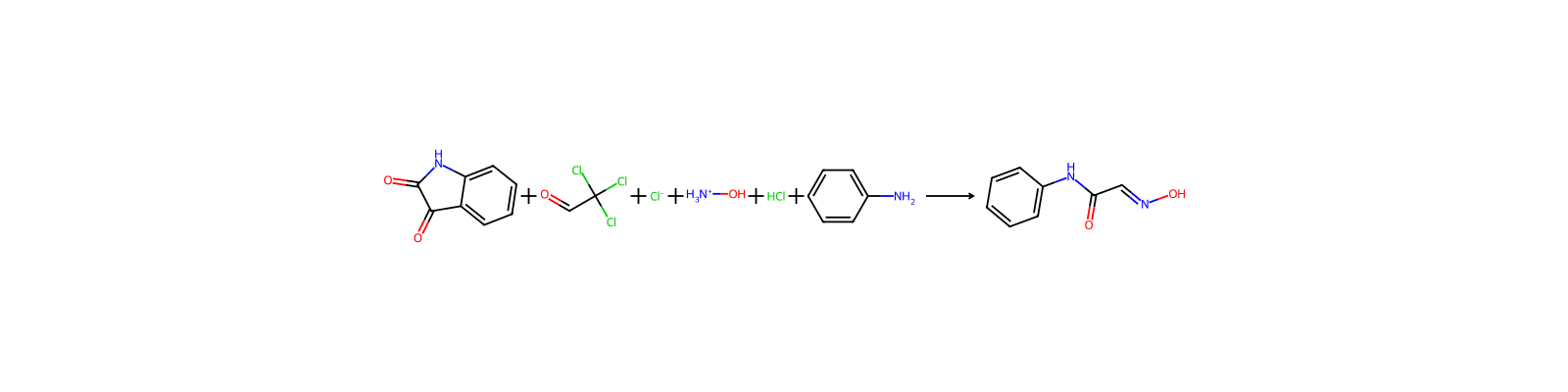
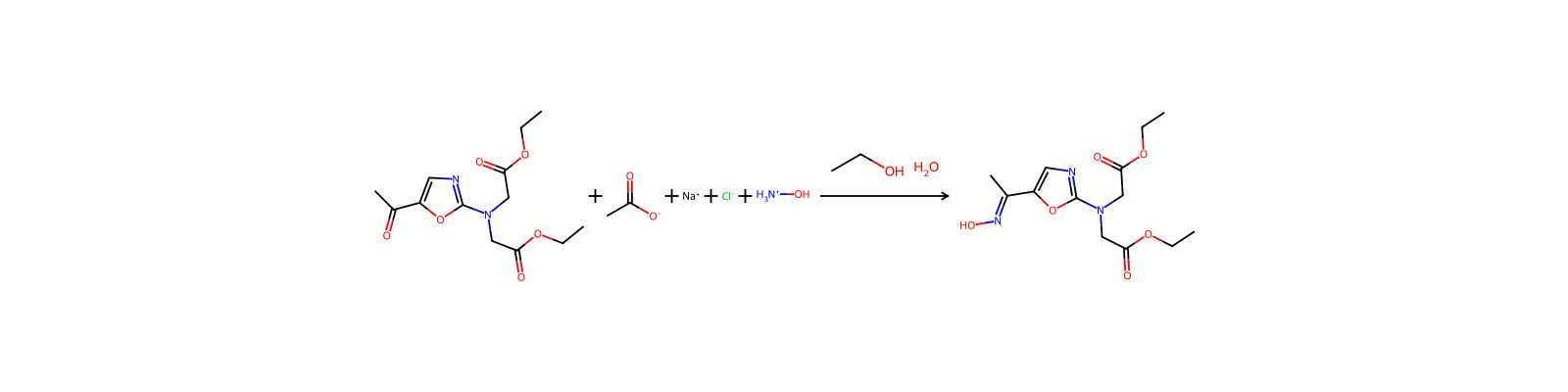
Zugehörige Reaktionen
2.184




Notizen zur Verbindung
Wird geladen…