
6-Bromo-3,4-dihydro-2H-isoquinolin-1-one
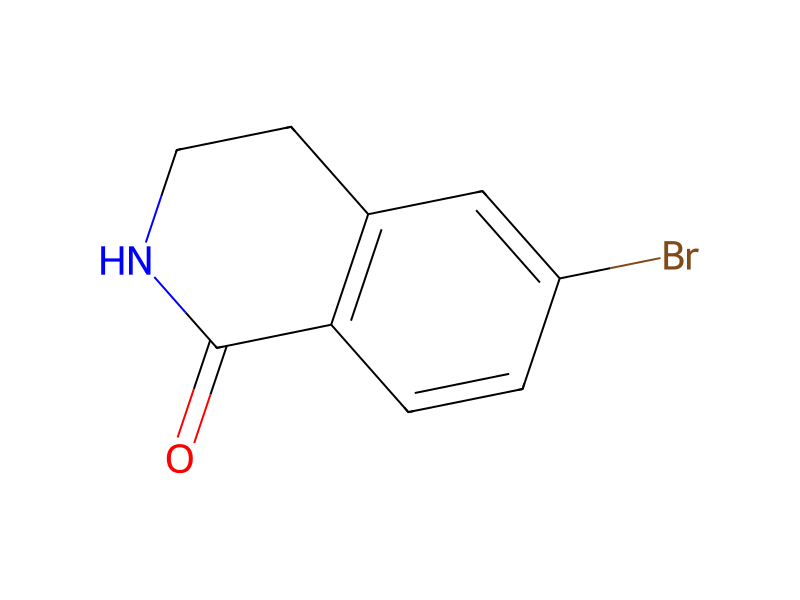
Grundinformationen
- CAS
147497-32-3- Standard-SMILES
O=C1NCCc2cc(Br)ccc21- InChIKey
FQPKKECSRKYXIZ-UHFFFAOYSA-N- Summenformel
- C9H8BrNO
- Durchschnittliche Molmasse
- 226,07 g/mol
- Monoisotopische Masse
- 224,97892598
Namen und Bezeichner
- Bevorzugter Name
- 6-Bromo-3,4-dihydro-2H-isoquinolin-1-one
- IUPAC
- 6-bromo-3,4-dihydro-2H-isoquinolin-1-one
- Englischer Name
- 6-BROMO-3,4-DIHYDRO-2H-ISOQUINOLIN-1-ONE
- Summenformel
- C9H8BrNO
- Molmasse
- 226.07
Namen und Synonyme
6-Bromo-3,4-dihydro-2H-isoquinolin-1-oneRefChem:540839818-974-8147497-32-36-bromo-3,4-dihydroisoquinolin-1(2H)-one1(2H)-ISOQUINOLINONE, 6-BROMO-3,4-DIHYDRO-MFCD041148586-Bromo-3,4-dihydro-1(2H)-isoquinolinone6-bromo-1,2,3,4-tetrahydroisoquinolin-1-oneCHEMBL4565268SCHEMBL581700SCHEMBL1002712
Weitere Namen anzeigen
6-BROMO-3,4-1(1H)-ISOQUINOLINONE6-BROMO-3,4-DIHYDRO-2H-ISOQUINOLIN-1-ON6-BROMO-3,4-DIHYDRO-1(1H)-ISOQUINOLINONE6-BroMo-1-oxo-1,2,3,4-tetrahydroisoquinoline1(2H)-Isoquinolinone, 6-bromo-3,4-dihydro- , 97%min
DTXSID10619066FQPKKECSRKYXIZ-UHFFFAOYSA-NCS-D0456BDBM50503861AKOS015900182EBC-610867FS-2432PB27642
Datenbank-Bezeichner
- CAS
147497-32-3- PubChem CID
- 21865450
- DTXSID
DTXSID10619066- ChEMBL
CHEMBL4565268- EC Number
- 818-974-8
- Nikkaji
- J3.151.680C
Eigenschaften
Berechnete Struktureigenschaften
- XLogP
- 1,9
- Polarare Oberfläche (TPSA)
- 29,1 Ų
- H-Brücken-Donoren
- 1
- H-Brücken-Akzeptoren
- 1
- Frei drehbare Bindungen
- 0
- Schwere Atome
- 12
- Formalladung
- 0
- Komplexität
- 195
Physikochemische Eigenschaften
- Schmelzpunkt
- 170 · 170.0-173.1 °C
- Siedepunkt
- 453.3 · 453.3±45.0 °C(Predicted)
- Dichte
- 1.559 · 1.559±0.06 g/cm3(Predicted)
- storage temp.
- Sealed in dry,Room Temperature
- Aggregatzustand
- powder
- pka
- 14.22 · 14.22±0.20(Predicted)
- Farbe
- Yellow
Sicherheit und Regulatorisches
GHS-Klassifizierung
GHS Classification
This chemical does not meet GHS hazard criteria for 25% (1 of 4) of reports.
Warning
H302+H312+H332 (25%): Harmful if swallowed, in contact with skin or if inhaled [Warning Acute toxicity, oral; acute toxicity, dermal; acute toxicity, inhalation]
P261, P264, P264+P265, P270, P271, P280, P301+P317, P302+P352, P304+P340, P305+P351+P338, P317, P319, P321, P330, P332+P317, P337+P317, P362+P364, P403+P233, P405, and P501 (click each P-code to see the statement)
Aggregated GHS information provided per 4 reports by companies from 4 notifications to the ECHA C&L Inventory. Each notification may be associated with multiple companies.
Gefahrenhinweise
Hazard Classes and CategoriesAcute Tox. 4 (50%)
Sicherheitsdaten
- hs_code
- 2933499090
Chemie und Industrie
Anwendungen
Verwenden6-bromo-3,4-dihydroisoquinolin-1(2H)-one is an intermediate used in the synthesis of benzolactams as dopamine D3 receptor ligands.IT is also used in the synthesis of new, selective 3-aminopyrazole based MK2-inhibitors that was proved to inhibit intracellular phosphorylation of hsp27 as well as LPS-induced TNFα release in cells.
Vor- und nachgelagerte Produkte
Vorgelagerte Rohstoffe
Anbieter100 Anbieter
杭州创引化工科技有限公司0571-87086220 13516718938 · [email protected]
郑州阿尔法化工有限公司+86-18530059196 · [email protected]
毕佳索(上海毕得医药科技股份有限公司)400-6005915 · [email protected]
温州共赢化学有限公司+86-0086-577-64498589 +86-15355981851 · [email protected]
普善实业(陕西)有限公司029-81310890 18165209495 · [email protected]
爱斯特(成都)生物制药股份有限公司+86-28-85122536 85324413 · [email protected]
Dayang Chem (Hangzhou) Co.,Ltd.+86-0571-88938639 17705817739 · [email protected]
郑州鸿晟医药科技有限公司0371-55695890 15637198702 · [email protected]
韶远科技(上海)有限公司021-50795510 4000665055 · [email protected]
上海迈瑞尔生化科技有限公司4006356688 18621169109 · [email protected]
北京华威锐科化工有限公司0757-86329057 18934348241 · [email protected]
北京索莱宝科技有限公司010-50973130 17801761073 · [email protected]
上海辅欣医药科技有限公司+86-021-021-50872116 · [email protected]
常州科化生物科技有限公司0519-68985668 13685222090 · [email protected]
上海瀚鸿科技股份有限公司021-54306202 13764082696 · [email protected]
上海相辉医药科技有限公司13761987713 · [email protected]
郑州药领医药科技有限公司13526569071 · [email protected]
上海西浦化工有限公司+86 (21) 6715-7650 · [email protected]
杰达维(上海)医药科技发展有限公司/J & W PharmLab021-64340559 · [email protected]
天津诺康医药科技有限公司022-23989838 13810451150 · [email protected]
上海宣月科技有限公司15216675652 · [email protected]
同创医药(苏州)有限公司0512-63263366 18912765016 · [email protected]
苏州岚云医药科技有限公司2332782371 · [email protected]
苏州键合化学试剂有限公司0512-69561983 13914027025 · [email protected]
江苏艾康生物医药研发有限公司025-66113011 13913916777 · [email protected]
上海贤鼎生物科技有限公司4009209199 · [email protected]
上海卡洛化学有限公司21-33526724 18930996265 · [email protected]
台州南峰药物研究所[email protected] 18616377689 · [email protected]
上海睿升化工科技有限公司+86-021-50935922
上海彰锐化工科技有限公司021-54880687
上海昶衍化工科技有限公司021-20242659 18930833303 · [email protected]
上海洪创医药科技有限公司18151128828 · [email protected]
上海毕得医药科技股份有限公司400-164-7117 18317119277 · [email protected]
Labnetwork lnc.+86-27-50766799 +86-18062016861 · [email protected]
上海驭远医药科技有限公司13052276172 · [email protected]
嘉兴诺华化工有限公司18957373295
上海安米克化学品有限公司微信 17321281695 18019252918 · [email protected]
杭州杰恒化工有限公司0571-87396432 · [email protected]
上海洽凡生化科技有限公司+86-021-61654350 · [email protected]
上海嵩爰化工科技有限公司010-1234567 18521000990 · [email protected]
凯试(上海)科技有限公司021-50135380 · [email protected]
上海皓骏医药科技有限公司021-34621078 13120882795 · [email protected]
北京蓝博特科技有限公司010-56330744 18310155299 · [email protected]
湖北巨胜科技有限公司027-59599241 18871490274 · [email protected]
苏州新凯生物医药技术有限公司0512-67213637 13952409868 · [email protected]
上海皓之翔生物科技有限公司(原上海拓青化工有限公司)526763801 13301653310 · [email protected]
诺尔凯立科技有限公司86-(0)21-31261262 373522135 · [email protected]
上海谱振生物科技有限公司4001650900 13817534909 · [email protected]
杭州凯邦生物科技有限公司0571-88937695 88937835 13606537248 · [email protected]
安耐吉化学&3A(安徽泽升科技股份有限公司)400-0056266 · [email protected]
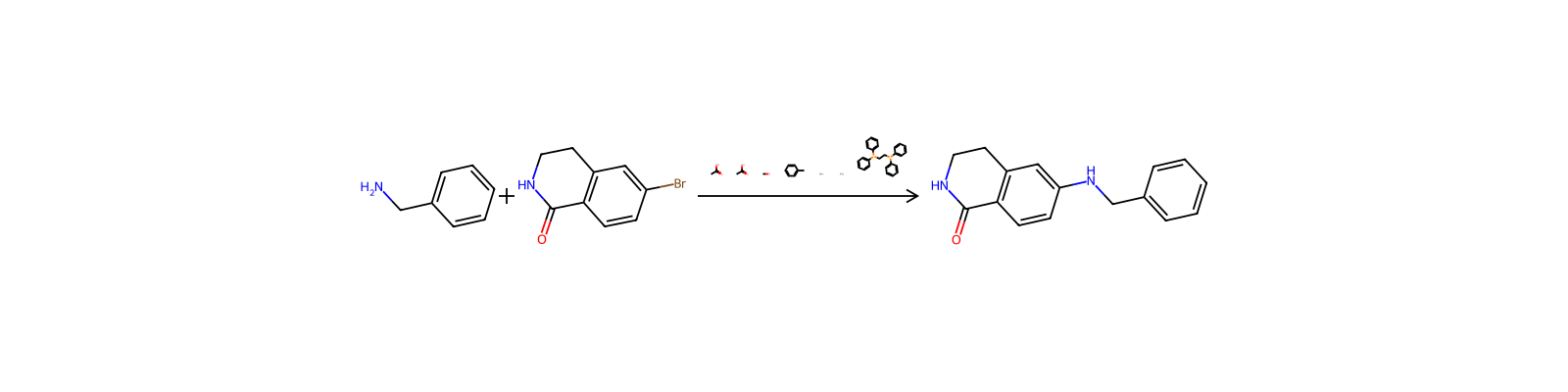
Zugehörige Reaktionen
48


Notizen zur Verbindung
Wird geladen…