

Grundinformationen
- Standard-SMILES
ClCCc1ccccc1- InChIKey
MNNZINNZIQVULG-UHFFFAOYSA-N- Summenformel
- C8H9Cl
- Durchschnittliche Molmasse
- 140,61 g/mol
- Monoisotopische Masse
- 140,03927797
Namen und Bezeichner
- Bevorzugter Name
- 1-Chloro-2-phenylethane
- IUPAC
- 2-chloroethylbenzene
- Englischer Name
- 2-CHLOROETHYLBENZENE
- Summenformel
- C8H9Cl
- Molmasse
- 140.61
Namen und Synonyme
(2-Chloroethyl)benzene622-24-2Phenethyl chloride2-Phenylethyl chloride1-Chloro-2-phenylethaneBenzene, (2-chloroethyl)-2-Phenyl-1-chloroethaneEthylchlorobenzenebeta-Phenylethyl chloride.beta.-Phenethyl chloridebeta-Phenethyl chloridealpha-Chloroethylbenzene
Weitere Namen anzeigen
.beta.-Phenylethyl chloride(.beta.-Chloroethyl)benzeneBENZENE, CHLOROETHYL-(beta-Chloroethyl)benzenephenylethyl chlorideEINECS 210-725-6NSC-27886DTXSID3060748
Datenbank-Bezeichner
- CAS
1331-31-3、622-24-2- PubChem CID
- 231496
- DTXSID
DTXSID3060748- UNII
- C7T86VN1QZ
- EC Number
- 210-725-6
- Nikkaji
- J91.303K
Eigenschaften
Berechnete Struktureigenschaften
- XLogP
- 3
- Polarare Oberfläche (TPSA)
- 0 Ų
- H-Brücken-Donoren
- 0
- H-Brücken-Akzeptoren
- 0
- Frei drehbare Bindungen
- 2
- Schwere Atome
- 9
- Formalladung
- 0
- Komplexität
- 65
Experimentelle und physikochemische Eigenschaften
SpringerMaterials PropertiesBoiling point
LogP
log Kow = 2.95
2.95
Density1.069 g/cu cm at 25 °C
Color/FormLight red, clear liquid
Solubility
Insoluble in water
Soluble in acetone, benzene, caron tetrachloride, chloroform
Boiling Point198 °C
Vapor Pressure1.69 mm Hg at 25 °C
Refractive IndexIndex of refraction: 1.5276 at 20 °C/D
Stability/Shelf LifeStable under recommended storage conditions.
Physikochemische Eigenschaften
- Schmelzpunkt
- -62.6 °C · -62.6°C
- Siedepunkt
- 188.79 °C · 188.79°C (estimate)
- Dichte
- 1.0536 · 1.0536 (estimate)
- Brechungsindex
- 1.5275 · 1.5275 (estimate)
- EPA chemische Informationen
- Benzene, chloroethyl- (1331-31-3)
Sicherheit und Regulatorisches
GHS-Klassifizierung
GHS Classification
Warning
H315 (33.3%): Causes skin irritation [Warning Skin corrosion/irritation]
P264, P264+P265, P273, P280, P302+P352, P305+P351+P338, P321, P332+P317, P337+P317, P362+P364, and P501 (click each P-code to see the statement)
Aggregated GHS information provided per 3 reports by companies from 2 notifications to the ECHA C&L Inventory. Each notification may be associated with multiple companies.
Warning
H227: Combustible liquid [Warning Flammable liquids]
Gefahrenhinweise
Regulatory Information
Chemical: Benzene, (2-chloroethyl)-
Chemical: Benzene, chloroethyl-
Status: Active Update: 08-09-2016 https://echa.europa.eu/registration-dossier/-/registered-dossier/18005
Benzene, (2-chloroethyl)-: Does not have an individual approval but may be used under an appropriate group standard
Other Safety InformationEvaluation - Chemicals not considered for in depth evaluation - Not commercially active in Australia
Other Hazardous ReactionsConditions to avoid: Heat, flames and sparks.
Hazard Classes and Categories
Skin Irrit. 2 (33.3%)
Flammable liquids - Category 4
Hazardous Reactivities and IncompatibilitiesIncompatible materials: Strong oxidizing agents, Strong bases
Sicherheit und Schutzausrüstung
Firefighting HazardsCarbon oxides, Hydrogen chloride gas
Fire Fighting Procedures
For small (incipient) fires, use media such as "alcohol" foam, dry chemical, or carbon dioxide. For large fires, apply water from as far as possible. Use very large quantities (flooding) of water applied as a mist or spray; solid streams of water may be ineffective. Cool all affected containers with flooding quantities of water.
Wear self contained breathing apparatus for fire fighting if necessary. Use water spray to cool unopened containers.
Storage ConditionsKeep container tightly closed in a dry and well-ventilated place. Containers which are opened must be carefully resealed and kept upright to prevent leakage.
Cleanup Methods
ACCIDENTAL RELEASE MEASURES: Personal precautions, protective equipment and emergency procedures: Avoid breathing vapors, mist or gas. Remove all sources of ignition. Beware of vapors accumulating to form explosive concentrations. Vapors can accumulate in low areas. Prevent further leakage or spillage if safe to do so. Do not let product enter drains. Contain spillage, and then collect with an electrically protected vacuum cleaner or by wet-brushing and place in container for disposal according to local regulations. Keep in suitable, closed containers for disposal.
Prevent further leakage or spillage if safe to do so. Do not let product enter drains.
Contain spillage, and then collect with an electrically protected vacuum cleaner or by wet-brushing and place in container for disposal according to local regulations. Keep in suitable, closed containers for disposal.
Disposal Methods
SRP: Recycle any unused portion of the material for its approved use or return it to the manufacturer or supplier. Ultimate disposal of the chemical must consider: the material's impact on air quality; potential migration in air, soil or water; effects on animal, aquatic and plant life; and conformance with environmental and public health regulations. If it is possible or reasonable use an alternative chemical product with less inherent propensity for occupational harm/injury/toxicity or environmental contamination.
Product: This combustible material may be burned in a chemical incinerator equipped with an afterburner and scrubber. Offer surplus and non-recyclable solutions to a licensed disposal company. Contaminated packaging: Dispose of as unused product.
Preventive Measures
ACCIDENTAL RELEASE MEASURES: Personal precautions, protective equipment and emergency procedures: Avoid breathing vapors, mist or gas. Remove all sources of ignition. Beware of vapors accumulating to form explosive concentrations. Vapors can accumulate in low areas. Prevent further leakage or spillage if safe to do so. Do not let product enter drains.
Avoid inhalation of vapor or mist. Keep away from sources of ignition - No smoking. Take measures to prevent the build up of electrostatic charge.
Handle in accordance with good industrial hygiene and safety practice. Wash hands before breaks and at the end of workday.
Gloves must be inspected prior to use. Use proper glove removal technique (without touching glove's outer surface) to avoid skin contact with this product. Dispose of contaminated gloves after use in accordance with applicable laws and good laboratory practices. Wash and dry hands.
Personal Protective Equipment (PPE)
Eye/face protection: Safety glasses with side-shields conforming to EN166. Use equipment for eye protection tested and approved under appropriate government standards such as NIOSH (US) or EN 166(EU).
Skin protection: Handle with gloves.
Body Protection: Impervious clothing. The type of protective equipment must be selected according to the concentration and amount of the dangerous substance at the specific workplace.
Respiratory protection: Where risk assessment shows air-purifying respirators are appropriate use a full-face respirator with multipurpose combination (US) or type ABEK (EN 14387) respirator cartridges as a backup to engineering controls. If the respirator is the sole means of protection, use a full-face supplied air respirator. Use respirators and components tested and approved under appropriate government standards such as NIOSH (US) or CEN (EU).
Toxikologische Informationen
Environmental Fate
TERRESTRIAL FATE: Based on a classification scheme(1), an estimated Koc value of 810(SRC), determined from a structure estimation method(2), indicates that 2-phenyl-1-chloroethane is expected to have low mobility in soil(SRC). Volatilization of 2-phenyl-1-chloroethane from moist soil surfaces is expected to be an important fate process(SRC) given an estimated Henry's Law constant of 2.8X10⁻³ atm-cu m/mole(SRC), using a fragment constant estimation method(3). 2-Phenyl-1-chloroethane is not expected to volatilize from dry soil surfaces(SRC) based upon a vapor pressure of 1.69 mm Hg at 25 °C(4). Utilizing the Japanese MITI test, 0% of the Theoretical BOD was reached in 4 weeks(5) indicating that biodegradation is not an important environmental fate process in soil(SRC).
AQUATIC FATE: Based on a classification scheme(1), an estimated Koc value of 810(SRC), determined from a structure estimation method(2), indicates that 2-phenyl-1-chloroethane is expected to adsorb to suspended solids and sediment(SRC). Volatilization from water surfaces is expected(3) based upon a an estimated Henry's Law constant of 2.8X10⁻³ atm-cu m/mole(SRC), developed using a fragment constant estimation method(4). Using this Henry's Law constant and an estimation method(3), volatilization half-lives for a model river and model lake are 9 hrs and 6 days, respectively(SRC). According to a classification scheme(5), a BCF range of 50-72(6) suggests the potential for bioconcentration in aquatic organisms is moderate(SRC). Utilizing the Japanese MITI test, 0% of the Theoretical BOD was reached in 4 weeks(6) indicating that biodegradation is not an important environmental fate process in water(SRC).
ATMOSPHERIC FATE: According to a model of gas/particle partitioning of semivolatile organic compounds in the atmosphere(1), 2-phenyl-1-chloroethane, which has a vapor pressure of 1.69 mm Hg at 25 °C(2), is expected to exist solely as a vapor in the ambient atmosphere. Vapor-phase 2-phenyl-1-chloroethane is degraded in the atmosphere by reaction with photochemically-produced hydroxyl radicals(SRC); the half-life for this reaction in air is estimated to be 3 days(SRC), calculated from its rate constant of 5.6X10⁻¹² cu cm/molecule-sec at 25 °C(SRC) that was derived using a structure estimation method(3). 2-Phenyl-1-chloroethane does not contain chromophores that absorb at wavelengths >290 nm(4) and, therefore, is not expected to be susceptible to direct photolysis by sunlight(SRC).
Toxicity SummaryIDENTIFICATION AND USE: 2-Phenyl-1-chloroethane is used as a chemical intermediate. HUMAN STUDIES: There are no data available. ANIMAL STUDIES: There are no data available.
Effluent Concentrations2-Phenyl-1-chloroethane was tentativley identified in leachate from a simulatation of a landfill lysimeter used to study the codisposal of metal plating sludge with municipal solid wastes(1).
Soil Adsorption/Mobility
Using a structure estimation method based on molecular connectivity indices(1), the Koc of 2-phenyl-1-chloroethane can be estimated to be 810(SRC). According to a classification scheme(2), this estimated Koc value suggests that 2-phenyl-1-chloroethane is expected to have low mobility in soil(SRC).
Artificial Pollution Sources2-Phenyl-1-chloroethane's production and use as a chemical intermediate(1) may result in its release to the environment through various waste streams(SRC).
Environmental BiodegradationAEROBIC: 2-Phenyl-1-chloroethane, present at 100 mg/L, reached 0% of its theoretical BOD in 4 weeks using an activated sludge inoculum at 30 mg/L in the Japanese MITI test(1).
Environmental Bioconcentration
Measured BCF values of 50-72 and 52-54 at 100 and 10 ug/L test chemical concentrations, respectively, were reported for 2-phenyl-1-chloroethane using rice fish (Oryzias latipes) which were exposed over an 6-week period(1). According to a classification scheme(2), this BCF range suggests that bioconcentration in aquatic organisms is moderate(SRC).
Volatilization from Water/Soil
The Henry's Law constant for 2-phenyl-1-chloroethane is estimated as 2.8X1903 atm-cu m/mole(SRC) using a fragment constant estimation method(1). This Henry's Law constant indicates that 2-phenyl-1-chloroethane is expected to volatilize from water surfaces(2). Based on this Henry's Law constant, the volatilization half-life from a model river (1 m deep, flowing 1 m/sec, wind velocity of 3 m/sec)(2) is estimated as 9 hours(SRC). The volatilization half-life from a model lake (1 m deep, flowing 0.05 m/sec, wind velocity of 0.5 m/sec)(2) is estimated as 6 days(SRC). 2-Phenyl-1-chloroethane's Henry's Law constant indicates that volatilization from moist soil surfaces may occur(SRC). 2-Phenyl-1-chloroethane is expected to volatilize from dry soil surfaces(SRC) based upon a vapor pressure of 1.69 mm Hg(3).
Environmental Abiotic Degradation
The rate constant for the vapor-phase reaction of 2-phenyl-1-chloroethane with photochemically-produced hydroxyl radicals has been estimated as 5.6X10⁻¹² cu cm/molecule-sec at 25 °C(SRC) using a structure estimation method(1). This corresponds to an atmospheric half-life of about 3 days at an atmospheric concentration of 5X10+5 hydroxyl radicals per cu cm(1). 2-Phenyl-1-chloroethane is not expected to undergo hydrolysis in the environment due to the lack of functional groups that hydrolyze under environmental conditions(2). 2-Phenyl-1-chloroethane does not contain chromophores that absorb at wavelengths >290 nm(2) and, therefore, is not expected to be susceptible to direct photolysis by sunlight(SRC).
Probable Routes of Human Exposure
Occupational exposure to 2-phenyl-1-chloroethane may occur through inhalation and dermal contact with this compound at workplaces where 2-phenyl-1-chloroethane is produced or used. Use data indicate that the general population is not likely to be exposed to 2-phenyl-1-chloroethane. (SRC)
Environmental Fate/Exposure Summary
2-Phenyl-1-chloroethane's production and use as a chemical intermediate may result in its release to the environment through various waste streams. If released to air, a vapor pressure of 1.69 mm Hg at 25 °C indicates 2-phenyl-1-chloroethane will exist solely as a vapor in the atmosphere. Vapor-phase 2-phenyl-1-chloroethane will be degraded in the atmosphere by reaction with photochemically-produced hydroxyl radicals; the half-life for this reaction in air is estimated to be 3 days. 2-Phenyl-1-chloroethane does not contain chromophores that absorb at wavelengths >290 nm and, therefore, is not expected to be susceptible to direct photolysis by sunlight. If released to soil, 2-phenyl-1-chloroethane is expected to have low mobility based upon an estimated Koc of 810. Volatilization from moist soil surfaces is expected to be an important fate process based upon an estimated Henry's Law constant of 2.8X10⁻³ atm-cu m/mole. 2-Phenyl-1-chloroethane may volatilize from dry soil surfaces based upon its vapor pressure. Utilizing the Japanese MITI test, 0% of the Theoretical BOD was reached in 4 weeks indicating that biodegradation is not an important environmental fate process in soil or water. If released into water, 2-phenyl-1-chloroethane is expected to adsorb to suspended solids and sediment based upon the estimated Koc. Volatilization from water surfaces is expected to be an important fate process based upon this compound's estimated Henry's Law constant. Estimated volatilization half-lives for a model river and model lake are 9 hrs and 6 days, respectively. A measured BCF range of 50-72 suggests that bioconcentration in aquatic organisms is moderate. Hydrolysis is not expected to be an important environmental fate process since this compound lacks functional groups that hydrolyze under environmental conditions (pH 5 to 9). Occupational exposure to 2-phenyl-1-chloroethane may occur through inhalation and dermal contact with this compound at workplaces where 2-phenyl-1-chloroethane is produced or used. Use data indicate that the general public is not likely to be exposed to 2-phenyl-1-chloroethane. (SRC)
Antidote and Emergency Treatment
/SRP:/ Immediate first aid: Ensure that adequate decontamination has been carried out. If patient is not breathing, start artificial respiration, preferably with a demand valve resuscitator, bag-valve-mask device, or pocket mask, as trained. Perform CPR if necessary. Immediately flush contaminated eyes with gently flowing water. Do not induce vomiting. If vomiting occurs, lean patient forward or place on the left side (head-down position, if possible) to maintain an open airway and prevent aspiration. Keep patient quiet and maintain normal body temperature. Obtain medical attention. /Poisons A and B/
/SRP:/ Basic treatment: Establish a patent airway (oropharyngeal or nasopharyngeal airway, if needed). Suction if necessary. Watch for signs of respiratory insufficiency and assist ventilations if needed. Administer oxygen by nonrebreather mask at 10 to 15 L/min. Monitor for pulmonary edema and treat if necessary ... . Monitor for shock and treat if necessary ... . Anticipate seizures and treat if necessary ... . For eye contamination, flush eyes immediately with water. Irrigate each eye continuously with 0.9% saline (NS) during transport ... . Do not use emetics. For ingestion, rinse mouth and administer 5 mL/kg up to 200 mL of water for dilution if the patient can swallow, has a strong gag reflex, and does not drool ... . Cover skin burns with dry sterile dressings after decontamination ... . /Poisons A and B/
/SRP:/ Advanced treatment: Consider orotracheal or nasotracheal intubation for airway control in the patient who is unconscious, has severe pulmonary edema, or is in severe respiratory distress. Positive-pressure ventilation techniques with a bag valve mask device may be beneficial. Consider drug therapy for pulmonary edema ... . Consider administering a beta agonist such as albuterol for severe bronchospasm ... . Monitor cardiac rhythm and treat arrhythmias as necessary ... . Start IV administration of D5W TKO /SRP: "To keep open", minimal flow rate/. Use 0.9% saline (NS) or lactated Ringer's (LR) if signs of hypovolemia are present. For hypotension with signs of hypovolemia, administer fluid cautiously. Watch for signs of fluid overload ... . Treat seizures with diazepam or lorazepam ... . Use proparacaine hydrochloride to assist eye irrigation ... . /Poisons A and B/
Chemie und Industrie
Verwendung und Herstellung
Uses/Chemical/ Intermediate
General Manufacturing InformationBenzene, (2-chloroethyl)-: ACTIVE
Anbieter50 Anbieter
国药集团化学试剂有限公司86-21-63210123 · [email protected]
梯希爱(上海)化成工业发展有限公司021-67121386 · [email protected]
上海阿拉丁生化科技股份有限公司400-6206333 13167063860 · [email protected]
上海策嵘生物科技有限公司[email protected]
武汉欣扬瑞和化学科技有限公司13720274133 · [email protected]
武汉欣扬瑞和化学科技有限公司153-07155313 15307155313 · [email protected]
上海泰矶林实业有限公司02150630626 17717886015 · [email protected]
河北创海生物科技有限公司+86-86-13131129325 · [email protected]
T&W GROUP021-61551611 13296011611 · [email protected]
Hebei Yanxi Chemical Co., Ltd.+86-17531190177 · [email protected]
上海弘顺生物科技有限公司15901914505 · [email protected]
科瑞迪化学400-821-5857 021-64326257 · [email protected]
衢州明锋化工有限公司0570-3062502 13819002126;13819008176 · [email protected]
Syntechem Co.,Ltd[email protected]
南通萧畅医药贸易有限公司0513-82104991 18862997351 · [email protected]
上海迈瑞尔生化科技有限公司4006356688 18621169109 · [email protected]
武汉易泰科技有限公司上海分公司18930552037 · [email protected]
阿法埃莎(中国)化学有限公司400-6106006 · [email protected]
安耐吉化学&3A(安徽泽升科技股份有限公司)400-0056266 · [email protected]
上海瀚鸿科技股份有限公司021-54306202 13764082696 · [email protected]
上海景颜化工科技有限公司13817811078 · [email protected]
嘉兴市艾森化工有限公司0573-85285100 18627885956 · [email protected]
上海隆盛化工有限公司58099637 13585536065 · [email protected]
郑州研德生物科技有限公司0371-63682289 15538176268 · [email protected]
孝感深远化工有限公司15527621225; 15527621225 · [email protected]
山东西亚化学有限公司13355009207 13355009207 · [email protected]
武汉盈邦医药有限公司+86-13296627870; +86-13971566811 · [email protected]
玛雅试剂+86 (573) 82222445 (0)18006601000 452520369 · [email protected]
上海耐士化工科技有限公司400-188-0725 +86 21 34310725 13611771617
天津希恩思生化科技有限公司400 638 7771 · [email protected]
Xiamen AmoyChem Co., Ltd+86-86-5926051114 · [email protected]
艾科试剂4008-755-333 18080918076 · [email protected]
TCI AMERICA800-4238616 · [email protected]
TOKYO CHEMICAL INDUSTRY CO., LTD.03-36680489 · [email protected]
TCI Europe320-37350700 · [email protected]
卡迪亚医药科技有限公司0371-86615086 18203638366 0371-86159066 13526786601
上海贤鼎生物科技有限公司4009209199 · [email protected]
北京奥秘佳得医药科技有限公司+86-13522808617 · [email protected]
成都零六生物科技有限公司400-1166-196 13458535857 · [email protected]
雷丁试剂0510-85629785 18013409632 · [email protected]
湖南华腾制药有限公司400-8592883 · [email protected]
上海御略医药科技有限公司021-60345187 13671753212 · [email protected]
上海麦克林生化科技股份有限公司15221275939 15221275939 · [email protected]
上海永叶生物科技有限公司86-021-61559134 15921386130 · [email protected]
上海嵩爰化工科技有限公司010-1234567 18521000990 · [email protected]
陕西缔都医药化工有限公司+86-29-87569262 +86-15003564040 · [email protected]
池州凯隆进出口贸易有限公司[email protected]
Sigma-Aldrich西格玛奥德里奇(上海)贸易有限公司021-61415566 800-8193336 · [email protected]
AN PharmaTech Co Ltd86(21)68097365 · [email protected]
成都瑞欧克科技有限公司028-64353063 · [email protected]
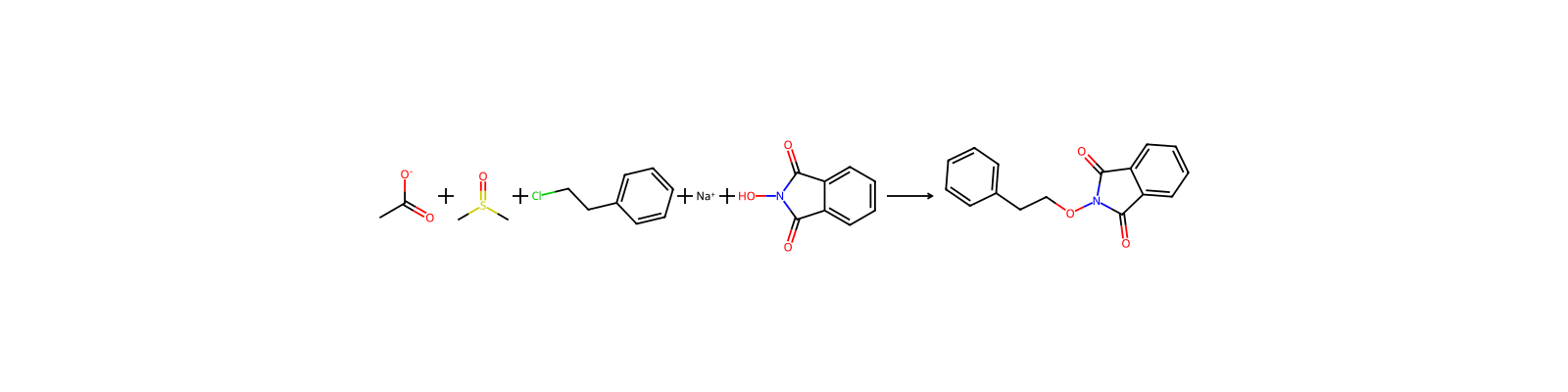
Zugehörige Reaktionen
49




Verknüpfte Notizen
Wird geladen…