

Grundinformationen
- Standard-SMILES
N#CCc1ccc(Cl)cc1- InChIKey
IVYMIRMKXZAHRV-UHFFFAOYSA-N- Summenformel
- C8H6ClN
- Durchschnittliche Molmasse
- 151,59 g/mol
- Monoisotopische Masse
- 151,01887687
Überblick
4-chlorophenylacetonitrile is a nitrile that is acetonitrile in which one of the hydrogens has been replaced by a p-chlorophenyl group. It is a nitrile and a member of monochlorobenzenes. It is functionally related to an acetonitrile.
Namen und Bezeichner
- Bevorzugter Name
- 4-Chlorobenzyl cyanide
- IUPAC
- 2-(4-chlorophenyl)acetonitrile
- Lokaler Name
- 4-Chlorphenylacetonitril
- Englischer Name
- 4-Chlorobenzyl cyanide
- Summenformel
- C8H6ClN
- Molmasse
- 151.59
Namen und Synonyme
4-Chlorobenzyl cyanide140-53-4(4-Chlorophenyl)acetonitrile4-Chlorophenylacetonitrile2-(4-Chlorophenyl)acetonitrileBenzeneacetonitrile, 4-chloro-p-Chlorobenzyl cyanide4-Chlorobenzeneacetonitrile(p-Chlorophenyl)acetonitrileAcetonitrile, (p-chlorophenyl)-p-ChlorophenylacetonitrileMFCD00001918
Weitere Namen anzeigen
Para chloro benzyl cyanidePCCNPyrimethamine EP Impurity C4-Chlorobenzyl cyanide/4-ChlorophenylacetonitrilePCNN
4-Chlor-benzyl-cyanidNSC 49108DTXSID8051708K2K7AKZ2Z72-(4-chlorophenyl)-acetonitrileNSC-491084-Chlorobenzylcyanide2-(4-chlorophenyl)ethanenitrile
Datenbank-Bezeichner
- CAS
140-53-4- PubChem CID
- 241582
- DTXSID
DTXSID8051708- ChEBI
CHEBI:17346- UNII
- K2K7AKZ2Z7
- EC Number
- 205-418-9
- Nikkaji
- J38.178K
Eigenschaften
Berechnete Struktureigenschaften
- XLogP
- 2,5
- Polarare Oberfläche (TPSA)
- 23,8 Ų
- H-Brücken-Donoren
- 0
- H-Brücken-Akzeptoren
- 1
- Frei drehbare Bindungen
- 1
- Schwere Atome
- 10
- Formalladung
- 0
- Komplexität
- 139
Experimentelle und physikochemische Eigenschaften
Chemical ClassesNitrogen Compounds -> Nitriles
SpringerMaterials PropertiesNuclear quadrupole resonance spectroscopy
LogP2.47
Vapor Pressure0.01 [mmHg]
Physical DescriptionWhite to light yellow solid with a pungent odor; mp = 28-31 deg C; [Alfa Aesar MSDS]
Collision Cross Section130.4 Ų [M-H]- [CCS Type: DT; Buffer gas: N2; Ionization: ESI-; Dataset: TOXCAST; Source Identifier: DTXSID8051708]
Physikochemische Eigenschaften
- Schmelzpunkt
- 25 · 25-28 °C(lit.)
- Siedepunkt
- 265 · 265-267 °C(lit.)
- Dichte
- 1.19 g/mL · 1.19 g/mL at 20 °C(lit.)
- Brechungsindex
- 20 · n20/D 1.543
- Flammpunkt
- 230 °F · >230 °F
- storage temp.
- Sealed in dry,Room Temperature
- Löslichkeit
- 0.3 g/l · 0.3g/l
- Aggregatzustand
- Liquid After Melting
- Farbe
- Clear colorless to yellow
- BRN
- 971171 · 971171
- InChI
- 1S/C8H6ClN/c9-8-3-1-7(2-4-8)5-6-10/h1-4H,5H2
- InChIKey
- IVYMIRMKXZAHRV-UHFFFAOYSA-N
- SMILES
- Clc1ccc(CC#N)cc1
- CAS Datenbank
- 140 · 140-53-4(CAS DataBase Reference)
- NIST chemische Informationen
- 4 · Benzeneacetonitrile, 4-chloro-(140-53-4)
- EPA chemische Informationen
- 4 · Benzeneacetonitrile, 4-chloro- (140-53-4)
Sicherheit und Regulatorisches
GHS-Klassifizierung
GHS Classification
Danger
H300 (20%): Fatal if swallowed [Danger Acute toxicity, oral]
P261, P262, P264, P264+P265, P270, P271, P280, P301+P316, P302+P352, P304+P340, P305+P351+P338, P316, P319, P321, P330, P332+P317, P337+P317, P361+P364, P362+P364, P403+P233, P405, and P501 (click each P-code to see the statement)
Aggregated GHS information provided per 50 reports by companies from 10 notifications to the ECHA C&L Inventory. Each notification may be associated with multiple companies.
Gefahrenhinweise
Regulatory Information
Chemical: Benzeneacetonitrile, 4-chloro-
4-Chlorobenzyl cyanide: Does not have an individual approval but may be used under an appropriate group standard
Hazards Summary
Causes convulsions and dyspnea in dermal lethal-dose studies of rabbits; Causes ataxia, dyspnea, and decreased body temperature in oral lethal-dose studies of rats; [RTECS] A skin, respiratory tract, and strong eye irritant; Highly toxic by ingestion; Toxic by inhalation and skin absorption; [Alfa Aesar MSDS] See 2-Chlorobenzonitrile.
Hazard Classes and CategoriesAcute Tox. 2 (20%)
Sicherheitsdaten
- wgk
- 3
- tsca
- TSCA listed
- ridadr
- UN 2811 6.1/PG 3
- hs_code
- 29269095
- RTECS-Nr.
- AL8250000
- risk_code
- 23/24/25-36/37/38
- hazard_code
- T,Xi
- hazard_note
- Irritant/Toxic
- safety_code
- 26-36/37/39-45-28B
- hazard_class
- 6.1
- packing_group
- II
- Speicherklasse
- 6.1A - Combustible acute toxic Cat. 1 and 2very toxic hazardous materials
- Hazard Classifications
- Acute Tox. 2 OralEye Irrit. 2Skin Irrit. 2STOT SE 3
Chemie und Industrie
Verwendung und Herstellung
General Manufacturing InformationBenzeneacetonitrile, 4-chloro-: INACTIVE
Anwendungen
Verwenden4-Chlorobenzyl cyanide is an intermediate for the preparation of 3-methyl-2-(4-chlorophenyl)butyric acid, which can be used to prepare pyrethroid insecticides such as fenvalerate and deltamethrin, and can be used in medicine Industrial preparation of pyrimethamine.
Darstellung
synthetische4-Chlorobenzyl cyanide is obtained by the reaction of 4-Chlorobenzyl chloride with sodium cyanide. Add 4-Chlorobenzyl chloride and Benzyldodecyldimethylammonium bromide into the reaction pot, heat to 100°C, slowly add sodium cyanide aqueous solution, and react at 100-104°C for 5h (add sodium cyanide for 3h, keep warm for 2h). Then add water to dissolve sodium chloride, and separate the water layer to obtain the crude benzyl chloride cyanide, which is distilled under reduced pressure to collect 160 (2.66kPa) fractions to obtain the finished product of 4-Chlorobenzyl cyanide. The yield is above 81%.
Vor- und nachgelagerte Produkte
Vorgelagerte Rohstoffe
Nachgelagerte Produkte
Anbieter50 Anbieter
梯希爱(上海)化成工业发展有限公司021-67121386 · [email protected]
上海阿拉丁生化科技股份有限公司400-6206333 13167063860 · [email protected]
韶远科技(上海)有限公司021-50795510 4000665055 · [email protected]
科瑞迪化学400-821-5857 021-64326257 · [email protected]
Syntechem Co.,Ltd[email protected]
上海迈瑞尔生化科技有限公司4006356688 18621169109 · [email protected]
北京华威锐科化工有限公司0757-86329057 18934348241 · [email protected]
阿法埃莎(中国)化学有限公司400-6106006 · [email protected]
太原市瑞和丰科贸有限公司+86 351 7031519 · [email protected]
安耐吉化学&3A(安徽泽升科技股份有限公司)400-0056266 · [email protected]
上海瀚鸿科技股份有限公司021-54306202 13764082696 · [email protected]
上海萃森医药科技有限公司13472757003
嘉兴市艾森化工有限公司0573-85285100 18627885956 · [email protected]
Pure Chemistry Scientific Inc.001-857-928-2050 or 1-888-588-9418 · [email protected]
上海隆盛化工有限公司58099637 13585536065 · [email protected]
孝感深远化工有限公司15527621225; 15527621225 · [email protected]
山东西亚化学有限公司13355009207 13355009207 · [email protected]
玛雅试剂+86 (573) 82222445 (0)18006601000 452520369 · [email protected]
四川库利南科技有限公司400-1166-196 18981987031 · [email protected]
天津希恩思生化科技有限公司400 638 7771 · [email protected]
斯百全化学(上海)有限公司021-021-021-67601398-809-809-809 15221380277 · [email protected]
艾科试剂4008-755-333 18080918076 · [email protected]
上海思域化工科技有限公司86-21-34053660 · [email protected]
赛默飞世尔科技(中国)有限公司800-810-5118 · [email protected]
北京伊诺凯科技有限公司400-810-7969 010-59572699 · [email protected]
江苏艾康生物医药研发有限公司025-66113011 13913916777 · [email protected]
上海健超生物科技有限公司150-2103-5486 18017383231 · [email protected]
TCI AMERICA800-4238616 · [email protected]
TOKYO CHEMICAL INDUSTRY CO., LTD.03-36680489 · [email protected]
TCI Europe320-37350700 · [email protected]
深圳振强药物研发有限公司0755-66853366 13670046396 · [email protected]
深圳康特腾科技有限公司86-0755-86635001 · [email protected]
越林试剂021-62960152 · [email protected]
苏州安尼康药物研发有限公司0512-69369885 · [email protected]
上海倍卓生物科技有限公司021-61119791,13386096464 · [email protected]
上海洪创医药科技有限公司18151128828 · [email protected]
上海将来实业股份有限公司400-0066400 13621662912 · [email protected]
上海将来实业股份有限公司021-61552785 · [email protected]
日照力德士化工有限公司010-51268198 · [email protected]
郑州鸿晟医药科技有限公司0371-0371-13526885213 15637198702 · [email protected]
美岚实业(上海)有限公司021-58958189 · [email protected]
上海石洋化工有限公司021-56795766 · [email protected]
上海爱蝶实业有限公司021-58957966 18930537195 · [email protected]
成都零六生物科技有限公司400-1166-196 13458535857 · [email protected]
广拓化学(上海)有限公司021-60899189-8001 18918189673 · [email protected]
雷丁试剂0510-85629785 18013409632 · [email protected]
上海创赛科技有限公司400-6087598 15021221957 · [email protected]
上海御略医药科技有限公司021-60345187 13671753212 · [email protected]
上海乾劲化工科技有限公司021-20900665 17321230821 · [email protected]
上海嵩爰化工科技有限公司010-1234567 18521000990 · [email protected]
Ergänzende Hinweise
DefinitionChEBI: 4-Chlorobenzyl cyanide is a nitrile that is acetonitrile in which one of the hydrogens has been replaced by a p-chlorophenyl group. It is a member of monochlorobenzenes and a nitrile. It derives from an acetonitrile.
Zugehörige Reaktionen
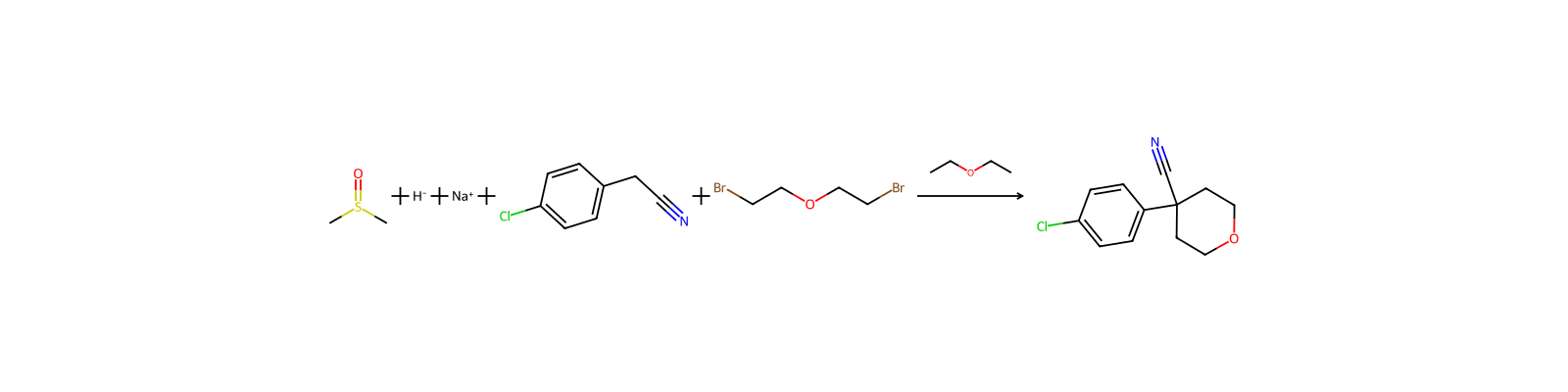
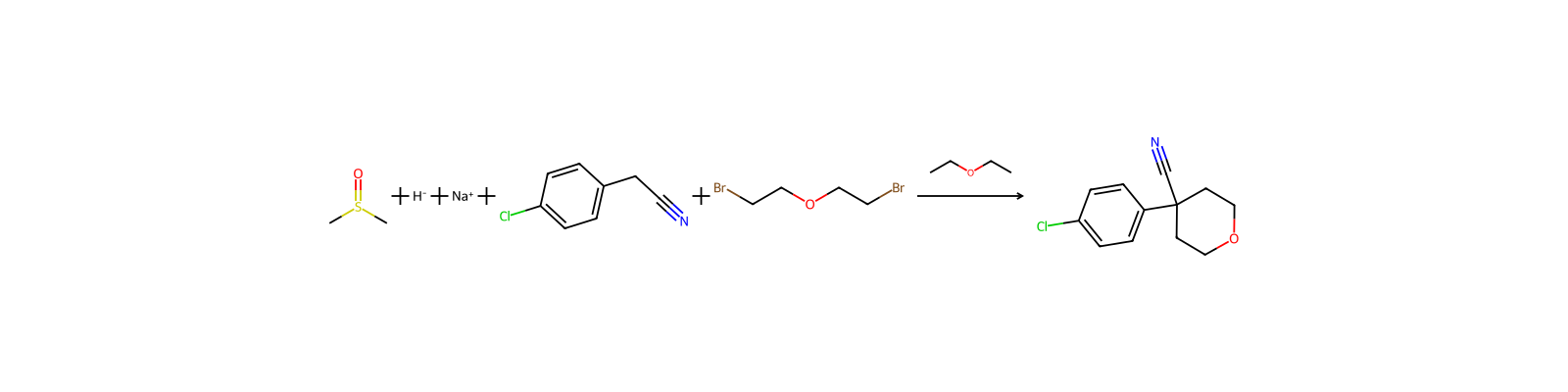
181




Verknüpfte Notizen
Wird geladen…