

Grundinformationen
- Standard-SMILES
O=[N+]([O-])[O-].O=[N+]([O-])[O-].[Zn+2]- InChIKey
ONDPHDOFVYQSGI-UHFFFAOYSA-N- Summenformel
- Zn(NO3)2
- Durchschnittliche Molmasse
- 189,4 g/mol
- Monoisotopische Masse
- 187,90477792
Überblick
Zinc nitrate is a colorless crystalline solid. Noncombustible, but accelerates the burning of combustible materials. If large quantities are involved in a fire or the combustible material is finely divided, an explosion may result. Prolonged exposure to fire or heat may result in an explosion. Toxic oxides of nitrogen are produced in fires involving this material. It is used as a catalyst in the manufacture of other chemicals, in medicine, and in dyes.
Namen und Bezeichner
- Bevorzugter Name
- Zinc Nitrate
- IUPAC
- zinc dinitrate
Namen und Synonyme
ZINC NITRATEZinc dinitrate7779-88-6CelloxanNitric acid, zinc saltNitrate de zincX 4 (nitrate)ZINC(II) NITRATEZinc nitrate (Zn(NO3)2)EDO66F5U49Nitric acid, zinc salt (2:1)DTXSID10890636
Weitere Namen anzeigen
RefChem:6363zinc(2+) ion dinitrateDTXCID401030921231-943-8zinc;dinitratezinc(2+) dinitrateMFCD00011293Nitrate de zinc [French]
Datenbank-Bezeichner
- CAS
10196-18-6、7779-88-6- PubChem CID
- 24518
- DTXSID
DTXSID10890636- ChEBI
CHEBI:231504- UNII
- EDO66F5U49
- EC Number
- 231-943-8
Eigenschaften
Berechnete Struktureigenschaften
- Polarare Oberfläche (TPSA)
- 126 Ų
- H-Brücken-Donoren
- 0
- H-Brücken-Akzeptoren
- 6
- Frei drehbare Bindungen
- 0
- Schwere Atome
- 9
- Formalladung
- 0
- Komplexität
- 18,8
Experimentelle und physikochemische Eigenschaften
Chemical ClassesMetals -> Metals, Inorganic Compounds
CosmeticsCosmetic ingredients (Zinc Nitrate) -> CIR (Cosmetic Ingredient Review)
Density
2.07 at 68 °F (USCG, 1999) - Denser than water; will sink
DENSITY: 2.065 G/CU CM @ 14 °C /HEXAHYDRATE/
Relative density (water = 1): 2.07 (hexahydrate)
2.065 @ 14°C
Color/FormWhite powder
Solubility
SOLUBILITY: 184.3 G/100 CC WATER @ 20 °C /HEXAHYDRATE/
Soluble in alcohol.
In water, 93 g/100g.
Solubility in water, g/100ml at 20 °C: 200 (very good)
DecompositionWhen heated to decomp it emits toxic fumes of /nitrogen oxides and zinc oxide/.
Melting Point
97 °F (USCG, 1999)
-18 °C /hydrate/
~110 °C
42.5 °C
Food Contact SubstancesFCS -> FDA Inventory of Food Contact Substances Listed in 21 CFR
Physical Description
Zinc nitrate is a colorless crystalline solid. Noncombustible, but accelerates the burning of combustible materials. If large quantities are involved in a fire or the combustible material is finely divided, an explosion may result. Prolonged exposure to fire or heat may result in an explosion. Toxic oxides of nitrogen are produced in fires involving this material. It is used as a catalyst in the manufacture of other chemicals, in medicine, and in dyes.
Liquid; Dry Powder; Liquid; Liquid; Other Solid
Colorless solid; [ICSC] White solid; mp = 45.5 deg C (trihydrate); [HSDB]
COLOURLESS CRYSTALS OR POWDER.
Other Experimental Properties
COLORLESS LUMPS; LOSES WATER OF CRYSTALLIZATION BETWEEN 105 & 131 °C /HEXAHYDRATE/
WHITE SOLID /HEXAHYDRATE/
COLORLESS NEEDLES; MP: 45.5 °C; 327.3 G SOL IN 100 CC WATER @ 40 °C /TRIHYDRATE/
COLORLESS TETRAGONAL CRYSTALS; SOL IN ALL PROPORTIONS IN HOT WATER, VERY SOL IN ALCOHOL; DENSITY: 2.065 /HEXAHYDRATE/
Aq soln is acid to litmus; pH of 5% aq soln 5.1; odorless /Hexahydrate/
Sicherheit und Regulatorisches
GHS-Klassifizierung
GHS Classification
This chemical does not meet GHS hazard criteria for 0.9% (3 of 318) of reports.
Danger
H272 (98.1%): May intensify fire; oxidizer [Danger Oxidizing liquids; Oxidizing solids]
P210, P220, P261, P264, P264+P265, P270, P271, P273, P280, P301+P317, P302+P352, P304+P340, P305+P351+P338, P305+P354+P338, P317, P319, P321, P330, P332+P317, P337+P317, P362+P364, P370+P378, P391, P403+P233, P405, and P501 (click each P-code to see the statement)
Aggregated GHS information provided per 318 reports by companies from 25 notifications to the ECHA C&L Inventory. Each notification may be associated with multiple companies.
Warning
Gefahrenhinweise
Regulatory Information
Chemical: Nitric acid, zinc salt
Nitric acid, zinc salt (2:1) is listed on the EPA's Chemical Data Reporting (CDR) system. Manufacturers and importers of Nitric acid, zinc salt (2:1) are required to report information about their production and use of this chemical to the EPA under the Toxic Substances Control Act (TSCA). (40 eCFR Part 711)
Status: Active Update: 24-01-2023 https://echa.europa.eu/registration-dossier/-/registered-dossier/15856
Nitric acid, zinc salt: HSNO Approval: HSR001361 Approved with controls
The New Jersey Worker and Community Right to Know Act requires public and private employers to provide information about hazardous substances at their workplaces. (N.J.S.A. 34:5A-1 et. seq.)
Other Safety InformationIMAP assessments - Nitric acid, zinc salt: Human health tier II assessment
DOT LabelOxidizer
Fire Hazards
Special Hazards of Combustion Products: Toxic oxides of nitrogen may form in fire.
CAUTION: Ammonium nitrate products may explode if involved in fire or contaminated with hydrocarbons (fuels), organic matter, other contaminants or when hot molten and contained. Treat as an explosive (GUIDE 112).
Not combustible but enhances combustion of other substances. Many reactions may cause fire or explosion. See Chemical dangers Gives off irritating or toxic fumes (or gases) in a fire.
Fire Potential
Non-combustible, but will accelerate the burning of combustible materials.
DANGEROUS FIRE ... RISK. /HEXAHYDRATE/
MAY INCREASE INTENSITY OF FIRE WHEN IN CONTACT WITH COMBUSTIBLE MATERIAL. /HEXAHYDRATE/
Health Hazards
Inhalation of dust may irritate nose and throat. Ingestion can cause irritation or corrosion of the alimentary tract. Contact with eyes causes irritation, which may be delayed. Contact with skin causes irritation. (USCG, 1999)
· Inhalation, ingestion or contact (skin, eyes) with vapors or substance may cause severe injury, burns or death.
Hazards Summary
Hexahydrate: A strong oxidizer; Poses dangerous fire and explosion hazard; [Hawley] A skin, eye, and respiratory tract irritant; May be more hazardous when hydrated; [ICSC] A skin, eye, nose, and throat irritant; [HSDB] A strong oxidizing agent; Reacts violently with combustible and reducing substances; A skin, eye, nose, and throat irritant; [CAMEO] An irritant; Targets blood and CNS; [MSDSonline] See Zinc. See NITRATES and NITRITES.
DOT ID and Guide1514 140
FDA RequirementsZinc nitrate is an indirect food additive for use only as a component of adhesives.
Reactive GroupNitrate and Nitrite Compounds, Inorganic
UN ClassificationUN Hazard Class: 5.1; UN Pack Group: II
Special Reports
Dang Prop Ind Mater Rep 5 (3): 82-8 (1985)
Zinc and Health. Current Bibliographies in Medicine 98-3. Public Services Division/National Library of Medicine. 3619 citations, January, 1990-June, 1998. Available from: http://www.nlm.nih.gov/archive/20040831/pubs/cbm/zinc.html as of November 2, 1998.
USEPA; Ambient Water Quality Criteria Doc: Zinc (1980) EPA 400/5-80-079
USEPA; Ambient Water Quality Criteria Doc: Zinc (1987) EPA 400/5-87-003
For more Special Reports (Complete) data for ZINC NITRATE (7 total), please visit the HSDB record page.
Sicherheit und Schutzausrüstung
Fire Fighting
Excerpt from ERG Guide 140 [Oxidizers]:
Use water in large amounts. In case of fire: keep drums, etc., cool by spraying with water.
First Aid Measures
Fresh air, rest. Refer for medical attention.
Rinse skin with plenty of water or shower.
First rinse with plenty of water for several minutes (remove contact lenses if easily possible), then refer for medical attention.
Rinse mouth. Refer for medical attention .
Accidental Release Measures
· CALL 911. Then call emergency response telephone number on shipping paper. If shipping paper not available or no answer, refer to appropriate telephone number listed on the inside back cover.
· Keep combustibles (wood, paper, oil, etc.) away from spilled material.
First Aid
INHALATION: move to fresh air.
General First Aid:
Safe StorageSeparated from combustible substances and other incompatible materials. See Chemical Dangers. Provision to contain effluent from fire extinguishing.
Exposure Control and Personal Protection
· Wear positive pressure self-contained breathing apparatus (SCBA).
0.1 [mg/m3] (respirable fraction), 2 mg/m3 (inhalable fraction) for Zn inorg. cmpnds[German Research Foundation (DFG)]
Fire Fighting Procedures
If material on fire or involved in fire: Flood with water. Cool all affected containers with flooding quantities of water. Apply water from as far a distance as possible. If fire becomes uncontrollable consider evacuation of one-half mile radius.
Wear positive pressure self-contained breathing apparatus when fighting fires involving this material.
Storage ConditionsKEEP WELL CLOSED & IN A COOL PLACE. /HEXAHYDRATE/
Cleanup Methods
Environmental considerations: Land spill: Dig a pit, pond, lagoon, or holding area to contain liquid or solid material. /SRP: If time permits, pits, ponds, lagoons, soak holes, or holding areas should be contained with a flexible impermeable membrane liner./ Cover solids with a plastic sheet to prevent dissolving in rain or fire fighting water.
Environmental considerations: Water spill: Add soda ash. Neutralize with agricultural lime (CaO), crushed limestone, or sodium bicarbonate. Adjust pH to neutral (pH 7).
Nonfire Spill ResponseExcerpt from ERG Guide 140 [Oxidizers]:
Disposal Methods
SRP: At the time of review, criteria for land treatment or burial (sanitary landfill) disposal practices are subject to significant revision. Prior to implementing land disposal of waste residue (including waste sludge), consult with environmental regulatory agencies for guidance on acceptable disposal practices.
Spillage Disposal
Personal protection: particulate filter respirator adapted to the airborne concentration of the substance. Do NOT let this chemical enter the environment. Sweep spilled substance into covered containers. If appropriate, moisten first to prevent dusting. Wash away remainder with plenty of water. Do NOT absorb in saw-dust or other combustible absorbents.
Toxikologische Informationen
Treatment
Zinc poisoning is treated symptomatically, often by administering fluids such as water or milk, or with gastric lavage. Methemoglobinemia can be treated with supplemental oxygen and methylene blue 1% solution administered intravenously slowly over five minutes followed by IV flush with normal saline. Methylene blue restores the iron in hemoglobin to its normal (reduced) oxygen-carrying state. (L1613, L49)
Health Effects
Chronic exposure to zinc causes anemia, atazia, lethargy, and decreases the level of good cholesterol in the body. It is also believed to cause pancreatic and reproductive damage. Nitrate and nitrite poisoning causes methemoglobinemia. Nitrites may cause pregnancy complications and developmental effects. They may also be carcinogenic. (L1137, L49)
Adverse EffectsMethemoglobinemia - The presence of increased methemoglobin in the blood; the compound is classified as secondary toxic effect
Exposure Routes
The substance can be absorbed into the body by ingestion.
Inhalation (L49) ; oral (L49) ; dermal (L49)
Toxicity Summary
The CIR Expert Panel concluded that the following 27 zinc salts are safe in cosmetics in the present practices of use and concentration described in this safety assessment when formulated to be non-irritating...Zinc Nitrate...
Safe for use in cosmetics, with qualifications
Anaemia results from the excessive absorption of zinc suppressing copper and iron absorption, most likely through competitive binding of intestinal mucosal cells. Unbalanced levels of copper and zinc binding to Cu,Zn-superoxide dismutase has been linked to amyotrophic lateral sclerosis (ALS). Stomach acid dissolves metallic zinc to give corrosive zinc chloride, which can cause damage to the stomach lining. Metal fume fever is thought to be an immune response to inhaled zinc. Nitrate's toxicity is a result of it's conversion to nitrite once in the body. Nitrite causes the autocatalytic oxidation of oxyhemoglobin to hydrogen peroxide and methemoglobin. This elevation of methemoglobin levels is a condition known as methemoglobinemia, and is characterized by tissue hypoxia, as methemoglobin cannot bind oxygen. (A2450, L1613, L48, L49, A49)
Signs and Symptoms
Cough. Sore throat.
Redness. Pain.
Redness. Pain.
Abdominal pain. Nausea.
Ingestion of large doses of zinc causes stomach cramps, nausea, and vomiting. Acute inhalation of large amounts of zinc causes metal fume fever, which is characterized by chills, fever, headache, weakness, dryness of the nose and throat, chest pain, and coughing. Dermal contact with zinc results in skin irritation. Nitrate and nitrite poisoning causes methemoglobinemia. Symptoms include cyanosis, cardiac dysrhythmias and circulatory failure, and progressive central nervous system (CNS) effects. CNS effects can range from mild dizziness and lethargy to coma and convulsions. (L1137, L49)
ICSC Environmental DataThe substance is very toxic to aquatic organisms. The substance may cause long-term effects in the aquatic environment. It is strongly advised not to let the chemical enter into the environment.
Human Toxicity Excerpts
When normal stimulated cultured human lymphocytes were pretreated with various soluble zinc salts, there was an increase in the numbers of cells with chromosomal fragmentation, diploidy, dicentrism, and chromatid gaps and breaks. A later study using a similar treatment regimen indicated that zinc induced a dose-dependent decrease in lymphocytic mitotic indices. /Soluble zinc salts/
... There is no chronic form of ... /metal fume fever/, but in rare instances the acute incident may be followed by complications such as bronchitis or pneumonia. /Zinc/
Carcinogen ClassificationIngested nitrate or nitrite under conditions that result in endogenous nitrosation is probably carcinogenic to humans (Group 2A). (L135)
Non-Human Toxicity Excerpts
REDUCED GROWTH OCCURRED IN YEARLINGS & ADULTS ON EXPOSURE TO ZINC NITRATE IN FRESH WATER OVER 150 DAYS. YEARLINGS MORE SENSITIVE, REDUCED GROWTH @ 0.13 PPM ZINC, ASSOCIATED WITH REDUCED TUBIFEX CONSUMPTION.
ADULT PHOXINUS PHOXINUS EXPOSED TO DIFFERENT CONCN ZINC NITRATE IN FRESH WATER SHOWED HEMORRHAGES & LESIONS. VERTEBRAL DAMAGE BETWEEN 0.20-2.4 PPM ZN(2+).
BRYOPHYTES, SUCH AS SCLEROPODIUM PURUM, PLEUROZIUM SCHREBERI, & HYPNUM CUPRESSIFORME, EXPOSED TO ZINC NITRATE SHOWED A DECR IN NET-PHOTOSYNTHESIS WHICH WAS DEPENDENT ON CONCN & BRYOPHYTE SPECIES.
LUMINAL EXPOSURE OF EXCISED CANINE TRACHEAL EPITHELIUM TO ZINC NITRATE (3 TIMES @ 1X10⁻³ MOLAR) REDUCED CONDUCTANCE BY 24% BUT DID NOT AFFECT SHORT CIRCUIT CURRENT. SUBMUCOSAL ZINC NITRATE INHIBITED SHORT CIRCUIT CURRENT, BUT HAD LITTLE EFFECT ON CONDUCTANCE.
Antidote and Emergency Treatment
Basic treatment: Establish a patent airway. Suction if necessary. Watch for signs of respiratory insufficiency and assist ventilations if necessary. Administer oxygen by nonrebreather mask at 10 to 15 L/min. Monitor for shock and treat if necessary ... . Anticipate seizures and treat as necessary ... . For eye contamination, flush eyes immediately with water. Irrigate each eye continuously with normal saline during transport ... . Do not use emetics. For ingestion, rinse mouth and administer 5 mL/kg up to 200 mL of water for dilution if the patient can swallow, has a strong gag reflex, and does not drool. Administer activated charcoal ... . /Nitrates, nitrites, and related compounds/
Advanced treatment: Consider orotracheal or nasotracheal intubation for airway control in the patient who is unconscious or in respiratory arrest. Monitor cardiac rhythm and treat arrhythmias if necessary ... . Start an IV with D5W TKO /SRP: "To keep open", minimal flow rate/. Use lactated Ringer's if signs of hypovolemia are present. For hypotension with signs of hypovolemia, administer fluid cautiously. If unresponsive to these measures, vasopressors may be helpful. Watch for signs of fluid overload ... . Treat seizures with diazepam (Valium) ... . Administer 1% solution methylene blue if patient is symptomatic with severe hypoxia, cyanosis, and cardiac compromise not responding to oxygen. ... . Use proparacaine hydrochloride to assist eye irrigation ... . /Nitrates, nitrites, and related compounds/
Toxicity DataLD50: 1400 mg/kg (Oral, Rat) (A200)
Regulatorische Informationen
FDA RequirementsZinc nitrate is an indirect food additive for use only as a component of adhesives.
CERCLA Reportable Quantities
Persons in charge of vessels or facilities are required to notify the National Response Center (NRC) immediately, when there is a release of this designated hazardous substance, in an amount equal to or greater than its reportable quantity of 1000 lb or 454 kg. The toll free number of the NRC is (800) 424-8802; In the Washington D.C. metropolitan area (202) 426-2675. The rule for determining when notification is required is stated in 40 CFR 302.4 (section IV. D.3.b).
Clean Water Act Requirements
Designated as a hazardous substance under section 311(b)(2)(A) of the Federal Water Pollution Control Act and further regulated by the Clean Water Act Amendments of 1977 and 1978. These regulations apply to discharges of this substance.
Toxic pollutant designated pursuant to section 307(a)(1) of the Clean Water Act and is subject to effluent limitations. /Zinc and compounds/
For total recoverable zinc the criterion to protect freshwater aquatic life ... is 47 ng/l as a 24 hr average ... at hardnesses of 50, 100, and 200 mg/l as CaCO3 the concentration of total recoverable zinc should not exceed 180, 320, 570 ug/l at any time. /Soluble zinc salts/
For total recoverable zinc the criterion to protect saltwater aquatic life ... is 58 ug/l as a 24 hr average and the concentration should not exceed 170 ug/l at any time. /Soluble zinc salts/
State Drinking Water Guidelines
(AZ) ARIZONA 5000 ug/l /Zinc/
(MN) MINNESOTA 2000 ug/l /Zinc/
Federal Drinking Water Guidelines
EPA 5000 ug/l /Zinc/
EPA 2000 ug/l /Zinc, Lifetime health advisory/
Chemie und Industrie
Pharmakologische Informationen
Metabolism/Metabolites
Zinc can enter the body through the lungs, skin, and gastrointestinal tract. Intestinal absorption of zinc is controlled by zinc carrier protein CRIP. Zinc also binds to metallothioneins, which help prevent absorption of excess zinc. Zinc is widely distributed and found in all tissues and tissues fluids, concentrating in the liver, gastrointestinal tract, kidney, skin, lung, brain, heart, and pancreas. In the bloodstream zinc is found bound to carbonic anhydrase in erythrocytes, as well as bound to albumin, _2-macroglobulin, and amino acids in the the plasma. Albumin and amino acid bound zinc can diffuse across tissue membranes. Zinc is excreted in the urine and faeces. Intake of some amount of nitrates and nitrites is a normal part of the nitrogen cycle in humans. In vivo conversion of nitrates to nitrites can occur in the gastrointestional tract under the right conditions, significantly enhancing nitrates' toxic potency. The major metabolic pathway for nitrate is conversion to nitrite, and then to ammonia. Nitrites, nitrates, and their metabolites are excreted in the urine. (L1137, L49)
Absorption, Distribution and Excretion
Upon intravenous injection zinc is distributed to erythrocytes, plasma, and leukocytes; about 80% of the zinc present in the blood is found in the erythrocytes, 12-20% in the plasma, and about 3% in the leukocytes. ... There is a dynamic exchange of zinc between plasma and erythrocytes. Inhalation of dusts of zinc salts results in a transient accumulation in the lung before its absorption into the blood. There is little absorption of zinc or its salts through the skin. ... About 80% of parenterally administered zinc is excreted in the feces, suggesting an enterohepatic circulation for zinc. In humans, about 10% of the absorbed zinc is excreted in the urine, and in tropical climates about 2-3 mg zinc/day may be lost in sweat. /Soluble zinc compounds/
Verwendung und Herstellung
Uses
CIR ingredient: Zinc Nitrate
Used as mordant in dyeing; as resin catalyst; as catalyst in chemical manufacture; in medicine; as acidic catalyst; as latex coagulant; as reagent and intermediate; as source of zinc in liquid fertilizers; [HSDB]
Plastic Composites Manufacturing [Category: Industry]
AS MORDANT IN DYEING
Resin catalyst
As catalyst in manufacture of other chemicals, in medicine, and in dyes.
U.S. Production2023: 1,000,000 - <2,500,000 lb
Consumer UsesBinder
Industry UsesPlating agent
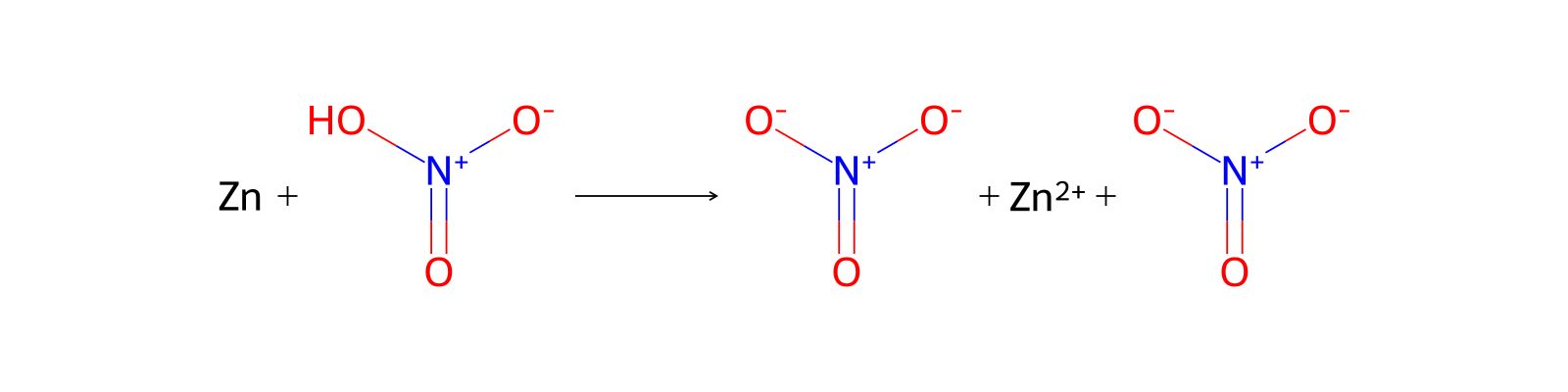
Methods of ManufacturingACTION OF NITRIC ACID ON ZINC OR ZINC OXIDE. /HEXAHYDRATE/
Formulations/Preparations
AEROTEX ACCELERATOR NUMBER 5
ALSO AVAILABLE IN FORM OF FUSED PIECES. IN THIS FORM IT CONTAINS ONLY ABOUT 20% WATER. TECHNICAL FLAKE USUALLY CONTAINS 25.6% WATER. /HEXAHYDRATE/
General Manufacturing Information
Transportation Equipment Manufacturing
Nitric acid, zinc salt (2:1): ACTIVE
Zugehörige Reaktionen
18


Verknüpfte Notizen
Wird geladen…