
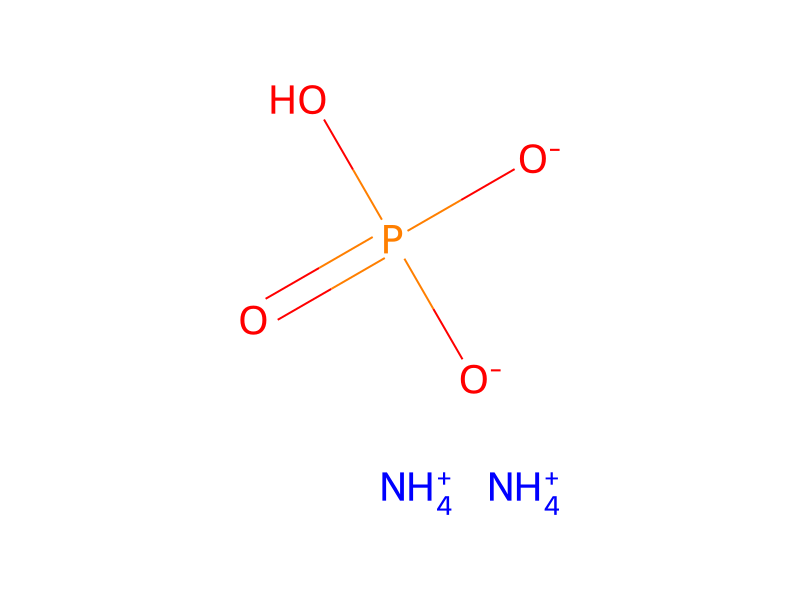
Grundinformationen
- Standard-SMILES
O=P([O-])([O-])O.[NH4+].[NH4+]- InChIKey
MNNHAPBLZZVQHP-UHFFFAOYSA-N- Summenformel
- (NH4)2HPO4
- Durchschnittliche Molmasse
- 132,06 g/mol
- Monoisotopische Masse
- 132,0299934
Überblick
Ammonium phosphate is a white solid with a weak odor of ammonia. Sinks and mixes with water. (USCG, 1999)
Namen und Bezeichner
- Bevorzugter Name
- Diammonium hydrogen phosphate
- IUPAC
- diazanium;hydrogen phosphate
- Lokaler Name
- Ammoniumdihydrogenorthophosphat
- Englischer Name
- Ammonium dihydrogen phosphate
- Summenformel
- H6NO4P
- Molmasse
- 115.03
Namen und Synonyme
7783-28-0Diammonium hydrogen phosphateDIAMMONIUM PHOSPHATEAmmonium phosphate dibasicPhosphoric acid, diammonium saltAkoustan APelorCoaltrol LPA 445Diammonium orthophosphateDiammonium acid phosphateK2 (phosphate)Diammonium hydrogen orthophosphate
Weitere Namen anzeigen
MAPMONOAMMONIUM PHOSPHATEAMMONIUM PHOSPHATE12-61-00AMMONIUM DIHYDROGEN ORTHOPHOSPHATEAmmonium dihydrogenAMMONIUM BIPHOSPHATEmonoammoniumacidphosphateAMMONIUM PHOSPHATE, MONOBASICPHOSPHORIC ACID MONOAMMONIUM SALT
Secondary ammonium phosphateHydrogen diammonium phosphateAmmonium orthophosphate dibasicDiammonium monohydrogen phosphateAmmonium hydrogen phosphateAmmonium phosphate, secondaryPyrozyl war10LGE70FSU
Datenbank-Bezeichner
- CAS
7722-76-1、7783-28-0- PubChem CID
- 24540
- DTXSID
DTXSID6029705- ChEMBL
CHEMBL2105954- ChEBI
CHEBI:63051- UNII
- 10LGE70FSU
- EC Number
- 231-987-8
Eigenschaften
Berechnete Struktureigenschaften
- Polarare Oberfläche (TPSA)
- 85,4 Ų
- H-Brücken-Donoren
- 3
- H-Brücken-Akzeptoren
- 4
- Frei drehbare Bindungen
- 0
- Schwere Atome
- 7
- Formalladung
- 0
- Komplexität
- 46,5
Experimentelle und physikochemische Eigenschaften
Chemical ClassesNitrogen Compounds -> Ammonium Compounds
Cosmetics
Cosmetic ingredients (Ammonium Phosphate) -> CIR (Cosmetic Ingredient Review)
Cosmetic ingredients (Diammonium Phosphate) -> CIR (Cosmetic Ingredient Review)
Oral care; Buffering
pHpH about 8
Pesticides
Attractants
Active substance -> EU Pesticides database: Approved
Odor
Odorless
Weak ammonia odor
TasteSaline, cooling taste
Food AdditivesFIRMING AGENT, FLAVOR ENHANCER, FLAVORING AGENT OR ADJUVANT, LEAVENING AGENT, MALTING OR FERMENTING AID, NUTRIENT SUPPLEMENT, PH CONTROL AGENT -> FDA Substance added to food
Density
Diammonium: 1.8 at 68.0 °F Monoammonium: 1.6 at 20 °C (USCG, 1999)
1.619 g/cu cm
Relative density (water = 1): 1.6
1.619 @25 °C
Color/Form
White crystals
Crystals or crystalline powder
Solubility
Insoluble in ethanol, acetone
69.5 g/100 g water at 25 °C
1 g dissolves in 1.7 mL water, 0.5 mL boiling water
Solubility in water, g/100ml at 10 °C: 57.5
Decomposition
When heated to decomposition emits very toxic fumes ... of /phosphorus oxides, nitrgen oxides, and ammonia/.
100 °C
Melting Point155 °C with decomposition
Physikochemische Eigenschaften
- Schmelzpunkt
- 190 °C · 190 °C (dec.) (lit.)
- Siedepunkt
- 87.4 °C · 87.4 °C
- Dichte
- 1.02 g/mL · 1.02 g/mL at 20 °C
- Dampfdruck
- 0.066 hPa · 0.066 hPa (125 °C)
- Brechungsindex
- 1.525 · 1.525
- storage temp.
- Inert atmosphere,Room Temperature
- Löslichkeit
- 2 O: · H2O: 0.1 M at 20 °C, clear, colorless
- Aggregatzustand
- Solid
- Farbe
- White or colorless
- Wichte
- 1.803 · 1.803
- Geruch (Odor)
- brilliant wh. cryst. or powd., odorless
- PH
- 3.8 · 3.8-4.4 (25℃, 50mg/mL in H2O)
- Wasserlöslichkeit
- 368 g/L · 368 g/L (20 ºC)
- Merck
- 14 · 14,543
- Kosmetik-Inhaltsstoffe Funktionen
- BUFFERINGORAL CARE
- InChI
- 1S/H3N.H3O4P/c;1-5(2,3)4/h1H3;(H3,1,2,3,4)
- InChIKey
- LFVGISIMTYGQHF-UHFFFAOYSA-N
- SMILES
- N.OP(O)(O)=O
- LogP
- -2.148 · -2.148 (est)
- CAS Datenbank
- 7722 · 7722-76-1(CAS DataBase Reference)
- EPA chemische Informationen
- Monoammonium phosphate (7722-76-1)
Sicherheit und Regulatorisches
GHS-Klassifizierung
GHS Classification
This chemical does not meet GHS hazard criteria for 80.1% (514 of 642) of all reports.
Warning
H315 (18.5%): Causes skin irritation [Warning Skin corrosion/irritation]
P261, P264, P264+P265, P271, P280, P302+P352, P304+P340, P305+P351+P338, P319, P321, P332+P317, P337+P317, P362+P364, P403+P233, P405, and P501 (click each P-code to see the statement)
Aggregated GHS information provided per 642 reports by companies from 23 notifications to the ECHA C&L Inventory. Each notification may be associated with multiple companies.
Gefahrenhinweise
Regulatory Information
Chemical: Phosphoric acid, diammonium salt
Phosphoric acid, ammonium salt (1:2) is listed on the EPA's Chemical Data Reporting (CDR) system. Manufacturers and importers of Phosphoric acid, ammonium salt (1:2) are required to report information about their production and use of this chemical to the EPA under the Toxic Substances Control Act (TSCA). (40 eCFR Part 711)
2002/2076, Reg. (EU) 2016/548, Reg. (EU) No 540/2011
Status: Active Update: 21-03-2023 https://echa.europa.eu/registration-dossier/-/registered-dossier/15555
Ammonium monohydrogen orthophosphate: Does not have an individual approval but may be used under an appropriate group standard
Other Safety InformationIMAP assessments - Phosphoric acid, diammonium salt: Human health tier I assessment
Fire Hazards
Special Hazards of Combustion Products: Toxic and irritating fumes of ammonia and oxides of nitrogen may form in fires. (USCG, 1999)
Not combustible. Gives off irritating or toxic fumes (or gases) in a fire.
Fire PotentialNoncombustible.
Health Hazards
Inhalation of monoammonium form causes irritation of mucous membranes; with diammonium form, ammonia vapors in closed area can cause pulmonary edema and asphyxia. Contact with solid or with ammonia gas causes irritation of eyes and skin. (USCG, 1999)
Hazards SummaryAn eye irritant; [ICSC] Ammonia vapors may accumulate in a confined space and cause pulmonary edema; [CAMEO] Caused contact dermatitis in surgical personnel wearing gowns containing this flame retardant; [Kanerva, p. 1778]
FDA Requirements
The food additive diammonium phosphate may be safely used in ruminant feed in accordance with the following prescribed conditions: (a) The food additive is the product resulting from the neutralization of feeding-phosphoric-acid or defluorinated wet-process phosphoric acid with anhydrous ammonia. It contains not less than 106.25% equivalent crude protein (nitrogen X 6.25) and 20% phosphorus. It contains not more than the following: 1 part fluorine to 100 parts phosphorus; 75 ppm arsenic (as As); 30 ppm heavy metals, as lead (Pb). (b) It is used in ruminant feeds as a source of phosphorus and nitrogen in an amt that supplies not more than 2% of equivalent crude protein in the total daily ration.
Ammonium phosphate (mono-, and dibasic) used as a general purpose food additive in animal drugs, feeds, and related products is generally recognized as safe when used in accordance with good manufacturing or feeding practice.
Substance added directly to human food affirmed as generally recognized as safe (GRAS).
Reactive GroupSalts, Acidic
Special ReportsWHO; Diseases Caused by Phosphorus and Its Toxic Compounds; Early Detection of Occupational Diseases pg 53-62 (1986). Review of diseases and health related effects resulting from exposure to phosphorus or phosphorus cmpd.
FIFRA Requirements
Residues of diammonium phosphate are exempted from the requirement of a tolerance when used in accordance with good agricultural practice as inert (or occasionally active) ingredients in pesticide formulations applied to growing crops only. Use: buffer, surfactant. Limit: none.
Reactivity Profile
Decomposition of sodium hypochlorite takes place within a few seconds with the following salts: ammonium acetate, ammonium carbonate, ammonium nitrate, ammonium oxalate, and ammonium phosphate [Mellor 2 Supp. 1:550 1956]. Several liquid ammonium phosphate fertilizer tanks have ruptured due to inadequate tank design and maintenance. The failure of these tanks were not considered hazardous, except that the failure of these tanks caused failure of nearby tanks of chemicals such as ammonia (anhydrous) and phosphoric acid. (EPA Chemical Safety Alert)
Chemical Dangers
Decomposes above 100 °C . Decomposes on contact with strong bases. This produces toxic and corrosive fumes including ammonia, nitrogen oxides and phosphorus oxides. The solution in water is a weak base. Reacts vigorously with strong acids and strong oxidants. Gradually gives off ammonia on exposure to air.
Sicherheit und Schutzausrüstung
Fire FightingIn case of fire in the surroundings, use appropriate extinguishing media.
First Aid Measures
Fresh air, rest.
Rinse skin with plenty of water or shower.
First rinse with plenty of water for several minutes (remove contact lenses if easily possible), then refer for medical attention.
Rinse mouth. Refer for medical attention .
First AidINHALATION: if exposed to ammonia fumes from diammonium phosphate, give artificial respiration and oxygen if needed; enforce rest.
Safe StorageSeparated from strong oxidants, strong bases and strong acids. Keep in a well-ventilated room.
Firefighting HazardsPoisonous gases including ammonia, phosphorus oxides, and nitrogen oxides are produced in fire.
Fire Fighting Procedures
Use extinguishing agents suitable for surrounding fire. If material or contaminated runoff enters waterways, notify downstream users of potentially contaminated waters. Notify local health and fire officials and pollution control agencies. From a secure, explosion proof location, use water spray to cool exposed containers. If cooling streams are ineffective (venting sound increases in volume and pitch, tank discolors, or shows any sign of deforming), withdraw immediately to a secure position.
Storage ConditionsKeep well closed.
Cleanup MethodsStop discharge if possible. Keep people away. Avoid contact with solid and dust. Isolate and remove discharged material. Notify health and pollution control agencies.
Disposal Methods
SRP: The most favorable course of action is to use an alternative chemical product with less inherent propensity for occupational harm/injury/toxicity or environmental contamination. Recycle any unused portion of the material for its approved use or return it to the manufacturer or supplier. Ultimate disposal of the chemical must consider: the material's impact on air quality; potential migration in soil or water; effects on animal and plant life; and conformance with environmental and public health regulations.
Spillage Disposal
Personal protection: particulate filter respirator adapted to the airborne concentration of the substance. Sweep spilled substance into covered containers. If appropriate, moisten first to prevent dusting. Wash away remainder with plenty of water.
Preventive Measures
SRP: In bulk storage or manufacturing situations where combustible dusts can collect in sufficient concentrations to give rise to an explosion/deflagration, reasonable precautions shall be taken to reduce or eliminate the hazard. Efforts shall be made to control or eliminate the five elements necessary to initiate a dust explosion. These include combustible dust (fuel), ignition source (heat), oxygen in air (oxidizer), and dispersion of dust particles in sufficient quantity and concentration as well as confinement of the dust cloud. General guidance in these efforts can be found in OSHA's "Combustible Dust in Industry; Preventing and Mitigating the Effects of Fire and Explosions", which list measures to control dusts, eliminate ignition sources, and limit the effects of explosions.
SRP: The scientific literature for the use of contact lenses by industrial workers is inconsistent. The benefits or detrimental effects of wearing contact lenses depend not only upon the substance, but also on factors including the form of the substance, characteristics and duration of the exposure, the uses of other eye protection equipment, and the hygiene of the lenses. However, there may be individual substances whose irritating or corrosive properties are such that the wearing of contact lenses would be harmful to the eye. In those specific cases, contact lenses should not be worn. In any event, the usual eye protection equipment should be worn even when contact lenses are in place.
Eye PreventionWear safety spectacles.
Toxikologische Informationen
Interactions
This paper summarizes data on the factors involved in addiction and dependence to cigarettes. Nicotine has been intensively studied by the tobacco industry, for instance for its addictive effect at the lowest possible rates. The addition of diammonium phosphate and urea produces an alcalinization of the pH of cigarette smoke, and promotes the absorption and the trans-membrane passage of nicotine. The taste, the smell of smoke, and the visual aspect of the pack of cigarettes are also sensory components that promote addiction. Finally, menthol, sugar, cocoa and liquorice added to cigarettes also play a role in dependence and addiction to cigarettes by, for instance, making an anesthetic effect on the airways.
Ecotoxicity Values
LC50; Species: Grammarus pseudolimnaeus (Northern spring amphipod) (mature); Conditions: static, 18 °C; Concentration: 52 mg/L for 96 hr (95% Confidence interval: 48 to 68 mg/L)
LC50; Species: Grammarus pseudolimnaeus (Northern spring amphipod) (mature); Conditions: static, 18 °C; Concentration: 40 mg/L for 96 hr (95% Confidence interval: 32 to 46 mg/L)
LC50; Species: Coho salmon; Conditions: static, 11 °C; Concentration: 320 mg/L for 96 hr (95% Confidence interval: 279-367 mg/L)
LC50; Species: Coho salmon; Conditions: static, 11 °C; Concentration: 245 mg/L for 96 hr (95% Confidence interval: 216 to 277 mg/L)
For more Ecotoxicity Values (Complete) data for DIAMMONIUM HYDROGEN PHOSPHATE (14 total), please visit the HSDB record page.
Adverse EffectsSkin Sensitizer - An agent that can induce an allergic reaction in the skin.
Exposure RoutesThe substance can be absorbed into the body by inhalation of its aerosol.
Toxicity Summary
The CIR Expert Panel concluded that the following 31 ingredients are safe in the present practices of use and concentration in cosmetics as described in this safety assessment, when formulated to be non-irritating...Ammonium Phosphate...
Safe for use in cosmetics, with qualifications
The CIR Expert Panel concluded that the following 31 ingredients are safe in the present practices of use and concentration in cosmetics as described in this safety assessment, when formulated to be non-irritating...Diammonium Phosphate...
Safe for use in cosmetics, with qualifications
Ecotoxicity Excerpts
/AQUATIC SPECIES/ Acute toxicity to five freshwater fishes and a scud was determined in static tests. 96 hr LC50 ranged from 40 mg/L for scuds to 1500 mg/L for fingerling fish. In salmon and trout, yolk-sac fry were more susceptible than swim-up fry.
/AQUATIC SPECIES/ The effects of two commonly used fertilizers, diammonium phosphate and urea, on hematological parameters (hemoglobin, red blood cell count, hematocrit, and total leucocyte count) of fresh water fish Clarias batrachus were studied. The toxic effect of diammonium phosphate was more pronounced than that of urea. The toxic effect of diammonium phosphate resulted in a sudden fall of hematological parameters--Hb, red blood cell count, Hct--at higher concentrations, and at lower concentrations gradual decreases were seen over comparatively longer durations. In urea intoxication, slight decreases in the three parameters were seen at lower concentrations during shorter intervals, while at higher concentrations, significant decreases during shorter intervals were observed. Total leucocyte count increased during toxicity with both fertilizers, but higher elevations in total leucocyte count were produced by diammonium phosphate than by urea.
Signs and SymptomsRedness. Pain.
Human Toxicity Excerpts
/SIGNS AND SYMPTOMS/ ... With large doses of ... ammonium /salts/, there arises the possibility of sufficient absorption to produce diuresis and systemic ammonia poisoning, particularly if material is administered parenterally. /Ammonium Salts/
/SIGNS AND SYMPTOMS/ Acute ... eye contact with concentrated alkali causes conjunctival edema and corneal destruction. Alkalies penetrate skin slowly. Extent of damage therefore depends on duration of contact. Chronic poisoning (from skin contact). Chronic dermatitis may follow repeated contact ... /Alkalies and Phosphates/
/OTHER TOXICITY INFORMATION/ This paper summarizes data on the factors involved in addiction and dependence to cigarettes. Nicotine has been intensively studied by the tobacco industry, for instance for its addictive effect at the lowest possible rates. The addition of diammonium phosphate and urea produces an alcalinization of the pH of cigarette smoke, and promotes the absorption and the trans-membrane passage of nicotine. The taste, the smell of smoke, and the visual aspect of the pack of cigarettes are also sensory components that promote addiction. Finally, menthol, sugar, cocoa and liquorice added to cigarettes also play a role in dependence and addiction to cigarettes by, for instance, making an anesthetic effect on the airways.
Non-Human Toxicity Excerpts
/LABORATORY ANIMALS: Acute Exposure/ ...It has been shown that solutions containing 0.1 molar ... ammonium phosphate ... at pH 7-7.5 made up to 0.46 osmolar (1.5 times isotonic concentration) by addition of sodium chloride or sucrose and dripped continuously on eyes of rabbits caused edema of epithelium of the cornea within 3-3.5 hr. /Ammonium Phosphate/
/LABORATORY ANIMALS: Subchronic or Prechronic Exposure/ In a recent series of experiments, Sherman diets containing 1%, 2.5% and 5% Na4P2O7 were fed for 16 weeks to groups of 20 male and female rats weighing between 90 and 115 g; a similar group received a diet containing 5% monophosphate. In the sodium phosphate groups, growth was normal up to the 2.5% level; kidney weight was increased at the 2.5% level (females) and above; kidney function was (concentration test) decreased at the 2.5% level (males) and above. Kidney damage (calcification, degeneration and necrosis) was observed in a greater percentage of rats in the 1% group than in the controls. At the higher concentration of sodium diphosphate more severe kidney damage occurred and, in addition, some of the animals had hypertrophy and hemorrhages of the stomach. The latter abnormality was not found in the 5% monophosphate group. /Diphosphate/
/LABORATORY ANIMALS: Subchronic or Prechronic Exposure/ In a series of successive experiments, Na4P2O7 was added in concentrations of 1.8%, 3% and 5% to a modified Sherman diet and fed to groups of 34-36 young rats for 6 months. The studies also included control groups and groups receiving the same levels of sodium monophosphate. With 3% and 5% diphosphate diets growth was significantly decreased and at both these concentrations nephrocalcinosis appeared as the main toxic effect. The degree of damage to the kidneys was about the same as that observed in the corresponding monophosphate groups. With the 1.8% diphosphate and monophosphate diets, normal growth occurred, but a slight yet statistically significant increase in kidney weight was noted. Microscopic examination revealed kidney calcification in some of the animals, both in the diphosphate and monophosphate groups. This was more extensive than the calcification occasionally found in the control animals. In an additional experiment, 1.1% of diphosphate and of monophosphate were used. There was a slight growth retardation in the first part of the experiment. After 39 weeks a slight degree of kidney calcification was noted and this was the same for both phosphates. /Diphosphate/
/GENOTOXICITY/ A tiered testing strategy has been employed to evaluate the potential for new ingredients, tobacco processes, and technological developments to alter the mainstream smoke or biological activity that results from burning cigarette tobacco. The foundation of this evaluation strategy is comparative testing, typically including chemical and biological assessments. In the manufacture of cigarettes, diammonium phosphate (DAP) and urea have been historically used as ingredients added to tobacco, to reconstituted tobacco sheet, and to other processed tobaccos. As part of ongoing stewardship efforts, a toxicological assessment of cigarettes with and without DAP and urea was conducted. Chemical and biological analyses were conducted for test cigarettes added 0.5% DAP and 0.2% urea in the final blend and also for those added 1.0% DAP and 0.41% urea in the final blend compared to reference cigarettes without added DAP or urea. Principal components of this evaluation included a determination of selected mainstream smoke constituent yields, an Ames assay in Salmonella typhimurium strains TA98 and TA100, a sister chromatid exchange assay in Chinese hamster ovary cells, a 13-week inhalation study of mainstream cigarette smoke in Sprague-Dawley rats, and a 30-week dermal tumor-promotion evaluation of mainstream cigarette smoke condensate in SENCAR mice. Comparative evaluations demonstrated that the addition of DAP and urea to cigarettes at up to 1% and 0.41%, respectively, does not alter the biological activity compared to reference cigarettes without DAP or urea.
Probable Routes of Human Exposure
According to the 2006 TSCA Inventory Update Reporting data, the number of persons reasonably likely to be exposed in the industrial manufacturing, processing, and use of diammonium phosphate is 1000 or greater; the data may be greatly underestimated(1).
Antidote and Emergency Treatment
/SRP:/ Immediate first aid: Ensure that adequate decontamination has been carried out. If patient is not breathing, start artificial respiration, preferably with a demand valve resuscitator, bag-valve-mask device, or pocket mask, as trained. Perform CPR if necessary. Immediately flush contaminated eyes with gently flowing water. Do not induce vomiting. If vomiting occurs, lean patient forward or place on the left side (head-down position, if possible) to maintain an open airway and prevent aspiration. Keep patient quiet and maintain normal body temperature. Obtain medical attention. /Ammonia and related compounds/
/SRP:/ Basic treatment: Establish a patent airway (oropharyngeal or nasopharyngeal airway, if needed). Suction if necessary. Watch for signs of respiratory insufficiency and assist ventilations if necessary. Administer oxygen by nonrebreather mask at 10 to 15 L/min. Monitor for signs of pulmonary edema and treat if necessary ... . Monitor for shock and treat if necessary ... . For eye contamination, flush eyes immediately with water. Irrigate each eye continuously with 0.9% saline (NS) during transport ... . Do not use emetics. For ingestion, rinse mouth and administer 5 mg/kg up to 200 ml of water for dilution if the patent can swallow, has a strong gag reflex, and does not drool ... . Do not attempt to neutralize. /Ammonia and related compounds/
/SRP:/ Advanced treatment: Consider orotracheal or nasotracheal intubation for airway control in the patient who is unconscious, has severe pulmonary edema, or is in severe respiratory distress. Positive-pressure ventilation techniques with a bag-valve-mask device may be beneficial. Consider drug therapy for pulmonary edema ... . Consider administering a beta agonist such as albuterol for severe bronchospasm ... . Monitor cardiac rhythm and treat arrhythmias if necessary ... . Start IV administration of D5W /SRP: "To keep open", minimal flow rate/. Use 0.9% saline (NS) or lactated Ringer's (LR) if signs of hypovolemia are present. For hypotension with signs of hypovolemia, administer fluid cautiously. Consider vasopressors if patient is hypotensive with a normal fluid volume. Watch for signs of fluid overload ... . Use proparacaine hydrochloride to assist eye irrigation ... . /Ammonium and related compounds/
/SRP:/ Immediate first aid: Ensure that adequate decontamination has been carried out. If patient is not breathing, start artificial respiration, preferably with a demand-valve resuscitator, bag-valve-mask device, or pocket mask, as trained. Perform CPR as necessary. Immediately flush contaminated eyes with gently flowing water. Do not induce vomiting. If vomiting occurs, lean patient forward or place on left side (head-down position, if possible) to maintain an open airway and prevent aspiration. Keep patient quiet and maintain normal body temperature. Obtain medical attention. /Phosphorus and related compounds/
For more Antidote and Emergency Treatment (Complete) data for DIAMMONIUM HYDROGEN PHOSPHATE (6 total), please visit the HSDB record page.
RAIS Toxicity Values
48.6
PPRTV Archive
0.09
PPRTV Current
Regulatorische Informationen
FDA Requirements
The food additive diammonium phosphate may be safely used in ruminant feed in accordance with the following prescribed conditions: (a) The food additive is the product resulting from the neutralization of feeding-phosphoric-acid or defluorinated wet-process phosphoric acid with anhydrous ammonia. It contains not less than 106.25% equivalent crude protein (nitrogen X 6.25) and 20% phosphorus. It contains not more than the following: 1 part fluorine to 100 parts phosphorus; 75 ppm arsenic (as As); 30 ppm heavy metals, as lead (Pb). (b) It is used in ruminant feeds as a source of phosphorus and nitrogen in an amt that supplies not more than 2% of equivalent crude protein in the total daily ration.
Ammonium phosphate (mono-, and dibasic) used as a general purpose food additive in animal drugs, feeds, and related products is generally recognized as safe when used in accordance with good manufacturing or feeding practice.
Substance added directly to human food affirmed as generally recognized as safe (GRAS).
FIFRA Requirements
Residues of diammonium phosphate are exempted from the requirement of a tolerance when used in accordance with good agricultural practice as inert (or occasionally active) ingredients in pesticide formulations applied to growing crops only. Use: buffer, surfactant. Limit: none.
Sicherheitsdaten
- wgk
- 1
- tsca
- TSCA listed
- ridadr
- UN3264
- hs_code
- 31054000
- risk_code
- 36/37/38
- Toxizität
- LD50 orally in Rabbit: 5750 mg/kg LD50 dermal Rabbit > 7940 mg/kg
- hazard_code
- Xi
- safety_code
- 24/25-36-26
- hazard_class
- 8
- packing_group
- III
- Speicherklasse
- 11 - Combustible Solids
- Giftige Stoffe Daten
- 7722-76-1(Hazardous Substances Data)
Chemie und Industrie
Pharmakologische Informationen
Bionecessity
Phosphate is a major intracellular anion which participates in providing energy for metabolism of substances and contributes to important metabolic and enzymatic reactions in almost all organs and tissues. Phosphate exerts a modifying influence on calcium concentrations, a buffering effect on acid-base equilibrium, and has a major role in the renal excretion of hydrogen ions. /Phosphate/
Metabolism/Metabolites
In the animal body, diphosphate is formed from adenosyl triphosphate (ATP) in many enzymatic reactions. It is either utilized by entering phosphorolytic reactions, or it is hydrolysed by an inorganic diposphatase to monophosphate. /Diphosphate/
A defect in phosphate metabolism occurs in a variety of diseases. ... Rickets ... Osteomalacia ... Primary or Secondary Hyperparathyroidism ... Chronic Renal Failure. /Phosphates/
MeSH Pharmacological Classification
Substances or mixtures that are added to the soil to supply nutrients or to make available nutrients already present in the soil, in order to increase plant growth and productivity.
Substances used in the processing or storage of foods or animal feed including ANTIOXIDANTS; FOOD PRESERVATIVES; FOOD COLORING AGENTS; FLAVORING AGENTS; ANTI-INFECTIVE AGENTS; EXCIPIENTS and other similarly used substances. Many of the same substances are used as PHARMACEUTIC AIDS.
Absorption, Distribution and Excretion
Ingested diphosphate is readily converted to monophosphate; no diphosphate was found in feces or urine of rats treated with diets containing up to 5% tetrasodium diphosphate. In these experiments diphosphate was almost completely absorbed by the gut and excreted as monophosphate in the urine. /Diphosphate/
/Ortho/ phosphate is absorbed from, and to a limited extent secreted into, the gastrointestinal tract. Transport of phosphate from the gut lumen is an active, energy-dependent process that is modified by several factors. ... Vitamin D stimulates phosphate absorption, an effect reported to precede its action on calcium ion transport. In adults, about two thirds of the ingested phosphate is absorbed, and that which is absorbed is almost entirely excreted into the urine. In growing children, phosphate balance is positive. Concentrations of phosphate in plasma are higher in children than in adults. This "hyperphosphatemia" decreases the affinity of hemoglobin for oxygen and is hypothesized to explain the physiological "anemia" of childhood. /Phosphates/
Verwendung und Herstellung
Uses
CIR ingredient: Ammonium Phosphate
CIR ingredient: Diammonium Phosphate
Used in fireproofing (textiles, paper, wood, and vegetable fibers), impregnating lamp wicks; preventing afterglow in matches, soldering, purifying sugar, inhibiting corrosion, and fertilizing; [Merck Index] Used as a food additive and livestock supplement; [CHEMINFO]
Soldering [Category: Heat or Machine]
Fireproofing textiles, paper, wood, and vegetable fibers; impregnating lamp wicks; preventing afterglow in matches; flux for soldering tin, copper, brass, and zinc; purifying sugar; in yeast cultures; in dentifrices; in corrosion inhibitors; in fertilizers.
A common fire-extinguishing ingredient in ABC-type dry-powder extinguishers ... Used as flame retardants for cellulosic materials, including plywood, papers, and fabrics, to prevent afterglow in matches and to control forest fires /Ammonium phosphates/
ImpuritiesWet process DAP: iron, aluminum and magnesium.
U.S. Exports
(1972) 1.7X10+12 GRAMS (INCL MONOAMMONIUM)
(1975) 2.20X10+12 GRAMS
About 5.8 million tons for crop year 1995 /Ammonium phosphates/
U.S. Imports
(1972) 4.6X10+11 GRAMS (INCL MONOAMMONIUM)
(1975) 8.31X10+10 GRAMS
Crop year 1995, negligible) /Ammonium phosphates/
U.S. Production
2023: 4,000,000,000 - <5,500,000,000 lb
(1972) 5.9X10+12 GRAMS (INCL MONOAMMONIUM)
(1975) 5.17X10+12 GRAMS
CHEMICAL PROFILE: Ammonium phosphates. Demand: 1985-1986 (Fertilizer year): 10.07 million tons; 1986-1987 /projected/: 10.32 million tons; 1990-1991 /projected/: 12.1 million tons. /Ammonium phosphates/
CHEMICAL PROFILE: Ammonium phosphates. Demand: 1988-1989 (fertilizer year): 15.25 million tons; 1989-1990 /projected/: 15.55 million tons; 1993-1994 /projected/: 17.0 million tons. (Includes exports, but not imports, which are negligible.) /Ammonium phosphates/
For more U.S. Production (Complete) data for DIAMMONIUM HYDROGEN PHOSPHATE (9 total), please visit the HSDB record page.
Consumption Patterns
(INCL MONOAMMONIUM PHOSPHATE) 97% FOR FERTILIZERS; 1% FOR FIRE CONTROL; 1% FOR LIVESTOCK FEEDS; 1% IN MISCELLANEOUS APPLICATIONS (1972)
CHEMICAL PROFILE: Ammonium Phosphates. 100% fertilizers: diammonium phosphate 87% (49% domestic, 51% export); monoammonium phosphate 13% (60% domestic, 40% export). /Ammonium phosphates/
CHEMICAL PROFILE: Ammonium phosphates. 100% fertilizers: diammonium phosphate 85%; monoammonium phosphates 15%. Exports account for 50% of total ammonium phosphates production. /Ammonium phosphates/
Fertilizer, 98% (DAP, 70%; MAP 23%, other solid ammonium phosphates, 5%); industrial uses, 1.5%; animal feed, 0.5%. /Ammonium phosphates/
During the year ending June 30, 1990, DAP represented 38% of total U.S. fertilizer P2O5 usage.
Consumer UsesOther
Industry UsesSoftener and conditioner
Methods of Manufacturing
Diammonium phosphate /solutions/ ... have a high partial pressure of ammonia and the reaction is carried out in a two-stage reactor system in which the feed acid passes countercurrentwise to the flow of ammonia gas. Incoming acid reacts in the scrubber with ammonia from the main reactor and may also serve as a scrubber for dryer off-gases.
Ammonium monophosphates are produced by neutralization of phosphoric acid with ammonia. Crude or partially purified wet phosphoric acid is mostly used for fertilizer applications. However, pure thermal phosphoric acid is used preferentially for the production of commercial ammonium phosphates with an assay >99 %. /Ammonium phosphates/
Formulations/Preparations
Grades: technical; CP /chemically pure: a grade designation signifying a minimum of impurities, but not 100% purity/; fertilizer; feed; dentifrice; highly purified, for phosphors; FCC /Food Chemicals Codex/.
The grade used medicinally is 98-99% pure.
Fertilizer grade, min 18% N, 46% P.
Household ProductsInformation on 66 consumer products that contain Ammonium phosphate, dibasic in the following categories is provided:
Use Classification
Food Additives -> ACIDITY_REGULATOR; FLOUR_TREATMENT_AGENT; RAISING_AGENT; YEAST_FOOD -> JECFA Functional Classes
Food Additives -> ACIDITY_REGULATOR; FLOUR_TREATMENT_AGENT; RAISING_AGENT; YEAST_FOOD -> JECFA Functional Classes
Food Additives -> ACIDITY_REGULATOR; FLOUR_TREATMENT_AGENT; RAISING_AGENT; YEAST_FOOD -> JECFA Functional Classes
Cosmetics -> Oral care; Buffering
Anwendungen
VerwendenAmmonium dihydrogen phosphate is a general purpose food additive which is readily soluble in water. A 1% solution has a ph of 4.3–5.0. It is used as a dough strengthener and leavening agent in baked goods and as a firming agent and ph control agent in condiments and puddings. It is also used in baking powder with sodium bicarbonate and as a yeast food.
Darstellung
synthetischePreparative method similar to its dibasic salt; obtained by reaction of equimolar amounts of ammonia and phosphoric acid:NH3 + H3PO4 → (NH4)H2PO4.
Vor- und nachgelagerte Produkte
Vorgelagerte Rohstoffe
Nachgelagerte Produkte
Anbieter50 Anbieter
国药集团化学试剂有限公司86-21-63210123 · [email protected]
上海阿拉丁生化科技股份有限公司400-6206333 13167063860 · [email protected]
韶远科技(上海)有限公司021-50795510 4000665055 · [email protected]
北京康普汇维科技有限公司010-67777729 18810111057 · [email protected]
上海迈瑞尔生化科技有限公司4006356688 18621169109 · [email protected]
阿法埃莎(中国)化学有限公司400-6106006 · [email protected]
安耐吉化学&3A(安徽泽升科技股份有限公司)400-0056266 · [email protected]
武汉市恒久化工有限公司17317534732 17671758929 · [email protected]
北京绿百草科技发展有限公司010-61136123 · [email protected]
上海瀚鸿科技股份有限公司021-54306202 13764082696 · [email protected]
上海景颜化工科技有限公司13817811078 · [email protected]
上海泰坦科技股份有限公司400-6009262 15618770481 · [email protected]
济南圣丰工贸有限公司186-15597515 17615809616
天津金汇太亚化学试剂有限公司022-59582624 18622766592 · [email protected]
Creative Peptides[email protected]
山东西亚化学有限公司13355009207 13355009207 · [email protected]
成都川科化工有限公司+86 (28) 68626087 · [email protected]
玛雅试剂+86 (573) 82222445 (0)18006601000 452520369 · [email protected]
天津希恩思生化科技有限公司400 638 7771 · [email protected]
湖南汇百侍生物科技有限公司0731-85526065 13308475853 · [email protected]
河南多贝化工有限公司0370-2785118 17550508557 · [email protected]
斯百全化学(上海)有限公司021-021-021-67601398-809-809-809 15221380277 · [email protected]
上海源叶生物科技有限公司13636370518 · [email protected]
艾科试剂4008-755-333 18080918076 · [email protected]
赛默飞世尔科技(中国)有限公司800-810-5118 · [email protected]
上海健超生物科技有限公司150-2103-5486 18017383231 · [email protected]
潍坊沃腾进出口有限公司0536-2456718
南京杜莱生物技术有限公司025-84699383-8003;025-846993838003-8003 18013301590 · [email protected]
北京环宇世纪化学科技有限公司hysj_bj.com
上海将来实业股份有限公司400-0066400 13621662912 · [email protected]
上海将来实业股份有限公司021-61552785 · [email protected]
HBCChem, Inc.+1-510-219-6317 · [email protected]
日照力德士化工有限公司010-51268198 · [email protected]
上海爱蝶实业有限公司021-58957966 18930537195 · [email protected]
成都零六生物科技有限公司400-1166-196 13458535857 · [email protected]
上海创赛科技有限公司400-6087598 15021221957 · [email protected]
上海德榜化工有限公司021-61531158 · [email protected]
上海麦克林生化科技股份有限公司15221275939 15221275939 · [email protected]
杭州杰恒化工有限公司0571-87396432 · [email protected]
天津锦耀翔承科技有限公司18822227517 18822227517 · [email protected]
上海孚一生物科技有限公司+86 (21) 61124340
成都润泽本土化工有限公司13096311329 028-88469284 616445927 · [email protected]
湖北巨胜科技有限公司027-59599241 18871490274 · [email protected]
池州凯隆进出口贸易有限公司[email protected]
Sigma-Aldrich西格玛奥德里奇(上海)贸易有限公司021-61415566 800-8193336 · [email protected]
九鼎化学(上海)科技有限公司4009209199 · [email protected]
武汉科达化工产品有限公司15827391819
杭州鼎燕化工有限公司0571-87157530-8003 18267553885 · [email protected]
Alfa Chemistry+1-5166625404 · [email protected]
廊坊乾耀科技有限公司0316-2132008 19932680339 · [email protected]
Ergänzende Hinweise
DefinitionChEBI: The ammonium salt of phosphoric acid (molar ratio 1:1).
Zugehörige Reaktionen
47




Verknüpfte Notizen
Wird geladen…