StartseiteMCPWorkbenchSkills
StartseiteWorkbenchBenachrichtigungenMein Bereich
llms.txt · MCP-AnleitungDatenschutz · Nutzungsbedingungen · Supportv1.8.0
  1. Startseite
  2. /Verbindung

Kupferbromid

copper(I) bromide

HCID 24593
Neue NotizNeue ReaktionAnfrage stellen
Druckvorschau

Daten werden ergänzt – lade die Seite später neu, um den aktuellen Stand zu sehen

GrundinformationenÜberblickNamen und BezeichnerEigenschaftenSicherheit und RegulatorischesChemie und IndustrieZugehörige ReaktionenNotizen zur Verbindung
TeilstruktursucheÄhnliche Strukturen suchen

Grundinformationen

CAS
7787-70-4
Standard-SMILES
[Cu][Br]
InChIKey
NKNDPYCGAZPOFS-UHFFFAOYSA-M
Summenformel
BrCu
Durchschnittliche Molmasse
143,45 g/mol
Monoisotopische Masse
141,8479346

Überblick

Copper (i) bromide appears as white powder or crystal. Turns green to dark blue on exposure to sunlight. Sinks and mixes slowly with water. (USCG, 1999)

Namen und Bezeichner

Bevorzugter Name
copper(I) bromide
IUPAC
bromocopper
Lokaler Name
Kupferbromid
Englischer Name
Cuprous bromide
Summenformel
BrCu
Molmasse
143.45

Namen und Synonyme

Copper(I) bromide7787-70-4CUPROUS BROMIDEBromocopperCopper(1+) bromideCopper monobromideCopper bromide (CuBr)UNII-R8V209A5G0HSDB 270EINECS 232-131-6DTXSID6052530RefChem:127896
Weitere Namen anzeigen
CUBRCOPPER BROMIDEcooper bromideCopper(l) bromideKupferbromidBromocopper(I)Cupper(Ⅰ)bromideCOPPER(+1)BROMIDE
DTXCID3031103232-131-6COPPER(I) BROMIDE [HSDB]CUPROUS BROMIDE [MI]BrCuR8V209A5G0copper(1)bromideCopper I Bromide

Datenbank-Bezeichner

CAS
7787-70-4
PubChem CID
24593
DTXSID
DTXSID6052530
EC Number
232-131-6

Eigenschaften

Berechnete StruktureigenschaftenWird ergänzt

Polarare Oberfläche (TPSA)
0 Ų
H-Brücken-Donoren
0
H-Brücken-Akzeptoren
0
Frei drehbare Bindungen
0
Schwere Atome
2
Formalladung
0
Komplexität
2

Experimentelle und physikochemische Eigenschaften

Chemical ClassesMetals -> Metals, Inorganic Compounds
SpringerMaterials Propertiesvalence band parameter
Density · 2 Einträge

4.72 at 77 °F (USCG, 1999) - Denser than water; will sink

4.72 @ 25 °C/4 °C

Color/Form · 3 Einträge

White powder or cubic crystals (zinc blende structure)

White tetrahedral crystals

White crystalline solid becoming green in light

Solubility · 3 Einträge

Slightly sol in cold water; sol in hydrochloric acid, hydrobromic acid, ammonium hydroxide with the formation of complexes; practically insoluble in acetone, concentrated sulfuric acid

Soluble in hydrochloric acid and ammonium hydroxide; insoluble in acetone and sulfuric acid

Slightly soluble in water

Boiling Point · 2 Einträge

2453 °F at 760 mmHg (USCG, 1999)

1345 °C

DecompositionWHEN STRONGLY HEATED, THEY EMIT HIGHLY TOXIC FUMES OF /HYDROGEN BROMIDE/. /BROMIDES/

Sicherheit und Regulatorisches

Sicherheitsangaben dienen nur zur Orientierung und ersetzen weder das Sicherheitsdatenblatt (SDB) des Lieferanten noch geltende Vorschriften oder eine fachliche Bewertung.

GHS-Klassifizierung

GHS Classification · 4 Einträge

Danger

H302+H312 (12.3%): Harmful if swallowed or in contact with skin [Warning Acute toxicity, oral; acute toxicity, dermal]

P261, P264, P264+P265, P270, P271, P273, P280, P301+P317, P302+P352, P304+P340, P305+P351+P338, P305+P354+P338, P317, P319, P321, P330, P332+P317, P337+P317, P362+P364, P391, P403+P233, P405, and P501 (click each P-code to see the statement)

Aggregated GHS information provided per 243 reports by companies from 14 notifications to the ECHA C&L Inventory. Each notification may be associated with multiple companies.

Gefahrenhinweise

Regulatory Information · 3 Einträge

Chemical: Copper bromide (CuBr)

Status: Active Update: 28-05-2019 https://echa.europa.eu/registration-dossier/-/registered-dossier/29323

Copper bromide (CuBr): Does not have an individual approval but may be used as a component in a product covered by a group standard. It is not approved for use as a chemical in its own right.

Other Safety InformationIMAP assessments - Copper bromide (CuBr): Human health tier I assessment
Health Hazards · 1 Eintrag

INHALATION: Irritation of upper respiratory tract. EYES: Irritation of conjunctivae. SKIN: Irritation, acne-like rash (usually from prolonged exposure). INGESTION: Vomiting caused by local irritant and astringent action of ionic Cu on stomach and intestines. Pain in mouth, esophagus, and stomach. Inorganic bromides produce depression, psychoses, and mental deterioration. (USCG, 1999)

Hazards Summary · 1 Eintrag

A skin, eye, and upper respiratory tract irritant; [HSDB] Acute copper poisoning after ingestion can cause liver injury, methemoglobinemia, and hemolytic anemia. Acute renal failure may result, secondary to massive hemoglobinuria. [Goldfrank, p. 1259] A skin and strong eye irritant; Targets the lungs and liver; [Sigma-Aldrich MSDS] See Bromine. See Copper.

Chemie und Industrie

Pharmakologische Informationen

Metabolism/Metabolites · 1 Eintrag

Copper is mainly absorbed through the gastrointestinal tract, but it can also be inhalated and absorbed dermally. It passes through the basolateral membrane, possibly via regulatory copper transporters, and is transported to the liver and kidney bound to serum albumin. The liver is the critical organ for copper homoeostasis. In the liver and other tissues, copper is stored bound to metallothionein, amino acids, and in association with copper-dependent enzymes, then partitioned for excretion through the bile or incorporation into intra- and extracellular proteins. The transport of copper to the peripheral tissues is accomplished through the plasma attached to serum albumin, ceruloplasmin or low-molecular-weight complexes. Copper may induce the production of metallothionein and ceruloplasmin. The membrane-bound copper transporting adenosine triphosphatase (Cu-ATPase) transports copper ions into and out of cells. Physiologically normal levels of copper in the body are held constant by alterations in the rate and amount of copper absorption, compartmental distribution, and excretion. Bromine is mainly absorbed via inhalation, but may also enter the body through dermal contact. Bromine salts can be ingested. Due to its reactivity, bromine quickly forms bromide and may be deposited in the tissues, displacing other halogens. (L626, L277, L279)

Verwendung und Herstellung

Uses · 3 Einträge

Used as a polymerization catalyst; [HSDB]

As a catalyst for organic reactions

As a polymerization catalyst for organic reactions.

Methods of Manufacturing · 3 Einträge

Prepn: Briggs, J Chem Soc 127: 496 (1925); Keller, Wycoff, Inorg Syn 2: 3 (1946); Wagner, Wagner, J Chem Phys 26: 1597 (1957).

... By reducing copper(II) sulfate soln containing potassium bromide with sulfur dioxide or other standard reducing agents, or with metallic copper.

Prepared pyrometallurgically or by reducing a copper(II) sulfate solution in the presence of sodium bromide, usually with sulfur dioxide or metallic copper.

Zugehörige Reaktionen

3.640
Reaktionsaufzeichnung erstellen
Reaktionsgleichung von HRID 18710
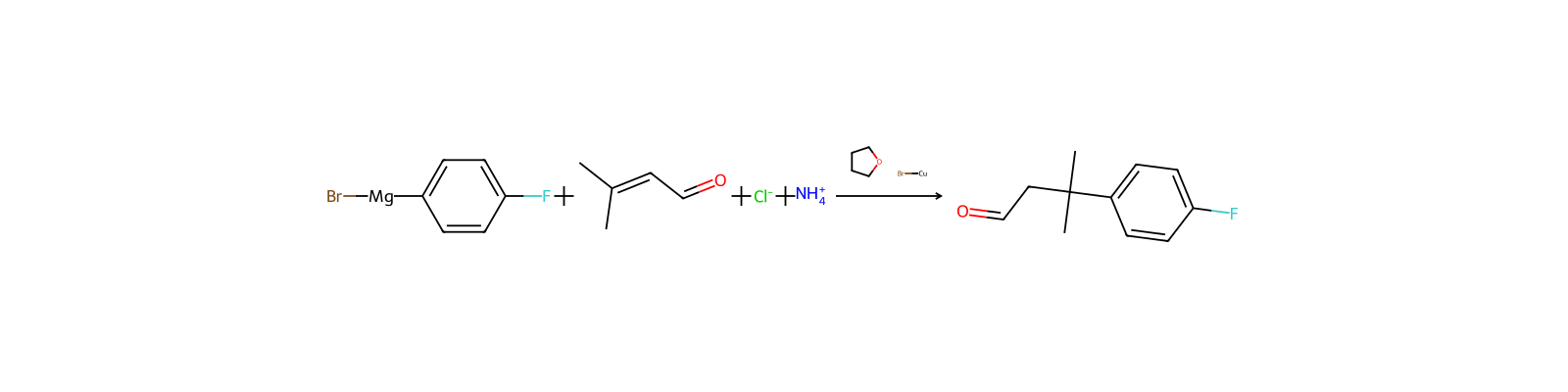
HRID 18710als Katalysatoruspto-grants-2010_06
Reaktionsgleichung von HRID 23268
HRID 23268als Katalysatoruspto-grants-2005_02
Reaktionsgleichung von HRID 41853
HRID 41853als Katalysatoruspto-grants-2013_09
Reaktionsgleichung von HRID 47550
HRID 47550als Katalysatoruspto-grants-2004_03
Reaktionsgleichung von HRID 48110
HRID 48110als Katalysatoruspto-grants-2004_03
Reaktionsgleichung von HRID 49849
HRID 49849als Katalysatoruspto-grants-2004_03
Reaktionsgleichung von HRID 53274
HRID 53274als Katalysatoruspto-grants-1997_04
Reaktionsgleichung von HRID 54256
HRID 54256als Katalysatoruspto-grants-1997_04
Seite 1 von 455

Notizen zur Verbindung

Wird geladen…

Auf dieser SeiteGrundinformationenÜberblickNamen und BezeichnerEigenschaftenSicherheit und RegulatorischesChemie und IndustrieZugehörige ReaktionenNotizen zur Verbindung
Weitere Aktionen
Neue NotizNeue ReaktionAnfrage stellen
Melting Point · 2 Einträge

939.2 °F (USCG, 1999)

504 °C

Vapor Pressure1 MM HG @ 572 °C
Food Contact Substances · 2 Einträge

FCS -> FDA Cumulative Estimated Daily Intake (CEDI)

FCS -> FDA Inventory of Food Contact Substances Listed in 21 CFR

Refractive IndexINDEX OF REFRACTION: 2.116
Physical Description · 2 Einträge

Copper (i) bromide appears as white powder or crystal. Turns green to dark blue on exposure to sunlight. Sinks and mixes slowly with water. (USCG, 1999)

White solid; Becomes green to dark-blue on sunlight exposure; Slightly soluble in cold water; Decomposed by hot water; [Merck Index] Powder; Isoluble in water; [Sigma-Aldrich MSDS]

Physikochemische Eigenschaften

Schmelzpunkt
504 °C · 504 °C(lit.)
Siedepunkt
1345 °C · 1345 °C
Dichte
4.71 g/mL · 4.71 g/mL at 25 °C(lit.)
Flammpunkt
1345 °C · 1345°C
storage temp.
Keep in dark place,Inert atmosphere,Room temperature
Löslichkeit
insoluble in acetone
Aggregatzustand
Powder
Farbe
Pale green to green
Wichte
4.98 · 4.98
Wasserlöslichkeit
Soluble in hydrogen bromide, hydrochloric acid, and ammonium hydroxide. Slightly soluble in water. Insoluble in acetone.
Spezifische Wärmekapazität
0.38 J/ · Cp(crystal): 0.38 J/(g·K), at 25℃
Merck
14 · 14,2659
Stabilität
Stable, but may be air or light sensitive. Incompatible with alkali metals, strong oxidizing agents.
InChI
1S/BrH.Cu/h1H;/q;+1/p-1
InChIKey
NKNDPYCGAZPOFS-UHFFFAOYSA-M
SMILES
[Cu]Br
Hardness, Mohs
2.5 · 2.5
CAS Datenbank
7787 · 7787-70-4(CAS DataBase Reference)
NIST chemische Informationen
Copper(I) bromide(7787-70-4)
EPA chemische Informationen
Copper bromide (CuBr) (7787-70-4)
Reactive GroupNon-Redox-Active Inorganic Compounds
Reactivity Profile · 1 Eintrag

COPPER (I) BROMIDE has weak oxidizing or reducing powers. Redox reactions can however still occur. The majority of compounds in this class are slightly soluble or insoluble in water. If soluble in water, then the solutions are usually neither strongly acidic nor strongly basic. These compounds are not water-reactive.

Air and Water ReactionsMixes slowly with water.
Toxic Combustion ProductsWHEN STRONGLY HEATED, THEY EMIT HIGHLY TOXIC FUMES OF /HYDROGEN BROMIDE/. /BROMIDES/
NIOSH RecommendationsRecommended Exposure Limit: 10 Hr Time-Weighted Avg: 1 mg/cu m. /Copper (dusts and mists)/
Clean Water Act RequirementsToxic pollutant designated pursuant to section 307(a)(1) of the Federal Water Pollution Control Act and is subject to effluent limitations. /Copper and cmpd/
Hazard Classes and CategoriesAcute Tox. 4 (75.3%)
State Drinking Water Guidelines(AZ) ARIZONA 1300 ug/l /Copper/

Sicherheit und Schutzausrüstung

First AidCall a physician.
Exposure Control and Personal Protection0.01 [mg/m3], respirable fraction (Cu, inorganic cmpnds)[German Research Foundation (DFG)]
Disposal Methods · 1 Eintrag

SRP: At the time of review, criteria for land treatment or burial (sanitary landfill) disposal practices are subject to significant revision. Prior to implementing land disposal of waste residue (including waste sludge), consult with environmental regulatory agencies for guidance on acceptable disposal practices.

Preventive Measures · 1 Eintrag

SRP: The scientific literature for the use of contact lenses in industry is conflicting. The benefit or detrimental effects of wearing contact lenses depend not only upon the substance, but also on factors including the form of the substance, characteristics and duration of the exposure, the uses of other eye protection equipment, and the hygiene of the lenses. However, there may be individual substances whose irritating or corrosive properties are such that the wearing of contact lenses would be harmful to the eye. In those specific cases, contact lenses should not be worn. In any event, the usual eye protection equipment should be worn even when contact lenses are in place.

Minimum Risk LevelAcute Oral: 0.01 mg/kg/day (Copper) (L134) Intermediate Oral: 0.01 mg/kg/day (Copper) (L134)
Threshold Limit Values (TLV) · 3 Einträge

1.0 [mg/m3], as Cu

8 hr Time Weighted Avg (TWA): 1 mg/cu m /Copper dusts and mists, as Cu/

Excursion Limit Recommendation: Excursions in worker exposure levels may exceed 3 times the TLV-TWA for no more than a total of 30 minutes during a work day, and under no circumstances should they exceed 5 times the TLV-TWA, provided that the TLV-TWA is not exceeded. /Copper dusts and mists, as Cu/

Permissible Exposure Limit (PEL)1.0 [mg/m3], as Cu
Personal Protective Equipment (PPE) · 2 Einträge

Rubber gloves, safety glasses, and laboratory coat. (USCG, 1999)

Rubber gloves, safety glasses, & lab coat.

Immediately Dangerous to Life or Health (IDLH)100.0 [mg/m3], as Cu

Toxikologische Informationen

Treatment · 1 Eintrag

EYES: irrigate opened eyes for several minutes under running water. INGESTION: do not induce vomiting. Rinse mouth with water (never give anything by mouth to an unconscious person). Seek immediate medical advice. SKIN: should be treated immediately by rinsing the affected parts in cold running water for at least 15 minutes, followed by thorough washing with soap and water. If necessary, the person should shower and change contaminated clothing and shoes, and then must seek medical attention. INHALATION: supply fresh air. If required provide artificial respiration.

Health Effects · 1 Eintrag

People must absorb small amounts of copper every day because copper is essential for good health, however, high levels of copper can be harmful. Very-high doses of copper can cause damage to your liver and kidneys, and can even cause death. Copper may induce allergic responses in sensitive individuals. Bromine vapour causes irritation and direct damage to the mucous membranes. Elemental bromine also burns the skin. The bromide ion is a central nervous system depressant and chronic exposure produces neuronal effects. This is called bromism and can result in central reactions reaching from somnolence to coma, cachexia, exicosis, loss of reflexes or pathologic reflexes, clonic seizures, tremor, ataxia, loss of neural sensitivity, paresis, papillar edema of the eyes, abnormal speech, cerebral edema, delirium, aggressiveness, and psychoses. (L625, L626, L627, L278, L279)

Adverse EffectsOccupational hepatotoxin - Secondary hepatotoxins: the potential for toxic effect in the occupational setting is based on cases of poisoning by human ingestion or animal experimentation.
Exposure RoutesOral (L277) ; inhalation (L277) ; dermal (L277)
Toxicity Summary · 1 Eintrag

Excess copper is sequestered within hepatocyte lysosomes, where it is complexed with metallothionein. Copper hepatotoxicity is believed to occur when the lysosomes become saturated and copper accumulates in the nucleus, causing nuclear damage. This damage is possibly a result of oxidative damage, including lipid peroxidation. Copper inhibits the sulfhydryl group enzymes such as glucose-6-phosphate 1-dehydrogenase, glutathione reductase, and paraoxonases, which protect the cell from free oxygen radicals. It also influences gene expression and is a co-factor for oxidative enzymes such as cytochrome C oxidase and lysyl oxidase. In addition, the oxidative stress induced by copper is thought to activate acid sphingomyelinase, which lead to the production of ceramide, an apoptotic signal, as well as cause hemolytic anemia. Copper-induced emesis results from stimulation of the vagus nerve. Bromine is a powerful oxidizing agent and is able to release oxygen free radicals from the water in mucous membranes. These free radicals are also potent oxidizers and produce tissue damage. In additon, the formation of hydrobromic and bromic acids will result in secondary irritation. The bromide ion is also known to affect the central nervous system, causing bromism. This is believed to be a result of bromide ions substituting for chloride ions in the in actions of neurotransmitters and transport systems, thus affecting numerous synaptic processes. (L626, L627, A543, L277, T49, A174, L280)

Signs and Symptoms · 1 Eintrag

Breathing high levels of copper can cause irritation of the nose and throat. Ingesting high levels of copper can cause nausea, vomiting, diarrhea, headache, dizziness, and respiratory difficulty. Bromine vapour causes irritation and direct damage to the mucous membranes. Symptoms include lacrimation, rhinorrhoea, eye irritation with mucous secretions from the oropharyngeal and upper airways, coughing, dyspnoea, choking, wheezing, epistaxis, and headache. The bromide ion is a central nervous system depressant producing ataxia, slurred speech, tremor, nausea, vomiting, lethargy, dizziness, visual disturbances, unsteadiness, headaches, impaired memory and concentration, disorientation and hallucinations. This is called bromism. (L626, L627, L278, L279)

Human Toxicity ExcerptsIrritating to skin & eyes. ... Irritation to upper respiratory tract.
Carcinogen ClassificationNo indication of carcinogenicity to humans (not listed by IARC).
Antidote and Emergency Treatment · 2 Einträge

Basic treatment: Establish a patent airway. Suction if necessary. Watch for signs of respiratory insufficiency and assist ventilations if necessary. Administer oxygen by nonrebreather mask at 10 to 15 L/min. Monitor for shock and treat if necessary ... . For eye contamination, flush eyes immediately with water. Irrigate each eye continuously with normal saline during transport ... . Do not use emetics. For ingestion, rinse mouth and administer 5 ml/kg up to 200 ml of water for dilution if the patient can swallow, has a strong gag reflex, and does not drool. Administer activated charcoal ... . /Copper and related compounds/

Advanced treatment: Consider orotracheal or nasotracheal intubation for airway control in the patient who is unconscious. Start an IV with lactated Ringer's /SRP: "To keep open", minimal flow rate/. Watch for signs of fluid overload. For hypotension with signs of hypovolemia, administer fluid cautiously. Consider vasopressors if hypotensive with a normal fluid volume. Watch for signs of fluid overload ... . Use proparacaine, hydrochloride to assist eye irrigation ... . /Copper and related compounds/

Regulatorische Informationen

Clean Water Act RequirementsToxic pollutant designated pursuant to section 307(a)(1) of the Federal Water Pollution Control Act and is subject to effluent limitations. /Copper and cmpd/
State Drinking Water Guidelines(AZ) ARIZONA 1300 ug/l /Copper/
Federal Drinking Water StandardsEPA 1300 ug/l (Action Level) /Copper/
Federal Drinking Water GuidelinesEPA 1000 ug/l /Copper/

Sicherheitsdaten

F
8-10-23
wgk
3
tsca
TSCA listed
ridadr
3260
hs_code
28275900
risk_code
36/37/38-22
hazard_code
Xi
safety_code
22-24/25-26-37/39
hazard_class
8
packing_group
III
Speicherklasse
11 - Combustible Solids
Giftige Stoffe Daten
7787-70-4(Hazardous Substances Data)
Hazard Classifications
Acute Tox. 4 DermalAcute Tox. 4 OralAquatic Acute 1Aquatic Chronic 1Eye Dam. 1Skin Irrit. 2
General Manufacturing Information
Copper bromide (CuBr): ACTIVE

Anwendungen

VerwendenAs catalyst for organic reactions.

Darstellung · 1 Eintrag

synthetischeIt is prepared pyrometallurgically with copper metal and elemental bromine in a process similar to that for copper(I) chloride. It can also be produced by the reduction of copper(II) sulfate solutions in the presence of sodium bromide using metallic copper or sulfite as the reducing agent. Copper(I) bromide is used as a polymerization catalyst in organic reactions.

Vor- und nachgelagerte Produkte

Vorgelagerte Rohstoffe

KaliumbromidKupfersulfat

Nachgelagerte Produkte

4-Chloro-2-fluorophenylboronic acid4-Bromo-2-methylbenzonitrile2-Methoxy-6-methylbenzoic acid3-Brom-α,α,α-trifluortoluol2,5-Dibromonicotinaldehyde2,3-Dibromopyridine6-Bromoindole-3-carboxaldehyde2-Bromchlorbenzol2-Bromo-1,3-benzothiazole1-(2,4-Dichloro-5-fluoro-3-methoxyphenyl)ethanoneEthyl-3-furoat4,4-Dimethylpentan-2-on2-Methoxyfuran7-Chloro-1-cyclopropyl-6-fluoro-1,4-dihydro-8-methoxy-4-oxoquinoline-3-carboxylic acid5-Hydroxy-2-methyl-1,4-naphthochinon2,6-Dimethylbenzyl alcohol1-Brom-2-nitrobenzolN,N,N',N'-Tetramethylbenzidin2,4-Dichloro-5-fluoro-3-methoxybenzoic acidTetrahydro-2-furylacetatN-(2-Thiophenecarbomyl)pyridinium bromide2-Bromo-5-methylbenzoic acid5-Brom-1,2,3-trimethoxybenzol2,4-Dichloro-5-fluoro-3-methoxybenzoyl chloride4-Bromtoluol1,2-Dibrombenzol2-Bromo-5-fomylthiazole4-Bromo-2,3,5,6-tetrafluoropyridine5-Bromo-1,3-dimethyl-1H-pyrazole3-Morpholinophenylboronic acid pinacol esterFuran-3-methanol3-Carboxy-4-chlorobenzeneboronic acid7-bromoindoline4-Hex-1-ynylbenzaldehyde1-[2-Hydroxy-2(2-thienyl)ethyl]pyridinium bromide3-Methylcyclohexanon4-Brom-1,2-difluorbenzol3-Bromo-1,5-dimethyl-1H-pyrazole3-Bromo-2,6-dichloro-5-fluoro-1-methoxybenzene3-Bromphenol