StartseiteMCPWorkbenchSkills
StartseiteWorkbenchBenachrichtigungenMein Bereich
llms.txt · MCP-AnleitungDatenschutz · Nutzungsbedingungen · Supportv1.8.0
  1. Startseite
  2. /Verbindung

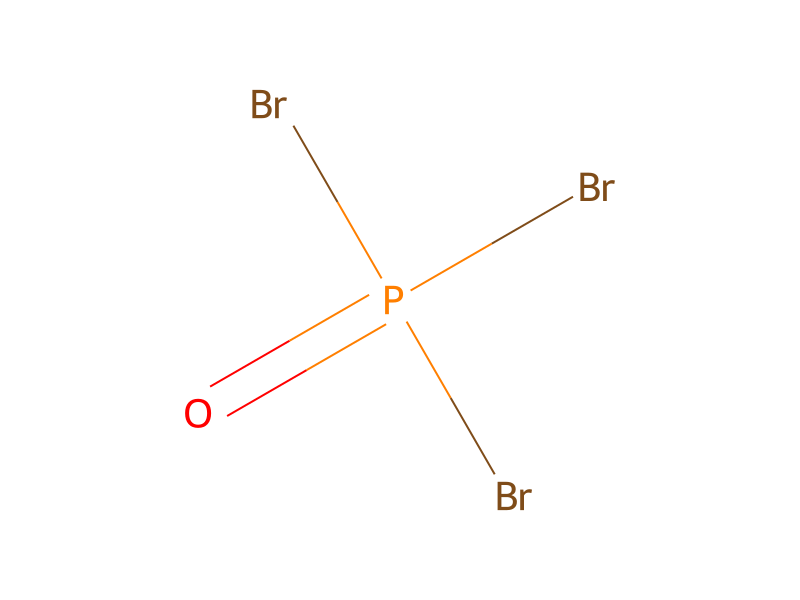
Phosphoryltribromid

Phosphorus oxybromide
HCID 24613
Neue NotizNeue ReaktionAnfrage stellen
Druckvorschau
GrundinformationenÜberblickNamen und BezeichnerEigenschaftenSicherheit und RegulatorischesChemie und IndustrieZugehörige ReaktionenNotizen zur Verbindung
TeilstruktursucheÄhnliche Strukturen suchen

Grundinformationen

CAS
7789-59-5
Standard-SMILES
O=P(Br)(Br)Br
InChIKey
UXCDUFKZSUBXGM-UHFFFAOYSA-N
Summenformel
Br3OP
Durchschnittliche Molmasse
286,69 g/mol
Monoisotopische Masse
283,72369

Überblick

Phosphorus oxybromide appears as a colorless crystalline solid or liquid if heated above 133 °F with a pungent odor. It is commonly heated and shipped in a molten state. Soluble in water, but, decomposed by water to hydrobromic and phosphoric acid with evolution of heat. Reacts with organic materials to cause fire. Evolves highly toxic and corrosive gases when exposed to fire. Corrosive to metals and tissue. Used to make other chemicals.

Namen und Bezeichner

Bevorzugter Name
Phosphorus oxybromide
IUPAC
Phosphoric tribromide
Lokaler Name
Phosphoryltribromid
Englischer Name
Phosphorus oxybromide
Summenformel
Br3OP
Molmasse
286.69

Namen und Synonyme

PHOSPHORUS OXYBROMIDE7789-59-5Phosphoric tribromidePhosphoryl bromidePhosphoryl tribromideTribromophosphorus oxidePhosphorus (V) oxybromideUN1939UN2576H98H8Y87QQHSDB 1166PHOSPHONYL TRIBROMIDE
Weitere Namen anzeigen
POBr3phosphorus(v) oxybromidePHOSPHOROUS OXYBROMIDEphosphoryltribromidetribromophosphorusoxideAURORA KA-1088Formylmelphalan
EINECS 232-177-7UN2576 (molten)PHOSPHORUS BROMIDE OXIDE (PBR3O)PHOSPHORUS OXYTRIBROMIDEDTXSID2064868PHOSPHORUS OXYBROMIDE [MI]PHOSPHORUS OXYBROMIDE, SOLIDUN-1939

Datenbank-Bezeichner

CAS
7789-59-5
PubChem CID
24613
DTXSID
DTXSID2064868
UNII
H98H8Y87QQ

Eigenschaften

Berechnete Struktureigenschaften

XLogP
2,2
Polarare Oberfläche (TPSA)
17,1 Ų
H-Brücken-Donoren
0
H-Brücken-Akzeptoren
1
Frei drehbare Bindungen
0
Schwere Atome
5
Formalladung
0
Komplexität
53

Experimentelle und physikochemische Eigenschaften

Chemical Classes · 2 Einträge

Other Classes -> Halogens, Inorganic Compounds

Corrosives

SpringerMaterials PropertiesGibbs energy
Density · 2 Einträge

greater than 1 (NOAA, 2007)

2.822

Color/Form · 2 Einträge

COLORLESS CRYSTALS

THIN PLATES, FAINT ORANGE TINT

SolubilitySOL IN ETHER, BENZENE, CHLOROFORM, CARBON DISULFIDE, CONCENTRATED SULFURIC ACID
Boiling PointAT 758 MM HG IT BOILS AT 193 °C WITH DECOMPOSITION
DecompositionWHEN HEATED TO DECOMP, IT EMITS HIGHLY TOXIC FUMES OF BROMIDES & PO(X).
Melting Point · 2 Einträge

133 °F (NOAA, 2007)

56 °C (IN HOT WATER)

Physical Description · 2 Einträge

Sicherheit und Regulatorisches

Sicherheitsangaben dienen nur zur Orientierung und ersetzen weder das Sicherheitsdatenblatt (SDB) des Lieferanten noch geltende Vorschriften oder eine fachliche Bewertung.

GHS-Klassifizierung

GHS Classification · 4 Einträge

Danger

H290 (13%): May be corrosive to metals [Warning Corrosive to Metals]

P234, P260, P261, P264, P271, P280, P301+P330+P331, P302+P361+P354, P304+P340, P305+P354+P338, P316, P319, P321, P363, P390, P403+P233, P405, P406, and P501 (click each P-code to see the statement)

Aggregated GHS information provided per 69 reports by companies from 8 notifications to the ECHA C&L Inventory. Each notification may be associated with multiple companies.

Gefahrenhinweise

Regulatory Information · 4 Einträge

Chemical: Phosphoryl bromide

REACH registered substance: Phosphoryl tribromide (EC: 232-177-7)

Phosphoryl bromide: Does not have an individual approval but may be used under an appropriate group standard

The New Jersey Worker and Community Right to Know Act requires public and private employers to provide information about hazardous substances at their workplaces. (N.J.S.A. 34:5A-1 et. seq.)

DOT LabelCorrosive
Fire Hazards · 3 Einträge

Excerpt from ERG Guide 137 [Substances - Water-Reactive - Corrosive]:

· EXCEPT FOR ACETIC ANHYDRIDE (UN1715), THAT IS FLAMMABLE, some of these materials may burn, but none ignite readily.

· EXCEPT FOR ACETIC ANHYDRIDE (UN1715), THAT IS FLAMMABLE, some of these materials may burn, but none ignite readily.

Health Hazards · 3 Einträge

Excerpt from ERG Guide 137 [Substances - Water-Reactive - Corrosive]:

· CORROSIVE and/or TOXIC; inhalation, ingestion or contact (skin, eyes) with vapors, dusts or substance may cause severe injury, burns or death.

· CORROSIVE and/or TOXIC; inhalation, ingestion or contact (skin, eyes) with vapors, dusts or substance may cause severe injury, burns or death.

Chemie und Industrie

Verwendung und Herstellung

Uses · 2 Einträge

Used as chemical intermediate; [Hawley]

PRINCIPALLY USED AS CHEM INTERMEDIATE

U.S. Exports · 2 Einträge

(1972) No Data

(1975) No Data

U.S. Imports · 2 Einträge

(1972) No Data

(1975) No Data

U.S. Production · 2 Einträge

(1972) No Data

(1975) No Data

Methods of Manufacturing · 2 Einträge

REACTION OF PHOSPHORUS PENTABROMIDE & PHOSPHORUS PENTOXIDE

REACTION OF PHOSPHORUS PENTABROMIDE AND PHOSPHORUS PENTOXIDE: HONIGSCHMID, HIRSCHBOLD-WITTNER; Z ANORG ALLGEM CHEM 243: 355 (1940); JOHNSON, NUNN; J AM CHEM SOC 63: 141 (1941); BOOTH, SEEGMILLER; INORG SYN 2: 151 (1946).

General Manufacturing InformationPhosphoric tribromide: ACTIVE

Anwendungen

VerwendenPhosphorus(V) Oxybromide is a reagent used in the preparation of phosphoryl halide for N-protection of amino acids using group assisted purification (GAP). Phosphorus(V) Oxybromide is a brominating agent.

Vor- und nachgelagerte Produkte

Vorgelagerte Rohstoffe

BifenthrinHydrogenbromid

Nachgelagerte Produkte

2,4-Dibromothiazole2-Bromo-3-iodo-isonicotinic acid

Zugehörige Reaktionen

551
Reaktionsaufzeichnung erstellen
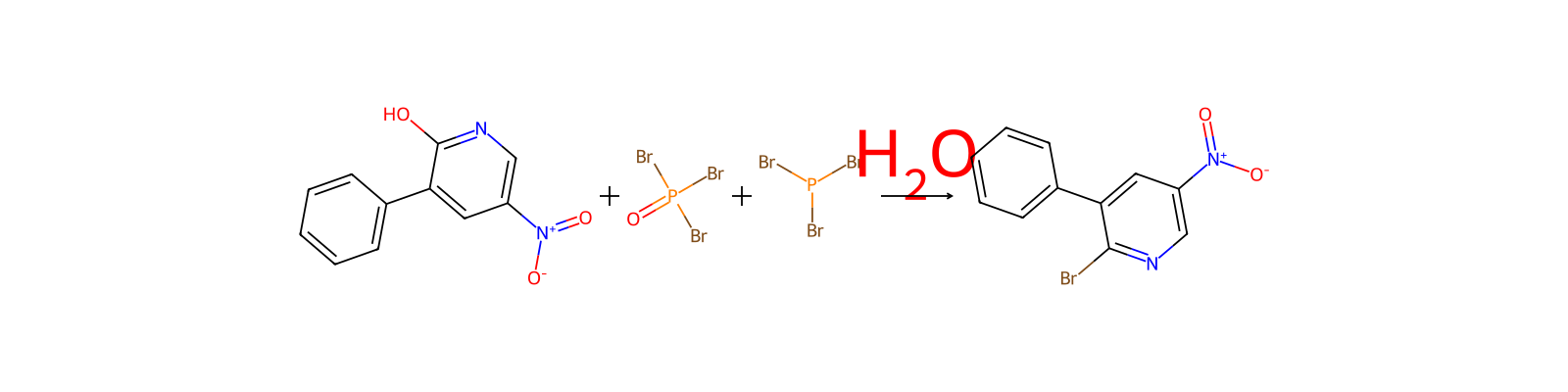
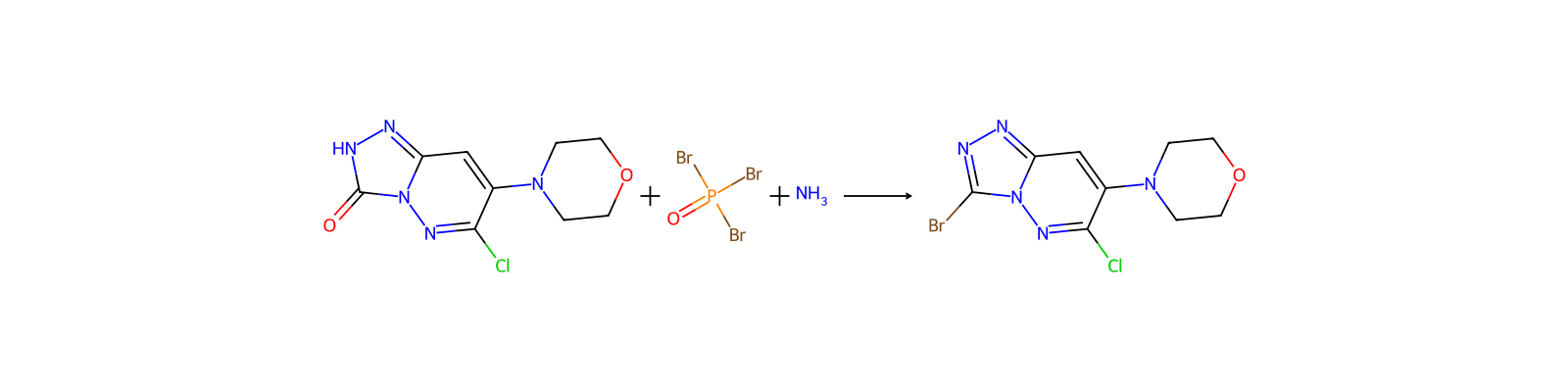
Reaktionsgleichung von HRID 41585
HRID 41585als Eduktuspto-grants-2013_09
Reaktionsgleichung von HRID 41603
HRID 41603als Eduktuspto-grants-2013_09
Reaktionsgleichung von HRID 41981
HRID 41981als Eduktuspto-grants-2013_09
Reaktionsgleichung von HRID 41994
HRID 41994als Eduktuspto-grants-2013_09
Reaktionsgleichung von HRID 47233
HRID 47233als Eduktuspto-grants-2004_03
Reaktionsgleichung von HRID 59958
HRID 59958als Eduktuspto-grants-2016_09
Reaktionsgleichung von HRID 65782
HRID 65782als Eduktuspto-grants-1978_12
Reaktionsgleichung von HRID 70814
HRID 70814als Eduktuspto-grants-2014_09
Seite 1 von 69

Notizen zur Verbindung

Wird geladen…

Auf dieser SeiteGrundinformationenÜberblickNamen und BezeichnerEigenschaftenSicherheit und RegulatorischesChemie und IndustrieZugehörige ReaktionenNotizen zur Verbindung
Weitere Aktionen
Neue NotizNeue ReaktionAnfrage stellen
EC Number
232-177-7
Nikkaji
J95.146C

Phosphorus oxybromide appears as a colorless crystalline solid or liquid if heated above 133 °F with a pungent odor. It is commonly heated and shipped in a molten state. Soluble in water, but, decomposed by water to hydrobromic and phosphoric acid with evolution of heat. Reacts with organic materials to cause fire. Evolves highly toxic and corrosive gases when exposed to fire. Corrosive to metals and tissue. Used to make other chemicals.

Colorless solid; [Hawley] Light brown solid; [MSDSonline]

Other Experimental Properties · 2 Einträge

SLOWLY HYDROLYZES IN WATER FORMING PHOSPHORIC ACID & HYDROGEN BROMIDE; AT 758 MM HG IT BOILS AT 193 °C WITH DECOMPOSITION

DECOMPOSES IN COLD WATER

Physikochemische Eigenschaften

Schmelzpunkt
56 °C · 56 °C(lit.)
Siedepunkt
192 °C · 192 °C(lit.)
Dichte
2.82 g/mL · 2.82 g/mL at 25 °C(lit.)
Flammpunkt
189 °C · 189°C
storage temp.
30 °C · Store below +30°C.
Löslichkeit
2 O; · reacts with H2O; soluble in benzene, ethyl ether,chloroform
Aggregatzustand
Lump
Wichte
2.822 · 2.822
Farbe
White to yellow
Wasserlöslichkeit
decomposes
Spezifische Wärmekapazität
0.31 J/ · Cp(gas): 0.31 J/(g·K), at 25℃
Merck
14 · 14,7348
InChI
1S/Br3OP/c1-5(2,3)4
InChIKey
UXCDUFKZSUBXGM-UHFFFAOYSA-N
SMILES
BrP(Br)(Br)=O
CAS Datenbank
7789 · 7789-59-5(CAS DataBase Reference)
NIST chemische Informationen
Phosphorus tribromide oxide(7789-59-5)
EPA chemische Informationen
Phosphoric tribromide (7789-59-5)
Hazards Summary · 1 Eintrag

Highly reactive with organic materials; A strong skin and tissue irritant; [Hawley] May cause fire on contact with organic substances; Corrosive to tissue; [CAMEO] Corrosive to skin and eyes; [eChemPortal: ERMA] Reacts violently with water; A corrosive substance that can cause injury to the skin, eyes, and respiratory tract; Inhalation may cause chemical pneumonitis; [MSDSonline]

DOT ID and Guide · 2 Einträge

1939 137

2576 137

Reactive GroupAcyl Halides, Sulfonyl Halides, and Chloroformates
Reactivity AlertsWater-Reactive
Reactivity Profile · 1 Eintrag

PHOSPHORUS OXYBROMIDE is incompatible with water, strong oxidizing agents, alcohols, bases, including amines. May react vigorously or explosively if mixed with diisopropyl ether or other ethers in the presence of trace amounts of metal salts [J. Haz. Mat., 1981, 4, 291].

DOT Emergency Guidelines · 5 Einträge

/GUIDE 137: SUBSTANCES - WATER-REACTIVE - CORROSIVE/ Health: CORROSIVE and/or TOXIC; inhalation, ingestion or contact (skin, eyes) with vapors, dusts or substance may cause severe injury, burns, or death. Fire will produce irritating, corrosive and/or toxic gases. Reaction with water may generate much heat which will increase the concentration of fumes in the air. Contact with molten substance may cause severe burns to skin and eyes. Runoff from fire control or dilution water may cause pollution. /Phosphorus oxybromide; Phosphorus oxybromide, molten; Phosphorus oxybromide, solid/

/GUIDE 137: SUBSTANCES - WATER-REACTIVE - CORROSIVE/ Fire or Explosion: ... Some of these materials may burn, but none ignite readily. May ignite combustibles (wood, paper, oil, clothing, etc.). Substance will react with water (some violently), releasing corrosive and/or toxic gases. Flammable/toxic gases may accumulate in confined areas (basement, tanks, hopper/tank cars etc.). Contact with metals may evolve flammable hydrogen gas. Containers may explode when heated or if contaminated with water. Substance may be transported in a molten form. /Phosphorus oxybromide; Phosphorus oxybromide, molten; Phosphorus oxybromide, solid/

/GUIDE 137: SUBSTANCES - WATER-REACTIVE - CORROSIVE/ Public Safety: CALL Emergency Response Telephone Number ... . As an immediate precautionary measure, isolate spill or leak area in all directions for at least 50 meters (150 feet) for liquids and at least 25 meters (75) feet for solids. Keep unauthorized personnel away. Stay upwind. Keep out of low areas. Ventilate enclosed areas. /Phosphorus oxybromide; Phosphorus oxybromide, molten; Phosphorus oxybromide, solid/

/GUIDE 137: SUBSTANCES - WATER-REACTIVE - CORROSIVE/ Protective Clothing: Wear positive pressure self-contained breathing apparatus (SCBA). Wear chemical protective clothing that is specifically recommended by the manufacturer. It may provide little or no thermal protection. Structural firefighters' protective clothing provides limited protection in fire situations ONLY; it is not effective in spill situations where direct contact with the substance is possible. /Phosphorus oxybromide; Phosphorus oxybromide, molten; Phosphorus oxybromide, solid/

For more DOT Emergency Guidelines (Complete) data for PHOSPHORUS OXYBROMIDE (8 total), please visit the HSDB record page.

DOT Hazard Classification · 6 Einträge

Phosphorus oxybromide

UN1939

Class 8 Corrosive material (49 eCFR § 173.136)

PG II: the degree of danger presented by the material is medium

Phosphorus oxybromide, molten

UN2576

Air and Water ReactionsReacts slowly and exothermically with water to form phosphoric acid and hydrobromic acid [Merck, 11th ed. 1989]. Decomposes exothermically in water to form toxic fumes of hydrobromic and phosphoric acids [Lewis].

Sicherheit und Schutzausrüstung

Fire FightingExcerpt from ERG Guide 137 [Substances - Water-Reactive - Corrosive]:
Accidental Release Measures · 4 Einträge

· CALL 911. Then call emergency response telephone number on shipping paper. If shipping paper not available or no answer, refer to appropriate telephone number listed on the inside back cover.

· Do not touch damaged containers or spilled material unless wearing appropriate protective clothing.

· CALL 911. Then call emergency response telephone number on shipping paper. If shipping paper not available or no answer, refer to appropriate telephone number listed on the inside back cover.

· Do not touch damaged containers or spilled material unless wearing appropriate protective clothing.

First Aid · 3 Einträge

Excerpt from ERG Guide 137 [Substances - Water-Reactive - Corrosive]:

General First Aid:

General First Aid:

Exposure Control and Personal Protection · 2 Einträge

· Wear positive pressure self-contained breathing apparatus (SCBA).

· Wear positive pressure self-contained breathing apparatus (SCBA).

Storage Conditions · 2 Einträge

...SHOULD BE STORED IN A COOL, WELL-VENTILATED PLACE, OUT OF DIRECT RAYS OF SUN, AWAY FROM AREAS OF HIGH FIRE HAZARD, &...PERIODICALLY INSPECTED & MONITORED. INCOMPATIBLE MATERIALS SHOULD BE ISOLATED...

STORE IN SEALED GLASS AMPULES.

Nonfire Spill ResponseExcerpt from ERG Guide 137 [Substances - Water-Reactive - Corrosive]:
Preventive MeasuresTHE BASIC VENTILATION METHODS ARE LOCAL EXHAUST AND DILUTION OR GENERAL VENTILATION.
Isolation and Evacuation · 3 Einträge

Excerpt from ERG Guide 137 [Substances - Water-Reactive - Corrosive]:

Immediate precautionary measure

Immediate precautionary measure

Personal Protective Equipment (PPE)Excerpt from ERG Guide 137 [Substances - Water-Reactive - Corrosive]:
Emergency Response Planning Guidelines · 2 Einträge

· When material is not involved in fire, do not use water on material itself.

· When material is not involved in fire, do not use water on material itself.

Toxikologische Informationen

Adverse EffectsDermatotoxin - Skin burns.
Human Toxicity Excerpts · 2 Einträge

SYMPTOMATOLOGY (...INGESTION OR SKIN CONTACT): 1. CORROSION OF MUCOUS MEMBRANES OF MOUTH, THROAT...ESOPHAGUS, WITH...PAIN & DYSPHAGIA. NECROTIC AREAS...GRAYISH WHITE BUT SOON...BLACKISH DISCOLORATION (YELLOW IN CASE OF NITRIC ACID) & SOMETIMES SHRUNK OR WRINKLED TEXTURE. 2. EPIGASTRIC PAIN...MAY BE ASSOC WITH NAUSEA & VOMITING...INTENSE THIRST. 3. CIRCULATORY COLLAPSE...CLAMMY SKIN, WEAK & RAPID PULSE, SHALLOW RESP...SCANTY URINE. ...SHOCK IS OFTEN...CAUSE OF DEATH. 4. ASPHYXIAL DEATH DUE TO GLOTTIC EDEMA. /ACIDS/

SYMPTOMATOLOGY.../INGESTION/: 5. ULCERATION OF ALL MEMBRANES & TISSUES WITH WHICH ACID COMES IN CONTACT. ULCERATED AREAS OFTEN PERFORATE, LEADING TO MEDIASTINITIS & PERITONITIS. 6. LATE ESOPHAGEAL, GASTRIC & PYLORIC STRUCTURES & STENOSIS...MAY REQUIRE...SURGICAL REPAIR, SHOULD BE ANTICIPATED. PERMANENT SCARS MAY...APPEAR IN CORNEA, SKIN & OROPHARYNX. 7. UNCORRECTED CIRCULATORY COLLAPSE OF SEVERAL HR...MAY LEAD TO RENAL FAILURE & ISCHEMIC LESIONS IN LIVER & HEART. /ACIDS/

Sicherheitsdaten

F
10-21
wgk
3
tsca
TSCA listed
ridadr
UN 2576 8/PG II (PHOSPHORUS OXYBROMIDE, MOLTEN)
hs_code
28129090
risk_code
14-34-37
hazard_code
C
hazard_note
Corrosive
safety_code
26-36/37/39-43-45-7/8-Neverusewater.
hazard_class
8
packing_group
II
Speicherklasse
8A - Combustible corrosive hazardous materials
Giftige Stoffe Daten
7789-59-5(Hazardous Substances Data)
Hazard Classifications
Eye Dam. 1Skin Corr. 1B
2-Bromo-4-nitroimidazole
Pyridazine, 3-bromo- (9CI)
3,3,3-Trifluoropropionic acid
6-Chloro-2-(trifluoromethyl)quinoline-4-carboxylic acid
3-Amino-2-bromopyridine
4-Bromopyrimidine
4-Bromo-6-fluoro-2-(trifluoromethyl)quinoline
2-Bromo-pyridin-3-ylamine HCl
2-(Trifluoromethyl)quinoline-4-carboxylic acid
2,4,6-Tribromopyrimidine
4-Bromo-pyran-2-one
4-Bromoquinolin-2(1H)-one
N-(2-Bromo-3-pyridinyl)acetamide
5-Dimethylamino-thiophene-2-carbaldehyde
Thiazole-5-carboxaldehyde
2-Bromoquinoline
5-Acetamido-2-bromopyridine
2-Bromo-6-ethoxypyridine-4-carboxylic acid
2-(Trifluoromethyl)-5,7-dimethylquinoline-4-carboxylic acid
1-(3-Methoxypropyl)-piperazine
Methyl 5-bromopyrazine-2-carboxylate
2-Brom-5-nitropyridin
2-Bromo-3-nitropyridine
Thiazole-4-carboxaldehyde
2,4-Dibromopyrimidine
6-Brom-1H-purin
5-Chloro-2-(trifluoromethyl)quinoline-4-carboxylic acid
5-Bromthiophen-2-carbaldehyd
5-Amino-2-bromopyridine
4-bromo-2-(trifluoromethyl)quinoline
6-Fluoro-4-(trifluoromethyl)quinoline-2-carboxylic acid ,97%
2-Bromo-5-nitro-4-picoline
2-Trifluoromethylquinoline
6-Bromo-2,4-dimethoxypyrimidine
2-Bromoquinoxaline
2-(Trifluoromethyl)-5-methylquinoline-4-carboxylic acid
2-Chloro(bromo)pyrimidine
2,6-Bis(trifluoromethyl)-4-hydroxyquinoline