StartseiteMCPWorkbenchSkills
StartseiteWorkbenchBenachrichtigungenMein Bereich
llms.txt · MCP-AnleitungDatenschutz · Nutzungsbedingungen · Supportv1.8.0
  1. Startseite
  2. /Verbindung

Trichlorsilan

Trichlorosilane

HCID 24811
Neue NotizNeue ReaktionAnfrage stellen
Druckvorschau

Daten werden ergänzt – lade die Seite später neu, um den aktuellen Stand zu sehen

GrundinformationenNamen und BezeichnerEigenschaftenSicherheit und RegulatorischesChemie und IndustrieZugehörige ReaktionenNotizen zur Verbindung
TeilstruktursucheÄhnliche Strukturen suchen

Grundinformationen

CAS
10025-78-2
Standard-SMILES
Cl[SiH](Cl)Cl
InChIKey
ZDHXKXAHOVTTAH-UHFFFAOYSA-N
Summenformel
Cl3HSi
Durchschnittliche Molmasse
135,45 g/mol
Monoisotopische Masse
133,89131

Namen und Bezeichner

Bevorzugter Name
Trichlorosilane
IUPAC
trichlorosilane
Lokaler Name
Trichlorsilan
Englischer Name
Trichlorosilane
Summenformel
Cl3HSi
Molmasse
135.45

Namen und Synonyme

RefChem:53380233-042-5419-930-710025-78-2DTXSID4029301EC 233-042-5EINECS 233-042-5QZY2645L6VSilane A-19Silane, trichloro-Silici-chloroformeSiliciumchloroform
Weitere Namen anzeigen
hsicl3silicon chloroformorosiLTrichLsilanea-19SiHCl3(TCS)Trichorosilane
SilicochloroformSilicon chloride hydride (SiHCl3)TrichloorsilaanTRICHLOROMONOSILANETrichlorosilaneTrichlorsilanTriclorosilanoUNII-QZY2645L6V

Datenbank-Bezeichner

CAS
10025-78-2
PubChem CID
24811
DTXSID
DTXSID4029301
EC Number
233-042-5、419-930-7

Eigenschaften

Berechnete StruktureigenschaftenWird ergänzt

Polarare Oberfläche (TPSA)
0 Ų
H-Brücken-Donoren
0
H-Brücken-Akzeptoren
0
Frei drehbare Bindungen
0
Schwere Atome
4
Formalladung
0
Komplexität
8

Experimentelle und physikochemische Eigenschaften

OdorACRID ODOR
Density · 4 Einträge

1.344 at 68 °F (USCG, 1999) - Denser than water; will sink

1.3417 at 20 °C/4 °C; 1.3830 at 0 °C/4 °C

Relative density (water = 1): 1.34

1.331 @25 °C

Viscosity0.397 centipoise at 0 °C; 0.332 centipoise at 20 °C; 0.316 centipoise at 25 °C
Color/FormColorless liquid
Solubility · 3 Einträge

Sol in benzene, carbon disulfide, chloroform, carbon tetrachloride

Sol in ether, heptane, perchloroethylene

Solubility in water: reaction

CorrosivityCorrodes metal after reacting with moisture to form hydrochloric acid
Flash Point · 4 Einträge

greater than -58 °F (USCG, 1999)

[ERG 2016] -14 °C

7 °F (-14 °C) (Open cup)

-27 °C c.c.

Boiling Point · 4 Einträge

90 °F at 760 mmHg (USCG, 1999)

31.8 °C at 760 mm Hg, also reported as 36.5 °C /at 760 mm Hg/

Sicherheit und Regulatorisches

Sicherheitsangaben dienen nur zur Orientierung und ersetzen weder das Sicherheitsdatenblatt (SDB) des Lieferanten noch geltende Vorschriften oder eine fachliche Bewertung.

GHS-Klassifizierung

GHS Classification · 6 Einträge

Danger

H224: Extremely flammable liquid and vapor [Danger Flammable liquids];H260: In contact with water releases flammable gases which may ignite spontaneously [Danger Substances and mixtures which in contact with water, emit flammable gases];H302: Harmful if swallowed [Warning Acute toxicity, oral];H314: Causes severe skin burns and eye damage [Danger Skin corrosion/irritation];H318: Causes serious eye damage [Danger Serious eye damage/eye irritation];H331: Toxic if inhaled [Danger Acute toxicity, inhalation]

P210, P223, P231+P232, P233, P240, P241, P242, P243, P260, P261, P264, P264+P265, P270, P271, P280, P301+P317, P301+P330+P331, P302+P335+P334, P302+P361+P354, P303+P361+P353, P304+P340, P305+P354+P338, P316, P317, P321, P330, P363, P370+P378, P402+P404, P403+P233, P403+P235, P405, and P501 (click each P-code to see the statement)

Danger

Gefahrenhinweise

Hazards IdentificationWater-reactive material (WR)
Regulatory Information · 6 Einträge

Chemical: Silane, trichloro-

Silane, trichloro- is listed on the EPA's Chemical Data Reporting (CDR) system. Manufacturers and importers of Silane, trichloro- are required to report information about their production and use of this chemical to the EPA under the Toxic Substances Control Act (TSCA). (40 eCFR Part 711)

Status: Active Update: 25-11-2021 https://echa.europa.eu/registration-dossier/-/registered-dossier/15176;Status: Active Update: 22-08-2012 https://echa.europa.eu/registration-dossier/-/registered-dossier/1719;Status: Active Update: 25-11-2010 https://echa.europa.eu/registration-dossier/-/registered-dossier/1702

Status: Active Update: 15-12-2008 https://echa.europa.eu/registration-dossier/-/registered-dossier/8353

Trichlorosilane: HSNO Approval: HSR004738 Approved with controls

The New Jersey Worker and Community Right to Know Act requires public and private employers to provide information about hazardous substances at their workplaces. (N.J.S.A. 34:5A-1 et. seq.)

Chemie und Industrie

Pharmakologische Informationen

Metabolism/Metabolites... Chlorosilanes will be rapidly hydrolyzed upon contact with tissue fluids to release hydrochloric acid. /Chlorosilanes/
Absorption, Distribution and ExcretionThe substance can be absorbed into the body by inhalation of its vapor and by ingestion.

Verwendung und Herstellung

Uses · 6 Einträge

Used to make silicon for semiconductors; [HSDB] Used to make high-purity silicon and silane adhesion promoters, coupling agents, and silicon resins; [AIHA]

Semiconductor Manufacturing [Category: Industry];Toxic Gas from Spilling Chemical in Water [Category: Other]

In manufacture of transistors.

In organic synthesis

In the production of high purity silicon metal and as an intermediate for silane adhesion promoters, coupling agents silicon resin intermediates, and surface treatment.

The major application for trichlorosilane is as a raw material for producing high-purity polycrystalline silicon, which eventually becomes the polished silicon wafers used in semiconductor production.

U.S. Production · 4 Einträge

2023: 1,000,000,000 - <2,500,000,000 lb;2022: 1,000,000,000 - <2,500,000,000 lb;2021: 700,000,000 - <850,000,000 lb;2020: 550,000,000 - <700,000,000 lb

This chemical is listed as a High Production Volume (HPV) (65FR81686). Chemicals listed as HPV were produced in or imported into the U.S. in >1 million pounds in 1990 and/or 1994. The HPV list is based on the 1990 Inventory Update Rule. (IUR) (40 CFR part 710 subpart B; 51FR21438).

(1975) PROBABLY GREATER THAN 4.54X10+5 GRAMS

Production volumes for non-confidential chemicals reported under the Inventory Update Rule. [Table#2353]

Industry UsesIntermediate;Viscosity modifiers
Methods of Manufacturing · 3 Einträge

REACTION OF HYDROGEN CHLORIDE GAS PASSED THROUGH SILICON OR COPPER SILICON POWDER IN FLUIDIZED BED.

Zugehörige Reaktionen

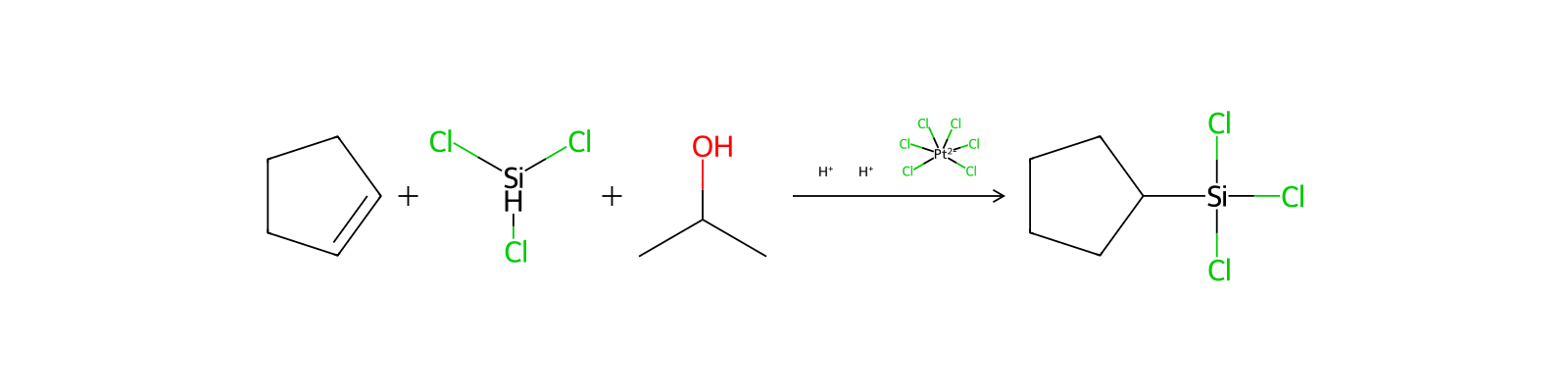
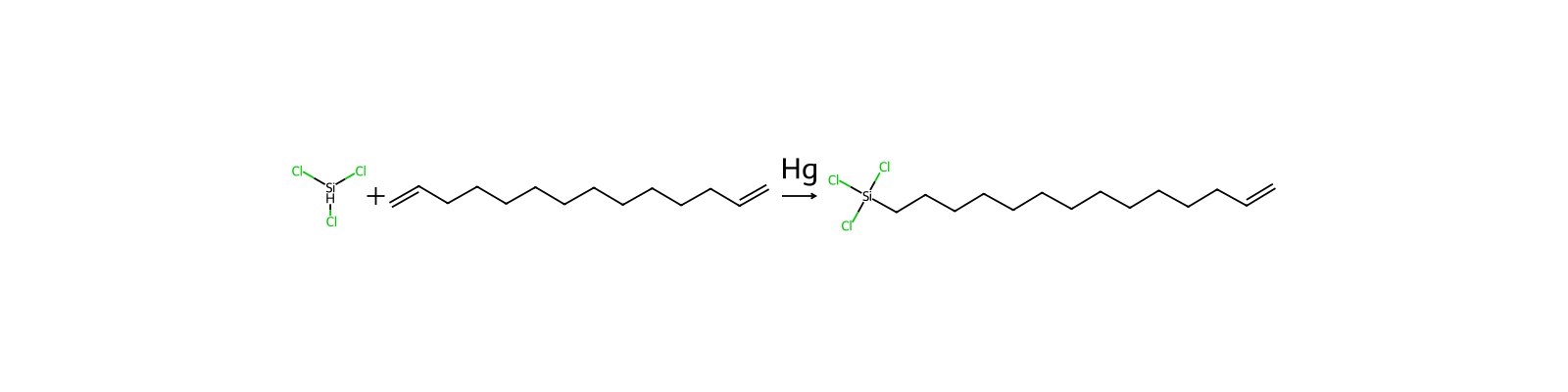
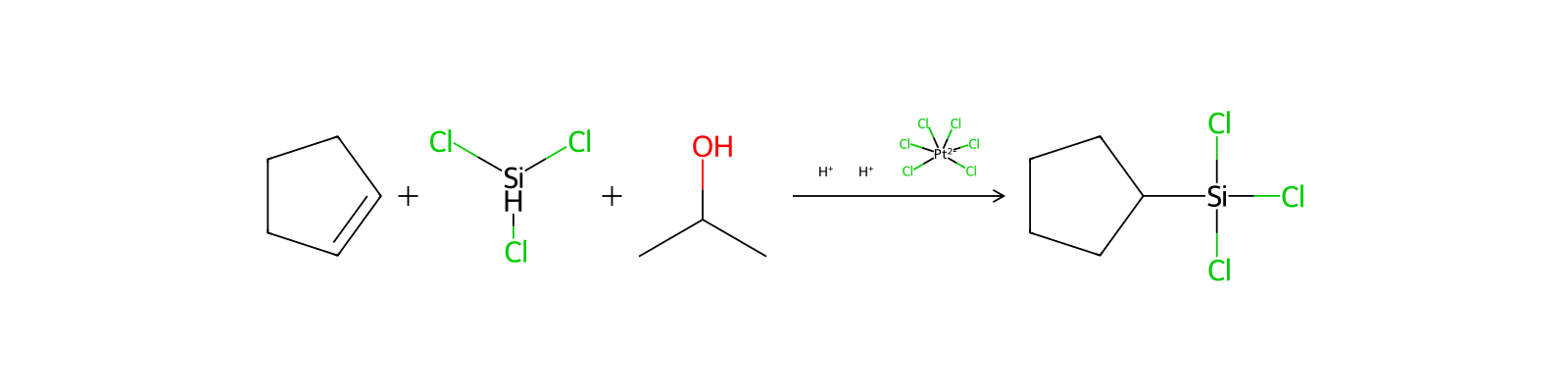
303
Reaktionsaufzeichnung erstellen
Reaktionsgleichung von HRID 6444
HRID 6444als Eduktuspto-grants-1993_09
Reaktionsgleichung von HRID 6447
HRID 6447als Eduktuspto-grants-1993_09
Reaktionsgleichung von HRID 6449
HRID 6449als Eduktuspto-grants-1993_09
Reaktionsgleichung von HRID 6451
HRID 6451als Eduktuspto-grants-1993_09
Reaktionsgleichung von HRID 26631
HRID 26631als Eduktuspto-grants-1979_04
Reaktionsgleichung von HRID 26632
HRID 26632als Eduktuspto-grants-1979_04
Reaktionsgleichung von HRID 27034
HRID 27034als Eduktuspto-grants-1980_09
Reaktionsgleichung von HRID 27035
HRID 27035als Eduktuspto-grants-1980_09
Seite 1 von 38

Notizen zur Verbindung

Wird geladen…

Auf dieser SeiteGrundinformationenNamen und BezeichnerEigenschaftenSicherheit und RegulatorischesChemie und IndustrieZugehörige ReaktionenNotizen zur Verbindung
Weitere Aktionen
Neue NotizNeue ReaktionAnfrage stellen

31.8 °C

33 °C @760 [mm Hg]

DecompositionWhen heated to decomposition it emits toxic fumes of /hydrogen chloride/.
Melting Point · 4 Einträge

-197 °F (USCG, 1999)

-126.5 °C

-126.5 °C

-128.2 °C

Vapor Density · 2 Einträge

4.67 (AIR= 1)

Relative vapor density (air = 1): 4.7

Vapor Pressure · 3 Einträge

594.0 [mmHg]

Vapor pressure, kPa at 20 °C: 65.8

750 [mm Hg] @31.6 °C

Physikochemische Eigenschaften

Schmelzpunkt
-127 °C · -127 °C
Siedepunkt
32 · 32-34 °C(lit.)
Dichte
1.342 g/mL · 1.342 g/mL at 25 °C(lit.)
Dampfdichte
1 · 1 (vs air)
Dampfdruck
9.75 psi · 9.75 psi ( 20 °C)
Brechungsindex
1.4 · 1.4-1.402
Flammpunkt
7 °F · 7 °F
storage temp.
Refrigerator
Löslichkeit
Soluble in benzene, ether, heptane, chloroform and carbon tetrachloride.
Aggregatzustand
Liquid
Wichte
1.342 · 1.342
Farbe
Colorless
Geruch (Odor)
Sharp, choking, like hydrochloric acid.
Explosionsgrenze
70 % · 70%
Wasserlöslichkeit
decomposes
Spezifische Wärmekapazität
0.56 J/ · Cp(gas): 0.56 J/(g·K), at 25℃
Merck
14 · 14,9646
Stabilität
Stable, but extremely flammable. Pyrophoric - spontaneously ignites in air. Explosion hazard in air - note wide explosion limits. Reacts violently with water. Incompatible with moisture, acids, bases, strong oxidizing agents, alcohols, amines.
InChIKey
ZDHXKXAHOVTTAH-UHFFFAOYSA-N
CAS Datenbank
10025 · 10025-78-2(CAS DataBase Reference)
NIST chemische Informationen
Trichlorosilane(10025-78-2)
EPA chemische Informationen
Trichlorosilane (10025-78-2)
DOT LabelDangerous When Wet Flammable Liquid Corrosive
Fire Hazards · 3 Einträge

Special Hazards of Combustion Products: Toxic hydrogen chloride and phosgene gases may form in fires.;Behavior in Fire: Difficult to extinguish; re-ignition may occur. Vapor is heavier than air and may travel a considerable distance to a source of ignition and flash back. (USCG, 1999)

· Produce flammable and toxic gases on contact with water.;· May ignite on contact with water or moist air.;· Some react vigorously or explosively on contact with water.;· May be ignited by heat, sparks or flames.;· May re-ignite after fire is extinguished.;· Some are transported in highly flammable liquids.;· Containers may explode when heated.;· Runoff may create fire or explosion hazard.

Extremely flammable. Gives off irritating or toxic fumes (or gases) in a fire. Vapour/air mixtures are explosive.

Fire Potential · 4 Einträge

A very dangerous fire hazard when exposed to heat, flame, or by chemical reaction.

... Trichlorosilane is highly flammable /Trichlorosilane/

The pure material is not impact-ignitable in absence of electrostatic charges, but technical material (possibly containing dichlorosilane) is.

Flammable liquid ... Low ignition energy ...

Health Hazards · 2 Einträge

Inhalation causes severe irritation of respiratory system. Liquid causes severe burns of eyes and skin. Ingestion causes severe burns of mouth and stomach. (USCG, 1999)

· Highly toxic: contact with water produces toxic gas, may be fatal if inhaled.;· Inhalation or contact with vapors, substance or decomposition products may cause severe injury or death.;· May produce corrosive solutions on contact with water.;· Fire will produce irritating, corrosive and/or toxic gases.;· Runoff from fire control or dilution water may cause environmental contamination.

Hazards Summary · 1 Eintrag

Reacts with water to release HCl; Corrosive to skin and can produce pneumonitis after inhalation of high concentrations; May ignite on exposure to air; [CSH, p. 418] Highly corrosive to skin; [Quick CPC] A lachrymator; [HSDB] See the Process, Toxic Gas from Spilling Chemical in Water.

DOT ID and Guide1295 139
Reactive GroupChlorosilanes
EC ClassificationSymbol: F+, C; R: 12-14-17-20/22-29-35; S: (2)-7/9-16-26-36/37/39-43-45
UN ClassificationUN Hazard Class: 4.3; UN Subsidiary Risks: 3 and 8; UN Pack Group: I
Special ReportsITC/USEPA; Information Review #223 (Draft) Chlorosilanes (1981)

Sicherheit und Schutzausrüstung

Fire Fighting · 2 Einträge

Excerpt from ERG Guide 139 [Substances - Water-Reactive (Emitting Flammable and Toxic Gases)]:;DO NOT USE WATER OR FOAM. (FOAM MAY BE USED FOR CHLOROSILANES, SEE BELOW).;SMALL FIRE: Dry chemical, soda ash, lime or sand.;LARGE FIRE: DRY sand, dry chemical, soda ash or lime or withdraw from area and let fire burn. FOR CHLOROSILANES, DO NOT USE WATER; use alcohol-resistant foam; DO NOT USE dry chemicals, soda ash or lime on chlorosilane fires (large or small) as they may release large quantities of hydrogen gas that may explode. If it can be done safely, move undamaged containers away from the area around the fire.;FIRE INVOLVING TANKS, RAIL TANK CARS OR HIGHWAY TANKS: Fight fire from maximum distance or use unmanned master stream devices or monitor nozzles. Cool containers with flooding quantities of water until well after fire is out. Do not get water inside containers. Withdraw immediately in case of rising sound from venting safety devices or discoloration of tank. ALWAYS stay away from tanks in direct contact with flames. (ERG, 2024)

NO water. Use AFFF, powder, carbon dioxide. In case of fire: keep drums, etc., cool by spraying with water. NO direct contact with water.

First Aid Measures · 4 Einträge

Fresh air, rest. Half-upright position. Artificial respiration may be needed. Refer for medical attention.

Remove contaminated clothes. Rinse skin with plenty of water or shower. Refer for medical attention .

First rinse with plenty of water for several minutes (remove contact lenses if easily possible), then refer for medical attention.

Rinse mouth. Do NOT induce vomiting. Give nothing to drink. Refer for medical attention .

Accidental Release Measures · 2 Einträge

· CALL 911. Then call emergency response telephone number on shipping paper. If shipping paper not available or no answer, refer to appropriate telephone number listed on the inside back cover.;· Keep unauthorized personnel away.;· Stay upwind, uphill and/or upstream.;· Ventilate closed spaces before entering, but only if properly trained and equipped.

· ELIMINATE all ignition sources (no smoking, flares, sparks or flames) from immediate area.;· Do not touch or walk through spilled material.;· Stop leak if you can do it without risk.;· DO NOT GET WATER on spilled substance or inside containers.;· Use water spray to reduce vapors or divert vapor cloud drift. Avoid allowing water runoff to contact spilled material.;· FOR CHLOROSILANES, use alcohol-resistant foam to reduce vapors.;Small Spill;· Cover with DRY earth, DRY sand or other non-combustible material followed with plastic sheet to minimize spreading or contact with rain.;· Dike for later disposal; do not apply water unless directed to do so.;Powder Spill;· Cover powder spill with plastic sheet or tarp to minimize spreading and keep powder dry.;· DO NOT CLEAN-UP OR DISPOSE OF, EXCEPT UNDER SUPERVISION OF A SPECIALIST.

First Aid · 2 Einträge

INHALATION: remove victim from exposure; if breathing is difficult or stopped, give artificial respiration; call physician.;EYES or SKIN: flush with plenty of water immediately for at least 15 min. and get medical attention.;INGESTION: do NOT induce vomiting; give large amount of water; get medical attention. (USCG, 1999)

General First Aid:;· Call 911 or emergency medical service.;· Ensure that medical personnel are aware of the material(s) involved, take precautions to protect themselves and avoid contamination.;· Move victim to fresh air if it can be done safely.;· Administer oxygen if breathing is difficult.;· If victim is not breathing:;-- DO NOT perform mouth-to-mouth resuscitation; the victim may have ingested or inhaled the substance.;-- If equipped and pulse detected, wash face and mouth, then give artificial respiration using a proper respiratory medical device (bag-valve mask, pocket mask equipped with a one-way valve or other device).;-- If no pulse detected or no respiratory medical device available, provide continuous compressions. Conduct a pulse check every two minutes or monitor for any signs of spontaneous respirations.;· Remove and isolate contaminated clothing and shoes.;· For minor skin contact, avoid spreading material on unaffected skin.;· In case of contact with substance, remove immediately by flushing skin or eyes with running water for at least 20 minutes.;· For severe burns, immediate medical attention is required.;· Effects of exposure (inhalation, ingestion, or skin contact) to substance may be delayed.;· Keep victim calm and warm.;· Keep victim under observation.;· For further assistance, contact your local Poison Control Center.;· Note: Basic Life Support (BLS) and Advanced Life Support (ALS) should be done by trained professionals.;Specific First Aid:;· In case of contact with substance, wipe from skin immediately; flush skin or eyes with running water for at least 20 minutes.

Safe StorageFireproof. Separated from food and feedstuffs and incompatible materials. See Chemical Dangers. Cool. Dry. Well closed. Ventilation along the floor.
Firefighting Hazards · 4 Einträge

... Corrosive ... May accumulate static electricity. Water reactive ... Hydrochloric acid is released.

Difficult to extinguish; reignition may occur. Flashback along vapor trail may occur.

The vapor is heavier than air and may travel along the ground; distant ignition possible.

Reacts violently with fire extinguishing agents such as water.

Exposure Control and Personal Protection · 2 Einträge

· Wear positive pressure self-contained breathing apparatus (SCBA).;· Wear chemical protective clothing that is specifically recommended by the manufacturer when there is NO RISK OF FIRE.;· Structural firefighters' protective clothing provides thermal protection but only limited chemical protection.

TIH (Toxic Inhalation Hazard) - Term used to describe gases and volatile liquids that are toxic when inhaled. Some are TIH materials themselves, e.g., chlorine, and some release TIH gases when spilled in water, e.g., chlorosilanes. [ERG 2016].

Fire Fighting Procedures · 4 Einträge

If material on fire or involved in fire: Do not extinguish fire unless flow can be stopped. Use "alcohol" foam, dry chemical or carbon dioxide. Cool all affected containers with flooding quantities of water. Apply water from as far a distance as possible. Do not use water on material itself. If large quantities of combustibles are involved, use water in flooding quantities as spray and fog. Use water spray to knock-down vapors.

Do not use halocarbons. Dry powders and carbon dioxide may be ineffective. Approach fire from upwind to avoid hazardous vapors and toxic decomposition products. Material is reactive with water but can be extinguished with a 6% solution in water of medium expansion foam. Use water spray to keep fire exposed containers cool. For small fires use copious quantities of water as spray to react with chlorosilane.

Evacuation: If fire becomes uncontrollable or container is exposed to direct flame - consider evacuation of one-third (1/3) mile radius.

No water. Aqueous film forming foams (AFFF), powder, carbon dioxide ... Cool drums, etc, by spraying with water but avoid contact of the substance with water.

Storage Conditions · 2 Einträge

Fireproof. Separated from food and feedstuffs and incompatible materials ... Cool. Dry. Well closed. Ventilation along the floor.

Separate from water, alcohols, organic acids, peroxides, amines, and oxidizing materials. Outside or detached storage is preferred. Store away from heat, oxidizing materials, and sunlight. Must be stored in a dry location. Inside storage should be in a standard flammable liquids storage warehouse, room, or cabinet.

Cleanup Methods · 2 Einträge

Evacuate danger area! Consult an expert! Ventilation. Collect leaking and spilled liquid in sealable containers as far as possible; do not use plastic containers. Absorb remaining liquid in dry sand or inert absorbent and remove to safe place. Do NOT wash away into sewer. (Extra personal protection: chemical protection suit including self-contained breathing apparatus.)

Eliminate all ignition sources. Approach release from upwind. Keep water away from release. Stop or control the leak, if this can be done without undue risk. Prompt cleanup and removal are necessary. May ignite spontaneously in insulating materials (absorbent materials) depending on size of piles. Control runoff and isolate discharged material for proper disposal.

Nonfire Spill Response · 1 Eintrag

Excerpt from ERG Guide 139 [Substances - Water-Reactive (Emitting Flammable and Toxic Gases)]:;ELIMINATE all ignition sources (no smoking, flares, sparks or flames) from immediate area. Do not touch or walk through spilled material. Stop leak if you can do it without risk. DO NOT GET WATER on spilled substance or inside containers. Use water spray to reduce vapors or divert vapor cloud drift. Avoid allowing water runoff to contact spilled material. FOR CHLOROSILANES, use alcohol-resistant foam to reduce vapors.;SMALL SPILL: Cover with DRY earth, DRY sand or other non-combustible material followed with plastic sheet to minimize spreading or contact with rain. Dike for later disposal; do not apply water unless directed to do so.;POWDER SPILL: Cover powder spill with plastic sheet or tarp to minimize spreading and keep powder dry. DO NOT CLEAN-UP OR DISPOSE OF, EXCEPT UNDER SUPERVISION OF A SPECIALIST. (ERG, 2024)

Disposal Methods · 1 Eintrag

SRP: The most favorable course of action is to use an alternative chemical product with less inherent propensity for occupational exposure or environmental contamination. Recycle any unused portion of the material for its approved use or return it to the manufacturer or supplier. Ultimate disposal of the chemical must consider: the material's impact on air quality; potential migration in soil or water; effects on animal, aquatic, and plant life; and conformance with environmental and public health regulations.

Toxikologische Informationen

Environmental Fate · 5 Einträge

TERRESTRIAL FATE: All silicon chlorides are immediately and completely hydrolyzed by water(1); trichlorosilane has been reported to hydrolyze in water releasing hydrochloric acid(2). Due to the hydrolysis of trichlorosilane, adsorption to soil is not expected to be important fate process(SRC). Trichlorosilane is expected to volatilize from dry soil surfaces(SRC) based upon a vapor pressure of 594 mm Hg(3).

AQUATIC FATE: All silicon chlorides are immediately and completely hydrolyzed by water(1) and trichlorosilane has been reported to hydrolyze in water releasing hydrochloric acid(2). Due to the hydrolysis of trichlorosilane, volatilization, biodegradation and bioaccumulation are not expected to be important fate process(SRC).

ATMOSPHERIC FATE: According to a model of gas/particle partitioning of semivolatile organic compounds in the atmosphere(1), trichlorosilane, which has a vapor pressure of 594 mm Hg at 25 °C(2), is expected to exist solely as a vapor in the ambient atmosphere.

ATMOSPHERIC FATE: In the trophosphere, the ultimate fate of chlorosilane is probably determined by hydrolysis of the silicon-chlorine bonds in water droplets. /Chlorosilanes/

ATMOSPHERIC FATE: In arid regions, some transport of chlorosilanes to the stratosphere might occur. In the stratosphere, photolysis by short wavelength light is expected. /Chlorosilanes/

Adverse EffectsDermatotoxin - Skin burns.;Lacrimator (Lachrymator) - A substance that irritates the eyes and induces the flow of tears.;Toxic Pneumonitis - Inflammation of the lungs induced by inhalation of metal fumes or toxic gases and vapors.
Exposure RoutesThe substance can be absorbed into the body by inhalation of its vapour and by ingestion.
Signs and Symptoms · 4 Einträge

Cough. Sore throat. Burning sensation. Laboured breathing. Shortness of breath. Symptoms may be delayed.

Redness. Pain. Blisters. Skin burns.

Redness. Pain. Severe deep burns.

Burning sensation. Abdominal pain. Shock or collapse.

Soil Adsorption/MobilityAll silicon chlorides are immediately and completely hydrolyzed by water(1). Trichlorosilane has been reported to hydrolyze in water releasing HCl(2); therefore, adsorption to soil is not expected to be an important fate process(SRC).
Human Toxicity Excerpts · 4 Einträge

/SIGNS AND SYMPTOMS/ Inhalation causes severe irritation of respiratory system. Liquid causes severe burns of eyes and skin. Ingestion causes severe burns of mouth and stomach.

/SIGNS AND SYMPTOMS/ ... /Trichlorosilane/ is a lachrymator ...

/SIGNS AND SYMPTOMS/ ... Trichlorosilane/ is corrosive to the eyes, the skin and the respiratory tract. Corrosive on ingestion. Inhalation of its vapor may cause lung edema ... Inhalation ... may cause asthma-like reactions. Exposure may result in death ... The symptoms of lung edema often do not become manifest until a few hours have passed and they are aggravated by physical effort ...

/SIGNS AND SYMPTOMS/ ACUTE ... SYMPTOMS: Inhalation--Cough. Sore throat. Burning sensation. Labored breathing. Shortness of breath. Symptoms may be delayed ... Skin--Redness. Pain. Blisters. Skin burns; Eyes--Redness. Pain. Severe deep burns; Ingestion--Burning sensation. Abdominal pain. Shock or collapse.

Artificial Pollution SourcesTrichlorosilane's production and use as an intermediate in silicone synthesis(1) may result in its release to the environment through various waste streams(SRC).
Environmental BioconcentrationTrichlorosilane has been reported to hydrolyze immediately upon contact with water(1) and therefore bioconcentration of trichlorosilane is not expected(SRC).
Volatilization from Water/Soil · 2 Einträge

All silicon chlorides are immediately and completely hydrolyzed by water(1) and trichlorosilane has been reported to hydrolyze in water, releasing hydrochloric acid(2). Trichlorosilane is expected to volatilize from dry soil surfaces(SRC) based upon a vapor pressure of 594 mm Hg(3).

The high volatility of /chlorosilanes/ suggests that they will move freely into the atmosphere. /Chlorosilanes/

Non-Human Toxicity Excerpts · 5 Einträge

/LABORATORY ANIMALS: Acute Exposure/ All these cmpd, even in very low doses ... caused severe burns of cornea and eyelids. ... /After/ application to the skin of the rabbit the region attacked by chlorosilanes blanches and then blisters appear ... /Chlorosilanes/[Lefaux, R. Practical Toxicology of Plastics. Cleveland: CRC Press Inc., 1968., p. 109]

/LABORATORY ANIMALS: Acute Exposure/ Tests by application of a drop to rabbit eyes have been made on tetrachlorosilane, dichloridimethyl silane, dichlorodiethylsilane, methyltrichlorosilane, & ethyl trichlorosilane. All the chlorosilanes were found to cause severe damage of the cornea & lids. More severe damage was caused by the alkylchlorosilanes than by tetrachlorosilane (silicone tetrachloride). The principal danger is from splash contamination. /Chlorosilanes/[Grant, W.M. Toxicology of the Eye. 3rd ed. Springfield, IL: Charles C. Thomas Publisher, 1986., p. 224]

/LABORATORY ANIMALS: Acute Exposure/ The acute inhalation toxicity of 10 chlorosilanes was investigated in Fischer 344 rats using a 1-hr whole-body vapor inhalation exposure and a 14-day recovery period. The median lethal concentration (LC50(1)) for each material was calculated from the nominal exposure concentrations and mortality. Experimentally derived LC50(1) values for monochlorosilanes (4257-4478 ppm) were greater than those for dichlorosilanes (1785-2092 ppm), which were greater than those for trichlorosilanes (1257-1611 ppm). Apparent was a strong structure-activity relationship (r2 = .97) between chlorine content and LC50(1) value. Estimated LC50(1) values for mono-, di-, and trichlorosilanes were determined to be 3262, 1639, and 1066 ppm, respectively, utilizing this relationship and the lower limit of the 95% prediction interval. The LC50(1) values determined in this series of studies were greater than that reported for hydrogen chloride (3124 ppm), when expressed on a chlorine equivalence basis (3570-5248 ppm), demonstrating that the acute toxicity of these chlorosilanes is similar to or less than that for hydrogen chloride.[Jean PA et al; Inhal Toxicol 18 (8): 515-22 (2006)]

/LABORATORY ANIMALS: Subchronic or Prechronic Exposure/ ... Groups of male and female Sprague-Dawley rats were exposed 6 hours/day, 5 days/week for a total of 9 exposures to concentrations of ... 0, 25, 50, or 100 ppm trichlorosilane (TCS). ... Exposure to TCS led to pneumonitis and alveolar histiocytosis in the 50 ppm and higher groups, and in the 100 ppm animals, 75% mortality. All treatment groups showed respiratory irritation, body weight reduction and increased lung weights.[EPA/OTS; Doc #89-900000005]

/GENOTOXICITY/ Ames test /in/ Salmonella typhimurium, /using trichlorosilane at/ 0.5, 5, 100, 500 uL/plate, with and without metabolic activation, /showed/ negative results.[European Chemicals Bureau; IUCLID Dataset, Trichlorosilane (10025-78-2) (2000 CD-ROM edition). Available from, as of October 16, 2006: http://esis.jrc.ec.europa.eu/]

Environmental Abiotic Degradation · 1 Eintrag

The rate constant for the vapor-phase reaction of trichlorosilane with photochemically-produced hydroxyl radicals has been estimated as 1.5X10⁻¹³ cu cm/molecule-sec at 25 °C(SRC) using a structure estimation method(1). This corresponds to an atmospheric half-life of about 36 days at an atmospheric concentration of 5X10+5 hydroxyl radicals per cu cm(1). All silicon chlorides are immediately and completely hydrolyzed by water(2) and trichlorosilane has been reported to hydrolyze in water releasing hydrochloric acid(3). Methyl silanes are transparent to UV radiation >290 nm(4) and therefore methyltrichlorosilane is not expected to undergo direct photolytic degradation(SRC).

Probable Routes of Human Exposure · 1 Eintrag

NIOSH (NOES Survey 1981-1983) has statistically estimated that 2,201 workers (267 of these are female) are potentially exposed to trichlorosilane in the US(1). Occupational exposure to trichlorosilane may occur through inhalation and dermal contact with this compound at workplaces where trichlorosilane is produced or used(SRC).

Regulatorische Informationen

Regulatory Information · 6 Einträge

Chemical: Silane, trichloro-

Silane, trichloro- is listed on the EPA's Chemical Data Reporting (CDR) system. Manufacturers and importers of Silane, trichloro- are required to report information about their production and use of this chemical to the EPA under the Toxic Substances Control Act (TSCA). (40 eCFR Part 711)

Status: Active Update: 25-11-2021 https://echa.europa.eu/registration-dossier/-/registered-dossier/15176;Status: Active Update: 22-08-2012 https://echa.europa.eu/registration-dossier/-/registered-dossier/1719;Status: Active Update: 25-11-2010 https://echa.europa.eu/registration-dossier/-/registered-dossier/1702

Status: Active Update: 15-12-2008 https://echa.europa.eu/registration-dossier/-/registered-dossier/8353

Trichlorosilane: HSNO Approval: HSR004738 Approved with controls

The New Jersey Worker and Community Right to Know Act requires public and private employers to provide information about hazardous substances at their workplaces. (N.J.S.A. 34:5A-1 et. seq.)

DHS Chemicals of Interest (COI) · 6 Einträge

Trichlorosilane

1

10000

A Commercial Grade

A Placarded Amount

Flammable chemical that can be released at a facility.

Sicherheitsdaten

F
4.5-21-31
wgk
1
tsca
TSCA listed
ridadr
UN 1295
hs_code
28530090
RTECS-Nr.
VV5950000
risk_code
12-14-17-20/22-29-35
Toxizität
LD50 orally in rats: 1.03 g/kg (Smyth)
hazard_code
F+,C
safety_code
16-26-36/37/39-43-45-7/9-43A
hazard_class
4.3
packing_group
I
Giftige Stoffe Daten
10025-78-2(Hazardous Substances Data)

Prepared from Si and HCl or from SiH4 and HCl in presence of AlCl3.

Trichlorosilane is made by passing hydrogen chloride through silicon powder at a moderate temperature (280 - 300 °C).

Formulations/PreparationsGRADES OF PURITY: 99+%.
General Manufacturing Information · 2 Einträge

All Other Basic Organic Chemical Manufacturing;Synthetic Rubber Manufacturing;Primary Metal Manufacturing;All Other Basic Inorganic Chemical Manufacturing

Silane, trichloro-: ACTIVE

Anwendungen

VerwendenTrichlorosilane is used in process of hydrosilylation. It is also used for reductive hydrazination which is a high yielding method for preparation of 1,1-disubstituted hydrazines.

Vor- und nachgelagerte Produkte

Vorgelagerte Rohstoffe

SiliciumDust settling pocketSiliciumtetrachloridHydrogenchlorid

Nachgelagerte Produkte

(R,R)-DIPAMP(S)-(-)-2,2'-Bis(di-p-tolylphosphino)-1,1'-binaphthyl(S)-(-)-7,7'-Bis[di(3,5-dimethylphenyl)phosphino]-2,2',3,3'-tetrahydro-1,1'-spirobiindane(S)-7,7'-Bis[di(p-methylphenyl)phosphino]-1,1'-spirobiindane ,97%(R)-(+)-7,7'-Bis[di(4-methylphenyl)phosphino]-2,2',3,3'-tetrahydro-1,1'-spirobiindaneSilicium(R)-(+)-7,7'-Bis(diphenylphosphino)-2,2',3,3'-tetrahydro-1,1'-spirobiindane3-Trimethoxysilylpropylmethacrylat(R)-(+)-TolBINAP3-(Triethoxysilyl)-propylaminDichlorsilan(R)-7,7'-Bis(diphenylphosphino)-1,1'-spirobiindaneTetrapropylorthosilicat1-Bromo-2,4,6-tri-tert-butylbenzeneDichlorethylsilan3-(Trichlorosilyl)propiononitrilHexachlordisiloxanEthylenbis(trichlorsilan)