
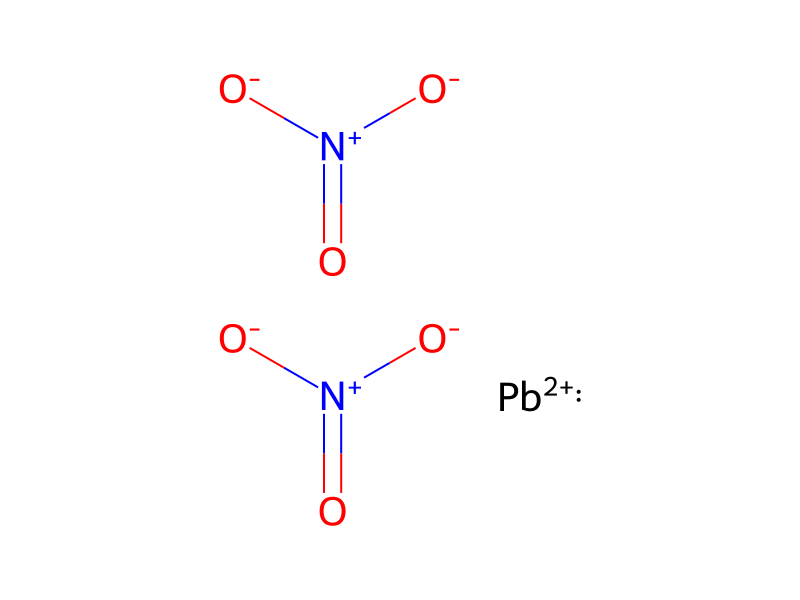
Grundinformationen
- Standard-SMILES
O=[N+]([O-])[O-].O=[N+]([O-])[O-].[Pb+2]- InChIKey
RLJMLMKIBZAXJO-UHFFFAOYSA-N- Summenformel
- N2O6Pb
- Durchschnittliche Molmasse
- 331 g/mol
- Monoisotopische Masse
- 331,95229
Namen und Bezeichner
- Bevorzugter Name
- Lead nitrate
- IUPAC
- lead(2+) dinitrate
- Lokaler Name
- Bleidinitrat
- Englischer Name
- Lead(II) nitrate
- Summenformel
- N2O6Pb
- Molmasse
- 331.21
Namen und Synonyme
LEAD NITRATELead dinitrate10099-74-8Lead(II) nitratePlumbous nitrateLead(2+) nitrateLead nitrate (Pb(NO3)2)Nitrate de plombLead(II) nitrate (1:2)Nitric acid, lead(2+) saltDTXSID20350696E5P1699FI
Weitere Namen anzeigen
PB(NO3)2LEAD STANDARD SOLUTIONLEAD STANDARDBlei(II)-nitratlead ion standard solutionPb solutionLead NitraleLeadNitrateGrLeadNitrateAr
Nitric Acid, Lead (2+) Salt(nitrooxy)plumbyl nitrateRefChem:152643LEAD(2+) BIS(NITRATE)DTXCID201478105233-245-9(Pb(NO3)2)CHEBI:37187
Datenbank-Bezeichner
- CAS
10099-74-8- PubChem CID
- 24924
- DTXSID
DTXSID2035069- UNII
- 6E5P1699FI
- EC Number
- 233-245-9
Eigenschaften
Berechnete Struktureigenschaften
- Polarare Oberfläche (TPSA)
- 126 Ų
- H-Brücken-Donoren
- 0
- H-Brücken-Akzeptoren
- 6
- Frei drehbare Bindungen
- 0
- Schwere Atome
- 9
- Formalladung
- 0
- Komplexität
- 18
Experimentelle und physikochemische Eigenschaften
pH3.0-4.0 (20% aq soln at 25 °C)
Density
4.53 at 68 °F (USCG, 1999) - Denser than water; will sink
4.53 g/cu cm
Relative density (water = 1): 4.6
4.53 @25 °C
Color/Form
White or colorless translucent crystals
Colorless, cubic crystals
Solubility
Slightly soluble in ethanol
1 g in 2 mL cold water; 1 g in 0.75 mL boiling water; 1 g in 2500 mL absolute alcohol; 1 g in 75 mL absolute methanol; insol in concentrated nitric acid
37.65 g/100 cu cm water at 0 °C; 56.5 g/100 cu cm at 20 °C; 127 g/100 cu cm at 100 °C
59.7 g/100 cu cm of water at 25 °C
Solubility in water, g/100ml at 20 °C: 52
Decomposition
When heated to decomp ... emits very toxic fumes of /lead and nitrogen oxides/.
Lead nitrate decomposes at 470 °C.
290 °C. This produces toxic fumes of nitrogen oxides and lead oxides. The substance is a strong oxidant. It reacts violently with combustible and reducing materials. Reacts violently with ammonium thiocyanate, red-hot carbon and lead hypophosphate.
Melting Point
470 °C
470 °C
Refractive IndexIndex of refraction: 1.782
Physical Description
Lead nitrate is a white crystalline solid. The material is soluble in water. It is noncombustible but it will accelerate the burning of combustible materials. If large quantities of the material are involved in the fire an explosion may result. Prolonged exposure of the material to fire or heat may result in an explosion. Toxic oxides of nitrogen are produced in fires involving this material.
Liquid; Dry Powder; Other Solid; CBI
White or colorless crystals; [HSDB]
WHITE OR COLOURLESS CRYSTALS.
Other Experimental Properties
CONSTANT HUMIDITY: 88.4% at 103.5 °C and 760 mm Hg aq tension
Heat of Solution: 23 cal/g (41 Btu/lb or 0.96X10+5 J/kg) /HNO3.PB(X)/
Above 205 °C, oxygen and nitrogen dioxide are driven off, and basic lead nitrates are formed. Above 470 °C, decomposes to lead monoxide and Pb3O4.
Lead is derived from the decay of radon. /Inorganic lead/
For more Other Experimental Properties (Complete) data for LEAD NITRATE (6 total), please visit the HSDB record page.
Physikochemische Eigenschaften
- Schmelzpunkt
- 470 °C · 470 °C (dec.)(lit.)
- Siedepunkt
- 500 ℃[at · 500℃[at 101 325 Pa]
- Dichte
- 1 g/mL · 1.00 g/mL at 20 °C
- storage temp.
- 30 °C · Store below +30°C.
- Löslichkeit
- 2 O: · H2O: soluble
- Aggregatzustand
- Solid
- Wichte
- 4.53 · 4.53
- Farbe
- White
- PH
- 3 · 3-4 (50g/l, H2O, 20℃)
- Geruch (Odor)
- Odorless
- Wasserlöslichkeit
- 343 g/L · 343 g/L
- Merck
- 14 · 14,5414
- Dielectric constant
- 37.7 · 37.7(0.0℃)
- Stabilität
- Stable. Strong oxidizer. Incompatible with combustible materials, organics, strong reducing agents.
- InChI
- 1S/2NO3.Pb/c2*2-1(3)4;/q2*-1;+2
- InChIKey
- RLJMLMKIBZAXJO-UHFFFAOYSA-N
- SMILES
- [PbH2++].[O-][N+]([O-])=O.[O-][N+]([O-])=O
- CAS Datenbank
- 10099 · 10099-74-8(CAS DataBase Reference)
- EPA chemische Informationen
- Lead nitrate (Pb(NO3)2) (10099-74-8)
Sicherheit und Regulatorisches
GHS-Klassifizierung
GHS Classification
This chemical does not meet GHS hazard criteria for 11.3% (36 of 318) of reports.
Danger
H272 (13.5%): May intensify fire; oxidizer [Danger Oxidizing liquids; Oxidizing solids];H302+H332 (39.6%): Harmful if swallowed or if inhaled [Warning Acute toxicity, oral; acute toxicity, inhalation];H302 (88.7%): Harmful if swallowed [Warning Acute toxicity, oral];H317 (48.4%): May cause an allergic skin reaction [Warning Sensitization, Skin];H318 (78.9%): Causes serious eye damage [Danger Serious eye damage/eye irritation];H332 (88.7%): Harmful if inhaled [Warning Acute toxicity, inhalation];H351 (48.1%): Suspected of causing cancer [Warning Carcinogenicity];H360 (34%): May damage fertility or the unborn child [Danger Reproductive toxicity];H360Df (61.6%): May damage the unborn child; Suspected of damaging fertility [Danger Reproductive toxicity];H372 (48.4%): Causes damage to organs through prolonged or repeated exposure [Danger Specific target organ toxicity, repeated exposure];H373 (47.2%): May causes damage to organs through prolonged or repeated exposure [Warning Specific target organ toxicity, repeated exposure];H400 (88.7%): Very toxic to aquatic life [Warning Hazardous to the aquatic environment, acute hazard];H410 (88.7%): Very toxic to aquatic life with long lasting effects [Warning Hazardous to the aquatic environment, long-term hazard]
P203, P210, P220, P260, P261, P264, P264+P265, P270, P271, P272, P273, P280, P301+P317, P302+P352, P304+P340, P305+P354+P338, P317, P318, P319, P321, P330, P333+P317, P362+P364, P370+P378, P391, P405, and P501 (click each P-code to see the statement)
Aggregated GHS information provided per 318 reports by companies from 21 notifications to the ECHA C&L Inventory. Each notification may be associated with multiple companies.;Reported as not meeting GHS hazard criteria per 36 of 318 reports by companies.;There are 20 notifications provided by 282 of 318 reports by companies with hazard statement code(s).;Information may vary between notifications depending on impurities, additives, and other factors. The percentage value in parenthesis indicates the notified classification ratio from companies that provide hazard codes. Only hazard codes with percentage values above 10% are shown. For more detailed information, please visit ECHA C&L website.
Gefahrenhinweise
Regulatory Information
Chemical: Nitric acid, lead(2+) salt;Conditions Of Use:;This chemical must not be imported or manufactured for use in any:;- industrial surface coating or as a component of industrial surface coatings at concentrations greater than 0.1%*;- ink or as a component of inks at concentrations greater than 0.1%*, when intended for industrial uses;*calculated on the non-volatile component of the surface coating or ink;Specific Information Requirement: Obligations to provide information apply. You must tell us within 28 days if the circumstances of your importation or manufacture (introduction) are different to those in our assessment.
Nitric acid, lead(2+) salt (2:1) is listed on the EPA's Chemical Data Reporting (CDR) system. Manufacturers and importers of Nitric acid, lead(2+) salt (2:1) are required to report information about their production and use of this chemical to the EPA under the Toxic Substances Control Act (TSCA). (40 eCFR Part 711)
Status: Active Update: 13-03-2023 https://echa.europa.eu/registration-dossier/-/registered-dossier/14897;Status: Cease Manufacture Update: 28-05-2018 https://echa.europa.eu/registration-dossier/-/registered-dossier/25285
Restricted substance: Lead dinitrate;EC: 233-245-9;Restriction condition document: PDF link
Substance: Lead dinitrate;EC: 233-245-9;Date of inclusion: >19-Dec-2012;Reason for inclusion: Toxic for reproduction (Article 57c)
Nitric acid, lead(2+) salt: HSNO Approval: HSR001328 Approved with controls
Other Safety Information
PEC / SN / Other assessments - Lead compounds used in industrial surface coatings and inks: Health;IMAP assessments - Water soluble lead(2+) salts: Environment tier II assessment;IMAP assessments - Nitric acid, lead(2+) salt: Human health tier II assessment
DOT LabelOxidizer Poison
Fire Hazards
Special Hazards of Combustion Products: Toxic oxides of nitrogen may form in fire.;Behavior in Fire: Increases the intensity of a fire when in contact with burning material. Use plenty of water to cool containers or spilled material. (USCG, 1999)
· These substances will accelerate burning when involved in a fire.;· May explode from heat or contamination.;· Some may burn rapidly.;· Some will react explosively with hydrocarbons (fuels).;· May ignite combustibles (wood, paper, oil, clothing, etc.).;· Containers may explode when heated.;· Runoff may create fire or explosion hazard.
Not combustible but enhances combustion of other substances.
Fire Potential
Lead nitrate reacts with brilliant sparks when projected on red-hot carbon.
Strong oxidizing material. Dangerous fire risk in contact with organic materials.
Health Hazards
Early symptoms of lead intoxicatin via inhalation or ingestion are most commonly gastrointestinal disorders, colic, constipation, etc.; weakness, which may go on to paralysis, chiefly of the extensor muscles of the wrists and less often the ankles, is noticeable in the most serious cases. Ingestion of a large amount causes local irritation of the alimentary tract; pain, leg cramps, muscle weakness, paresthesias, depression, coma, and death may follow in 1 or 2 days. Contact with eyes causes irritation. (USCG, 1999)
· Toxic by ingestion.;· Inhalation of dust is toxic.;· Fire may produce irritating, corrosive and/or toxic gases.;· Contact with substance may cause severe burns to skin and eyes.;· Runoff from fire control or dilution water may cause environmental contamination.
Hazards SummaryEffects of short-term exposure: irritation of the skin, eyes, and respiratory tract; Heating to decomposition at 290 deg C releases nitrogen oxides and lead oxide; [ICSC] See Lead and linked occupational diseases.
DOT ID and Guide1469 141
Reactive GroupNitrate and Nitrite Compounds, Inorganic
EC ClassificationSymbol: T, N; R: 61-20/22-33-62-50/53; S: 53-45-60-61; Note: A, E
UN ClassificationUN Hazard Class: 5.1; UN Subsidiary Risks: 6.1; UN Pack Group: II
Special Reports
National Toxicology Program. Eleventh Report on Carcinogens (2005). The Report on Carcinogens is an informational scientific and public health document that identifies and discusses substances (including agents, mixtures, or exposure circumstances) that may pose a carcinogenic hazard to human health. Lead and Lead Compounds are listed as reasonably anticipated to be human carcinogens. /Lead and Lead Compounds/[Available from, as of July 31, 2009: http://ntp.niehs.nih.gov/ntp/roc/eleventh/profiles/s101lead.pdf]
WHO; Environmental Health Criteria 85: Lead - Environmental Aspects (1989). EHC are designed for scientists and administrators responsible for the establishment of safety standards and regulations and provide basic scientific risk evaluations of a wide range of chemicals and groups of chemicals.
IARC. Monographs on the Evaluation of the Carcinogenic Risk of Chemicals to Humans. Vol 87 Inorganic and Organic Lead Compounds Geneva: World Health Organization, International Agency for Research on Cancer, (2006). IARC Monographs provide critical reviews of data on carcinogenicity for agents to which humans are known to be exposed and on specific exposure situations.
Sicherheit und Schutzausrüstung
Fire Fighting
Excerpt from ERG Guide 141 [Oxidizers - Toxic]:;SMALL FIRE: Use water. Do not use dry chemicals or foams. CO2 or Halon® may provide limited control.;LARGE FIRE: Flood fire area with water from a distance. Do not move cargo or vehicle if cargo has been exposed to heat. If it can be done safely, move undamaged containers away from the area around the fire.;FIRE INVOLVING TANKS, RAIL TANK CARS OR HIGHWAY TANKS: Fight fire from maximum distance or use unmanned master stream devices or monitor nozzles. Cool containers with flooding quantities of water until well after fire is out. ALWAYS stay away from tanks in direct contact with flames. For massive fire, use unmanned master stream devices or monitor nozzles; if this is impossible, withdraw from area and let fire burn. (ERG, 2024)
In case of fire in the surroundings, use appropriate extinguishing media. In case of fire: keep drums, etc., cool by spraying with water.
First Aid Measures
Fresh air, rest. Refer for medical attention.
Remove contaminated clothes. Rinse skin with plenty of water or shower.
First rinse with plenty of water for several minutes (remove contact lenses if easily possible), then refer for medical attention.
Rinse mouth. Refer for medical attention .
Accidental Release Measures
· CALL 911. Then call emergency response telephone number on shipping paper. If shipping paper not available or no answer, refer to appropriate telephone number listed on the inside back cover.;· Keep unauthorized personnel away.;· Stay upwind, uphill and/or upstream.;· Ventilate closed spaces before entering, but only if properly trained and equipped.
· Keep combustibles (wood, paper, oil, etc.) away from spilled material.;· Do not touch damaged containers or spilled material unless wearing appropriate protective clothing.;· Stop leak if you can do it without risk.;Small Dry Spill;· With clean shovel, place material into clean, dry container and cover loosely; move containers from spill area.;Large Spill;· Dike far ahead of spill for later disposal.
First Aid
Remove at once all cases of lead intoxication from further exposure until the blood level is reduced to a safe value; immediately place the individual under medical care.;INGESTION: give gastric lavage using 1% solution of sodium or magnesium sulfate; leave 15-30 gm magnesium sulfate in 6-8 oz. of water in the stomach as antidote and cathartic; egg white, milk, and tannin are useful demulcents; atropine sulfate and other antispasmodics may relieve abdominal pain, but morphine may be necessary.;EYES or SKIN: flush with water. (USCG, 1999)
General First Aid:;· Call 911 or emergency medical service.;· Ensure that medical personnel are aware of the material(s) involved, take precautions to protect themselves and avoid contamination.;· Move victim to fresh air if it can be done safely.;· Administer oxygen if breathing is difficult.;· If victim is not breathing:;-- DO NOT perform mouth-to-mouth resuscitation; the victim may have ingested or inhaled the substance.;-- If equipped and pulse detected, wash face and mouth, then give artificial respiration using a proper respiratory medical device (bag-valve mask, pocket mask equipped with a one-way valve or other device).;-- If no pulse detected or no respiratory medical device available, provide continuous compressions. Conduct a pulse check every two minutes or monitor for any signs of spontaneous respirations.;· Remove and isolate contaminated clothing and shoes.;· For minor skin contact, avoid spreading material on unaffected skin.;· In case of contact with substance, remove immediately by flushing skin or eyes with running water for at least 20 minutes.;· For severe burns, immediate medical attention is required.;· Effects of exposure (inhalation, ingestion, or skin contact) to substance may be delayed.;· Keep victim calm and warm.;· Keep victim under observation.;· For further assistance, contact your local Poison Control Center.;· Note: Basic Life Support (BLS) and Advanced Life Support (ALS) should be done by trained professionals.;Specific First Aid:;· Contaminated clothing may be a fire risk when dry.
Safe StorageSeparated from combustible substances, reducing agents and food and feedstuffs.
Exposure Control and Personal Protection
· Wear positive pressure self-contained breathing apparatus (SCBA).;· Wear chemical protective clothing that is specifically recommended by the manufacturer when there is NO RISK OF FIRE.;· Structural firefighters' protective clothing provides thermal protection but only limited chemical protection.
Biological Exposure Indices (BEI) [ACGIH] - Lead in blood = 200 ug/L (20 ug/100 ml); sampling time not critical; [ACGIH]
Fire Fighting Procedures
Evacuation: If fire becomes uncontrollable - consider evacuation of one-half (1/2) mile radius.
If material on fire or involved in fire: Flood with water. Cool all affected containers with flooding quantities of water. Apply water from as far a distance as possible.
Storage Conditions
Stow away from foodstuffs.
Storage temp: ambient. Venting: open.
Cleanup Methods
Evironmental considerations - Land spill: Dig a pit, pond, lagoon, holding area to contain liquid or solid material. /SRP: If time permits, pits, ponds, lagoons, soak holes, or holding areas should be sealed with an impermeable flexible membrane liner./ Cover solids with a plastic sheet to prevent dissolving in rain or fire fighting water.
Environmental considerations - Water spill: Neutralize with agricultural lime (CaO), crushed limestone (CaCO3), or sodium bicarbonate (NaHCO3). Remove trapped material with suction hoses. Use mechanical dredges or lifts to remove immobilized masses of pollutants and precipitates.
Nonfire Spill Response
Excerpt from ERG Guide 141 [Oxidizers - Toxic]:;Keep combustibles (wood, paper, oil, etc.) away from spilled material. Do not touch damaged containers or spilled material unless wearing appropriate protective clothing. Stop leak if you can do it without risk.;SMALL DRY SPILL: With clean shovel, place material into clean, dry container and cover loosely; move containers from spill area.;LARGE SPILL: Dike far ahead of spill for later disposal. (ERG, 2024)
Disposal MethodsGenerators of waste (equal to or greater than 100 kg/mo) containing this contaminant, EPA hazardous waste number D008, must conform with USEPA regulations in storage, transportation, treatment and disposal of waste. /Lead/
Spillage Disposal
Personal protection: chemical protection suit including self-contained breathing apparatus. Do NOT let this chemical enter the environment. Sweep spilled substance into covered containers. If appropriate, moisten first to prevent dusting. Carefully collect remainder. Then store and dispose of according to local regulations. Do NOT absorb in saw-dust or other combustible absorbents.
Toxikologische Informationen
Treatment
Lead poisoning is usually treated with chelation therapy using DMSA, EDTA, or dimercaprol. Methemoglobinemia can be treated with supplemental oxygen and methylene blue 1% solution administered intravenously slowly over five minutes followed by IV flush with normal saline. Methylene blue restores the iron in hemoglobin to its normal (reduced) oxygen-carrying state. (L1613, L21)
Interactions
... Melatonin (MLT) (10 or 50 mg/kg) was orally administered to ICR mice daily for 28 days, and Pb was also administered at 35 mg/kg in the same way 2 hr after the administration of MLT, and the normal mice were given vehicle. Within the Pb plus MLT-treated group, the body weight gains and the relative thymus weights were significantly increased when compared with the treatment of Pb alone. The relative spleen and liver weights were increased by the treatment of Pb alone, and then restored to normal value by MLT treatment. Hemagglutination (HA) titer, plaque-forming cell response to sheep red blood cell (SRBC), and secondary IgG antibody response to BSA were significantly enhanced in the Pb plus MLT-treated mice, as opposed to when compared with the treatment of Pb alone. The mitogenic response of splenic T cell to concanavalin A and that of B cells to lipopolysaccharide was remarkably increased by MLT treatment when compared with treatment of Pb alone. Splenic CD4(+)cells were significantly increased by MLT treatment when compared with treatment of Pb alone. In case of CD8(+) cells, the slight enhancement was observed in MLT treatment. Splenic T and B cells were significantly increased by MLT treatment when compared with the treatment of Pb alone. The natural killer cell, phagocytic activity and the number of peripheral leukocytes were significantly enhanced in Pb plus MLT-treated mice when compared with the treatment of Pb alone.
The development toxicity of lead nitrate (25 mg/kg, SC), methylmercury chloride (12.5 mg/kg, PO), and sodium arsenite (6 mg/kg, SC) was assessed in CD1 mice following administration on gestation day 10 of these chemicals separately or in their binary and ternary combinations. Cesarean sections were performed on day 18 of gestation, and fetuses were examined for malformations and variations. Three fetuses from each dam were used for whole-body analyses of Pb, Hg, and As. Maternal toxic effects were more remarkable in the group concurrently exposed to Pb, Hg, and As than in those given binary combinations of the elements. In turn, maternal toxicity was more notable in these groups than in those given separately the test compounds. With regard to developmental toxicity, the most relevant effects (decreased fetal weight, cleft palate) corresponded to the Hg-treated groups. It is in agreement with the finding that in all experimental groups the levels of Pb and As in whole fetuses were under their respective detection limits. In general terms, the present data suggests that at the current doses, the interactive effects of Pb and As on Hg-induced developmental toxicity were not greater than additive. In contrast, exposure of pregnant mice to Pb and As at doses that were practically nontoxic to dams, concurrently with organic Hg at a toxic dose, caused supra-additive interactions in maternal toxicity.
Oral exposure to lead nitrate increased the incidence of N-nitrosodimethylamine-induced renal tumors in male rats
Lead nitrate pretreatment antagonized toxicity of carbon tetrachloride in rats.
For more Interactions (Complete) data for LEAD NITRATE (9 total), please visit the HSDB record page.
Health Effects
Lead is a neurotoxin and has been known to cause brain damage and reduced cognitive capacity, especially in children. Lead exposure can result in nephropathy, as well as blood disorders such as high blood pressure and anemia. Lead also exhibits reproductive toxicity and can results in miscarriages and reduced sperm production. Nitrate and nitrite poisoning causes methemoglobinemia. Nitrites may cause pregnancy complications and developmental effects. They may also be carcinogenic. (L1137, L21)
Ecotoxicity Values
LC50; Species: Anas platyrynchos (Mallard duck) young; Concentration: > 500 mg/L for < 100 days /from table/
LC50; Species: Anas platyrynchos (Mallard duck) adult; Concentration: > 50 mg/L for < 100 days /from table/
LC50; Species: Coturnix japonica (Japanese quail), males or females, 14 days old; oral (5-day ad libitum in diet) > 5,000 ppm; no overt signs of toxicity to 5,000 ppm; control references were dieldrin & dicrotophos; corn oil diluent was added to diet at ratio of 2:98 by wt; (extreme concentrations: 1,000-5,000 ppm) /Reagent grade, 100% AI/
EC50; Species: Ceriodaphnia dubia (Water flea, age <24 hr); Conditions: freshwater, renewal, 25 °C, pH 8.2, hardness 100 mg/L CaCO3, alkalinity 97 mg/L CaCO3, dissolved oxygen > or =70%); Concentration: 269 ug/L for 7 days; Effect: reduced growth, reduced number of young per female /total lead ion/
For more Ecotoxicity Values (Complete) data for LEAD NITRATE (64 total), please visit the HSDB record page.
Adverse Effects
Neurotoxin - Predominantly motor;Occupational hepatotoxin - Secondary hepatotoxins: the potential for toxic effect in the occupational setting is based on cases of poisoning by human ingestion or animal experimentation.;Nephrotoxin - The chemical is potentially toxic to the kidneys in the occupational setting.;Reproductive Toxin - A chemical that is toxic to the reproductive system, including defects in the progeny and injury to male or female reproductive function. Reproductive toxicity includes developmental effects. See Guidelines for Reproductive Toxicity Risk Assessment.;IARC Carcinogen - Class 2: International Agency for Research on Cancer classifies chemicals as probable (2a), or possible (2b) human carcinogens.;NTP Carcinogen - Reasonably anticipated to be a human carcinogen.;ACGIH Carcinogen - Confirmed Animal.
Exposure Routes
The substance can be absorbed into the body by inhalation of its aerosol and by ingestion.
Oral (L136) ; inhalation (L136); dermal (L136)
Milk Concentrations
Much of an oral dose of (203)Pb lead nitrate was poorly absorbed and thus ... excreted fairly rapidly from the lactating cow. In 6 days, 95% ... excreted in ... feces, 0.2% in ... urine, and 0.02% in the milk. The biological half lives were 18 hr for the unabsorbed and 72 hr for ... absorbed (203)Pb.
Toxicity Summary
Lead mimics other biologically important metals, such as zinc, calcium, and iron, competing as cofactors for many of their respective enzymatic reactions. For example, lead has been shown to competitively inhibit calcium's binding of calmodulin, interferring with neurotransmitter release. It exhibits similar competitive inhibition at the NMDA receptor and protein kinase C, which impairs brain microvascular formation and function, as well as alters the blood-brain barrier. Lead also affects the nervous system by impairing regulation of dopamine synthesis and blocking evoked release of acetylcholine. However, it's main mechanism of action occurs by inhibiting delta-aminolevulinic acid dehydratase, an enzyme vital in the biosynthesis of heme, which is a necesssary cofactor of hemoglobin. Nitrate's toxicity is a result of it's conversion to nitrite once in the body. Nitrite causes the autocatalytic oxidation of oxyhemoglobin to hydrogen peroxide and methemoglobin. This elevation of methemoglobin levels is a condition known as methemoglobinemia, and is characterized by tissue hypoxia, as methemoglobin cannot bind oxygen. (A2450, L1613, T4, A20, A22, L136)
Ecotoxicity Excerpts
/BIRDS and MAMMALS/ One-day-old herring gulls (Larus argentatus) were injected intraperitoneally with lead nitrate solution (0.1 or 0.2 mg Pb/g) or sterile saline to examine differences in growth rates. ... By d 8 there were significant differences in growth rates as a function of treatment. There were also, by d 8, significant differences in bill length, tarsus length, and wing bone length. Except for bill length, these differences persisted for the duration of the study. Developmental curves varied, with lead-treated birds reaching the same asymptote as control birds for bill length, but having a lower asymptote for tarsus length. For curves where asymptotes were reached, lead-treated birds required more days to reach it than control birds. The initial amount of food eaten each day was positively correlated with weight gain for control birds, but negatively correlated for lead-treated birds.
/BIRDS and MAMMALS/ ... Young herring gulls, Larus argentatus, were used to examine the effect of timing of lead exposure on individual recognition behavior and development. Each of 60 1-day-old herring gull chicks was randomly assigned to a control group or to one of three treatment groups that received a single dose of lead nitrate solution (100 mg/kg) at Day 2 or 6 of age or the same total dose divided in thirds on Day 2, 4, and 6. Matched controls were injected with isotonic saline on the same schedules. Variations in individual recognition of human attendants were largely explained by age and status (lead versus control), and some variation was explained by day of injection (exposure regime). Using a feeding paradigm, the percentage responding to their caretaker compared to another person was higher (70% versus 38%), and occurred earlier in controls compared to lead-injected birds. Lead-injected birds required longer to respond initially, took longer to choose, moved less distance per time, and took longer to eventually reach the food. ... Among lead-injected birds there was a disjunction of effect related to dosing schedule: birds injected on Day 6 chose more correctly but were slower to respond ...
/BIRDS and MAMMALS/ ... The effects of temporal differences in lead exposure on early development in herring gulls (Larus argentatus) /were examined/. Each of 72 1-day-old herring gull chicks was randomly assigned to one of six treatment groups to receive a lead nitrate concentration of 100 ug/g at age 2 or at age 6, a similar cumulative dose evenly divided on days 2, 4, and 6, or matched-volume saline injections on the same days. Behavioral tests were performed (some at 2- and others at 5-day intervals) to examine locomotion, balance, righting response, thermoregulation, and visual cliff. Most variation in weight was explained by testing age, although treatment affected weight gain for the lead-6 gulls, particularly after 20 days. Although treatment influenced balance and locomotion, the effect was small. The lead-6 birds were unable to remain on an incline as long as the lead-2, lead-246, and control birds. The overall score for balance improved with age for controls, showed little change for the lead-2 and lead-2-4-6 gulls, but showed a decrease in performance for the lead-6 birds. On the thermoregulation test, the lead-6 birds performed less well under both low- and high-temperature test conditions. Although the lead-2-4-6 birds had a lower score on the visual cliff tests than the other groups, the lead-6 gulls showed a significant delay in response and gave significantly fewer calls then the other groups
/BIRDS and MAMMALS/ ... /BIRDS and MAMMALS/ ... One randomly chosen member of each of 8 pairs of young /Sterna hirundo/ common tern chicks was injected with lead nitrate solution at a concentration of 0.2 mg/g. The pairs were not siblings but were matched for age (+/- 1 d) and weight (+/- 3 g). The second member of each pair was injected with an equal volume of sterile saline. Behavioral tests performed examined locomotion, balance and righting response, feeding tasks and begging, depth perception and response on a visual cliff, and behavioral thermoregulation. In each pair the control chick was heavier at 4 wk of age. For most behavioral measures, except begging and movement on a stationary incline, the lead-injected chicks performed less well than the control chicks. When presented with a novel feeding situation (reversal of fish position), the lead-injected chicks required significantly more time to eat the same number of fish. The single injection of lead thus affected a variety of behavioral patterns, with effects apparent within 5 d after injection.
For more Ecotoxicity Excerpts (Complete) data for LEAD NITRATE (88 total), please visit the HSDB record page.
Signs and Symptoms
Cough. Sore throat.
Redness. Pain.
Redness. Pain.
Abdominal pain. Nausea. Vomiting.
Symptions of chronic lead poisoning include reduced cognitive abilities, nausea, abdominal pain, irritability, insomnia, metal taste in the mouth, excess lethargy or hyperactivity, chest pain, headache and, in extreme cases, seizures, comas, and death. There are also associated gastrointestinal problems, such as constipation, diarrhea, vomiting, poor appetite, weight loss, which are common in acute poisoning. Nitrate and nitrite poisoning causes methemoglobinemia. Symptoms include cyanosis, cardiac dysrhythmias and circulatory failure, and progressive central nervous system (CNS) effects. CNS effects can range from mild dizziness and lethargy to coma and convulsions. (L1137, A2, L21)
ICSC Environmental Data
The substance is toxic to aquatic organisms. The substance may cause long-term effects in the aquatic environment. Bioaccumulation of this chemical may occur in marine organisms and terrestrial organisms. It is strongly advised not to let the chemical enter into the environment because it is persistent.
Human Toxicity Excerpts
/CASE REPORTS/ ... A child with extremely high lead blood level of 20.4 umol/L (422.7 ug/dL) ... was treated with chelation and ... significant organ dysfunction did not develop. Documented significant high level above 3.37 umol/L (corresponding to 70 ug/dL) in this patient persisted for approximately 24 hr. Adequate, single or combined chelatation therapy in early phase of acute lead poisoning is essential for the further patient's outcome.
/GENOTOXICITY/ ... The aim ... was to evaluate the cytotoxic and genotoxic effects of lead by using lymphocytes from human peripheral blood in vitro. The LC50 for lead nitrate as determined by Trypan blue dye exclusion technique was ... 3.14 mM. Chromosomal aberration frequency at sublethal doses (1/10 of LC50) as determined by examining the metaphase chromosomes (karyotyping) did not show significant aberrations except for some aneuploidy and about 2-4% gaps, breaks (3-4%), and about 5% satellite associations. However, significant DNA damage was determined by SCGE (Comet assay). The comet tail length proportionately increased with increasing lead nitrate concentration.
/GENOTOXICITY/ The induction of DNA damage in mammalian cells by lead acetate and lead nitrate has been investigated repeatedly, yielding negative or (mostly weakly) positive results for DNA strand breaks; one study did not find 8-OH-deoxyguanosine (8-OH-dG) in nuclear DNA, and one suggested the induction of DNA- protein crosslinks. Besides genotoxic effects, there is growing evidence for altered gene expression resulting from low-level exposure to lead ...
Regulatorische Informationen
Regulatory Information
Chemical: Nitric acid, lead(2+) salt;Conditions Of Use:;This chemical must not be imported or manufactured for use in any:;- industrial surface coating or as a component of industrial surface coatings at concentrations greater than 0.1%*;- ink or as a component of inks at concentrations greater than 0.1%*, when intended for industrial uses;*calculated on the non-volatile component of the surface coating or ink;Specific Information Requirement: Obligations to provide information apply. You must tell us within 28 days if the circumstances of your importation or manufacture (introduction) are different to those in our assessment.
Nitric acid, lead(2+) salt (2:1) is listed on the EPA's Chemical Data Reporting (CDR) system. Manufacturers and importers of Nitric acid, lead(2+) salt (2:1) are required to report information about their production and use of this chemical to the EPA under the Toxic Substances Control Act (TSCA). (40 eCFR Part 711)
Status: Active Update: 13-03-2023 https://echa.europa.eu/registration-dossier/-/registered-dossier/14897;Status: Cease Manufacture Update: 28-05-2018 https://echa.europa.eu/registration-dossier/-/registered-dossier/25285
Restricted substance: Lead dinitrate;EC: 233-245-9;Restriction condition document: PDF link
Substance: Lead dinitrate;EC: 233-245-9;Date of inclusion: >19-Dec-2012;Reason for inclusion: Toxic for reproduction (Article 57c)
Nitric acid, lead(2+) salt: HSNO Approval: HSR001328 Approved with controls
RCRA Requirements
D008; A solid waste containing lead may or may not become characterized as a hazardous waste when subjected to the Toxicity Characteristic Leaching Procedure listed in 40 CFR 261.24, and if so characterized, must be managed as a hazardous waste. /Lead/
The Environmental Protection Agency is ... /promulgated/ regulations concerning ground-water monitoring with regard to screening suspected contamination at land based hazardous waste treatment, storage, and disposal facilities. ... /There are/ new requirements to analyze for a specified core list of chemicals plus those chemicals specified by the Regional Administrator on a site-specific basis. ... /Total lead (all species) is included on this list./ /Total lead (all species)/
Atmospheric Standards
National primary and secondary ambient air quality standards for lead and its compounds, measured as elemental lead by a reference method based on appendix G to this part, or by an equivalent method, are: 1.5 micrograms per cubic meter, maximum arithmetic mean averaged over a calendar quarter. /Lead and its compounds, as Pb/
Listed as a hazardous air pollutant (HAP) generally known or suspected to cause serious health problems. The Clean Air Act, as amended in 1990, directs EPA to set standards requiring major sources to sharply reduce routine emissions of toxic pollutants. EPA is required to establish and phase in specific performance based standards for all air emission sources that emit one or more of the listed pollutants. Lead compounds are included on this list. /Lead compounds/
CERCLA Reportable Quantities
Persons in charge of vessels or facilities are required to notify the National Response Center (NRC) immediately, when there is a release of this designated hazardous substance, in an amount equal to or greater than its reportable quantity of 10 lb or 4.54 kg. The toll free number of the NRC is (800) 424-8802. The rule for determining when notification is required is stated in 40 CFR 302.4 (section IV. D.3.b).
Clean Water Act Requirements
Lead nitrate is designated as a hazardous substance under section 311(b)(2)(A) of the Federal Water Pollution Control Act and further regulated by the Clean Water Act Amendments of 1977 and 1978. These regulations apply to discharges of this substance. This designation includes any isomers and hydrates, as well as any solutions and mixtures containing this substance.
Toxic pollutant designated pursuant to section 307(a)(1) of the Federal Water Pollution Control Act and is subject to effluent limitations. /Lead and compounds/
State Drinking Water Standards(AZ) ARIZONA 50 ug/L /Lead/
State Drinking Water Guidelines
(AZ) ARIZONA 20 ug/L /Lead/
(ME) MAINE 10 ug/L /Lead/
Federal Drinking Water StandardsEPA 15 ug/L (Action Level) /Lead/
Sicherheitsdaten
- wgk
- 3
- tsca
- TSCA listed
- ridadr
- UN 1469
- hs_code
- 2834 29 20
- RTECS-Nr.
- OG2100000
- risk_code
- 61-8-20/22-33-50/53-62-52/53-36/38-51/53-35-41-34
- Toxizität
- guinea pig,LDLo,oral,500mg/kg (500mg/kg),BLOOD: PIGMENTED OR NUCLEATED RED BLLOD CELLSBEHAVIORAL: CONVULSIONS OR EFFECT ON SEIZURE THRESHOLD,Archiv fuer Hygiene und Bakteriologie. Vol. 125, Pg. 273, 1941.
- hazard_code
- O,T,N,Xi,C
- safety_code
- 53-45-60-61-17-26-36/37-36/37/39-39
- hazard_class
- 5.1
- packing_group
- II
- Speicherklasse
- 5.1B - Oxidizing hazardous materials
- Giftige Stoffe Daten
- 10099-74-8(Hazardous Substances Data)
- Hazard Classifications
- Acute Tox. 4 InhalationAcute Tox. 4 OralAquatic Acute 1Aquatic Chronic 1Carc. 2Eye Dam. 1Repr. 1ASkin Sens. 1BSTOT RE 1
Chemie und Industrie
Pharmakologische Informationen
Biological Half-Life
Much of an oral dose of (203)Pb lead nitrate was poorly absorbed and thus ... excreted fairly rapidly from the lactating cow. In 6 days, 95% ... excreted in ... feces, 0.2% in ... urine, and 0.02% in the milk. The biological half lives were 18 hr for the unabsorbed and 72 hr for ... absorbed (203)Pb.
Metabolism/Metabolites
... Carp (Cyprinus carpio) /were held/ for 48 hr in lead nitrate concn of between 0 and 20 mg lead/L, with and without one of the three complexans, EDTA, NTA, or DTPA. The accumulation of lead in both viscera and gills was dose-related, with the highest levels for viscera and gills being 86,000 and 4,560 mg/kg dry wt, respectively. The complexans reduced the uptake of lead at all dose levels. Concn in viscera ranged from 399 to 690 mg/kg for the three complexans, and 298 to 645 mg/kg in gills, after exposure to 20 mg/Lead (which had given the above levels without chelating agents).
Lead is absorbed following inhalation, oral, and dermal exposure. It is then distributed mainly to the bones and red blood cells. In the blood lead may be found bound to serum albumin or the metal-binding protein metallothionein. Organic lead is metabolized by cytochrome P-450 enzymes, whereas inorganic lead forms complexes with delta-aminolevulinic acid dehydratase. Lead is excreted mainly in the urine and faeces. Intake of some amount of nitrates and nitrites is a normal part of the nitrogen cycle in humans. In vivo conversion of nitrates to nitrites can occur in the gastrointestional tract under the right conditions, significantly enhancing nitrates' toxic potency. The major metabolic pathway for nitrate is conversion to nitrite, and then to ammonia. Nitrites, nitrates, and their metabolites are excreted in the urine. (L1137, L136)
MeSH Pharmacological ClassificationElements, compounds, mixtures, or solutions that are considered severely harmful to human health and the environment. They include substances that are toxic, corrosive, flammable, or explosive.
Absorption, Distribution and Excretion
The retention and tissue distribution of (210)Pb were studied on 10-day-old, 150-day-old, and adult Macaca fascicularis monkeys, each age-group comprising four animals ... Lead nitrate, 10 ug lead/kg bw, containing 10 u-Ci (210)Pb/ug Pb was administered by gavage after a 12-hr fast. The (210)Pb excreted in urine and feces was monitored for 96 hr. All monkeys were necropsied 96 hr after dosing, and the (210)Pb contents of various tissues was determined. The data demonstrate that infant monkeys retain significantly more lead than adults. Blood (210)Pb levels 96 hr after dosing did not vary significantly between age groups, and of the (210)Pb contained in blood, 98-99% was found in the cells, and 1-2% in the plasma. In the cells, 5-8% of the (210)Pb was bound to the cell membranes. The distribution between blood components did not vary significantly with age. The percentage of the lead dose excreted in urine did not vary significantly between age groups. Both the tissue Pb concn and tissue-blood Pb ratios were significantly higher in the bone structures of the young animals than in the adults. The brain:blood Pb ratio in the infants was significantly higher than in the older groups.
... Under fasting conditions absorption of lead nitrate, lead sulfide, and lead cysteine ranged from 16 to 53%.
Much of an oral dose of (203)Pb lead nitrate was poorly absorbed and thus ... excreted fairly rapidly from the lactating cow. In 6 days, 95% ... excreted in ... feces, 0.2% in ... urine, and 0.02% in the milk. The biological half lives were 18 hr for the unabsorbed and 72 hr for ... absorbed (203)Pb.
Lead had a particular affinity for bone which, in rats 4 days after lead nitrate treatment, contained sevenfold more lead than the soft tissue.
For more Absorption, Distribution and Excretion (Complete) data for LEAD NITRATE (12 total), please visit the HSDB record page.
Verwendung und Herstellung
Uses
Used in match and pyrotechnics manufacturing, dyeing and printing textiles, staining horn and mother-of-pearl, photography, engraving, refining lead, separating titanium from clay, delustering rayon, stabilizing nylon, coating paper for photothermography, catalyzing polyesters, coating nickel anodes, and recovering metals from cyanide solution; [HSDB]
Pulp and Paper Processing [Category: Industry];Textiles (Fiber & Fabric Manufacturing) [Category: Industry];Photographic Processing [Category: Other];Textiles (Printing, Dyeing, or Finishing) [Category: Industry]
Manuf matches and special explosives; as mordant in dyeing and printing on textiles; mordant for staining horn, mother-of-pearl; oxidizer in dye industry; sensitizer in photography; process engraving.
In electrolytic refining of lead, a flotation agent in titanium removal from clays; in red lead manufacture; in matches, pyrotechnics and explosives; in rayon delustering, as a heat stabilizer in nylon, as a coating on paper for photothermography, as an esterification catalyst for polyesters, as a rodenticide, as an electroluminescent mixture with zinc sulfide, as a means of electrodepositing lead dioxide coatings on nickel anodes, and as a means of recovering precious metals from cyanide soln.
Explosives, tanning, and lithography.
Lead nitrate is used as a heat stabiliser in nylon and polyesters, as a coating for photothermographic paper, in rodenticides, and in gold cyanidation. (L411)
ImpuritiesImpurities typically present in the reagent grade incl copper, iron and chloride ...
U.S. Imports
(1977) 1.59X10+8 G
(1982) 1.83X10+8 G
(1986) 9.12X10+5 lb
U.S. Production
2023: 250,000 - <400,000 lb;2022: 550,000 - <700,000 lb;2021: 250,000 - <400,000 lb;2020: 50,000 - <250,000 lb
(1977) AT LEAST 5.59X10+8 G
Production volumes for non-confidential chemicals reported under the Inventory Update Rule. [Table#1798]
Production volume for non-confidential chemicals reported under the 2006 Inventory Update Rule. Chemical: Nitric acid, lead(2+) salt (2:1). Aggreated National Production Volume: 1 to <10 million pounds.
Consumer UsesNot Known or Reasonably Ascertainable
Industry UsesPlating agent;Intermediate;Stabilizing agent;Not Known or Reasonably Ascertainable
Methods of Manufacturing
By the action of nitric acid on lead.
Dissolve lead metal, lead monoxide, or lead carbonate in nitric acid, cool. Excess acid prevents formation of basic nitrates.
Formulations/Preparations
98+% /Grade of purity
ACS reagent, reagent, technical, solution, and crystals.
General Manufacturing Information
Explosives Manufacturing;Not Known or Reasonably Ascertainable;Other (requires additional information);All Other Basic Inorganic Chemical Manufacturing;Primary Metal Manufacturing;Computer and Electronic Product Manufacturing
Nitric acid, lead(2+) salt (2:1): ACTIVE
Anwendungen
VerwendenLead(II) nitrate is employed in industrial applications such as heat stabilization in nylon and polyesters and coatings of photothermographic paper. It is utilized to improve the leaching process in the gold cyanidation. It finds applications as a lead paint as well as a source of dinitrogen tetroxide. As an oxidant, it is used in the oxidation of benzylic halides to aldehydes in organic synthesis. It is also used in the preparation of dithiocarbamates from isothiocyanates. It acts as a scavenger of bromide in nucleophilic substitution reactions.
Darstellung
synthetischeLead nitrate is prepared by dissolving lead metal, lead monoxide or lead carbonate in excess dilute nitric acid followed by evaporation of and/or cooling the solution for crystallization.
Vor- und nachgelagerte Produkte
Vorgelagerte Rohstoffe
Nachgelagerte Produkte
Zugehörige Reaktionen
6


Verknüpfte Notizen
Wird geladen…