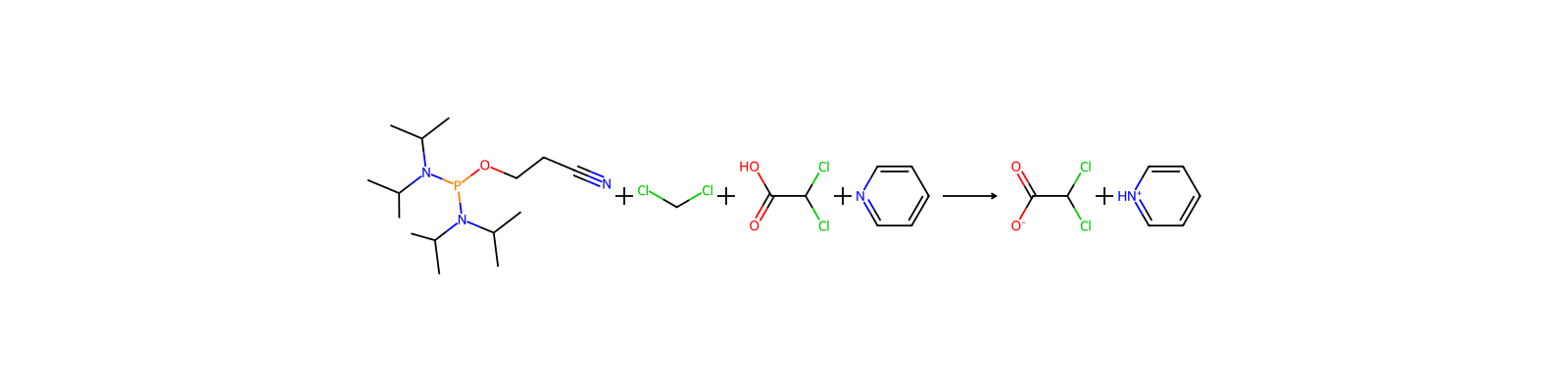

Grundinformationen
- Standard-SMILES
O=C([O-])C(Cl)Cl- InChIKey
JXTHNDFMNIQAHM-UHFFFAOYSA-M- Summenformel
- C2HCl2O2-
- Durchschnittliche Molmasse
- 127,93 g/mol
- Monoisotopische Masse
- 126,93590821
Überblick
Dichloroacetate is a monocarboxylic acid anion that is the conjugate base of dichloroacetic acid. It has a role as a geroprotector. It is functionally related to an acetate. It is a conjugate base of a dichloroacetic acid.
Namen und Bezeichner
- Bevorzugter Name
- Dichloroacetate anion
- IUPAC
- 2,2-dichloroacetate
- Englischer Name
- Dichloroacetate
- Summenformel
- C2HCl2O2
- Molmasse
- 0
Namen und Synonyme
Dichloroacetate13425-80-4DichloracetateDichloroacetate ionDichloroacetic acid ion(1-)CHEBI:28240DTXSID40158610Dichloroacetate anionRefChem:1083416DTXCID80811012,2-dichloroacetateBRN 3903873
Weitere Namen anzeigen
Ion Chromatography Standard: Dichloroacetate @ 500 microg/mL in H2OAcetic acid, 2,?2-?dichloro-?, ion(1-?); Acetic acid, dichloro-, ion(1-) (8CI,9CI); 2,2-Dichloroacetate; Dichloroacetate anion; Dichloroacetate ion; Dichloroacetate ion(1-)2q8hACETIC ACID, DICHLORO-, ION(1-)GTPL4518Method 300.1 Surrogate StandardBDBM50177027ACETICACID,DICHLORO-,ION(1-)
Datenbank-Bezeichner
- CAS
13425-80-4- PubChem CID
- 25975
- DTXSID
DTXSID40158610- ChEBI
CHEBI:28240- Nikkaji
- J54.198B
Eigenschaften
Berechnete Struktureigenschaften
- XLogP
- 1,8
- Polarare Oberfläche (TPSA)
- 40,1 Ų
- H-Brücken-Donoren
- 0
- H-Brücken-Akzeptoren
- 2
- Frei drehbare Bindungen
- 0
- Schwere Atome
- 6
- Formalladung
- -1
- Komplexität
- 55,1
Sicherheit und Regulatorisches
Toxikologische Informationen
Health Effects
Multiple independent studies demonstrate that DCA has the ability to alter normal carbohydrate metabolism. Dichloroacetic acid treatment results in a significant reduction in plasma levels of glucose, pyruvate, and lactate. Another consistent finding in DCA ingestion studies is a dose-related increase in liver size, generally accompanied (or caused) by an increase in glycogen deposition in the liver. There is an extensive and consistent data base demonstrating the reproductive toxicity of DCA in males and females. Neurologic symptoms and morphologic changes in the nervous system have been reported in humans, dogs, and rats. (L2086)
Exposure RoutesIngestion
Toxicity Summary
The dichloroacetate ion stimulates the activity of the enzyme pyruvate dehydrogenase by inhibiting the enzyme pyruvate dehydrogenase kinase. Thus, it decreases lactate production by shifting the metabolism of pyruvate from fermentation towards oxidation in the mitochondria. (Wikipedia)
Carcinogen Classification2B, possibly carcinogenic to humans. (L135)
Toxicity DataORAL (LD50): Acute: 2820 mg/kg [Rat]; DERMAL (LD50): Acute: 510 mg/kg [Rabbit]
Chemie und Industrie
Pharmakologische Informationen
Metabolism/Metabolites
Dichloroacetic acid is metabolized in the liver by oxidative dechlorination to yield glyoxylate, which can enter intermediary metabolism and either be oxidized to oxalate and excreted, converted to carbon dioxide, and/or incorporated into amino acids or other cellular molecules. (L2086)
Verwendung und Herstellung
Uses
Dichloroacetic acid has shown promise as a potentially new class of anti-cancer medication, but has yet to complete clinical trials. Early reports of its activity against brain cancer cells led patients to treat themselves with DCA, which is commercially available in non-pharmaceutical grade. As of October 2014, dichloroacetic acid was undergoing phase III clinical trials for cancer treatment (L2084) (Wikipedia). Dichloroacetic acid has undergone clinical trials for the treatment of lactic acidosis in humans, but the trials found no clinical benefit (Wikipedia). In 2014 Thomas E. Mallouk and colleagues published a new technique for the production of graphene by intercalation of graphite with non-oxidizing Brønsted acids including dichloroacetic acid, raising the prospect that dichloroacetic acid might be used in industrial graphene production in the future (L2085).
Anbieter1 Anbieter
AccuStandard Inc[email protected]
Ergänzende Hinweise
DefinitionChEBI: A monocarboxylic acid anion that is the conjugate base of dichloroacetic acid.
Zugehörige Reaktionen
2

Verknüpfte Notizen
Wird geladen…