
3-(Aminomethyl)biphenyl
Daten werden ergänzt – lade die Seite später neu, um den aktuellen Stand zu sehen

Grundinformationen
- CAS
177976-49-7- Standard-SMILES
NCc1cccc(-c2ccccc2)c1- InChIKey
WKHABRRJMGVELW-UHFFFAOYSA-N- Summenformel
- C13H13N
- Durchschnittliche Molmasse
- 183,25 g/mol
- Monoisotopische Masse
- 183,10479942
Namen und Bezeichner
- Bevorzugter Name
- 3-(Aminomethyl)biphenyl
- IUPAC
- (3-phenylphenyl)methanamine
- Englischer Name
- 3-PHENYLBENZYLAMINE
- Summenformel
- C13H13N
- Molmasse
- 183.25
Namen und Synonyme
3-(Aminomethyl)biphenylRefChem:494132671-211-93-Phenylbenzylamine177976-49-7[1,1'-Biphenyl]-3-ylmethanamine(3-phenylphenyl)methanamine[1,1'-Biphenyl]-3-methanamineMFCD00270124CHEMBL4162063(3-phenylphenyl)methylamineBiphenyl-3-methanamine HCl
Weitere Namen anzeigen
TIMTEC-BB SBB007527RARECHEM AL BW 08853-Phenylbenzylamine ,98%3-(Aminomethyl)biphenyl 95%1,1'-Biphenyl]-3-methanamine
3-phenyl benzylamine3-phenyl-benzylamine3-phenylbenzyl aminebiphenyl-3-methanamine3-(phenyl)benzyl amine(biphenyl-3-y)methylamine1-Biphenyl-3-ylmethanamineC-Biphenyl-3-yl-methylamine
Datenbank-Bezeichner
- CAS
177976-49-7- PubChem CID
- 2760368
- DTXSID
DTXSID70375136- ChEMBL
CHEMBL4162063- EC Number
- 671-211-9
- Nikkaji
- J2.283.183F
Eigenschaften
Berechnete StruktureigenschaftenWird ergänzt
- XLogP
- 2,4
- Polarare Oberfläche (TPSA)
- 26 Ų
- H-Brücken-Donoren
- 1
- H-Brücken-Akzeptoren
- 1
- Frei drehbare Bindungen
- 2
- Schwere Atome
- 14
- Formalladung
- 0
- Komplexität
- 161
Physikochemische Eigenschaften
- Schmelzpunkt
- 28 °C · 28 °C
- Siedepunkt
- 128 °C · 128 °C
- Dichte
- 1.048 · 1.048±0.06 g/cm3(Predicted)
- storage temp.
- 2 · under inert gas (nitrogen or Argon) at 2–8 °C
- pka
- 9 · 9.00±0.10(Predicted)
- Aggregatzustand
- solid
- InChI
- 1S/C13H13N/c14-10-11-5-4-8-13(9-11)12-6-2-1-3-7-12/h1-9H,10,14H2
- InChIKey
- WKHABRRJMGVELW-UHFFFAOYSA-N
- SMILES
- NCc1cccc(c1)-c2ccccc2
Sicherheit und Regulatorisches
Sicherheitsangaben dienen nur zur Orientierung und ersetzen weder das Sicherheitsdatenblatt (SDB) des Lieferanten noch geltende Vorschriften oder eine fachliche Bewertung.
GHS-Klassifizierung
GHS Classification
Danger
H314 (25%): Causes severe skin burns and eye damage [Danger Skin corrosion/irritation]
P260, P261, P264, P264+P265, P271, P273, P280, P301+P330+P331, P302+P352, P302+P361+P354, P304+P340, P305+P351+P338, P305+P354+P338, P316, P317, P319, P321, P332+P317, P337+P317, P362+P364, P363, P391, P403+P233, P405, and P501 (click each P-code to see the statement)
Aggregated GHS information provided per 4 reports by companies from 4 notifications to the ECHA C&L Inventory. Each notification may be associated with multiple companies.
Gefahrenhinweise
Hazard Classes and CategoriesSkin Corr. 1B (25%)
Sicherheitsdaten
- wgk
- WGK 3
- hs_code
- 2921490090
- risk_code
- 36/37/38-50-41-37/38
- hazard_code
- T,Xi,N
- safety_code
- 26-36/37/39-61-39
- hazard_class
- IRRITANT, IRRITANT-HARMFUL
- Speicherklasse
- 11 - Combustible Solids
- Hazard Classifications
- Aquatic Acute 1Aquatic Chronic 1Eye Dam. 1Skin Irrit. 2STOT SE 3
Chemie und Industrie
Anwendungen
Verwenden3-Phenylbenzylamine is used as a reagent for the preparation of N-bis[3-(2-arylethynyl)benzyl]-N''-isopropylureas. Based on biological studies, N-bis[3-(2-arylethynyl)benzyl]-N''-isopropylureas is considered a potent and selective microsomal prostaglandin E synthase (mPGES-1) inhibitors.
Vor- und nachgelagerte Produkte
Vorgelagerte Rohstoffe
Zugehörige Reaktionen
44
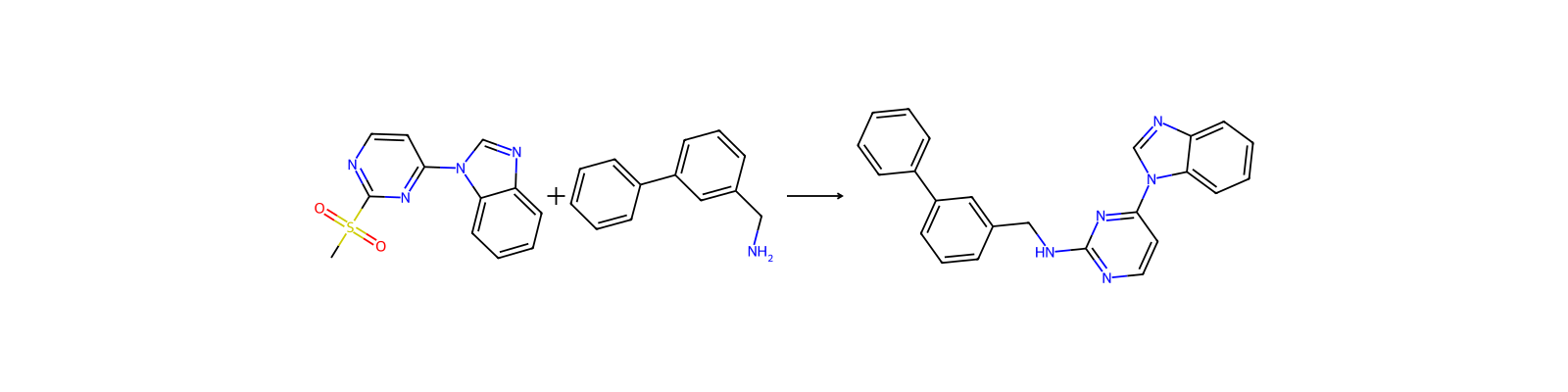


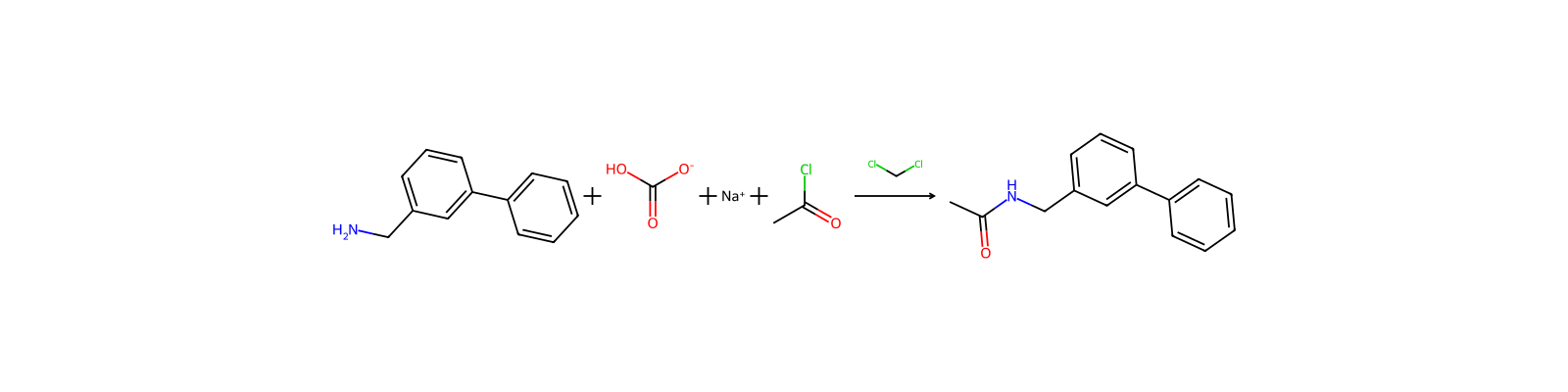
Notizen zur Verbindung
Wird geladen…