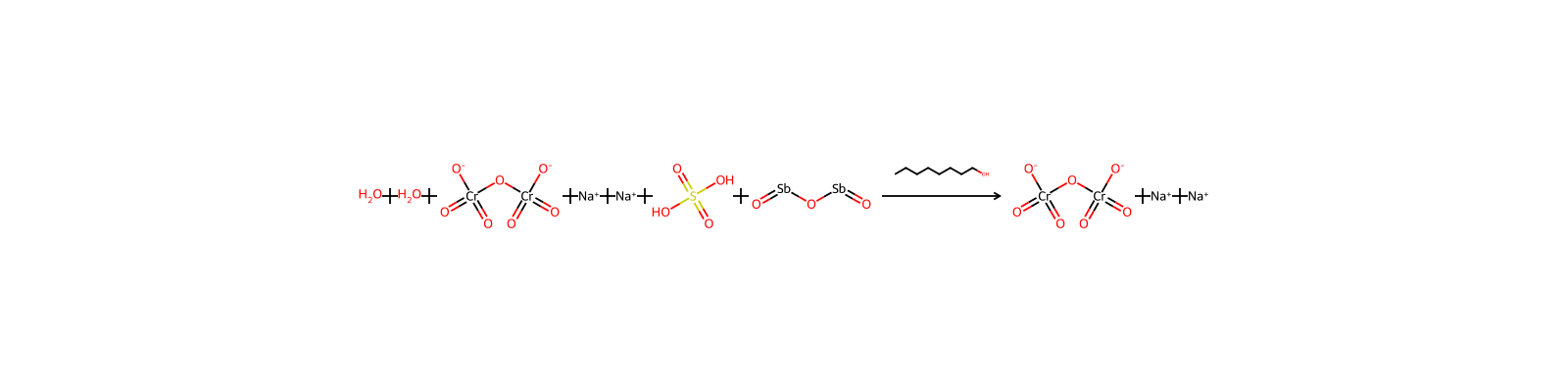
Diantimontrioxid
Oxo(oxostibanyloxy)stibane
Daten werden ergänzt – lade die Seite später neu, um den aktuellen Stand zu sehen

Grundinformationen
- CAS
1309-64-4- Standard-SMILES
[O]=[Sb][O][Sb]=[O]- InChIKey
ADCOVFLJGNWWNZ-UHFFFAOYSA-N- Summenformel
- O3Sb2
- Durchschnittliche Molmasse
- 291,52 g/mol
- Monoisotopische Masse
- 289,79237526
Überblick
See also: Antimony Trioxide (annotation moved to).
Namen und Bezeichner
- Bevorzugter Name
- Oxo(oxostibanyloxy)stibane
- IUPAC
- oxo(oxostibanyloxy)stibane
- Lokaler Name
- Diantimontrioxid
- Englischer Name
- Diantimony trioxide
- Summenformel
- O3Sb2
- Molmasse
- 291.52
Namen und Synonyme
Antimonous oxideoxo(oxostibanyloxy)stibaneAntimony (III) OxideDistiboxane-1,3-dioneAntimony(III) oxide, CPSCHEMBL27224Antimony(III) oxide, >=99%Antimony(III) oxide, 99.5%ADCOVFLJGNWWNZ-UHFFFAOYSA-NAntimony(III) oxide, elec. gr.Antimony(III) oxide, puriss. p.a.AKOS015904094
Weitere Namen anzeigen
ANTIMONY TRIOXIDEANTIMONY OXIDEAntimony(III) oxideANTIMON(III)OXIDEANTIMONIUM TRIOXIDEAntimony Trioxide (production, master batches, paste weighing and mixing from powder)at3JOSap50
NS00074457Antimony(III) oxide, 99.99% trace metals basisAntimony(III) oxide, 99.999% trace metals basisAntimony(III) oxide, powder, 5 mum, ReagentPlus(R), 99%Antimony trioxide, United States Pharmacopeia (USP) Reference StandardAntimony(III) oxide, nanopowder, <250 nm particle size (TEM), >=99.9% trace metals basis
Datenbank-Bezeichner
- CAS
1309-64-4- PubChem CID
- 27652
- DTXSID
DTXSID4023880
Eigenschaften
Berechnete StruktureigenschaftenWird ergänzt
- Polarare Oberfläche (TPSA)
- 43,4 Ų
- H-Brücken-Donoren
- 0
- H-Brücken-Akzeptoren
- 3
- Frei drehbare Bindungen
- 0
- Schwere Atome
- 5
- Formalladung
- 0
- Komplexität
- 34,2
Experimentelle und physikochemische Eigenschaften
Polymers
Plastics -> Flame retardants
Plastics -> Polyolefin-I; Polyolefin-II; PVC (soft); ABS; PA
Flame RetardantsFlame retardants
Physikochemische Eigenschaften
- Schmelzpunkt
- 655 °C · 655 °C (lit.)
- Siedepunkt
- 1550 °C · 1550 °C (lit.)
- Dichte
- 5.2 · 5.20
- Dampfdruck
- 13.3 hPa · 13.3 hPa (660 °C)
- Flammpunkt
- 1550 °C · 1550°C subl.
- storage temp.
- 30 °C · Store below +30°C.
- Löslichkeit
- 2.7 mg/l · 2.70mg/l
- Aggregatzustand
- powder
- Farbe
- White
- Wichte
- 5.67 · 5.67
- Geruch (Odor)
- wh. cubic or orthorhombic cryst., odorless
Sicherheit und Regulatorisches
Sicherheitsangaben dienen nur zur Orientierung und ersetzen weder das Sicherheitsdatenblatt (SDB) des Lieferanten noch geltende Vorschriften oder eine fachliche Bewertung.
Sicherheitsdaten
- wgk
- 2
- tsca
- TSCA listed
- ridadr
- 1549
- hs_code
- 28258000
- RTECS-Nr.
- CC5650000
- risk_code
- 40-61
- Toxizität
- LD50 orally in rats: >20 g/kg (Smyth)
- hazard_code
- Xn,Xi,T
- hazard_note
- Irritant
- safety_code
- 22-36/37-45-53
- hazard_class
- 6.1
- packing_group
- III
- Speicherklasse
- 13 - Non Combustible Solids
- Giftige Stoffe Daten
- 1309-64-4(Hazardous Substances Data)
- Hazard Classifications
- Carc. 2
Chemie und Industrie
Verwendung und Herstellung
UsesPlastics -> Typical concentration range in plastic materials -> 8%
Use Classification
Plastics -> Polymer Type -> Polyolefin-I; Polyolefin-II; PVC (soft); ABS; PA
Plastics -> Flame retardants
Anwendungen
BeschreibungThis hard shiny metal is often alloyed to other elements. It is used in various industrial fields, such as those making or using batteries, printing machines, bearing, textiles, and ceramics. It caused positive patch test reactions in two workers in a ceramics industry.
OccurrenceAntimony trioxide occurs in nature as minerals, valentinite [1317-98-2] and senarmontinite [12412-52-1]. It is used as a flame retardant in fabrics; as an opacifier in ceramics, glass and vitreous enamels; as a catalyst; as a white pigment in paints; as a mortar in the manufacture of tartar emetic; and in the production of metallic antimony.
Verwendenmanufacture of tartar emetic; as paint pigment; in enamels and glasses; as mordant; in flame-proofing canvas.
Darstellung
synthetischeAntimony trioxide is obtained by roasting stibnite:2 Sb2S3 + 9 O2 → 2Sb2O3 + 6SO2Temperature and air feed is carefully controlled in the process to suppress any formation of antimony tetroxide (Sb2O4). Antimony trioxide is separated from any arsenic trioxide (As2O3) that may be present as an impurity by volatilization, as the latter is much more volatile than the former. It may be also prepared by alkaline hydrolysis of antimony trichloride and subsequent dehydration of hydrous oxide under controlled heating (rapid or vigorous heating may partially oxidize Sb(III) to Sb(V).Antimony trioxide also may be made by heating the metallic element with oxygen or air. The volatilizing trioxide is condensed and collected.
Vor- und nachgelagerte Produkte
Zugehörige Reaktionen
16


Notizen zur Verbindung
Wird geladen…