
StartseiteMCPWorkbenchSkills
StartseiteWorkbenchBenachrichtigungenMein Bereich
llms.txt · MCP-AnleitungDatenschutz · Nutzungsbedingungen · Supportv1.8.0
  1. Startseite
  2. /Verbindung

4-(5H-Dibenzo(a,d)cyclohepten-5-yliden)-1-methyl-piperidin

Cyproheptadine

HCID 2913
Neue NotizNeue ReaktionAnfrage stellen
Druckvorschau
GrundinformationenÜberblickNamen und BezeichnerEigenschaftenSicherheit und RegulatorischesChemie und IndustrieZugehörige ReaktionenNotizen zur Verbindung
TeilstruktursucheÄhnliche Strukturen suchen

Grundinformationen

CAS
129-03-3
Standard-SMILES
CN1CCC(=C2c3ccccc3C=Cc3ccccc32)CC1
InChIKey
JJCFRYNCJDLXIK-UHFFFAOYSA-N
Summenformel
C21H21N
Durchschnittliche Molmasse
287,4 g/mol
Monoisotopische Masse
287,16739967

Überblick

Cyproheptadine is the product resulting from the formal oxidative coupling of position 5 of 5H-dibenzo[a,d]cycloheptene with position 4 of 1-methylpiperidine resulting in the formation of a double bond between the two fragments. It is a sedating antihistamine with antimuscarinic and calcium-channel blocking actions. It is used (particularly as the hydrochloride sesquihydrate) for the relief of allergic conditions including rhinitis, conjunctivitis due to inhalant allergens and foods, urticaria and angioedema, and in pruritic skin disorders. Unlike other antihistamines, it is also a seratonin receptor antagonist, making it useful in conditions such as vascular headache and anorexia. It has a role as a H1-receptor antagonist, a serotonergic antagonist, an anti-allergic agent, a gastrointestinal drug and an antipruritic drug. It is a member of piperidines and a tertiary amine.

Namen und Bezeichner

Bevorzugter Name
Cyproheptadine
IUPAC
1-methyl-4-(2-tricyclo[9.4.0.03,8]pentadeca-1(15),3,5,7,9,11,13-heptaenylidene)piperidine
Lokaler Name
4-(5H-Dibenzo(a,d)cyclohepten-5-yliden)-1-methyl-piperidin
Englischer Name
Cyproheptadine
Summenformel
C21H21N
Molmasse
287.4

Namen und Synonyme

CYPROHEPTADINE129-03-3PeriactinolEiproheptadineDronactinCiproheptadinaCyproheptadinumCiprovitMK 1414-(5H-Dibenzo(a,d)cyclohepten-5-ylidene)-1-methylpiperidine1-Methyl-4-(5H-dibenzo(a,d)cycloheptenylidene)piperidine5-(1-Methylpiperidylidene-4)-5H-dibenzo(a,d)cyclopheptene
Weitere Namen anzeigen
PeriactinCyproheptadienePeriactineCypoheptadineAKOS NCG1-0040
1-Methyl-4-(5-dibenzo(a,e)cycloheptatrienylidene)piperidine4-(5-Dibenzo(a,d)cyclohepten-5-ylidine)-1-methylpiperidineDTXSID80228724-(5H-Dibenzo[a,d]cyclohepten-5-ylidene)-1-methylpiperidine2YHB6175DOPiperidine, 4-(5H-dibenzo(a,d)cyclohepten-5-ylidene)-1-methyl-Piperidine, 4-(5H-dibenzo[a,d]cyclohepten-5-ylidene)-1-methyl-1-Methyl-4-(5H-dibenzo[a,d]cycloheptenylidene)piperidine

Datenbank-Bezeichner

CAS
129-03-3

Eigenschaften

Berechnete Struktureigenschaften

XLogP
4,7
Polarare Oberfläche (TPSA)
3,2 Ų
H-Brücken-Donoren
0
H-Brücken-Akzeptoren
1
Frei drehbare Bindungen
0
Schwere Atome
22
Formalladung
0
Komplexität
423

Experimentelle und physikochemische Eigenschaften

DrugsPharmaceuticals -> Listed in ZINC15
LogP · 3 Einträge

Log P= 4.69

4.7

3.94

Color/FormCRYSTALS FROM DIL ETHANOL
Solubility · 2 Einträge

WHITE TO SLIGHTLY YELLOW, CRYSTALLINE POWDER; ODORLESS; SLIGHT BITTER TASTE; NONHYGROSCOPIC; 1 G SOL IN 1.5 ML METHANOL, 16 ML CHLOROFORM, 35 ML ALCOHOL, 275 ML WATER; PRACTICALLY INSOL IN ETHER /HCL/

1.36e-02 g/L

Human Drugs · 2 Einträge

Breast Feeding; Lactation; Milk, Human; Antihistamines; Antipruritics; Gastrointestinal Agents

Pharmaceuticals

Melting Point · 3 Einträge

112.3-113.3

112.3-113.3 °C

215 - 217 °C

Physical DescriptionSolid
Stability/Shelf LifeRELATIVELY STABLE IN LIGHT, STABLE @ ROOM TEMP. /HCL/

Sicherheit und Regulatorisches

Sicherheitsangaben dienen nur zur Orientierung und ersetzen weder das Sicherheitsdatenblatt (SDB) des Lieferanten noch geltende Vorschriften oder eine fachliche Bewertung.

Gefahrenhinweise

Other Safety InformationIMAP assessments - Piperidine, 4-(5H-dibenzo[a,d]cyclohepten-5-ylidene)-1-methyl-: Human health tier I assessment
FDA Requirements · 1 Eintrag

Manufacturers, packers, and distributors of drug and drug products for human use are responsible for complying with the labeling, certification, and usage requirements as prescribed by the Federal Food, Drug, and Cosmetic Act, as amended (secs 201-902, 52 Stat. 1040 et seq., as amended; 21 U.S.C. 321-392).

Special ReportsKaliner MA; am Fam Physician 45 (3): 1337-42 (1992). Nonsedating antihistamines: pharmacology, clinical efficacy and adverse effects.

Sicherheit und Schutzausrüstung

Storage ConditionsStore below 40 °C (104 °F), preferably between 15 and 30 °C (59 and 86 °F), unless otherwise specified by manufacturer. Store in a well-closed container.
Disposal Methods · 1 Eintrag

SRP: At the time of review, criteria for land treatment or burial (sanitary landfill) disposal practices are subject to significant revision. Prior to implementing land disposal of waste residue (including waste sludge), consult with environmental regulatory agencies for guidance on acceptable disposal practices.

Toxikologische Informationen

Treatment · 1 Eintrag

If vomiting has not occurred spontaneously the patient should be induced to vomit with syrup of ipecac. If the patient is unable to vomit, perform gastric lavage followed by activated charcoal. Isotonic or 1/2 isotonic saline is the lavage of choice. Precautions against aspiration must be taken especially in infants and children. When life threatening CNS signs and symptoms are present, intravenous physostigmine salicylate may be considered. Dosage and frequency of administration are dependent on age, clinical response, and recurrence after response. (See package circulars for physostigmine products.) Saline cathartics, as milk of magnesia, by osmosis draw water into the bowel and, therefore, are valuable for their action in rapid dilution of bowel content. Stimulants should not be used. Vasopressors may be used to treat hypotension. (L1712)

Chemie und Industrie

Pharmakologische Informationen

ATC Code · 2 Einträge

R - Respiratory system

QR - Respiratory system

Pharmacodynamics · 1 Eintrag

Cyproheptadine has been observed to antagonize several pharmacodynamic effects of serotonin in laboratory animals, including bronchoconstriction and vasodepression, and has demonstrated similar efficacy in antagonizing histamine-mediated effects. The reason for its efficacy in preventing anaphylactic shock has not been elucidated, but appears to be related to its anti-serotonergic effects.

Mechanism of Action · 3 Einträge

Cyproheptadine appears to exert its antihistamine and antiserotonin effects by competing with free histamine and serotonin for binding at their respective receptors. Antagonism of serotonin on the appetite center of the hypothalamus may account for cyproheptadine's ability to stimulate the appetite.

CYPROHEPTADINE...IS A SEROTONIN & HISTAMINE ANTAGONIST...

... It is an effective H1 blocker. Cyproheptadine also has prominent 5-H blocking activity on smooth muscle by virtue of its binding to 5-HT2A receptors. ... It has weak anticholinergic activity and possess mild central depressant properties.

Metabolism/Metabolites · 4 Einträge

The principal metabolite found in human urine has been identified as a quaternary ammonium glucuronide conjugate of cyproheptadine.

In humans, the metabolism of a number of tertiary amine containing pharmacological agents to quaternary ammonium linked glucuronides, catalyzed by UDP-glucuronosyltransferase (UGT), represents a unique and important metabolic pathway for these compounds. A full length cDNA encoding human UGTl.4 (the so-called minor human bilirubin UGT) was inserted into the expression vector pREP9 and transfected into human embryonic kidney 293 cells, and stable transfectants were obtained after geneticin selection. As expected, the expressed protein had low catalytic activity toward bilirubin. However, expressed human UGTl.4 protein exhibited glucuronidation activity toward tertiary amine substrates, such as imipramine, cyproheptadine, tripelennamine, and chlorpromazine, which form quaternary ammonium linked glucuronides. Carcinogenic primary amines (beta-naphthylamine, benzidine, and 4-aminobiphenyl) also reacted with the expressed UGTl.4 protein at rates approximately 10-fold higher than the rates for quaternary ammonium glucuronide formation. Although a number of other UGT gene products are capable of catalyzing the glucuronidation of primary amine substrates, expressed human UGTl.4 protein is the only UGT isoform that has been shown to conjugate tertiary amine substrates, forming quaternary ammonium linked glucuronides.

Zugehörige Reaktionen

19
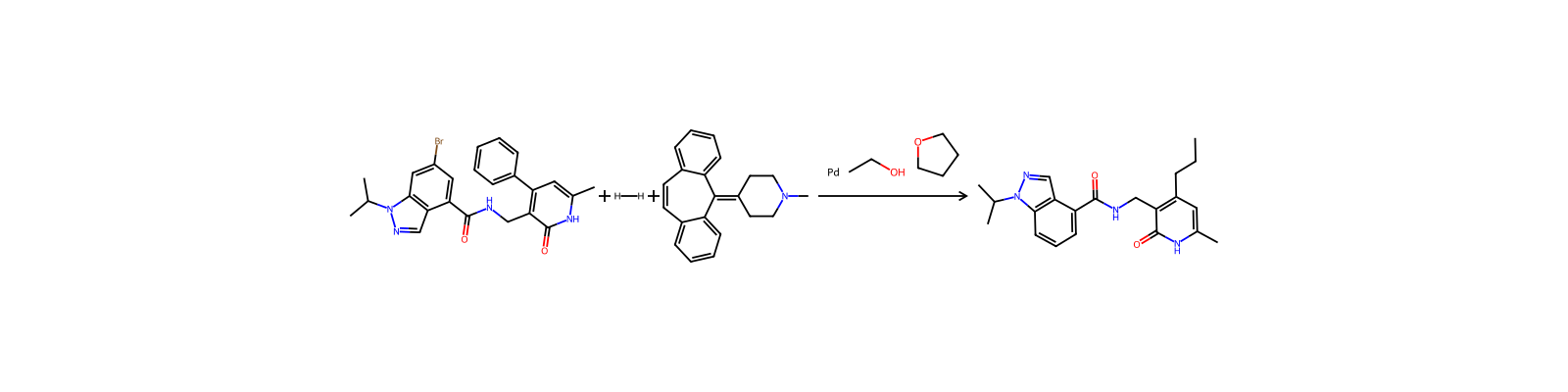
Reaktionsaufzeichnung erstellen
Reaktionsgleichung von HRID 5222
HRID 5222als Eduktuspto-grants-1993_09
Reaktionsgleichung von HRID 85528
HRID 85528als Eduktuspto-grants-2014_09
Reaktionsgleichung von HRID 128635
HRID 128635als Eduktuspto-grants-1995_11
Reaktionsgleichung von HRID 313185
HRID 313185als EduktTraining data from https://doi.org/10.1039/C8SC04228D (8/10)
Reaktionsgleichung von HRID 382288
HRID 382288als Eduktuspto-grants-2001_10
Reaktionsgleichung von HRID 382314
HRID 382314als Eduktuspto-grants-2001_10
Reaktionsgleichung von HRID 477820
HRID 477820als Eduktuspto-grants-1989_12
Reaktionsgleichung von HRID 532292
HRID 532292als Eduktuspto-grants-2014_10
Seite 1 von 3

Notizen zur Verbindung

Wird geladen…

Auf dieser SeiteGrundinformationenÜberblickNamen und BezeichnerEigenschaftenSicherheit und RegulatorischesChemie und IndustrieZugehörige ReaktionenNotizen zur Verbindung
Weitere Aktionen
Neue NotizNeue ReaktionAnfrage stellen
PubChem CID
2913
DTXSID
DTXSID8022872
ChEMBL
CHEMBL516
ChEBI
CHEBI:4046
UNII
2YHB6175DO
EC Number
204-928-9
Nikkaji
J5.419D
Collision Cross Section
170.35 Ų [M+H]+ [CCS Type: TW; Method: calibrated with polyalanine and drug standards]
Other Experimental PropertiesCRYSTALS FROM ABSOLUTE ETHANOL + ETHER. UV MAX (0.1 N H2SO4): 224,285 NM (E AT 1 CM AND 1%= 1,656,355) /HCL/

Physikochemische Eigenschaften

Schmelzpunkt
112.3 · 112.3-113.3°
Siedepunkt
419.7 °C · 419.7°C (rough estimate)
Dichte
0.9917 · 0.9917 (rough estimate)
Brechungsindex
1.824 · 1.8240 (estimate)
storage temp.
-20 °C · Store at -20°C
Aggregatzustand
Solid
pka
8.87 · pKa 8.87 (Uncertain)
Farbe
Crystals from EtOH (aq)
Wasserlöslichkeit
317.6 ug/L · 317.6ug/L(22.5 ºC)
CAS Datenbank
129 · 129-03-3(CAS DataBase Reference)
NIST chemische Informationen
Cyproheptadine(129-03-3)
Interactions · 5 Einträge

Concurrent use may potentiate the CNS depressant effects of either these medications /alcohol or other CNS depression-producing medications/ or antihistamines; also, concurrent use of maprotiline or tricyclic antidepressants may potentiate the anticholinergic effects of either antihistamines or these medications. /Antihistamines/

Anticholinergic effects may be potentiated when these medications /anticholinergics or other medications with anticholinergic activity/ are used concurrently with antihistamines; patients should be advised to report occurrence of gastrointestinal problems promptly since paralytic ileus may occur with concurrent therapy. /Antihistamines/

Concurrent use of monoamine oxidase (MAO) inhibitors with antihistamines may prolong the intensify the anticholinergic and CNS depressant effects of antihistamines; concurrent use is not recommended. /Antihistamines/

Concurrent use /of ototoxic medications/ with antihistamines may mask the symptoms of ototoxicity such as tinnitus, dizziness, or vertigo. /Antihistamines/

For more Interactions (Complete) data for CYPROHEPTADINE (12 total), please visit the HSDB record page.

Hepatotoxicity · 1 Eintrag

Unlike most first generation antihistamines, cyproheptadine has been associated with several instances of clinically apparent liver injury. The few cases that have been described had a time to onset of 1 to 6 weeks and a cholestatic or mixed pattern of liver enzyme elevations. Immunoallergic and autoimmune features were not present and most patients recovered rapidly without residual. Acute liver failure due to cyproheptadine has not been described.

Exposure RoutesWell absorbed after oral administration.
Toxicity Summary · 1 Eintrag

Cyproheptadine competes with free histamine for binding at HA-receptor sites. This antagonizes the effects of histamine on HA-receptors, leading to a reduction of the negative symptoms brought on by histamine HA-receptor binding. Cyproheptadine also competes with serotonin at receptor sites in smooth muscle in the intestines and other locations. Antagonism of serotonin on the appetite center of the hypothalamus may account for Cyproheptadine's ability to stimulate appetite.

Signs and SymptomsDrowsiness, epigastric distress (dysphagia), nausea, vomiting, (it is noted that these side effects are much more common in people with neuromuscular disorders). [Wikipedia]
Human Toxicity ExcerptsThis compound is thought to inhibit the contractile effect of serotinin on smooth muscles by competing with serotonin for its receptor. 41 Pregnancies were treated with 4 to 16 mg and no teratogenic effects were observed.
Carcinogen ClassificationNo indication of carcinogenicity to humans (not listed by IARC).
Drug Induced Liver Injury · 5 Einträge

Drug-Induced Liver Injury Severity and Toxicity (DILIst)

cyproheptadine

DILI Positive

Oral

DOI:10.1016/j.drudis.2019.09.022

Non-Human Toxicity Excerpts · 3 Einträge

In experiments on chick embryos from various age groups, studies have been made of the effect of a blockader of serotonin receptors: cyproheptadine, and blockader of adrenoreceptors: propranolol, on rhythmic activity of the amnion in vivo after injection of the substances into amniotic fluid. Stimulating effect of propranolol from the 9th to the 19th day of incubation and inhibitory effect of cyproheptadine from the 5th to the 19th day of incubation were revealed. These results indicate the existence of serotonin and noradrenaline in the amniotic fluid of chick embryo. High performance liquid chromatography directly confirmed this conclusion.

CYPROHEPTADINE, THE MAIN CONSTITUENT OF THE APPETITE STIMULANT TONIC, MAGNADYN IS A POTENT ANTIHISTAMINE DRUG USED IN THE TREATMENT OF RHINITIS, PRURITUS, URTICARIA, NELSON S SYNDROME & CUSHING S SYNDROME. ITS GENOTOXIC EFFECT WAS INVESTIGATED ON SWISS ALBINO MOUSE BONE MARROW AND PERIPHERAL BLOOD CELLS THROUGH MICRONUCLEUS ANALYSIS. THE TONIC WAS ADMINISTERED ORALLY IN THREE DIFFERENT DOSES VIZ: 0.1 MG/KG, 0.5 MG/KG AND 2.5 MG/KG OF CYPROHEPTADINE IN 0.15 ML QUANTITY. THE THERAPEUTIC DOSE OF 0.5 MG/KG WAS ADMINISTERED DAILY FOR 45 DAYS. ADEQUATE NEGATIVE AND CYCLOPHOSPHAMIDE (50 MG/KG) TREATED POSITIVE CONTROLS WERE MAINTAINED. THE ANIMALS WERE SACRIFICED AT 24, 48 AND 72 HOURS OF ADMINISTRATION TO ASCERTAIN THE DOSE AND TIME-YIELD EFFECT OF THE DRUG. THE DATA WERE SUBJECTED TO MANN-WHITNEY U-TEST. THE EFFECT OF THE DRUG ON MICRONUCLEUS INDUCTION WAS NOT STATISTICALLY SIGNIFICANT IN BOTH THE TESTS. THERE WAS NO SIGNIFICANT CHANGE IN THE P/N RATIO. THE INCIDENCE OF MICRONUCLEUS IN PCE & NCE OF BOTH THE BONE MARROW AND PERIPHERAL BLOOD CELLS OF THE TREATED ANIMALS WERE STATISTICALLY NONSIGNIFICANT COMPARED TO NEGATIVE CONTROL EVEN AFTER LONG TERM ADMINISTRATION. THE ABOVE STUDY CLEARLY SHOWED THAT CYPROHEPTADINE IS NEITHER CLASTOGENIC NOR MITOCLASTIC IN THE PRESENT TEST SYSTEM.

The clonal insulin producing cell line RINm5F was evaluated as model for the action of cyproheptadine (CPH)-like diabetogenic compounds in the rat pancreas. Treatment with 10 ug CPH and selected structural analogs under culture conditions produced a progressive loss of cellular insulin which reached 30% of control within 24 hours. Comparison of the activities of the analogs 4-diphenylmethylpiperidine (4-DPMP) and 2-diphenylmethylpiperidine (2-DPMP) to produce cellular insulin depletion showed that 4-DPMP was as active as CPH but 2-DPMP had no activity at the highest concn employed (10 microM). The CPH metabolite desmethyl CPH-epoxide was five times more active than the parent compound in producing loss of insulin in RINm5F cells. These results are consistent with previously published results of CPH actions in vivo. An inhibition of insulin biosynthesis with no loss of preproinsulin mRNA occurred in RINm5F cells treated with CPH or DMCPH-epoxide. This suggests that an effect on transcription may not be the primary action by which CPH and its analogs inhibit insulin synthesis in vivo.

Antidote and Emergency Treatment · 1 Eintrag

For treatment of overdose: Since there is no specific antidote for overdose with antihistamines, treatment is symptomatic and supportive with possible utilization of the following: Induction of emesis (syrup of ipecac recommended); however, precaution against aspiration is necessary, especially in infants and children. Gastric lavage (isotonic or 0.45% sodium chloride solution) if patient is unable to vomit within 3 hours of ingestion. Saline cathartics (milk of magnesia) are sometimes used. Vasopressors to treat hypotension; however, epinephrine should not be used since it may further lower blood pressure. Oxygen and intravenous fluids. Precaution against use of stimulants (analeptic agents) because they may cause seizures. /Antihistamines/

Effects During Pregnancy and Lactation◉ Summary of Use during Lactation

Regulatorische Informationen

FDA Requirements · 1 Eintrag

Manufacturers, packers, and distributors of drug and drug products for human use are responsible for complying with the labeling, certification, and usage requirements as prescribed by the Federal Food, Drug, and Cosmetic Act, as amended (secs 201-902, 52 Stat. 1040 et seq., as amended; 21 U.S.C. 321-392).

Sicherheitsdaten

hs_code
29143900
Toxizität
LD50 orl-rat: 295 mg/kg 27ZQAG -,69,72
Giftige Stoffe Daten
129-03-3(Hazardous Substances Data)

Cyproheptadine has known human metabolites that include Cyproheptadine N-glucuronide.

Hepatic (cytochrome P-450 system) and some renal. Route of Elimination: After a single 4 mg oral dose of14C-labelled cyproheptadine HCl in normal subjects, given as tablets 2% to 20% of the radioactivity was excreted in the stools. At least 40% of the administered radioactivity was excreted in the urine.

MeSH Pharmacological Classification · 5 Einträge

Agents, usually topical, that relieve itching (pruritus).

Drugs used for their effects on the gastrointestinal system, as to control gastric acidity, regulate gastrointestinal motility and water flow, and improve digestion.

Drugs that selectively bind to but do not activate histamine H1 receptors, thereby blocking the actions of endogenous histamine. Included here are the classical antihistaminics that antagonize or prevent the action of histamine mainly in immediate hypersensitivity. They act in the bronchi, capillaries, and some other smooth muscles, and are used to prevent or allay motion sickness, seasonal rhinitis, and allergic dermatitis and to induce somnolence. The effects of blocking central nervous system H1 receptors are not as well understood.

Drugs that bind to but do not activate serotonin receptors, thereby blocking the actions of serotonin or SEROTONIN RECEPTOR AGONISTS.

Agents that are used to treat allergic reactions. Most of these drugs act by preventing the release of inflammatory mediators or inhibiting the actions of released mediators on their target cells. (From AMA Drug Evaluations Annual, 1994, p475)

Absorption, Distribution and Excretion · 6 Einträge

A single study examining the difference in absorption of orally administered versus sublingually administered cyproheptadine in five healthy males demonstrated a mean Cmax of 30.0 mcg/L and 4.0 mcg/L, respectively, and a mean AUC of 209 mcg.h/L and 25 mcg.h/L, respectively. The Tmax of orally and sublingually administered cyproheptadine was 4 hours and 9.6 hours, respectively.

Approximately 2-20% of the radioactivity from an orally administered radio-labeled dose of cyproheptadine is excreted in the feces, of which approximately 34% is unchanged parent drug (less than 5.7% of the total dose). At least 40% of radioactivity is recovered in the urine.

H1 antagonists are eliminated more rapidly by children than by adults and more slowly in those with severe liver disease. /H1 Receptor Antagonists/

The H1 antagonists are well absorbed from the gastrointestinal tract. Following oral administration, peak plasma concentrations are achieved in 2 to 3 hours ... . /H1 Receptor Antagonists/

To investigate the pharmacokinetics of cyproheptadine (CPH) and its metabolites, the plasma concn and urinary excretion of CPH and its detectable metabolites were determined after iv admin of parent or synthesized metabolites to rats. The plasma CPH concn time course was subjected to biexponential calculation following the iv admin of CPH, producing the temporal and low plasma concn of desmethylcyproheptadine (DMCPH) and the sustained plasma concn of desmethylcyproheptadine epoxide (DMCPHepo). DMCPH was also eliminated according to the biexponential equation, after iv admin of performed DMCPH, forming DMCPHepo in plasma. On the other hand, no detectable DMCPHepo was found in plasma after the iv admin of cyproheptadine epoxide (CPHepo). All cmpd administered had large distribution volumes and were most entirely excreted as DMCPHepo in urine; this excretion continued for a long time. However, the urinary excretion pattern of DMCPHepo after CPHepo was different from those after CPH and MCPH. The mean residence times of the epoxidized metabolites estimated from the urinary data were much longer than those from the plasma concn data, suggesting either a gradual reflux of the metabolites from a tissue depot into systemic circulation under those plasma concn close of detection limit, or one interaction which delays excretion into the urine. This study suggests that both metabolic pathways of CPH, through DMCPH nd CPHepo, to DMCPHepo are possible, but that the demethylation largely occurs prior to epoxidation; also that the extensive and persistent distribution of DMCPHepo to tissues may relate to the toxicity of CPH reported in rats.

Twelve diphenhydramine and cyproheptadine derivatives were synthesized and screened for Hl-receptor antagonist activity at the isolated guinea pig ileum and for H2-receptor antagonist activity at the isolated guinea pig right atrium. The cmpd showed high Hl- and H2-receptor antagonist activity. The incorporation of the diphenhydramine and cyproheptadine components provided high affinity to Hl-receptors. All compounds elicited a dual mode of competitive and noncompetitive antagonism. The nitroethenediamines with 4-fluoro-4-methyl-substituted diphenhydramine as the Hl-receptor antagonist moiety displayed the most potent Hl- and H2-receptor antagonist effects.

Cellular LocationsMembrane
Metabolite PathwaysCyproheptadine H1-Antihistamine Action

Verwendung und Herstellung

Uses · 2 Einträge

MEDICATION

Used as an antihistaminic/anticholinergic and antiserotonergic agent. For treatment of perennial and seasonal allergic rhinitis, vasomotor rhinitis, allergic conjunctivitis due to inhalant allergens and foods, mild uncomplicated allergic skin manifestations of urticaria and angioedema, amelioration of allergic reactions to blood or plasma, cold urticaria, dermatographism, and as therapy for anaphylactic reactions adjunctive to epinephrine.

Methods of ManufacturingDibenzosuberenone-5 + isonipecotic acid (condensation/decarboxylation)
Formulations/PreparationsAvailable commercially as the free base and as the hydrochloride sesquihydrate salt.
Use ClassificationPharmaceuticals

Anwendungen

BeschreibungCyproheptadine has antianaphylactic activity that is associated with its ability to slow down the release of histamine and other mediators from fat cells.

VerwendenAntihistaminic; antipruritic.

Vor- und nachgelagerte Produkte

Vorgelagerte Rohstoffe

MagnesiumBromethanNatriumhydroxidHydrogenchloridEssigsäureanhydrid4-Chloropiperidine hydrochloride

Nachgelagerte Produkte

cyproheptadine 10,11-epoxide
Ergänzende Hinweise · 1 Eintrag

DefinitionChEBI: The product resulting from the formal oxidative coupling of position 5 of 5H-dibenzo[a,d]cycloheptene with position 4 of 1-methylpiperidine resulting in the formation of a double bond between the two fragments. t is a sedating antihistamine with antimuscarinic and calcium-channel blocking actions. It is used (particularly as the hydrochloride sesquihydrate) for the relief of allergic conditions including rhinitis, conjunctivitis due to inhalant allergens and food , urticaria and angioedema, and in pruritic skin disorders. Unlike other antihistamines, it is also a seratonin receptor antagonist, making it useful in conditions such as vascular headache and anorexia.