
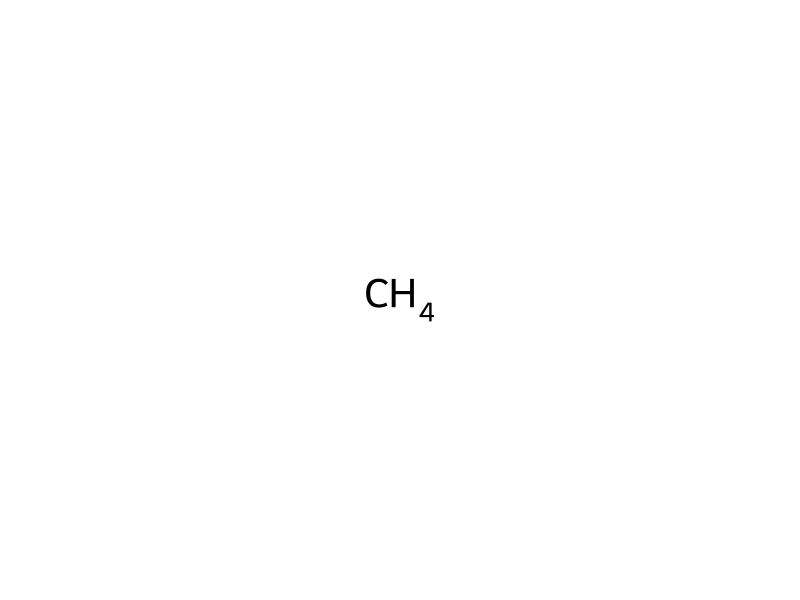
Grundinformationen
- Standard-SMILES
C- InChIKey
VNWKTOKETHGBQD-UHFFFAOYSA-N- Summenformel
- CH4
- Durchschnittliche Molmasse
- 16,043 g/mol
- Monoisotopische Masse
- 16,03130013
Überblick
Methane is a colorless odorless gas. It is also known as marsh gas or methyl hydride. It is easily ignited. The vapors are lighter than air. Under prolonged exposure to fire or intense heat the containers may rupture violently and rocket. It is used in making other chemicals and as a constituent of the fuel, natural gas.
Namen und Bezeichner
- Bevorzugter Name
- Methane
- IUPAC
- methane
- Englischer Name
- Methane
- Summenformel
- CH4
- Molmasse
- 0
Namen und Synonyme
methaneMarsh gasMethyl hydrideFire DampBiogas74-82-8R 50 (refrigerant)metanotetrahydridocarbonHSDB 167Methane in gaseus stateUN1972
Weitere Namen anzeigen
BRN 1718732OP0UW79H66UN1971CH4DTXSID8025545UNII-OP0UW79H66CHEBI:16183R 50
Datenbank-Bezeichner
- CAS
74-82-8、8006-14-2- PubChem CID
- 297
- DTXSID
DTXSID8025545- ChEMBL
CHEMBL17564- ChEBI
CHEBI:16183- UNII
- OP0UW79H66
- EC Number
- 200-812-7、927-905-1
- Nikkaji
- J2.228.533E、J2.380I、J3.470.363I、J593B、J68.119I
Eigenschaften
Berechnete Struktureigenschaften
- XLogP
- 0,6
- Polarare Oberfläche (TPSA)
- 0 Ų
- H-Brücken-Donoren
- 0
- H-Brücken-Akzeptoren
- 0
- Frei drehbare Bindungen
- 0
- Schwere Atome
- 1
- Formalladung
- 0
- Komplexität
- 0
Experimentelle und physikochemische Eigenschaften
Chemical Classes
Toxic Gases & Vapors -> Simple Asphyxiants
Flammable agents - 4th degree
SpringerMaterials PropertiesDunham energy parameter
LogP
log Kow = 1.09
1.09
1.09
Odor
Odorless
Weak odor
TasteTasteless
Density
0.415 to 0.45 at -259.6 °F (USCG, 1999)
0.422 at -256 °F (USCG, 1999) - Less dense than water; will float
0.554 at 0 °C/4 °C (air = 1 ) or 0.7168 g/liter
0.4228 @ -162°C
Viscosity34.8 uP at -181.6 °C; 76.0 uP at -78.5 °C; 102.6 uP at 0 °C; 108.7 uP at 20 °C; 133.1 uP at 100.0 °C; 160.5 uP at 200.5 °C; 181.3 uP at 284 °C; 202.6 uP at 380 °C; 226.4 uP at 499 °C
Color/FormColorless gas
Solubility
3.5 mL/100 mL at 63 °F (NTP, 1992)
In water, 22 mg/L at 25 °C
Slightly soluble in acetone; soluble in ethanol, ethyl ether, benzene, toluene, methanol
0.91 mL in 1 g ether at 20 °C; 0.60 mL in 1 g ethyl alcohol at 20 °C
0.022 mg/mL at 25 °C
Solubility in water, ml/100ml at 20 °C: 3.3
Flash Point
-306 °F (NTP, 1992)
-306 °F
-188 °C (-306 °F) - closed cup
Flammable gas
Boiling Point
-258 °F at 760 mmHg (USCG, 1999)
-258.7 °F at 760 mmHg (NTP, 1992)
-161.50 °C
-161 °C
-161.48 °C @760 [mm Hg]
Melting Point
-296 °F (USCG, 1999)
-296.5 °F (NTP, 1992)
-182.566 °C
-182.4 °C
-183 °C
-182.47 °C
Physikochemische Eigenschaften
- Schmelzpunkt
- -182.6 °C · -182.6 °C
- Siedepunkt
- -161.4 °C · -161.4 °C
- Dichte
- 0.7168 g/cm3 · 0.7168 g/cm3
Sicherheit und Regulatorisches
GHS-Klassifizierung
GHS Classification
Danger
H220: Extremely flammable gas [Danger Flammable gases]
P203, P210, P222, P280, P377, P381, and P403 (click each P-code to see the statement)
Danger
H220 (100%): Extremely flammable gas [Danger Flammable gases]
P203, P210, P222, P280, P282, P336+P317, P377, P381, P403, and P410+P403 (click each P-code to see the statement)
Gefahrenhinweise
Regulatory Information
Chemical: Methane
Methane is listed on the EPA's Chemical Data Reporting (CDR) system. Manufacturers and importers of Methane are required to report information about their production and use of this chemical to the EPA under the Toxic Substances Control Act (TSCA). (40 eCFR Part 711)
Status: Active Update: 23-03-2023 https://echa.europa.eu/registration-dossier/-/registered-dossier/14250
Methane or natural gas but excluding refrigerated liquid methane or natural gas: HSNO Approval: HSR001005 Approved with controls
The New Jersey Worker and Community Right to Know Act requires public and private employers to provide information about hazardous substances at their workplaces. (N.J.S.A. 34:5A-1 et. seq.)
Other Safety InformationIMAP assessments - Methane: Human health tier I assessment
DOT Label
Flammable Gas
Flammable Gas
Flammable Gas
Flammable Gas
Fire Hazards
Excerpt from ERG Guide 115 [Gases - Flammable (Including Refrigerated Liquids)]:
Special Hazards of Combustion Products: None (USCG, 1999)
Excerpt from ERG Guide 115 [Gases - Flammable (Including Refrigerated Liquids)]:
Excerpt from ERG Guide 115 [Gases - Flammable (Including Refrigerated Liquids)]:
· EXTREMELY FLAMMABLE.
· EXTREMELY FLAMMABLE.
Fire Potential
Very dangerous fire and explosion hazard when exposed to heat or flame.
Flammable in the presence of an oxidizing gas (eg air), a source of ignition, and when the concentration of the gas is between the lower and upper explosive limits. Keep away from heat/sparks/open flame/hotsurface/oxidizing gas. No smoking.
Health Hazards
If concentration of gas is high enough, may cause asphyxiation. No detectable systemic effects, even at 5% concentration in air. (USCG, 1999)
High concentrations may cause asphyxiation. No systemic effects, even at 5% concentration in air. (USCG, 1999)
Excerpt from ERG Guide 115 [Gases - Flammable (Including Refrigerated Liquids)]:
Excerpt from ERG Guide 115 [Gases - Flammable (Including Refrigerated Liquids)]:
· Vapors may cause dizziness or asphyxiation without warning, especially when in closed or confined areas.
· Vapors may cause dizziness or asphyxiation without warning, especially when in closed or confined areas.
Hazards Summary
The Critical Effects for aliphatic hydrocarbon gases are CNS depression and cardiac sensitization. From a toxicologic standpoint, methane and ethane are practically inert; however, at very high concentrations, they act as a simple asphyxiant and can cause suffocation by displacement of oxygen from breathing atmosphere, below the critical level of 16% oxygen that is required to sustain life. [ACGIH] Simple asphyxiant; Evaporating liquid can cause frostbite; [ICSC]
DOT ID and Guide
1972 115
1971 115
Reactive Group
Hydrocarbons, Aliphatic Saturated
Hydrocarbons, Aliphatic Saturated
Hydrocarbons, Aliphatic Saturated
Hydrocarbons, Aliphatic Saturated
EC ClassificationSymbol: F+; R: 12; S: (2)-9-16-33
UN ClassificationUN Hazard Class: 2.1
Reactivity Alerts
Highly Flammable
Highly Flammable
Highly Flammable
Highly Flammable
Sicherheit und Schutzausrüstung
Fire Fighting
Excerpt from ERG Guide 115 [Gases - Flammable (Including Refrigerated Liquids)]:
Excerpt from ERG Guide 115 [Gases - Flammable (Including Refrigerated Liquids)]:
Excerpt from ERG Guide 115 [Gases - Flammable (Including Refrigerated Liquids)]:
Excerpt from ERG Guide 115 [Gases - Flammable (Including Refrigerated Liquids)]:
Shut off supply; if not possible and no risk to surroundings, let the fire burn itself out. In other cases extinguish with water spray, powder, carbon dioxide. In case of fire: keep cylinder cool by spraying with water. Combat fire from a sheltered position.
First Aid Measures
Fresh air, rest. Artificial respiration may be needed. Refer for medical attention.
ON FROSTBITE: rinse with plenty of water, do NOT remove clothes. Refer for medical attention .
First rinse with plenty of water for several minutes (remove contact lenses if easily possible), then refer for medical attention.
Accidental Release Measures
· CALL 911. Then call emergency response telephone number on shipping paper. If shipping paper not available or no answer, refer to appropriate telephone number listed on the inside back cover.
· ELIMINATE all ignition sources (no smoking, flares, sparks or flames) from immediate area.
· CALL 911. Then call emergency response telephone number on shipping paper. If shipping paper not available or no answer, refer to appropriate telephone number listed on the inside back cover.
· ELIMINATE all ignition sources (no smoking, flares, sparks or flames) from immediate area.
First Aid
Remove victim to open air. If he is overcome by gas, apply artificial resuscitation. (USCG, 1999)
EYES: First check the victim for contact lenses and remove if present. Flush victim's eyes with water or normal saline solution for 20 to 30 minutes while simultaneously calling a hospital or poison control center. Do not put any ointments, oils, or medication in the victim's eyes without specific instructions from a physician. IMMEDIATELY transport the victim after flushing eyes to a hospital even if no symptoms (such as redness or irritation) develop.
Excerpt from ERG Guide 115 [Gases - Flammable (Including Refrigerated Liquids)]:
Excerpt from ERG Guide 115 [Gases - Flammable (Including Refrigerated Liquids)]:
General First Aid:
General First Aid:
Safe StorageFireproof. Cool. Ventilation along the floor and ceiling.
Exposure Control and Personal Protection
· Wear positive pressure self-contained breathing apparatus (SCBA).
· Wear positive pressure self-contained breathing apparatus (SCBA).
Fire Fighting Procedures
Wear self contained breathing apparatus for fire fighting if necessary.
Use water spray, alcohol-resistant foam, dry chemical or carbon dioxide.
Storage Conditions
Store in a cool, dry, well-ventilated location. Separate from halogens and oxygen. Outside or detached storage is preferred.
Protect against physical damage. ... Isolate from oxidizing agents. Prohibit open flame. Inspect for leakage occasionally.
Cleanup Methods
Clean up promptly by sweeping or vaccum.
Do not let product enter drains.
Evacuate danger area! Personal protection: self-contained breathing apparatus. Consult an expert! Ventilation. Remove all ignition sources. NEVER direct water jet on liquid.
By forced ventilation, maintain concn of gas below the range of explosive mixture. Remove the tank or cylinder to an open area. Leave to bleed off in the atmosphere.
Nonfire Spill Response
Excerpt from ERG Guide 115 [Gases - Flammable (Including Refrigerated Liquids)]:
Excerpt from ERG Guide 115 [Gases - Flammable (Including Refrigerated Liquids)]:
Excerpt from ERG Guide 115 [Gases - Flammable (Including Refrigerated Liquids)]:
Excerpt from ERG Guide 115 [Gases - Flammable (Including Refrigerated Liquids)]:
Disposal Methods
Offer surplus and non-recyclable solutions to a licensed disposal company. Contact a licensed professional waste disposal service to dispose of this material.
SRP: The most favorable course of action is to use an alternative chemical product with less inherent propensity for occupational exposure or environmental contamination. Recycle any unused portion of the material for its approved use or return it to the manufacturer or supplier. Ultimate disposal of the chemical must consider: the material's impact on air quality; potential migration in soil or water; effects on animal, aquatic, and plant life; and conformance with environmental and public health regulations.
Spillage DisposalEvacuate danger area! Personal protection: self-contained breathing apparatus. Consult an expert! Ventilation. Remove all ignition sources. NEVER direct water jet on liquid.
Toxikologische Informationen
TreatmentAsphyxiation should be treated by moving the affected person to an uncontaminated area, then giving artificial respiration and administering oxygen, if necessary. (L173)
Health EffectsMethane is an asphyxiant and displaces oxygen in enclosed spaces. At high enough concentrations, oxygen depletion may cause asphyxiation, resulting in generalized hypoxia and possibly death. (L171, L172)
Environmental Fate
TERRESTRIAL FATE: Based on a classification scheme(1), an estimated Koc value of 9(SRC), determined from a log Kow of 1.09(2) and a regression-derived equation(3), indicates that methane is expected to have very high mobility in soil(SRC). Volatilization of methane from moist soil surfaces is expected to be an important fate process(SRC) given an estimated Henry's Law constant of 0.66 atm-cu m/mole(SRC), derived from its vapor pressure, 4.66X10+5 mm Hg(4), and water solubility, 22 mg/L(5). Methane is expected to volatilize from dry soil surfaces(SRC) based upon its vapor pressure(4). An average utilization of 55% for methane by anaerobic soil microorganisms(6) suggests that biodegradation may be an environmental fate process in soil(SRC).
AQUATIC FATE: Based on a classification scheme(1), an estimated Koc value of 9(SRC), determined from a log Kow of 1.09(2) and a regression-derived equation(3), indicates that methane is not expected to adsorb to suspended solids and sediment(SRC). Volatilization from water surfaces is expected(4) based upon an estimated Henry's Law constant of 0.66 atm-cu m/mole(SRC), derived from its vapor pressure, 4.66X10+5 mm Hg(5), and water solubility, 22 mg/L(6). Using this Henry's Law constant and an estimation method(4), volatilization half-lives for a model river and model lake are 2 hours(SRC). According to a classification scheme(7), an estimated BCF of 2(SRC), from its log Kow(2) and a regression-derived equation(3), suggests the potential for bioconcentration in aquatic organisms is low(SRC). The biodegradation half-life of methane was estimated to range from 70 days to infinity in model anaerobic estuarine ecosystems(8), indicating that biodegradation is not an important environmental fate process in water(SRC).
ATMOSPHERIC FATE: According to a model of gas/particle partitioning of semivolatile organic compounds in the atmosphere(1), methane, which has a vapor pressure of 4.66X10+5 mm Hg at 25 °C(2), is expected to exist solely as a gas in the ambient atmosphere. Gas-phase methane is degraded in the atmosphere by reaction with photochemically-produced hydroxyl radicals(SRC); the half-life for this reaction in air is estimated to be 4 yrs(3), calculated from its rate constant of 6.85X10⁻¹⁵ cu cm/molecule-sec at 25 °C(4). Methane does not contain chromophores that absorb at wavelengths >290 nm(5) and, therefore, is not expected to be susceptible to direct photolysis by sunlight(SRC).
Adverse EffectsOther Poison - Simple Asphyxiant
Exposure Routes
The substance can be absorbed into the body by inhalation.
Inhalation (L172)
Toxicity Summary
Methane is an asphyxiant and displaces oxygen in enclosed spaces. At high enough concentrations, oxygen depletion may cause asphyxiation. Low concentrations of surrounding oxygen results in deficient oxygen to the organs, compounded by increased oxygen exhalation during respiration. This results in generalized hypoxia and possibly death. (L171, A120)
Signs and Symptoms
Suffocation.
ON CONTACT WITH LIQUID: FROSTBITE.
ON CONTACT WITH LIQUID: FROSTBITE.
Symptoms of methane asphyxiation include nausea, vomiting, difficulty breathing, irregular heartbeat, headache, drowsiness, fatigue, dizziness, disorientation, mood swings, tingling sensation, loss of coordination, suffocation, convulsions, unconsciousness, coma, and possibly death. (L173)
Effluent Concentrations
In exhaust of diesel engine: 17% of emitted hydrocarbons; in exhaust of reciprocating gasoline engine: 24% of emitted hydrocarbons; in exhaust of rotary gasoline engine: 4.9% of emitted hydrocarbons; expected glc's in USA urgan air: range: 1.6-10 ppm; in combustion gas of household central heating on gasoil: 20 ppm; in flue gas of municipal incinerator: < 0.4-13.0 ppm; in exhaust of gasoline engine: 14-17% of total exhaust hydrocarbons; 15 fuel survey: 18 vol % of total exhaust hydrocarbons
In 1990, emissions of methane to the atmosphere were approximately 380 million tons/yr; in 1860, 80 million tons/yr of methane were released(1). Methane emissions estimates for 1993 were as follows: gas flaring, 18.0X10+12 g/yr; gas supply, 16.9X10+12 g/yr; coal mining 46.3X10+12 g/yr; biomass burning, 38.4X10+12 g/yr; livestock, 112.1X10+12 g/yr; rice, 101.4X10+12 g/yr; landfills, 43.9X10+12 g/yr(1). Methane emissions estimates for 1860 were as follows: gas flaring, 0.0X10+12 g/yr; gas supply, 0.0X10+12 g/yr; coal mining 2.2X10+12 g/yr; biomass burning, 9.8X10+12 g/yr; livestock, 25.6X10+12 g/yr; rice, 40.1X10+12 g/yr; landfills, 1.6X10+12 g/yr(1). Livestock farming is the largest anthropogenic source of methane(1).
Methane was detected in the flue gas of an incineration plant located in the town of Babylon, NY during three different tests at concentrations ranging from less than 0.4 to 13.0 ppm(1). Methane was found in combustion gas of light fuel oil at concentrations ranging from 0.32 to 26.80 mL/L and it was detected in the exhaust gas of light fuel oil at a concentration of 0.11 mL/L(2). Automotive exhaust emissions have been found to contain methane(6,7). It was found to be present in effluents from coal combustion(3). Methane was detected in ten samples of emissions from jet engines at concentrations ranging from 0.05 to 48.0 ppm(4). Wood smoke has been found to contain methane in the gas-phase at final concentrations of 4,500 and 3,920 ppb(5). Methane was detected in the ambient air of five California landfills at concentrations ranging from 16,600 to 587,000 ppm(8). The rate of methane from fireplace combustion of wood was 4,120 mg/kg wood burned(9). The concentration of methane measured in the Caldecott Tunnel located in San Francisco Bay, CA was approx 413 mg/L during a period when low oxygenated fuel was used(10). When high oxygenated fuel was used, the concentration of methane in tunnel air was about 459 mg/L(10).
Direct measurement of methane (CH4) flux from wetland ecosystems of south Florida demonstrates that freshwater wet prairies and inundated sawgrass marsh are the dominant sources of atmospheric CH4 in the region(1). Fluctuations in soil moisture are an important environmental factor controlling both seasonal and interannual fluctuations in CH4 emissions from undisturbed wetlands(1). Land use estimates for 1900 and 1973 were used to calculate regional CH4 flux(1). Human settlement in south Florida has modified wetland sources of CH4, reducing the natural prairies and marsh sources by 37%(1). During the same period, impoundments and disturbed wetlands were created which produce CH4 at rates approximately 50% higher than the natural wetlands they replaced(1). The mean standard error, in mg methane/sq m/day, was 61 for wet prairies and sawgrass marsh, 59 for wetland forests, 4 for saltwater mangroves, and 74 for impoundments and disturbed wetlands(1).
Soil Adsorption/Mobility
The Koc of methane is estimated as 9(SRC), using a log Kow of 1.09(1) and a regression-derived equation(2). According to a classification scheme(3), this estimated Koc value suggests that methane is expected to have very high mobility in soil. Methane's vapor pressure of 4.7X10+5 mm Hg(4) suggests that this compound will permeate through soil(SRC).
Natural Pollution Sources
Methane may be released to the environment as emissions from microbes, animal waste and volcanoes(1,2). Methane is the principal constituent of natural gas(1,3); natural gas from America is approximately 85% methane(4). Emissions of geothermal steam may release methane to the environment(1,5). Methane is a constituent of petroleum gases(6). An important source of methane is the rumen of domestic animals, especially of cattle(7). Methane may be released to the environment through emissions during the growing of rice(7).
Methane is found as hydrates (i.e., methane hydrate) in immense amounts both in Arctic regions and in marine sediments(1). Methane hydrate is stable in ocean floor sediments at water depths greater than 300 meters, and where it occurs, it is known to cement loose sediments in a surface layer several hundred meters thick(1). The worldwide amounts of carbon bound as gas hydrates (e.g., methane hydrate) is conservatively estimated to total twice the amount of carbon found in all known fossil fuels on Earth(1). The earth's atmosphere contains 0.00022% methane by volume(2).
Potential rates of methane generation and carbon dioxide generation were measured on 11 dates in 1986 in peat from six plant communities typical of moss dominated peatlands in the Appalachian Mountains(1). Annual methane generation ranged from 2.7 to 17.5 M/sq m, and annual carbon dioxide production ranged from 30.6 to 79.0 M/sq m(1). The wide range in methane generation values among the communities found within a single peatland indicates that obtaining one generation value for a peatland may not be appropriate(1). Low temperature constrained the potential for methane generation in winter, while the chemical quality of the peat substrate appears to control methane generation in the summer(1). Methane oxidation was measured throughout the peat profile to a depth of 30 cm(1). Values for methane oxidation ranged from 0.08 to 18.7 uM/hr among the six plant communities(1). Aerobic methane oxidizing bacteria probably mediated most of the activity(1). On a daily basis during the summer, between 11 and 100% of the methane generated is susceptible to oxidation within the peat column(1). Pools of dissolved methane and dissolved carbon dioxide in pore waters were <0.2 and <1.0 M/sq m, respectively, indicating that methane does not accumulate in the pore waters. Peatlands have been considered as an important source of biologically produced methane(1). Despite the high rates of methane generation, the high rates of methane oxidation dampen the potential emission of methane to the atmosphere(1).
C(14) content of atmospheric methane prior to nuclear adn thermal nuclear bomb-testing contamination suggests that greater than 80% of atmospheric methane is from decay of recent organic matter. /14(C)-Methane/
Atmospheric Concentrations
A factor of 2.5 increase in the global abundance of atmospheric methane (CH(4)) since 1750 contributes 0.5 Wm(-2) to total direct radiative forcing by long-lived greenhouse gases (2.77 Wm(-2) in 2009), while its role in atmospheric chemistry adds another approximately 0.2 Wm(-2) of indirect forcing. Since CH(4) has a relatively short lifetime and it is very close to a steady state, reductions in its emissions would quickly benefit climate. Sensible emission mitigation strategies require quantitative understanding of CH(4)'s budget of emissions and sinks. Atmospheric observations of CH(4) abundance and its rate of increase, combined with an estimate of the CH(4) lifetime, constrain total global CH(4) emissions to between 500 and 600 Tg CH(4) yr(-1). While total global emissions are constrained reasonably well, estimates of emissions by source sector vary by up to a factor of 2. Current observation networks are suitable to constrain emissions at large scales (e.g. global) but not at the regional to national scales necessary to verify emission reductions under emissions trading schemes. Improved constraints on the global CH(4) budget and its break down of emissions by source sector and country will come from an enhanced observation network for CH(4) abundance and its isotopic composition (delta(13)C, deltaD(D=(2)H) and delta(14)C). Isotopic measurements are a valuable tool in distinguishing among various sources that contribute emissions to an air parcel, once fractionation by loss processes is accounted for. Isotopic measurements are especially useful at regional scales where signals are larger. Reducing emissions from many anthropogenic source sectors is cost-effective, but these gains may be cancelled, in part, by increasing emissions related to economic development in many parts of the world. An observation network that can quantitatively assess these changing emissions, both positive and negative, is required, especially in the context of emissions trading schemes.
Methane is an important greenhouse gas, and its atmospheric concentration has nearly tripled since pre-industrial times. The growth rate of atmospheric methane is determined by the balance between surface emissions and photochemical destruction by the hydroxyl radical, the major atmospheric oxidant. Remarkably, this growth rate has decreased markedly since the early 1990s, and the level of methane has remained relatively constant since 1999, leading to a downward revision of its projected influence on global temperatures. Large fluctuations in the growth rate of atmospheric methane are also observed from one year to the next, but their causes remain uncertain. Here we quantify the processes that controlled variations in methane emissions between 1984 and 2003 using an inversion model of atmospheric transport and chemistry. Our results indicate that wetland emissions dominated the inter-annual variability of methane sources, whereas fire emissions played a smaller role, except during the 1997-1998 El Nino event. These top-down estimates of changes in wetland and fire emissions are in good agreement with independent estimates based on remote sensing information and biogeochemical models. On longer timescales, our results show that the decrease in atmospheric methane growth during the 1990s was caused by a decline in anthropogenic emissions. Since 1999, however, they indicate that anthropogenic emissions of methane have risen again. The effect of this increase on the growth rate of atmospheric methane has been masked by a coincident decrease in wetland emissions, but atmospheric methane levels may increase in the near future if wetland emissions return to their mean 1990s levels.
URBAN/SUBURBAN: The concentration of methane measured at Exhibition Road, London, UK ranged from 1.34-2.45 ppm (average, 1.59 ppm) between the period of January 1991 to July 1992(1). Methane has been detected in five air samples collected in Houston, TX on April 2, 1974 at concentrations ranging from 1.91 to 2.31 ppm(2). Methane detected of Riverside, CA in smoggy air at 2.02 ppm(3).
URBAN/SUBURBAN: Methane emission in the Mexico City Metropolitan Area, 2000(1).
For more Atmospheric Concentrations (Complete) data for METHANE (7 total), please visit the HSDB record page.
Human Toxicity Excerpts
/HUMAN EXPOSURE STUDIES/ ...May cause frostbite /like effects/ on skin contact. /Liquified methane/
/HUMAN EXPOSURE STUDIES/ ... Methane... acts as a simple asphyxiant when inhaled. /Its/ presence displaces air, which lowers the partial pressure of oxygen and causes hypoxia.
/CASE REPORTS/ It has been known that methane gas intoxication causes loss of consciousness or asphyxia. There is, however, a paucity of information about acute pulmonary toxicity from methane gas inhalation. A 21-year-old man was presented with respiratory distress after an accidental exposure to methane gas for one minute. He came in with a drowsy mentality and hypoxemia. Mechanical ventilation was applied immediately. The patient's symptoms and chest radiographic findings were consistent with acute pneumonitis. He recovered spontaneously and was discharged after 5 days without other specific treatment. His pulmonary function test, 4 days after methane gas exposure, revealed a restrictive ventilatory defect. In conclusion, acute pulmonary injury can occur with a restrictive ventilator defect after a short exposure to methane gas. The lung injury was spontaneously resolved without any significant sequela.
/OTHER TOXICITY INFORMATION/ The impact of major gaseous and particulate pollutants emitted by the wildfire of October 2003 on ambient air quality and health of San Diego residents before, during, and after the fire are analyzed using data available from the San Diego County Air Pollution Control District and California Air Resources Board. It was found that fine particulate matter (PM) levels exceeded the federal daily 24-hr average standard during the fire. There was a slight increase in some of the gaseous pollutants, such as carbon monoxide, which exceeded federal standards. Ozone (O3) precursors, such as total hydrocarbons and methane gases, experienced elevated concentration during the fire. Fortunately, the absence of sunlight because of the cloud of thick smoke that covered most of the county during the fire appears to have prevented the photochemical conversion of the precursor gases to harmful concentrations of O3. Statistical analysis of the compiled medical surveillance data has been used to establish correlations between pollutant levels in the region and the resultant health problems experienced by the county citizens. The study shows that the increased PM concentration above the federal standard resulted in a significant increase in hospital emergency room visits for asthma, respiratory problems, eye irritation, and smoke inhalation...
/OTHER TOXICITY INFORMATION/ A simple asphyxiant.
Regulatorische Informationen
DHS Chemicals of Interest (COI)
Methane
1
10000
Flammable chemical that can be released at a facility.
Sicherheitsdaten
- Alarmwort
- Achtung
- Gefahrenhinweise
- Code Gefahrenhinweise Gefahrenklasse Abteilung Alarmwort Symbol P-Code H220
Chemie und Industrie
Pharmakologische Informationen
Metabolism/Metabolites
Methane is absorbed through the lungs in mammals. when inhaled, the majority of the absorbed dose is exhaled unchanged. A small amount of methane is converted to methanol and ultimately to carbon dioxide. Uptake in humans is less rapid than in the rat.
Small amt of methane undergoes metabolism to methanol and ultimately to carbon dioxide.
Methane is biologically inactive. (L172)
Absorption, Distribution and Excretion
The pharmacokinetics of methane ... would probably be similar to that reported for ethane.
Methane has been demonstrated to be absorbed through the lungs in mammals.
Tissue LocationsAdipose Tissue
Cellular LocationsCytoplasm
Verwendung und Herstellung
Uses
In the USA 85% of natural gas is methane. [Merck Index] Produced by decaying matter in swamps and marshes; [Hawley]
Mining [Category: Industry]
Smoking cigarettes [Category: Food & Drugs]
In the production of methanol
Constituent of illuminating and cooking gas; in manufacture of hydrogen, hydrogen cyanide, ammonia, acetylene, formaldehyde, in organic syntheses.
Chemical intermediate (excluding fuel use); constituent of natural gas (about 85% methane); ... halogenated methanes, carbon disulfide, sodium hydrosulfide, carbon black
ImpuritiesMethanol and carbon monoxide
U.S. Exports
(1972) 7.8X10+10 CU FT (NATURAL GAS)
(1975) 7.0X10+10 CU FT (NATURAL GAS)
(1984) 1.70X10+11 g /NATURAL GAS, METHANE AND MIXTURES THERE OF INCLUDING SYNTHETIC NATURAL GAS/
U.S. Imports
(1972) 1.02X10+12 CU FT (NATURAL GAS)
(1975) 9.7X10+11 CU FT (NATURAL GAS)
(1984) 3.80X10+11 g /NATURAL GAS, METHANE AND MIXTURES THEREOF INCLUDING SYNTHETIC NATURAL GAS/
(1986) 7.26X10+8 mcf /Natural gas, methane and mixtures thereof including synthetic natural gas/
U.S. Production
2023: 4,000,000,000 - <5,500,000,000 lb
(1972) 2.25X10+13 CU FT (NATURAL GAS)
(1975) 2.01X10+13 CU FT (NATURAL GAS)
(1982) 509.1 MILLION BARRELS
Methane is listed as a High Production Volume (HPV) chemical (65FR81686). Chemicals listed as HPV were produced in or imported into the U.S. in >1 million pounds in 1990 and/or 1994. The HPV list is based on the 1990 Inventory Update Rule. (IUR) (40 CFR part 710 subpart B; 51FR21438).
For more U.S. Production (Complete) data for METHANE (7 total), please visit the HSDB record page.
Consumer UsesFuel
Industry UsesNot Known or Reasonably Ascertainable
Methods of Manufacturing
Prepared commercially from natural gas or by fermentation of cellulose and sewage sludge.
Pure carbon combines directly with pure hydrogen at temperatures above 1100 °C forming methane. Above 1500 °C amount of methane formed increases with temperature.
From natural gas by absorption or adsorption
From coal mines for use as fuel gas.
For more Methods of Manufacturing (Complete) data for METHANE (8 total), please visit the HSDB record page.
Formulations/PreparationsGrades: Research 99.99%; CP /chemically pure/ 99%; technical 95%; Btu grade, which must have heating value of 1000 BTU/cu ft at 15.5 °C and a pressure of 30 inches of mercury.
General Manufacturing Information
Utilities
Methane: ACTIVE
American natural gas is about 85% methane.
Due to environmental pressures, the use of methane in the production of several halogenated products is decreasing rapidly
Anbieter33 Anbieter
安徽旺山旺水特种气体有限公司15906197626 · [email protected]
江西核研院新材料有限公司18901398682 18901398682 · [email protected]
湖南省华中特种气体有限公司0734-8755555 15674722888 · [email protected]
Shanghai Enviko Biotechnologyg Co.,Ltd+86-13918629532 +86-13918629532 · [email protected]
济南源茂化工有限公司15665725027 18854103888 · [email protected]
尚澜气体(上海)有限公司4001882517 13323475516 · [email protected]
上海嘉斯保气体有限公司13218776790 13218776790 · [email protected]
济南市万理气体有限公司13245484555 · [email protected]
时美拓特种气体(上海)有限公司15757158480 · [email protected]
淄博桓明新材料有限公司15264351707 15264351707 · [email protected]
PT CHEM GROUP LIMITED+86-85511178; +86-85511178 · [email protected]
池州凯隆进出口贸易有限公司[email protected]
Sigma-Aldrich西格玛奥德里奇(上海)贸易有限公司021-61415566 800-8193336 · [email protected]
热耳科技(上海)有限公司021-64400900 15800436310 · [email protected]
上海辰楚化学有限公司13651748127
武汉百思达气体有限公司15072387200 · [email protected]
陕西缔都医药化工有限公司029-029-81120477 17792793610 · [email protected]
茂图气体设备(上海)有限公司17301833415 · [email protected]
陕西缔都医药化工有限公司+86-29-81139210 +86-17392587031 · [email protected]
武汉易司拓普科技有限公司18086015167 17702779303 · [email protected]
上海众巍化学有限公司18824865657 · [email protected]
奥博瑞(天津)科技有限公司022-65675308 18310521067 · [email protected]
淄博泽诺医药科技有限公司0533-8800999 13515338377 · [email protected]
河南天孚化工有限公司+86-0371-55170693 +86-19937530512 · [email protected]
厦门盈融达化工有限公司+86-0592-6210733 · [email protected]
武汉纽瑞德特种气体有限公司027-82652715 18986267605 · [email protected]
XIAMEN AMITY INDUSTRY AND TRADE CO., LTD.+8618950047208 · [email protected]
广州市粤佳气体有限公司400-6377517 19876107228 · [email protected]
青岛腾龙微波科技有限公司0532-83818797 17669478191 · [email protected]
SUZHOU SENFEIDA CHEMICAL CO.,LTD+86-0512-83500002 +86-15195660023 · [email protected]
佛山市智程气体有限公司18098161577 · [email protected]
唐缘生命科学(上海)有限公司400-618-1121 17316483629 · [email protected]
Hefei TNJ Chemical Industry Co.,Ltd.+86-0551-65418671 +86-189 4982 3763 · [email protected]
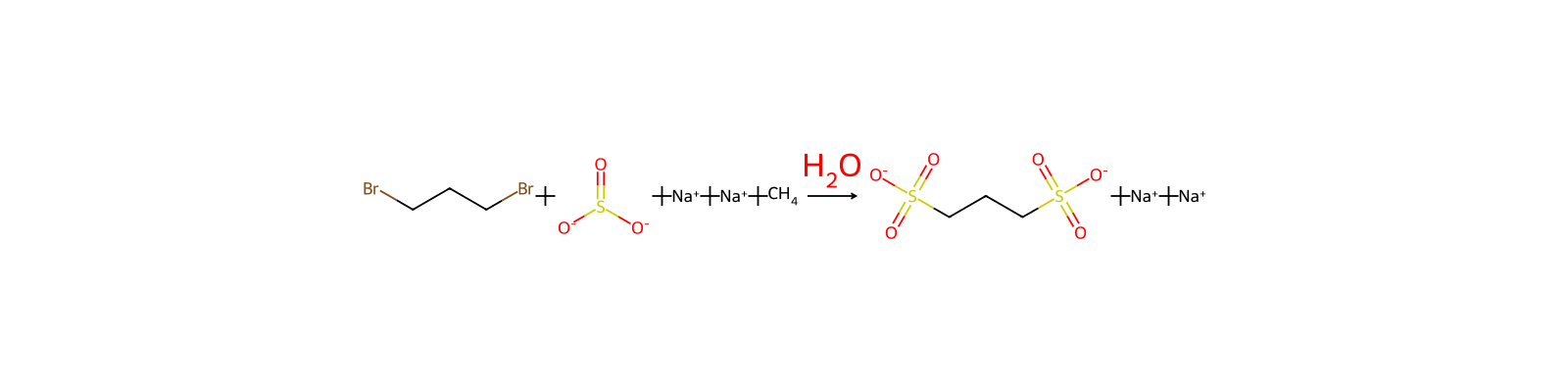
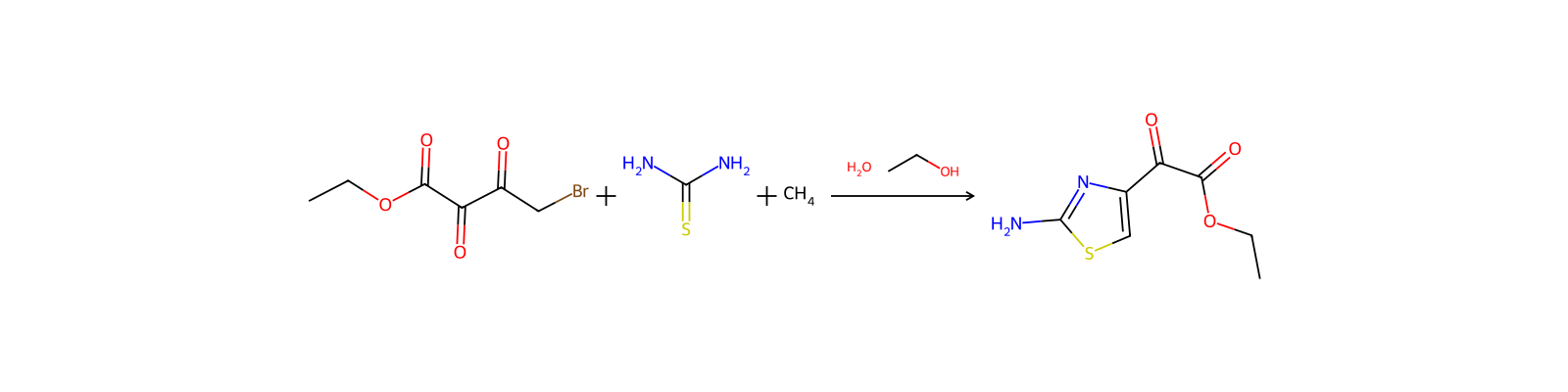
Zugehörige Reaktionen
4.433



Verknüpfte Notizen
Wird geladen…