
Grundinformationen
- Standard-SMILES
CS(=O)(=O)Cl- InChIKey
QARBMVPHQWIHKH-UHFFFAOYSA-N- Summenformel
- CH3ClO2S
- Durchschnittliche Molmasse
- 114,55 g/mol
- Monoisotopische Masse
- 113,95422802
Überblick
Methanesulfonyl chloride appears as a pale yellow corrosive liquid. More dense than water and insoluble in water. Very toxic by ingestion, inhalation, or skin absorption.
Namen und Bezeichner
- Bevorzugter Name
- Methanesulfonyl chloride
- IUPAC
- methanesulfonyl chloride
- Lokaler Name
- Methansulfonylchlorid
- Englischer Name
- Methanesulfonyl chloride
- Summenformel
- CH3ClO2S
- Molmasse
- 114.55
Namen und Synonyme
Methanesulfonyl chloride124-63-0Mesyl chlorideMethanesulphonyl chlorideMethyl sulfochlorideMETHYLSULFONYL CHLORIDEChloro methyl sulfoneMethanesulfonic acid chlorideMethanesulfuryl chlorideMethyl sulfonyl chlorideChloromethyl sulfoneDTXSID1021615
Weitere Namen anzeigen
MSCLMSCMSCICH3SO2ClmethanesulfonylJJHXLMethane sufonyl chloride
METHANE SULFONYL CHLORIDEB17EWY1R7QNSC-15039DTXCID601615RefChem:156944204-706-1MesylchlorideNSC 15039
Datenbank-Bezeichner
- CAS
124-63-0- PubChem CID
- 31297
- DTXSID
DTXSID1021615- UNII
- B17EWY1R7Q
- EC Number
- 204-706-1
- Nikkaji
- J2.507K
Eigenschaften
Berechnete Struktureigenschaften
- XLogP
- 0,4
- Polarare Oberfläche (TPSA)
- 42,5 Ų
- H-Brücken-Donoren
- 0
- H-Brücken-Akzeptoren
- 2
- Frei drehbare Bindungen
- 0
- Schwere Atome
- 5
- Formalladung
- 0
- Komplexität
- 95,3
Experimentelle und physikochemische Eigenschaften
Chemical ClassesToxic Gases & Vapors -> Acid Halides
SpringerMaterials PropertiesSchoenflies notation
OdorUnpleasant odor
Density
1.4805 at 18 °C/4 °C
Relative density (water = 1): 1.5
1.4805 @ 18°C
Viscosity1.33 centistokes at 25 °C
Color/FormPale yellow liquid
Solubility
Soluble in most organic solvents
Practically insoluble in water; soluble in alcohol, ether
Solubility in water: reaction
Flash Point>110 °C
Boiling Point
62 °C at 18 mm Hg; 161 °C at 730 mm Hg
at 97.3kPa: 161 °C
DecompositionWhen heated to decompositionit emits toxic vapors of /sulfur oxides and hydrogen chloride/.
Melting Point
Freezing point: -32 °C
-32 °C
-32 °C
Vapor Density
3.9 (Air = 1)
Relative vapor density (air = 1): 4.0
Physikochemische Eigenschaften
- Schmelzpunkt
- -33 °C · -33°C
- Siedepunkt
- 60 °C/21 · 60 °C/21 mmHg (lit.)
- Dichte
- 1.48 g/mL · 1.48 g/mL at 25 °C (lit.)
- Dampfdruck
- 3.001 · 3.001-8.9hPa at 20-25℃
- Brechungsindex
- 20 · n20/D 1.452(lit.)
- Flammpunkt
- 230 °F · >230 °F
- storage temp.
- 2 · 2-8°C
- Löslichkeit
- Chloroform, Hexanes
- Aggregatzustand
- Liquid
- Farbe
- Clear
- Geruch (Odor)
- Unpleasant odor
- Wasserlöslichkeit
- Miscible with alcohol, ether and organic solvents. Immiscible with water.
- Merck
- 14 · 14,5955
- BRN
- 506297 · 506297
- Henry's Law Constant
- 2.2 · 2.2×10-1 mol/(m3Pa) at 25℃, HSDB (2015)
- Stabilität
- Moisture Sensitive
- InChI
- 1S/CH3ClO2S/c1-5(2,3)4/h1H3
- InChIKey
- QARBMVPHQWIHKH-UHFFFAOYSA-N
- SMILES
- CS(Cl)(=O)=O
- LogP
- -0.78 · -0.78-1.27 at 25℃
- Oberflächenspannung
- 72.5 mN/m · 72.5mN/m at 1.1g/L and 21℃
- CAS Datenbank
- 124 · 124-63-0(CAS DataBase Reference)
- NIST chemische Informationen
- Methanesulfonyl chloride(124-63-0)
- EPA chemische Informationen
- Methanesulfonyl chloride (124-63-0)
Sicherheit und Regulatorisches
GHS-Klassifizierung
GHS Classification
Danger
H290 (47.5%): May be corrosive to metals [Warning Corrosive to Metals]
P234, P260, P261, P262, P264, P264+P265, P270, P271, P272, P273, P280, P284, P301+P316, P301+P317, P301+P330+P331, P302+P352, P302+P361+P354, P304+P340, P305+P354+P338, P316, P317, P319, P320, P321, P330, P333+P317, P361+P364, P362+P364, P363, P390, P403+P233, P405, P406, and P501 (click each P-code to see the statement)
Aggregated GHS information provided per 314 reports by companies from 27 notifications to the ECHA C&L Inventory. Each notification may be associated with multiple companies.
Danger
H301: Toxic if swallowed [Danger Acute toxicity, oral]
Gefahrenhinweise
Hazards IdentificationToxic/poison by inhalation (TIH/PIH)
Regulatory Information
Chemical: Methanesulfonyl chloride
Methanesulfonyl chloride is listed on the EPA's Chemical Data Reporting (CDR) system. Manufacturers and importers of Methanesulfonyl chloride are required to report information about their production and use of this chemical to the EPA under the Toxic Substances Control Act (TSCA). (40 eCFR Part 711)
SP - indicates a substance that is identified in a proposed Significant New Use Rule.
Status: Active Update: 10-01-2023 https://echa.europa.eu/registration-dossier/-/registered-dossier/13541
Methanesulphonyl chloride: HSNO Approval: HSR004556 Approved with controls
DOT LabelPoison Inhalation Hazard Corrosive
Fire Hazards
Excerpt from ERG Guide 156 [Substances - Toxic and/or Corrosive (Combustible / Water-Sensitive)]:
· Combustible material: may burn but does not ignite readily.
Combustible. Gives off irritating or toxic fumes (or gases) in a fire.
Health Hazards
Excerpt from ERG Guide 156 [Substances - Toxic and/or Corrosive (Combustible / Water-Sensitive)]:
· TOXIC and/or CORROSIVE; inhalation, ingestion or contact (skin, eyes) with vapors, dusts or substance may cause severe injury, burns or death.
Hazards Summary
Highly corrosive to skin; [Quick CPC] It is tear drawing and corrosive to the skin and respiratory tract; [ICSC] May form hydrogen chloride gas on contact with water or moisture, although experiments at Argonne National Laboratory have shown essentially no reaction with water; Highly toxic by ingestion, inhalation, and skin absorption; [CAMEO] Slowly hydrolyzed by water forming hydrochloric acid; A lachrymator; Corrosive to tissue; [EPA OHM/TADS] Hydrolyzed by water evolving acidic gas; Causes burns; Inhalation may cause corrosive injuries to upper respiratory tract and lungs; Highly toxic by ingestion, inhalation, and skin absorption; [Aldrich MSDS]
DOT ID and Guide3246 156
Reactive GroupAcyl Halides, Sulfonyl Halides, and Chloroformates
UN ClassificationUN Hazard Class: 6.1; UN Subsidiary Risks: 8; UN Pack Group: I
Special ReportsEuropean Chemicals Bureau; IUCLID Dataset, Methanesulphonyl chloride (CAS # 124-63-0) describes toxicological information and use patterns supplied to the European Union by industry as of 2000.
TSCA Requirements
Section 8(a) of TSCA requires manufacturers of this chemical substance to report preliminary assessment information concerned with production, exposure, and use to EPA as cited in the preamble in 51 FR 41329.
Pursuant to section 8(d) of TSCA, EPA promulgated a model Health and Safety Data Reporting Rule. The section 8(d) model rule requires manufacturers, importers, and processors of listed chemical substances and mixtures to submit to EPA copies and lists of unpublished health and safety studies. Methanesulfonyl chloride is included on this list.
Reactivity AlertsWater-Reactive
Sicherheit und Schutzausrüstung
Fire Fighting
Excerpt from ERG Guide 156 [Substances - Toxic and/or Corrosive (Combustible / Water-Sensitive)]:
Use water spray, powder, foam, carbon dioxide.
First Aid Measures
Fresh air, rest. Refer immediately for medical attention.
Wear protective gloves when administering first aid. Remove contaminated clothes. Rinse skin with plenty of water or shower. Refer immediately for medical attention.
Rinse with plenty of water for several minutes (remove contact lenses if easily possible). Refer immediately for medical attention.
Rinse mouth. Do NOT induce vomiting. Refer immediately for medical attention.
Accidental Release Measures
· CALL 911. Then call emergency response telephone number on shipping paper. If shipping paper not available or no answer, refer to appropriate telephone number listed on the inside back cover.
· ELIMINATE all ignition sources (no smoking, flares, sparks or flames) from immediate area.
First Aid
Excerpt from ERG Guide 156 [Substances - Toxic and/or Corrosive (Combustible / Water-Sensitive)]:
General First Aid:
Safe StorageSeparated from food and feedstuffs and incompatible materials. Dry. Well closed. Keep in a well-ventilated room. Store in an area without drain or sewer access.
Exposure Control and Personal Protection
· Wear positive pressure self-contained breathing apparatus (SCBA).
TIH (Toxic Inhalation Hazard) - Term used to describe gases and volatile liquids that are toxic when inhaled. Some are TIH materials themselves, e.g., chlorine, and some release TIH gases when spilled in water, e.g., chlorosilanes. [ERG 2016].
Fire Fighting Procedures
If material on fire or involved in fire: Do not extinguish fire unless flow can be stopped. Use water in flooding quantities as fog Solid streams of water may be ineffective. Cool all affected containers with flooding quantities of water. Apply water from as far a distance as possible Use "alcohol" foam, dry chemical or carbon dioxide.
Cleanup Methods
Environmental considerations- land spill: Dig a pit, pond, lagoon, holding area to contain liquid or solid material. /SRP: If time permits, pits, ponds, lagoons, soak holes, or holding areas should be sealed with an impermeable flexible membrane liner./ Dike surface flow using soil, sand bags, foamed polyurethane, or foamed concrete. Absorb bulk liquid with fly ash, cement powder, or commercial sorbents.
Environmental considerations- water spill: Use natural barriers or oil spill control booms to limit spill travel. Remove trapped material with suction hoses.
Environmental considerations- air spill: Apply water spray or mist to knock down vapors.
Nonfire Spill ResponseExcerpt from ERG Guide 156 [Substances - Toxic and/or Corrosive (Combustible / Water-Sensitive)]:
Disposal Methods
SRP: The most favorable course of action is to use an alternative chemical product with less inherent propensity for occupational exposure or environmental contamination. Recycle any unused portion of the material for its approved use or return it to the manufacturer or supplier. Ultimate disposal of the chemical must consider: the material's impact on air quality; potential migration in soil or water; effects on animal, aquatic, and plant life; and conformance with environmental and public health regulations.
Spillage Disposal
Evacuate danger area! Consult an expert! Personal protection: complete protective clothing including self-contained breathing apparatus. Collect leaking and spilled liquid in sealable dry containers as far as possible. Absorb remaining liquid in sand or inert absorbent. Then store and dispose of according to local regulations. Do NOT wash away into sewer.
Preventive Measures
If material not on fire and not involved in fire: Keep sparks, flames, and other sources of ignition away. Keep material out of water sources and sewers. Build dikes to contain flow as necessary. Attempt to stop leak if without undue personnel hazard. Use water spray to knock-down vapors.
Personnel protection: Avoid breathing vapors. Keep upwind. ... Avoid bodily contact with the material. ... Do not handle broken packages unless wearing appropriate personal protective equipment Wash away any material which may have contacted the body with copious amounts of water or soap and water.
SRP: Contaminated protective clothing should be segregated in such a manner so that there is no direct personal contact by personnel who handle, dispose, or clean the clothing. Quality assurance to ascertain the completeness of the cleaning procedures should be implemented before the decontaminated protective clothing is returned for reuse by the workers. Contaminated clothing should not be taken home at end of shift, but should remain at employee's place of work for cleaning.
SRP: The scientific literature for the use of contact lenses in industry is conflicting. The benefit or detrimental effects of wearing contact lenses depend not only upon the substance, but also on factors including the form of the substance, characteristics and duration of the exposure, the uses of other eye protection equipment, and the hygiene of the lenses. However, there may be individual substances whose irritating or corrosive properties are such that the wearing of contact lenses would be harmful to the eye. In those specific cases, contact lenses should not be worn. In any event, the usual eye protection equipment should be worn even when contact lenses are in place.
Toxikologische Informationen
Ecotoxicity Values
LC50 Menidia beryllina (inland silverside, length 40-100 mm) 15 mg/L/96 hr; static, 20 °C, pH 7.6-7.9, hardness 55 mg/L CaCO3
LC50 Menidia beryllina (inland silverside) 15 mg/L/96 hr; static bioassay in synthetic seawater at 23 °C, mild aeration applied after 24 hr.
LC50 Lepomis macrochirus (bluegill sunfish) 11 mg/L/96 hr; static bioassay in freshwater at 23 °C, mild aeration applied after 24 hr
LC50 Lepomis macrochirus (bluegill, length 33-75 mm) 11 mg/L/96 hr; static, 23 °C, pH 7.6-7.9, hardness 55 mg/L CaCO3
Environmental Fate
TERRESTRIAL FATE: Based on a classification scheme(1), an estimated Koc value of 6.1(SRC), determined from a structure estimation method(2), indicates that methanesulfonyl chloride is expected to have very high mobility in soil(SRC). Volatilization of methanesulfonyl chloride from moist soil surfaces is expected to be an important fate process(SRC) given an estimated Henry's Law constant of 4.4X10⁻⁵ atm-cu m/mole(SRC), using a fragment constant estimation method(3). Methanesulfonyl chloride is expected to volatilize from dry soil surfaces(SRC) based upon an estimated vapor pressure of 3.1 mm Hg(SRC), determined from a fragment constant method(4). Biodegradation data were not available(SRC, 2007).
AQUATIC FATE: Based on a classification scheme(1), an estimated Koc value of 6.1(SRC), determined from a structure estimation method(2), indicates that methanesulfonyl chloride is not expected to adsorb to suspended solids and sediment(SRC). Volatilization from water surfaces is expected(3) based upon an estimated Henry's Law constant of 4.4X10⁻⁵ atm-cu m/mole(SRC), developed using a fragment constant estimation method(4). Using this Henry's Law constant and an estimation method(3), volatilization half-lives for a model river and model lake are 15 hours and 11 days, respectively(SRC). According to a classification scheme(5), an estimated BCF of 1.9(SRC), from an estimated log Kow of 1.3(SRC) and a regression-derived equation(6), suggests the potential for bioconcentration in aquatic organisms is low(SRC). Methanesulfonyl chloride hydrolyzes slowly in water(7). Biodegradation data were not available(SRC, 2007).
ATMOSPHERIC FATE: According to a model of gas/particle partitioning of semivolatile organic compounds in the atmosphere(1), methanesulfonyl chloride, which has an estimated vapor pressure of 3.1 mm Hg at 25 °C(SRC), determined from a fragment constant method(2), is expected to exist solely as a vapor in the ambient atmosphere. Vapor-phase methanesulfonyl chloride is degraded in the atmosphere by reaction with photochemically-produced hydroxyl radicals(SRC); the half-life for this reaction in air is estimated to be 150 days(SRC), calculated from its rate constant of 1.1X10⁻¹² cu cm/molecule-sec at 25 °C(SRC) that was derived using a structure estimation method(3). Methanesulfonyl chloride does not contain chromophores that absorb at wavelengths >290 nm and therefore is not expected to be susceptible to direct photolysis by sunlight(4).
Adverse EffectsDermatotoxin - Skin burns.
Exposure RoutesThe substance can be absorbed into the body by inhalation, by ingestion and through the skin.
Signs and Symptoms
Cough. Sore throat. Burning sensation. Laboured breathing. Shortness of breath.
Redness. Pain. Blisters.
Redness. Pain. Severe burns.
See Inhalation.
ICSC Environmental DataThe substance is harmful to aquatic organisms.
Soil Adsorption/Mobility
Using a structure estimation method based on molecular connectivity indices(1), the Koc of methanesulfonyl chloride can be estimated to be 6.1(SRC). According to a classification scheme(2), this estimated Koc value suggests that methanesulfonyl chloride is expected to have very high mobility in soil.
Human Toxicity Excerpts/SIGNS AND SYMPTOMS/ Methanesulfonyl chloride is corrosive to eyes, skin, and mucous membranes.
Artificial Pollution Sources
Methanesulfonyl chloride's production and use in flame-resistant products, as a stabilizer for liquid sulfur trioxide, as a biological chemical, as a chemical intermediate(1) in the photographic, fiber dye, agricultural, and pharmaceutical industries, a catalyst, curing agent, and chlorinating agent(2) may result in its release to the environment through various waste streams(SRC).
Environmental Bioconcentration
An estimated BCF of 1.9 was calculated for methanesulfonyl chloride(SRC), using an estimated log Kow of 1.3(1) and a regression-derived equation(2). According to a classification scheme(3), this BCF suggests the potential for bioconcentration in aquatic organisms is low(SRC).
Volatilization from Water/Soil
The Henry's Law constant for methanesulfonyl chloride is estimated as 4.4X10⁻⁵ atm-cu m/mole(SRC) using a fragment constant estimation method(1). This Henry's Law constant indicates that methanesulfonyl chloride is expected to volatilize from water surfaces(2). Based on this Henry's Law constant, the volatilization half-life from a model river (1 m deep, flowing 1 m/sec, wind velocity of 3 m/sec)(2) is estimated as 15 hours(SRC). The volatilization half-life from a model lake (1 m deep, flowing 0.05 m/sec, wind velocity of 0.5 m/sec)(2) is estimated as 11 days(SRC). Methanesulfonyl chloride's Henry's Law constant indicates that volatilization from moist soil surfaces may occur(SRC). Methanesulfonyl chloride is expected to volatilize from dry soil surfaces(SRC) based upon an estimated vapor pressure of 3.1 mm Hg(SRC), determined from a fragment constant method(3).
Non-Human Toxicity Excerpts
/LABORATORY ANIMALS: Acute Exposure/ The 1-hr and 4-hr inhalation LC50 values in rats were approximately 200 ppm and 25 ppm, respectively. Clinical signs during exposure included salivation and marked eye and respiratory tract irritation. Effects noted postexposure included lethargy, persistent disturbances in respiratory pattern, decreases in body weight and food and water intake, lung congestion, and damage to the corneal surface of the eyes.[Bingham, E.; Cohrssen, B.; Powell, C.H.; Patty's Toxicology Volumes 1-9 5th ed. John Wiley & Sons. New York, N.Y. (2001)., p. 7:747]
/LABORATORY ANIMALS: Acute Exposure/ In rabbits, irrigation of the eye 20 to 30 sec after instillation reduced the response, but corneal opacity and congestion of the iris with no pupillary light reaction were still noted.[Bingham, E.; Cohrssen, B.; Powell, C.H.; Patty's Toxicology Volumes 1-9 5th ed. John Wiley & Sons. New York, N.Y. (2001)., p. 7:747]
/LABORATORY ANIMALS: Acute Exposure/ A single dermal application of 2000 mg/kg to rabbits killed all animals within 24 hr. No deaths occurred following a dermal application of 200 mg/kg.[Bingham, E.; Cohrssen, B.; Powell, C.H.; Patty's Toxicology Volumes 1-9 5th ed. John Wiley & Sons. New York, N.Y. (2001)., p. 7:747]
/LABORATORY ANIMALS: Acute Exposure/ The oral LD50 in rats was 255 mg/kg and there were clinical signs of hypertonia, general distress, and stomach irritation.[Bingham, E.; Cohrssen, B.; Powell, C.H.; Patty's Toxicology Volumes 1-9 5th ed. John Wiley & Sons. New York, N.Y. (2001)., p. 7:747]
For more Non-Human Toxicity Excerpts (Complete) data for METHANESULFONYL CHLORIDE (6 total), please visit the HSDB record page.
Regulatorische Informationen
TSCA Requirements
Section 8(a) of TSCA requires manufacturers of this chemical substance to report preliminary assessment information concerned with production, exposure, and use to EPA as cited in the preamble in 51 FR 41329.
Pursuant to section 8(d) of TSCA, EPA promulgated a model Health and Safety Data Reporting Rule. The section 8(d) model rule requires manufacturers, importers, and processors of listed chemical substances and mixtures to submit to EPA copies and lists of unpublished health and safety studies. Methanesulfonyl chloride is included on this list.
Sicherheitsdaten
- wgk
- 2
- tsca
- TSCA listed
- ridadr
- UN 3246
- hs_code
- 29049095
- RTECS-Nr.
- PB2790000
- risk_code
- 24/25-26-34-37-35-22-41
- hazard_code
- T+,T,C
- hazard_note
- Toxic/Corrosive
- safety_code
- 26-28-36/37/39-45-25-28A
- hazard_class
- 6.1
- packing_group
- I
- Speicherklasse
- 6.1A - Combustible acute toxic Cat. 1 and 2very toxic hazardous materials
- Giftige Stoffe Daten
- 124-63-0(Hazardous Substances Data)
- Hazard Classifications
- Acute Tox. 2 InhalationAcute Tox. 3 OralAcute Tox. 4 DermalEye Dam. 1Met. Corr. 1Skin Corr. 1BSkin Sens. 1STOT SE 3
- Selbstentzündungstemperatur
- 435°C
Chemie und Industrie
Verwendung und Herstellung
Uses
Used as an intermediate in the production of drugs, flame retardants, and other chemicals; Also used as a stabilizer, catalyst, curing agent, and chlorinating agent; Has been detected in air samples at a pulp mill that used chlorine-containing bleaching agents; [HSDB]
Pulp and Paper Processing [Category: Industry]
Intermediate; flame-resistant products; stabilizer for liquid sulfur trioxide; biological chemicals.
Chemical intermediate for busulfan (human antineoplastic agent)
Chemical intermediate for glucocorticoids used in human medicine
Chemical intermediate for antiinflammatory agents in human medicine
U.S. Production
2023: 500,000 - <1,000,000 lb
(1979) PROBABLY GREATER THAN 2.27X10+6 GRAMS
(1981) PROBABLY GREATER THAN 2.27X10+6 GRAMS
This chemical is listed as a High Production Volume (HPV) (65FR81686). Chemicals listed as HPV were produced in or imported into the U.S. in >1 million pounds in 1990 and/or 1994. The HPV list is based on the 1990 Inventory Update Rule. (IUR) (40 CFR part 710 subpart B; 51FR21438).
Production volumes for non-confidential chemicals reported under the Inventory Update Rule. [Table#5456]
Industry UsesIntermediate
Methods of Manufacturing
Made commercially by ... the sulfochlorination of methane.
Prepared from sulfur trioxide and methane
Formulations/PreparationsGrade: 98%, 99%+
General Manufacturing Information
Pesticide, Fertilizer, and Other Agricultural Chemical Manufacturing
Methanesulfonyl chloride: ACTIVE
Anwendungen
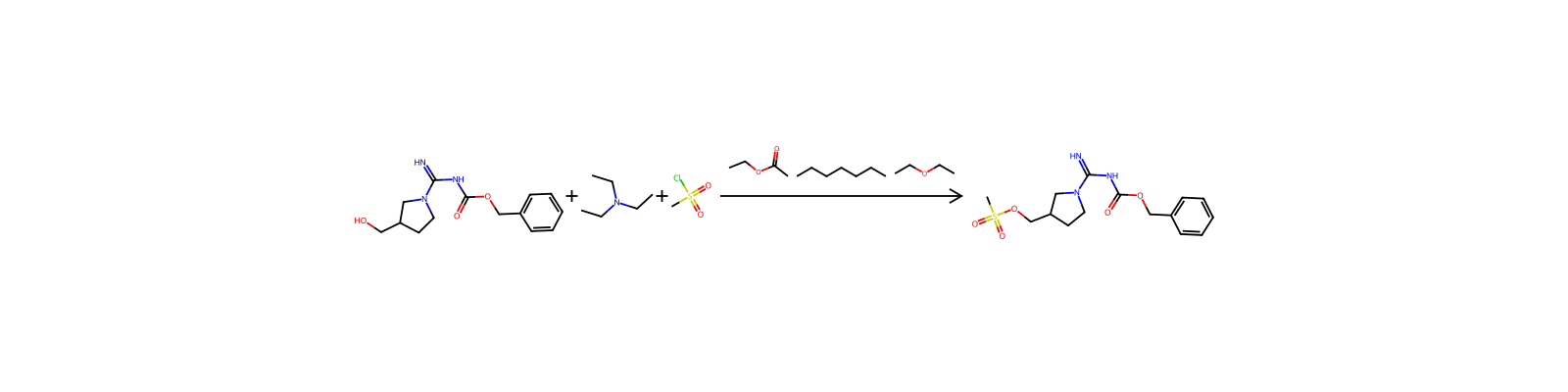
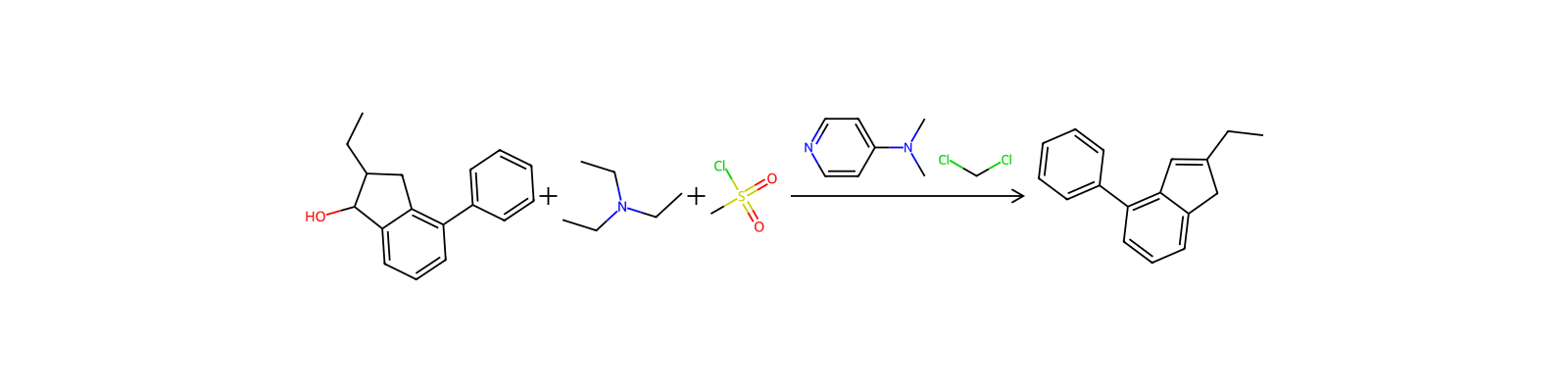
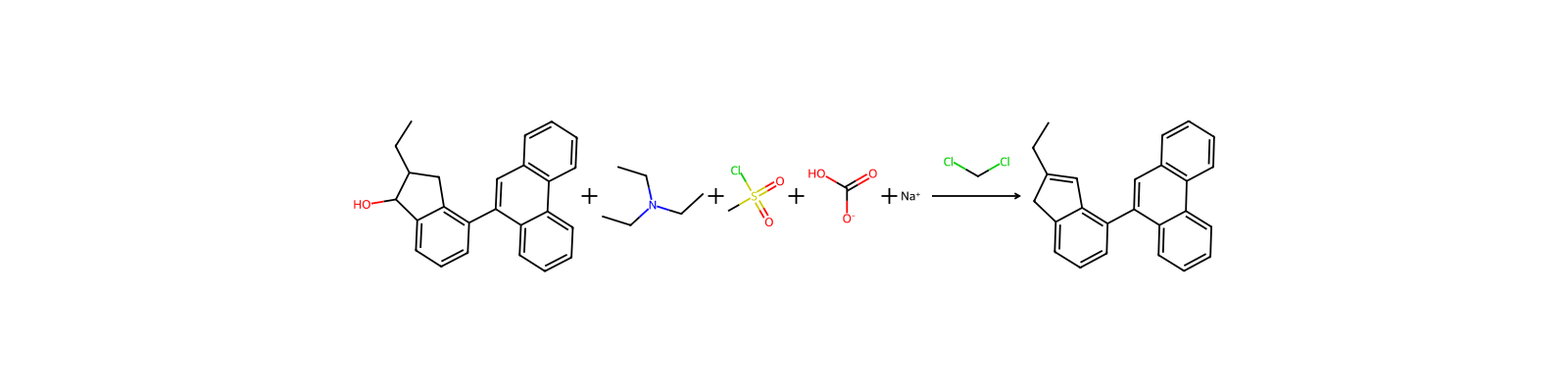
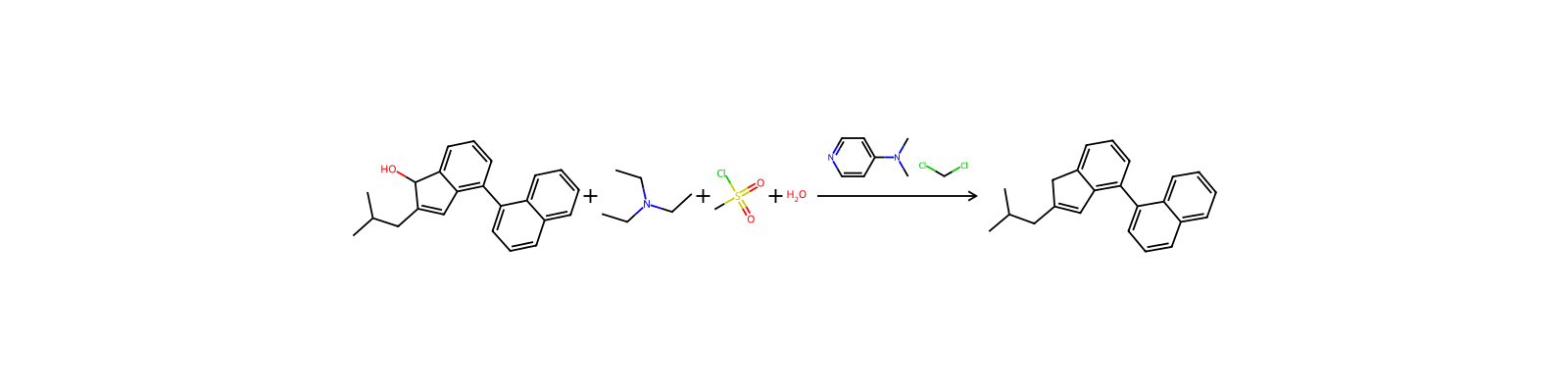
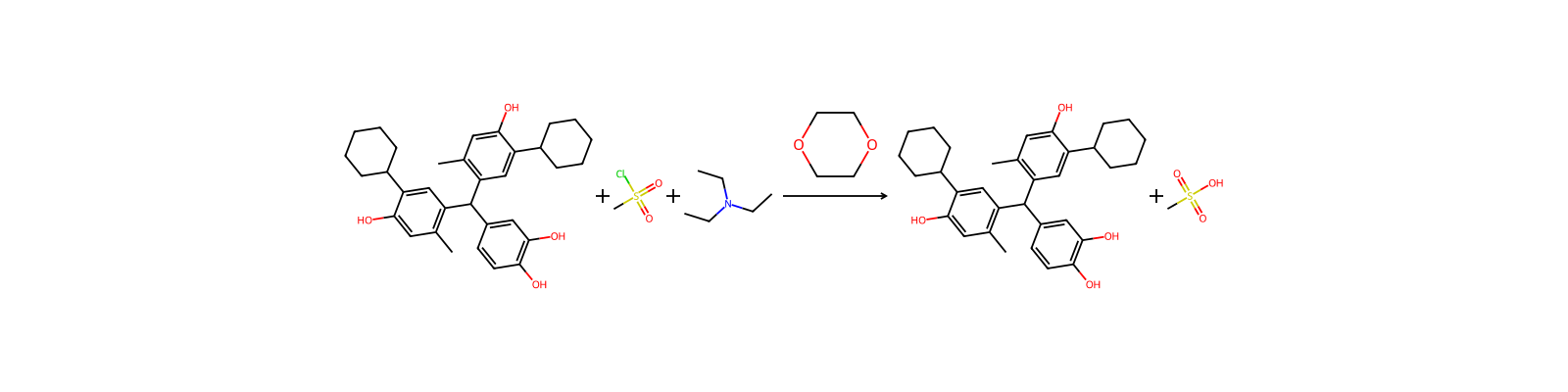
VerwendenMethanesulfonyl chloride is used as a reagent for conversion of alcohols to mesylate esters such as methanesulfonate, which is an intermediate in substitution reactions, elimination reactions, reductions, and rearrangement reactions viz. Beckmann rearrangement. It is an electrophile and acts as a source of CH3SO2+ group. It is also used to prepare beta-chloro sulfones, methanesulfonamide and heterocyclic compounds containing five membered sultones.
Vor- und nachgelagerte Produkte
Vorgelagerte Rohstoffe
Nachgelagerte Produkte
Zugehörige Reaktionen
19.505


Verknüpfte Notizen
Wird geladen…