Grundinformationen
- Standard-SMILES
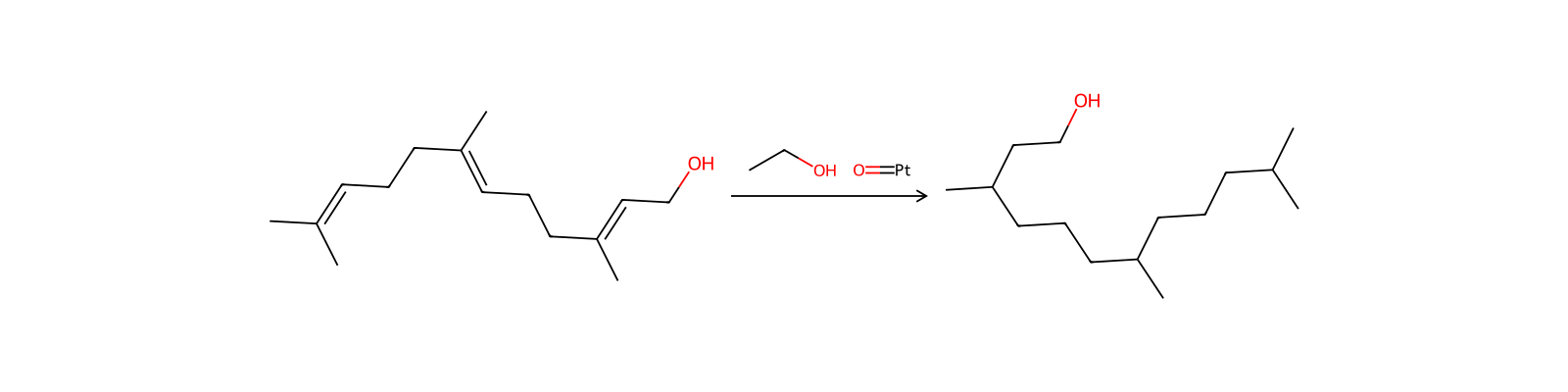
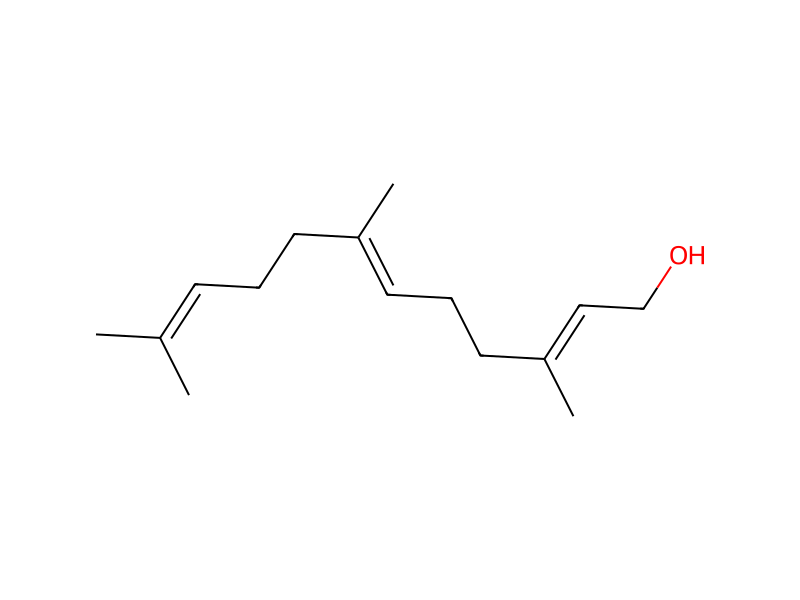
CC(C)=CCCC(C)=CCCC(C)=CCO- InChIKey
CRDAMVZIKSXKFV-UHFFFAOYSA-N- Summenformel
- C15H26O
- Durchschnittliche Molmasse
- 222,37 g/mol
- Monoisotopische Masse
- 222,19836545
Namen und Bezeichner
- Bevorzugter Name
- a Farnesol
- IUPAC
- 3,7,11-trimethyldodeca-2,6,10-trien-1-ol
- Lokaler Name
- Farnesol
- Englischer Name
- FARNESOL
- Summenformel
- C15H26O
- Molmasse
- 222.37
Namen und Synonyme
a farnesolRefChem:1075118Spectrum_001282trans,trans-Farnesol; trans-FarnesolSpecPlus_000549Spectrum2_001397Spectrum3_001070Spectrum4_001221SCHEMBL58069KBioGR_001682KBioSS_001762DivK1c_006645
Weitere Namen anzeigen
2,6,10-Dodecatrien-1-ol, 3,7,11-trimethyl-3,7,11-TRIMETHYL-2,6,10-DODECATRIEN-1-OLFEMA 2478PolyprenolFarnesol 95%Farnesyl alcoholLINALOOL, DL-(SG)LINALOOL, (-)-(SG)3,7,11-TRIMETHYLDODECA-2,6,10-TRIEN-1-OL6,10-Dodecatrien-1-ol,3,7,11-trimethyl-2
SPBio_001414GTPL3215orb1299430orb3139646SCHEMBL2852929SCHEMBL9953423CHEMBL4464165KBio1_001589
Datenbank-Bezeichner
- CAS
4602-84-0- PubChem CID
- 3327
- DTXSID
DTXSID3032389- ChEMBL
CHEMBL4464165
Eigenschaften
Berechnete Struktureigenschaften
- XLogP
- 4,8
- Polarare Oberfläche (TPSA)
- 20,2 Ų
- H-Brücken-Donoren
- 1
- H-Brücken-Akzeptoren
- 1
- Frei drehbare Bindungen
- 7
- Schwere Atome
- 16
- Formalladung
- 0
- Komplexität
- 265
Physikochemische Eigenschaften
- Schmelzpunkt
- 25 °C · 25°C
- Siedepunkt
- 149 °C4 · 149 °C4 mm Hg(lit.)
- Dichte
- 0.886 g/mL · 0.886 g/mL at 20 °C(lit.)
- Dampfdruck
- 13 Pa · 13Pa at 20℃
- FEMA
- 2478 · 2478 | FARNESOL
- Brechungsindex
- 20 · n20/D 1.490(lit.)
- Flammpunkt
- 205 °F · 205 °F
- storage temp.
- 2 · 2-8°C
- Löslichkeit
- 100 · DMSO:100.0(Max Conc. mg/mL);449.7(Max Conc. mM)
- pka
- 14.69 · 14.69±0.10(Predicted)
- Aggregatzustand
- Liquid
- Farbe
- Clear colorless to faint yellow
- Geruch (Odor)
- 100 % · at 100.00 %. mild fresh sweet linden floral angelica
- Geruchsart
- floral
- Biologische Quelle
- synthetic
- Wasserlöslichkeit
- Not miscible or difficult to mix in water.
- Merck
- 14 · 14,3937
- JECFA Number
- 1230 · 1230
- BRN
- 1763926 · 1763926
- Henry's Law Constant
- 3.9 · 3.9×10-2 mol/(m3Pa) at 25℃, HSDB (2015)
- Stabilität
- Stable. Combustible. Incompatible with strong oxidizing agents.
- Major Application
- flavors and fragrances
- Kosmetik-Inhaltsstoffe Funktionen
- PERFUMINGDEODORANT
- InChI
- 1S/C15H26O/c1-13(2)7-5-8-14(3)9-6-10-15(4)11-12-16/h7,9,11,16H,5-6,8,10,12H2,1-4H3/b14-9+,15-11+
- InChIKey
- CRDAMVZIKSXKFV-YFVJMOTDSA-N
- SMILES
- C/C(CC/C=C(C)/CCC=C(C)C)=C\CO
- LogP
- 4.72 at · 4.72 at 22.3℃
- CAS Datenbank
- 4602 · 4602-84-0(CAS DataBase Reference)
- NIST chemische Informationen
- 2 · 2,6,10-Dodecatrien-1-ol, 3,7,11-trimethyl-(4602-84-0)
- EPA chemische Informationen
- Farnesol (4602-84-0)
Sicherheit und Regulatorisches
Sicherheitsdaten
- F
- 8
- wgk
- 3
- tsca
- TSCA listed
- ridadr
- UN 3082 9 / PGIII
- hs_code
- 29052200
- RTECS-Nr.
- JR4979000
- hazard_code
- Xi
- hazard_note
- Irritant
- safety_code
- 24/25-22
- hazard_class
- 9
- Speicherklasse
- 10 - Combustible liquids
- Giftige Stoffe Daten
- 4602-84-0(Hazardous Substances Data)
- Hazard Classifications
- Aquatic Acute 1Aquatic Chronic 1Skin Irrit. 2Skin Sens. 1
Chemie und Industrie
Anwendungen
BeschreibungFarnesol has a characteristic flowery odor.
OccurrenceThe presence of this terpene alcohol in nature has been reported in more than 30 essential oils; the levels are generally low (0.5 to 1.0%) with the exception of cabreuva, which contains up to 2 5% farensol, and the distillate from fowers of Oxystigma buccholtzii Harms which contains up to 18% farnesol Among the essential oils containing farnesol are lemongrass, Ceylon citronella, cananga, ambrette seeds, ylang-ylang, Acacia farnesiana, Peru balsam, palmarosa, tuberose, and others Reported found in apricot, citrus peel oils, grapefruit juice, strawberry jam, ginger, clove bud, hop oil, cardamom, ginger, thyme, beer, whiskey, basil, papaya, anise seed, German chamomile and Cympogon citratus oils
Verwendenfarnesol is described as a substance of high biological potential, capable of acting in the skin as a true bioactivator. A biological precursor and fatty alcohol, farnesol is one component of vitamin K. It is said to help smooth wrinkles, normalize sebum secretion, and increase the skin’s elasticity, tissue tension, and moisture-binding capability. It is able to penetrate the epidermis. In humans, farnesol is found in the skin and is involved in sterol biosynthesis. It is also used for its deodorant, odor-masking, and skin-soothing properties. In clinical studies, farnesol has demonstrated anti-microbial activity, though it is unclear if this remains the case once incorporated into a cosmetic formulation. It is widely present in vegetables and found in many essential oils (for example, acacia, lilac, lily of the valley, rose, orange blossom, oak moss, and sandalwood).
Darstellung
synthetischeOne method uses cabreuva as the starting material (Swiss Patent 261,120-Givaudan and Co ), while a second method starts from ambrette seeds (German Patent 149, 603-Haarmann and Reimer).
Vor- und nachgelagerte Produkte
Vorgelagerte Rohstoffe
Nachgelagerte Produkte
Anbieter50 Anbieter
北京华美互利生物化工010-56205725 · [email protected]
梯希爱(上海)化成工业发展有限公司021-67121386 · [email protected]
上海阿拉丁生化科技股份有限公司400-6206333 13167063860 · [email protected]
上海康朗生物科技有限公司021-61998208 18217752821 · [email protected]
武汉欣扬瑞和化学科技有限公司13720274133 · [email protected]
武汉欣扬瑞和化学科技有限公司153-07155313 15307155313 · [email protected]
河北创海生物科技有限公司+86-86-13131129325 · [email protected]
云南西力生物技术股份有限公司0871-65217109 · [email protected]
爱斯特(成都)生物制药股份有限公司+86-28-85122536 85324413 · [email protected]
Baoji Guokang Healthchem co.,ltd+8615604608665 15604608665 · [email protected]
泰州市奥睿锦生物科技有限公司0523-0523-86200346 15996028822 · [email protected]
Hebei Yanxi Chemical Co., Ltd.+86-17531190177 · [email protected]
上海迈瑞尔生化科技有限公司4006356688 18621169109 · [email protected]
武汉易泰科技有限公司上海分公司18930552037 · [email protected]
上海晶抗生物工程有限公司021-54721350 13524668266 · [email protected]
阿法埃莎(中国)化学有限公司400-6106006 · [email protected]
安耐吉化学&3A(安徽泽升科技股份有限公司)400-0056266 · [email protected]
上海瀚鸿科技股份有限公司021-54306202 13764082696 · [email protected]
成都普思生物科技股份有限公司028-85370565-229 18080489829 · [email protected]
湖北冠众通科技有限公司0716-7227299 13507251920
吉良化学21-62165282 · [email protected]
郑州研德生物科技有限公司0371-63682289 15538176268 · [email protected]
武汉丰泰威远科技有限公司+86-27-8746-5837 +86-18627785180 · [email protected]
武汉丰泰威远科技有限公司027-87465837 19945049750 · [email protected]
四川库利南科技有限公司400-1166-196 18981987031 · [email protected]
天津希恩思生化科技有限公司400 638 7771 · [email protected]
Hebei Qige Biological Technology Co. Ltd+86 +8618733132031
斯百全化学(上海)有限公司021-021-021-67601398-809-809-809 15221380277 · [email protected]
上海源叶生物科技有限公司13636370518 · [email protected]
艾科试剂4008-755-333 18080918076 · [email protected]
上海思域化工科技有限公司86-21-34053660 · [email protected]
赛默飞世尔科技(中国)有限公司800-810-5118 · [email protected]
北京伊诺凯科技有限公司400-810-7969 010-59572699 · [email protected]
上海遐瑞医药科技有限公司+86 21 61551611
TOKYO CHEMICAL INDUSTRY CO., LTD.03-36680489 · [email protected]
上海贤鼎生物科技有限公司4009209199 · [email protected]
南京杜莱生物技术有限公司025-84699383-8003;025-846993838003-8003 18013301590 · [email protected]
上海陶素生化科技有限公司021-33632979 · [email protected]
上海将来实业股份有限公司400-0066400 13621662912 · [email protected]
上海将来实业股份有限公司021-61552785 · [email protected]
天津阿尔塔科技有限公司022-65378550-8551 · [email protected]
四川省维克奇生物科技有限公司028-81700200 18116577057 · [email protected]
上海麦克林生化科技股份有限公司15221275939 15221275939 · [email protected]
池州凯隆进出口贸易有限公司[email protected]
Sigma-Aldrich西格玛奥德里奇(上海)贸易有限公司021-61415566 800-8193336 · [email protected]
桦特昇生物科技(武汉)有限公司027-59207879 1972026995 18140587686 · [email protected]
天津阿尔塔科技有限公司022-6537-8550 15522853686 · [email protected]
TargetMol中国(陶术生物)021-021-33632979 15002134094 · [email protected]
武汉天植生物技术有限公司18607101326 15172504745 · [email protected]
上海陶术生物科技股份有限公司+1-781-999-5354; +1-00000000000 · [email protected]
Ergänzende Hinweise
DefinitionChEBI: A farnesane sesquiterpenoid that is dodeca-2,6,10-triene substituted by methyl groups at positions 3, 7 and 11 and a hydroxy group at position 1.
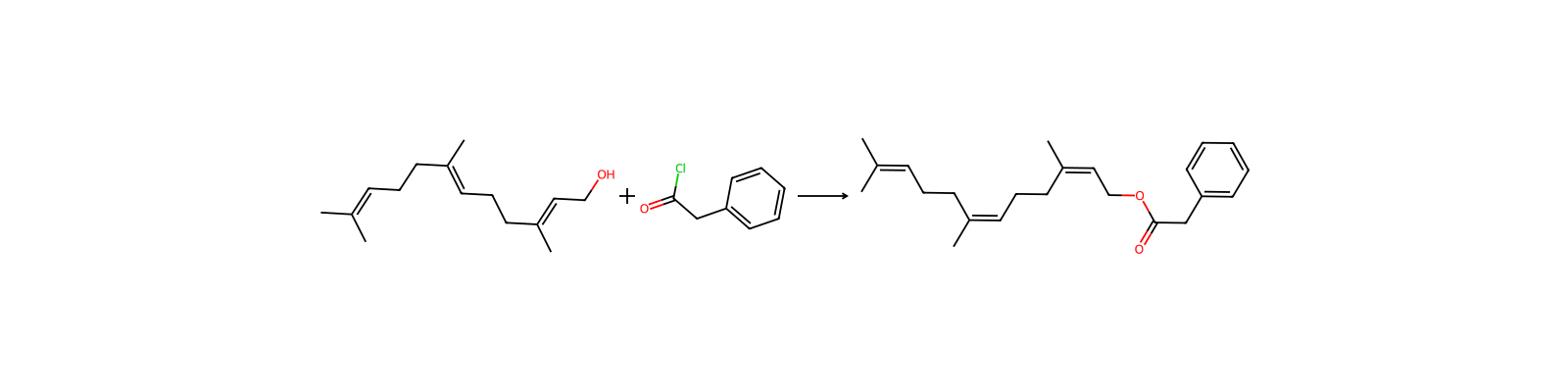
Zugehörige Reaktionen
67



Verknüpfte Notizen
Wird geladen…