
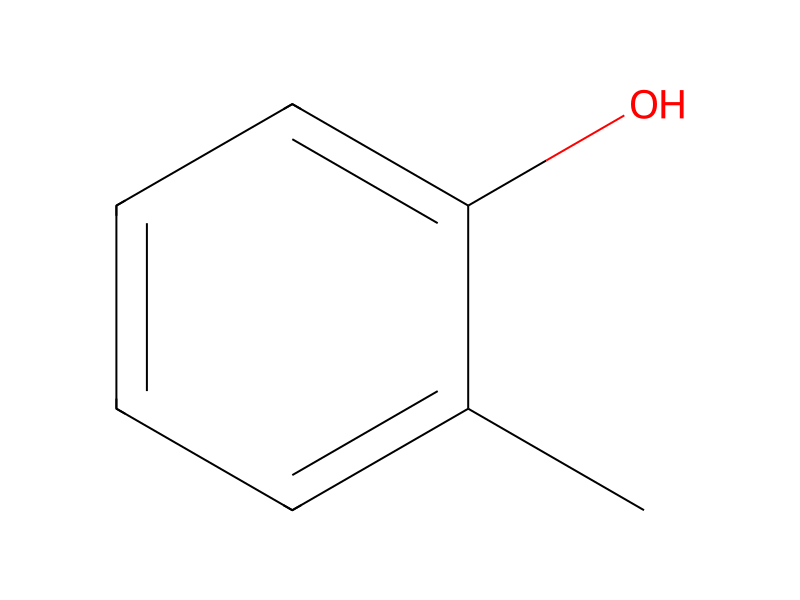
Grundinformationen
- Standard-SMILES
Cc1ccccc1O- InChIKey
QWVGKYWNOKOFNN-UHFFFAOYSA-N- Summenformel
- C7H8O
- Durchschnittliche Molmasse
- 108,14 g/mol
- Monoisotopische Masse
- 108,05751487
Namen und Bezeichner
- Bevorzugter Name
- O-Cresol
- IUPAC
- 2-methylphenol
- Lokaler Name
- o-Kresol
- Englischer Name
- o-Cresol
- Summenformel
- C7H8O
- Molmasse
- 108.14
Namen und Synonyme
o-cresol2-Methylphenol95-48-7Orthocresol2-hydroxytoluene2-Cresolo-methylphenolPhenol, 2-methyl-o-Cresylic acido-Toluolo-Oxytolueneo-Hydroxytoluene
Weitere Namen anzeigen
FEMA 3480Phenol,2-methyl-o-CresoORTHO CRESO
ortho-cresol1-Hydroxy-2-methylbenzeneo-Methylphenylolo-Kresol2-methyl phenol2-Hydroxy-1-methylbenzeneFEMA No. 3480DTXSID8021808
Datenbank-Bezeichner
- CAS
95-48-7- PubChem CID
- 335
- DTXSID
DTXSID8021808- ChEMBL
CHEMBL46931- ChEBI
CHEBI:28054- UNII
- YW84DH5I7U
- EC Number
- 202-423-8
- Nikkaji
- J1.176B
Eigenschaften
Berechnete Struktureigenschaften
- XLogP
- 2
- Polarare Oberfläche (TPSA)
- 20,2 Ų
- H-Brücken-Donoren
- 1
- H-Brücken-Akzeptoren
- 1
- Frei drehbare Bindungen
- 0
- Schwere Atome
- 8
- Formalladung
- 0
- Komplexität
- 70
Physikochemische Eigenschaften
- Schmelzpunkt
- 29 · 29-31 °C (lit.)
- Siedepunkt
- 191 °C · 191 °C (lit.)
- Dichte
- 1.048 g/mL · 1.048 g/mL at 25 °C
- Dampfdichte
- 3.72 · 3.72 (vs air)
- Dampfdruck
- 0.3 mm · 0.3 mm Hg ( 20 °C)
- Brechungsindex
- 1.5361 · 1.5361
- FEMA
- 3480 · 3480 | O-CRESOL
- Flammpunkt
- 178 °F · 178 °F
- storage temp.
- under inert gas
- Löslichkeit
- 20 g/l · 20g/l
- Aggregatzustand
- Liquid or Low Melting Solid
- pka
- 10.2 · 10.2(at 25℃)
- Farbe
- white to brown
- PH
- 4.8 · 4.8 (20g/l, H2O, 20℃)
- Geruch (Odor)
- 0.01 % · at 0.01 % in dipropylene glycol. musty phenolic plastic medicinal herbal leathery
- Geruchsart
- phenolic
- Odor Threshold
- 0.00028 ppm · 0.00028ppm
- Biologische Quelle
- synthetic
- Explosionsgrenze
- 1.47 %, · 1.47%, 148°F
- Wasserlöslichkeit
- 20 g/L · 20 g/L (20 ºC)
- Spezifische Wärmekapazität
- 1.43 J/ · Cp(crystal): 1.43 J/(g·K), at 25℃
- JECFA Number
- 691 · 691
- Merck
- 14 · 14,2579
- BRN
- 506917 · 506917
- Henry's Law Constant
- 0.34 at · 0.34 at 5.25 °C, 0.61 at 10.00 °C, 1.57 at 20.00 °C, 2.33 at 25.00 °C (dynamic equilibrium system- GC, Feigenbrugel et al., 2004a)
- Dielectric constant
- 5.8 · 5.8(-5℃)
- Stabilität
- Stable, but light and air sensitive. Combustible. Incompatible with oxidizing agents, bases.
- Major Application
- agriculturecleaning productscosmeticsenvironmentalflavors and fragrancesfood and beveragespersonal care
- Kosmetik-Inhaltsstoffe Funktionen
- ANTIMICROBIALPERFUMING
- InChI
- 1S/C7H8O/c1-6-4-2-3-5-7(6)8/h2-5,8H,1H3
- InChIKey
- QWVGKYWNOKOFNN-UHFFFAOYSA-N
- SMILES
- Cc1ccccc1O
- LogP
- 1.95 at · 1.95 at 20℃
- Oberflächenspannung
- 35.86 mN/m · 35.86mN/m at 298.15K
- CAS Datenbank
- 95 · 95-48-7(CAS DataBase Reference)
- NIST chemische Informationen
- 2 · Phenol, 2-methyl-(95-48-7)
- EPA chemische Informationen
- o-Cresol (95-48-7)
Sicherheit und Regulatorisches
Sicherheitsdaten
- F
- 8-23
- OEB
- B
- OEL
- TWA: 2.3 ppm (10 mg/m3)
- wgk
- 1
- IDLA
- 250 ppm
- tsca
- TSCA listed
- ridadr
- UN 3455 6.1/PG 2
- hs_code
- 29071200
- RTECS-Nr.
- GO6300000
- risk_code
- 24/25-34-39/23/24/25-23/24/25
- Toxizität
- LD50 orally in rats: 1.35 g/kg (Deichmann, Witherup)
- hazard_code
- T
- safety_code
- 36/37/39-45-36/37
- hazard_class
- 6.1
- packing_group
- II
- Speicherklasse
- 6.1A - Combustible acute toxic Cat. 1 and 2very toxic hazardous materials
- Giftige Stoffe Daten
- 95-48-7(Hazardous Substances Data)
- Hazard Classifications
- Acute Tox. 3 DermalAcute Tox. 3 OralAquatic Chronic 3Eye Dam. 1Skin Corr. 1B
- Selbstentzündungstemperatur
- 555 °C
Chemie und Industrie
Anwendungen
OccurrenceReported in Acacial farnesiana, ylang-ylang oil (probably as p-cresyl acetate), jasmine absolute, orange oil from leaves, the essence from flowers of Lilium candidum, anise seed oil, the essence of Artemisia santolinoflia, and some sea algae. Also reported found in asparagus, peppermint oil, cheddar cheese, provolone cheese, butter, milk, lean fish, boiled egg, smoked pork, rum, Scotch whiskey, red wine, white wine, coffee and mango.Reported found in cinnamon, coffee, Oriental tobacco, rum, sherry, tea, tomato and whiskey.
Verwendeno-Cresol is used as a disinfectant and solvent. Lysol disinfectant is a 50% (v/v) mixed-cresol isomer in a soap emulsion formed on mixing with water. Besides disinfection products at solutions of 1–5%, the cresols are used as degreasing compounds, paintbrush cleaners, and additives in lubricating oils. Cresols were previously widely used for disinfection of poultry houses, but this use was discontinued because of their toxicity; they cause respiratory problems and abdominal edema in young chicks. o-Cresol has been used in synthetic resins, explosives, petroleum, photographic, paint, and agricultural industries.
Vor- und nachgelagerte Produkte
Vorgelagerte Rohstoffe
Nachgelagerte Produkte
Ergänzende Hinweise
DefinitionChEBI: A cresol that is phenol substituted by a methyl group at position 2. It is a minor urinary metabolite of toluene.
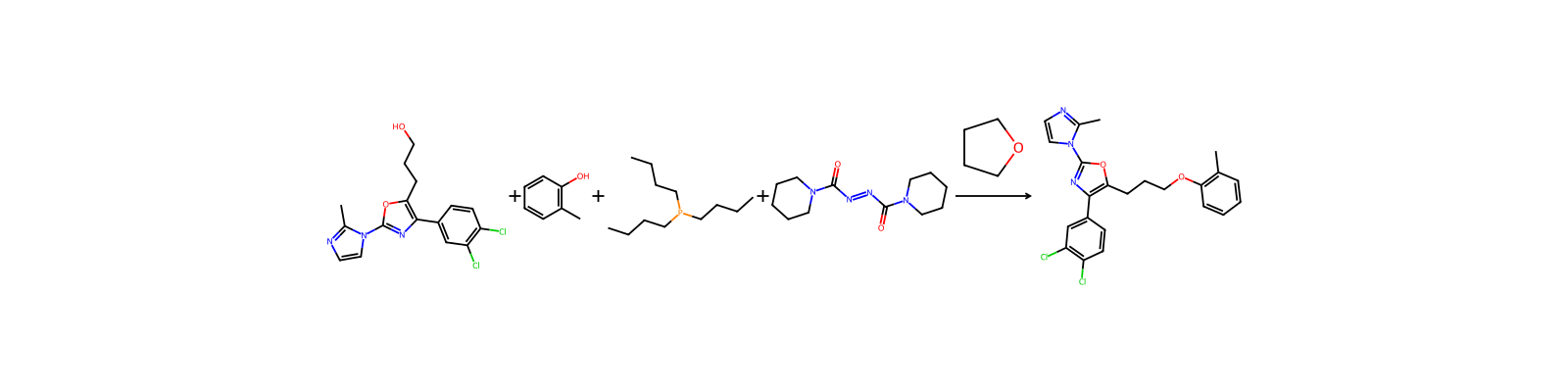
Zugehörige Reaktionen
387






Verknüpfte Notizen
Wird geladen…