Palladium(II) acetat
Palladium (II) acetate
HCID 4144353
Daten werden ergänzt – lade die Seite später neu, um den aktuellen Stand zu sehen
Grundinformationen
- CAS
3375-31-3- Standard-SMILES
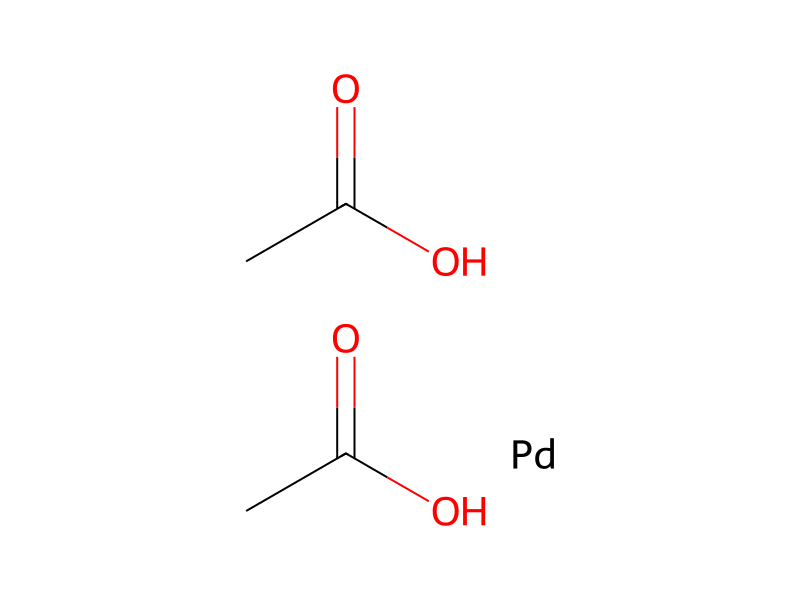
CC(=O)O.CC(=O)O.[Pd]- InChIKey
LXNAVEXFUKBNMK-UHFFFAOYSA-N- Summenformel
- C4H8O4Pd
- Durchschnittliche Molmasse
- 226,52 g/mol
- Monoisotopische Masse
- 225,94574
Namen und Bezeichner
- Bevorzugter Name
- Palladium (II) acetate
- IUPAC
- acetic acid;palladium
- Lokaler Name
- Palladium(II) acetat
- Englischer Name
- Palladium (II) Acetate
- Summenformel
- Pd(CH3COO)2
- Molmasse
- 224.51
Namen und Synonyme
RefChem:858312Palladium (II) acetateacetic acid;palladiumpalladium(2+) diacetatepalladium acetate-SCHEMBL17964palladium(ii) acetate, trimerPalladium(II) acetate, 98%SCHEMBL30125186AKOS016015615BP-11459Palladium(II) acetate, Pd 45.9-48.4%
Weitere Namen anzeigen
pd(oac)2PALLADIUM DIACETATEPALLADIUM ACETATEPALLADIUM(II) ACETATEdiacetoxypalladiumACETIC ACID PALLADIUM(II) SALTdiacetatopalladiumalladium diacetatePalladium(Ⅱ)AcetatePD(OAC)2 (TRIMER) SALT
Palladium(II) acetate, reagent grade, 98%Palladium(II) acetate, recrystallized, 97%Palladium(II) acetate, purum, 47% Pd basisPalladium(II) acetate, 99.98% trace metals basisPalladium(II) acetate, >=99.9% trace metals basisPalladium(II) acetate, Vetec(TM) reagent grade, 98%F0001-0990Palladium (II) acetate, >=99.95% Trace metals grade
Datenbank-Bezeichner
- CAS
3375-31-3- PubChem CID
- 4144353
Eigenschaften
Berechnete StruktureigenschaftenWird ergänzt
- Polarare Oberfläche (TPSA)
- 74,6 Ų
- H-Brücken-Donoren
- 2
- H-Brücken-Akzeptoren
- 4
- Frei drehbare Bindungen
- 0
- Schwere Atome
- 9
- Formalladung
- 0
- Komplexität
- 78
Physikochemische Eigenschaften
- Schmelzpunkt
- 205 °C · 205 °C
- Dampfdruck
- 0.002 Pa · 0.002Pa at 25℃
- storage temp.
- 30 °C · Store below +30°C.
- Löslichkeit
- Soluble as monomer in glacial acetic acid or as trimer in benzene.
- Aggregatzustand
- Various Forms In Red-(Powder/Flake/Crystalline/Beads)
- Farbe
- Red-brown
- PH
- 2 · 2-3 (H2O, 20℃)(aqueous suspension)
- Wasserlöslichkeit
- insoluble
- Merck
- 14 · 14,6991
- BRN
- 6086766 · 6086766
- InChI
- 1S/2C2H4O2.Pd/c2*1-2(3)4;/h2*1H3,(H,3,4);/q;;+2/p-2
- InChIKey
- PCUVQHHZCJMCHO-UHFFFAOYSA-M
- SMILES
- CC(O[Pd]OC(C)=O)=O
- LogP
- -0.17 at · -0.17 at 20℃
- CAS Datenbank
- 3375 · 3375-31-3(CAS DataBase Reference)
- EPA chemische Informationen
Sicherheit und Regulatorisches
Sicherheitsangaben dienen nur zur Orientierung und ersetzen weder das Sicherheitsdatenblatt (SDB) des Lieferanten noch geltende Vorschriften oder eine fachliche Bewertung.
Gefahrenhinweise
Regulatory InformationPalladium (II) acetate: Does not have an individual approval but may be used under an appropriate group standard
Regulatorische Informationen
Regulatory InformationPalladium (II) acetate: Does not have an individual approval but may be used under an appropriate group standard
Sicherheitsdaten
- F
- 10-23
- wgk
- 2
- tsca
- TSCA listed
- ridadr
- 3261
- hs_code
- 28439090
- RTECS-Nr.
- AJ1900000
- risk_code
- 41-36/37/38-40-35
- Toxizität
- LD50 orally in Rabbit: >= 5110 mg/kg
- hazard_code
- Xi,Xn,C
- safety_code
- 26-39-36/37/39-45-36
- Speicherklasse
- 11 - Combustible Solids
- Hazard Classifications
- Aquatic Acute 1Aquatic Chronic 1Eye Dam. 1Skin Sens. 1A
Chemie und Industrie
Anwendungen
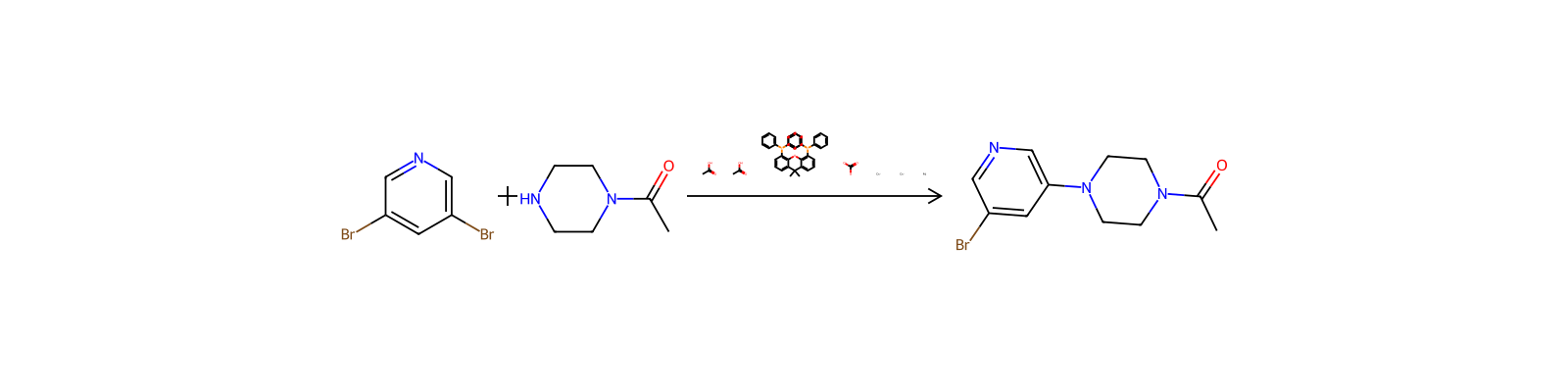
VerwendenPalladium (II) Acetate Trimer is used in Suzuki-Miyaura cross-coupling reactions and a catalyst for intramolecular coupling. It also serves to catalyze the chemoselective reduction of nitroarenes.
Darstellung
synthetischeThe synthesis of palladium acetate was first reported by Wilkinson et al.,where glacial acetic acid containing palladium powder is heated at reflux with a minimal amount of nitric acid until the generation of brown NOx fumes ceases. Although this is a relatively old method, it is still the most commercially employed route for the synthesis of palladium acetate, considering the process economics. Palladium (II) Acetate can be synthesized in two steps from palladium sponge via the intermediate dinitrate by first combining it with hot glacial acetic acid and nitric acid:Pd + 2 HNO3 → Pd(NO3)2 + H2Pd(NO3)2 + 2 CH3COOH → Pd(O2CCH3)2 + 2 HNO3
Vor- und nachgelagerte Produkte
Vorgelagerte Rohstoffe
Nachgelagerte Produkte
Zugehörige Reaktionen
493