

Grundinformationen
- Standard-SMILES
CCN1CCN(C(=O)N[C@@H](C(=O)N[C@@H]2C(=O)N3[C@@H]2SC(C)(C)[C@@H]3C(=O)O)c2ccccc2)C(=O)C1=O- InChIKey
IVBHGBMCVLDMKU-GXNBUGAJSA-N- Summenformel
- C23H27N5O7S
- Durchschnittliche Molmasse
- 517,6 g/mol
- Monoisotopische Masse
- 517,1631192
Überblick
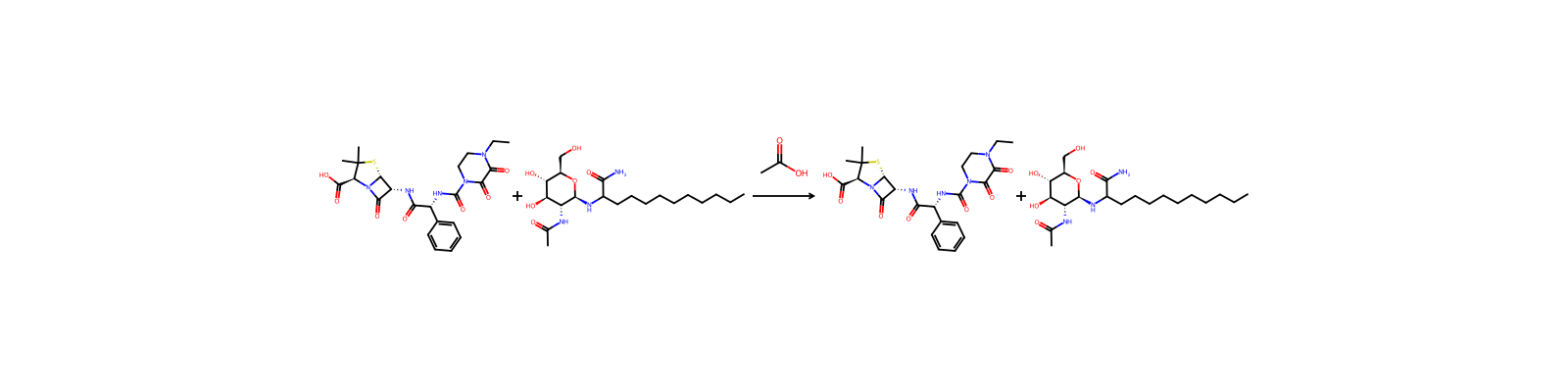
Piperacillin is a penicillin in which the substituent at position 6 of the penam ring is a 2-[(4-ethyl-2,3-dioxopiperazin-1-yl)carboxamido]-2-phenylacetamido group. It has a role as an antibacterial drug. It is a penicillin and a penicillin allergen. It is a conjugate acid of a piperacillin(1-).
Namen und Bezeichner
- Bevorzugter Name
- Piperacillin
- IUPAC
- (2S,5R,6R)-6-[[(2R)-2-[(4-ethyl-2,3-dioxopiperazine-1-carbonyl)amino]-2-phenylacetyl]amino]-3,3-dimethyl-7-oxo-4-thia-1-azabicyclo[3.2.0]heptane-2-carboxylic acid
- Lokaler Name
- [2S-[2α,5α,6β(S*)]]-6-[[[[(4-Ethyl-2,3-dioxopiperazin-1-yl)carbonyl]amino]phenylacetyl]amino]-3,3-dimethyl-7-oxo-4-thia-1-azabicyclo[3.2.0]heptan-2-carbonsure
- Englischer Name
- Piperacillin
- Summenformel
- C23H27N5O7S
- Molmasse
- 517.55
Namen und Synonyme
piperacillin61477-96-1Piperacillin anhydrousPiperacillinePiperacilinaPeracinPiperacillinaPiperacillinumPIPCCHEBI:8232Pipercillin(2S,5R,6R)-6-[[(2R)-2-[(4-ethyl-2,3-dioxopiperazine-1-carbonyl)amino]-2-phenylacetyl]amino]-3,3-dimethyl-7-oxo-4-thia-1-azabicyclo[3.2.0]heptane-2-carboxylic acid
Weitere Namen anzeigen
PIPERACILLIN SODIUMPipracil(2S,5R,6R)-6-[[(2R)-[[(4-Ethyl-2,3-dioxo-1-piperazinyl)carbonyl]amino]phenylacetyl]amino]-3,3-dimethyl-7-oxo-4-Thia-1-azabicyclo[3.2.0]heptane-2-carboxylic acid(2S,5R,6R)-6-((R)-2-(4-ethyl-2,3-dioxopiperazine-1-carboxamido)-2-phenylacetamido)-3,3-dimethyl-7-oxo-4-thia-1-azabicyclo[3.2.0]heptane-2-carboxylic acid hydrate4-Thia-1-azabicyclo[3.2.0]heptane-2-carboxylicacid,6-[[(2R)-2-[[(4-ethyl-2,3-dioxo-1-piperazinyl)carbonyl]aMino]-2-phenylacetyl]aMino]-3,3-diMethyl-7-oxo-,(2S,5R,6R)-C14034Pipraci
(2S,5R,6R)-6-{[(2R)-2-{[(4-ethyl-2,3-dioxopiperazin-1-yl)carbonyl]amino}-2-phenylacetyl]amino}-3,3-dimethyl-7-oxo-4-thia-1-azabicyclo[3.2.0]heptane-2-carboxylic acid9I628532GXDTXSID2023482AB Piperacillin4-Thia-1-azabicyclo(3.2.0)heptane-2-carboxylic acid, 3,3-dimethyl-6-(((((4-ethyl-2,3-dioxo-1-piperazinyl)carbonyl)amino)phenylacetyl)amino)-7-oxo-, (2S-(2-alpha,5-alpha,6-beta(S*)))-4-Thia-1-azabicyclo(3.2.0)heptane-2-carboxylic acid, 6-(((((4-ethyl-2,3-dioxo-1-piperazinyl)carbonyl)amino)phenylacetyl)amino)-3,3-dimethyl-7-oxo-, (2S-(2alpha,5alpha,6beta(S*)))-(2S,5R,6R)-6-[(2R)-2-{[(4-ethyl-2,3-dioxopiperazin-1-yl)carbonyl]amino}-2-phenylacetamido]-3,3-dimethyl-7-oxo-4-thia-1-azabicyclo[3.2.0]heptane-2-carboxylic acid(2S,5R,6R)-6-((R)-2-(4-Ethyl-2,3-dioxo-1-piperazinecarboxamido)-2-phenylacetamido)-3,3-dimethyl-7-oxo-4-thia-1-azabicyclo(3.2.0)heptane-2-carboxylic acid monohydrate
Datenbank-Bezeichner
- CAS
61477-96-1、66258-76-2- PubChem CID
- 43672
- DTXSID
DTXSID2023482- ChEMBL
CHEMBL702- ChEBI
CHEBI:8232- UNII
- 9I628532GX
- EC Number
- 262-811-8
- Nikkaji
- J18.442J
Eigenschaften
Berechnete Struktureigenschaften
- XLogP
- 0,5
- Polarare Oberfläche (TPSA)
- 182 Ų
- H-Brücken-Donoren
- 3
- H-Brücken-Akzeptoren
- 8
- Frei drehbare Bindungen
- 6
- Schwere Atome
- 36
- Formalladung
- 0
- Komplexität
- 982
Experimentelle und physikochemische Eigenschaften
Chemical ClassesOther Uses -> Pharmaceuticals
Drugs
Pharmaceuticals -> Antibiotics
Pharmaceuticals -> Listed in ZINC15
Pharmaceuticals -> Used in Switzerland
Pharmaceuticals -> Antibiotics
LogP0.3
Solubility1.19e-01 g/L
Human DrugsBreast Feeding; Lactation; Milk, Human; Anti-Infective Agents; Antibacterial Agents; Penicillins
Physical Description
White to off-white solid; [Bristol-Myers Squibb]
Solid
Collision Cross Section
227.2 Ų [M+H]+ [CCS Type: TW; Method: calibrated with Waters Major Mix]
222.2 Ų [M+H]+ [CCS Type: TW; Method: calibrated with polyalanine and drug standards]
221.26 Ų [M-H]-
Physikochemische Eigenschaften
- Schmelzpunkt
- 183 · 183-185C (dec.)
- Dichte
- 1.51 · 1.51±0.1 g/cm3(Predicted)
- Dampfdruck
- 0 Pa · 0Pa at 20℃
- storage temp.
- 2 · Sealed in dry,2-8°C
- Löslichkeit
- 0.119 mg/mL · Freely soluble in methanol. Only sparingly soluble in aqueous solution at 0.119 mg/mL
- pka
- 2.44 · 2.44±0.50(Predicted)
- Aggregatzustand
- Solid
- Farbe
- White to Off-White
- Wasserlöslichkeit
- 256.8 mg/L · 256.8mg/L at 20℃
- Stabilität
- Hygroscopic
- InChIKey
- IVBHGBMCVLDMKU-GXNBUGAJSA-N
- SMILES
- N12[C@@]([H])([C@H](NC([C@H](NC(N3CCN(CC)C(=O)C3=O)=O)C3=CC=CC=C3)=O)C1=O)SC(C)(C)[C@@H]2C(O)=O
- LogP
- -1.55 at · -1.55 at 20℃
- CAS Datenbank
- 61477 · 61477-96-1(CAS DataBase Reference)
Sicherheit und Regulatorisches
GHS-Klassifizierung
GHS Classification
Danger
H317 (93.8%): May cause an allergic skin reaction [Warning Sensitization, Skin]
P233, P260, P261, P271, P272, P273, P280, P284, P302+P352, P304+P340, P321, P333+P317, P342+P316, P362+P364, P403, and P501 (click each P-code to see the statement)
Aggregated GHS information provided per 16 reports by companies from 4 notifications to the ECHA C&L Inventory. Each notification may be associated with multiple companies.
Gefahrenhinweise
Regulatory InformationStatus: Active Update: 15-06-2020 https://echa.europa.eu/registration-dossier/-/registered-dossier/27459
Other Safety InformationIMAP assessments - 4-Thia-1-azabicyclo[3.2.0]heptane-2-carboxylic acid, 6-[[[[(4-ethyl-2,3-dioxo-1-piperazinyl)carbonyl]amino]phenylacetyl]amino]-3,3-dimethyl-7-oxo-, [2S-[2.alpha.,5.alpha.,6.beta.(S*)]]-: Environment tier I assessment
Hazards SummaryA dermal and respiratory sensitizer; [Bristol-Myers Squibb] Occupational asthma confirmed in a pharmaceutical worker; [Malo] Causes contact urticaria; [Kanerva, p. 219]
Hazard Classes and CategoriesSkin Sens. 1 (93.8%)
Toxikologische Informationen
Hepatotoxicity
Patients on intravenous piperacillin may have transient and mild-to-moderate serum aminotransferase elevations in up to 12% of patients, but these are of little clinical significance and not more common than with comparative parenteral antibiotics. Hepatic injury was more commonly reported with mezlocillin, a related extended spectrum ureidopenicillin which has been withdrawn from use. Rare instances of idiosyncratic liver injury have been reported in persons receiving piperacillin. The liver injury is typically cholestatic arising within 1 to 6 weeks of starting therapy. The injury can be severe, but is generally self-limited once piperacillin is stopped. The features of the hepatotoxicity resemble those of other penicillins. The cholestatic hepatitis caused by piperacillin and other penicillins can be prolonged and lead to persistent cholestasis (vanishing bile duct syndrome) or persistent elevations in serum alkaline phosphatase suggestive of partial bile duct loss. Most cases of liver injury related to piperacillin are linked to the combination of piperacillin with the beta-lactamase inhibitor tazobactam (Zosyn and generics), which is more commonly used than piperacillin alone.
Adverse EffectsAsthma - Reversible bronchoconstriction (narrowing of bronchioles) initiated by the inhalation of irritating or allergenic agents.
Drug Induced Liver Injury
Drug-Induced Liver Injury Severity and Toxicity (DILIst)
piperacillin
DILI Negative
Intravenous
DOI:10.1016/j.drudis.2019.09.022
Effects During Pregnancy and Lactation◉ Summary of Use during Lactation
Sicherheitsdaten
- risk_code
- 42/43
- hazard_code
- Xi
- safety_code
- 36/37
Chemie und Industrie
Pharmakologische Informationen
ATC Code
J01CR05
J - Antiinfectives for systemic use
QJ - Antiinfectives for systemic use
Pharmacodynamics
Piperacillin is a penicillin beta-lactam antibiotic used in the treatment of bacterial infections caused by susceptible, usually gram-positive, organisms. The name "penicillin" can either refer to several variants of penicillin available, or to the group of antibiotics derived from the penicillins. Piperacillin has <i>in vitro</i> activity against gram-positive and gram-negative aerobic and anaerobic bacteria. The bactericidal activity of Piperacillin results from the inhibition of cell wall synthesis and is mediated through Piperacillin binding to penicillin binding proteins (PBPs). Piperacillin is stable against hydrolysis by a variety of beta-lactamases, including penicillinases, and cephalosporinases and extended spectrum beta-lactamases.
Mechanism of Action
By binding to specific penicillin-binding proteins (PBPs) located inside the bacterial cell wall, Piperacillin inhibits the third and last stage of bacterial cell wall synthesis. Cell lysis is then mediated by bacterial cell wall autolytic enzymes such as autolysins; it is possible that Piperacillin interferes with an autolysin inhibitor.
Biological Half-Life36-72 minutes
Metabolism/MetabolitesLargely not metabolized.
FDA Pharmacological Classification
9I628532GX
PIPERACILLIN ANHYDROUS
Established Pharmacologic Class [EPC] - Penicillin-class Antibacterial
Chemical Structure [CS] - Penicillins
Piperacillin anhydrous is a Penicillin-class Antibacterial.
MeSH Pharmacological ClassificationSubstances that inhibit the growth or reproduction of BACTERIA.
Absorption, Distribution and Excretion
Not absorbed following oral administration.
As with other penicillins, PIPRACIL is eliminated primarily by glomerular filtration and tubular secretion; it is excreted rapidly as unchanged drug in high concentrations in the urine. Because PIPRACIL is excreted by the biliary route as well as by the renal route, it can be used safely in appropriate dosage in patients with severely restricted kidney function.
101 mL/kg [intravenous administration of 50 mg/kg (5-minute infusion) in neonates]
32 - 41 mL/min/1.73 m2
Cellular LocationsMembrane
Verwendung und Herstellung
Uses
A beta-lactam antibiotic; [Bristol-Myers Squibb]
Use (kg) in Switzerland (2009): >1000
Anwendungen
VerwendenPiperacillin is a semisynthetic penicillin with wide spectrum of antimicrobial activity, particularly pseudomonas strains. It is used to treat moderate-to-severe infections due to susceptible organisms.
Vor- und nachgelagerte Produkte
Vorgelagerte Rohstoffe
Anbieter50 Anbieter
北京华美互利生物化工010-56205725 · [email protected]
湖北威德利化学试剂有限公司181-6332-1995 18062128043 · [email protected]
济南百隆化学有限公司[email protected] · [email protected]
HubeiwidelychemicaltechnologyCo.,Ltd18627774460 · [email protected]
合肥翰刚医药科技有限公司+8618062405514 · [email protected]
广州隽沐生物科技股份有限公司020-36607679; 13502246435 · [email protected]
南京望知星医药科技有限公司18569809817 · [email protected]
上海如吉生物科技发展有限公司+86-21-65211385-8001 36031160 · [email protected]
Dayang Chem (Hangzhou) Co.,Ltd.+86-0571-88938639 17705817739 · [email protected]
广州隽唐科技有限公司020-36607679 13502246435 · [email protected]
湖北辰心化工有限公司18696113233 · [email protected]
石家庄感拓生物科技有限公司[email protected]
江西瑞威尔生物科技有限公司400-880-2824 18107960669 · [email protected]
上海晶抗生物工程有限公司021-54721350 13524668266 · [email protected]
大连美仑生物技术有限公司0411-62910999 13889544652 · [email protected]
梯希爱(上海)化工贸易有限公司021-61109150 · [email protected]
南京圣亿来化工有限公司19951936396 · [email protected]
上海钰康生物科技有限公司+86-18930848214 +86-021-56762820 · [email protected]
医恩医疗系统研发(上海)有限公司021-58958002 18930822973 · [email protected]
孝感深远化工有限公司15527621225; 15527621225 · [email protected]
HONG KONG IPURE BIOLOGY CO.,LIMITED86 18062405514 18062405514 · [email protected]
Xiamen AmoyChem Co., Ltd+86-86-5926051114 · [email protected]
湖南汇百侍生物科技有限公司0731-85526065 13308475853 · [email protected]
上海源叶生物科技有限公司13636370518 · [email protected]
深圳菲斯生物科技有限公司0755-83725681-603
上海特伯化学科技有限公司+86-21-60341587 · [email protected]
深圳振强药物研发有限公司0755-66853366 13670046396 · [email protected]
广州爱纯医药科技有限公司020-39119399 18927568969 · [email protected]
南京生利德生物科技有限公司025-57798810 18652991625 · [email protected]
上海陶素生化科技有限公司021-33632979 · [email protected]
上海倍卓生物科技有限公司021-61119791,13386096464 · [email protected]
南京世洲生物科技有限公司13675144456 · [email protected]
湖北鑫源顺医药化工有限公司13971561712, 13995564702, 027-50664929 · [email protected]
上海湄水化工科技有限公司021-60549325 18616193163
上海将来实业股份有限公司021-61552785 · [email protected]
湖南华腾制药有限公司400-8592883 · [email protected]
天津普西唐生物医药科技有限公司010-60605840 · [email protected]
上海御略医药科技有限公司021-60345187 13671753212 · [email protected]
上海麦克林生化科技股份有限公司15221275939 15221275939 · [email protected]
凯试(上海)科技有限公司021-50135380 · [email protected]
湖北巨胜科技有限公司027-59599241 18871490274 · [email protected]
池州凯隆进出口贸易有限公司[email protected]
天津阿尔塔科技有限公司022-6537-8550 15522853686 · [email protected]
TargetMol中国(陶术生物)021-021-33632979 15002134094 · [email protected]
上海陶术生物科技股份有限公司+1-781-999-5354; +1-00000000000 · [email protected]
湖北威德利化学科技有限公司027-83989310 18627915365
湖北威德利化学试剂有限公司18327179646 · [email protected]
杭州鼎燕化工有限公司0571-87157530-8003 18267553885 · [email protected]
西安美川生物科技有限公司029-89275612 +8618991951683 · [email protected]
武汉鑫儒化工有限公司15927387915 15337108568
Ergänzende Hinweise
DefinitionChEBI: Piperacillin is a penicillin in which the substituent at position 6 of the penam ring is a 2-[(4-ethyl-2,3-dioxopiperazin-1-yl)carboxamido]-2-phenylacetamido group. It has a role as an antibacterial drug. It is a penicillin and a penicillin allergen. It is a conjugate acid of a piperacillin(1-).
Zugehörige Reaktionen
3

Verknüpfte Notizen
Wird geladen…