
D-Tartaric acid
Daten werden ergänzt – lade die Seite später neu, um den aktuellen Stand zu sehen
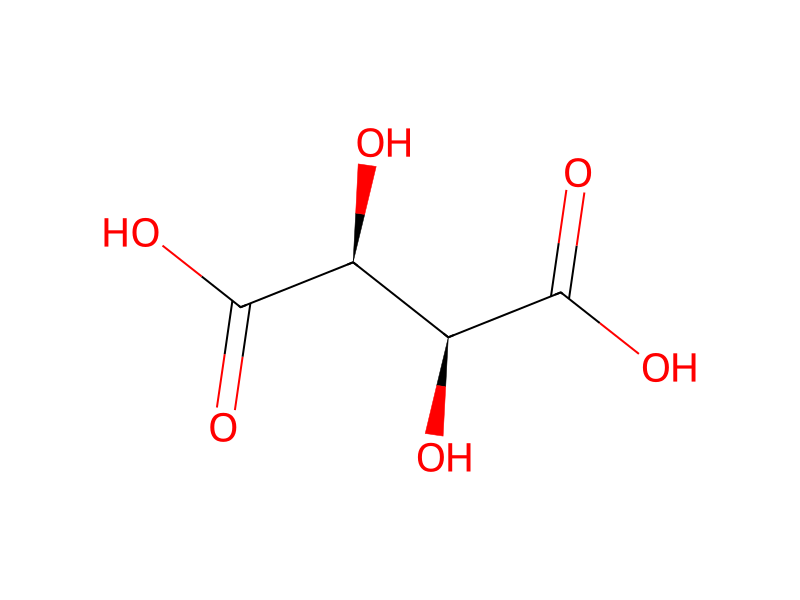
Grundinformationen
- CAS
133-37-9- Standard-SMILES
O=C(O)[C@@H](O)[C@H](O)C(=O)O- InChIKey
FEWJPZIEWOKRBE-LWMBPPNESA-N- Summenformel
- C4H6O6
- Durchschnittliche Molmasse
- 150,09 g/mol
Überblick
D-tartaric acid is the D-enantiomer of tartaric acid. It has a role as an Escherichia coli metabolite. It is a conjugate acid of a D-tartrate(1-). It is an enantiomer of a L-tartaric acid.
Namen und Bezeichner
- Bevorzugter Name
- D-Tartaric acid
- IUPAC
- (2S,3S)-2,3-dihydroxybutanedioic acid
- Englischer Name
- L-Tartaric acid
- Summenformel
- C4H6O6
- Molmasse
- 150.08684
Namen und Synonyme
d-Tartaric acidD-(-)-Tartaric acid147-71-7(2S,3S)-2,3-dihydroxybutanedioic acid(-)-Tartaric acidD-threaric acid(-)-D-Tartaric acid(S,S)-Tartaric acid(2S,3S)-(-)-Tartaric acid(2S,3S)-Tartaric acid(-)-(S,S)-Tartaric acid(S,S)-(-)-Tartaric acid
Weitere Namen anzeigen
unusual tartaric acidRRX6A4PL3CTARTARIC ACID, D-UNNATURAL TARTARIC ACIDDTXSID4043775CHEBI:15672RefChem:130683GlyTouCan:G95238FE
Datenbank-Bezeichner
- CAS
133-37-9、147-71-7- PubChem CID
- 439655
- DTXSID
DTXSID4043775- ChEMBL
CHEMBL1200861- ChEBI
CHEBI:15672- UNII
- RRX6A4PL3C
- EC Number
- 205-105-7、205-695-6
- Nikkaji
- J9.264I
Eigenschaften
Berechnete StruktureigenschaftenWird ergänzt
- XLogP
- -1,9
- Polarare Oberfläche (TPSA)
- 115 Ų
- H-Brücken-Donoren
- 4
- H-Brücken-Akzeptoren
- 6
- Frei drehbare Bindungen
- 3
- Schwere Atome
- 10
- Formalladung
- 0
- Komplexität
- 134
Experimentelle und physikochemische Eigenschaften
Chemical Classes
Other Classes -> Organic Acids
Other Classes -> Organic Acids
SpringerMaterials PropertiesCrystal structure
FragrancesFragrance Ingredient (Tartaric acid (d-, l-, dl-, meso-)) -> IFRA transparency List
Solubility1.00E+06 mg/L @ 25 °C (exp)
Melting Point169 - 170 °C
Physical Description
Liquid; Other Solid
White solid; [ICSC] Colorless or white odorless solid; [JECFA] White odorless crystalline powder; [Acros Organics MSDS]
Solid; [Merck Index] White odorless crystalline powder; [Alfa Aesar MSDS]
Solid
Collision Cross Section
119.1 Ų [M-H]- [CCS Type: DT; Buffer gas: N2; Ionization: ESI-; Dataset: TOXCAST; Source Identifier: DTXSID5046986]
118.3 Ų [M-H]-
Sicherheit und Regulatorisches
Sicherheitsangaben dienen nur zur Orientierung und ersetzen weder das Sicherheitsdatenblatt (SDB) des Lieferanten noch geltende Vorschriften oder eine fachliche Bewertung.
GHS-Klassifizierung
GHS Classification
This chemical does not meet GHS hazard criteria for 5.1% (26 of 506) of reports.
Danger
H315 (22.1%): Causes skin irritation [Warning Skin corrosion/irritation]
P261, P264, P264+P265, P271, P280, P302+P352, P304+P340, P305+P351+P338, P305+P354+P338, P317, P319, P321, P332+P317, P337+P317, P362+P364, P403+P233, P405, and P501 (click each P-code to see the statement)
Aggregated GHS information provided per 506 reports by companies from 13 notifications to the ECHA C&L Inventory. Each notification may be associated with multiple companies.
This chemical does not meet GHS hazard criteria for 1% (3 of 310) of reports.
Gefahrenhinweise
Regulatory Information
Chemical: Butanedioic acid, 2,3-dihydroxy-, (R*,R*)-(.+-.)-
Chemical: Butanedioic acid, 2,3-dihydroxy-, [S-(R*,R*)]-
Butanedioic acid, 2,3-dihydroxy-, (2S,3S)- is listed on the EPA's Chemical Data Reporting (CDR) system. Manufacturers and importers of Butanedioic acid, 2,3-dihydroxy-, (2S,3S)- are required to report information about their production and use of this chemical to the EPA under the Toxic Substances Control Act (TSCA). (40 eCFR Part 711)
Status: Active Update: 23-07-2020 https://echa.europa.eu/registration-dossier/-/registered-dossier/17277
Status: Active Update: 03-10-2022 https://echa.europa.eu/registration-dossier/-/registered-dossier/34095
D-Tartaric acid: Does not have an individual approval but may be used under an appropriate group standard
Other Safety Information
IMAP assessments - Butanedioic acid, 2,3-dihydroxy-, (R*,R*)-(.+-.)-: Human health tier I assessment
Evaluation - Chemicals that are unlikely to require further regulation to manage risks to environment
Hazards Summary
Chemie und Industrie
Pharmakologische Informationen
Cellular LocationsCytoplasm
Verwendung und Herstellung
Uses
Used as a synergist for antioxidants, acid, emulsifier, sequestrant, and flavoring agent; [JECFA]
Dextro configuration of levorotatory tartaric acid; Called unnatural but has been found in nature; [Merck Index]
U.S. Production2023: 477,000 lb
Consumer UsesNot Known or Reasonably Ascertainable
Use Classification
Fragrance Ingredients
Flavouring Agent -> FLAVOURING_AGENTFood Additives -> ACID; ANTIOXIDANT_SYNERGIST; EMULSIFIER; SEQUESTRANT; SYNERGIST -> JECFA Functional Classes
General Manufacturing InformationButanedioic acid, 2,3-dihydroxy-, (2S,3S)-: ACTIVE
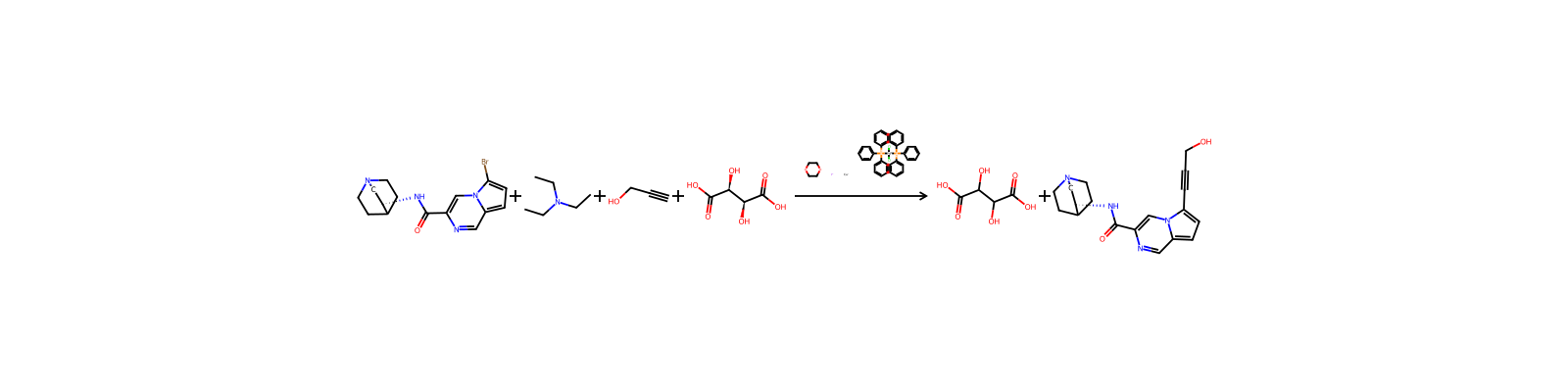
Zugehörige Reaktionen
139




Notizen zur Verbindung
Wird geladen…