Hydroxylammoniumchlorid
Hydroxyamine hydrochloride
HCID 443297
Daten werden ergänzt – lade die Seite später neu, um den aktuellen Stand zu sehen

Grundinformationen
- CAS
5470-11-1- Standard-SMILES
Cl.NO- InChIKey
WTDHULULXKLSOZ-UHFFFAOYSA-N- Summenformel
- ClH.H3NO
- Durchschnittliche Molmasse
- 69,49 g/mol
Überblick
Hydroxylamine hydrochloride appears as colorless or off-white crystalline solid. pH (0.1 molar aqueous solution) 3.4. pH (0.2 molar aqueous solution) 3.2. (NTP, 1992)
Namen und Bezeichner
- Bevorzugter Name
- Hydroxyamine hydrochloride
- IUPAC
- hydroxylamine;hydrochloride
- Lokaler Name
- Hydroxylammoniumchlorid
- Englischer Name
- Hydroxylamine hydrochloride
- Summenformel
- NH2OH·HCl
- Molmasse
- 69.49
Namen und Synonyme
Hydroxylamine hydrochloride5470-11-1Hydroxylammonium chlorideOxammonium hydrochlorideHydroxyamine hydrochlorideHydroxylamine chloride (1:1)NSC-262505X4ZA62Z4QHYDROXYLAMINE CHLOROHYDRATERefChem:5895226-798-2DTXCID501476239
Weitere Namen anzeigen
HYDROXYLAMINE HCLHYDROXYLAMINE HYDROCHLORIDhydroxyaminehydrochlorideHydroxylamine hydrocOXAMMONIUM HCLHA HCLOxammionium
DTXSID7025425Hydroxyammonium chlorideHydroxylamine chlorideHYDROXYLAMINE, HYDROCHLORIDEhydroxylamine;hydrochlorideMFCD00051089hydroxyl amine hydrochlorideHydroxyamine (hydrochloride)
Datenbank-Bezeichner
- CAS
5470-11-1- PubChem CID
- 443297
- ChEMBL
CHEMBL542448- ChEBI
CHEBI:5807- UNII
- 5X4ZA62Z4Q
- EC Number
- 226-798-2
Eigenschaften
Berechnete StruktureigenschaftenWird ergänzt
- Polarare Oberfläche (TPSA)
- 46,3 Ų
- H-Brücken-Donoren
- 3
- H-Brücken-Akzeptoren
- 2
- Frei drehbare Bindungen
- 0
- Schwere Atome
- 3
- Formalladung
- 0
- Komplexität
- 2
Experimentelle und physikochemische Eigenschaften
Chemical ClassesNitrogen Compounds -> Hydroxylamines
Density
1.67 at 63 °F (NTP, 1992) - Denser than water; will sink
1.7 g/cm³
1.6717 @25 °C
Solubility
greater than or equal to 100 mg/mL at 66 °F (NTP, 1992)
Solubility in water, g/100ml at 25 °C: 94 (freely soluble)
Boiling PointDecomposes (NTP, 1992)
Melting Point
304 °F (Decomposes) (NTP, 1992)
304 °F (decomposes)
154 °C
Physical Description
Hydroxylamine hydrochloride appears as colorless or off-white crystalline solid. pH (0.1 molar aqueous solution) 3.4. pH (0.2 molar aqueous solution) 3.2. (NTP, 1992)
Colorless to off-white crystals that are hygroscopic and water soluble; [CAMEO]
COLOURLESS HYGROSCOPIC CRYSTALS.
Physikochemische Eigenschaften
- Schmelzpunkt
- 155 to · 155 to 157 °C (311 to 315 °F; 428 to 430 K) decomposes
- Dichte
- 1.67 g/cm3 · 1.67 g/cm3
- Dampfdruck
- 0.054 Pa · 0.054 Pa (50 °C)
- Flammpunkt
- Not applicable
- storage temp.
- 15 °C · Store at +15°C to +25°C.
- Löslichkeit
- 470 g/l · 470g/l
- Aggregatzustand
- crystalline solid
- Farbe
- white
- PH
- 2.5 · 2.5-3.5 (25℃, 50mg/mL in H2O)
- Wasserlöslichkeit
- 560 g/L · 560 g/L (20 ºC)
- Merck
- 14 · 14,4828
- BRN
- 3539763 · 3539763
- Stabilität
- 115 C · Substances to be avoided include strong oxidizing agents. Heating above 115 C may cause explosion; do not store above 65C. Moisture and air sensitive.
- Kosmetik-Inhaltsstoffe Funktionen
- ANTIOXIDANT
- InChI
- 1S/ClH.H3NO/c;1-2/h1H;2H,1H2
- InChIKey
- WTDHULULXKLSOZ-UHFFFAOYSA-N
- SMILES
- Cl.NO
- LogP
- -0.81 · -0.810 (est)
- CAS Datenbank
- 5470 · 5470-11-1(CAS DataBase Reference)
- EPA chemische Informationen
- Hydroxylamine hydrochloride (5470-11-1)
Sicherheit und Regulatorisches
Sicherheitsangaben dienen nur zur Orientierung und ersetzen weder das Sicherheitsdatenblatt (SDB) des Lieferanten noch geltende Vorschriften oder eine fachliche Bewertung.
GHS-Klassifizierung
GHS Classification
Warning
H290: May be corrosive to metals [Warning Corrosive to Metals]
P203, P234, P260, P261, P264, P264+P265, P270, P272, P273, P280, P301+P317, P302+P352, P305+P351+P338, P317, P318, P319, P321, P330, P332+P317, P333+P317, P337+P317, P362+P364, P390, P391, P405, P406, and P501 (click each P-code to see the statement)
Warning
H290 (99.8%): May be corrosive to metals [Warning Corrosive to Metals]
P203, P234, P260, P261, P264, P264+P265, P270, P272, P273, P280, P301+P317, P302+P352, P305+P351+P338, P317, P318, P319, P321, P330, P332+P317, P333+P317, P337+P317, P362+P364, P390, P391, P405, P406, and P501 (click each P-code to see the statement)
Gefahrenhinweise
Regulatory Information
Chemical: Hydroxylamine, hydrochloride
Status: Active Update: 18-11-2021 https://echa.europa.eu/registration-dossier/-/registered-dossier/24099
Hydroxylammonium chloride: Does not have an individual approval but may be used under an appropriate group standard
Other Safety InformationIMAP assessments - Hydroxylamine and its salts: Human health tier II assessment
DOT LabelCorrosive Poison
Fire Hazards
Flash point data for this chemical are not available; however, it is probably combustible. (NTP, 1992)
Not combustible. Gives off irritating or toxic fumes (or gases) in a fire. Risk of explosion as a result of decomposition when heated.
Health Hazards
SYMPTOMS: Symptoms of exposure to this chemical include eye, skin and mucous membrane irritation; burning sensation, coughing, wheezing, laryngitis, shortness of breath, headache, nausea, vomiting and methemoglobinemia. Inhalation may be fatal as a result of spasm, inflammation and edema of the larynx and bronchi; chemical pneumonitis and pulmonary edema.
Hazards Summary
A powerful reducing agent and a strong irritant of the skin and eyes; Can cause methemoglobinemia; Inhalation of high concentrations can induce toxic pneumonitis; [CAMEO] Negligible evaporation at room temperature; Harmful if dispersed particles are inhaled; A skin sensitizer; [ICSC] Causes skin burns; [MSDSonline] See Hydroxylamine.
Reactive GroupSalts, Acidic
EC ClassificationH290; H302; H312; H315; H319; H317; H351; H373; H400
UN ClassificationUN Hazard Class: 8; UN Subsidiary Risks: 6.1; UN Pack Group: III
Reactivity ProfileA reducing agent. Reacts with bases and oxidizing agents. (NTP, 1992)
Chemical DangersDecomposes slowly on contact with moisture. Upon heating, toxic fumes are formed. Decomposes on heating. This generates explosion hazard. The solution in water is a weak acid. Attacks many metals.
Packaging and LabellingDo not transport with food and feedstuffs. Marine pollutant.
Sicherheit und Schutzausrüstung
Fire Fighting
Fires involving this material can be controlled using a dry chemical, carbon dioxide or Halon extinguisher. (NTP, 1992)
In case of fire in the surroundings, use appropriate extinguishing media.
First Aid Measures
Fresh air, rest. Refer for medical attention.
Remove contaminated clothes. Rinse skin with plenty of water or shower. Refer for medical attention .
First rinse with plenty of water for several minutes (remove contact lenses if easily possible), then refer for medical attention.
Rinse mouth. Give a slurry of activated charcoal in water to drink. Refer for medical attention .
First Aid
EYES: First check the victim for contact lenses and remove if present. Flush victim's eyes with water or normal saline solution for 20 to 30 minutes while simultaneously calling a hospital or poison control center. Do not put any ointments, oils, or medication in the victim's eyes without specific instructions from a physician. IMMEDIATELY transport the victim after flushing eyes to a hospital even if no symptoms (such as redness or irritation) develop.
Safe StorageDry. Cool. Store in an area without drain or sewer access. Provision to contain effluent from fire extinguishing.
Nonfire Spill Response
SMALL SPILLS AND LEAKAGE: If you spill this chemical, you should dampen the solid spill material with water, then transfer the dampened material to a suitable container. Use absorbent paper dampened with water to pick up any remaining material. Seal your contaminated clothing and the absorbent paper in a vapor-tight plastic bag for eventual disposal. Wash all contaminated surfaces with a soap and water solution. Do not reenter the contaminated area until the Safety Officer (or other responsible person) has verified that the area has been properly cleaned.
Spillage Disposal
Personal protection: particulate filter respirator adapted to the airborne concentration of the substance. Do NOT let this chemical enter the environment. Sweep spilled substance into covered non-metallic containers. If appropriate, moisten first to prevent dusting. Carefully collect remainder. Then store and dispose of according to local regulations.
Isolation and EvacuationExcerpt from ERG Guide 154 [Substances - Toxic and/or Corrosive (Non-Combustible)]:
Eye PreventionWear safety goggles or eye protection in combination with breathing protection if powder.
Inhalation RiskEvaporation at 20 °C is negligible; a harmful concentration of airborne particles can, however, be reached quickly when dispersed.
Skin PreventionProtective gloves.
Exposure PreventionAVOID ALL CONTACT! IN ALL CASES CONSULT A DOCTOR!
Ingestion PreventionDo not eat, drink, or smoke during work.
Toxikologische Informationen
Adverse EffectsMethemoglobinemia - The presence of increased methemoglobin in the blood; the compound is classified as secondary toxic effect
Exposure RoutesThe substance can be absorbed into the body by inhalation of its aerosol, through the skin and by ingestion.
Signs and Symptoms
Blue lips, fingernails and skin. Headache. Dizziness. Nausea. Confusion. Convulsions. Unconsciousness.
MAY BE ABSORBED! Redness. Pain. Further see Inhalation.
Redness. Pain.
See Inhalation.
ICSC Environmental DataThe substance is very toxic to aquatic organisms.
Sicherheitsdaten
- F
- 21
- wgk
- 3
- tsca
- TSCA listed
- ridadr
- UN 2923 8/PG 2
- hs_code
- 28251000
- RTECS-Nr.
- NC3675000
- risk_code
- 22-36/38-43-48/22-50-40-21/22-2
- Toxizität
- LD50 orally in mice: 408 mg/kg (Riemann)
- hazard_code
- Xn,N,E
- safety_code
- 22-24-37-61-36/37
- hazard_class
- 8
- packing_group
- III
- Speicherklasse
- 4.1A - Other explosive hazardous materials
- Hazard Classifications
- Acute Tox. 4 DermalAcute Tox. 4 OralAquatic Acute 1Aquatic Chronic 2Carc. 2Eye Irrit. 2Met. Corr. 1Skin Irrit. 2Skin Sens. 1STOT RE 2 Oral
Chemie und Industrie
Verwendung und Herstellung
Uses
Hydroxylamine is used in organic synthesis; in photographic developers; in the production of rubber, plastics, and steel; and in the separation of uranium and plutonium; [Ullmann]
Steel Producing [Category: Industry]
General Manufacturing InformationHydroxylamine, hydrochloride (1:1): ACTIVE
Anwendungen
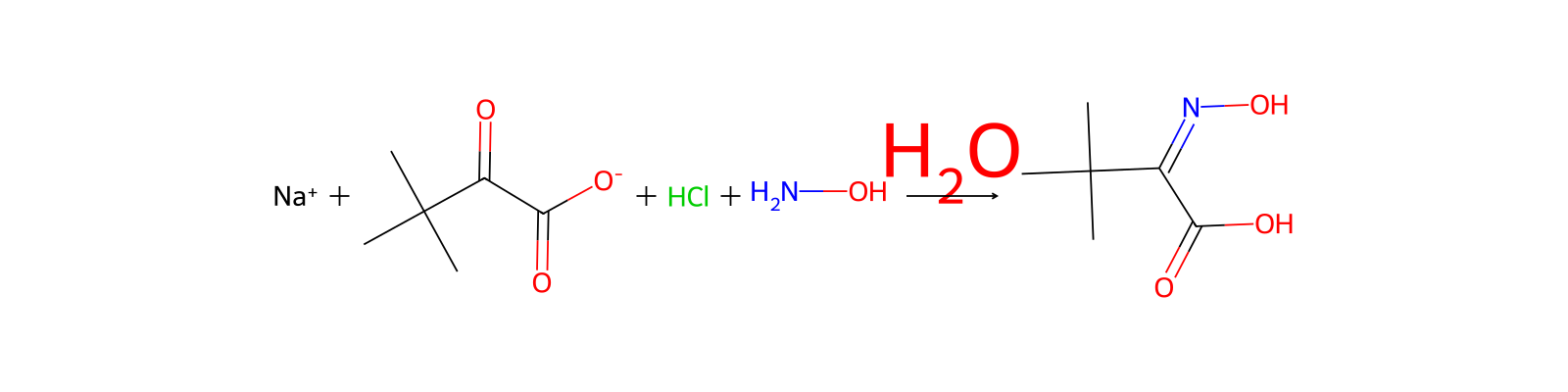
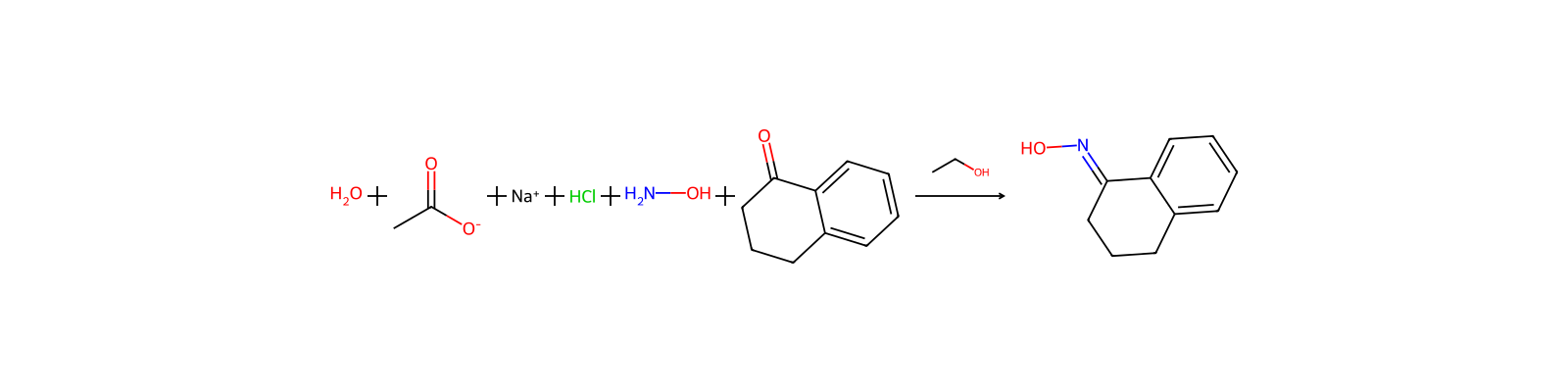
BeschreibungHydroxylamine hydrochloride is a reducing agent that is routinely used for the deacetylation of SATA to form free sulfhydryls (Figure 1), for cleavage of protein cross‐linkers that contain carbonyl groups (i.e. EGS) and for mutagenesis of plasmid DNA.Hydroxylamine converts aldehydes and ketones (carbonyls) to their oxime derivative in weak bases, therefore cross‐linkers and other compounds with carbonyl groups are cleavable with Hydroxylamine hydrochloride.SATA and SATP are modification reagents that add a sulfhydryl group to primary amines on biomolecules. The initial modification results in the addition of an acetyl‐protected sulfur enabling storage of the biomolecule. To generate a free sulfhydryl the biomolecule is treated with hydroxylamine to remove the protecting acetyl group (see figure).EGS and sulfo‐EGS are homobifunctional, succinimidyl ester, amine reactive crosslinkers that are resistant to cleavage by denaturants used in SDS‐PAGE conditions, but may be cleaved with hydroxylamine.
VerwendenHydroxylamine hydrochloride is a monomoamine oxidase inhibitor. It is used to prepare oximes and hydroxmic acids in organic synthesis. It acts as a copolymerization inhibitor. It can be used to remove bromine and polybromide from a solution during extraction of lignin from lignocellulosic biomass. It is key starting material for the preparation of pharmaceuticals and agrochemicals. It plays a vital role in rubber and plastic industries as an antioxidant, a vulcanization accelerator and a radical scavenger. It is also used as a color stabilizer and emulsion additive in color films.
Darstellung
synthetischeHydroxylamine hydrochloride is prepared by electrolytic reduction of ammonium chloride. Or by the action of nitromethane with hydrochloric acid and water to obtain hydroxylamine hydrochloride.
Vor- und nachgelagerte Produkte
Vorgelagerte Rohstoffe
Nachgelagerte Produkte
Ergänzende Hinweise
DefinitionChEBI: Hydroxylamine hydrochloride is an organic molecular entity. It is a colorless inorganic compound (HONH2) used in organic synthesis and as a reducing agent, due to its ability to donate nitric oxide.
Zugehörige Reaktionen
7.871