
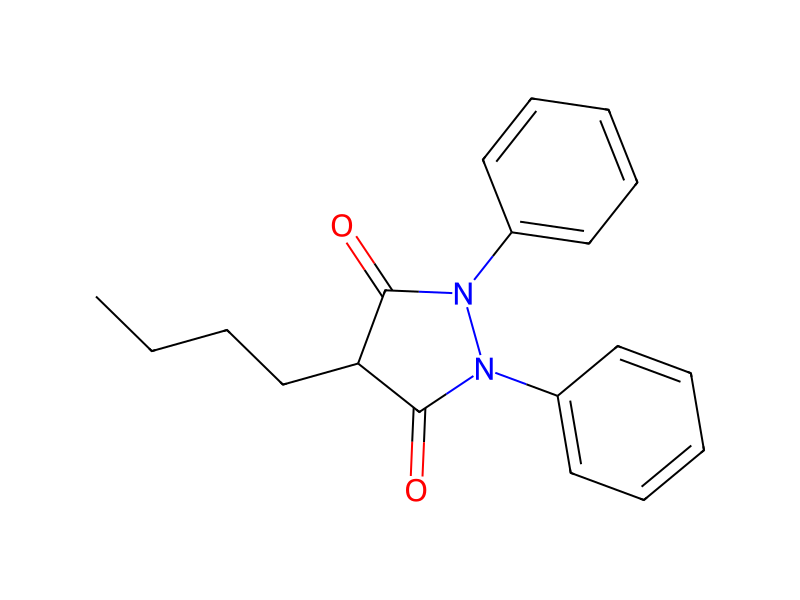
Grundinformationen
- Standard-SMILES
CCCCC1C(=O)N(c2ccccc2)N(c2ccccc2)C1=O- InChIKey
VYMDGNCVAMGZFE-UHFFFAOYSA-N- Summenformel
- C19H20N2O2
- Durchschnittliche Molmasse
- 308,4 g/mol
- Monoisotopische Masse
- 308,15247789
Namen und Bezeichner
- Bevorzugter Name
- Phenylbutazone
- IUPAC
- 4-butyl-1,2-diphenylpyrazolidine-3,5-dione
- Lokaler Name
- 4-Butyl-1,2-diphenyl-3,5-pyrazoli-dindion
- Englischer Name
- Phenylbutazone
- Summenformel
- C19H20N2O2
- Molmasse
- 308.37
Namen und Synonyme
phenylbutazone50-33-94-Butyl-1,2-diphenylpyrazolidine-3,5-dioneButapirazolButadionButazolidinFlexazoneAzolidButacoteButazolidineEcobutazoneFenibutazona
Weitere Namen anzeigen
PBZphenylbutazon4-PhenylbutazoneBenzoneBaotaisongButadionePyrazolidin4-BUTYL-1,2-DIPHENYL-3,5-PYRAZOLIDINEDIONEButeButone
FenilbutazonaFenylbutazonIntrabutazoneArtrizinButadionaDiphebuzolFenibutolIntrazone
Datenbank-Bezeichner
- CAS
50-33-9- PubChem CID
- 4781
- DTXSID
DTXSID9021136- ChEMBL
CHEMBL101- ChEBI
CHEBI:48574- UNII
- GN5P7K3T8S
- EC Number
- 200-029-0
- Nikkaji
- J792G
Eigenschaften
Berechnete Struktureigenschaften
- XLogP
- 3,2
- Polarare Oberfläche (TPSA)
- 40,6 Ų
- H-Brücken-Donoren
- 0
- H-Brücken-Akzeptoren
- 2
- Frei drehbare Bindungen
- 5
- Schwere Atome
- 23
- Formalladung
- 0
- Komplexität
- 389
Experimentelle und physikochemische Eigenschaften
pHpH of aqueous solution = 8.2
LogP
3.16
log Kow = 3.16
3.7
LogS-3.81
Odor
ODORLESS
Very slight aromatic odor
TasteSlightly bitter taste
Color/Form
Crystals from ethanol
White or very-light-yellow powder
Solubility
less than 1 mg/mL at 74.3 °F (NTP, 1992)
47.5
Freely soluble in acetone, ether, and ethyl acetate
1 G IN ABOUT 20 ML ALCOHOL
Solubility in water at 22.5 °C: 0.7 mg/mL (also 2.2 mg/mL)
In water, 34 mg/L at 25 °C
DecompositionWhen heated to decomposition it emits toxic fumes of /nitrogen oxides/.
Melting Point
219 to 225 °F (NTP, 1992)
105
105 °C
MP: 140-141 °C (solidifies and remelts at approximately 180 °C) /Phenylbutazone piperazine salt/
105 °C
Refractive IndexINDICES OF REFRACTION: 1.600 (ALPHA), 1.620 (GAMMA)
Physical Description
Phenylbutazone appears as odorless white or off-white crystalline powder. Tasteless at first, but slightly bitter aftertaste. pH (aqueous solution) 8.2. (NTP, 1992)
Solid
Dissociation Constants4.5
Physikochemische Eigenschaften
- Schmelzpunkt
- 106 · 106-108 °C (lit.)
- Siedepunkt
- 448.76 °C · 448.76°C (rough estimate)
- Dichte
- 1.1591 · 1.1591 (rough estimate)
- Brechungsindex
- 1.614 · 1.6140 (estimate)
- storage temp.
- 2 · 2-8°C
- Löslichkeit
- Practically insoluble in water, sparingly soluble in alcohol. It dissolves in alkaline solutions.
- Aggregatzustand
- Powder
- pka
- 4.5 · 4.5(at 25℃)
- Farbe
- White to almost white
- Biologische Quelle
- synthetic (organic)
- Wasserlöslichkeit
- 0.1 g/100 · <0.1 g/100 mL at 23.5 ºC
- Merck
- 14 · 14,7277
- BRN
- 290080 · 290080
- Henry's Law Constant
- 1.5 · 1.5×103 mol/(m3Pa) at 25℃, HSDB (2015)
- Stabilität
- Stable. Incompatible with strong oxidizing agents, strong acids, strong bases.
- Major Application
- forensics and toxicologyveterinary
- InChI
- 1S/C19H20N2O2/c1-2-3-14-17-18(22)20(15-10-6-4-7-11-15)21(19(17)23)16-12-8-5-9-13-16/h4-13,17H,2-3,14H2,1H3
- InChIKey
- VYMDGNCVAMGZFE-UHFFFAOYSA-N
- SMILES
- CCCCC1C(=O)N(N(C1=O)c2ccccc2)c3ccccc3
- LogP
- 3.16 · 3.160
- CAS Datenbank
- 50 · 50-33-9(CAS DataBase Reference)
- NIST chemische Informationen
- Phenylbutazone(50-33-9)
- EPA chemische Informationen
- Phenylbutazone (50-33-9)
Sicherheit und Regulatorisches
GHS-Klassifizierung
GHS Classification
Danger
H301 (94.3%): Toxic if swallowed [Danger Acute toxicity, oral];H312 (67.1%): Harmful in contact with skin [Warning Acute toxicity, dermal];H315 (72.1%): Causes skin irritation [Warning Skin corrosion/irritation];H317 (40%): May cause an allergic skin reaction [Warning Sensitization, Skin];H319 (97.1%): Causes serious eye irritation [Warning Serious eye damage/eye irritation];H332 (68.6%): Harmful if inhaled [Warning Acute toxicity, inhalation];H334 (39.3%): May cause allergy or asthma symptoms or breathing difficulties if inhaled [Danger Sensitization, respiratory];H335 (72.9%): May cause respiratory irritation [Warning Specific target organ toxicity, single exposure; Respiratory tract irritation];H351 (64.3%): Suspected of causing cancer [Warning Carcinogenicity];H361 (22.9%): Suspected of damaging fertility or the unborn child [Warning Reproductive toxicity]
P203, P233, P260, P261, P264, P264+P265, P270, P271, P272, P280, P284, P301+P316, P302+P352, P304+P340, P305+P351+P338, P317, P318, P319, P321, P330, P332+P317, P333+P317, P337+P317, P342+P316, P362+P364, P403, P403+P233, P405, and P501 (click each P-code to see the statement)
Aggregated GHS information provided per 140 reports by companies from 25 notifications to the ECHA C&L Inventory. Each notification may be associated with multiple companies.;Information may vary between notifications depending on impurities, additives, and other factors. The percentage value in parenthesis indicates the notified classification ratio from companies that provide hazard codes. Only hazard codes with percentage values above 10% are shown. For more detailed information, please visit ECHA C&L website.
Gefahrenhinweise
Regulatory InformationPhenylbutazone: Does not have an individual approval but may be used under an appropriate group standard
Other Safety InformationIMAP assessments - 3,5-Pyrazolidinedione, 4-butyl-1,2-diphenyl-: Human health tier I assessment;IMAP assessments - 3,5-Pyrazolidinedione, 4-butyl-1,2-diphenyl-: Environment tier I assessment
DOT LabelPoison
Fire HazardsFlash point data for this chemical are not available; however, it is probably combustible. (NTP, 1992)
Health Hazards
SYMPTOMS: Symptoms of exposure to this compound include agranulocytosis, nausea, vomiting, epigastric pain, tinnitus, convulsions, coma, sodium retention, edema, aplastic anemia and leukopenia. Other symptoms include leukemia, cyanosis, respiratory depression, agitation, hallucinations, hypertension, reactivation of pre-existing peptic ulcers, ulcerative esophagitis, hepatic necrosis, glomerulonephritis, kidney stones, kidney failure, pericarditis, diffuse interstitial myocarditis with muscle necrosis, blood dyscrasias, hemolytic anemia, pancytopenia, optic neuritis causing blurred vision, toxic amblyopia, detached retina and allergic reactions such as rash, urticaria, arthralgia, Lyell's syndrome, Steven-Johnson syndrome, erythema multiforme and anaphylactic shock. It may cause kidney damage, bone marrow depression, excessive perspiring, stupor, ulceration of the buccal and gastrointestinal mucosa, cardiac toxicity, perivascular granulomata, thrombocytopenic purpura and exfoliative dermatitis. It may also cause fever, hematuria (blood in the urine), peptic ulcer, hypersensitivity reactions, hepatitis, sore throat, lesions in the mouth, dyspepsia, unusual bleeding or bruising, black or tarry stools or other evidence of intestinal ulceration, weight gain, thrombocytopenia, hemorrhagic diathesis, perforation, gastrointestinal bleeding, jaundice, death, abdominal discomfort and distress, indigestion, heartburn, water retention, abdominal distention with flatulence, constipation, diarrhea, gastritis, salivary gland enlargement, stomatitis (sometimes with ulceration), vasculitis, serum sickness, systemic lupus erythematosus, aggravation of temporal arteritis, pruritis, erythema nodosum, nonthrombocytopenic purpura, chloride retention, fluid retention, plasma dilution, congestive heart failure, metabolic acidosis, respiratory alkalosis, proteinuria, ureteral obstruction with uric acid crystals, anuria, nephrotic syndrome, impaired renal function, interstitial nephritis, h;ACUTE/CHRONIC HAZARDS: This compound is harmful if swallowed, inhaled or absorbed through the skin. It may cause irritation. When heated to decomposition it emits toxic fumes of carbon monoxide, carbon dioxide and nitrogen oxides. (NTP, 1992)
FDA Requirements
The Approved Drug Products with Therapeutic Equivalence Evaluations List identifies currently marketed prescription drug products, including phenylbutazone, approved on the basis of safety and effectiveness by FDA under sections 505 of the Federal Food, Drug, and Cosmetic Act.
The Generic Animal Drug and Patent Restoration act requires that each sponsor of an approved animal drug must submit to the FDA certain information regarding patents held for the animal drug or its method of use. The Act requires that this information, as well as a list of all animal drug products approved for safety and effectiveness, be made available to the public. Phenylbutazone is included on this list.
Phenylbutazone tablets and boluses. ... (1) Dogs - ... Indications for use. For the relief of inflammatory conditions associated with the musculoskeletal system. Limitations . Federal law restricts this drug to use by or on the order of a licensed veterinarian. ...(2) Horses - ... Indications for use. For the relief of inflammatory conditions associated with the musculoskeletal system. Limitations . Do not use in horses intended for human consumption. Federal law prohibits the use of this drug in female dairy cattle 20 months of age or older. Federal law restricts this drug to use by or on the order of a licensed veterinarian.
Phenylbutazone granules. ... (1) Horses - ... Indications. For the treatment of inflammatory conditions associated with the musculoskeletal system. Limitations. Administer orally by adding to a portion of the usual grain ration. Use a relatively high dose for the first 48 hours, then gradually reduce to a maintenance level at the lowest level capable of producing the desired clinical response. Treated animals should not be slaughtered for food use. Federal law restricts this drug to use by or on the order of a licensed veterinarian.
For more FDA Requirements (Complete) data for Phenylbutazone (9 total), please visit the HSDB record page.
Reactive GroupAmides and Imides;Azo, Diazo, Azido, Hydrazine, and Azide Compounds
Special Reports
DHHS/NTP; Toxicology & Carcinogenesis Studies of Phenylbutazone in F344/N Rats and B6C3F1 Mice (Gavage Studies) Technical Report Series No. 367 (1990) NIH Publication No. 90-2822
Faich GA; Risks and Indications of Phenylbutazone: Another Look. Pharmacotherapy 7 (1): 25-7 (1987). In 1984 an extensive review of phenylbutazone risks was undertaken by the FDA. Since that review, new recommendations for the drug's use have been published.
Furet Y et al; Nephrotoxic Potential of Drugs and Chemicals: Pharmacological Basis and Clinical Relevance. Med Toxicol 4 (Jan-Feb): 59-72 (1989). A review of the nephrotoxic potential of drugs and chemicals is presented which includes information on the mechanisms of nephrotoxicity as well as the clinical toxicology of common nephrotoxins, including radiocontrast media, aminoglycosides, vancomycin, amphotericin B, cancer chemotherapy, cyclosporine, nonsteroidal anti-inflammatory agents, analgesics, phenylbutazone, penicillamine (D-penicillamine), and halogenated alkane solvents.
Tobin T et al; Phenylbutazone in the Horse: A Review. J Vet Pharmacol Ther 9 (1): 1-25 (1986). A review of phenylbutazone in the horse.
Vale JA, Meredith TJ; Acute Poisoning Due to Non-steroidal Anti-inflammatory Drugs. Clinical Features and Management. Med Toxicol 1 (1): 12-31 (1986). A review of clinical features and management of acute poisoning due to non-steroidal anti-inflammatory drugs, including phenylbutazone.
Reactivity ProfilePHENYLBUTAZONE is incompatible with strong oxidizers, strong acids and strong bases. (NTP, 1992).
Air and Water ReactionsThis compound is relatively stable at ambient temperatures. Aqueous decomposition of this chemical occurs by hydrolysis and oxidation. Insoluble in water.
Hazard Classes and CategoriesAcute Tox. 3 (94.3%);Acute Tox. 4 (67.1%);Skin Irrit. 2 (72.1%);Skin Sens. 1 (40%);Eye Irrit. 2 (97.1%);Acute Tox. 4 (68.6%);Resp. Sens. 1 (39.3%);STOT SE 3 (72.9%);Carc. 2 (64.3%);Repr. 2 (22.9%)
Sicherheit und Schutzausrüstung
Fire FightingFires involving this material can be controlled with a dry chemical, carbon dioxide or Halon extinguisher. A water spray may also be used. (NTP, 1992)
First Aid
EYES: First check the victim for contact lenses and remove if present. Flush victim's eyes with water or normal saline solution for 20 to 30 minutes while simultaneously calling a hospital or poison control center. Do not put any ointments, oils, or medication in the victim's eyes without specific instructions from a physician. IMMEDIATELY transport the victim after flushing eyes to a hospital even if no symptoms (such as redness or irritation) develop.;SKIN: IMMEDIATELY flood affected skin with water while removing and isolating all contaminated clothing. Gently wash all affected skin areas thoroughly with soap and water. If symptoms such as redness or irritation develop, IMMEDIATELY call a physician and be prepared to transport the victim to a hospital for treatment.;INHALATION: IMMEDIATELY leave the contaminated area; take deep breaths of fresh air. IMMEDIATELY call a physician and be prepared to transport the victim to a hospital even if no symptoms (such as wheezing, coughing, shortness of breath, or burning in the mouth, throat, or chest) develop. Provide proper respiratory protection to rescuers entering an unknown atmosphere. Whenever possible, Self-Contained Breathing Apparatus (SCBA) should be used; if not available, use a level of protection greater than or equal to that advised under Protective Clothing.;INGESTION: DO NOT INDUCE VOMITING. If the victim is conscious and not convulsing, give 1 or 2 glasses of water to dilute the chemical and IMMEDIATELY call a hospital or poison control center. Be prepared to transport the victim to a hospital if advised by a physician. If the victim is convulsing or unconscious, do not give anything by mouth, ensure that the victim's airway is open and lay the victim on his/her side with the head lower than the body. DO NOT INDUCE VOMITING. IMMEDIATELY transport the victim to a hospital.;OTHER: Since this chemical is a known or suspected carcinogen you should contact a physician for advice regarding the possible long term health effects and potential recommendation for medical monitoring. Recommendations from the physician will depend upon the specific compound, its chemical, physical and toxicity properties, the exposure level, length of exposure, and the route of exposure. (NTP, 1992)
Storage Conditions
Stable if stored at room temperature in closed containers in absence of moisture.
Store in refrigerator between 2 - 8 °C (36 - 46 °F)
Nonfire Spill Response
SMALL SPILLS AND LEAKAGE: Should a spill occur while you are handling this chemical, FIRST REMOVE ALL SOURCES OF IGNITION, then you should dampen the solid spill material with 60-70% ethanol and transfer the dampened material to a suitable container. Use absorbent paper dampened with 60-70% ethanol to pick up any remaining material. Seal the absorbent paper, and any of your clothes, which may be contaminated, in a vapor-tight plastic bag for eventual disposal. Solvent wash all contaminated surfaces with 60-70% ethanol followed by washing with a soap and water solution. Do not reenter the contaminated area until the Safety Officer (or other responsible person) has verified that the area has been properly cleaned.;STORAGE PRECAUTIONS: You should store this chemical under ambient temperatures, and protect it from moisture. (NTP, 1992)
Disposal Methods
SRP: Expired or waste pharmaceuticals shall carefully take into consideration applicable DEA, EPA, and FDA regulations. It is not appropriate to dispose by flushing the pharmaceutical down the toilet or discarding to trash. If possible return the pharmaceutical to the manufacturer for proper disposal being careful to properly label and securely package the material. Alternatively, the waste pharmaceutical shall be labeled, securely packaged and transported by a state licensed medical waste contractor to dispose by burial in a licensed hazardous or toxic waste landfill or incinerator.
SRP: At the time of review, regulatory criteria for small quantity disposal are subject to significant revision, however, household quantities of waste pharmaceuticals may be managed as follows: Mix with wet cat litter or coffee grounds, double bag in plastic, discard in trash.
Isolation and Evacuation
Excerpt from ERG Guide 154 [Substances - Toxic and/or Corrosive (Non-Combustible)]:;IMMEDIATE PRECAUTIONARY MEASURE: Isolate spill or leak area in all directions for at least 50 meters (150 feet) for liquids and at least 25 meters (75 feet) for solids.;SPILL: Increase the immediate precautionary measure distance, in the downwind direction, as necessary.;FIRE: If tank, rail tank car or highway tank is involved in a fire, ISOLATE for 800 meters (1/2 mile) in all directions; also, consider initial evacuation for 800 meters (1/2 mile) in all directions. (ERG, 2024)
Personal Protective Equipment (PPE)
RECOMMENDED RESPIRATOR: Where the neat test chemical is weighed and diluted, wear a NIOSH-approved half face respirator equipped with a combination filter cartridge, i.e. organic vapor/acid gas/HEPA (specific for organic vapors, HCl, acid gas, SO2 and a high efficiency particulate filter). (NTP, 1992)
Toxikologische Informationen
Interactions
Because phenylbutazone and oxyphenbutazone (a metabolite) are highly protein bound, they could be displaced from binding sites by, or they could displace from binding sites, other protein bound drugs such as oral anticoagulants, hydantoins, salicylates, sulfonamides, and sulfonylureas. Patients receiving phenylbutazone with any of these drugs should be observed for adverse effects.
As microsomal enzyme inducers, phenylbutazone and oxyphenbutazone (a metabolite) may accelerate the metabolism of drugs that are affected by this system. Conversely, the metabolism of phenylbutazone may be enhanced and the plasma half-life shortened by concomitant administration of other agents such as barbiturates, promethazine, chlorpheniramine, rifampin, or corticosteroids, which also induce hepatic microsomal enzymes. ... Phenylbutazone may enhance the metabolism of digitoxin (presumably by induction of hepatic microsomal enzymes), resulting in decreased digitoxin plasma concentrations and half-life. ... Phenylbutazone may also enhance the metabolism of aminopyrine, hexobarbital, or corticosteroids.
Administration of phenylbutazone with warfarin or other coumarin or indandione derivative anticoagulants has resulted in increased concentrations of free anticoagulant and an increased risk of serious hemorrhage. Hypoprothrombinemia occurs in almost all patients treated with warfarin and phenylbutazone, usually within the first week and as early as the first day after the initiation of concurrent therapy. This effect has been attributed to displacement of anticoagulants from protein binding sites by phenylbutazone and/or its metabolite, oxyphenbutazone; in addition, phenylbutazone appears to inhibit metabolism of the pharmacologically active S-isomer of warfarin. Phenylbutazone does not affect prothrombin time when administered alone. The ulcerogenic potential of phenylbutazone and the effect of the drug on platelet function further contribute to the hazard of concomitant therapy with any anticoagulant or thrombolytic agent (eg, streptokinase).
Phenylbutazone may potentiate the hypoglycemic effects of acetohexamide, tolbutamide, and other sulfonylureas, possibly through competition for protein binding sites or for urinary excretion. Phenylbutazone has been shown to inhibit the metabolism of tolbutamide, possibly by stimulating a cytochrome P450 like enzyme system that has a low metabolic activity for tolbutamide hydroxylation, and to decrease the renal excretion of hydroxyhexamide (the active metabolite of acetohexamide). Phenylbutazone may also potentiate the hypoglycemic effect of insulin.
For more Interactions (Complete) data for Phenylbutazone (20 total), please visit the HSDB record page.
Environmental Fate
TERRESTRIAL FATE: Based on a classification scheme(1), an estimated Koc value of 2,270(SRC), determined from a structure estimation method(2), and a reported Koc of 15,800(3) indicate that phenylbutazone is expected to have slight to no mobility in soil(SRC). Volatilization of phenylbutazone from moist soil surfaces is not expected to be an important fate process(SRC) given an estimated Henry's Law constant of 6.56X10⁻⁹ atm-cu m/mole(SRC), using a fragment constant estimation method(4). Phenylbutazone is not expected to volatilize from dry soil surfaces(SRC) based upon an estimated vapor pressure of 6.38X10⁻⁷ mm Hg at 25 °C(SRC), determined from a fragment constant method(5). The fungus Rhizopus arrhizus Fischer was shown to metabolize phenylbutazone to 4-hydroxyphenylbutazone(6), suggesting that biodegradation may occur in some soil environments(SRC).
TERRESTRIAL FATE: In a soil study using a light sand soil (0.4% organic carbon content) designed to investigate the potential for veterinary medicines to be taken up from soil by plants used for human consumption, phenylbutazone had dissipation half-life (DT50) of <103 days and a DT90 of <152 days; a graph of phenylbutazone soil concentration indicates that about 75% of initial application was gone after 103 days of incubation(1).
AQUATIC FATE: Based on a classification scheme(1), an estimated Koc value of 2,270(SRC), determined from a structure estimation method(2), and a reported Koc of 15,800(3) indicate that phenylbutazone is expected to adsorb to suspended solids and sediment(SRC). Volatilization from water surfaces is not expected(4) based upon an estimated Henry's Law constant of 6.56X10⁻⁹ atm-cu m/mole(SRC), developed using a fragment constant estimation method(5). According to a classification scheme(6), an estimated BCF of 56(SRC), derived from a log Kow of 3.16(7) suggests the potential for bioconcentration in aquatic organisms is moderate(SRC). Although a specific aqueous hydrolysis half-life can not be estimated, the chemical structure of phenylbutazone contains hydrolyzable functions that hydrolyze very slowly (half-life in the years to centuries at pH7 and 25 °C)(2). Insufficient data are available to predict the importance of direct photolysis in the environment(SRC). Biodegradation data in aquatic environments were not available(SRC, 2010).
ATMOSPHERIC FATE: According to a model of gas/particle partitioning of semivolatile organic compounds in the atmosphere(1), phenylbutazone, which has an estimated vapor pressure of 6.38X10⁻⁷ mm Hg at 25 °C(SRC), determined from a fragment constant method(2), will exist in both the vapor and particulate phases in the ambient atmosphere. Vapor-phase phenylbutazone is degraded in the atmosphere by reaction with photochemically-produced hydroxyl radicals(SRC); the half-life for this reaction in air is estimated to be 11.7 hours(SRC), calculated from its rate constant of 3.29X10⁻¹¹ cu cm/molecule-sec at 25 °C(SRC) that was derived using a structure estimation method(3). Particulate-phase phenylbutazone may be removed from the air by wet or dry deposition(SRC). Insufficient data are available to predict the importance of direct photolysis in the environment(SRC).
Ongoing Test Status
The following link will take the user to the National Toxicology Program (NTP) Test Agent Search Results page, which tabulates all of the "Standard Toxicology & Carcinogenesis Studies", "Developmental Studies", and "Genetic Toxicity Studies" performed with this chemical. Clicking on the "Testing Status" link will take the user to the status (i.e., in review, in progress, in preparation, on test, completed, etc.) and results of all the studies that the NTP has done on this chemical.[Available from: http://ntp-apps.niehs.nih.gov/ntp_tox/index.cfm?fuseaction=ntpsearch.searchresults&searchterm=50-33-9]
Effluent Concentrations
Wastewater collected in 1977 from a small specialty chemical manufacturing plant located on the Pawtuxet River in Rhode Island contained a phenylbutazone concentration of 700 ppb(1). Wastewater collected between 1975-1976 from a small specialty chemical manufacturing plant contained a phenylbutazone concentration of 0.02-0.50 ppm(2).
Soil Adsorption/Mobility
Using a structure estimation method based on molecular connectivity indices(1), the Koc of phenylbutazone can be estimated to be 2,270(SRC). A soil Koc of 15,800 has also been reported for phenylbutazone(2), but it is not clear whether this value is estimated or based on measurement(SRC). According to a classification scheme(2), these Koc values suggest that phenylbutazone is expected to have slight to no mobility in soil.
Natural Pollution SourcesPhenylbutazone occurs naturally in certain plants(1), among them Tallow wood (Ximenia americana L.)(2), and Moussonia deppeana (Gesneriaceae), a species of Mexican medicinal flora(3) pollinated by hummingbirds(4).
Human Toxicity Excerpts
/SIGNS AND SYMPTOMS/ Phenylbutazone overdosage may result in the prompt onset of respiratory or metabolic acidosis with hyperventilation which can progress to coma, trismus, tonic clonic seizures, and a shock syndrome (with hypotension and oliguria). Renal failure (with proteinuria, oliguria, and hematuria), liver damage (with hepatomegaly and toxic jaundice), acute bone marrow depression, abnormalities of formed blood elements, ulceration of the buccal or GI mucosa, and acute perforation of peptic ulcer may occur as late manifestations of overdosage. Other signs and symptoms of phenylbutazone overdosage include nausea, vomiting, epigastric pain, excessive perspiration, euphoria, psychosis, headaches,giddiness, vertigo, nystagmus, insomnia, tinnitus, difficulty in hearing, edema (sodium retention), hypertension, cyanosis, respiratory depression, agitation, hallucinations, drowsiness, and stupor.
/SIGNS AND SYMPTOMS/ Hepatic necrosis with markedly elevated serum aminotransferases and bilirubin has accompanied severe phenylbutazone overdose.
/CASE REPORTS/ A 56-year old female was treated with 300 mg phenylbutazone daily for 17 days. After 2 weeks she became seriously ill and was found to have aplastic anemia which was accompanied by extensive bruising; she died week later. Autopsy showed massive cerebral hemorrhage, and diagnosis was of acute leukemia.
/CASE REPORTS/ ... A 54-year-old woman presented lumbar pains treated with phenylbutazone for three days. Six days later, she exhibited inflammation of the submaxillary and parotid salivary glands, followed by an erythematous, edematous, pustular and febrile eruption, with failure of antibiotic therapy. Laboratory data showed leukocytosis and neutrophilia, anemia, an elevated platelet count and liver dysfunction. The infectious and autoimmune tests were negative. The skin biopsy confirmed Sweet's syndrome. Clinical and biological abnormalities resolved on administration of systemic steroids. Phenylbutazone-induced sialadenitis is rare and presents unrecognized adverse effects that may be associated with a systemic reaction. In the present case report, Sweet's syndrome met the criteria for drug-induced Sweet's syndrome. ...
For more Human Toxicity Excerpts (Complete) data for Phenylbutazone (22 total), please visit the HSDB record page.
Artificial Pollution SourcesPhenylbutazone's production and use as an anti-inflammatory drug licensed for human use and veterinary medicine(1) may result in its release to the environment through various waste streams(SRC).
Environmental BiodegradationPURE CULTURE: Microbial conversion of phenylbutazone with the fungus Rhizopus arrhizus Fischer gave 4-hydroxyphenylbutazone in excellent yield(1).
Carcinogen Classification
Phenylbutazone
Group 3: Not classifiable as to its carcinogenicity to humans
Volume 13: (1977) Some Miscellaneous Pharmaceutical Substances;Volume Sup 7: Overall Evaluations of Carcinogenicity: An Updating of IARC Monographs Volumes 1 to 42, 1987; 440 pages; ISBN 92-832-1411-0 (out of print)
1987
1987
Phenylbutazone
Drug Induced Liver Injury
Drug-Induced Liver Injury Severity and Toxicity (DILIst)
phenylbutazone
DILI Positive
Oral
DOI:10.1016/j.drudis.2019.09.022
Environmental Bioconcentration
An estimated BCF of 56 was calculated in fish for phenylbutazone(SRC), using a log Kow of 3.16(1) and a regression-derived equation(2). According to a classification scheme(3), this BCF suggests the potential for bioconcentration in aquatic organisms is moderate(SRC), provided the compound is not metabolized by the organism(SRC).
Regulatorische Informationen
Regulatory InformationPhenylbutazone: Does not have an individual approval but may be used under an appropriate group standard
FDA Requirements
The Approved Drug Products with Therapeutic Equivalence Evaluations List identifies currently marketed prescription drug products, including phenylbutazone, approved on the basis of safety and effectiveness by FDA under sections 505 of the Federal Food, Drug, and Cosmetic Act.
The Generic Animal Drug and Patent Restoration act requires that each sponsor of an approved animal drug must submit to the FDA certain information regarding patents held for the animal drug or its method of use. The Act requires that this information, as well as a list of all animal drug products approved for safety and effectiveness, be made available to the public. Phenylbutazone is included on this list.
Phenylbutazone tablets and boluses. ... (1) Dogs - ... Indications for use. For the relief of inflammatory conditions associated with the musculoskeletal system. Limitations . Federal law restricts this drug to use by or on the order of a licensed veterinarian. ...(2) Horses - ... Indications for use. For the relief of inflammatory conditions associated with the musculoskeletal system. Limitations . Do not use in horses intended for human consumption. Federal law prohibits the use of this drug in female dairy cattle 20 months of age or older. Federal law restricts this drug to use by or on the order of a licensed veterinarian.
Phenylbutazone granules. ... (1) Horses - ... Indications. For the treatment of inflammatory conditions associated with the musculoskeletal system. Limitations. Administer orally by adding to a portion of the usual grain ration. Use a relatively high dose for the first 48 hours, then gradually reduce to a maintenance level at the lowest level capable of producing the desired clinical response. Treated animals should not be slaughtered for food use. Federal law restricts this drug to use by or on the order of a licensed veterinarian.
For more FDA Requirements (Complete) data for Phenylbutazone (9 total), please visit the HSDB record page.
Sicherheitsdaten
- wgk
- 3
- tsca
- TSCA listed
- ridadr
- 3249
- hs_code
- 29331990
- RTECS-Nr.
- UQ8225000
- risk_code
- 36/37/38-20/21/22-42/43-45-36-11
- Toxizität
- LD50 oral in rabbit: 781mg/kg
- hazard_code
- Xn,T,F
- safety_code
- 36/37/39-26-45-22-53-36/37-16
- hazard_class
- 6.1(b)
- packing_group
- III
- Speicherklasse
- 6.1C - Combustible acute toxic Cat.3toxic compounds or compounds which causing chronic effects
- Giftige Stoffe Daten
- 50-33-9(Hazardous Substances Data)
- Hazard Classifications
- Acute Tox. 3 OralAcute Tox. 4 DermalAcute Tox. 4 InhalationEye Irrit. 2Skin Irrit. 2STOT SE 3
Chemie und Industrie
Pharmakologische Informationen
ATC Code
M - Musculo-skeletal system;M01 - Antiinflammatory and antirheumatic products;M01A - Antiinflammatory and antirheumatic products, non-steroids;M01AA - Butylpyrazolidines;M01AA01 - Phenylbutazone
M - Musculo-skeletal system;M02 - Topical products for joint and muscular pain;M02A - Topical products for joint and muscular pain;M02AA - Antiinflammatory preparations, non-steroids for topical use;M02AA01 - Phenylbutazone
QM - Musculo-skeletal system;QM02 - Topical products for joint and muscular pain;QM02A - Topical products for joint and muscular pain;QM02AA - Antiinflammatory preparations, non-steroids for topical use;QM02AA01 - Phenylbutazone
QM - Musculo-skeletal system;QM01 - Antiinflammatory and antirheumatic products;QM01A - Antiinflammatory and antirheumatic products, non-steroids;QM01AA - Butylpyrazolidines;QM01AA01 - Phenylbutazone
Pharmacodynamics
Phenylbutazone is a synthetic, pyrazolone derivative. It is a nonhormonal anti-inflammatory, antipyretic compound useful in the management of inflammatory conditions. The apparent analgesic effect is probably related mainly to the compound's anti-inflammatory properties and arise from its ability to reduce production of prostaglandin H and prostacyclin. Prostaglandins act on a variety of cells such as vascular smooth muscle cells causing constriction or dilation, on platelets causing aggregation or disaggregation and on spinal neurons causing pain. Prostacylcin causes vascular constriction platelet disaggregation
Mechanism of Action
Phenylbutazone binds to and inactivates prostaglandin H synthase and prostacyclin synthase through peroxide (H2O2) mediated deactivation. The reduced production of prostaglandin leads to reduced inflammation of the surrounding tissues.
The drug exhibits anti-inflammatory, analgesic, antipyretic, and mild uricosuric activity. The exact mechanisms have not been clearly established, but many of the actions appear to be associated principally with the inhibition of prostaglandin synthesis. Many nonsteriodal anti- inflammatory agents inhibit the synthesis of prostaglandins in body tissues by inhibiting cyclooxygenase, an enzyme that catalyzes the formation of prostaglandin precursors (endoperoxides) from arachidonic acid.
Nonsteroidal anti-inflammatory drugs probably act by inhibiting prostaglandin synthesis. Prostaglandins prostaglandins are believed to cause vasodilaton, increased vascular permeability, and increased sensitivity of nerve endings to other inflammatory mediators. By reversibly inhibiting the enzyme cyclooxygenase, nonsteroidal anti-inflammatory drugs block the conversion of the arachidonic acid found in cell membrane phospholipids into varius prostaglandins (E2,F2,D2, thromboxane A2). Since prostaglandins appear to maintain the gastric mucosal barrier nonsteroidal anti-inflammatory drugs inhibition of prostaglandins synthesis may be the cause of the gastritis, peptic ulcerations, and gastrointestinal bleeding observed with nonsteroidal anti-inflammatory drugs. Nonsteroidal anti-inflammatory drugs cause sodium retention, especially in patients with underlying sodium-retaining states such as congestive heart failure. Although the mechanism is not entirely clear, the inhibition of prostaglandins synthesis plays a leading role. These compounds redistribute renal blood flow away from the superficial cortical glomeruli to the juxtamedullary glomeruli, which have a greater capacity to absorb sodium. Stress intensifies the effect of prostaglandins. /Nonsteroidal anti-inflammatory drugs/
Phenylbutazone exists in solution in three forms--a diketo, an enol, and a mesomeric anion form. In solution, it exists primarily in the diketo form, and conversion between the forms is slow. These transformations probably contribute to its chemical instability and the ability of the cyclooxygenase system to generate the 4-hydroxphenylbutazone metabolite by a peroxide-dependent cooxygenation reaction. This reaction has been shown to produce reactive intermediates capable of inactivating prostacyclin synthase and prostaglandin H synthase, which may account for phenylbutazone's anti-inflammatory activity.
Mechanism of anti-inflammatory effects of phenylbutazone is not known. ... Inhibits biosynthesis of prostaglandins, uncouples oxidative phosphorylation, and inhibits ATP-dependent biosynthesis of mucopolysaccharide sulfates in cartilage.
Biological Half-Life
Biological half-life of phenylbutazone in plasma was about 6 hr in dogs, 5 hr in guinea-pigs and 3 hr in rabbits.
Biological half-life of phenylbutazone in plasma is 72 hours.
The plasma half-lives of phenylbutazone and oxyphenbutazone (a metabolite) have been reported to be 50-100 hours with large interindividual and intraindividual variations. The plasma half-life of phenylbutazone has been reported to be shorter in children than in adults and in one study was reported to be about 40 hours in children 1-7 years of age. It was suggested that this may result from enhanced cytochrome p450 enzyme activity in children or a greater liver to body weight ratio in children than in adults. Plasma half-lives of phenylbutazone may be somewhat longer in geriatric patients than in younger adults. Age related biologic and physiologic changes (eg, decreased liver and renal function, decreased serum albumin concentration) may be responsible for altered elimination of the drug in geriatric patients. In patients with severely impaired liver function, plasma phenylbutazone half-lives up to 149 hours have been reported.
After administration of a single dose to humans, the plasma concentration of unaltered drug is characterized by an early maximum of 36 ug/mL at 3 hours and by slow decay between 7 and 336 hours, corresponding to an elimination half-life of 88 hours.
Metabolism/Metabolites
Phenylbutazone is metabolized in the liver. Phenylbutazone is oxidized to oxyphenbutazone, gamma-hydroxyphenylbutazone, beta-hydroxyphenylbutazone, gamma-ketophenylbutazone, and p,gamma-dihydroxyphenylbutazone. Glucuronide conjugates of phenylbutazone and its metabolites are also formed. In a multiple-dose study in patients with rheumatoid arthritis, plasma concentrations of total oxyphenbutazone decreased with increasing phenylbutazone dose, suggesting that increased chronic doses of phenylbutazone might stimulate elimination of oxyphenbutazone or inhibit oxyphenbutazone formation. Plasma concentrations of gamma-hydroxyphenylbutazone increased proportionally with phenylbutazone dose and showed large interindividual variations.
Major metabolites that have been identified include oxyphenbutazone (ring hydroxylation), Y-hydroxyphenylbutazone (side-chain hydroxylation) Y-hydroxyoxyphenbutazone (dihydroxy metabolite), and 4-hydroxyphenylbutazone. In rats and horses, Y-hydroxyphenylbutazone represents a major (approximately 35%) metabolite and exists in two interchangeable forms; the lactone and the straight-chain forms. The production of the lactone form of Y-phenylbutazone requires cleavage of one of the amide bonds. The formation of this lactone isomer has been shown to be an insignificant reaction in humans. Additional, but apparently minor, products of phenylbutazone oxidation include B-hydroxy- and Y-keto-derivatives of the parent compound.
Phenylbutazone exists in solution in three forms--a diketo, an enol, and a mesomeric anion form. In solution, it exists primarily in the diketo form, and conversion between the forms is slow. These transformations probably contribute to its chemical instability and the ability of the cyclooxygenase system to generate the 4-hydroxphenylbutazone metabolite by a peroxide-dependent cooxygenation reaction.
In addition to the primary metabolites, glucuronide/sulfate conjugates of these primary metabolites have been detected in varying proportions. No glucuronide metabolites have been reported in horses; in rats, approximately 35%-40% of the metabolites are excreted in the urine as conjugated metabolites; in humans, conjugates represent about 50% of urinary metabolites.
... A novel type of drug metabolite in man, the C-glucuronide, is formed by direct coupling of the pyrazolidine ring of phenylbutazone to glucuronic acid via a C-C bond. Phenylbutazone is oxidised in a phenyl ring or in the side chain to hydroxylated metabolites, which may undergo subsequent O-glucuronidation. After a single dose, C-glucuronidation seems to be the dominant reaction, while oxidation becomes increasingly important after repeated administration. Due to different pharmacokinetic properties of the metabolites, the C-glucuronides are detected in highest concentrations in the urine, while the pharmacologically active compounds oxyphenbutazone and gamma-hydroxyphenbutazone predominate in plasma. ...
MeSH Pharmacological Classification
Anti-inflammatory agents that are non-steroidal in nature. In addition to anti-inflammatory actions, they have analgesic, antipyretic, and platelet-inhibitory actions. They act by blocking the synthesis of prostaglandins by inhibiting cyclooxygenase, which converts arachidonic acid to cyclic endoperoxides, precursors of prostaglandins. Inhibition of prostaglandin synthesis accounts for their analgesic, antipyretic, and platelet-inhibitory actions; other mechanisms may contribute to their anti-inflammatory effects.
Organic substances that are required in small amounts for maintenance and growth, but which cannot be manufactured by the human body.
Absorption, Distribution and Excretion
Nonsteroidal anti-inflammatory drugs are 95% bound to plasma protein, especially albumin. With extensive protein binding, there is a small volume of distribution (0.10-0.17 L/kg). The pKa for nonsteroidal anti-inflammatory drugs ranges from 3.5 to 5.2.
Phenylbutazone appears to be rapidly and completely absorbed from the Gl tract. Following oral administration of a single 300 mg dose of phenylbutazone to healthy fasting men, peak plasma phenylbutazone concentrations averaging 43.3 ug/mL are reached within 2.5 hours.
It is recommended that many drugs be taken with or after meals. Recently, however, food intake has been shown to alter significantly the rate and/or extent of absorption of many drugs. Such alterations may induce important changes in the clinical activity of these drugs. Enteric-coated phenylbutazone is recommended to be taken with food to minimize possible gastro-intestinal side-effects. The results of this study demonstrate that while food delays the onset of absorption from this formulation by 4-5 hr, it has no significant effect on the peak concentration or area under the curve. Thus, some effect on fluctuation in plasma levels at steady-state would be expected, but the mean concentration over the recommended dosage interval would remain the same. Treatment efficacy should therefore be unaffected by food but the tolerability may be improved.
Phenylbutazone is almost completely absorbed after oral administration. A large fraction of the drug in plasma is bound to proteins, and the drug has a small volume of distribution. Phenylbutazone is eliminated by metabolism, only 1% being excreted unchanged in the urine. Approximately 10% of a single dose of phenylbutazone is excreted in bile as metabolites. About 60% of the urinary metabolites have been identified. A novel type of drug metabolite in man, the C-glucuronide, is formed by direct coupling of the pyrazolidine ring of phenylbutazone to glucuronic acid via a C-C bond. Phenylbutazone is oxidised in a phenyl ring or in the side chain to hydroxylated metabolites, which may undergo subsequent O-glucuronidation. After a single dose, C-glucuronidation seems to be the dominant reaction, while oxidation becomes increasingly important after repeated administration. Due to different pharmacokinetic properties of the metabolites, the C-glucuronides are detected in highest concentrations in the urine, while the pharmacologically active compounds oxyphenbutazone and gamma-hydroxyphenbutazone predominate in plasma. The biological (elimination) half-life of phenylbutazone in man is long, with a mean of about 70 hours, and exhibits large interindividual and intraindividual variation. The interindividual variation is largely due to genetic factors.
For more Absorption, Distribution and Excretion (Complete) data for Phenylbutazone (14 total), please visit the HSDB record page.
Cellular LocationsCytoplasm;Membrane
Metabolite PathwaysPhenylbutazone Action Pathway
Verwendung und Herstellung
Uses
Analgesic in dogs, cats, horses, cattle, pigs
THERAPEUTIC CATEGORY: Anti-inflammatory
THERAPEUTIC CATEGORY (VETERINARY): Analgesic; anti-inflammatory
MEDICATION
MEDICATION (VET)
Use (kg; approx.) in Germany (2009): >500;Consumption (g per capita; approx.) in Germany (2009): 0.00611;Calculated removal (%): 83.4
U.S. Imports
(1976) 1.20X10+7 GRAMS (PRINCPL CUSTMS DISTS)
(1978) 1.40X10+7 GRAMS (PRINCPL CUSTMS DISTS)
U.S. Production
(1976) PROBABLY GREATER THAN 4.54X10+5 GRAMS
(1978) PROBABLY GREATER THAN 4.54X10+5 GRAMS
Methods of Manufacturing
Derived from the condensation of 2-(n-butyl)malonate with 1,2-diphenylhydrazine
Heating diethyl-n-butylmalonate and 1,2-diphenylhydrazine in the presence of sodium ethoxide at 150 °C followed by acidification affords phenylbutazone in good yield. Alternatively, n-butylmalonyl chloride in pyridine and ether at 0 °C is treated with 1,2-diphenylhydrazine to give the desired product.
Reaction of butylmalonyl chloride with hydrazobenzene in ether solution, followed by extraction with sodium carbonate
Formulations/Preparations
Phenylbutazone tablets containing 100 mg and 1000 mg of active ingredient are available for oral administration to dogs and horses, respectively, for treatment of inflammation associated with the musculoskeletal system. Phenylbutazone solution for intravenous injection contains 200 mg/mL of active ingredient and is indicated for the relief of inflammation associated with the musculoskeletal system of the horse.
GRADE: National Formulary
Oral Capsules, 100 mg; Phenylbutazone Capsules, Barr, CMC, Interstate, Major, Rugby; Tablets film-coated, 100 mg; Phenylbutazone Tablets, Barr, CMC, Interstate, Major, Rugby, United Research.
Use Classification
Animal Drugs -> FDA Approved Animal Drug Products (Green Book) -> Active Ingredients
Pharmaceuticals -> Animal Drugs -> Approved in Taiwan
General Manufacturing Information
3,5-Pyrazolidinedione, 4-butyl-1,2-diphenyl-: ACTIVE
A synthetic pyrazolone derivative
Also available as sodium salt
Anwendungen
BeschreibungPhenylbutazone, one of the earliest NSAIDs introduced, is now indicated for the symptomatic relief of rheumatoid arthritis, osteoarthritis, psoriatic arthritis, ankylosing spondylitis, gout, and acute superficial thrombophlebitis. The gastrointestinal and bone marrow toxicity observed in its early use have been greatly reduced by lower dosage (300 mg/d). Nevertheless, it is used primarily where other drugs have failed and then only for short-term therapy. The drug has a long serum half-life of about 100 h. It is a moderately active cyclooxygenase inhibitor and it suppresses both spontaneous and chemotactic motility of neutrophils. In addition to the serious gastrointestinal and hematological adverse effects, sodium and water retention, rash, vertigo, and dermatitis are observed.
VerwendenPhenylbutazone, a nonsteroidal anti-inflammatory drug, is an efficient reducing cofactor for the peroxidase activity of COX. Phenylbutazone-dependent inactivation of COX and prostacyclin synthase is markedly increased in the presence of 100 μM hydrogen peroxide with half-maximal effects at Phenylbutazone concentrations of 100 and 25 μM for COX and prostacyclin synthase, respectively.
Vor- und nachgelagerte Produkte
Vorgelagerte Rohstoffe
Nachgelagerte Produkte
Anbieter50 Anbieter
国药集团化学试剂有限公司86-21-63210123 · [email protected]
北京华美互利生物化工010-56205725 · [email protected]
梯希爱(上海)化成工业发展有限公司021-67121386 · [email protected]
上海阿拉丁生化科技股份有限公司400-6206333 13167063860 · [email protected]
Jai Radhe Sales+(91)-(79)-26431096/65255722 · [email protected]
LGM Pharma1-(800)-881-8210 · [email protected]
Syntechem Co.,Ltd[email protected]
上海迈瑞尔生化科技有限公司4006356688 18621169109 · [email protected]
武汉易泰科技有限公司上海分公司18930552037 · [email protected]
大连美仑生物技术有限公司0411-62910999 13889544652 · [email protected]
阿法埃莎(中国)化学有限公司400-6106006 · [email protected]
太原市瑞和丰科贸有限公司+86 351 7031519 · [email protected]
安耐吉化学&3A(安徽泽升科技股份有限公司)400-0056266 · [email protected]
上海诗丹德标准技术服务有限公司021-021-57127007-6622-6622 17621252073 · [email protected]
Pure Chemistry Scientific Inc.001-857-928-2050 or 1-888-588-9418 · [email protected]
上海泰坦科技股份有限公司400-6009262 15618770481 · [email protected]
MedChemexpress LLC021-58955995 · [email protected]
合肥天健化工有限公司551-65418679 15856988503;15837135945 · [email protected]
BOC Sciences1-631-485-4226; 16314854226 · [email protected]
Abblis Chemicals LLC+1-832-373-8299 · [email protected]
玛雅试剂+86 (573) 82222445 (0)18006601000 452520369 · [email protected]
天津希恩思生化科技有限公司400 638 7771 · [email protected]
斯百全化学(上海)有限公司021-021-021-67601398-809-809-809 15221380277 · [email protected]
上海思域化工科技有限公司86-21-34053660 · [email protected]
赛默飞世尔科技(中国)有限公司800-810-5118 · [email protected]
北京伊诺凯科技有限公司400-810-7969 010-59572699 · [email protected]
AdooQ BioScience, LLC+1 (866) 930-6790 · [email protected]
TCI AMERICA800-4238616 · [email protected]
TOKYO CHEMICAL INDUSTRY CO., LTD.03-36680489 · [email protected]
上海贤鼎生物科技有限公司4009209199 · [email protected]
深圳振强药物研发有限公司0755-66853366 13670046396 · [email protected]
Clearsynth Labs Limited+91-22-26355700 · [email protected]
广州爱纯医药科技有限公司020-39119399 18927568969 · [email protected]
南京生利德生物科技有限公司025-57798810 18652991625 · [email protected]
深圳市石金谷科技有限公司(0086)755-61930359 (0086)18038192047 · [email protected]
上海倍卓生物科技有限公司021-61119791,13386096464 · [email protected]
湖北威德利化学试剂有限公司186-02735115 18602735115 · [email protected]
北京环宇世纪化学科技有限公司hysj_bj.com
上海湄水化工科技有限公司021-60549325 18616193163
上海笛柏生物科技有限公司400-008-9730,021-54359730 400-008-9730 · [email protected]
上海石洋化工有限公司021-56795766 · [email protected]
四川省维克奇生物科技有限公司028-81700200 18116577057 · [email protected]
雷丁试剂0510-85629785 18013409632 · [email protected]
杭州杰恒化工有限公司0571-87396432 · [email protected]
上海永叶生物科技有限公司86-021-61559134 15921386130 · [email protected]
江苏艾康生物医药研发有限公司025-66028182 17714375163 · [email protected]
南京百鑫德诺生物科技有限公司025-58849295 · [email protected]
上海孚一生物科技有限公司+86 (21) 61124340
凯试(上海)科技有限公司021-50135380 · [email protected]
池州凯隆进出口贸易有限公司[email protected]
Zugehörige Reaktionen
17


Verknüpfte Notizen
Wird geladen…