
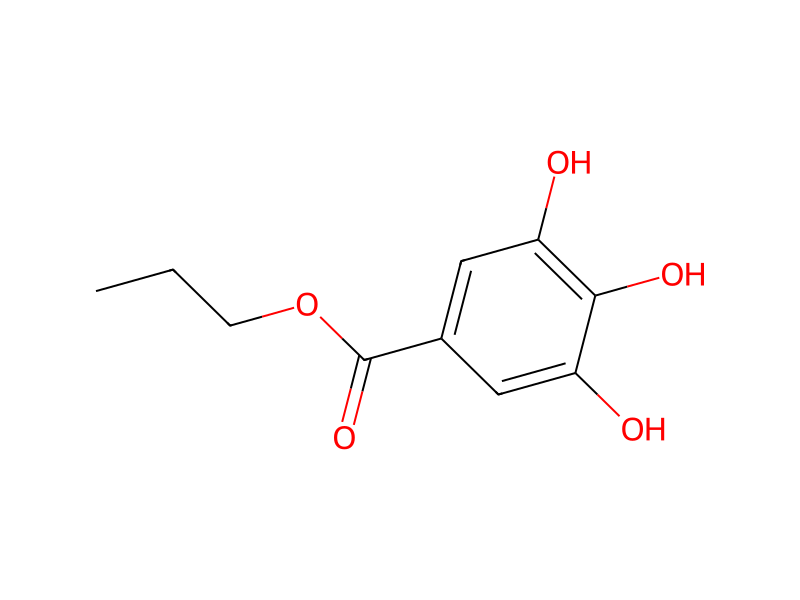
Grundinformationen
- Standard-SMILES
CCCOC(=O)c1cc(O)c(O)c(O)c1- InChIKey
ZTHYODDOHIVTJV-UHFFFAOYSA-N- Summenformel
- C10H12O5
- Durchschnittliche Molmasse
- 212,2 g/mol
- Monoisotopische Masse
- 212,06847348
Namen und Bezeichner
- Bevorzugter Name
- Propyl Gallate
- IUPAC
- propyl 3,4,5-trihydroxybenzoate
- Lokaler Name
- Propyl-3,4,5-trihydroxybenzoat
- Englischer Name
- Propyl gallate
- Summenformel
- C10H12O5
- Molmasse
- 212.2
Namen und Synonyme
propyl gallate121-79-9Propyl 3,4,5-trihydroxybenzoateN-Propyl gallateProgallin PGallic acid, propyl esterTenox PGNipagallin PGallic acid propyl esterNIPA 49Propylester kyseliny galloveBenzoic acid, 3,4,5-trihydroxy-, propyl ester
Weitere Namen anzeigen
Propyl galiateproply gallatePropyl Gallate BPGALLIC ACID N-PROPYL ESTERPropyl gallat
FEMA No. 2947n-Propyl 3,4,5-trihydroxybenzoate3,4,5-Trihydroxybenzene-1-propylcarboxylateGallate, Propyln-Propyl ester of 3,4,5-trihydroxybenzoic acidNipanox S 1NSC 2626NCI-C505888
Datenbank-Bezeichner
- CAS
121-79-9- PubChem CID
- 4947
- DTXSID
DTXSID5021201- ChEMBL
CHEMBL7983- ChEBI
CHEBI:10607- UNII
- 8D4SNN7V92
- EC Number
- 204-498-2
- Nikkaji
- J2.925D
Eigenschaften
Berechnete Struktureigenschaften
- XLogP
- 1,8
- Polarare Oberfläche (TPSA)
- 87 Ų
- H-Brücken-Donoren
- 3
- H-Brücken-Akzeptoren
- 5
- Frei drehbare Bindungen
- 4
- Schwere Atome
- 15
- Formalladung
- 0
- Komplexität
- 206
Experimentelle und physikochemische Eigenschaften
pHpH = 6.3 (0.05% aqueous solution); pH = 5.9 (0.1% aqueous solution); pH = 5.7 (0.2% aqueous solution)
LogP
log Kow = 1.80
1.80
Odor
Odorless
Odorless or with a faint odor
TasteSlightly bitter taste
Density
1.21 (NTP, 1992) - Denser than water; will sink
1.21
Color/Form
White to creamy-white crystalline powder
Colorless crystals
Needles in water
Fine, ivory powder or crystals
Solubility
less than 1 mg/mL at 68 °F (NTP, 1992)
Slightly soluble in water, freely soluble in ethanol, ether and propane-1,2-diol
In water, 3490 mg/L at 25 deg, 2790 mg/L at 20 °C, 3790 mg/L at 30 °C
Solubility at 25 °C: in water 0.35 g/100 mL
Slightly soluble in acetone and 2-butanol
Solubility at 25 °C: in alcohol 103 g/100 g, in ether 83 g/100 g; Solubility at 30 °C: in cottonseed oil at 30 °C 1.23 g/100 g, in lard at 45 °C 1.14 g/100 g
Flash Point
368 °F (NTP, 1992)
187 °C (369 °F) - closed cup
Boiling PointDecomposes (NTP, 1992)
DecompositionWhen heated to decomposition it emits acrid smoke and irritating fumes.
Melting Point
302 °F (NTP, 1992)
Between 146 °C and 150 °C after drying at 110 °C for four hours
147-149 °C
150 °C
Vapor Density7.3 (NTP, 1992) - Heavier than air; will sink (Relative to Air)
Physikochemische Eigenschaften
- Schmelzpunkt
- 146 · 146-149 °C(lit.)
- Siedepunkt
- 312.03 °C · 312.03°C (rough estimate)
- Dichte
- 1.21 · 1.210
- Dampfdruck
- 0 Pa · 0Pa at 20℃
- Brechungsindex
- 1.514 · 1.5140 (estimate)
- FEMA
- 2947 · 2947 | PROPYL GALLATE
- Flammpunkt
- 187 ℃ · 187℃
- storage temp.
- 30 °C · Store below +30°C.
- Löslichkeit
- 50 mg/mL · ethanol: 50 mg/mL
- Aggregatzustand
- powder
- pka
- 8.11 · 8.11(at 25℃)
- Farbe
- White to light beige
- Geruch (Odor)
- bland
- Biologische Quelle
- synthetic
- Wasserlöslichkeit
- 0.35 g/100 · 0.35 g/100 mL (25 ºC)
- Merck
- 14 · 14,7859
- BRN
- 1877976 · 1877976
- Major Application
- diagnostic assay manufacturinghematologyhistology
- Kosmetik-Inhaltsstoffe Funktionen
- PERFUMINGANTIOXIDANT
- InChI
- 1S/C10H12O5/c1-2-3-15-10(14)6-4-7(11)9(13)8(12)5-6/h4-5,11-13H,2-3H2,1H3
- InChIKey
- ZTHYODDOHIVTJV-UHFFFAOYSA-N
- SMILES
- CCCOC(=O)c1cc(O)c(O)c(O)c1 || CCCOC(=O)c1cc(O)c(O)c(O)c1
- LogP
- 1.8 · 1.8
- CAS Datenbank
- 121 · 121-79-9(CAS DataBase Reference)
- NIST chemische Informationen
- 3 · Benzoic acid, 3,4,5-trihydroxy-, propyl ester(121-79-9)
- EPA chemische Informationen
- Propyl gallate (121-79-9)
Sicherheit und Regulatorisches
GHS-Klassifizierung
GHS Classification
Warning
H302: Harmful if swallowed [Warning Acute toxicity, oral];H317: May cause an allergic skin reaction [Warning Sensitization, Skin];H400: Very toxic to aquatic life [Warning Hazardous to the aquatic environment, acute hazard];H410: Very toxic to aquatic life with long lasting effects [Warning Hazardous to the aquatic environment, long-term hazard]
P261, P264, P270, P272, P273, P280, P301+P317, P302+P352, P321, P330, P333+P317, P362+P364, P391, and P501 (click each P-code to see the statement)
Warning
Gefahrenhinweise
Regulatory Information
Chemical: Benzoic acid, 3,4,5-trihydroxy-, propyl ester
Regulation (EC) No 1831/2003 (amended)
Status: Active Update: 15-12-2022 https://echa.europa.eu/registration-dossier/-/registered-dossier/24203
Propyl gallate: Does not have an individual approval but may be used under an appropriate group standard
Fire HazardsThis chemical is combustible. (NTP, 1992)
Fire PotentialCombustible when exposed to heat or flame ... .
Health Hazards
SYMPTOMS: Symptoms of exposure to this compound may include irritation of the skin, eyes, mucous membranes and upper respiratory tract. Other symptoms include gasping respirations and convulsions. Brief skin contact may dry the skin. Prolonged or repeated contact can cause dermatitis and sensitization of the skin. Aspiration into the lungs may cause chemical pneumonia.;ACUTE/CHRONIC HAZARDS: This compound may be harmful by inhalation or ingestion. It is an irritant of the skin, eyes, mucous membranes and upper respiratory tract. When heated to decomposition it emits acrid smoke, irritating fumes and toxic fumes of carbon monoxide and carbon dioxide. (NTP, 1992)
Hazards Summary
Cause allergic contact dermatitis in bakers and other workers; [HSDB] A skin, eye, mucous membrane, and upper respiratory tract irritant; May cause skin sensitization; [CAMEO] Causes convulsions in lethal dose studies of rats; [RTECS] May cause skin sensitization; [eChemPortal: ESIS] Does not increase birth defects in animal experiments; [REPROTOX] ADI = 0-1.4 mg/kg when used as an antioxidant in food; [JECFA]
FDA Requirements
The food additive chewing gum base may be safely used in the manufacture of chewing gum in accordance with the following prescribed conditions: (a) The food additive consists of one or more of the following substances that meet the specifications and limitations prescribed in this paragraph, used in amounts not to exceed those required to produce the intended physical or other technical effect. Propyl gallate is included on this list. Not to exceed antioxidant content of 0.1% when used alone or in any combination.
Substances classified as antioxidants, when migrating from food-packaging material (limit of addition to food, 0.005 percent) shall include: propyl gallate.
Substance added directly to human food affirmed as generally recognized as safe (GRAS). ... Good manufacturing practice results in a maximum total content of antioxidants of 0.02 percent of the fat or oil content, including the essential (volatile) oil content, of the food.
This substance is generally recognized as safe for use in food when the total content of antioxidants is not over 0.02 percent of fat or oil content, including essential (volatile) oil content of the food, provided the substance is used in accordance with good manufacturing or feeding practice.
Reactive GroupEsters, Sulfate Esters, Phosphate Esters, Thiophosphate Esters, and Borate Esters;Phenols and Cresols
Special Reports
DHHS/NTP; Toxicology & Carcinogenesis Studies of Propyl Gallate in F344/N Rats and B6C3F1 Mice (Feed Study) Technical Report Series No. 240 (1982) NIH Publication No. 83-1796[Available from, as of October 10, 2016: https://ntp.niehs.nih.gov/]
International Programme on Chemical Safety/World Health Organization; Food Additives Series 32, Gallates (1993)[Available from, as of October 10, 2016: http://www.inchem.org/documents/jecfa/jecmono/v32je02.htm]
FIFRA Requirements
Residues of propyl gallate are exempted from the requirement of a tolerance when used as an antioxidant in accordance with good agricultural practice as inert (or occasionally active) ingredients in pesticide formulations applied to growing crops or to raw agricultural commodities after harvest.
Residues of propyl gallate are exempted from the requirement of a tolerance when used as a antioxidant in accordance with good agricultural practice as inert (or occasionally active) ingredients in pesticide formulations applied to animals.
Reactivity ProfilePROPYL GALLATE can react with oxidizing agents. Incompatible with strong acids, strong bases and strong reducing agents. Darkens in the presence of iron and iron salts. Contact with metals should be avoided (NTP, 1992).
Air and Water ReactionsInsoluble in water.
Toxic Combustion ProductsSpecial hazards arising from the substance or mixture: Carbon oxides
Sicherheit und Schutzausrüstung
Fire FightingFires involving this material can be controlled with a dry chemical, carbon dioxide or Halon extinguisher. (NTP, 1992)
First Aid
EYES: First check the victim for contact lenses and remove if present. Flush victim's eyes with water or normal saline solution for 20 to 30 minutes while simultaneously calling a hospital or poison control center. Do not put any ointments, oils, or medication in the victim's eyes without specific instructions from a physician. IMMEDIATELY transport the victim after flushing eyes to a hospital even if no symptoms (such as redness or irritation) develop.;SKIN: IMMEDIATELY flood affected skin with water while removing and isolating all contaminated clothing. Gently wash all affected skin areas thoroughly with soap and water. If symptoms such as redness or irritation develop, IMMEDIATELY call a physician and be prepared to transport the victim to a hospital for treatment.;INHALATION: IMMEDIATELY leave the contaminated area; take deep breaths of fresh air. If symptoms (such as wheezing, coughing, shortness of breath, or burning in the mouth, throat, or chest) develop, call a physician and be prepared to transport the victim to a hospital. Provide proper respiratory protection to rescuers entering an unknown atmosphere. Whenever possible, Self-Contained Breathing Apparatus (SCBA) should be used; if not available, use a level of protection greater than or equal to that advised under Protective Clothing.;INGESTION: DO NOT INDUCE VOMITING. If the victim is conscious and not convulsing, give 1 or 2 glasses of water to dilute the chemical and IMMEDIATELY call a hospital or poison control center. Be prepared to transport the victim to a hospital if advised by a physician. If the victim is convulsing or unconscious, do not give anything by mouth, ensure that the victim's airway is open and lay the victim on his/her side with the head lower than the body. DO NOT INDUCE VOMITING. IMMEDIATELY transport the victim to a hospital. (NTP, 1992)
Fire Fighting Procedures
Suitable extinguishing media: Use water spray, alcohol-resistant foam, dry chemical or carbon dioxide.
Advice for firefighters: Wear self contained breathing apparatus for fire fighting if necessary.
Storage ConditionsKeep container tightly closed in a dry and well-ventilated place.
Cleanup Methods
ACCIDENTAL RELEASE MEASURES: Personal precautions, protective equipment and emergency procedures: Use personal protective equipment. Avoid dust formation. Avoid breathing vapors, mist or gas. Ensure adequate ventilation. Evacuate personnel to safe areas. Avoid breathing dust. Environmental precautions: Do not let product enter drains. Methods and materials for containment and cleaning up: Pick up and arrange disposal without creating dust. Sweep up and shovel. Keep in suitable, closed containers for disposal.
Nonfire Spill Response
SMALL SPILLS AND LEAKAGE: Should a spill occur while you are handling this chemical, FIRST REMOVE ALL SOURCES OF IGNITION, then you should dampen the solid spill material with 60-70% ethanol and transfer the dampened material to a suitable container. Use absorbent paper dampened with 60-70% ethanol to pick up any remaining material. Seal the absorbent paper, and any of your clothes, which may be contaminated, in a vapor-tight plastic bag for eventual disposal. Solvent wash all contaminated surfaces with 60-70% ethanol followed by washing with a soap and water solution. Do not reenter the contaminated area until the Safety Officer (or other responsible person) has verified that the area has been properly cleaned.;STORAGE PRECAUTIONS: You should store this chemical under ambient temperatures, and keep it away from oxidizing materials. (NTP, 1992)
Disposal Methods
SRP: Recycle any unused portion of the material for its approved use or return it to the manufacturer or supplier. Ultimate disposal of the chemical must consider: the material's impact on air quality; potential migration in air, soil or water; effects on animal, aquatic and plant life; and conformance with environmental and public health regulations. If it is possible or reasonable use an alternative chemical product with less inherent propensity for occupational harm/injury/toxicity or environmental contamination.
Product: Offer surplus and non-recyclable solutions to a licensed disposal company. Contact a licensed professional waste disposal service to dispose of this material. Dissolve or mix the material with a combustible solvent and burn in a chemical incinerator equipped with an afterburner and scrubber; Contaminated packaging: Dispose of as unused product.
Preventive Measures
ACCIDENTAL RELEASE MEASURES: Personal precautions, protective equipment and emergency procedures: Use personal protective equipment. Avoid dust formation. Avoid breathing vapors, mist or gas. Ensure adequate ventilation. Evacuate personnel to safe areas. Avoid breathing dust. Environmental precautions: Do not let product enter drains.
Precautions for safe handling: Avoid contact with skin and eyes. Avoid formation of dust and aerosols. Provide appropriate exhaust ventilation at places where dust is formed.
Appropriate engineering controls: Handle in accordance with good industrial hygiene and safety practice. Wash hands before breaks and at the end of workday.
Gloves must be inspected prior to use. Use proper glove removal technique (without touching glove's outer surface) to avoid skin contact with this product. Dispose of contaminated gloves after use in accordance with applicable laws and good laboratory practices. Wash and dry hands.
SRP: Local exhaust ventilation should be applied wherever there is an incidence of point source emissions or dispersion of regulated contaminants in the work area. Ventilation control of the contaminant as close to its point of generation is both the most economical and safest method to minimize personnel exposure to airborne contaminants. Ensure that the local ventilation moves the contaminant away from the worker.
Allowable Tolerances
Residues of propyl gallate are exempted from the requirement of a tolerance when used as an antioxidant in accordance with good agricultural practice as inert (or occasionally active) ingredients in pesticide formulations applied to growing crops or to raw agricultural commodities after harvest.
Residues of propyl gallate are exempted from the requirement of a tolerance when used as a antioxidant in accordance with good agricultural practice as inert (or occasionally active) ingredients in pesticide formulations applied to animals.
Personal Protective Equipment (PPE)
RECOMMENDED RESPIRATOR: Where the neat test chemical is weighed and diluted, wear a NIOSH-approved half face respirator equipped with an organic vapor/acid gas cartridge (specific for organic vapors, HCl, acid gas and SO2) with a dust/mist filter. (NTP, 1992)
Eye/face protection: Face shield and safety glasses. Use equipment for eye protection tested and approved under appropriate government standards such as NIOSH (US) or EN 166(EU).
Skin protection: Handle with gloves.
Body Protection: Complete suit protecting against chemicals. The type of protective equipment must be selected according to the concentration and amount of the dangerous substance at the specific workplace.
Respiratory protection: For nuisance exposures use type P95 (US) or type P1 (EU EN 143) particle respirator. For higher level protection use type OV/AG/P99 (US) or type ABEK-P2 (EU EN 143) respirator cartridges. Use respirators and components tested and approved under appropriate government standards such as NIOSH (US) or CEN (EU).
Toxikologische Informationen
Interactions
The antioxidant propyl gallate (PG) induced lipid peroxidation in combination with non-toxic Cu(II) concentrations in human fibroblasts. This was measured by the thiobarbituric acid assay (TBA assay) and by detection of accumulating fluorescent products after a 1-hr treatment of cells with CuCl2/PG at concentrations higher than 0.125 mM. PG alone led to a significant reduction of thiobarbituric acid-reactive substances (TBARS) demonstrating its antioxidative properties. Time course studies of lipid peroxidation by PG/Cu(II) showed that formation of TBARS was preceded by a lag phase of 60 min. Thereafter, the TBARS value increased rapidly for 1 hr and then reached a constant maximum or slightly decreased. The induction of lipid peroxidation by PG/Cu(II) is probably due to the formation of reactive species like reactive oxygen species (ROS), Cu(I) and semiquinone radicals which are able to participate in initiation and propagation of lipid peroxidation. Combination effects of PG/Cu(II) were demonstrated also on inhibition of membrane-bound succinate dehydrogenase. Cytosolic esterases were affected only slightly. The greater susceptibility of membrane-bound enzymes is in accordance with the lipid peroxidation-inducing effects of PG/Cu(II).
We looked at the in vitro effect of an antioxidant, propyl gallate (PG), on the antifungal activity of miconazole sulphosalicylate, econazole sulphosalicylate and ketoconazole against 40 clinical isolates of Candida albicans. The combination of imidazole and PG gave MIC values 10-150 times lower than those of imidazole alone. The optimal conditions for this enhanced activity were pH 6.2-8.0 and a fungal cell concentration lower than 3 x 10(5) cells/mL. The mechanism of the interaction between imidazole and PG is not known but may be as a result of an effect of PG on the P-450 cytochrome. ...
Partial protection against liver damage by single oral doses of 2.5 or 0.25 ml/kg of chloroform was provided by ip injection of 150 mg/kg bw of propyl gallate ... .
Pregnant New Zealand white rabbits (on gestation day 12) were injected sc with propyl gallate (362-900 mg/kg bw) and hydroxyurea (600-750 mg/kg bw). The materials were injected either simultaneously or mixed over periods of 45 min. The extent of amelioration of the teratogenic effects of hydroxyurea was dependent on the dose of propyl gallate. There was a significant linear decrease in both resorptions and specific malformations with increasing doses of propyl gallate ... .
For more Interactions (Complete) data for PROPYL GALLATE (22 total), please visit the HSDB record page.
Ecotoxicity Values
EC50; Species: Dreissena polymorpha (Zebra Mussel) shell length 5-8 mm; Conditions: freshwater, static, 17.0 °C (16.3-17.4 °C), pH 8.0 (7.3-8.7), hardness 146 mg/L CaCO3 (136-156 mg/L CaCO3), alkalinity 109 mg/L CaCO3 (98-120 mg/L CaCO3), dissolved oxygen 8.3 mg/L (6.0-11.2 mg/L); Concentration: 17800 ug/L for 48 hr (95% confidence interval: 11700-23800 ug/L); Effect: behavior, increased ability to detach from substrate /formulation/
Environmental Fate
TERRESTRIAL FATE: Based on a classification scheme(1), an estimated Koc value of 490(SRC), determined from a structure estimation method(2), indicates that propyl gallate is expected to have moderate mobility in soil(SRC). Volatilization of propyl gallate from moist soil surfaces is not expected to be an important fate process(SRC) given an estimated Henry's Law constant of 2.1X10⁻¹¹ atm-cu m/mole(SRC), derived from its estimated vapor pressure, 2.6X10⁻⁷ mm Hg(2), and water solubility, 3490 mg/L(3). Propyl gallate is not expected to volatilize from dry soil surfaces(SRC) based upon its estimated vapor pressure(2). Propyl gallate is reported to be biodegradable in the environment(4) with ultimate aerobic degradation estimated to be weeks and primary degradation in days(5).
AQUATIC FATE: Based on a classification scheme(1), an estimated Koc value of 490(SRC), determined from a structure estimation method(2), indicates that propyl gallate is expected to adsorb moderately to suspended solids and sediment(SRC). Volatilization from water surfaces is not expected(3) based upon an estimated Henry's Law constant of 2.1X10⁻¹¹ atm-cu m/mole(SRC) derived from its estimated vapor pressure, 2.6X10⁻⁷ mm Hg(2), and water solubility, 3490 mg/L(4). According to a classification scheme(5), an estimated BCF of 7(SRC), from its log Kow of 1.80(6) and a regression-derived equation(2), suggests the potential for bioconcentration in aquatic organisms is low(SRC). Propyl gallate is reported to be biodegradable in the environment(7) with ultimate aerobic degradation estimated to be weeks and primary degradation in days(8). A base-catalyzed second-order hydrolysis rate constant of 0.018 L/mole-sec(SRC) was estimated using a structure estimation method(2); this corresponds to half-lives of 12 and 1.2 years at pH values of 7 and 8, respectively(2). Propyl gallate is reported to react readily with photo-oxidant radicals in aqueous media(9); therefore, photo-oxidation may have some importance in surface waters exposed to sunlight(SRC).
ATMOSPHERIC FATE: According to a model of gas/particle partitioning of semivolatile organic compounds in the atmosphere(1), propyl gallate, which has an estimated vapor pressure of 2.6X10⁻⁷ mm Hg at 25 °C(SRC), determined from a fragment constant method(2), will exist in both the vapor and particulate phases in the ambient atmosphere. Vapor-phase propyl gallate is degraded in the atmosphere by reaction with photochemically-produced hydroxyl radicals(SRC); the half-life for this reaction in air is estimated to be 4.2 hours(SRC), calculated from its rate constant of 9.2X10⁻¹¹ cu cm/molecule-sec at 25 °C(SRC) that was derived using a structure estimation method(2). Particulate-phase propyl gallate may be removed from the air by wet and dry deposition(SRC). Propyl gallate absorbs at wavelengths >290 nm(3) and, therefore, may be susceptible to direct photolysis by sunlight(SRC).
Adverse EffectsNeurotoxin - Other CNS neurotoxin;Skin Sensitizer - An agent that can induce an allergic reaction in the skin.
Toxicity Summary
On the basis of the data presented in this report, the CIR Expert Panel concludes that Propyl Gallate is safe in the practices of use as described in this safety assessment at concentrations less than or equal to 0.1%.
Safe for use in cosmetics, with qualifications
IDENTIFICATION AND USE: Propyl gallate is white to creamy-white crystalline powder. It is used as an antioxidant for foods and cosmetics; especially fats, oils, emulsions, and waxes. It is used in transformer oils and as a stabilizer for synthetic vitamin A. It is also used as experimental medication. HUMAN EXPOSURE AND TOXICITY: Statistically significant increase in propyl gallate-positive rates on patch testing over the last decade have been reported. Propyl gallate produced contact dermatitis in 5 of 10 patients. Patients applied 20% in 70% ethyl alcohol to forearm daily for 24 days. 5 patients complained of pruritus and erythema. Propyl gallate was investigated in vitro at concentration of 0.5, 5.0 and 50 ug/mL employing WI-38 human embryonic lung cells for anaphase abnormalities. Propyl gallate was not mutagenic. ANIMAL STUDIES: In a 4-week oral toxicity study, rats ingested 0%, 0.1%, 0.5%, or 2.5% propyl gallate in feed. In rats ingesting the highest dose, a decrease in weight gain of more than 10%, dirty tails, thickening of the stomach wall, necrosis, and ulceration of the stomach mucosa, a moderate to severe granulomatous inflammatory response in the submucosa and muscular wall of the stomach, anemia, hyperplastic tubuli in the outer medulla of the kidneys, and increased activity of several microsomal and cytoplasmic drug-metabolizing enzymes in the liver were observed. Increased activity of hepatic drug metabolizing enzymes was also noted in rats treated with 0.5% propyl gallate. No effects were noted in those ingesting 0.1%. Guinea pigs fed 0.02% propyl gallate in the diet for 14 months and dogs fed 0.01% for a year showed no signs of toxicity. Administration to rats of 2.5% propyl gallate in the diet caused maternal toxicity and slight retardation of fetal development, but no teratogenic effects. In dose levels up to 250 mg/kg/day, propyl gallate had no effects on organogenesis in rabbits. At a concentration of 0-0.1 mg/plate, propyl gallate was mutageni
Average Daily IntakeAverage daily intake assessment: 0.25 - 1.11 mg/kg bw/day in adults(1). Propyl gallate has an ADI of 0-1.4 mg/kg bw/day established by the Joint FAO/WHO Expert Committee on Food Additives(JECFA)(2).
Ecotoxicity Excerpts
/AQUATIC SPECIES/ ... The toxic effects /of propyl gallate on aquatic organisms/ were investigated, using five model systems from four trophic levels. The most sensitive system was the hepatoma fish cell line PLHC-1 according to total protein content, with an EC(50) of 10 uM and a NOAEL of 1 uM at 72 hr, followed by the immobilization of Daphnia magna, the inhibition of bioluminescence of Vibrio fischeri, the salmonid fish cell line RTG-2 and the inhibition of the growth of Chlorella vulgaris. Although protein content, neutral red uptake, methylthiazol metabolization and acetylcholinesterase activity were reduced in PLHC-1 cells, stimulations were observed for lysosomal function, succinate dehydrogenase, glucose-6-phosphate dehydrogenase and ethoxyresorufin-O-deethylase activities. No changes were observed in metallothionein levels. The main morphological observations were the loss of cells and the induction of cell death mainly by necrosis but also by apoptosis. The protective and toxic effects of propyl gallate were evaluated. General antioxidants and calcium chelators did not modify the toxicity of propyl gallate, but an iron-dependent lipid peroxidation inhibitor gave 22% protection. The results also suggest that propyl gallate cytotoxicity is dependent on glutathione levels, which were modulated by malic acid diethyl ester and 2-oxothiazolidine-4-carboxylic acid. According to the results, propyl gallate should be classified as toxic to aquatic organisms.
Plant ConcentrationsPropyl gallate was detected, not quantified in corn kernels (Zea mays, Poceae)(1).
Ongoing Test Status
EPA has released the Interactive Chemical Safety for Sustainability (iCSS) Dashboard. The iCSS Dashboard provides an interactive tool to explore rapid, automated (or in vitro high-throughput) chemical screening data generated by the Toxicity Forecaster (ToxCast) project and the federal Toxicity Testing in the 21st century (Tox21) collaboration. /The title compound was tested by ToxCast and/or Tox21 assays/[USEPA; ICSS Dashboard Application; Available from, as of September 8, 2016: http://actor.epa.gov/dashboard/]
The following link will take the user to the National Toxicology Program (NTP) Test Agent Search Results page for propyl gallate, which tabulates all of the "Short-Term Toxicity Studies," "Long-term Carcinogenicity Studies," and "Genetic Toxicology Studies" performed with this chemical. Clicking on the "Testing Status" link will take the user to the status (i.e., in review, in progress, in preparation, on test, completed, etc.) and results of all the studies that the NTP has done on this chemical.[Available from: http://ntp.niehs.nih.gov/testing/status/agents/ts-10564-y.html]
Soil Adsorption/Mobility
Using a structure estimation method based on molecular connectivity indices(1), the Koc of propyl gallate can be estimated to be 490(SRC). According to a classification scheme(2), this estimated Koc value suggests that propyl gallate is expected to have moderate mobility in soil.
Natural Pollution SourcesPropyl gallate was detected, not quantified in corn kernels (Zea mays, Poceae)(1).
Human Toxicity Excerpts
/HUMAN EXPOSURE STUDIES/ ... The objectives were to assess the prevalence of allergic contact dermatitis to propyl gallate in our center from 1988 to 2005. From 1988 to 2005, 9529 patients were patch tested to the face series, 6973 were females and 2556 were males. Patch tests were read at 2 D and 4 D. Positive reactions were scored as per International Contact Dermatitis Research Group recommendations as negative, +, ++, and +++ reactions. Propyl gallate was used at a 1% petrolatum (pet.). A total of 55 patients had positive reactions to propyl gallate 1% pet. (0.57%), 46 were female (0.65%) and 9 were male (0.33%). Using chi-square, there was a significant difference (p<0.05) in the positivity rates between the 1988-96 period (0.45%) and the 1997-2005 period (0.77%). A review of our face series performed in the last 18 years has shown a statistically significant increase in propyl gallate-positive rates on patch testing over the last decade. An increase in its use in the cosmetic industry may well be the explanation for this. Nevertheless, a concomitant reduction of propyl gallate as an antioxidant in food, with oral tolerance being less likely to develop, may also be a contributing factor in the increasing trend of allergic contact dermatitis caused by propyl gallate.
/HUMAN EXPOSURE STUDIES/Propyl gallate produced contact dermatitis in 5 of 10 patients. Patients applied 20% in 70% ethyl alc to forearm daily for 24 days. 5 Patients complained of pruritus and erythema.
/CASE REPORTS/ A 29-year-old Turkish woman with allergic contact cheilitis from a lipstick was misdiagnosed as herpes labialis and subsequently worsened with the application of Zovirax cream. Patch tests were positive to Zovirax cream, propylene glycol, the patient's favorite lipstick and propyl gallate. No reaction was seen with Zovirax ophthalmic ointment and Zovirax tablet. The propylene glycol component of the Zovirax cream and the propyl gallate component of the lipstick were regarded as the responsible contact sensitizers. The differential diagnosis was challenging due to concomitant contact sensitization with these agents.
/CASE REPORTS/ A 62-year-old man, with a 20-year history of seborrhoeic dermatitis, presented with a worsening of his dermatitis. He had previously been demonstrated to be allergic to various topical corticosteroids, so he had been using an emollient cream (Sebclair), containing piroctone olamine and various anti-inflammatory substances, for 6 months, with good effect. Patch testing to the cream and its ingredients revealed positive reactions to both propyl gallate and pentylene glycol. A positive reaction to propylene glycol was also detected, whereas patch testing to butylene glycol was negative. Complete remission followed avoidance of the offending substances.
For more Human Toxicity Excerpts (Complete) data for PROPYL GALLATE (20 total), please visit the HSDB record page.
Regulatorische Informationen
Regulatory Information
Chemical: Benzoic acid, 3,4,5-trihydroxy-, propyl ester
Regulation (EC) No 1831/2003 (amended)
Status: Active Update: 15-12-2022 https://echa.europa.eu/registration-dossier/-/registered-dossier/24203
Propyl gallate: Does not have an individual approval but may be used under an appropriate group standard
FDA Requirements
The food additive chewing gum base may be safely used in the manufacture of chewing gum in accordance with the following prescribed conditions: (a) The food additive consists of one or more of the following substances that meet the specifications and limitations prescribed in this paragraph, used in amounts not to exceed those required to produce the intended physical or other technical effect. Propyl gallate is included on this list. Not to exceed antioxidant content of 0.1% when used alone or in any combination.
Substances classified as antioxidants, when migrating from food-packaging material (limit of addition to food, 0.005 percent) shall include: propyl gallate.
Substance added directly to human food affirmed as generally recognized as safe (GRAS). ... Good manufacturing practice results in a maximum total content of antioxidants of 0.02 percent of the fat or oil content, including the essential (volatile) oil content, of the food.
This substance is generally recognized as safe for use in food when the total content of antioxidants is not over 0.02 percent of fat or oil content, including essential (volatile) oil content of the food, provided the substance is used in accordance with good manufacturing or feeding practice.
FIFRA Requirements
Residues of propyl gallate are exempted from the requirement of a tolerance when used as an antioxidant in accordance with good agricultural practice as inert (or occasionally active) ingredients in pesticide formulations applied to growing crops or to raw agricultural commodities after harvest.
Residues of propyl gallate are exempted from the requirement of a tolerance when used as a antioxidant in accordance with good agricultural practice as inert (or occasionally active) ingredients in pesticide formulations applied to animals.
Sicherheitsdaten
- wgk
- 2
- tsca
- TSCA listed
- hs_code
- 29182950
- RTECS-Nr.
- LW8400000
- risk_code
- 22-43-36/37/38
- Toxizität
- LD50 in mice, rats, hamsters, rabbits (g/kg): 1.70-3.50, 2.1-7, 2.48, 2.75 orally; LD50 i.p. in rats: 0.38 g/kg (J. Am. Coll. Toxicol.)
- hazard_code
- Xn
- safety_code
- 24-37-36-26
- Speicherklasse
- 13 - Non Combustible Solids
- Giftige Stoffe Daten
- 121-79-9(Hazardous Substances Data)
- Hazard Classifications
- Acute Tox. 4 OralAquatic Acute 1Aquatic Chronic 1Eye Dam. 1Skin Sens. 1
Chemie und Industrie
Pharmakologische Informationen
Mechanism of Action
The present study aimed to assess anti-inflammatory activity and underlying mechanism of n-propyl gallate, the n-propyl ester of gallic acid. n-Propyl gallate was shown to contain anti-inflammatory activity using two experimental animal models, acetic acid-induced permeability model in mice, and air pouch model in rats. It suppressed production of nitric oxide and induction of inducible nitric oxide synthase and cyclooxygenase-2 in the lipopolysaccharide (LPS)-stimulated RAW264.7 macrophage cells. It was able to diminish reactive oxygen species level elevated in the LPS-stimulated RAW264.7 macrophage cells. It also suppressed gelatinolytic activity of matrix metalloproteinase-9 enhanced in the LPS-stimulated RAW264.7 macrophage cells. It inhibited inhibitory kappaB-aplha degradation and enhanced NF-kappaB promoter activity in the stimulated macrophage cells. It was able to suppress phosphorylation of c-Jun NH(2)-terminal kinase 1/2 (JNK1/2) and activation of c-Jun promoter activity in the stimulated macrophage cells. In brief, n-propyl gallate possesses anti-inflammatory activity via down-regulation of NF-kappaB and JNK pathways.
... In the present study, we demonstrate that propyl gallate (PG) reduced cell viability in THP-1, Jurkat, and HL-60 leukemia cells and induced apoptosis in THP-1 cells. PG activated caspases 3, 8, and 9 and increased the levels of p53, Bax, Fas, and Fas ligand. PG activated mitogen-activated protein kinases (MAPKs), inhibited nuclear translocation of the nuclear factor erythroid 2-related factor 2 (Nrf-2) and induced intracellular glutathione (GSH) depletion. In addition, PG increased superoxide dismutase-1 expression and decreased intracellular levels of reactive oxygen species. Our data show ... that an early event of PG-induced apoptosis is MAPKs/Nrf-2-mediated GSH depletion and that PG induced apoptosis via multiple pathways in human leukemia. PG might serve as a potential chemotherapeutic agent or food supplement for human leukemia patients.
Metabolism/Metabolites
Propyl gallate was quickly metabolized and excreted when administered orally to rats and rabbits. ...When fed to rats, most of the propyl gallate was passed in the feces as the original ester. The urinary components detected were the original ester and gallic acid, and these were excreted completely within 24 hours. When administered orally to rabbits, 79 percent of the administered dose of propyl gallate was excreted in the urine, 72 percent as 4-methoxygallic acid glucuronide and 6.7 percent as unconjugated phenolic compounds. Minor metabolites included pyrogallol (free and conjugated) and free 4-methoxy gallic acid.
In rats, /SRP: some/ of an oral dose of propyl gallate is absorbed in the GI tract. In vivo, the gallate esters are hydrolized to gallic acid and free alcohol. Free alcohol is metabolized through the Krebs cycle, and most of the gallic acid is converted into 4-O-methyl gallic acid. Free gallic acid or a conjugated derivative of 4-O-methyl gallic acid is excreted in the urine. Significant amounts of unchanged esters are excreted in the feces of rats. In pigs, the metabolism is similar to rats.
The available evidence indicates that the gallate esters are hydrolyzed in the body to gallic acid. Most of the gallic acid is converted into 4-O-methyl gallic acid. Free gallic acid or a conjugated derivative of 4-O-methyl gallic acid is excreted in the urine. Conjugation of the 4-O-methyl gallic acid with glucuronic acid was demonstrated ... .
In vitro incubations with propyl, octyl and dodecyl gallate were performed using homogenates of liver, mucosa of the small intestine, and contents of caecum/colon as a source of intestinal microflora. The various homogenates were incubated at 37 °C with the individual gallate esters. At various time points up to 24 hr, samples were taken and analyzed by HPLC. ... All test substances were extensively metabolized by the homogenate of the intestinal mucosa. ... Furthermore, the caecum and colon contents also showed a high metabolic capacity, especially towards propyl gallate. The amt of gallic acid detected in the incubations was always much smaller than the total decrease of the amt of ester. It seems likely that apart from hydrolysis of the ester bond, other biotransformation routes ... are of major importance for all three gallate esters.
MeSH Pharmacological ClassificationNaturally occurring or synthetic substances that inhibit or retard oxidation reactions. They counteract the damaging effects of oxidation in animal tissues.
Absorption, Distribution and Excretion
Propyl gallate was quickly metabolized and excreted when administered orally to rats and rabbits. ...When fed to rats, most of the propyl gallate was passed in the feces as the original ester. The urinary components detected were the original ester and gallic acid, and these were excreted completely within 24 hours. When administered orally to rabbits, 79 percent of the administered dose of propyl gallate was excreted in the urine, 72 percent as 4-methoxygallic acid glucuronide and 6.7 percent as unconjugated phenolic compounds. Minor metabolites included pyrogallol (free and conjugated) and free 4-methoxy gallic acid.
In rats, /SRP: some/ of an oral dose of propyl gallate is absorbed in the GI tract. In vivo, the gallate esters are hydrolized to gallic acid and free alcohol. Free alcohol is metabolized through the Krebs cycle, and most of the gallic acid is converted into 4-O-methyl gallic acid. Free gallic acid or a conjugated derivative of 4-O-methyl gallic acid is excreted in the urine. Significant amounts of unchanged esters are excreted in the feces of rats.
Cellular LocationsCytoplasm;Extracellular
Verwendung und Herstellung
Uses
CIR ingredient: Propyl Gallate
Used as antioxidant to prevent rancidity in fats, oils, and other food products; Also used as a laboratory reagent and stabilizer for synthetic vitamin A; [HSDB] Used as an antioxidant for cosmetics, ethers, emulsions, waxes, and transformer oils; [Merck Index] Contact dermatitis documented in a baker and confectioner; [Kanerva, p. 1830]
Reported uses (ppm):;Table: Reported uses (ppm): (Flavor and Extract Manufacturers' Association, 1994) [Table#1691]
It is used as an antioxidant for foods and cosmetics; especially fats, oils, emulsions, and waxes. It is also used in transformer oils and as a stabilizer for synthetic vitamin A.
Reactive peroxides in povidone often lead to degradation of oxidation-labile drugs. ... The antioxidants ascorbic acid, propyl gallate, and sodium sulfite reduced the peroxide concentration in povidone ... .
Synthetic antioxidants commonly used in food include butylated hydroxyanisole (BHA), butylated hydroxytoluene (BHT), propyl gallate (PG), and tert-butylhydroquinone (TBHQ).
U.S. Production
(1975) PROBABLY GREATER THAN 9.08X10+5 GRAMS
Non-confidential 2012 Chemical Data Reporting (CDR) information on the production and use of chemicals manufactured or imported into the United States. Chemical: Benzoic acid, 3,4,5-trihydroxy-, propyl ester. National Production Volume: 232,076 lb/yr.
Methods of Manufacturing
Propyl gallate is manufactured via a reaction of n-propanol with 3,4,5-trihydroxybenzoic acid.
Produced commercially by the esterification of gallic acid with propyl alcohol followed by distillation to remove the excess alcohol.
REACTION OF N-PROPYL ALCOHOL WITH 3,4,5-TRIHYDROXYBENZOIC ACID
Formulations/Preparations
Trade Names: NIPA 49; Nipagallin P; Progallin P; and Tenox PG.
The antioxidant formulations most commonly used in edible products contain various combinations of BHA, BHT, and/or propyl gallate together with citric acid in a suitable solvent.
Household ProductsInformation on 8 consumer products that contain Propyl gallate in the following categories is provided:;• Personal Care
Use Classification
Food additives
Fragrance Ingredients
Food Additives -> ANTIOXIDANT -> JECFA Functional Classes
Cosmetics -> Antioxidant
General Manufacturing Information
Benzoic acid, 3,4,5-trihydroxy-, propyl ester: ACTIVE
The Panel on Food Additives and Nutrient Sources added to Food (ANS), European Food Safety Authority (EFSA), concluded in a 2014 report, that the use of propyl gallate as food additive at the current uses and use levels is not of safety concern.
Propyl gallate is used as an antioxidant in pesticide formulations at typical concentrations of 0.25% or less.
Used in foods restricted to 0.02% of fat content.
The antioxidant formulations most commonly used in edible products contain various combinations of BHA, BHT, and/or propyl gallate together with citric acid in suitable solvent.
Tocopherols, gum guaiac, and similar natural antioxidants usually lack potency in most products compared to combinations of BHA /butylated hydroxyanisole/, BHT /butylated hydroxytoluene/, and propyl gallate.
Anwendungen
BeschreibungPropyl gallate is an antioxidant with antimicrobial activity. It is hepatoprotective in vitro and in vivo, preventing CCl4 induced lipoperoxidation and reduction in polysomes in rat liver. Propyl gallate (100 mg/kg, i.p.) increases expression of HIF-1α, EPO, and VEGF mRNA levels and the number of normal neurons in rat brains after 8 minutes of forebrain ischemia. Propyl gallate in combination with potassium sorbate is bactericidal and bacteriostatic against S. aureus strains known to produce enterotoxins in food. Propyl gallate is commonly added to foods to prevent autoxidation and microbial growth.
VerwendenPropyl Gallate is a known inhibitor of Tyrosinase, a polyphenol oxidase, which is an important enzyme in pigment biosynthesis in various organisms. It has also recently been seen to boost biodiesel li pid biosynthesis in cultures.
Darstellung
synthetischeProduced commercially by the esterification of gallic acid with propyl alcohol followed by distillation to remove the excess alcohol.
Vor- und nachgelagerte Produkte
Vorgelagerte Rohstoffe
Nachgelagerte Produkte
Anbieter50 Anbieter
国药集团化学试剂有限公司86-21-63210123 · [email protected]
北京华美互利生物化工010-56205725 · [email protected]
梯希爱(上海)化成工业发展有限公司021-67121386 · [email protected]
上海阿拉丁生化科技股份有限公司400-6206333 13167063860 · [email protected]
上海如吉生物科技发展有限公司+86-21-65211385-8001 36031160 · [email protected]
科瑞迪化学400-821-5857 021-64326257 · [email protected]
上海迈瑞尔生化科技有限公司4006356688 18621169109 · [email protected]
武汉易泰科技有限公司上海分公司18930552037 · [email protected]
大连美仑生物技术有限公司0411-62910999 13889544652 · [email protected]
阿法埃莎(中国)化学有限公司400-6106006 · [email protected]
太原市瑞和丰科贸有限公司+86 351 7031519 · [email protected]
安耐吉化学&3A(安徽泽升科技股份有限公司)400-0056266 · [email protected]
上海瀚鸿科技股份有限公司021-54306202 13764082696 · [email protected]
成都普菲德生物技术有限公司028-82610909 13388174823 · [email protected]
Pure Chemistry Scientific Inc.001-857-928-2050 or 1-888-588-9418 · [email protected]
上海隆盛化工有限公司58099637 13585536065 · [email protected]
合肥天健化工有限公司551-65418679 15856988503;15837135945 · [email protected]
武汉丰泰威远科技有限公司027-87465837 19945049750 · [email protected]
孝感深远化工有限公司15527621225; 15527621225 · [email protected]
山东西亚化学有限公司13355009207 13355009207 · [email protected]
张家界至诚生物有限公司+86 (744) 832-8128 · [email protected]
玛雅试剂+86 (573) 82222445 (0)18006601000 452520369 · [email protected]
四川库利南科技有限公司400-1166-196 18981987031 · [email protected]
湖南汇百侍生物科技有限公司0731-85526065 13308475853 · [email protected]
成都健腾生物技术有限公司86-28-85159085 · [email protected]
河南多贝化工有限公司0370-2785118 17550508557 · [email protected]
斯百全化学(上海)有限公司021-021-021-67601398-809-809-809 15221380277 · [email protected]
上海源叶生物科技有限公司13636370518 · [email protected]
艾科试剂4008-755-333 18080918076 · [email protected]
成都锦然生物科技有限公司028-83311324 1278112614 · [email protected]
上海思域化工科技有限公司86-21-34053660 · [email protected]
西安康培基生物科技有限公司86-029-85456576 · [email protected]
赛默飞世尔科技(中国)有限公司800-810-5118 · [email protected]
北京伊诺凯科技有限公司400-810-7969 010-59572699 · [email protected]
南京诺利斯医药科技有限公司13901585132 · [email protected]
江苏艾康生物医药研发有限公司025-66113011 13913916777 · [email protected]
TCI AMERICA800-4238616 · [email protected]
TOKYO CHEMICAL INDUSTRY CO., LTD.03-36680489 · [email protected]
TCI Europe320-37350700 · [email protected]
上海贤鼎生物科技有限公司4009209199 · [email protected]
深圳振强药物研发有限公司0755-66853366 13670046396 · [email protected]
深圳康特腾科技有限公司86-0755-86635001 · [email protected]
南京杜莱生物技术有限公司025-84699383-8003;025-846993838003-8003 18013301590 · [email protected]
广州爱纯医药科技有限公司020-39119399 18927568969 · [email protected]
上海倍卓生物科技有限公司021-61119791,13386096464 · [email protected]
北京环宇世纪化学科技有限公司hysj_bj.com
湖北鑫源顺医药化工有限公司13971561712, 13995564702, 027-50664929 · [email protected]
上海将来实业股份有限公司021-61552785 · [email protected]
HBCChem, Inc.+1-510-219-6317 · [email protected]
日照力德士化工有限公司010-51268198 · [email protected]
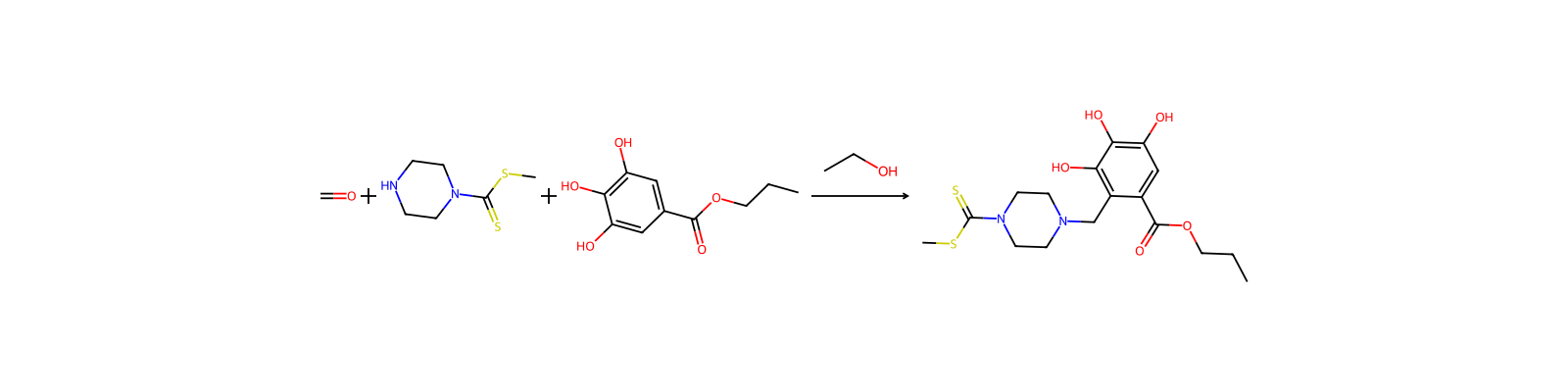
Zugehörige Reaktionen
8




Verknüpfte Notizen
Wird geladen…