
2-Brom-1-(4-hydroxyphenyl)ethan-1-on
2-Bromo-1-(4-hydroxyphenyl)ethanone
Daten werden ergänzt – lade die Seite später neu, um den aktuellen Stand zu sehen

Grundinformationen
- CAS
2491-38-5- Standard-SMILES
O=C(CBr)c1ccc(O)cc1- InChIKey
LJYOFQHKEWTQRH-UHFFFAOYSA-N- Summenformel
- C8H7BrO2
- Durchschnittliche Molmasse
- 215,04 g/mol
- Monoisotopische Masse
- 213,96294
Überblick
electrochemical active reagent
Namen und Bezeichner
- Bevorzugter Name
- 2-Bromo-1-(4-hydroxyphenyl)ethanone
- IUPAC
- 2-bromo-1-(4-hydroxyphenyl)ethanone
- Lokaler Name
- 2-Brom-1-(4-hydroxyphenyl)ethan-1-on
- Englischer Name
- 2-Bromo-4'-hydroxyacetophenone
- Summenformel
- C8H7BrO2
- Molmasse
- 215.04
Namen und Synonyme
2491-38-52-bromo-1-(4-hydroxyphenyl)ethanone2-Bromo-4-hydroxyacetophenoneEthanone, 2-bromo-1-(4-hydroxyphenyl)-Busan 90DTXSID40345766H0QU4I6BA1-(4-Hydroxyphenyl)-2-bromoethanoneDTXCID2014576RefChem:4665594-HBE2-BROMO-4'-HYDROXYACETOPHENONE
Weitere Namen anzeigen
BHAPBUSAN90BUSAN1130Butrol 1130SHP-1 Inhibitor II4-HYDROXYPHENACYL BR4-(Bromoacetyl)phenol(+)-alpha-isolupanine
2-Bromo-1-(4-hydroxyphenyl)ethan-1-one4-Hydroxyphenacyl bromideptp inhibitor ialpha-Bromo-4-hydroxyacetophenone168693-83-22-Bromo-4/'-hydroxyacetophenoneMFCD00072424CHEMBL102952
Datenbank-Bezeichner
- CAS
2491-38-5- PubChem CID
- 4964
- DTXSID
DTXSID4034576
Eigenschaften
Berechnete StruktureigenschaftenWird ergänzt
- XLogP
- 2,4
- Polarare Oberfläche (TPSA)
- 37,3 Ų
- H-Brücken-Donoren
- 1
- H-Brücken-Akzeptoren
- 2
- Frei drehbare Bindungen
- 2
- Schwere Atome
- 11
- Formalladung
- 0
- Komplexität
- 139
Experimentelle und physikochemische Eigenschaften
Chemical ClassesOther Uses -> Biocides/Disinfectants
Endocrine DisruptorsPotential endocrine disrupting compound
Vapor Pressure0.000011 [mmHg]
Food Contact SubstancesFCS -> FDA Inventory of Food Contact Substances Listed in 21 CFR
Physical DescriptionReddish-brown odorless liquid; [Reference #1]
Physikochemische Eigenschaften
- Schmelzpunkt
- 123 · 123-126°C
- Siedepunkt
- 338.7 · 338.7±17.0 °C(Predicted)
- Dichte
- 1.622 · 1.622±0.06 g/cm3(Predicted)
- storage temp.
- 2 · Inert atmosphere,2-8°C
- Löslichkeit
- Chloroform (Slightly), Methanol (Slightly)
- Aggregatzustand
Sicherheit und Regulatorisches
Sicherheitsangaben dienen nur zur Orientierung und ersetzen weder das Sicherheitsdatenblatt (SDB) des Lieferanten noch geltende Vorschriften oder eine fachliche Bewertung.
GHS-Klassifizierung
GHS Classification
Warning
H302 (97.2%): Harmful if swallowed [Warning Acute toxicity, oral]
P264, P264+P265, P270, P280, P301+P317, P305+P351+P338, P330, P337+P317, and P501 (click each P-code to see the statement)
Aggregated GHS information provided per 72 reports by companies from 4 notifications to the ECHA C&L Inventory. Each notification may be associated with multiple companies.
Gefahrenhinweise
Regulatory Information
Chemical: Ethanone, 2-bromo-1-(4-hydroxyphenyl)-
Ethanone, 2-bromo-1-(4-hydroxyphenyl)-: Does not have an individual approval but may be used as a component in a product covered by a group standard. It is not approved for use as a chemical in its own right.
Hazards Summary
Erythema and edema progressing to subcutaneous hemorrhage, eschar, scabbing, necrosis, and exfoliation were observed in 21 day dermal study of rabbits (no systemic toxicity observed); No evidence of developmental toxicity; [Reference #1] After a spill of this slimicide at a papermill, workers developed recurrent allergic contact dermatitis. [Kanerva, p. 1761]
Hazard Classes and CategoriesAcute Tox. 4 (97.2%)
Toxikologische Informationen
Adverse EffectsSkin Sensitizer - An agent that can induce an allergic reaction in the skin.
Toxicity DataLC50 (rat) = 190 mg/m3/4hr
Sicherheitsdaten
Chemie und Industrie
Verwendung und Herstellung
Uses
Used as microbiocide/microbiostat for control of slime forming bacteria and fungi in water cooling systems, oil recovery drilling muds and secondary injection water, pulp and paper water systems, adhesives, coatings, latex paints, and wet-end additives, and industrial processing chemicals; [Reference #1]
Petroleum Production and Refining [Category: Industry]
Anwendungen
BeschreibungPTP Inhibitor I is a cell-permeable, protein tyrosine phosphatase (PTP) inhibitor that covalently blocks the catalytic domain of the Src homology region 2 domain-containing phosphatase (SHP-1(ΔSH2)) with a Ki value of 43 μM and PTP1B with a Ki value of 42 μM. SHP-1 and PTP1B both have known roles in regulating insulin signaling as well as myeloid and lymphoid cell differentiation, making inhibitors of these phosphatases of interest in diabetes, cancer, allergy, and inflammation research.
VerwendenA covalent inhibitor of protein tyrosine phosphatases (PTPs)
Darstellung
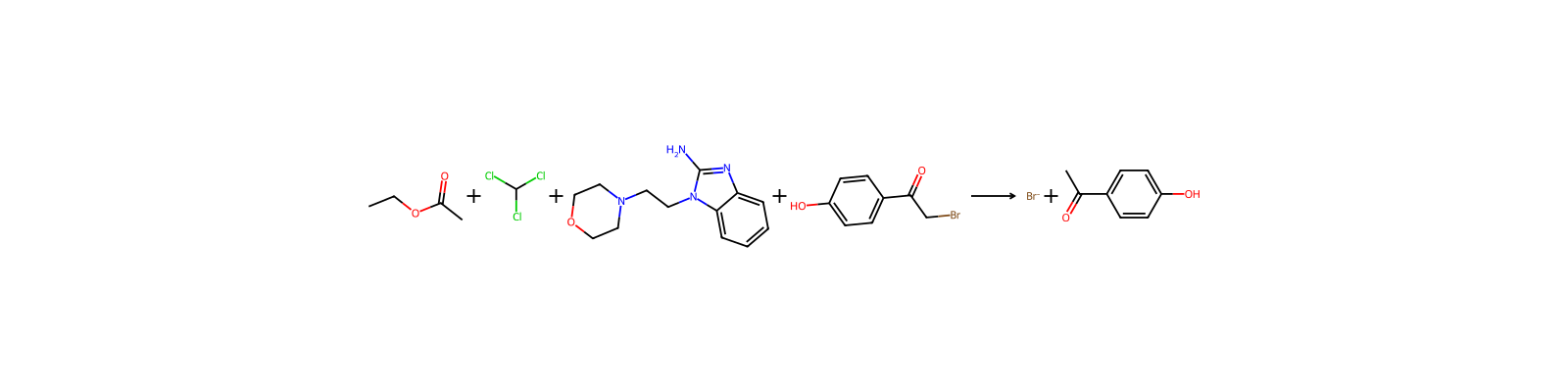
synthetischeAlso obtained by reaction of pyridinium hydrobromide perbromide with 4-hydroxyacetophenone in THF at r.t. for 3 h.
Vor- und nachgelagerte Produkte
Vorgelagerte Rohstoffe
Nachgelagerte Produkte
Zugehörige Reaktionen
248




Notizen zur Verbindung
Wird geladen…