StartseiteMCPWorkbenchSkills
StartseiteWorkbenchBenachrichtigungenMein Bereich
llms.txt · MCP-AnleitungDatenschutz · Nutzungsbedingungen · Supportv1.8.0
  1. Startseite
  2. /Verbindung

Kaliumperchlorat

Potassium Perchlorate
HCID 516900
Neue NotizNeue ReaktionAnfrage stellen
Druckvorschau
GrundinformationenÜberblickNamen und BezeichnerEigenschaftenSicherheit und RegulatorischesChemie und IndustrieZugehörige ReaktionenNotizen zur Verbindung
TeilstruktursucheÄhnliche Strukturen suchen

Grundinformationen

CAS
7778-74-7
Standard-SMILES
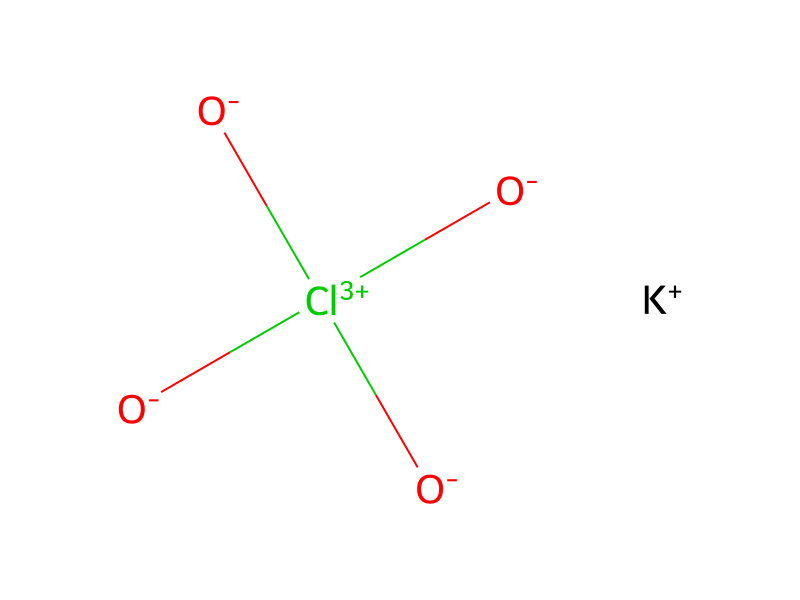
[K+].[O-][Cl+3]([O-])([O-])[O-]
InChIKey
YLMGFJXSLBMXHK-UHFFFAOYSA-M
Summenformel
KClO4
Durchschnittliche Molmasse
138,55 g/mol
Monoisotopische Masse
137,91221784

Überblick

Potassium perchlorate appears as a white crystalline solid. Forms explosive mixtures with certain combustible materials. Difficult to burn, but will accelerate burning of combustible materials. Prolonged exposure to fire or heat may result in an explosion. Used in explosives, pyrotechnics, photography.

Namen und Bezeichner

Bevorzugter Name
Potassium Perchlorate
IUPAC
potassium perchlorate
Lokaler Name
Kaliumperchlorat
Englischer Name
Potassium perchlorate
Summenformel
ClKO4
Molmasse
138.55

Namen und Synonyme

POTASSIUM PERCHLORATE7778-74-7PerchloracapPerchloric acid, potassium saltAstrumalPeroidinIrenatPotassium hyperchloridePotassium perchlorate (KClO4)DTXSID3047003Spectrex Fire Extinguishant Formulation A42255P5X4D
Weitere Namen anzeigen
KaliumperchloratIrenalON-1489PeriodinPotassium perchlorat
Potassium perchlorate (USP)Potassium perchlorate [USP]DTXCID1027003NSC41873PertiroidKClO4RefChem:6158231-912-9

Datenbank-Bezeichner

CAS
7778-74-7
PubChem CID
516900
DTXSID
DTXSID3047003
ChEMBL
CHEMBL1200696
UNII
42255P5X4D
EC Number
231-912-9
Nikkaji
J43.938J

Eigenschaften

Berechnete Struktureigenschaften

Polarare Oberfläche (TPSA)
74,3 Ų
H-Brücken-Donoren
0
H-Brücken-Akzeptoren
4
Frei drehbare Bindungen
0
Schwere Atome
6
Formalladung
0
Komplexität
118

Experimentelle und physikochemische Eigenschaften

Chemical Classes · 2 Einträge

Other Classes -> Perchlorates

Reactive agents - 1st degree

TasteHAS SLIGHTLY SALTY TASTE
Density · 3 Einträge

2.53 g/cu cm

2.5 g/cm³

2.52 @25 °C

Color/Form · 2 Einträge

COLORLESS CRYSTALS OR WHITE, CRYSTALLINE POWDER

Colorless orthorhombic crystals

Solubility · 4 Einträge

SOL IN 65 PARTS COLD WATER, 15 PARTS BOILING WATER; PRACTICALLY INSOL IN ALCOHOL

In water, 15 g/l at 25 °C.

INSOL IN ETHER

Solubility in water, g/100ml at 20 °C: 1.8

Human Drugs · 2 Einträge

FDA approved drugs -> Active ingredient

FDA approved drugs -> Active ingredient

Decomposition · 3 Einträge

When heated to decompositon it emits very toxic fumes of K20 and /hydrogen chloride/.

PRESENCE OF 25% OF ORGANOMETALLIC SALT CONSIDERABLY INCR THE RATE OF THERMAL DECOMP OF CHLORATE, INVOLVING HYDROGEN CYANIDE ARISING FROM THE THIOCYANATO GROUPS.

Sicherheit und Regulatorisches

Sicherheitsangaben dienen nur zur Orientierung und ersetzen weder das Sicherheitsdatenblatt (SDB) des Lieferanten noch geltende Vorschriften oder eine fachliche Bewertung.

GHS-Klassifizierung

GHS Classification · 6 Einträge

Danger

H271: May cause fire or explosion; strong Oxidizer [Danger Oxidizing liquids; Oxidizing solids]

P210, P220, P264, P270, P280, P283, P301+P317, P306+P360, P330, P370+P378, P371+P380+P375, P420, and P501 (click each P-code to see the statement)

Danger

H271 (100%): May cause fire or explosion; strong Oxidizer [Danger Oxidizing liquids; Oxidizing solids]

P210, P220, P260, P264, P270, P280, P283, P301+P317, P306+P360, P319, P330, P370+P378, P371+P380+P375, P420, and P501 (click each P-code to see the statement)

Gefahrenhinweise

Regulatory Information · 5 Einträge

Chemical: Perchloric acid, potassium salt

Perchloric acid, potassium salt (1:1) is listed on the EPA's Chemical Data Reporting (CDR) system. Manufacturers and importers of Perchloric acid, potassium salt (1:1) are required to report information about their production and use of this chemical to the EPA under the Toxic Substances Control Act (TSCA). (40 eCFR Part 711)

Status: Active Update: 30-03-2023 https://echa.europa.eu/registration-dossier/-/registered-dossier/23770

Perchloric acid, potassium salt: HSNO Approval: HSR000984 Approved with controls

The New Jersey Worker and Community Right to Know Act requires public and private employers to provide information about hazardous substances at their workplaces. (N.J.S.A. 34:5A-1 et. seq.)

Other Safety InformationIMAP assessments - Perchlorates: Human health tier II assessment
DOT LabelOxidizer
Fire Hazards · 3 Einträge

Excerpt from ERG Guide 140 [Oxidizers]:

CAUTION: Ammonium nitrate products may explode if involved in fire or contaminated with hydrocarbons (fuels), organic matter, other contaminants or when hot molten and contained. Treat as an explosive (GUIDE 112).

Chemie und Industrie

Pharmakologische Informationen

ATC Code · 2 Einträge

H - Systemic hormonal preparations, excl. sex hormones and insulins

QH - Systemic hormonal preparations, excl. sex hormones and insulin

Protein BindingDisplacement studies with thyroid hormones suggest that perchlorate ions may interfere with the binding of T4 to serum proteins.
Pharmacodynamics · 1 Eintrag

Potassium perchlorate inhibits thyroid iodide transport. The clinical use of potassium perchlorate in hyperthyroidism, such as Graves' disease and amiodarone-induced hypothyroidism, have been investigated in various studies. Thyroid dysfunction occurs in about 15-20% of the patients receiving long-term amiodarone therapy. In patients with amiodarone-induced hypothyroidism, short-term administration of potassium perchlorate resulted in restoration of euthyroidism in most patients. Euthyroidism promoted by potassium perchlorate does not persist unless amiodarone treatment is withdrawn.

Mechanism of Action · 2 Einträge

Thyroxine (T4) and tri-iodothyronine (T3) are major thyroid hormones, or iodothyronines, that are synthesized and released from the thyroid. Iodine plays an essential role in the synthesis of these hormones. Via the sodium-iodide symporter (NIS), which is a protein located on the basolateral membrane of the thyroid follicular cell, iodine is transported from the blood into the thyroid gland where it is oxidized to. Perchlorate (ClO4−) is the dissociated anion of potassium perchlorate that exerts an inhibitory effect on iodide uptake by the thyroid gland in the cellular level. Due to its similarity in ionic size and charge to iodide, perchlorate inhibits the sodium-iodide symporter (NIS) without being translocated into the thyroid follicular cell. The inhibition constant, Ki, is estimated as 0.4 µmol to 24 µmol. At therapeutic dosage levels this competitive inhibition decreases the entrance of iodide into the thyroid, resulting in less available iodide for hormone synthesis and, therefore, a decrease in T3 and T4 synthesis. When ambient iodine intake is low or iodide uptake is sufficiently inhibited, perchlorate is capable in inducing goiter and hypothyroidism from inhibited iodide uptake. At high doses of potassium perchlorate, reduced T3 and T4 levels may be accompanied by increased TSH levels via a negative feedback loop, affecting the thyroid, pituitary and hypothalamus.

Zugehörige Reaktionen

3

Reaktionsaufzeichnung erstellen
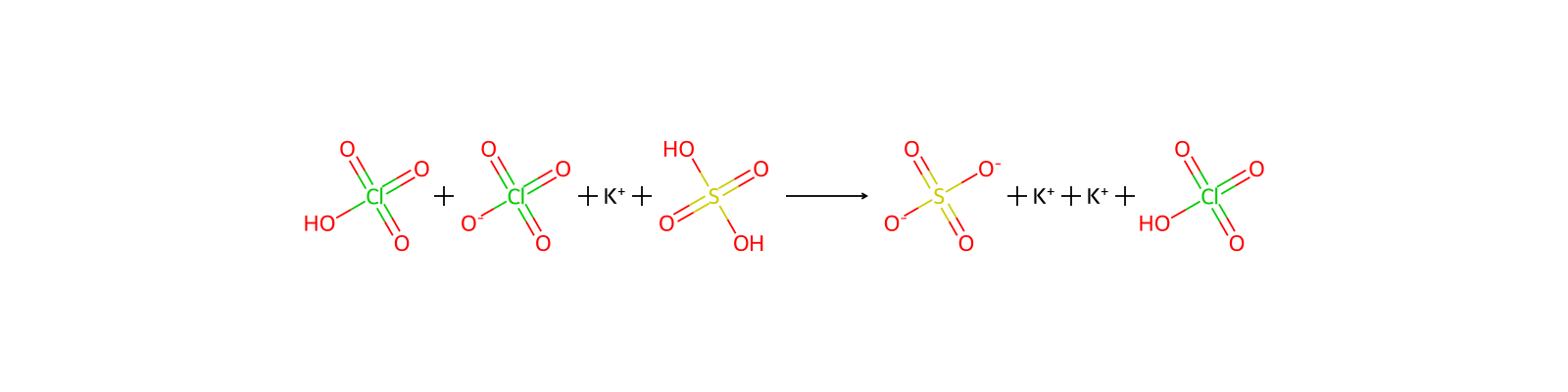
Reaktionsgleichung von HRID 259524
HRID 259524als Eduktuspto-grants-1977_07
Reaktionsgleichung von HRID 268232
HRID 268232als Eduktuspto-grants-1976_03
Reaktionsgleichung von HRID 339447
HRID 339447als Eduktuspto-grants-2014_11

Notizen zur Verbindung

Wird geladen…

Auf dieser SeiteGrundinformationenÜberblickNamen und BezeichnerEigenschaftenSicherheit und RegulatorischesChemie und IndustrieZugehörige ReaktionenNotizen zur Verbindung
Weitere Aktionen
Neue NotizNeue ReaktionAnfrage stellen

400 °C

Melting Point · 2 Einträge

Decomposes at 400 °C

525 °C

Food Contact SubstancesFCS -> FDA Cumulative Estimated Daily Intake (CEDI)
Refractive IndexINDEX OF REFRACTION: 1.4717, 1.4724, 1.476
Physical Description · 4 Einträge

Potassium perchlorate appears as a white crystalline solid. Forms explosive mixtures with certain combustible materials. Difficult to burn, but will accelerate burning of combustible materials. Prolonged exposure to fire or heat may result in an explosion. Used in explosives, pyrotechnics, photography.

Large Crystals; CBI; Dry Powder

Colorless crystals or white crystalline solid that absorbs moisture from the air; [CHEMINFO]

COLOURLESS CRYSTALS OR WHITE CRYSTALLINE POWDER.

Stability/Shelf LifePOTASSIUM PERCHLORATE CAPSULES HAVE EXPIRATION DATE OF 6 MO FOLLOWING DATE OF MANUFACTURE

Physikochemische Eigenschaften

Schmelzpunkt
400 °C · 400 °C (dec.)(lit.)
Siedepunkt
400 °C · 400°C
Dichte
2.52 · 2.52
Dampfdichte
4.8 · 4.8 (vs air)
Dampfdruck
0 Pa · 0Pa at 25℃
storage temp.
5 °C · Store at +5°C to +30°C.
Löslichkeit
2 O: · H2O: 0.1 M at 20 °C, clear, colorless
Aggregatzustand
Powder
Wichte
2.52 · 2.52
Farbe
Clear colorless to slightly yellow
PH
5 · 5.0 (10g/l, H2O, 25℃)
Geruch (Odor)
Odorless
Wasserlöslichkeit
17 g/L · 17 g/L (20 ºC)
Spezifische Wärmekapazität
0.81 J/ · Cp(crystal): 0.81 J/(g·K), at 25℃
Merck
14 · 14,7653
Stabilität
Stable. Strong oxidiser - contact with combustible materials may lead to fire or explosion. Incompatible with reducing agents, organic materials. Forms explosive mixtures with alcohols.
InChI
1S/ClHO4.K/c2-1(3,4)5;/h(H,2,3,4,5);/q;+1/p-1
InChIKey
YLMGFJXSLBMXHK-UHFFFAOYSA-M
SMILES
[K+].[O-]Cl(=O)(=O)=O
LogP
-7.18 at · -7.18 at 25℃
CAS Datenbank
7778 · 7778-74-7(CAS DataBase Reference)
NIST chemische Informationen
Potassium perchlorate(7778-74-7)
EPA chemische Informationen
Perchloric acid, potassium salt (1:1) (7778-74-7)

Not combustible but enhances combustion of other substances. Many reactions may cause fire or explosion. Gives off irritating or toxic fumes (or gases) in a fire.

Fire Potential · 2 Einträge

PRESENCE OF ALUMINUM FLUORIDE INCR THE EASE OF IGNITION OF ALUMINUM-PERCHLORATE MIXTURES, OWING TO COMPLEX FLUORIDE FORMATION.

...AVOID CHANCE SOURCES OF IGNITION FROM ANY CAUSE INCLUDING STATIC ELECTRICITY OR FRICTION...SPARK WHICH HAS INSUFFICIENT ENERGY TO IGNITE FLAMMABLE SUBSTANCE IN NORMAL CIRCUMSTANCES MAY.../IGNITE MIXT OF COMBUSTIBLE...& OXIDIZING SUBSTANCE/. /OXIDIZING SUBSTANCES/

Health Hazards · 2 Einträge

Excerpt from ERG Guide 140 [Oxidizers]:

· Inhalation, ingestion or contact (skin, eyes) with vapors or substance may cause severe injury, burns or death.

Hazards Summary · 1 Eintrag

Concentrated solutions are probably not irritating to the skin; May induce methemoglobinemia after ingestion; A strong oxidizer that is explosive when mixed with combustible materials releasing toxic gases including chlorine and hydrogen chloride; [CHEMINFO] Decomposes on heating to produce chlorine and chloroxides; [ICSC] See PERCHLORATES.

DOT ID and Guide1489 140
Reactive GroupOxidizing Agents, Strong
EC ClassificationSymbol: O, Xn; R: 9-22; S: (2)-13-22-27
UN ClassificationUN Hazard Class: 5.1; UN Pack Group: II
Reactivity AlertsExplosive

Sicherheit und Schutzausrüstung

Fire Fighting · 2 Einträge

Excerpt from ERG Guide 140 [Oxidizers]:

In case of fire in the surroundings, use appropriate extinguishing media. In case of fire: keep drums, etc., cool by spraying with water. Combat fire from a sheltered position.

First Aid Measures · 4 Einträge

Fresh air, rest. Refer for medical attention.

Remove contaminated clothes. Rinse and then wash skin with water and soap.

First rinse with plenty of water for several minutes (remove contact lenses if easily possible), then refer for medical attention.

Rinse mouth. Refer for medical attention .

Accidental Release Measures · 2 Einträge

· CALL 911. Then call emergency response telephone number on shipping paper. If shipping paper not available or no answer, refer to appropriate telephone number listed on the inside back cover.

· Keep combustibles (wood, paper, oil, etc.) away from spilled material.

First Aid · 2 Einträge

Excerpt from ERG Guide 140 [Oxidizers]:

General First Aid:

Safe StorageSeparated from combustible substances and reducing agents. See Chemical Dangers.
Exposure Control and Personal Protection· Wear positive pressure self-contained breathing apparatus (SCBA).
Fire Fighting ProceduresCool all affected containers with flooding quantities of water. Apply water from as far a distance as possible. Wear positive pressure self-contained breathing apparatus when fighting fires involving this material.
Storage Conditions · 3 Einträge

OXIDIZING SUBSTANCES SHOULD...NOT BE STORED ALONGSIDE COMBUSTIBLE SUBSTANCES SUCH AS ORGANIC MATERIALS & METAL POWDERS &...SHOULD NOT BE KEPT NEAR REDUCING AGENTS.../THEY SHOULD BE SEGREGATED/ FROM ALL OTHER MATERIALS IN SUITABLE CONTAINERS IN FIRE-RESISTING STORE WHERE THEY CANNOT ACCIDENTALLY COME IN CONTACT WITH WATER. /OXIDIZING SUBSTANCES/

COMMERCIALLY AVAILABLE POTASSIUM PERCHLORATE CAPSULES SHOULD BE PROTECTED FROM LIGHT, HUMIDITY, & HEAT & HAVE AN EXPIRATION DATE OF 6 MONTHS FOLLOWING DATE OF MANUFACTURE.

IT IS RECOMMENDED THAT ANY FORMULATION CONTAINING POTASSIUM PERCHLORATE BE KEPT AT ROOM TEMP SINCE PRECIPITATION OF THE ACTIVE INGREDIENT MAY OCCUR IF REFRIGERATED.

Nonfire Spill ResponseExcerpt from ERG Guide 140 [Oxidizers]:
Disposal Methods · 1 Eintrag

SRP: At the time of review, criteria for land treatment or burial (sanitary landfill) disposal practices are subject to significant revision. Prior to implementing land disposal of waste residue (including waste sludge), consult with environmental regulatory agencies for guidance on acceptable disposal practices.

Spillage Disposal · 1 Eintrag

Personal protection: particulate filter respirator adapted to the airborne concentration of the substance. Sweep spilled substance into sealable containers. Wash away remainder with plenty of water. Do NOT absorb in saw-dust or other combustible absorbents.

Preventive Measures · 5 Einträge

SRP: The scientific literature for the use of contact lenses in industry is conflicting. The benefit or detrimental effects of wearing contact lenses depend not only upon the substance, but also on factors including the form of the substance, characteristics and duration of the exposure, the uses of other eye protection equipment, and the hygiene of the lenses. However, there may be individual substances whose irritating or corrosive properties are such that the wearing of contact lenses would be harmful to the eye. In those specific cases, contact lenses should not be worn. In any event, the usual eye protection equipment should be worn even when contact lenses are in place.

VENTILATION CONTROL: WHERE THERE IS DANGER OF HARMFUL SUBSTANCES BEING RELEASED INTO ATMOSPHERE, HAZARD AREA SHOULD BE FITTED WITH EXHAUST VENTILATION. /OXIDIZING SUBSTANCES/

...MOST RADICAL SAFETY & HEALTH MEASURE IS TO RATIONALIZE PROCESSES IN WHICH OXIDIZING SUBSTANCES ARE (EMPLOYED. REPLACEMENT OF BATCH BY CONTINUOUS PROCESSES, MECHANIZATION, AUTOMATION & REMOTE CONTROL, SUBSTITUTION OF SAFER MATERIALS & PROCESSES, ENCLOSURE OF CONVEYING SYSTEMS & PROCESS PLANT; THIS MINIMIZES DEGREE OF RISK... /OXIDIZING SUBSTANCES/

IN GENERAL, MOST RADICAL SAFETY & HEALTH MEASURE IS TO RATIONALIZE PROCESSES IN WHICH OXIDIZING SUBSTANCES ARE EMPLOYED (...ENCLOSURE OF CONVEYING SYSTEMS & PROCESS PLANT); THIS MINIMIZES DEGREE OF RISK... /OXIDIZING SUBSTANCES/

For more Preventive Measures (Complete) data for POTASSIUM PERCHLORATE (8 total), please visit the HSDB record page.

Toxikologische Informationen

Treatment · 1 Eintrag

In case of oral exposure, immediately dilute with 4 to 8 ounces (120 to 240 mol) of water or milk. Consider after ingestion of a potentially life-threatening amount of poison if it can be performed soon after ingestion (generally within 1 hour). Protect airway by placement in Trendelenburg and left lateral decubitus position or by endotracheal intubation. Control any seizures first. Maintain ventilation and oxygenation and evaluate with frequent arterial blood gas or pulse oximetry monitoring. Early use of PEEP and mechanical ventilation may be needed. Following inhalation, Move patient to fresh air. Monitor for respiratory distress. If cough or difficulty breathing develops, evaluate for respiratory tract irritation, bronchitis, or pneumonitis. Administer oxygen and assist ventilation as required. Treat bronchospasm with inhaled beta2 agonist and oral or parenteral corticosteroids. In case of acute lung injury, maintain ventilation and oxygenation and evaluate with frequent arterial blood gas or pulse oximetry monitoring. Following eye exposure, irrigate exposed eyes with copious amounts of room temperature water for at least 15 minutes. Following dermal exposure, remove contaminated clothing and wash exposed area thoroughly with soap and water. A physician may need to examine the area if irritation or pain persists. Treat dermal irritation or burns with standard topical therapy. Patients developing dermal hypersensitivity reactions may require treatment with systemic or topical corticosteroids or antihistamines. (T36)

Interactions · 2 Einträge

/POTASSIUM/ PERCHLORATE MAY INTERFERE WITH IODIDE UPTAKE BY THYROID FOR 3 DAYS OR MORE.

IM ADMIN OF POTASSIUM PERCHLORATE 11.5 MG/G TO QUAIL PRETREATED WITH (131)I 1-6 HR PREVIOUSLY GAVE A DISCHARGE OF THE LABELED OVARIAN IODIDE.

Health Effects · 1 Eintrag

Adverse effects on a wide variety of organ systems can result from disruption in the availability of T3 to target tissues. Organ systems affected by disturbances in T3 levels include the skin, cardiovascular system, pulmonary system, kidneys, gastrointestinal tract, liver, blood, neuromuscular system, central nervous system, skeleton, male and female reproductive systems, and numerous endocrine organs, including the pituitary and adrenal glands. Such an array of secondary potential targets underscores the need to maintain an adequate level of circulating thyroid hormones. Perchlorate, an environmental contaminant, is known to disturb the hypothalamus-pituitary-thyroid (HPT) axis by blocking iodide accumulation in the thyroid. Iodide deficiency can lead to hypothyroidism and goiter (L894, A267).

Adverse EffectsMethemoglobinemia - The presence of increased methemoglobin in the blood; the compound is classified as secondary toxic effect
Exposure Routes · 2 Einträge

The substance can be absorbed into the body by inhalation of its aerosol and by ingestion.

Inhalation (L894) ; oral (L894) ; dermal (L894) ; eye contact (L894).

Toxicity Summary · 1 Eintrag

The primary and most sensitive target of the perchlorate anion (perchlorate) is the thyroid gland. Perchlorate inhibits the transport of iodide (I-) from the blood into the thyroid follicle cells. The inhibition is thought to be accomplished by perchlorate competitively blocking iodide binding to a carrier, or sodium/iodide symporter (NIS), which catalyzes the simultaneous transfer of Na+ and I-across the basolateral membrane of thyroid follicle cells. Perchlorate inhibition of the NIS can limit the availability of iodide needed for the production of the thyroid hormones thyroxine (T4) and triiodothyronine (T3), which in turn, may affect the circulating levels of T4 and T3. All known effects of perchlorate on the thyroid hormone system derive directly or secondarily from the inhibition of the NIS. T3 is essential for normal development of the nervous system and for the regulation of metabolism of cells in nearly all tissues of the body. Disruption in the availability of T3 in target tissues can result in adverse effects on a wide variety of organs and systems (L894).

Signs and Symptoms · 4 Einträge

Cough. Sore throat.

Redness.

Redness. Pain.

Irritating to skin, eyes, and respiratory system, depending on the route of exposure. Esophageal or gastrointestinal tract irritation could occur following exposures (L894).

Human Toxicity Excerpts · 3 Einträge

THERE HAVE BEEN NO SIDE EFFECTS REPORTED AFTER SINGLE-DOSE ADMIN OF POTASSIUM PERCHLORATE AS ADJUNCT TO SODIUM PERTECHNETATE TC 99M.

IN HIGHER DOSES AS ANTITHYROID AGENT, POTASSIUM PERCHLORATE HAS BEEN ASSOCIATED WITH GASTRIC IRRITATION, NAUSEA, VOMITING, FEVER, SKIN RASHES, LYMPHADENOPATHY, NEPHROTIC SYNDROME & RARELY, LEUKOPENIA, AGRANULOCYTOSIS, PANCYTOPENIA & FATAL APLASTIC ANEMIA.

SKIN, EYE & RESPIRATORY IRRITANT.

Carcinogen ClassificationNo indication of carcinogenicity to humans (not listed by IARC).
Antidote and Emergency Treatment · 2 Einträge

For basic treatment: Establish a patent airway. Suction if necessary. Watch for signs of respiratory insufficiency and assist ventilations if necessary. Administer oxygen by nonrebreather mask at 10 to 15 L/min. Anticipate seizures and treat if necessary ... . For eye contamination, flush eyes immediately with water. Irrigate each eye continuously with normal saline during transport ... . Do not use emetics. For ingestion, rinse mouth and administer 5 mL/kg up to 200 mL of water for dilution if the patient can swallow, has a strong gag reflex, and does not drool ... . /Chlorates and related compounds/

For advanced treatment: Consider orotracheal or nasotracheal intubation for airway control in the patient who is unconscious. Start an IV with D5W TKO. Use lactated Ringer's if signs of hypovolemia are present. Watch for signs of fluid overload. Treat seizures with diazepam (Valium) ... . Use proparacaine hydrochloride to assist eye irrigation ... . /Chlorates and related compounds/

Toxicity DataLD50: 3621 mg/kg (Oral, Mouse) (L894)
RAIS Toxicity Values · 2 Einträge

0.0007

IRIS Current

Regulatorische Informationen

State Drinking Water Standards · 2 Einträge

(CA) CALIFORNIA 6 ug/L /Perchlorate ion/

(MA) MASSACHUSETTS 2 ug/L /Perchlorate ion/

DHS Chemicals of Interest (COI) · 4 Einträge

Potassium perchlorate

A Commercial Grade

400

Explosive/Improvised Explosive Device Precursor material that, if stolen or diverted, can be converted into weapons using simple chemistry, equipment, or techniques.

State Drinking Water Guidelines · 2 Einträge

(CA) CALIFORNIA 6 ug/L /Perchlorate ion/

(ME) MAINE 1 ug/L /Perchlorate ion/

Federal Drinking Water StandardsEPA 4 ug/L /Perchlorate ion/

Sicherheitsdaten

wgk
1
tsca
TSCA listed
ridadr
UN 1489
hs_code
2829 90 10
RTECS-Nr.
SC9700000
risk_code
9-22
hazard_code
O,Xn
safety_code
13-22-27
hazard_class
5.1
packing_group
II
Speicherklasse
5.1A - Strongly oxidizing hazardous materials
Giftige Stoffe Daten
7778-74-7(Hazardous Substances Data)
Hazard Classifications
Acute Tox. 4 OralOx. Sol. 1

POTASSIUM PERCHLORATE ADMIN ONCE A WK FOR 8 WK TO FRESHWATER CATFISH, HETEROPNEUSTES FOSSILIS, SIGNIFICANTLY REDUCED THYROIDAL ACTIVITY & ELEVATED TSH LEVEL OF PITUITARY GLAND. GONADOTROPIC POTENCY OF PITUITARY GLAND, & OVARIAN ACTIVITY, WERE EFFECTIVELY LOWERED AFTER TREATMENT.

Biological Half-Life · 2 Einträge

Perchlorate has a half-life in humans of approximately 6 to 8 hours.

PERCHLORATE IONS... ABOUT 1/2 OF ORAL DOSE ELIMINATED IN 5 HR & REMAINDER EXCRETED WITHIN 48-72 HR.

Metabolism/Metabolites · 3 Einträge

Perchlorate ions are not reported to undergo metabolism.

PERCHLORATE IONS ARE NOT METABOLIZED...

There is no evidence that potasssium perchlorate is metabolized in the body. It is rapidly eliminated from the body through the urinary tract (L894).

Absorption, Distribution and Excretion · 6 Einträge

Perchlorate is rapidly absorbed from the gastrointestinal (GI) tract after ingestion. The time to reach peak plasma levels of perchlorate is approximately 3 hours following oral administration. As potassium perchlorate is an organic compound with complete ionization in water, dermal absorption through intact skin is unlikely.

Perchlorate is mainly excreted unchanged in the urine with the recovery rate of approximately 95% within 72 hours. It is reported that half of the total perchlorate ions administered orally are excreted during the first 5 hours post-dosing while the rest of the dose is excreted within 48 to 72 hours.

No pharmacokinetic data on the volume of distribution. Perchlorate is likely to sequester into the thyroid gland, gastrointestinal tract, and possibly the skin.

No pharmacokinetic data on clearance rate. Systemic clearance is biphasic with a slow terminal phase.

POTASSIUM PERCHLORATE IS ABSORBED FROM GI TRACT. PERCHLORATE IONS... /CONCENTRATE/ IN THYROID, CHOROID PLEXUS, SALIVARY GLANDS & GASTRIC MUCOSA. PEAK PLASMA LEVELS OF PERCHLORATE ARE REPORTED TO OCCUR ABOUT 3 HR AFTER ORAL ADMIN.

PERCHLORATE IONS ARE...EXCRETED UNCHANGED IN URINE.

Verwendung und Herstellung

Uses · 6 Einträge

Used in explosives, fireworks, rocket propellants, life-support systems for generating oxygen, and photography; Used as an oxidizing agent and laboratory reagent; [CHEMINFO] Used to make airbags for automobiles; [Luttrell, p. 132]

Photographic Processing [Category: Other]

IN EXPLOSIVES, PYROTECHNICS & PHOTOGRAPHY; IN ANALYTICAL CHEMISTRY

Explosives, oxidizing agent, photography, pyrotechnics and flares, reagents, oxidizer in solid rocket propellants.

INFLATING AGENT IN AUTOMOBILE SAFETY AIR BAGS

MEDICATION

U.S. Production2023: 400,000 - <550,000 lb
Consumer UsesOther
Industry UsesOther
Methods of ManufacturingSodium perchlorate + potassium chloride (salt formation).
Formulations/Preparations · 2 Einträge

CAPSULES, 200 MG; POWDER; EACH 200 MG CAPSULE OF POTASSIUM PERCHLORATE CONTAINS ABOUT 1.5 MILLIEQUIVALENTS OF POTASSIUM.

GRADES: TECHNICAL; REAGENT; ORDNANCE.

General Manufacturing Information · 6 Einträge

All Other Basic Inorganic Chemical Manufacturing

Perchloric acid, potassium salt (1:1): ACTIVE

GREEN SPARKLERS CONTAIN BARIUM NITRATE, POTASSIUM PERCHLORATE, PLUS WHEAT PASTES, GUM, DEXTRIN & ALUMINUM POWDER. RED SPARKLERS CONTAIN STRONTIUM CARBONATE & NITRATE, POTASSIUM PERCHLORATE, PLUS GUMS, WHEAT PASTES, DEXTRIN & ALUMINUM POWDER.

FOLLOWING ADMIN OF POTASSIUM PERCHLORATE PRIOR TO SODIUM PERTECHNETATE TC 99M IN BRAIN IMAGING PROCEDURES, PERCHLORATE ION REDUCES LOCALIZATION OF PERTECHNETATE IN CHOROID PLEXUS & APPEARANCE OF UNWANTED IMAGE OF CHOROID PLEXUS ON BRAIN IMAGE.

...USED PRIMARILY AS ADJUNCT TO SODIUM PERTECHNETATE TC 99M TO MINIMIZE UPTAKE OF PERTECHNETATE IN CHOROID PLEXUS & SALIVARY GLANDS THEREBY ENHANCING VISUALIZATION OF INTRACRANIAL LESIONS & FACILITATING INTERPRETATION OF RESULTS OF BRAIN IMAGING PROCEDURES.

...USED IN CONJUCTION WITH SODIUM IODIDE (131)I IN PERCHLORATE DISCHARGE TEST TO MEASURE ABILITY OF THYROID TO BIND INORGANIC IODIDE TO TYROSINE.

Anwendungen · 1 Eintrag

VerwendenPotassium perchlorate is used in ammunition percussion caps, explosive primers, fireworks and propellants. It acts as a solid rocket propellant. It is also used as an oxidizer in colored pyrotechnic compositions and flash powder. It is used as an antithyroid and involved in the treatment of hyperthyroidism. The mixture of anthracene and sulfur with potassium perchlorate is used for generating black smoke signaling.

Darstellung · 1 Eintrag

synthetischeThe potassium perchlorate can be separated from the potassium chloride because it is less soluble in water; however, the preferred production route involves anodic oxidation of cold chloride solutions using a high voltage and high current density. The alkali perchlorates can also be prepared by neutralizing perchloric acid with alkali carbonates, or by metathesis between ammonium perchlorate and alkali sulphates.

Vor- und nachgelagerte Produkte

Vorgelagerte Rohstoffe

NatriumchloridBariumhydroxidNatriumchloratKaliumchloratKaliumchlorid