
Grundinformationen
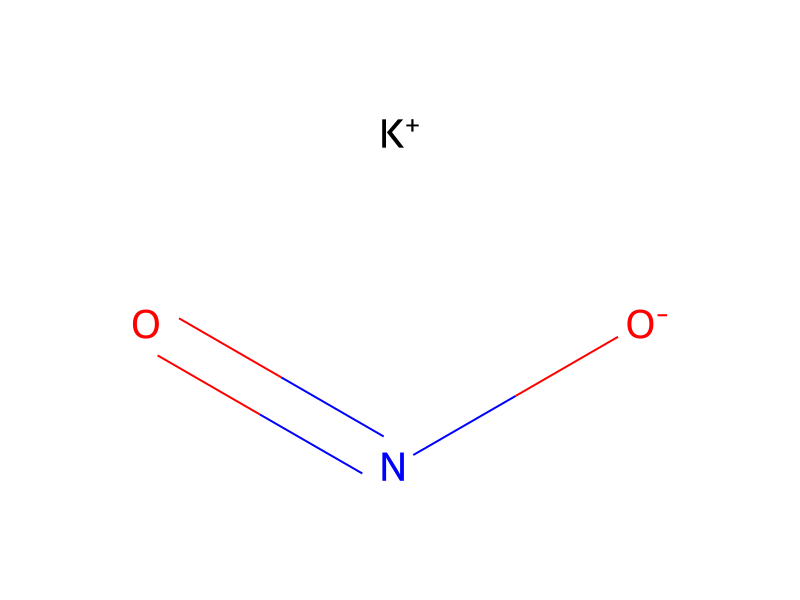
- Standard-SMILES
O=N[O-].[K+]- InChIKey
BXNHTSHTPBPRFX-UHFFFAOYSA-M- Summenformel
- KNO2
- Durchschnittliche Molmasse
- 85,104 g/mol
- Monoisotopische Masse
- 84,95660992
Überblick
Potassium nitrite appears as a yellowish white crystalline solid. Noncombustible but accelerates the burning of all combustible material. If large quantities are involved in fire or if the combustible material is finely divided, an explosion may result. May explode under prolonged exposure to heat. Toxic oxides of nitrogen are produced in fires. Used to make other chemicals and in chemical analysis.
Namen und Bezeichner
- Bevorzugter Name
- Potassium nitrite
- IUPAC
- potassium nitrite
- Lokaler Name
- Kaliumnitrit
- Englischer Name
- POTASSIUM NITRITE
- Summenformel
- KNO2
- Molmasse
- 85.1038
Namen und Synonyme
POTASSIUM NITRITE7758-09-0Nitrous acid, potassium saltPotassium nitrite (1:1)DTXSID5042320794654G42LNitrous acid potassium salt (1:1)INS NO.249DTXCID3022320INS-249E-249RefChem:175535
Weitere Namen anzeigen
Potassium nitrite, Extra PureKaliumnitritNPotassiuM nitriPotassiumNitriteFccPotassium nitrite,ARpotassiumnitrite(1:1)POTASSIUM NITRITE XTLPOTASSIUM NITRITE, ACSNitrous acid potassium
Nitrous acid potassium salt231-832-4potassium;nitriteCaswell No. 698CCRIS 3959HSDB 1216EINECS 231-832-4UN1488
Datenbank-Bezeichner
- CAS
7758-09-0、92937-66-1- PubChem CID
- 516910
- DTXSID
DTXSID5042320- ChEMBL
CHEMBL3186418- ChEBI
CHEBI:232610- UNII
- 794654G42L
- EC Number
- 231-832-4、685-198-2
- Nikkaji
- J4.518G
Eigenschaften
Berechnete Struktureigenschaften
- Polarare Oberfläche (TPSA)
- 52,5 Ų
- H-Brücken-Donoren
- 0
- H-Brücken-Akzeptoren
- 3
- Frei drehbare Bindungen
- 0
- Schwere Atome
- 4
- Formalladung
- 0
- Komplexität
- 13,5
Experimentelle und physikochemische Eigenschaften
Chemical ClassesNitrogen Compounds -> Nitrates and Nitrites
pH
6,0-9,0 (5 % solution)
Aq soln is alkaline
Food AdditivesUse unspecified -> FDA Substance added to food
Density
1.915
1.9 g/cm³
1.915 @25 °C
Color/Form
White or slightly yellow granules or rods
White crystals
Solubility
281 G/100 CC OF WATER @ 0 °C; 413 G/100 CC OF WATER @ 100 °C
312 g/100g of water at 25 °C
SOL IN HOT ALCOHOL; VERY SOL IN LIQUID AMMONIA
306 parts by wt per 100 parts by wt of water at 20 °C
For more Solubility (Complete) data for POTASSIUM NITRITE (6 total), please visit the HSDB record page.
Solubility in water, g/100ml at 0 °C: 281 (very good)
Boiling Point537 °C (explodes)
Decomposition
Decomposition of compound starts at 350 °C.
Upon decomposition it emits toxic fumes of /potassium oxide/.
Melting Point
441 °C with decomp starting at 350 °C
441 °C
440 °C
Physical Description
Potassium nitrite appears as a yellowish white crystalline solid. Noncombustible but accelerates the burning of all combustible material. If large quantities are involved in fire or if the combustible material is finely divided, an explosion may result. May explode under prolonged exposure to heat. Toxic oxides of nitrogen are produced in fires. Used to make other chemicals and in chemical analysis.
Liquid
White or slightly yellow, deliquescent granules
White to slightly yellow granules; [CHEMINFO MSDS]
WHITE-TO-YELLOW DELIQUESCENT SOLID IN VARIOUS FORMS.
Other Experimental Properties
The hydrate exists below -8.9 °C
Deliquescent
Physikochemische Eigenschaften
- Schmelzpunkt
- 350 °C · 350 °C (dec.)(lit.)
- Siedepunkt
- 537 ℃ · explodes at 537℃ [HAW93]
- Dichte
- 1 · 1,92 g/cm3
- Dampfdichte
- 2.9 · 2.9 (vs air)
- storage temp.
- 5 °C · Store at +5°C to +30°C.
- Löslichkeit
- 0.35 part · water: soluble0.35 part
- Aggregatzustand
- Solid
- Farbe
- White to slightly yellow
- Wichte
- 1.915 · 1.915
- Geruch (Odor)
- Odorless
- PH
- 7 · 7-10 (50g/l, H2O, 20℃)
- Wasserlöslichkeit
- 3 · Soluble in water, hot alcohol, liquid NH{3}Soluble in water, alcohol and ammonia.
- Spezifische Wärmekapazität
- 1.26 J/ · Cp(crystal): 1.26 J/(g·K), at 25℃
- Merck
- 14 · 14,7649
- Stabilität
- Stability Stable, but strong oxidizer - contact with combustible material may lead to fire. Incompatible with strong reducing agents, strong acids, combustible materials, cyanides, ammonium salts.
- InChI
- 1S/K.HNO2/c;2-1-3/h;(H,2,3)/q+1;/p-1
- InChIKey
- BXNHTSHTPBPRFX-UHFFFAOYSA-M
- SMILES
- [K+].[O-]N=O
- CAS Datenbank
- 7758 · 7758-09-0(CAS DataBase Reference)
- EPA chemische Informationen
- Potassium nitrite (7758-09-0)
Sicherheit und Regulatorisches
GHS-Klassifizierung
GHS Classification
Danger
H272: May intensify fire; oxidizer [Danger Oxidizing liquids; Oxidizing solids]
P210, P220, P264, P270, P273, P280, P301+P316, P321, P330, P370+P378, P391, P405, and P501 (click each P-code to see the statement)
Danger
H272 (100%): May intensify fire; oxidizer [Danger Oxidizing liquids; Oxidizing solids]
P210, P220, P262, P264, P270, P273, P280, P301+P316, P302+P352, P316, P321, P330, P361+P364, P370+P378, P391, P405, and P501 (click each P-code to see the statement)
Gefahrenhinweise
Regulatory Information
Chemical: Nitrous acid, potassium salt
Regulation (EC) No 257/2010
Nitrous acid, potassium salt (1:1) is listed on the EPA's Chemical Data Reporting (CDR) system. Manufacturers and importers of Nitrous acid, potassium salt (1:1) are required to report information about their production and use of this chemical to the EPA under the Toxic Substances Control Act (TSCA). (40 eCFR Part 711)
S - indicates a substance that is identified in a final Significant New Use Rule.
Status: Active Update: 28-01-2022 https://echa.europa.eu/registration-dossier/-/registered-dossier/23602
Nitrous acid, potassium salt: HSNO Approval: HSR001339 Approved with controls
DOT LabelOxidizer
Fire Hazards
Excerpt from ERG Guide 140 [Oxidizers]:
CAUTION: Ammonium nitrate products may explode if involved in fire or contaminated with hydrocarbons (fuels), organic matter, other contaminants or when hot molten and contained. Treat as an explosive (GUIDE 112).
Not combustible but enhances combustion of other substances. Many reactions may cause fire or explosion. Gives off irritating or toxic fumes (or gases) in a fire.
Fire Potential
Not combustible but enhances combustion of other substances ... /Potassium nitrite/ is a strong oxidant and reacts with combustible and reducing materials causing fire and explosion hazard.
Moderate; Oxidizing material.
Health Hazards
Excerpt from ERG Guide 140 [Oxidizers]:
· Inhalation, ingestion or contact (skin, eyes) with vapors or substance may cause severe injury, burns or death.
Hazards Summary
Strong irritant of the skin and eyes; As an oxidizer, it enhances burning of combustible materials; [CHEMINFO MSDS] Has caused cases of methemoglobinemia when well water was contaminated by fertilizer; [HSDB] See NITRATES and NITRITES.
The major hazards encountered in the use and handling of potassium nitrite stem from its toxicologic properties and reactivity. Toxic by all routes (ie, inhalation, ingestion, or dermal contact), exposure to this white-to-yellowish, crystalline substance may occur from its use as a color fixative and preservative in meats, in analytical chemistry, and in organic synthesis. Effects from exposure may include burns to the skin and eyes, headache, nausea, or methemoglobinemia. In activities and situations where over-exposure may occur, wear personal protective clothing and a self-contained breathing apparatus. If exposure should occur, immediately flush affected skin and eyes with running water for at least 15 minutes. Remove contaminated clothing and shoes at the site. Potassium nitrite is an oxidizer and may ignite combustible materials (wood, paper, oil, etc.). With fuels, the reaction may be violent. Also, prolonged exposure to heat or fire may result in an explosion, with the production of poisonous gases. For fires involving potassium nitrite, extinguish with dry chemical, CO2, Halon, water spray, or fog. If water is used, apply from as far a distance as possible. If fire becomes uncontrollable, consider evacuation of one-half mile radius. Potassium nitrite should be kept in airtight containers and stored away from combustibles and sources of ignition. Potassium nitrite may be shipped via air, rail, road, and water, in containers bearing the label, "Oxidizer." For small spills of potassium nitrite, place material into a clean, dry, covered container. For large spills of potassium nitrite solutions, first dike far ahead of the spill to prevent it from entering water sources and sewers, then take up with sand, earth, or other noncombustible absorbent material.
DOT ID and Guide1488 140
FDA Requirements
Sodium nitrite and potassium nitrite are subject to prior sanctions issued by the U.S. Department of Agriculture for use as color fixatives and preservative agents, with or without sodium or potassium nitrate, in the curing of red meat and poultry products.
Reactive GroupNitrate and Nitrite Compounds, Inorganic
EC ClassificationSymbol: O, T, N; R: 8-25-50; S: (1/2)-45-61
UN ClassificationUN Hazard Class: 5.1; UN Pack Group: II
Special ReportsWHO; WHO Food Additives Series 35 (844): Nitrite provides a summary of the background materials used by JECFA to determine an ADI for nitrite.
Sicherheit und Schutzausrüstung
Fire Fighting
Excerpt from ERG Guide 140 [Oxidizers]:
In case of fire in the surroundings, use appropriate extinguishing media. In case of fire: keep drums, etc., cool by spraying with water.
First Aid Measures
Fresh air, rest. Artificial respiration may be needed. Refer for medical attention.
First rinse with plenty of water for at least 15 minutes, then remove contaminated clothes and rinse again.
First rinse with plenty of water for several minutes (remove contact lenses if easily possible), then refer for medical attention.
Rinse mouth. Induce vomiting (ONLY IN CONSCIOUS PERSONS!). Refer for medical attention .
Accidental Release Measures
· CALL 911. Then call emergency response telephone number on shipping paper. If shipping paper not available or no answer, refer to appropriate telephone number listed on the inside back cover.
· Keep combustibles (wood, paper, oil, etc.) away from spilled material.
First Aid
Excerpt from ERG Guide 140 [Oxidizers]:
General First Aid:
Safe StorageFireproof. Provision to contain effluent from fire extinguishing. Separated from combustible substances, reducing agents and acids. Dry. Well closed.
Firefighting HazardsEvaporation at 20 °C is negligible; a harmful concentration of airborne particles can, however, be reached quickly.
Exposure Control and Personal Protection· Wear positive pressure self-contained breathing apparatus (SCBA).
Fire Fighting Procedures
Evacuation: If fire becomes uncontrollable - consider evacuation of one-half (1/2) mile radius
If material on fire or involved in fire: Flood with water. Cool all affected containers with flooding quantities of water. Apply water from as far a distance as possible.
... All extinguishing agents allowed.
Storage Conditions
Keep well closed.
Store in airtight containers.
Fireproof. Provision to contain effluent from fire extinguishing. Separated from combustible and reducing substances, acids. Dry. Well closed.
Cleanup Methods
Sweep spilled substance into containers. Carefully collect remainder, then remove to safe place. Do NOT absorb in saw-dust or other combustible absorbents. Do NOT let this chemical enter the environment. (Extra personal protection: P3 filter respirator for toxic particles).
Nonfire Spill ResponseExcerpt from ERG Guide 140 [Oxidizers]:
Disposal Methods
SRP: The most favorable course of action is to use an alternative chemical product with less inherent propensity for occupational exposure or environmental contamination. Recycle any unused portion of the material for its approved use or return it to the manufacturer or supplier. Ultimate disposal of the chemical must consider: the material's impact on air quality; potential migration in soil or water; effects on animal, aquatic, and plant life; and conformance with environmental and public health regulations.
Toxikologische Informationen
Treatment
Methemoglobinemia can be treated with supplemental oxygen and methylene blue 1% solution administered intravenously slowly over five minutes followed by IV flush with normal saline. Methylene blue restores the iron in hemoglobin to its normal (reduced) oxygen-carrying state. (L1613)
Interactions
Methylene blue has a protective effect against nitrite-induced MetHb formation ... Dietary factors may have a protective effect against MetHb formation. Examples are ascorbic acid (vitamin C) and methionine which reduced the level of nitrite-induced MetHb when added to the diet of guinea-pigs. Conversely, guinea-pigs deficient in ascorbic acid had higher nitrite-induced MetHb levels than control animals ... /Nitrite/
The effect of nitrite ingestion on the intestinal deconjugation and absorption of folic acid (PGA) and brewers yeast folate was investigated using a rat bioassay and liver folate uptake as the response parameter. Male weanling Sprague Dawley rats were depleted on a low folate AIN-76A formulated basal diet for 21 days. During a 14 day repletion period, folic acid (PGA) and brewers yeast were added to provide 0.25, 0.5 and 1.0 mg of folate per kg of diet. Potassium nitrite was administered as part of the diet at 0.5%. All diets were made isonitrogenous and isocaloric. Based on a parallel line assay, the relative bioavailability of folate in the brewers yeast diet (109) was significantly higher than in the standard diet (PGA = 100). When combined with nitrite, the relative bioavailability of the PGA diet was not significantly different (101), while that of the brewers yeast diet was significantly lower than the standard diet. Concomitant ingestion of nitrite significantly reduced the bioavailability of brewers yeast folate but not that of PGA in rats. This appeared to be a direct effect of oxidation by nitrite on the more susceptible substituted folates in brewers yeast.
... In vivo formation of nitrosopiperidine /was demonstrated/ in the stomach of rats from nitrate and piperidine. At comparable doses, a lesser degree of nitrosation occurred with nitrite and piperidine. /Nitrate and nitrite/
No increase was found in urinary nitrosamine levels of human subjects after consumption of meals with fish or beef (source of amines), bacon (source of pre-formed nitrosamines), in combination with spinach and vegetable juice (source of nitrate/nitrite). /Nitrate or nitrite/
For more Interactions (Complete) data for POTASSIUM NITRITE (6 total), please visit the HSDB record page.
Health EffectsNitrite poisoning causes methemoglobinemia. Nitrites may cause pregnancy complications and developmental effects. They may also be carcinogenic. (L1137)
Adverse EffectsMethemoglobinemia - The presence of increased methemoglobin in the blood; the compound is classified as secondary toxic effect
Exposure Routes
The substance can be absorbed into the body by inhalation of its aerosol and by ingestion.
Oral (L1137) ; inhalation (L1137)
Toxicity Summary
Nitrite causes the autocatalytic oxidation of oxyhemoglobin to hydrogen peroxide and methemoglobin. This elevation of methemoglobin levels is a condition known as methemoglobinemia, and is characterized by tissue hypoxia, as methemoglobin cannot bind oxygen. (A2450, L1613)
Ecotoxicity Excerpts
/AQUATIC SPECIES/ Salmo gairdneri /exposed/ to 0.1 mg NO2-/L for ... /7 wk/ in freshwater caused no lethality, growth reduction, gill histological changes or hematological dyscrasions ... Although 0.05 mg NO2-/L causes significant increase in methemoglobin levels, the change was slight and not of biological significance. /Nitrite/
/AQUATIC SPECIES/ Rainbow trout (Salmo gairdneri) appears to be the most sensitive fish species to nitrite toxicity, with a 96 hr LC50 ranging from 0.56 to 1.78 mg NO2-/L for low chloride water and 11.5 to 17.4 mg NO2-/L for high chloride water, at pH between 7.5 and 8.6 in hard water. /Nitrite/
Signs and Symptoms
Cough. Sore throat. Headache. Blue lips, fingernails and skin. Nausea. Dizziness. Confusion. Laboured breathing. Convulsions. Unconsciousness.
Redness.
Redness. Pain.
Vomiting. Increased heart rate. Fall in blood pressure. Further see Inhalation.
Nitrite poisoning causes methemoglobinemia. Symptoms include cyanosis, cardiac dysrhythmias and circulatory failure, and progressive central nervous system (CNS) effects. CNS effects can range from mild dizziness and lethargy to coma and convulsions. (L1137)
ICSC Environmental DataThis substance may be hazardous to the environment. Special attention should be given to water quality and soil contamination.
Medical Surveillance
Clinical Evaluation: History. Evaluation of a patient with suspected nitrate/nitrite exposure includes a complete medical history and physical examination. Clues to potential exposure are often obtained by reviewing the following items with the patient or family: location of home (urban, suburban, or rural); drinking water source and supply (if well water: depth, location, type of well construction, and frequency of microbiologic and nitrate testing); surrounding activities (agricultural or industrial) and proximity to drinking-water source; type of sewer system (municipal or septic) and proximity to drinking water source; recent flooding; occupations, avocations, and hobbies of family members; nutritional status (for infants: type of formula, feeding regimen, and source of dilution water); family history, including recent use of medications by infant and mother; and history of recent gastroenteritis with vomiting or diarrhea. /Nitrates and Nitrites/
Physical examination should include special attention to the color of the skin and mucous membranes. If there is a history of gastroenteritis (especially in infants), evaluate the patient for the possible presence of dehydration (poor skin turgor, sunken fontanelle, dry mucous membranes). All cyanotic patients should be assessed for possible cardiac and lung disease (cardiac murmurs, gallops, arrhythmias; rales, rhonchi, wheezes, dullness or hyperresonance in the chest). A central chocolate-brown or slate-gray cyanosis that does not respond to administration of 100% oxygen is indicative of methemoglobinemia. Cyanosis due to cardiorespiratory compromise most often improves with administration of 100% oxygen. In young infants, look for labored breathing, respiratory exhaustion, hypotension, below-average weight gain, and failure to meet developmental markers. Gastroenteritis can increase the rates of production and absorption of nitrites in young infants and aggravate methemoglobinemia. /Nitrates and Nitrites/
Signs and Symptoms Signs and symptoms of methemoglobinemia can be directly correlated with the percentage of total hemoglobin in the oxidized form... The lips and mucous membranes of patients with nitrate/nitrite toxicity usually have more of a brownish than a bluish cast. Dyspnea, especially on exertion, is common. Varying degrees of central nervous system depression might be present. The cardiac and pulmonary examinations are usually normal, but systolic flow murmurs might be detected. Cardiac arrhythmias and hypotension can occur in patients with severe poisoning, although death from methemoglobinemia alone is uncommon, except in infants. /Nitrates and Nitrites/
Laboratory Evaluation Most commonly, a drop of the patient's blood is placed on a piece of filter paper next to a drop of blood from person who does not have methemoglobinemia; when dry, the blood with methemoglobin will turn a deep chocolate-brown or slate-gray color. A tube of methemoglobin containing blood will not turn red when shaken in air or when oxygen is bubbled through it, whereas blood that is dark because of normal deoxyhemoglobin will turn red. Screening Tests: Examination of blood color. Determination of the calculated versus measured arterial saturation gap. Hemoglobin and hematocrit. Serum-free hemoglobin (for hemolysis detection). Serum haptoglobin (for hemolysis detection). Heinz bodies on peripheral blood smear. Urinalysis. Specialized Tests: Determination of methemoglobin level. Tests for causes of congenital methemoglobinemia. Hemoglobin electrophoresis. Activity of NADH-dependent methemoglobin reductase. Tests for Causes of Failure of Methylene Blue Therapy (see Treatment and Management section): Activity of glucose-6-phosphate dehydrogenase (G-6-PD). Activity of NADPH-dependent methemoglobin reductase. Sulfhemoglobin blood level (not readily available for clinical use). /Nitrates and Nitrites/
For more Medical Surveillance (Complete) data for POTASSIUM NITRITE (6 total), please visit the HSDB record page.
Human Toxicity Excerpts
/HUMAN EXPOSURE STUDIES/ Symptoms of nitrite poisoning and MetHb formation after ingestion ranged from 0.4 to > 200 mg/kg bw, expressed as nitrite ion ... MetHb formation in different cases varied from 7.7 up to 79% ... /It was deduced that/ cyanosis occurred at MetHb concentration above 10%, and other symptoms at > 20% ... /Nitrite/[WHO; WHO Food Additives Series 35 (844): Nitrite. Available from, as of October 30, 2006: http://www.inchem.org/documents/jecfa/jecmono/v35je13.htm]
/SIGNS AND SYMPTOMS/ Symptomatology: 1. A prompt fall in blood pressure. 2. A roaring sound in the ears, a headache which is persistent and throbbing, with associated vertigo, a generalized tingling sensation, palpitations, and visual disturbances. 3. The skin is flushed and perspiring, later cold and cyanotic. 4. Nausea and vomiting. The ingestion of nitrites may also cause colic and diarrhea. 5. Syncope, esp when attempting to stand upright. 6. Methemoglobinemia, with attendant cyanosis and anoxia. 7. Hyperpnea; later dyspnea and slow breathing. 8. The pulse may be slow, dicrotic, and intermittent. 9. Incr intraocular tension and intracranial pressure. 10. Collapse and coma, followed by clonic convulsions. 11. Death due to circulatory collapse. /Nitrite/[Gosselin, R.E., R.P. Smith, H.C. Hodge. Clinical Toxicology of Commercial Products. 5th ed. Baltimore: Williams and Wilkins, 1984., p. III-317]
/SIGNS AND SYMPTOMS/ ... /Potassium nitrite/ is irritating to the eyes, the skin and the respiratory tract. The substance may cause effects on the cardiovascular system and blood, resulting in fall of blood pressure, formation of methemoglobin. Exposure may result in death. The effects may be delayed ...[IPCS, CEC; International Chemical Safety Card on Potassium nitrite. (April 2000). Available from, as of October 24, 2006: http://www.inchem.org/documents/icsc/icsc/eics1069.htm]
/SIGNS AND SYMPTOMS/ Symptomatology: 1. A prompt fall in blood pressure. 2. A roaring sound in the ears, a headache which is persistent and throbbing, with associated vertigo, a generalized tingling sensation, palpitations, and visual disturbances. 3. The skin is flushed and perspiring, later cold and cyanotic. 4. Nausea and vomiting. The ingestion of nitrites may also cause colic and diarrhea. 5. Syncope, esp when attempting to stand upright. 6. Methemoglobinemia, with attendant cyanosis and anoxia. 7. Hyperpnea; later dyspnea and slow breathing. 8. The pulse may be slow, dicrotic, and intermittent. 9. Incr intraocular tension and intracranial pressure. 10. Collapse and coma, followed by clonic convulsions. 11. Death due to circulatory collapse. /Nitrite/[Gosselin, R.E., R.P. Smith, H.C. Hodge. Clinical Toxicology of Commercial Products. 5th ed. Baltimore: Williams and Wilkins, 1984., p. III-317]
For more Human Toxicity Excerpts (Complete) data for POTASSIUM NITRITE (17 total), please visit the HSDB record page.
Carcinogen ClassificationIngested nitrate or nitrite under conditions that result in endogenous nitrosation is probably carcinogenic to humans (Group 2A). (L135)
Regulatorische Informationen
FDA Requirements
Sodium nitrite and potassium nitrite are subject to prior sanctions issued by the U.S. Department of Agriculture for use as color fixatives and preservative agents, with or without sodium or potassium nitrate, in the curing of red meat and poultry products.
State Drinking Water Guidelines(ME) MAINE 1000 ug/L /Nitrite/
Federal Drinking Water StandardsEPA 1000 ug/L /Nitrite/
Federal Drinking Water GuidelinesEPA 1000 ug/L /Nitrite/
Sicherheitsdaten
- wgk
- 2
- tsca
- TSCA listed
- ridadr
- UN 1488
- hs_code
- 2834 10 00
- RTECS-Nr.
- TT3750000
- risk_code
- 8-25-50
- Toxizität
- LD50 orally in rabbits: 108 mg anion/kg, Dollahite, Rowe, Southwest. Vet. 27, 246 (1974)
- hazard_code
- O,T,N
- safety_code
- 45-61
- hazard_class
- 5.1
- packing_group
- II
- Speicherklasse
- 5.1B - Oxidizing hazardous materials
- Giftige Stoffe Daten
- 7758-09-0(Hazardous Substances Data)
- Hazard Classifications
- Acute Tox. 3 OralAquatic Acute 1Ox. Sol. 2
Chemie und Industrie
Pharmakologische Informationen
Mechanism of Action
The two basic actions of sodium nitrite in vivo are relaxation of smooth muscle, especially of small blood vessels, and in toxic doses conversion of hemoglobin to methemoglobin. Same dual toxicity is shared by many inorganic ... nitrites S ... /Sodium nitrite/
The principal mechanism of nitrite toxicity is the oxidation of the ferrous iron (Fe2+) in deoxyhemoglobin to the ferric (Fe3+) valence state, producing methemoglobin. Methemoglobin cannot reversibly bind or transport circulating oxygen. Depending on the percentage of total methemoglobin in oxidized form, the clinical picture is one of oxygen deprivation with cyanosis, cardiac dysrhythmias and circulatory failure, and progressive central nervous system (CNS) effects. CNS effects can range from mild dizziness and lethargy to coma and convulsions. ... A chocolate-brown or slate-gray central cyanosis (involving the trunk and proximal portions of the limbs, as well as the distal extremities, mucous membranes, and lips) is one of the hallmarks of methemoglobinemia. This cyanosis is due to the dark chocolate-brown color of methemoglobin itself and can become noticeable at a concentration of 10% to 15% of total hemoglobin. /Nitrates and nitrites/
... The major concern of possible long-term effects of exposure to nitrate and nitrite is associated with formation of nitroso compounds, many of which are carcinogenic. This formation may take place wherever nitrite and nitrosable compounds are present, but it is favored by acidic conditions or the presence of some bacteria. The gastrointestinal tract and especially the stomach is regarded as the main formation site, but nitrosation reactions can also take place in an infected urinary bladder ... /Nitrate and nitrite poisoning/
Acute nitrate toxicity is almost always seen in infants rather than adults when it results from ingestion of well waters and vegetables high in nitrates ... /It was/ deduced that infants were prone to upset stomachs and achlorhydria. As result, stomach pH increased in alkalinity allowing nitrate-reducing organisms to enter and to reduce nitrates to nitrites. A gastric pH above 4 supports nitrate-reducing organisms ... Immature enzyme systems may also be of importance ... Fetal hemoglobin (hemoglobin F) is oxidized by nitrite to methemoglobin at rate twice as rapid as adult hemoglobin (hemoglobin A). Furthermore, enzymatic capacity of erythrocytes of newborn infants to reduce methemoglobin to hemoglobin appears less than that of adults. Difference is probably due to developmental deficiency in activity of DPNH-methemoglobin reductase (diphosphopyridine nucleotide). As opposed to adults, several clinical, physiologic and metabolic factors predispose infants to development of methemoglobinemia and acute nitrate poisoning. /Nitrate and nitrite/
For more Mechanism of Action (Complete) data for POTASSIUM NITRITE (6 total), please visit the HSDB record page.
Metabolism/Metabolites
... Intestinal bacteria were involved in the reduction of nitrite ... Absorbed nitrite is rapidly oxidized to nitrate in the blood by a mammalian process ... The process of nitrate generation parallels the methemoglobin (MetHb) formation ... Nitrite oxidation to nitrate may also occur in the stomach prior to absorption, as demonstrated in vitro for mice. However, under in vivo conditions, nitrite is probably absorbed from the stomach before large quantities of nitrate are formed. /Nitrite/
... Nitrite may be further reduced to nitrogen by bacteria under some conditions. In blood, nitrite transforms hemoglobin to methemoglobin and is simultaneously oxidized to nitrate. Normally methemoglobin gradually reverts to hemoglobin through enzymatic reactions. Nitrite has vasodilating properties, probably through transformation into nitric oxide (NO) or a NO-containing molecule acting as a signal factor for smooth muscle relaxation. Nitrite easily transforms into a nitrosating agent in an acidic environment and can react with a variety of compounds, eg ascorbic acid, amines, amides. Nitrosation can also be mediated by bacteria, eg in the stomach. Some reaction products are carcinogenic (eg most nitrosoamines and amides). /Nitrate and nitrite/
No or very slight increase in blood nitrosamine level was found in human subjects after consumption of nitrate-, nitrite-, and/or amine-rich meals /Nitrate, nitrite, and amine/
Nitrite may form nitroso compounds by reaction with a nitrosatable compound. Many different amino compounds including secondary and tertiary amines, secondary and tertiary amides, N-substituted ureas, guanidines, indoles (mainly tryptophan-bound in proteins) and urethanes, can act as nitrosatable compounds. In the case of amines, amides and ureas, the formed nitroso compounds are N-nitrosamines, N-nitrosoamides and N-nitrosoureas. The most common nitroso compounds are those derived from secondary amines. The rate of formation is often pH dependent and proportional to the concentration of unprotonated amine (inversely related to the basicity of the amine) and to the concentration of N2O3, and hence to the square of the NO2 concentration. An optimum pH in the range of 2.5 to 3.3 is commonly observed for N-nitrosamine formation ... Nitrosation occurs especially rapidly with weakly basic secondary amines (eg morpholine, piperazine, N-methylaniline), N-alkylureas, N-alkylcarbamates and aminopyrine. Nitrosation occurs relatively slowly with strongly basic amines, such as dimethylamine, and simple N-alkylamides. Nitrosation of tertiary amines, yielding dialkylnitrosamines and nitrosation of guanidines, yielding nitrosocyanamides and nitrosoureas occur relatively slowly. Catalysis of N-nitrosamine formation by nucleophilic anions at pH 2 to 5 has been widely observed. The catalytic order is SCN > I > Br > Cl > phosphate or carboxylate. Acceleration by SCN- and I- have attracted much attention because of their in vivo relevance: salivary SCN- levels are relatively high in smokers and I- is present in gastric secretion. Nitrosation of amides and related compounds is not catalyzed by nucleophilic anions. Effective inhibition of nitrosation requires materials which react readily with and convert the nitrosating agent to innocuous products, e.g.. compounds which either reduce HNO2 or NO or bind the NO+ group irreversibly. Sulfur dioxide and bisulfite ion, ascorbic acid, tocopherols, gallic acid, thiols, several dihydroxy phenols and some synthetic and natural antioxidants are inhibitors of nitrosation ... /It was/ demonstrated the endogenous formation of N-nitrosomorpholine from precursors (high amounts of nitrite and morpholine) by determination in the urine. Chinese tea inhibited this N-nitrosation which was attributed to the inhibitory effect of polyphenolic compounds and ascorbic acid present in tea ... A study with ascorbic acid showing that the inhibition of the formation of N-nitrosoproline was not complete. /Nitrite/
Nitrites and their metabolites are excreted in the urine. (L1137)
Absorption, Distribution and Excretion
Nitrate and nitrite given orally are absorbed and transferred to the blood in the upper part of the gastrointestinal tract. Abundant pectin in the food may delay absorption which may then occur lower down in the intestine, with possible increased risk for microbial transformation of nitrate into nitrite. /Nitrate and nitrite/
Regardless of route of exposure, nitrate and nitrite are rapidly transferred into the blood. Nitrite is gradually oxidized to nitrate which is readily distributed into most body fluids (urine, saliva, gastric juice, sweat, ileostomy fluid). Distribution of nitrate into plasma, erythrocytes, saliva and urine following an oral dose of sodium nitrate has been demonstrated ... Nitrate does not accumulate in the body. /Nitrate and nitrite/
Nitrite rapidly disappeared from a buffered solution at pH<5, simulating gastric conditions, and the rate of disappearance was enhanced by the presence of food ... Nitrite may also react with gastric contents (eg, nitrosation) or be reduced by the GI flora. A large part of nitrite entering the GI tract may thus disappear before absorption takes place ... Absorption of nitrite from the GI tract of rats was slower than that of nitrate. Forty five minutes after intragastric instillation of 13N-labelled nitrite, radioactivity was higher in the stomach and lower in the liver, kidneys, bladder and eviscerated carcass, than in similar experiments with 13N-labelled nitrate ... Nitrite was not absorbed from the caecum and large intestine of rats ... Gastric absorption of nitrite was noted in labelling and gastric emptying studies using rats and mice ... In rats, 63% of nitrite loss from the stomach was due to emptying and 37% to other processes ... Gastric absorption of nitrite seemed faster in mice than in rats. In vivo, the rate of absorption was about 4.5 times greater than the rate of chemical degradation. /Nitrite/
Nitrite is normally absent from the body fluids and tissues of laboratory animals ... The extensive pre-systemic metabolism of nitrite results in an absolute bioavailability (ie the percentage of the dose reaching the systemic circulation) considerably lower than 100%. Intravenous injections and intratracheal instillation of (13)N-labelled nitrite in mice and rabbits resulted in homogenous distribution of radioactivity in the heart, kidneys, liver, stomach, intestines, lungs and bladder (ranging from 4.2 to 10.5%) within 5 minutes. The (13)N was equally distributed in plasma and red blood cells with 15 to 20% of the plasma (13)N bound to proteins ... Thirty minutes after iv injection of nitrite, low levels of nitrite were detected in blood and saliva of dogs ... Nitrite can cross the placenta of rats and guinea-pigs: nitrite injected into pregnant animals appeared after a lag of approximately 20 minutes in fetal blood but at a lower concentration than in maternal blood ... /Nitrite/
For more Absorption, Distribution and Excretion (Complete) data for POTASSIUM NITRITE (6 total), please visit the HSDB record page.
Verwendung und Herstellung
Uses
Used as a food preservative, analytical reagent, and medicine; Used to synthesize organic chemicals; [HSDB]
... Oxidizing agent and as a corrosion inhibitor in washing with hot potash for removal of carbon dioxide from gas streams (e.g., synthesis gas)..
Analysis (testing for amino acids, cobalt, iodine, urea)
Nitrite is used as a food preservative and coloring agent, eg curing of meat, in the manufacture of diazo dyes and rubber, in the textile industry and in photography. Nitrite is also used in analytical and preparative chemistry, as a corrosion inhibitor and as an antidote in cyanide poisoning. /Nitrite/
Several adulterants are used to mask tests for abused drugs in urine. Adulterants such as "Klear" and "Whizzies" contain potassium nitrite... ,
Potassium nitrite is used as a food preservative and in the manufacturing of heat transfer salts. (L1616)
U.S. Production2023: <50,000 lb
Consumption PatternsAs a color fixative and preservative in meats; approximately 40% in lunch meat; approximately 40% in cured, smoked pork; approximately 10% in variety meat; approximately 10% in canned, cooked beef and pork and meat mixtures (1973)
Consumer UsesCorrosion inhibitor
Industry UsesCorrosion inhibitor
Methods of Manufacturing
Potassium nitrite can be obtained by reduction of potassium nitrate ... Production of potassium nitrite by absorption of nitrogen oxides in potassium hydroxide or potassium carbonate solution is not employed on a large scale because of the high price of these alkalies. Furthermore, the fact that potassium nitrite is highly soluble in water makes the solid difficult to recover.
Formulations/Preparations
Grade: CP; technical; reagent; FCC.
Nitrite of commerce usually contains about 85% potassium nitrite, remainder consisting chiefly of nitrate
Use Classification
Food additives
Food Additives -> COLOUR_RETENTION_AGENT; PRESERVATIVE -> JECFA Functional Classes
General Manufacturing Information
Wholesale and Retail Trade
Nitrous acid, potassium salt (1:1): ACTIVE
Food for babies less than 6 month of age should not contain added nitrites. /Nitrites/
Potassium nitrite has the pharmacological effects of the other nitrites.
MID /MEAT INSPECTION DIVISION (DEPARTMENT OF AGRICULTURE)/ LIMITATION: SOURCE OF NITRITE IN CURED PRODUCTS; 7 LB/100 GAL PICKLE; 3 1/2 OZ/100 LB MEAT (DRY CURE); 2 3/4 OZ/100 LB CHOPPED MEAT.
Anwendungen
VerwendenPotassium Nitrite is a color fixative in meats which exists as white or yellowish granules or cylindrical sticks. it is very soluble in water. see nitrite.
Darstellung
synthetischePotassium nitrite may be prepared by fusion of nitrate with lead:KNO3+ Pb →KNO2+ PbOThe product is extracted with water and allowed to crystallize. Filtration separates nitrite from insoluble lead oxide.Potassium nitrite also may be obtained by high temperature thermal decomposition of nitrate:2KNO3→2KNO2+ O2↑.
Vor- und nachgelagerte Produkte
Vorgelagerte Rohstoffe
Nachgelagerte Produkte
Anbieter50 Anbieter
国药集团化学试剂有限公司86-21-63210123 · [email protected]
江西益众化工有限公司15307925109 15350027073 · [email protected]
阿诺西(上海)生物技术有限公司400-1107768 15058188853 · [email protected]
上海阿拉丁生化科技股份有限公司400-6206333 13167063860 · [email protected]
Shandong chuangyingchemical Co., Ltd.18853181302 · [email protected]
南通润丰石油化工有限公司66017690 19952660367 · [email protected]
安徽旺山旺水特种气体有限公司15906197626 · [email protected]
上海毕合生物化学技术有限公司13816464724 · [email protected]
湖北成丰化工有限公司13125175253 · [email protected]
杭州品高化工有限公司0571-87658025 · [email protected]
天津市恒兴化学试剂制造有限公司022-26772349 15822233318 · [email protected]
河北展药生物科技有限公司15369953316 +8615369953316 · [email protected]
Baoji Guokang Healthchem co.,ltd+8615604608665 15604608665 · [email protected]
武汉绿景丰华生物科技有限公司19972070065 · [email protected]
上海迈瑞尔生化科技有限公司4006356688 18621169109 · [email protected]
江苏普乐司生物科技有限公司0513-66017706 18551496367 · [email protected]
武汉市聚舜化工有限公司027-02783261126 18971318572 · [email protected]
阿法埃莎(中国)化学有限公司400-6106006 · [email protected]
安耐吉化学&3A(安徽泽升科技股份有限公司)400-0056266 · [email protected]
武汉卡诺斯科技有限公司027-83238443 15327105076 · [email protected]
上海瀚鸿科技股份有限公司021-54306202 13764082696 · [email protected]
尚澜气体(上海)有限公司4001882517 13323475516 · [email protected]
江苏艾康生物医药研发有限公司025-5885952 15955137747 · [email protected]
武汉市皇臻生物化工有限公司13795480948 · [email protected]
山东艺鸿化工有限公司15253143303 15269100373
山东西亚化学有限公司13355009207 13355009207 · [email protected]
广东大小化工有限公司1866-171603 18666171603 · [email protected]
玛雅试剂+86 (573) 82222445 (0)18006601000 452520369 · [email protected]
四川库利南科技有限公司400-1166-196 18981987031 · [email protected]
天津希恩思生化科技有限公司400 638 7771 · [email protected]
斯百全化学(上海)有限公司021-021-021-67601398-809-809-809 15221380277 · [email protected]
艾科试剂4008-755-333 18080918076 · [email protected]
赛默飞世尔科技(中国)有限公司800-810-5118 · [email protected]
北京京土恒盛化工科技有限公司00-13911456598 13911456598 · [email protected]
成都零六生物科技有限公司400-1166-196 13458535857 · [email protected]
上海麦克林生化科技股份有限公司15221275939 15221275939 · [email protected]
康迪斯化工(湖北)有限公司13125172151 · [email protected]
武汉弘德悦欣医药科技有限公司027-83855396 15271852016
成都润泽本土化工有限公司13096311329 028-88469284 616445927 · [email protected]
池州凯隆进出口贸易有限公司[email protected]
Sigma-Aldrich西格玛奥德里奇(上海)贸易有限公司021-61415566 800-8193336 · [email protected]
康迪斯化工(湖北)有限公司13343438265 · [email protected]
九鼎化学(上海)科技有限公司4009209199 · [email protected]
厦门志信化学有限公司+86-5922680277 +86-13806087780 · [email protected]
昆山中莱特贸易有限公司0512-55170668 13913095008;13770601296 · [email protected]
嘉兴市德亿化工有限公司0573-85866609 13325730825 · [email protected]
上海玻尔化学试剂有限公司19102157732 · [email protected]
廊坊乾耀科技有限公司0316-2132008 19932680339 · [email protected]
陕西缔都医药化工有限公司029-029-81120477 17792793610 · [email protected]
启源(广东)医药化工有限公司18026564465 · [email protected]
Ergänzende Hinweise
Definitionpotassium nitrite: A white orslightly yellow deliquescent solid,KNO2, soluble in water and insolublein ethanol; r.d. 1.91; m.p. 440°C; mayexplode at 600°C. Potassium nitrite isprepared by the reduction of potassiumnitrate. It reacts with cold dilutemineral acids to give nitrousacid and is also able to behave as areducing agent (if oxidized to the nitrate)or as an oxidizing agent (if reducedto nitrogen). It is used inorganic synthesis because of its partin diazotization, and in detecting thepresence of the amino groups in organiccompounds.
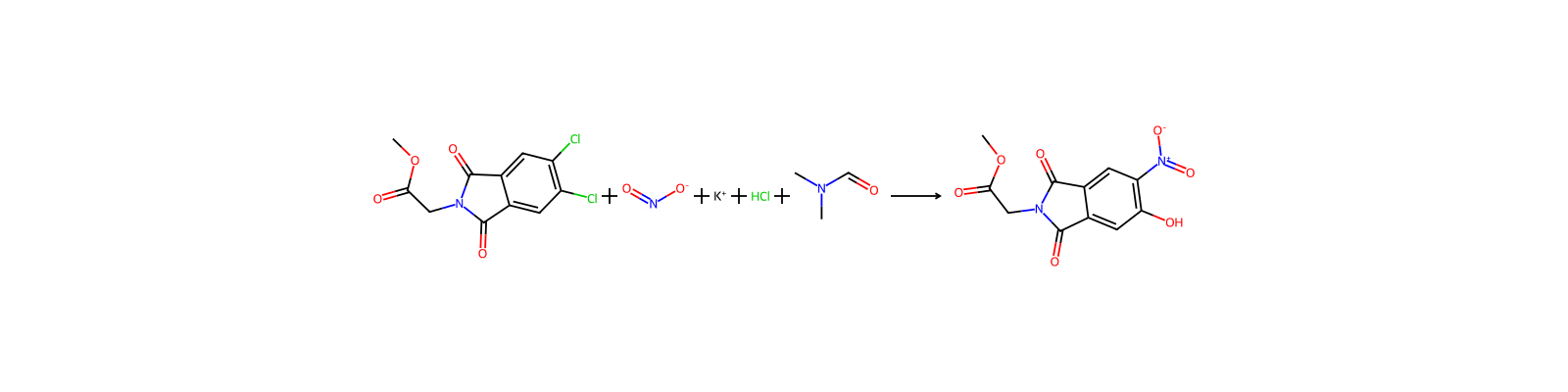
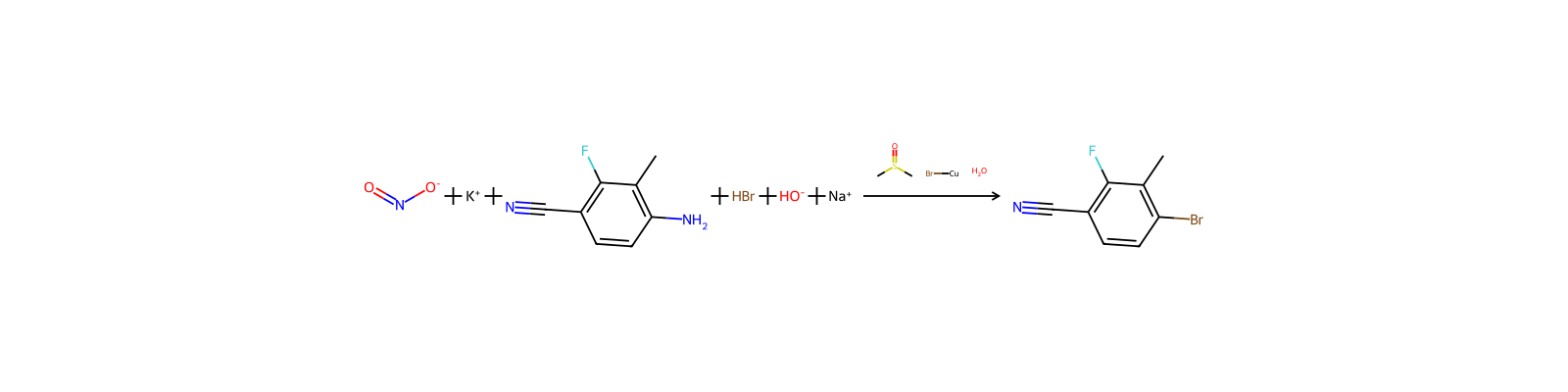
Zugehörige Reaktionen
20





Verknüpfte Notizen
Wird geladen…