
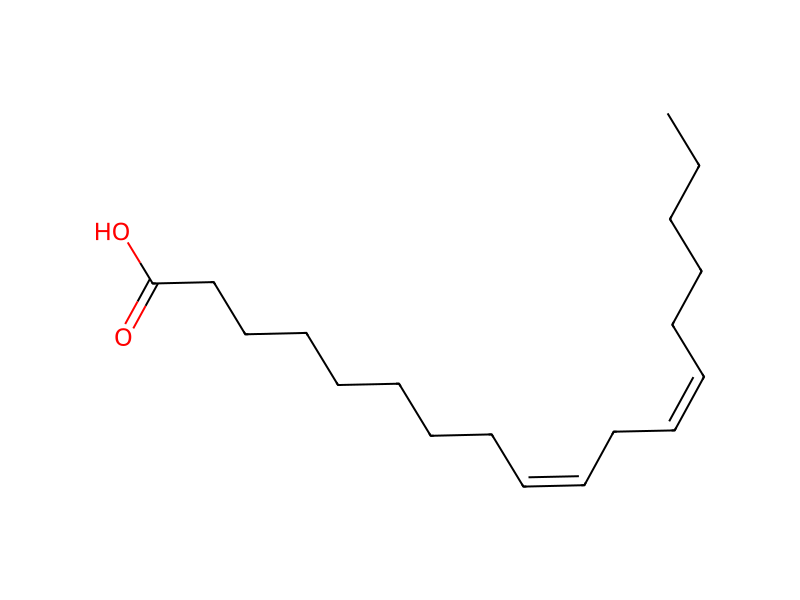
Grundinformationen
- Standard-SMILES
CCCCC/C=C\C/C=C\CCCCCCCC(=O)O- InChIKey
OYHQOLUKZRVURQ-HZJYTTRNSA-N- Summenformel
- C18H32O2
- Durchschnittliche Molmasse
- 280,4 g/mol
- Monoisotopische Masse
- 280,24023026
Überblick
Linoleic acid is a colorless to straw colored liquid. A polyunsaturated fatty acid essential to human diet.
Namen und Bezeichner
- Bevorzugter Name
- Linoleic Acid
- IUPAC
- (9Z,12Z)-octadeca-9,12-dienoic acid
- Englischer Name
- Linoleic acid
- Summenformel
- C18H32O2
- Molmasse
- 280.44548
Namen und Synonyme
linoleic acid60-33-3Linolic acid(9Z,12Z)-octadeca-9,12-dienoic acidTelfairic acidcis,cis-Linoleic acid9,12-Linoleic acidUnifac 6550Emersol 315alpha-Linoleic acidcis-9,cis-12-Octadecadienoic acid9Z,12Z-Linoleic acid
Weitere Namen anzeigen
cis,cis-9,12-Octadecadienoic acidEmersol 310(Z,Z)-9,12-Octadecadienoic acidExtra Linoleic 909Z,12Z-octadecadienoic acid9-cis,12-cis-Linoleic acidall-cis-9,12-Octadecadienoic acidLeinoleic acid
Datenbank-Bezeichner
- CAS
2197-37-7、506-21-8、60-33-3、6144-28-1、8024-22-4、80969-37-5、85594-37-2- PubChem CID
- 5280450
- DTXSID
DTXSID2025505- ChEMBL
CHEMBL267476- ChEBI
CHEBI:17351- UNII
- 9KJL21T0QJ
- EC Number
- 200-470-9、287-896-9、617-024-8
- Nikkaji
- J4.801A
Eigenschaften
Berechnete Struktureigenschaften
- XLogP
- 6,8
- Polarare Oberfläche (TPSA)
- 37,3 Ų
- H-Brücken-Donoren
- 1
- H-Brücken-Akzeptoren
- 2
- Frei drehbare Bindungen
- 14
- Schwere Atome
- 20
- Formalladung
- 0
- Komplexität
- 267
Experimentelle und physikochemische Eigenschaften
Chemical ClassesBiological Agents -> Fatty Acids and Fats
Drugs
Pharmaceuticals -> Listed in ZINC15
Pharmaceuticals
Lipids
Lipids -> Unambiguous Lipids
Fatty Acyls [FA] -> Fatty Acids and Conjugates [FA01] -> Unsaturated fatty acids [FA0103]
Cosmetics
Cosmetic ingredients (Linoleic Acid) -> CIR (Cosmetic Ingredient Review)
Hair conditioning; Antistatic; Cleansing; Skin conditioning; Emollient; Surfactant
SpringerMaterials PropertiesChemical diffusion
FragrancesFragrance Ingredient (Linoleic acid) -> IFRA transparency List
LogP
log Kow = 7.05
7.05
7.05
Food AdditivesFLAVORING AGENT OR ADJUVANT -> FDA Substance added to food
Density
0.9007 at 72 °F (NTP, 1992) - Less dense than water; will float
0.9022 g/cu cm at 20 °C
0.898-0.904
Flavoring AgentsEU Flavoring substances
Color/Form
Colorless oil
Colorless to straw-colored liquid
Solubility
Insoluble (NTP, 1992)
In water, 1.59 mg/L at 25 °C
Freely soluble in ether; soluble in absolute alcohol; 1 mL dissolves in 10 mL petroleum ether; miscible with dimethylformamide, fat solvents, oils
Very soluble in acetone, benzene, ethyl ether, and ethanol.
In acetone: 4.10 g/100 g acetone at -50 °C, 1.20 g/100 g acetone at -60 °C, 0.35 g/100 g acetone at -70 °C; in n-heptane: 0.98 g/100 g n-heptane at -50 °C, 0.20 g/100 g n-heptane at -60 °C, 0.042 g/100 g n-heptane at -70 °C.
soluble in ether, alcohol; miscible with dimethylformamide, fat solvents, oils; insoluble in water
Physikochemische Eigenschaften
- Schmelzpunkt
- -12 °C · -12 °C
- Siedepunkt
- 365.2 °C · 365.2 °C
- Dichte
- 0.9022 g/cm3 · 0.9022 g/cm3
- pka
- 4.78 · 4.78±0.10(Predicted)
Sicherheit und Regulatorisches
GHS-Klassifizierung
GHS Classification
This chemical does not meet GHS hazard criteria for 90.2% (2223 of 2465) of all reports.
Not Classified
Aggregated GHS information provided per 2465 reports by companies from 14 notifications to the ECHA C&L Inventory.
This chemical does not meet GHS hazard criteria for 82.5% (175 of 212) of all reports.
Warning
H226 (17%): Flammable liquid and vapor [Warning Flammable liquids]
Gefahrenhinweise
Regulatory Information
Chemical: 9,12-Octadecadienoic acid, (Z,Z)-
Chemical: Grape seed oil
9,12-Octadecadienoic acid (9Z,12Z)- is listed on the EPA's Chemical Data Reporting (CDR) system. Manufacturers and importers of 9,12-Octadecadienoic acid (9Z,12Z)- are required to report information about their production and use of this chemical to the EPA under the Toxic Substances Control Act (TSCA). (40 eCFR Part 711)
Linoleic acid: Does not have an individual approval but may be used under an appropriate group standard
Grapeseed oil: Does not have an individual approval but may be used under an appropriate group standard
Other Safety Information
IMAP assessments - 9,12-Octadecadienoic acid, (Z,Z)-: Environment tier I assessment
IMAP assessments - Oils, grape: Environment tier I assessment
Fire HazardsFlash point data for this chemical are not available. It is probably combustible. (NTP, 1992)
Fire PotentialCombustible
Health HazardsSYMPTOMS: Symptoms of exposure to this compound may include mild irritation of the eyes, skin and mucous membranes, nausea and vomiting.
Hazards SummaryA mild irritant; [HSDB]; Safe when used as a flavoring agent in food; [JECFA] An irritant; [MSDSonline] LD50 (mouse) >50 gm/kg; [RTECS]
FDA Requirements
Substance added directly to human food affirmed as generally recognized as safe (GRAS).
Linoleic acid used as a nutrient and/or dietary supplement in animal drugs, feeds, and related products is generally recognized as safe when used in accordance with good manufacturing or feeding practice.
Reactive GroupAcids, Carboxylic
Special ReportsSmith WL; p. 505-15 in Encyclopedia of Dietary Supplements; Coates PM et al, eds (2005): A review of biochemistry and pharmacology of Omega-6 Fatty Acids.
EPA Safer Chemical
Chemical: Grape seed oil
Chemical: Linoleic acid
Reactivity ProfileLINOLEIC ACID reacts to neutralize bases. May react vigorously with oxidizing agents. May react exothermically with reducing agents to release hydrogen gas.
Air and Water ReactionsSensitive to air and light. (NTP, 1992). Oxidizes across carbon double bonds
Sicherheit und Schutzausrüstung
Fire FightingFires involving this material can be controlled with a dry chemical, carbon dioxide or Halon extinguisher. (NTP, 1992)
First Aid
EYES: First check the victim for contact lenses and remove if present. Flush victim's eyes with water or normal saline solution for 20 to 30 minutes while simultaneously calling a hospital or poison control center. Do not put any ointments, oils, or medication in the victim's eyes without specific instructions from a physician. IMMEDIATELY transport the victim after flushing eyes to a hospital even if no symptoms (such as redness or irritation) develop.
Storage ConditionsStorage in ester form is recommended.
Nonfire Spill Response
SMALL SPILLS AND LEAKAGE: If you spill this chemical, use absorbent paper to pick up all liquid spill material. Your contaminated clothing and absorbent paper should be sealed in a vapor-tight plastic bag for eventual disposal. Solvent wash all contaminated surfaces with alcohol followed by washing with a strong soap and water solution. Do not reenter the contaminated area until the Safety Officer (or other responsible person) has verified that the area has been properly cleaned.
Disposal Methods
SRP: Criteria for land treatment or burial (sanitary landfill) disposal practices are subject to significant revision. Prior to implementing land disposal of waste residue (including waste sludge), consult with environmental regulatory agencies for guidance on acceptable disposal practices.
Personal Protective Equipment (PPE)
RECOMMENDED RESPIRATOR: Where the neat test chemical is weighed and diluted, wear a NIOSH-approved half face respirator equipped with an organic vapor/acid gas cartridge (specific for organic vapors, HCl, acid gas and SO2) with a dust/mist filter. (NTP, 1992)
Toxikologische Informationen
InteractionsConjugated linoleic acid inhibited the development of mammary cancer in rats initiated with the carcinogen, methylnitrosourea. /Conjugated linoleic acid/
Environmental Fate
TERRESTRIAL FATE: Based on a classification scheme(1), an estimated Koc value of 1.2X10+4(SRC), determined from a structure estimation method(2), indicates that undissociated linoleic acid is expected to be immobile in soil(SRC). The pKa of linoleic acid is 4.77(3), indicating that this compound will exist primarily in anion form in the environment and anions generally do not adsorb more strongly to soils containing organic carbon and clay than their neutral counterparts(4). Volatilization of linoleic acid from moist soil surfaces is not expected to be an important fate process(SRC) given an estimated Henry's Law constant of 2.0X10⁻⁷ atm-cu m/mole(SRC), derived from its vapor pressure, 8.68X10⁻⁷ mm Hg(5), and water solubility, 1.59 mg/L(6). Linoleic acid is not expected to volatilize from dry soil surfaces(SRC) based upon its vapor pressure. Linoleic acid absorbs at wavelengths >290 nm(7) and, therefore, may be susceptible to direct photolysis on soil surfaces exposed to sunlight(SRC). An 80-100% of theoretical BOD using activated sludge in the Japanese MITI test, which classifies linoleic acid as readily biodegradable(8), suggests that biodegradation is an important environmental fate process in soil(SRC). Other studies also indicate that linoleic acid is biodegradable(9,10).
AQUATIC FATE: Based on a classification scheme(1), an estimated Koc value of 1.2X10+4(SRC), determined from a structure estimation method(2), indicates that undissociated linoleic acid is expected to adsorb to suspended solids and sediment(SRC). A pKa of 4.77(3) indicates linoleic acid will exist primarily in the anion form at pH values of 5 to 9, and anions generally do not adsorb more strongly than their neutral counterparts(4). Volatilization from water surfaces is not expected(5) based upon an estimated Henry's Law constant of 2.0X10⁻⁷ atm-cu m/mole(SRC), derived from its vapor pressure, 8.68X10⁻⁷ mm Hg(6), and water solubility, 1.59 mg/L(7). According to a classification scheme(8), an estimated BCF of 56(SRC), from its log Kow of 7.05(9) and a regression-derived equation(2), suggests the potential for bioconcentration in aquatic organisms is moderate(SRC). An 80-100% of theoretical BOD using activated sludge in the Japanese MITI test, which classifies linoleic acid as readily biodegradable(10), suggests that biodegradation is an important environmental fate process in waterl(SRC). Other studies also indicate that linoleic acid is biodegradable(10,11). Linoleic acid absorbs at wavelengths >290 nm(12) and, therefore, may be susceptible to direct photolysis in waters exposed to sunlight(SRC). Exposure of linoleic acid in sterile seawater solutions to ambient sunlight for a 5-hour period resulted in a 4% photodegradation of linoleic acid with the formation of aldehyde degradation products(13). Linoleic acid is an olefin and olefins can react with photochemically-produced hydroxyl radicals and singlet oxygen radicals in natural water with half-lives on the order of one to two weeks(14). Linoleic acid is not expected to undergo hydrolysis in the environment due to the lack of functional groups that hydrolyze under environmental conditions(15).
ATMOSPHERIC FATE: According to a model of gas/particle partitioning of semivolatile organic compounds in the atmosphere(1), linoleic acid, which has a vapor pressure of 8.68X10⁻⁷ mm Hg at 25 °C(2), will exist in both the vapor and particulate phases in the ambient atmosphere. Vapor-phase linoleic acid is degraded in the atmosphere by reaction with photochemically-produced hydroxyl radicals(SRC); the half-life for this reaction in air is estimated to be 3 hours(SRC), calculated from its rate constant of 1.3X10⁻¹⁰ cu cm/molecule-sec at 25 °C(SRC) that were derived using a structure estimation method(3). Vapor-phase linoleic acid is also degraded in the atmosphere by reaction with ozone(SRC); the half-life for linoleic acid reaction in air is estimated to be 1.1 hours(SRC), calculated from its rate constants of 2.6X10⁻¹⁶ cu cm/molecule-sec at 25 °C(SRC) that were derived using a structure estimation method(3). Particulate-phase linoleic acid may be removed from the air by wet or dry deposition(SRC). Linoleic acid absorbs at wavelengths >290 nm(4) and, therefore, may be susceptible to direct photolysis by sunlight(SRC).
Food Survey Values
Linoleic acid was detected, but not quantified, in headspace samples of peanut oil heated under four different temperature conditions(1). Linoleic acid was detected in Indica, Sinica, Javanica, and Japonica groups of nonglutinous brown rice at a mean weight % of total acids of 30.44, 30.70, 34.37, and 36.26, respectively(2). Linoleic acid was detected in both roasted and boiled Chinese chestnuts obtained from a commercial grower in Western Pennsylvania in the fall of 1994(3). Linoleic acid is found in (weight %): butterfat, anhydrous (2.25); hydrogenated coconut oil (0.6); regular hard margarine (17.0); hard butter (5.0)(4).
Milk Concentrations
Human milk fatty acids vary with maternal dietary fat composition. Hydrogenated dietary oils with trans fatty acids may displace cis n-6 and n-3 unsaturated fatty acids or have adverse effects on their metabolism. The effects of milk trans, n-6, and n-3 fatty acids in breast-fed infants are unclear, although n-6 and n-3 fatty acids are important in infant growth and development. Objective: We sought to determine the relations between trans and cis unsaturated fatty acids in milk and plasma phospholipids and triacylglycerols of breast-fed infants, and to identify the major maternal dietary sources of trans fatty acids. Design: We collected milk from 103 mothers with exclusively breast-fed 2-mo-old infants, blood from 62 infants, and 3-d dietary records from 21 mothers. Results: Mean (+/-SEM) percentages of trans fatty acids were as follows: milk, 7.1 +/- 0.32%; infants' triacylglycerols, 6.5 +/- 0.33%; and infants' phospholipids, 3.7 +/- 0.16%. Milk trans fatty acids, a-linolenic acid (18:3n-3), arachidonic acid (20:4n-6), docosahexaenoic acid (22:6n-3) (P < 0.001), and linoleic acid (18:2n-6) (P = 0.007) were each related to the same fatty acid in infant plasma phospholipids. Milk trans fatty acids were inversely related to milk 18:2n-6 and 18:3n-3, but not to milk or infant plasma 20:4n-6 or 22:6n-3. trans Fatty acids represented 7.7% of maternal total fat intake (2.5% of total energy); the major dietary sources were bakery products and breads (32%), snacks (14%), fast foods (11%), and margarines and shortenings (11%). There were comparable concentrations of trans fatty acids in the maternal diet, breast milk, and plasma triacylglycerols of breast-fed infants. Prepared foods were the major dietary source of trans fatty acids.
Linoleic acid is reported to be 12.9% of the fatty acid in the total milk fat of humans(1).
Toxicity Summary
The CIR Expert Panel concluded that the following ingredients are safe in the present practices of use andconcentration described in the safety assessment when formulated to be non-irritating and non-sensitizing, which may be basedon a QRA...Linoleic Acid...
Safe for use in cosmetics, with qualifications
Average Daily IntakeFatty acids are an important part of the normal daily diet of mammals, birds and invertebrates(1).
Ecotoxicity Excerpts
/AQUATIC SPECIES/ The toxicities of chemicals found in bleached kraft pulp mill effluent were assessed using a sea urchin sperm toxicity test. Sperm of the purple sea urchin, Strongylocentrotus purpuratus, were preincubated with 12 individual compounds, including resin acids, unsaturated fatty acids, their chlorinated derivatives and chlorinated guaiacols. Sperm were then coincubated with eggs and inhibition of fertilization and the effects on sperm motility were assessed. Resin acids, which are highly toxic to juvenile salmonids in freshwater, were less toxic in seawater (EC50s ranging from 2 to more than 20 mg/L). Unsaturated linoleic and linolenic fatty acids inhibited fertilization at lower concentrations (EC50s of 0.28 to 1.07 mg/L) than resin acids, although they are less toxic than resin acids to freshwater fishes. Oleic acid was not significantly toxic up to 75 mg/L. Chlorinated derivatives showed increasing toxicity with increasing chlorination, and chlorinated resin acids were more toxic than their unchlorinated parent compound. Dichlorostearic acid was the most toxic compound tested, with an EC50 of 0.057 mg/L. All compounds except fatty acids inhibited sperm motility. These results indicate that some of the major constituents of pulp mill effluent exhibit very different levels of toxicity in seawater using a sea urchin sperm cell toxicity test as compared to freshwater bioassays using juvenile salmonids. In addition, mechanisms of action on the sperm appear to differ among the compounds. Accurate quantification of the compounds in effluent as well as the potential effect of the effluent on other marine organisms remains to be determined.
Plant Concentrations
Linoleic acid was found in fine particulate matter released (by resuspension and agitation of the leaf composites) from green and dead plant leaves, from plant species characteristic of the Los Angeles area, at concentrations of 110.8 and 71.8 ug/g, respectively(1). Linoleic acid is found in cotton oil (33-58 wt%); coconut oil (1-3 wt%); palm kernel oil (1-3 wt%); corn oil (34-62 wt%); palm oil (9-12 wt%); castor oil (2-7 wt%); rapeseed oil, low erucic (18-30 wt%); rapeseed oil, high erucic (11-25 wt%); soybean oil (48-58 wt%); and sunflower oil (50-70 wt%)(2).
Linoleic acid occurrence in plants(1).[Table#5252]
Linoleic acid occurrence in plants(1).[Table#5253]
Linoleic acid occurrence in plants(1).[Table#5254]
Linoleic acid occurrence in plants(1).
Ongoing Test Status
EPA has released the first beta version (version 0.5) of the Interactive Chemical Safety for Sustainability (iCSS) Dashboard. The beta version of the iCSS Dashboard provides an interactive tool to explore rapid, automated (or in vitro high-throughput) chemical screening data generated by the Toxicity Forecaster (ToxCast) project and the federal Toxicity Testing in the 21st century (Tox21) collaboration. /The title compound was tested by ToxCast and/or Tox21 assays; See the data in Chemical Explorer/[USEPA; ICSS Dashboard Application; Available from, as of March 28, 2014: http://actor.epa.gov/dashboard/]
The following link will take the user to the National Toxicology Program (NTP) Test Agent Search Results page, which tabulates all of the "Standard Toxicology & Carcinogenesis Studies", "Developmental Studies", and "Genetic Toxicity Studies" performed with this chemical. Clicking on the "Testing Status" link will take the user to the status (i.e., in review, in progress, in preparation, on test, completed, etc.) and results of all the studies that the NTP has done on this chemical.[Available from, as of March 19, 2014: http://ntp-apps.niehs.nih.gov/ntp_tox/index.cfm?fuseaction=ntpsearch.searchresults&searchterm=60-33-3]
Effluent Concentrations
Linoleic acid was detected in 14 out of 25 final mill effluent samples taken from Northern Ontario pulp and paper mills in 1982-83, at a maximum concentration of 4,801 ug/L(1). Linoleic acid was detected in leachate samples from the Woolwich landfill in Waterloo, Ontario at a concentration of 0.1 ug/L, 19.6 and 24.6 m below the surface(2). Linoleic acid was quantitatively detected in both the influent and effluent of the Weyerhaeuser Co. kraft mill aerated stabilization in Springfield, OR(3). Linoleic acid was detected (as its methyl derivative) in large quantities, generally >0.1 ug/L, in 24 hour composite effluent samples from the Luton Sewage Treatment works, London(4). Water samples taken from Lake Saimaa, Lappeenranta, Finland at distances of 0.1 km, 0.8 km , 3 to 3.5 km, and 4 to 6.0 km from the waste water discharge of a kraft pulp mill contained maximum linoleic acid concentrations of 54, 10, 1, and 2 ug/L, respectively(5). Raw wastewater samples from two kraft paper mills in Georgia sampled in March 1972 were found to contain an average of 0.29 and 0.51 mg/L linoleic acid (identified as the methyl derivative)(6). Linoleic acid was detected, but not quantified, in the acidic fraction of 5 to 7 day sewage and sludge composites from the Iona Island Sewage Treatment Plant, British Columbia(7). Linoleic acid was identified in discharges and sludges in the Lake Superior basin at unreported concentrations(8). Linoleic acid was detected in various effluent samples collected from 15 pulp and paper mills located throughout the U.S. at concentrations ranging from <0.02 to 0.66 ppm(9).
Linoleic acid was detected in road dust particles collected from paved streets in a residential area of Pasadena, CA in May 1988 at a concentration of 129.1 ug/g of particle sample; and tire wear particles at a concentration of 163.7 ug/g of particle sample(1). Linoleic acid was found in wood smoke from red maple, red oak, white birch, white pine, hemlock, balsam fir(2), yellow poplar, white ash, sweet gum, mockernut hickory, loblolly pine, and slash pine(3). Linoleic acid was detected in wood smoke from pine and oak logs at 8.35 and 1.45 mg/kg of wood burnt but was undetected from synthetic logs(4). Linoleic acid was found in particulate matter effluents from commercial-scale meat charbroiling operations at 32,000 ug/kg meat cooked(5).
Soil Adsorption/Mobility
Using a structure estimation method based on molecular connectivity indices(1), the Koc of linoleic acid can be estimated to be 1.2X10+4(SRC). According to a classification scheme(2), this estimated Koc value suggests that undissociated linoleic acid is expected to be immobile mobility in soil. The pKa of linoleic acid is 4.77(3), indicating that this compound will exist primarily in anion form in the environment and anions generally do not adsorb more strongly to soils containing organic carbon and clay than their neutral counterparts(4).
TSCA Test Submissions
Linoleic acid (CAS # 60-33-3) was evaluated for dermal permeability in in vitro study with human and rat skin (protocol and data not reported). Following 95 hours in contact with human skin in in vitro study, 9% of the applied dose had diffused into the sample. Debilitated rat skin, 56% of an applied dose diffused into the sample under identical study conditions.
Regulatorische Informationen
FDA Requirements
Substance added directly to human food affirmed as generally recognized as safe (GRAS).
Linoleic acid used as a nutrient and/or dietary supplement in animal drugs, feeds, and related products is generally recognized as safe when used in accordance with good manufacturing or feeding practice.
Chemie und Industrie
Pharmakologische Informationen
BionecessityLinoleic acid, an n-6 polyunsaturated fatty acid, is essential for normal mammary tissue development, at least in part because it provides the metabolic precursor required for the biosynthesis of key eicosanoids. ...
Mechanism of Action
/The objective of this work was/ to study the gene expression of the resistin and the effects of conjugated linoleic acid on its expression in white adipose tissue of obese rats fed with high fat diet during the formation of insulin resistance. Male Wistar rats were randomly separated in control group, high-fat group and high fat + conjugated linoleic acid (CLA) group (0.75 g, 1.50 g, 3.00 g per 100 g diet weight), using reverse transcription polymerase chain reaction (RT-PCR) technique to measure the expression level of resistin and peroxisome proliferator-activated receptor-gamma (PPARgamma) mRNA expression. The serum insulin and glucose levels of obese rats were (11.11 +/- 2.73) mIU/L, (5.09 +/- 0.66) mmol/L, and supplement of CLA might decrease hyperinsulinemia and hyperglycemia, in CLA group (0.75 g, 1.50 g, 3.00 g per 100 g diet weight) the serum insulin levels were (6.99 +/- 1.77) mIU/L, (7.36 +/- 1.48) mIU/L, (7.85 +/- 1.60) mIU/L, and glucose levels were (4.28 +/- 0.72) mmol/L, (4.18 +/- 0.55) mmol/L, (4.06 +/- 0.63) mmol/L. The expression of resistin in adipose tissue of obese rat fed with high fat diet was increased as compared with those fed with basic diet. CLA might increase the expression of resistin and PPARgamma in adipose tissue of obese rat. The expression of resistin mRNA of obese rat fed with high fat diet was higher than those fed with basic diet, and CLA might improve the insulin resistance in obese rats and possibly upregulate the expression of resistin through activing PPARgamma. /Conjugated linoleic acid/
Conjugated linoleic acid (CLA) is a mixture of positional (e.g. 7,9; 9,11; 10,12; 11,13) and geometric (cis or trans) isomers of octadecadienoic acid. This compound was first shown to prevent mammary carcinogenesis in murine models. Later investigations uncovered a number of additional health benefits, including decreasing atherosclerosis and inflammation while enhancing immune function. The mechanisms of action underlying these biological properties are not clearly understood. The aim of this review is to highlight recent advances in CLA research related to experimental inflammatory bowel disease. In addition, two possible mechanisms of action (i.e. endoplasmic and nuclear) were discussed in detail in the context of enteric inflammatory disorders. Conjugated linoleic acid was first implicated in down-regulating the generation of inducible eicosanoids (i.e. PGE(2) and LTB(4)) involved in early micro-inflammatory events (endoplasmic). More recently, CLA has been shown to modulate the expression of genes regulated by peroxisome proliferator-activated receptors (PPARs; nuclear). In pigs, prolonged dietary CLA treatment stimulated the expression of PPAR-gamma in the muscle. Thus, evidence supporting both mechanistic theories of CLA acting through eicosanoid synthesis and PPAR activity is available. The further understanding of the anti-inflammatory mechanisms of action of CLA may yield novel nutritional therapies for enteric inflammation. /Conjugated linoleic acid/
/Conjugated linoleic acid/ CLA may modulate eicosanoid activity as well as the activity... of tumor necrosis factor-alpha. /Conjugated linoleic acid/
Metabolism/Metabolites
/OTHER TOXICITY INFORMATION/ The hepatotoxicity of orally administered secondary autoxidation products of linoleic acid in rats was investigated and compared to the effects following administration of a saline solution and linoleic acid as controls. The de novo synthesis of fatty acids was strongly reduced in the secondary products group. The level of nicotine adenine dinucleotide phosphate (NADPH) in the liver significantly decreased whereas that of nicotine adenine dinucleotide (NADH) did not. The activities of glucose 6-phosphate dehydrogenase and phosphogluconate dehydrogenase apparently decreased. The activities of NAD + kinase and NAD + synthetase decreased and that of NAD + nucleosidase increased in the secondary products group. Therefore the depletion of nicotine adenine dinucleotide phosphate can be attributed to the inhibition of two metabolic systems (a nicotine adenine dinucleotide phosphate-supplemental system and a synthetic system of NADP and NAD), and resulted in the reduction of lipogenesis in the liver. /Autooxidation products/
... Linoleic acid stimulated tumor growth because it is converted by hepatoma 7288CTC to the mitogen, 13-hydroxyoctadecadienoic acid (13-HODE). ...
13-hydroxyoctadecadienoic acid (13-HODE) synthesis is enhanced by cyclic AMP. Gamma-linolenic acid, a desaturated metabolite of linoleic acid, causes substantial stimulation of 13-HODE synthesis. A fall in gamma-linolenic acid synthesis with age may be related to the age-related fall in 13-HODE formation. /gamma-Linolenic acid/
Linoleic acid has known human metabolites that include Isoleukotoxin and Leukotoxin.
Absorption, Distribution and Excretion
... The objectives of the study were to 1) use the whole body fatty acid balance method to quantify whole-body concentrations of linoleate in humans, 2) estimate the distribution of linoleate between adipose and lean tissue, and 3) assess the effect of weight loss on linoleate stores and beta-oxidation in obese humans. Nine healthy obese men underwent supervised weight loss for 112 d (16 wk). Magnetic resonance imaging data and fatty acid profiles from fat biopsies were both used to determine linoleate stores in adipose and lean tissue and in the whole body. Linoleate beta-oxidation was calculated as intake - (accumulation + excretion). Mean weight loss was 13 kg and linoleate intake was 24 +/- 6 mmol/d over the study period. Whole-body loss of linoleate was 37 +/- 18 mmol/d, or 28% of the level before weight loss. Combining the intake and whole-body loss of linoleate resulted in linoleate beta-oxidation exceeding intake by 2.5-fold during the weight-loss period. All dietary linoleate is beta-oxidized and at least an equivalent amount of linoleate is lost from the body during moderate weight loss in obese men. The method studied permits the assessment of long-term changes in linoleate homeostasis in obese humans and may be useful in determining the risk of linoleate deficiency in other conditions. /Linoleate/
Human milk fatty acids vary with maternal dietary fat composition. Hydrogenated dietary oils with trans fatty acids may displace cis n-6 and n-3 unsaturated fatty acids or have adverse effects on their metabolism. The effects of milk trans, n-6, and n-3 fatty acids in breast-fed infants are unclear, although n-6 and n-3 fatty acids are important in infant growth and development. /The authors/ sought to determine the relations between trans and cis unsaturated fatty acids in milk and plasma phospholipids and triacylglycerols of breast-fed infants, and to identify the major maternal dietary sources of trans fatty acids. collected milk from 103 mothers with exclusively breast-fed 2-mo-old infants, blood from 62 infants, and 3-d dietary records from 21 mothers. Results: Mean (+/-SEM) percentages of trans fatty acids were as follows: milk, 7.1 +/- 0.32%; infants' triacylglycerols, 6.5 +/- 0.33%; and infants' phospholipids, 3.7 +/- 0.16%. Milk trans fatty acids, a-linolenic acid (18:3n-3), arachidonic acid (20:4n-6), docosahexaenoic acid (22:6n-3) (P < 0.001), and linoleic acid (18:2n-6) (P = 0.007) were each related to the same fatty acid in infant plasma phospholipids. Milk trans fatty acids were inversely related to milk 18:2n-6 and 18:3n-3, but not to milk or infant plasma 20:4n-6 or 22:6n-3. trans Fatty acids represented 7.7% of maternal total fat intake (2.5% of total energy); the major dietary sources were bakery products and breads (32%), snacks (14%), fast foods (11%), and margarines and shortenings (11%). There were comparable concentrations of trans fatty acids in the maternal diet, breast milk, and plasma triacylglycerols of breast-fed infants. Prepared foods were the major dietary source of trans fatty acids.
Some /conjugated linoleic acid/ CLA appears to get incorporated into the phospholipids of cell membranes. /Conjugated linoleic acid/
Tissue LocationsAdipose Tissue
Cellular LocationsCytoplasm
Metabolite Pathwaysalpha-Linolenic acid metabolism
Verwendung und Herstellung
Uses
CIR ingredient: Linoleic Acid
Fatty acid found in many vegetable oils (cottonseed, soybean, peanut, etc.); [Merck Index] Used to make paints, coatings, emulsifiers, vitamins, soaps, margarine, and dietary supplements; [HSDB]
Painting (Pigments, Binders, and Biocides) [Category: Paint]
Manufacture paints, coatings, emulsifiers, vitamins. Aluminum salt used to manufacture lacquers.
Soaps; special driers for protective coatings, emulsifying agents; feeds; biochemical research; dietary supplement; margarine
MEDICATION
U.S. Production
2023: 10,000,000 - <25,000,000 lb
9,12-Octadecadienoic acid (9Z,12Z)- is listed as a High Production Volume (HPV) chemical (65FR81686). Chemicals listed as HPV were produced in or imported into the U.S. in >1 million pounds in 1990 and/or 1994. The HPV list is based on the 1990 Inventory Update Rule. (IUR) (40 CFR part 710 subpart B; 51FR21438).
Production volumes for non-confidential chemicals reported under the Inventory Update Rule.[Table#5256]
Production volume for non-confidential chemicals reported under the 2006 Inventory Update Rule. Chemical: 9,12-Octadecadienoic acid (9Z,12Z)-. Aggregated National Production Volume: 10 to < 50 million pounds.
Non-confidential 2012 Chemical Data Reporting (CDR) information on the production and use of chemicals manufactured or imported into the United States. Chemical: 9,12-Octadecadienoic acid (9Z,12Z)-. National Production Volume: 31,585,291 lb/yr.
Consumer UsesNot Known or Reasonably Ascertainable
Industry UsesIntermediate
Methods of Manufacturing
Linoleic acid may be prepared from edible fats and oils by various methods including hydrolysis and saponification, the Twitchell method, low pressure splitting with catalyst, continuous high pressure counter current splitting, and medium pressure autoclave splitting with catalyst.
Grape-seed oil is a valuable oil obtained from the grapeseed left in winery pomace. The oil content averages 15% (dry weight basis).
Formulations/Preparations
There are a few products with /conjugated linoleic acid/ CLA available. The amounts of the two most studied isomers of CLA, cis-9, trans-11 and trans-10, cis-12 CLA, vary. Also, there are different amounts of other isomers of CLA in the various preparations. Typical doses are 1 to 2 grams daily. Some use doses up to 6 grams daily. /Conjugated linoleic acid/
Grade: Technical, purified (99+%), edible.
/Conjugated linoleic acid/ CLA is also being developed for use in functional foods. /Conjugated linoleic acid/
Household Products
Information on 8 consumer products that contain Vitus Vinifera (Grape) Seed Oil in the following categories is provided:
Information on 75 consumer products that contain Linoleic acid in the following categories is provided:
Information on 8 consumer products that contain Grape, ext. in the following categories is provided:
Use Classification
EPA Safer Chemical Functional Use Classes -> Skin Conditioning Agents
Safer Chemical Classes -> Green circle - The chemical has been verified to be of low concern
EPA Safer Chemical Functional Use Classes -> Surfactants
Safer Chemical Classes -> Green circle - The chemical has been verified to be of low concern
Fragrance Ingredients
Flavoring Agents -> JECFA Flavorings Index
General Manufacturing Information
All Other Basic Organic Chemical Manufacturing
9,12-Octadecadienoic acid (9Z,12Z)-: ACTIVE
Perilla frutescens seeds are a good source of polyunsaturated fatty acids (PUFAs). The seeds of perilla ... are approximately 35-45% oil. However the leaves are a very poor source of oil, since they contain only 0.2%. In addition, only the seed oil contains the omega 3 fatty acid alpha-linolenic acid (ALA). In comparing to other plant oils, perilla seed oil consistently contains the one of the highest proportion of omega-3 (ALA) fatty acids, at 54-64%. The omega-6 (linoleic acid) component is usually around 14% and omega-9 (Oleic acid) is also present in perilla oil.
An essential fatty acid. Major constituent of many vegetable oils, eg, cottonseed, soybean, peanut, corn, sunflower seed, safflower, poppy seed, linseed, and perilla oils, where it occurs as glyceride. Characteristic ingredient of semi-drying oils.
Common constituent of many vegetable oils & therefore of most normal diets.
Used to manufacture tires /Fatty acids/
Anbieter50 Anbieter
国药集团化学试剂有限公司86-21-63210123 · [email protected]
北京华美互利生物化工010-56205725 · [email protected]
梯希爱(上海)化成工业发展有限公司021-67121386 · [email protected]
上海阿拉丁生化科技股份有限公司400-6206333 13167063860 · [email protected]
武汉零加一化工有限公司15972036926 15972036926 · [email protected]
T&W GROUP021-61551611 13296011611 · [email protected]
上海如吉生物科技发展有限公司+86-21-65211385-8001 36031160 · [email protected]
北京安司莫森技术有限公司010-82954736 13391601435 · [email protected]
韶远科技(上海)有限公司021-50795510 4000665055 · [email protected]
科瑞迪化学400-821-5857 021-64326257 · [email protected]
上海将来实业股份有限公司400-0066400 13621662912 · [email protected]
Syntechem Co.,Ltd[email protected]
上海迈瑞尔生化科技有限公司4006356688 18621169109 · [email protected]
阿法埃莎(中国)化学有限公司400-6106006 · [email protected]
上海德默医药科技有限公司400-021-7337 2355568890 · [email protected]
安耐吉化学&3A(安徽泽升科技股份有限公司)400-0056266 · [email protected]
武汉吉业升化工有限公司13545274181 · [email protected]
上海瀚鸿科技股份有限公司021-54306202 13764082696 · [email protected]
嘉兴市艾森化工有限公司0573-85285100 18627885956 · [email protected]
湖北广奥生物科技有限公司027-02702759223056 18162699093 · [email protected]
合肥天健化工有限公司551-65418679 15856988503;15837135945 · [email protected]
武汉丰泰威远科技有限公司027-87465837 19945049750 · [email protected]
上海忆嵘生物科技有限公司18049974220 · [email protected]
Beckmann-Kenko GmbH+49 4241 9308 88 · [email protected]
山东西亚化学有限公司13355009207 13355009207 · [email protected]
玛雅试剂+86 (573) 82222445 (0)18006601000 452520369 · [email protected]
四川库利南科技有限公司400-1166-196 18981987031 · [email protected]
天津希恩思生化科技有限公司400 638 7771 · [email protected]
湖南汇百侍生物科技有限公司0731-85526065 13308475853 · [email protected]
斯百全化学(上海)有限公司021-021-021-67601398-809-809-809 15221380277 · [email protected]
上海源叶生物科技有限公司13636370518 · [email protected]
艾科试剂4008-755-333 18080918076 · [email protected]
上海思域化工科技有限公司86-21-34053660 · [email protected]
赛默飞世尔科技(中国)有限公司800-810-5118 · [email protected]
北京伊诺凯科技有限公司400-810-7969 010-59572699 · [email protected]
上海遐瑞医药科技有限公司+86 21 61551611
江苏艾康生物医药研发有限公司025-66113011 13913916777 · [email protected]
TCI AMERICA800-4238616 · [email protected]
TOKYO CHEMICAL INDUSTRY CO., LTD.03-36680489 · [email protected]
TCI Europe320-37350700 · [email protected]
上海贤鼎生物科技有限公司4009209199 · [email protected]
深圳振强药物研发有限公司0755-66853366 13670046396 · [email protected]
南京杜莱生物技术有限公司025-84699383-8003;025-846993838003-8003 18013301590 · [email protected]
陕西帕尼尔生物科技有限公司13720616393;029-84385017-8003 13720616393 · [email protected]
上海陶素生化科技有限公司021-33632979 · [email protected]
上海倍卓生物科技有限公司021-61119791,13386096464 · [email protected]
上海将来实业股份有限公司400-0066400 13621662912 · [email protected]
上海将来实业股份有限公司021-61552785 · [email protected]
天津阿尔塔科技有限公司022-65378550-8551 · [email protected]
日照力德士化工有限公司010-51268198 · [email protected]
Zugehörige Reaktionen
83







Verknüpfte Notizen
Wird geladen…