
Daten werden ergänzt – meist innerhalb einer Minute fertig

Grundinformationen
- Standard-SMILES
O=C(CCCCCCC(=O)Nc1ccccc1)NO- InChIKey
WAEXFXRVDQXREF-UHFFFAOYSA-N- Summenformel
- C14H20N2O3
- Durchschnittliche Molmasse
- 264,325 g/mol
- Monoisotopische Masse
- 264,1473925
Namen und Bezeichner
- Bevorzugter Name
- Vorinostat
- IUPAC
- N~1~-Hydroxy-N~8~-phenyloctanediamide
- Englischer Name
- Vorinostat
- Summenformel
- C14H20N2O3
- Molmasse
- 264.32
Namen und Synonyme
Suberoylanilide hydroxamic acidN1-hydroxy-N8-phenyloctanediaMideSAHA cpdVornostatvorinostaVorinostat (SAHA, MK0683)suberoylaMide hydroxaMic acidMK0683CS-1949FuLi, he
Datenbank-Bezeichner
- CAS
149647-78-9- PubChem CID
- 5311
- DTXSID
DTXSID6041133- ChEMBL
CHEMBL98- ChEBI
CHEBI:45716- UNII
- 58IFB293JI
- EC Number
- 682-505-1
- Nikkaji
- J653.349C
Eigenschaften
Physikochemische Eigenschaften
- Schmelzpunkt
- 161 · 161-162°C
- Dichte
- 1.2 · 1.2
- storage temp.
- -20 °C · -20°C
- Löslichkeit
- 15 mg/mL · DMSO: ≥15mg/mL
- Aggregatzustand
- powder
- pka
- 9.48 · 9.48±0.20(Predicted)
- Farbe
- white to tan
- Merck
- 14 · 14,10034
- Stabilität
- 2 years · Stable for 2 years from date of purchase as supplied. Solutions in DMSO or ethanol may be stored at -20°C for up to 6 months.
- InChI
- InChI=1S/C14H20N2O3/c17-13(15-12-8-4-3-5-9-12)10-6-1-2-7-11-14(18)16-19/h3-5,8-9,19H,1-2,6-7,10-11H2,(H,15,17)(H,16,18)
- InChIKey
- WAEXFXRVDQXREF-UHFFFAOYSA-N
- SMILES
- C(NO)(=O)CCCCCCC(NC1=CC=CC=C1)=O
- CAS Datenbank
- 149647 · 149647-78-9(CAS DataBase Reference)
Sicherheit und Regulatorisches
Sicherheitsdaten
- wgk
- 3
- hs_code
- 29280000
- risk_code
- 61-68
- hazard_code
- T
- safety_code
- 53-36/37-45
- Speicherklasse
- 6.1C - Combustible acute toxic Cat.3toxic compounds or compounds which causing chronic effects
- Giftige Stoffe Daten
- 149647-78-9(Hazardous Substances Data)
- Hazard Classifications
- Muta. 2Repr. 1A
Chemie und Industrie
Anwendungen
BeschreibungVorinostat is the first drug in a new class of anti-cancer agents that inhibit histone deacetylases (HDAC). It was launched as an oral treatment for cutaneous manifestations in patients with cutaneous T-cell lymphoma (CTCL) who have progressive, persistent, or recurrent disease on or following two systemic therapies. HDACs are enzymes that catalyze the removal of the acetyl modification on lysine residues of proteins, including the core nucleosomal histones. Together with their counterpart histone acetyltransferases (HATs), HDACs regulate the acetylation level of the histones, which plays an important role in the regulation of chromatin plasticity and gene transcription. Hypoacetylation of histones is associated with a condensed chromatin structure resulting in the repression of gene transcription, whereas acetylated histones are associated with a more open chromatin structure and activation of transcription. In some cancer cells, there is an overexpression of HDACs, resulting in hypoacetylation of histones. Inhibitors of HDAC are thought to transcriptionally reactivate dormant tumor-suppressor genes by allowing for the accumulation of acetyl groups on histones and an open chromatin structure. Vorinostat inhibits the enzymatic activity of HDAC1, HDAC2, HDAC3, and HDAC6 at nanomolar concentrations (IC50 <86 nM). In vitro, it induces growth arrest, differentiation or apoptosis in a variety of tumor cells. In addition, vorinostat inhibits tumor growth in animal models bearing solid tumors, including breast, prostate, lung and gastric cancers, as well as hematologic malignancies such as multiple myeloma and leukemias.
VerwendenVorinostat, a histone deacetylase (HDAC) inhibitor from Merck, was approved for the treatment of cutaneous T-cell lymphoma (CTCL), a type of non-Hodgkin’s lymphoma. Vorinostat was shown to inhibit HDAC1, HDAC2, HDAC3 and HDAC6 at nanomolar concentrations. HDAC inhibitors are potent differentiating agents toward a variety of neoplasms, including leukemia and breast and prostate cancers.
Vor- und nachgelagerte Produkte
Vorgelagerte Rohstoffe
Anbieter50 Anbieter
梯希爱(上海)化成工业发展有限公司021-67121386 · [email protected]
杭州凌禾医药科技有限公司+86-19521660860 18571465433
上海阿拉丁生化科技股份有限公司400-6206333 13167063860 · [email protected]
LGM Pharma1-(800)-881-8210 · [email protected]
上海波以尔化工有限公司[email protected]
大连美仑生物技术有限公司0411-62910999 13889544652 · [email protected]
安耐吉化学&3A(安徽泽升科技股份有限公司)400-0056266 · [email protected]
吴江市稣科医药发展有限公司+86-512-6320-2019
济南安德医药科技有限公司13256107535 · [email protected]
上海瀚鸿科技股份有限公司021-54306202 13764082696 · [email protected]
上海柯维化学技术有限公司021-64609169 18901607656 · [email protected]
上海景颜化工科技有限公司13817811078 · [email protected]
嘉兴市艾森化工有限公司0573-85285100 18627885956 · [email protected]
上海泰坦科技股份有限公司400-6009262 15618770481 · [email protected]
上海隆盛化工有限公司58099637 13585536065 · [email protected]
上海瀚香生物科技有限公司177-54423994 17754423994 · [email protected]
杰达维(上海)医药科技发展有限公司/J & W PharmLab021-64340559 · [email protected]
孝感深远化工有限公司15527621225; 15527621225 · [email protected]
ALPENGLOW CHEMICAL INDUSTRIAL CO., LTD086-0531-86986713 · [email protected]
上海复和化学科技有限公司0086-21-67651709 · [email protected]
上海源叶生物科技有限公司13636370518 · [email protected]
深圳菲斯生物科技有限公司0755-83725681-603
南京精瑞久安生物技术有限公司025-58196018 800028039 · [email protected]
天津尚德药缘科技有限公司13132578992 · [email protected]
AdooQ BioScience, LLC+1 (866) 930-6790 · [email protected]
Wuhan NCE Biomedical Co.,Ltd.4000-027-021 |24 +86-13986109188 | +86-15623472865 | +81-08033611988
TCI AMERICA800-4238616 · [email protected]
TOKYO CHEMICAL INDUSTRY CO., LTD.03-36680489 · [email protected]
TCI Europe320-37350700 · [email protected]
越林试剂021-62960152 · [email protected]
上海睿升化工科技有限公司+86-021-50935922
Clearsynth Labs Limited+91-22-26355700 · [email protected]
广州爱纯医药科技有限公司020-39119399 18927568969 · [email protected]
南京生利德生物科技有限公司025-57798810 18652991625 · [email protected]
ApexBio Technology LLC+1-832-696-8203 · [email protected]
湖北鑫源顺医药化工有限公司13971561712, 13995564702, 027-50664929 · [email protected]
上海将来实业股份有限公司400-0066400 13621662912 · [email protected]
成都零六生物科技有限公司400-1166-196 13458535857 · [email protected]
嘉兴诺华化工有限公司18957373295
上海御略医药科技有限公司021-60345187 13671753212 · [email protected]
上海马氏化学科技有限公司19916721580 · [email protected]
天津安浩生物科技有限公司[email protected]
上海麦克林生化科技股份有限公司15221275939 15221275939 · [email protected]
杭州杰恒化工有限公司0571-87396432 · [email protected]
上海寰川实业有限公司021-61478794 · [email protected]
上海嵩爰化工科技有限公司010-1234567 18521000990 · [email protected]
南京百鑫德诺生物科技有限公司025-58849295 · [email protected]
济南安尔瑞医药科技有限公司0531-81263406 · [email protected]
广州市慈铭生物科技有限公司020-38082199,29065168,38082986,29878298,29866629,4000192398
上海孚一生物科技有限公司+86 (21) 61124340
Ergänzende Hinweise
DefinitionChEBI: A dicarboxylic acid diamide comprising suberic (octanedioic) acid coupled to aniline and hydroxylamine. A histone deacetylase inhibitor, it is marketed under the name Zolinza for the treatment of cutaneous T cell lymphoma (CTCL).
Zugehörige Reaktionen
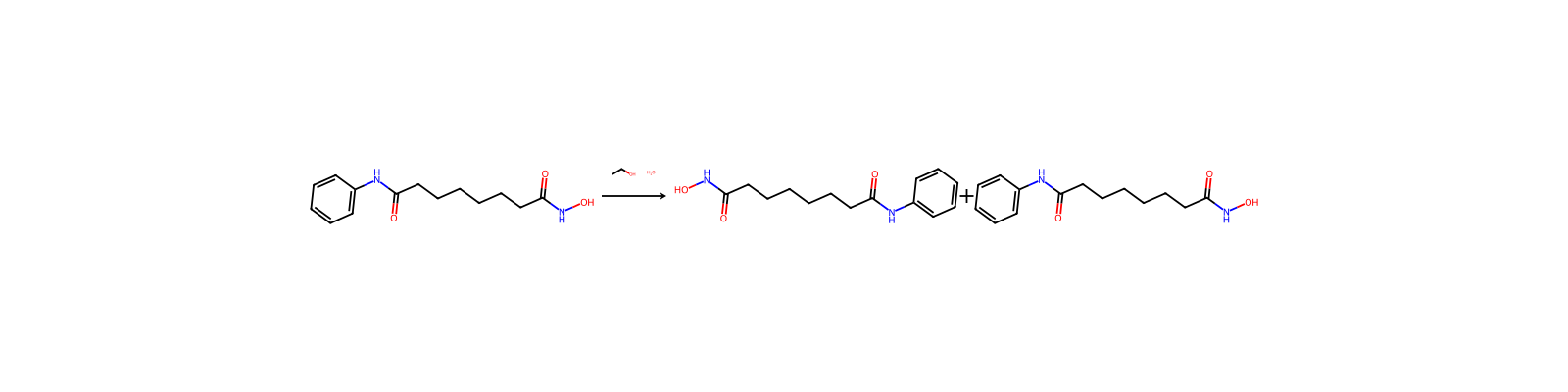
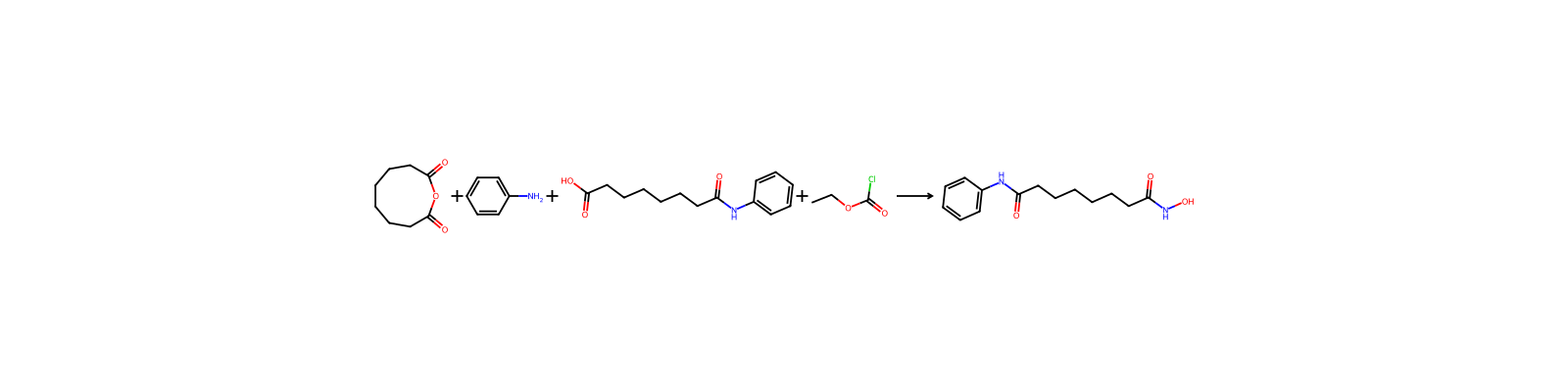
9




Verknüpfte Notizen
Wird geladen…