
2,6-Dichlor-1H-purin
2,6-Dichloropurine
Daten werden ergänzt – lade die Seite später neu, um den aktuellen Stand zu sehen

Grundinformationen
- CAS
5451-40-1- Standard-SMILES
Clc1nc(Cl)c2[nH]cnc2n1- InChIKey
RMFWVOLULURGJI-UHFFFAOYSA-N- Summenformel
- C5H2Cl2N4
- Durchschnittliche Molmasse
- 189 g/mol
- Monoisotopische Masse
- 187,9656515
Namen und Bezeichner
- Bevorzugter Name
- 2,6-Dichloropurine
- IUPAC
- 2,6-dichloro-7H-purine
- Lokaler Name
- 2,6-Dichlor-1H-purin
- Englischer Name
- 2,6-Dichloropurine
- Summenformel
- C5H2Cl2N4
- Molmasse
- 189
Namen und Synonyme
2,6-Dichloropurine5451-40-1DTXSID60202922RefChem:445475DTXCID90125413226-681-62,6-dichloro-9H-purine2,6-dichloro-7H-purine2,6-Dichloro-1H-purineMFCD000777259H-purine, 2,6-dichloro-1H-Purine, 2,6-dichloro-
Weitere Namen anzeigen
Cefepime IntermediateNSC 18395Dichloropurine6-Dichloropurine2,6-Dichloropurine>2,6-Dichloropurine.97%
2,6 dichloropurine2,6-bis(chloranyl)-7H-purinePurine, 2,6-dichloro-AI3-51950NSC-18395GS-3174KS-1014D2470
Datenbank-Bezeichner
- CAS
5451-40-1- PubChem CID
- 5324412
- DTXSID
DTXSID60202922- ChEMBL
CHEMBL1256006- UNII
- W6WK3TS9AP
- EC Number
- 226-681-6
- Nikkaji
- J81.036C
Eigenschaften
Berechnete StruktureigenschaftenWird ergänzt
- XLogP
- 1,7
- Polarare Oberfläche (TPSA)
- 54,5 Ų
- H-Brücken-Donoren
- 1
- H-Brücken-Akzeptoren
- 3
- Frei drehbare Bindungen
- 0
- Schwere Atome
- 11
- Formalladung
- 0
- Komplexität
- 155
Physikochemische Eigenschaften
- Schmelzpunkt
- 185 · 185-195 °C (dec.) (lit.)
- Siedepunkt
- 310.62 °C · 310.62°C (rough estimate)
- Dichte
- 1.7265 · 1.7265 (rough estimate)
- Brechungsindex
- 1.63 · 1.6300 (estimate)
- storage temp.
- Keep in dark place,Sealed in dry,Room Temperature
- Löslichkeit
- soluble
- Aggregatzustand
- Crystalline Powder
- pka
- 5.22 · 5.22±0.20(Predicted)
- Farbe
- White to yellow
- Wasserlöslichkeit
- soluble
- BRN
- 9354 · 9354
- InChI
- InChI=1S/C5H2Cl2N4/c6-3-2-4(9-1-8-2)11-5(7)10-3/h1H,(H,8,9,10,11)
- InChIKey
- RMFWVOLULURGJI-UHFFFAOYSA-N
- SMILES
- N1C2C(=NC(Cl)=NC=2Cl)NC=1
- CAS Datenbank
- 5451 · 5451-40-1(CAS DataBase Reference)
Sicherheit und Regulatorisches
Sicherheitsangaben dienen nur zur Orientierung und ersetzen weder das Sicherheitsdatenblatt (SDB) des Lieferanten noch geltende Vorschriften oder eine fachliche Bewertung.
GHS-Klassifizierung
GHS Classification
This chemical does not meet GHS hazard criteria for 0.7% (1 of 146) of reports.
Danger
H301 (71.2%): Toxic if swallowed [Danger Acute toxicity, oral];H315 (26.7%): Causes skin irritation [Warning Skin corrosion/irritation];H317 (24%): May cause an allergic skin reaction [Warning Sensitization, Skin];H319 (26.7%): Causes serious eye irritation [Warning Serious eye damage/eye irritation]
P261, P264, P264+P265, P270, P272, P280, P301+P316, P302+P352, P305+P351+P338, P321, P330, P332+P317, P333+P317, P337+P317, P362+P364, P405, and P501 (click each P-code to see the statement)
Aggregated GHS information provided per 146 reports by companies from 9 notifications to the ECHA C&L Inventory. Each notification may be associated with multiple companies.;Reported as not meeting GHS hazard criteria per 1 of 146 reports by companies.;There are 8 notifications provided by 145 of 146 reports by companies with hazard statement code(s).;Information may vary between notifications depending on impurities, additives, and other factors. The percentage value in parenthesis indicates the notified classification ratio from companies that provide hazard codes. Only hazard codes with percentage values above 10% are shown. For more detailed information, please visit ECHA C&L website.
Gefahrenhinweise
Regulatory Information1H-Purine, 2,6-dichloro-: Does not have an individual approval but may be used under an appropriate group standard
Hazard Classes and CategoriesAcute Tox. 3 (71.2%);Skin Irrit. 2 (26.7%);Skin Sens. 1 (24%);Eye Irrit. 2A (26.7%)
Regulatorische Informationen
Regulatory Information1H-Purine, 2,6-dichloro-: Does not have an individual approval but may be used under an appropriate group standard
Chemie und Industrie
Anwendungen
Beschreibung2,6-Dichloropurine is an important pharmaceutical intermediate. It is widely used in the preparation of purine nucleosides and purine nucleotides[1].
Verwenden2,6-Dichloropurine is used in the synthesis of 2,6-diamino-substituted purine derivatives as potential cardiomyogenesis inducing agents.
Vor- und nachgelagerte Produkte
Vorgelagerte Rohstoffe
Nachgelagerte Produkte
Zugehörige Reaktionen
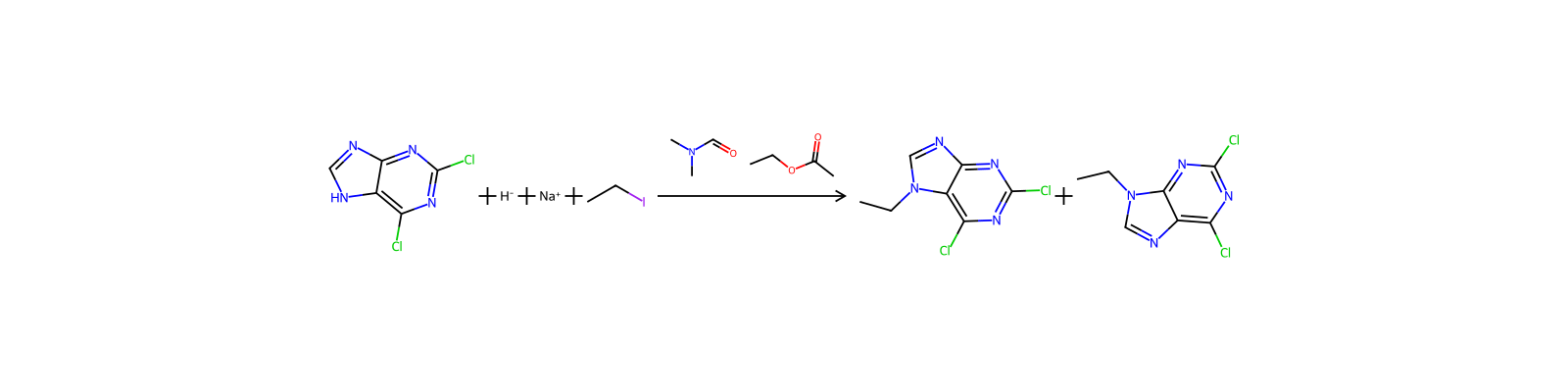
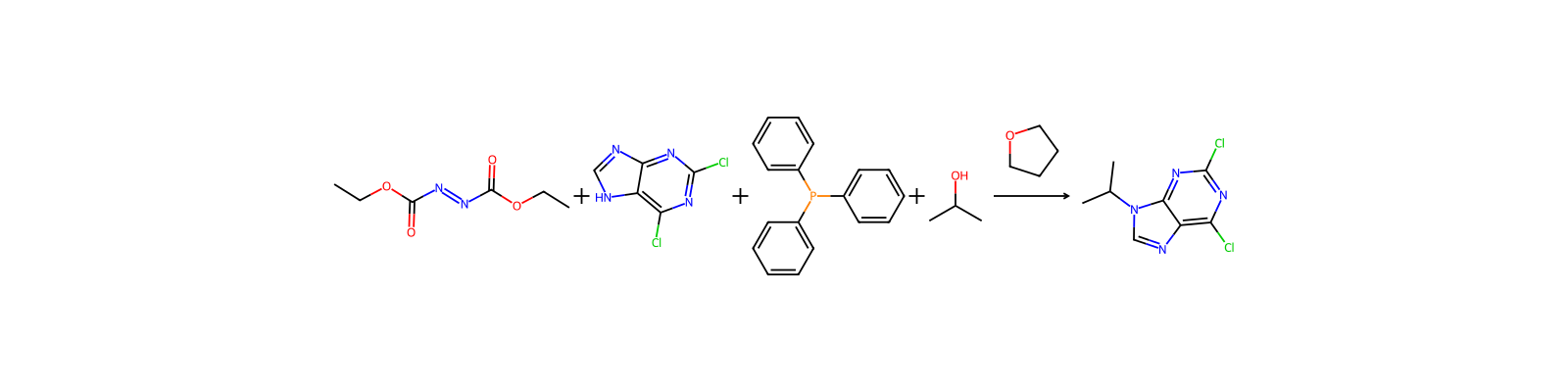
309


Notizen zur Verbindung
Wird geladen…