
Grundinformationen
- Standard-SMILES
C[Si](C)(C)N[Si](C)(C)C.[Li]- InChIKey
QQIRAVWVGBTHMJ-UHFFFAOYSA-N- Summenformel
- C6H19LiNSi2
- Durchschnittliche Molmasse
- 168,4 g/mol
Überblick
structure in first source
Namen und Bezeichner
- Bevorzugter Name
- Lithium bis(trimethylsilyl)amide
- Lokaler Name
- Lithiumbis(trimethylsilyl)amid
- Englischer Name
- Lithium bis(trimethylsilyl)amide
- Summenformel
- C6H18LiNSi2
- Molmasse
- 167.33
Namen und Synonyme
Bis(trimethylsilyl)amidolithiumLithiumbis(trimethylsilyl)amineBis(trimethylsilyl)amido lithiumLi bis(TMS)ARefChem:924827(LiN(SiMe3)2)223-725-64039-32-1Disilazane, 1,1,1,3,3,3-hexamethyl-, lithium saltLithium bis(trimethylsilyl)amideLithium, (bis(trimethylsilyl)amino)-Lithiumbis(trimethylsilyl)amide
Weitere Namen anzeigen
LIHMDSLHMDSLiHDMSLITHIUM HEXAMETHYLDISILAZANELithium 1,1,1,3,3,3-hexamethyldisilazideLITHIUM HEXAMETHYLDISILAZIDELithium bis(trimethylsilyl)amide solutionLiHMDS(1M)HMDS LiLiHMDS 1M in THF
lithium bis(trimethylsilyl)aminelithium HMDSlithiumhexamethyldisilazanelithium hexamethydisilazanelithium hexamethyidisilazanelithium hexamethyl disilazanelithium hexamethyl-disilazanelithium(hexamethyldisilazane)
Datenbank-Bezeichner
- CAS
4039-32-1- PubChem CID
- 57426343
- EC Number
- 223-725-6
Eigenschaften
Berechnete Struktureigenschaften
- Polarare Oberfläche (TPSA)
- 12 Ų
- H-Brücken-Donoren
- 1
- H-Brücken-Akzeptoren
- 1
- Frei drehbare Bindungen
- 2
- Schwere Atome
- 10
- Formalladung
- 0
- Komplexität
- 76,2
Experimentelle und physikochemische Eigenschaften
Chemical ClassesMetals -> Metalloid Compounds (Silicon)
Physical Description
Wet Solid
White powder; [Alfa Aesar MSDS]
Physikochemische Eigenschaften
- Schmelzpunkt
- 73 °C · 73°C
- Siedepunkt
- 55 · 55-56 °C
- Dichte
- 0.86 g/mL · 0.860 g/mL at 25 °C (lit.)
- Brechungsindex
- 20 · n20/D 1.425(lit.)
- Flammpunkt
- 48 °F · 48 °F
- storage temp.
- 30 °C · Store below +30°C.
- Löslichkeit
- hydrolysis
- Aggregatzustand
- Powder
- Farbe
- White
- Wichte
- 0.716 · 0.716
- Wasserlöslichkeit
- hydrolysis
- BRN
- 3567910 · 3567910
- Major Application
- battery precursorscatalystsmaterial synthesis precursor
- InChI
- 1S/C6H18NSi2.Li/c1-8(2,3)7-9(4,5)6;/h1-6H3;/q-1;+1
- InChIKey
- YNESATAKKCNGOF-UHFFFAOYSA-N
- SMILES
- [Li]N([Si](C)(C)C)[Si](C)(C)C
- CAS Datenbank
- 4039 · 4039-32-1(CAS DataBase Reference)
- EPA chemische Informationen
- 1 · Silanamine, 1,1,1-trimethyl-N-(trimethylsilyl)-, lithium salt (4039-32-1)
Sicherheit und Regulatorisches
GHS-Klassifizierung
GHS Classification
Danger
H228 (43.9%): Flammable solid [Danger Flammable solids]
P210, P240, P241, P260, P261, P264, P264+P265, P270, P271, P273, P280, P301+P317, P301+P330+P331, P302+P352, P302+P361+P354, P304+P340, P305+P354+P338, P316, P317, P321, P330, P362+P364, P363, P370+P378, P405, and P501 (click each P-code to see the statement)
Aggregated GHS information provided per 198 reports by companies from 9 notifications to the ECHA C&L Inventory. Each notification may be associated with multiple companies.
Gefahrenhinweise
Regulatory Information
Silanamine, 1,1,1-trimethyl-N-(trimethylsilyl)-, lithium salt (1:1) is listed on the EPA's Chemical Data Reporting (CDR) system. Manufacturers and importers of Silanamine, 1,1,1-trimethyl-N-(trimethylsilyl)-, lithium salt (1:1) are required to report information about their production and use of this chemical to the EPA under the Toxic Substances Control Act (TSCA). (40 eCFR Part 711)
Status: Active Update: 19-10-2022 https://echa.europa.eu/registration-dossier/-/registered-dossier/13861
1,1,1,3,3,3-Hexamethyldisilazane lithium salt: Does not have an individual approval but may be used under an appropriate group standard
Hazards SummaryReacts violently with water evolving extremely flammable gases; Causes burns; [Alfa Aesar MSDS] See Silanamine, 1,1,1-trimethyl-N-(trimethylsilyl)-, hydrolysis products with silica. See Hexamethyldisilazane. See Lithium.
Hazard Classes and CategoriesFlam. Sol. 2 (43.9%)
Toxikologische Informationen
Adverse EffectsDermatotoxin - Skin burns.
Sicherheitsdaten
- F
- 10-23
- wgk
- 3
- tsca
- TSCA listed
- ridadr
- UN 2925 4.1/PG 2
- hs_code
- 29319090
- risk_code
- 11-34-48/20-63-65-67-51/53-35-20-62-14-40-37-19
- hazard_code
- F,C,N
- safety_code
- 9-16-26-29-33-36/37/39-45-61-62-57-43
- hazard_class
- 4.3
- packing_group
- II
- Speicherklasse
- 4.2 - Pyrophoric and self-heating hazardous materials
- Hazard Classifications
- Eye Dam. 1Flam. Sol. 1Self-heat. 1Skin Corr. 1B
Chemie und Industrie
Verwendung und Herstellung
UsesUsed as an intermediate; [ExPub: ECHA REACH Registrations]
U.S. Production2023: <50,000 lb
Industry UsesIntermediate
General Manufacturing Information
Pharmaceutical and Medicine Manufacturing
Silanamine, 1,1,1-trimethyl-N-(trimethylsilyl)-, lithium salt (1:1): ACTIVE
Anwendungen
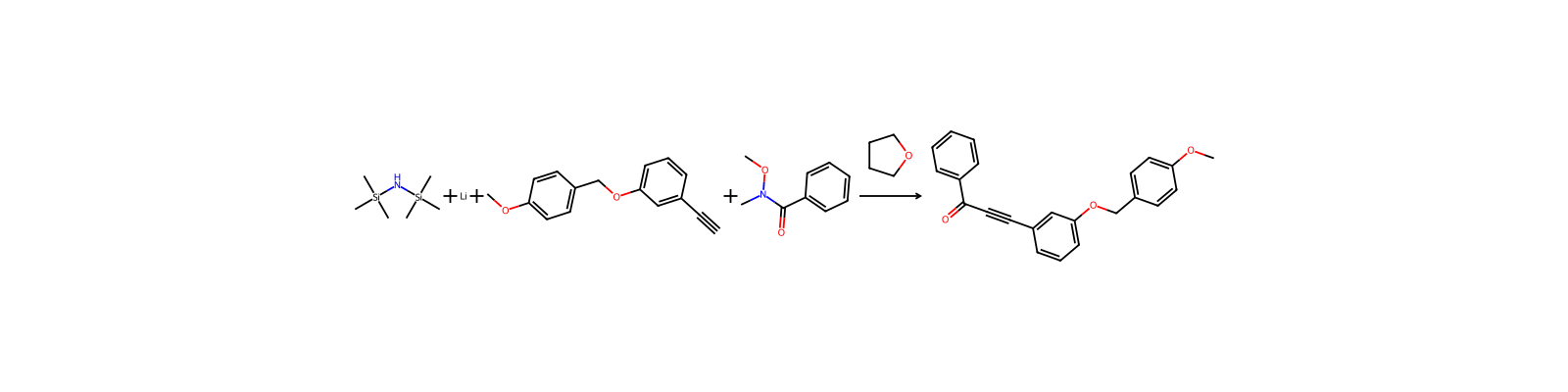
VerwendenLithium bis(trimethylsilyl)amide is used as nonnucleophilic base to generate kinetic ketone and ester enolates. It is considerably more selective than LDA and undesired reductions (e.g., of nonenolizable ketones observed in the case of LDA) can be avoided by using LHMDS.
Darstellung
synthetischeIt is conveniently prepared by the reaction of hexamethyldisilazane with n-butyllithium in hexane. For most uses the hexane is then evaporated and replaced with THF.
Vor- und nachgelagerte Produkte
Vorgelagerte Rohstoffe
Nachgelagerte Produkte
Anbieter50 Anbieter
国药集团化学试剂有限公司86-21-63210123 · [email protected]
梯希爱(上海)化成工业发展有限公司021-67121386 · [email protected]
上海阿拉丁生化科技股份有限公司400-6206333 13167063860 · [email protected]
四川伟博贸易有限公司028-65199188 13880582998 · [email protected]
T&W GROUP021-61551611 13296011611 · [email protected]
爱斯特(成都)生物制药股份有限公司+86-28-85122536 85324413 · [email protected]
上海凯曼化工科技有限公司021-021-50400622 15618790390 · [email protected]
科瑞迪化学400-821-5857 021-64326257 · [email protected]
兰州红胜精细化工有限公司15693160370; 15693160393 · [email protected]
上海迈瑞尔生化科技有限公司4006356688 18621169109 · [email protected]
阿法埃莎(中国)化学有限公司400-6106006 · [email protected]
安耐吉化学&3A(安徽泽升科技股份有限公司)400-0056266 · [email protected]
上海瀚鸿科技股份有限公司021-54306202 13764082696 · [email protected]
上海龙云生物科技有限公司+86 (21) 33920504 · [email protected]
上海景颜化工科技有限公司13817811078 · [email protected]
嘉兴市艾森化工有限公司0573-85285100 18627885956 · [email protected]
南京哈柏医药科技有限公司13376080562 13376090521 · [email protected]
雅帝興業有限公司+86-561-5269788, 5209788
上海攀鸿化工科技有限公司021-56491756 13512199871 · [email protected]
杭州东帆化学有限公司86-0571-85151182
山东西亚化学有限公司13355009207 13355009207 · [email protected]
玛雅试剂+86 (573) 82222445 (0)18006601000 452520369 · [email protected]
四川库利南科技有限公司400-1166-196 18981987031 · [email protected]
湖南汇百侍生物科技有限公司0731-85526065 13308475853 · [email protected]
南京维奥化工有限公司Please Send Email 18652950785 · [email protected]
河南多贝化工有限公司0370-2785118 17550508557 · [email protected]
艾科试剂4008-755-333 18080918076 · [email protected]
上海思域化工科技有限公司86-21-34053660 · [email protected]
赛默飞世尔科技(中国)有限公司800-810-5118 · [email protected]
上海健超生物科技有限公司150-2103-5486 18017383231 · [email protected]
TCI AMERICA800-4238616 · [email protected]
TOKYO CHEMICAL INDUSTRY CO., LTD.03-36680489 · [email protected]
TCI Europe320-37350700 · [email protected]
深圳康特腾科技有限公司86-0755-86635001 · [email protected]
越林试剂021-62960152 · [email protected]
上海睿升化工科技有限公司+86-021-50935922
山东博洛达生物科技有限公司0531-68659041 · [email protected]
上海泽信化工科技有限公司021-60136491 15901897992
重庆卡兰医药有限公司023-62879767 · [email protected]
上海将来实业股份有限公司021-61552785 · [email protected]
安徽科迪达化工有限公司0554-2106669 · [email protected]
上海石洋化工有限公司021-56795766 · [email protected]
重庆星灿医药科技有限公司13594048950 19923294409 · [email protected]
成都零六生物科技有限公司400-1166-196 13458535857 · [email protected]
雷丁试剂0510-85629785 18013409632 · [email protected]
上海恒岳化工科技有限公司51691706 13391095697 · [email protected]
上海御略医药科技有限公司021-60345187 13671753212 · [email protected]
上海麦克林生化科技股份有限公司15221275939 15221275939 · [email protected]
杭州杰恒化工有限公司0571-87396432 · [email protected]
上海嵩爰化工科技有限公司010-1234567 18521000990 · [email protected]
Zugehörige Reaktionen
126


Verknüpfte Notizen
Wird geladen…