
Grundinformationen
- Standard-SMILES
O=C(O)c1ccc(Cl)cc1Cl- InChIKey
ATCRIUVQKHMXSH-UHFFFAOYSA-N- Summenformel
- C7H4Cl2O2
- Durchschnittliche Molmasse
- 191,01 g/mol
- Monoisotopische Masse
- 189,95883473
Überblick
2,4-dichlorobenzoic acid is a white to slightly yellowish powder. (NTP, 1992)
Namen und Bezeichner
- Bevorzugter Name
- 2,4-Dichlorobenzoic Acid
- IUPAC
- 2,4-dichlorobenzoic acid
- Lokaler Name
- 2,4-Dichlorbenzoesure
- Englischer Name
- 2,4-Dichlorobenzoic acid
- Summenformel
- C7H4Cl2O2
- Molmasse
- 191.01
Namen und Synonyme
2,4-DICHLOROBENZOIC ACID50-84-0Benzoic acid, 2,4-dichloro-DTXSID0024977NSC-5780SR0320D45DTXCID104977CHEBI:307482,4-DCBARefChem:82379200-067-8Furosemide EP impurity E
Weitere Namen anzeigen
2,4-Dichlorobenzoic2,4-Dichlolrobenzoic Acid2,4-Dichlorobenzoicacid,98%'LGC' (1305)2.4-Dichlorobeorbenzoic acidAKOS BBS-00003747Dichlorbenzoic aci
MFCD000024142,4 dichlorobenzoic acidBRN 1868192CCRIS 94722,4-Dichlorobenzoesyre2,4-Dichlorbenzoic acid2,4-DichlorobenzoicacidAKOS000119754
Datenbank-Bezeichner
- CAS
50-84-0- PubChem CID
- 5787
- DTXSID
DTXSID0024977- ChEMBL
CHEMBL1492029- ChEBI
CHEBI:30748- UNII
- 0SR0320D45
- EC Number
- 200-067-8
- Nikkaji
- J55.459F
Eigenschaften
Berechnete Struktureigenschaften
- XLogP
- 2,8
- Polarare Oberfläche (TPSA)
- 37,3 Ų
- H-Brücken-Donoren
- 1
- H-Brücken-Akzeptoren
- 2
- Frei drehbare Bindungen
- 1
- Schwere Atome
- 11
- Formalladung
- 0
- Komplexität
- 161
Experimentelle und physikochemische Eigenschaften
SpringerMaterials PropertiesNuclear quadrupole resonance spectroscopy
PesticidesEnvironmental transformation -> Pesticide transformation products (metabolite, successor)
LogP2.76
Solubilityless than 1 mg/mL at 66 °F (NTP, 1992)
Boiling PointSublimes (NTP, 1992)
Melting Point315 to 320 °F (NTP, 1992)
Physical Description2,4-dichlorobenzoic acid is a white to slightly yellowish powder. (NTP, 1992)
Physikochemische Eigenschaften
- Schmelzpunkt
- 157 · 157-160 °C (lit.)
- Siedepunkt
- 200 °C · 200 °C
- Dichte
- 1.441 · 1.4410 (rough estimate)
- Brechungsindex
- 1.459 · 1.4590 (estimate)
- Flammpunkt
- 80 ° · 80°
- storage temp.
- Sealed in dry,Room Temperature
- Löslichkeit
- 1 g/10 · ethanol: soluble1g/10 mL, clear, colorless
- pka
- 2.68 · 2.68±0.25(Predicted)
- Aggregatzustand
- Powder
- Farbe
- White to almost white
- PH
- 2.8 · 2.8 (0.36g/l, H2O, 15℃)
- Wasserlöslichkeit
- 0.36 g/L · 0.36 g/L (15 ºC)
- BRN
- 1868192 · 1868192
- Stabilität
- Stable. Incompatible with strong oxidizing agents.
- InChI
- 1S/C7H4Cl2O2/c8-4-1-2-5(7(10)11)6(9)3-4/h1-3H,(H,10,11)
- InChIKey
- ATCRIUVQKHMXSH-UHFFFAOYSA-N
- SMILES
- OC(=O)c1ccc(Cl)cc1Cl
- CAS Datenbank
- 50 · 50-84-0(CAS DataBase Reference)
- NIST chemische Informationen
- 2 · 2,4-Dichlorobenzoic acid(50-84-0)
- EPA chemische Informationen
- 2 · Benzoic acid, 2,4-dichloro- (50-84-0)
Sicherheit und Regulatorisches
GHS-Klassifizierung
GHS Classification
Warning
H302 (96.6%): Harmful if swallowed [Warning Acute toxicity, oral]
P261, P264, P264+P265, P270, P271, P280, P301+P317, P302+P352, P304+P340, P305+P351+P338, P319, P321, P330, P332+P317, P337+P317, P362+P364, P403+P233, P405, and P501 (click each P-code to see the statement)
Aggregated GHS information provided per 117 reports by companies from 11 notifications to the ECHA C&L Inventory. Each notification may be associated with multiple companies.
Gefahrenhinweise
Regulatory Information
Chemical: Benzoic acid, 2,4-dichloro-
2,4-Dichlorobenzoic acid: Does not have an individual approval but may be used under an appropriate group standard
Fire HazardsFlash point data for this chemical are not available; however, it is probably combustible. (NTP, 1992)
Health HazardsSYMPTOMS: Symptoms of exposure to this compound may include irritation.
Reactive GroupAcids, Carboxylic
Reactivity Profile
2,4-DICHLOROBENZOIC ACID is a halogenated carboxylic acid. Carboxylic acids donate hydrogen ions if a base is present to accept them. They react in this way with all bases, both organic (for example, the amines) and inorganic. Their reactions with bases, called "neutralizations", are accompanied by the evolution of substantial amounts of heat. Neutralization between an acid and a base produces water plus a salt. Carboxylic acids with six or fewer carbon atoms are freely or moderately soluble in water; those with more than six carbons are slightly soluble in water. Soluble carboxylic acid dissociate to an extent in water to yield hydrogen ions. The pH of solutions of carboxylic acids is therefore less than 7.0. Many insoluble carboxylic acids react rapidly with aqueous solutions containing a chemical base and dissolve as the neutralization generates a soluble salt. Carboxylic acids in aqueous solution and liquid or molten carboxylic acids can react with active metals to form gaseous hydrogen and a metal salt. Such reactions occur in principle for solid carboxylic acids as well, but are slow if the solid acid remains dry. Even "insoluble" carboxylic acids may absorb enough water from the air and dissolve sufficiently in it to corrode or dissolve iron, steel, and aluminum parts and containers. Carboxylic acids, like other acids, react with cyanide salts to generate gaseous hydrogen cyanide. The reaction is slower for dry, solid carboxylic acids. Insoluble carboxylic acids react with solutions of cyanides to cause the release of gaseous hydrogen cyanide. Flammable and/or toxic gases and heat are generated by the reaction of carboxylic acids with diazo compounds, dithiocarbamates, isocyanates, mercaptans, nitrides, and sulfides. Carboxylic acids, especially in aqueous solution, also react with sulfites, nitrites, thiosulfates (to give H2S and SO3), dithionites (SO2), to generate flammable and/or toxic gases and heat. Their reaction with carbonates and bicarbonates generates a harmless gas (carbon dioxide) but still heat. Like other organic compounds, carboxylic acids can be oxidized by strong oxidizing agents and reduced by strong reducing agents. These reactions generate heat. A wide variety of products is possible. Like other acids, carboxylic acids may initiate polymerization reactions; like other acids, they often catalyze (increase the rate of) chemical reactions.
Air and Water ReactionsInsoluble in water.
Hazard Classes and CategoriesAcute Tox. 4 (96.6%)
Sicherheit und Schutzausrüstung
Fire FightingFires involving this material can be controlled with a dry chemical, carbon dioxide or Halon extinguisher. (NTP, 1992)
First Aid
EYES: First check the victim for contact lenses and remove if present. Flush victim's eyes with water or normal saline solution for 20 to 30 minutes while simultaneously calling a hospital or poison control center. Do not put any ointments, oils, or medication in the victim's eyes without specific instructions from a physician. IMMEDIATELY transport the victim after flushing eyes to a hospital even if no symptoms (such as redness or irritation) develop.
Nonfire Spill Response
SMALL SPILLS AND LEAKAGE: Should a spill occur while you are handling this chemical, FIRST REMOVE ALL SOURCES OF IGNITION, then you should dampen the solid spill material with 60-70% ethanol and transfer the dampened material to a suitable container. Use absorbent paper dampened with 60-70% ethanol to pick up any remaining material. Seal the absorbent paper, and any of your clothes, which may be contaminated, in a vapor-tight plastic bag for eventual disposal. Solvent wash all contaminated surfaces with 60-70% ethanol followed by washing with a soap and water solution. Do not reenter the contaminated area until the Safety Officer (or other responsible person) has verified that the area has been properly cleaned.
Personal Protective Equipment (PPE)
RECOMMENDED RESPIRATOR: Where the neat test chemical is stored, weighed and diluted, wear an approved half face respirator equipped with an organic vapor/acid gas cartridge (specific for organic vapors, HCl, acid gas and SO2) with a dust/mist filter. (NTP, 1992)
Sicherheitsdaten
- wgk
- 3
- tsca
- TSCA listed
- hs_code
- 29163900
- RTECS-Nr.
- DG6650000
- risk_code
- 22-36/37/38
- hazard_code
- Xn,Xi
- hazard_note
- Irritant
- safety_code
- 26-36-37/39-22
- Speicherklasse
- 11 - Combustible Solids
- Hazard Classifications
- Acute Tox. 4 OralEye Irrit. 2Skin Irrit. 2STOT SE 3
Chemie und Industrie
Verwendung und Herstellung
Use ClassificationEnvironmental transformation -> Pesticide transformation products (metabolite, successor)
General Manufacturing InformationBenzoic acid, 2,4-dichloro-: ACTIVE
Anwendungen
Verwenden2,4-Dichlorobenzoic Acid is a di-halogenated benzoic acid derivative and an intermediate in the synthesis of spirodiclofen (S682990), a tetronic acid acaricide fungicide used in controlling red mites.
Vor- und nachgelagerte Produkte
Vorgelagerte Rohstoffe
Nachgelagerte Produkte
Anbieter50 Anbieter
国药集团化学试剂有限公司86-21-63210123 · [email protected]
梯希爱(上海)化成工业发展有限公司021-67121386 · [email protected]
衢州润东化工有限公司0570-8789886 18892685668 · [email protected]
上海阿拉丁生化科技股份有限公司400-6206333 13167063860 · [email protected]
北京安司莫森技术有限公司010-82954736 13391601435 · [email protected]
科瑞迪化学400-821-5857 021-64326257 · [email protected]
上海将来实业股份有限公司400-0066400 13621662912 · [email protected]
Syntechem Co.,Ltd[email protected]
青岛元桦新材料有限公司19015480862; 19015480862 · [email protected]
上海迈瑞尔生化科技有限公司4006356688 18621169109 · [email protected]
阿法埃莎(中国)化学有限公司400-6106006 · [email protected]
太原市瑞和丰科贸有限公司+86 351 7031519 · [email protected]
上海德默医药科技有限公司400-021-7337 2355568890 · [email protected]
安耐吉化学&3A(安徽泽升科技股份有限公司)400-0056266 · [email protected]
上海瀚鸿科技股份有限公司021-54306202 13764082696 · [email protected]
上海柯维化学技术有限公司021-64609169 18901607656 · [email protected]
南通联谊化工有限公司0513-81188185 13861935768 · [email protected]
上海景颜化工科技有限公司13817811078 · [email protected]
嘉兴市艾森化工有限公司0573-85285100 18627885956 · [email protected]
Pure Chemistry Scientific Inc.001-857-928-2050 or 1-888-588-9418 · [email protected]
山东西亚化学有限公司13355009207 13355009207 · [email protected]
四川库利南科技有限公司400-1166-196 18981987031 · [email protected]
上海耐士化工科技有限公司400-188-0725 +86 21 34310725 13611771617
天津希恩思生化科技有限公司400 638 7771 · [email protected]
南京维奥化工有限公司Please Send Email 18652950785 · [email protected]
斯百全化学(上海)有限公司021-021-021-67601398-809-809-809 15221380277 · [email protected]
泰州志诚化工科技有限公司0523-82837785 13914525028 · [email protected]
艾科试剂4008-755-333 18080918076 · [email protected]
上海思域化工科技有限公司86-21-34053660 · [email protected]
北京世纪裕立化学有限公司010-64446226 13146983882 · [email protected]
赛默飞世尔科技(中国)有限公司800-810-5118 · [email protected]
北京伊诺凯科技有限公司400-810-7969 010-59572699 · [email protected]
上海特伯化学科技有限公司+86-21-60341587 · [email protected]
TCI AMERICA800-4238616 · [email protected]
TOKYO CHEMICAL INDUSTRY CO., LTD.03-36680489 · [email protected]
TCI Europe320-37350700 · [email protected]
深圳振强药物研发有限公司0755-66853366 13670046396 · [email protected]
深圳康特腾科技有限公司86-0755-86635001 · [email protected]
越林试剂021-62960152 · [email protected]
上海睿升化工科技有限公司+86-021-50935922
无锡中坤生化科技有限公司+86 0510-85629785
上海汇凯化学科技有限公司021-61995394 18916691159 · [email protected]
宁波台康化工有限公司0574-87365517 18074210286 · [email protected]
北京环宇世纪化学科技有限公司hysj_bj.com
上海将来实业股份有限公司400-0066400 13621662912 · [email protected]
上海将来实业股份有限公司021-61552785 · [email protected]
日照力德士化工有限公司010-51268198 · [email protected]
郑州鸿晟医药科技有限公司0371-0371-13526885213 15637198702 · [email protected]
美岚实业(上海)有限公司021-58958189 · [email protected]
上海爱蝶实业有限公司021-58957966 18930537195 · [email protected]
Ergänzende Hinweise
DefinitionChEBI: A chlorobenzoic acid that is benzoic acid in which the ring hydrogens at positions 2 and 4 are substituted by chloro groups.
Zugehörige Reaktionen
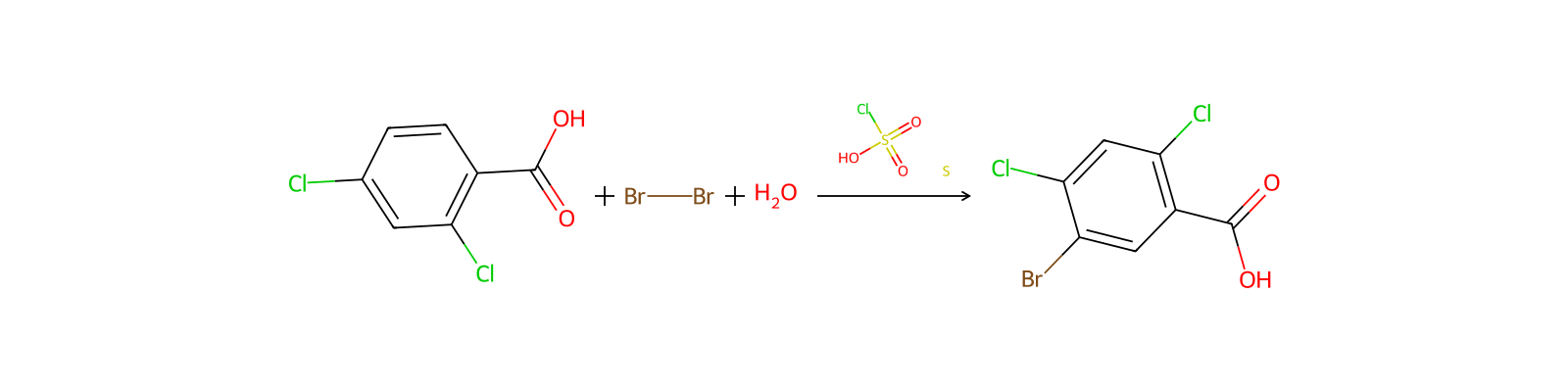
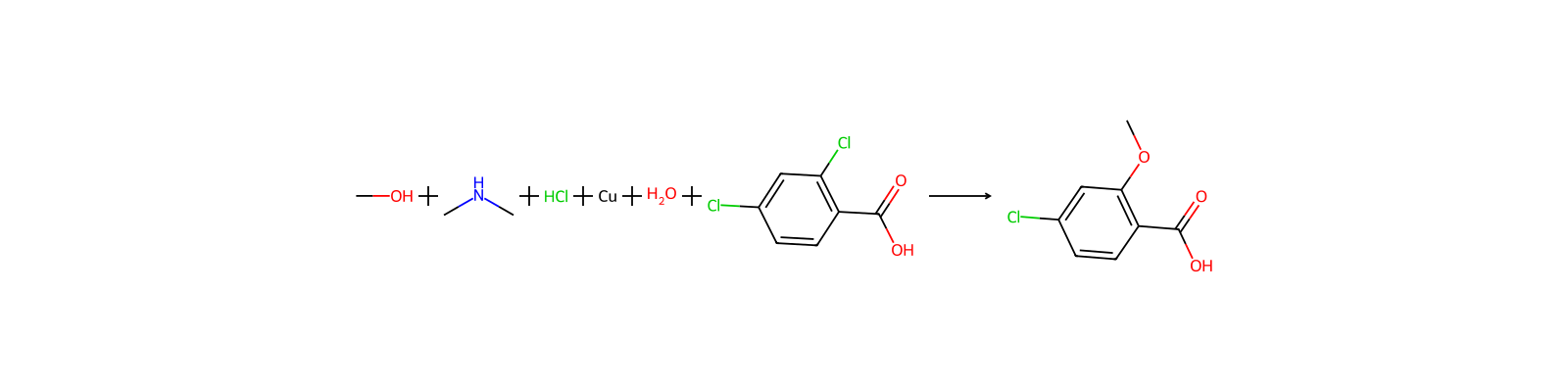
91





Verknüpfte Notizen
Wird geladen…