StartseiteMCPWorkbenchSkills
StartseiteWorkbenchBenachrichtigungenMein Bereich
llms.txt · MCP-AnleitungDatenschutz · Nutzungsbedingungen · Supportv1.8.0
  1. Startseite
  2. /Verbindung

Penicillamin

Penicillamine

HCID 5852
Neue NotizNeue ReaktionAnfrage stellen
Druckvorschau
GrundinformationenÜberblickNamen und BezeichnerEigenschaftenSicherheit und RegulatorischesChemie und IndustrieZugehörige ReaktionenNotizen zur Verbindung
TeilstruktursucheÄhnliche Strukturen suchen

Grundinformationen

CAS
52-67-5
Standard-SMILES
CC(C)(S)[C@@H](N)C(=O)O
InChIKey
VVNCNSJFMMFHPL-VKHMYHEASA-N
Summenformel
C5H11NO2S
Durchschnittliche Molmasse
149,21 g/mol
Monoisotopische Masse
149,05104977

Überblick

Penicillamine can cause developmental toxicity according to state or federal government labeling requirements.

Namen und Bezeichner

Bevorzugter Name
Penicillamine
IUPAC
(2S)-2-amino-3-methyl-3-sulfanylbutanoic acid
Lokaler Name
Penicillamin
Englischer Name
D-Penicillamine
Summenformel
C5H11NO2S
Molmasse
149.21

Namen und Synonyme

D-Penicillaminepenicillamine52-67-5CuprimineD-(-)-Penicillamine3-Mercapto-D-valine(2S)-2-Amino-3-methyl-3-sulfanylbutanoic acidDepenCuprenilCupripenD-Valine, 3-mercapto-(-)-Penicillamine
Weitere Namen anzeigen
Penicillamin2-Amino-3-mercapto-3-methylbutanoic acid(S)-2-aMino-3-Mercapto-3-Methylbutanoic acidPencillamineusanH-D-PEN-OHD-Pen-OH
KuprenilTrolovol(S)-3,3-DimethylcysteineMercaptovalinePenicilaminaD-3-MercaptovalinePenicillaminumDimethylcysteine

Datenbank-Bezeichner

CAS
52-67-5、771431-20-0
PubChem CID
5852
DTXSID
DTXSID6037069
ChEMBL
CHEMBL1430
ChEBI
CHEBI:7959
UNII
GNN1DV99GX
EC Number
200-148-8
Nikkaji
J9.116B

Eigenschaften

Berechnete Struktureigenschaften

XLogP
-1,8
Polarare Oberfläche (TPSA)
64,3 Ų
H-Brücken-Donoren
3
H-Brücken-Akzeptoren
4
Frei drehbare Bindungen
2
Schwere Atome
9
Formalladung
0
Komplexität
124

Experimentelle und physikochemische Eigenschaften

Chemical ClassesOther Uses -> Pharmaceuticals
Drugs · 2 Einträge

Pharmaceuticals -> Listed in ZINC15

Pharmaceuticals -> Antibiotics

OdorSLIGHT CHARACTERISTIC ODOR
TasteSLIGHTLY BITTER
Color/FormFINE, WHITE OR PRACTICALLY WHITE, CRYSTALLINE POWDER
Solubility · 2 Einträge

CRYSTALS; DECOMP 177.5 °C; SPECIFIC OPTICAL ROTATION: -63 DEG @ 25 °C/D (1N SODIUM HYDROXIDE); HYGROSCOPIC; FREELY SOL IN WATER, SOL IN ETHANOL. /D-PENICILLAMINE HYDROCHLORIDE/

FREELY SOL IN WATER; SLIGHTLY SOL IN ALC; INSOL IN ETHER, CHLOROFORM.

Human Drugs · 4 Einträge

Breast Feeding; Lactation; Milk, Human; Antirheumatic Agents

FDA approved drugs -> Active ingredient

FDA approved drugs -> Active ingredient

Antidotes and other substances used in poisonings > Specific

DecompositionWhen heated to decomposition it emits very toxic fumes of oxides of nitrogen and oxides of sulfur.

Sicherheit und Regulatorisches

Sicherheitsangaben dienen nur zur Orientierung und ersetzen weder das Sicherheitsdatenblatt (SDB) des Lieferanten noch geltende Vorschriften oder eine fachliche Bewertung.

GHS-Klassifizierung

GHS Classification · 4 Einträge

Warning

H315 (90.4%): Causes skin irritation [Warning Skin corrosion/irritation]

P261, P264, P264+P265, P271, P280, P302+P352, P304+P340, P305+P351+P338, P319, P321, P332+P317, P337+P317, P362+P364, P403+P233, P405, and P501 (click each P-code to see the statement)

Aggregated GHS information provided per 52 reports by companies from 11 notifications to the ECHA C&L Inventory. Each notification may be associated with multiple companies.

Gefahrenhinweise

Regulatory InformationHazard Traits - Developmental Toxicity
Hazards Summary · 1 Eintrag

Asthma reported in a pharmaceutical worker; [Malo] Penicillamine is a drug used to treat several diseases. Many side effects have been reported after ingestion of therapeutic doses, including bone marrow suppression and drug-induced hepatitis. [HSDB]

FDA Requirements · 2 Einträge

Manufacturers, packers, and distributors of drug and drug products for human use are responsible for complying with the labeling, certification, and usage requirements as prescribed by the Federal Food, Drug, and Cosmetic Act, as amended (secs 201-902, 52 Stat. 1040 et seq., as amended; 21 U.S.C. 321-392).

The Approved Drug Products with Therapeutic Equivalence Evaluations List identifies currently marketed prescription drug products, incl penicillamine, approved on the basis of safety and effectiveness by FDA under sections 505 and 507 of the Federal Food, Drug, and Cosmetic Act.

Special Reports · 5 Einträge

HUSKISSON EC; EUR J RHEUMATOL INFLAMMATION 3 (2): 156 (1979); REVIEW ARTICLE ON THE RENAL TOXICITY OF PENICILLAMINE.

JELLUM E, MUNTHE E; NAT SULFUR CMPD, (PROC INT MEET) 3RD: 375 (1980); CLINICAL EFFECTS OF PENICILLAMINE IN THE TREATMENT OF RHEUMATOID ARTHRITIS ARE DISCUSSED.

Chemie und Industrie

Pharmakologische Informationen

ATC Code · 3 Einträge

M - Musculo-skeletal system

QM - Musculo-skeletal system

M01CC01

Protein Binding>80% (bound to plasma proteins)
Pharmacodynamics · 1 Eintrag

Penicillamine is a chelating agent used in the treatment of Wilson's disease. It is also used to reduce cystine excretion in cystinuria and to treat patients with severe, active rheumatoid arthritis unresponsive to conventional therapy. Penicillamine is used as a form of immunosuppression to treat rheumatoid arthritis. Penicillamine inhibits macrophages, decreases IL-1 and the number of T-lymphocytes, and prevents collagen cross linkage. In Wilson's disease it binds copper, allowing it to be eliminated in the urine.

Mechanism of Action · 5 Einträge

Penicillamine is a chelating agent recommended for the removal of excess copper in patients with Wilson's disease. From in vitro studies which indicate that one atom of copper combines with two molecules of penicillamine. Penicillamine also reduces excess cystine excretion in cystinuria. This is done, at least in part, by disulfide interchange between penicillamine and cystine, resulting in formation of penicillamine-cysteine disulfide, a substance that is much more soluble than cystine and is excreted readily. Penicillamine interferes with the formation of cross-links between tropocollagen molecules and cleaves them when newly formed. The mechanism of action of penicillamine in rheumatoid arthritis is unknown although it appears to suppress disease activity. Unlike cytotoxic immunosuppressants, penicillamine markedly lowers IgM rheumatoid factor but produces no significant depression in absolute levels of serum immunoglobulins. Also unlike cytotoxic immunosuppressants which act on both, penicillamine in vitro depresses T-cell activity but not B-cell activity.

The rationale for ... use in cyctinuria is that penicillamine forms a relatively soluble disulfide compound with cysteine through a disulfide interchange mechanism and thereby decr the formation of cystine containing renal stones.

Penicillamine chelates mercury, lead, copper, iron, and probably other heavy metals to form stable, soluble complexes that are readily excreted in the urine.

The mechanism of action of penicillamine in rheumatoid arthritis is not known, but may involve improvement of lymphocyte function. It markedly reduces IgM rheumatoid factor and immune complexes in serum and synovial fluid, but does not significantly lower absolute concentrations of serum immunoglobulins. In vitro, penicillamine depresses T-cell but not B-cell activity. However, the relationship of these effects to the activity of penicillamine in rheumatoid arthritis is not known.

Zugehörige Reaktionen

63
Reaktionsaufzeichnung erstellen
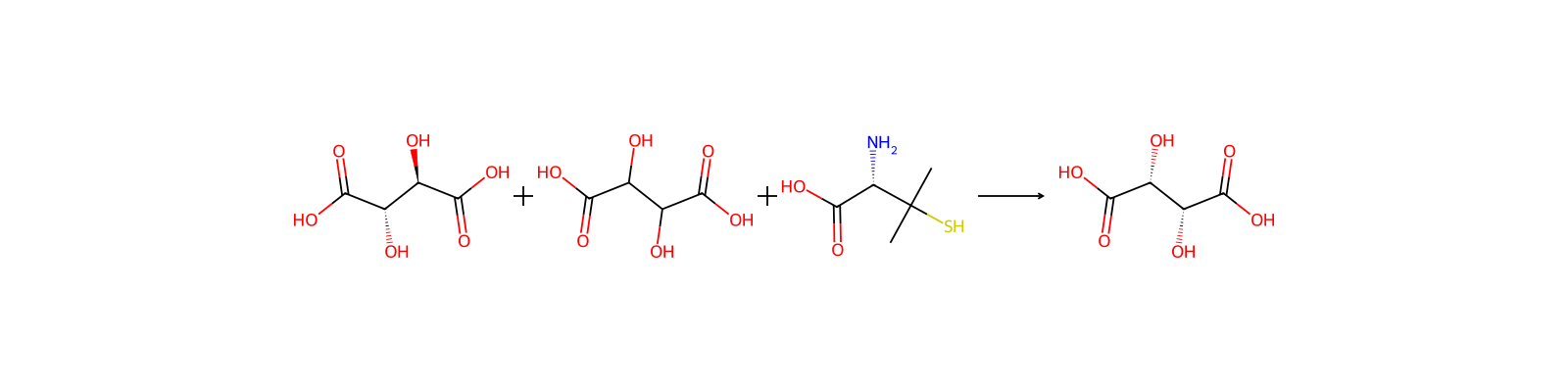
Reaktionsgleichung von HRID 26577
HRID 26577als Produktuspto-grants-1979_04
Reaktionsgleichung von HRID 26578
HRID 26578als Produktuspto-grants-1979_04
Reaktionsgleichung von HRID 26579
HRID 26579als Produktuspto-grants-1979_04
Reaktionsgleichung von HRID 324285
HRID 324285als Eduktuspto-grants-2001_04
Reaktionsgleichung von HRID 379097
HRID 379097als Eduktuspto-grants-2001_10
Reaktionsgleichung von HRID 410126
HRID 410126als Eduktuspto-grants-2014_06
Reaktionsgleichung von HRID 410127
HRID 410127als Eduktuspto-grants-2014_06
Reaktionsgleichung von HRID 434548
HRID 434548als Eduktuspto-grants-1983_08
Seite 1 von 8

Notizen zur Verbindung

Wird geladen…

Auf dieser SeiteGrundinformationenÜberblickNamen und BezeichnerEigenschaftenSicherheit und RegulatorischesChemie und IndustrieZugehörige ReaktionenNotizen zur Verbindung
Weitere Aktionen
Neue NotizNeue ReaktionAnfrage stellen
Melting Point202-206 °C
Optical RotationSPECIFIC OPTICAL ROTATION: -63 DEG @ 25 °C/D (CONCENTRATION BY VOLUME = 0.1 G IN 100 ML PYRIDINE)
Stability/Shelf Life · 2 Einträge

RELATIVELY STABLE IN BOTH LIGHT & AIR.

AQ SOLN IS COMPARATIVELY STABLE @ PH 2-4

Dissociation Constants · 2 Einträge

7.83

1.8

Physikochemische Eigenschaften

Schmelzpunkt
210 °C · 210 °C (dec.)(lit.)
Siedepunkt
251.8 · 251.8±35.0 °C(Predicted)
Dichte
1.113 · 1.113 (estimate)
Brechungsindex
-63 ° · -63 ° (C=1, 1mol/L NaOH)
storage temp.
2 · 2-8°C
Löslichkeit
2 O: · H2O: soluble100mg/mL
pka
7.83 · pKa 7.83±0.01(H2O,t =37±0.05,I=0.15)(Approximate)
Aggregatzustand
Powder
Farbe
White to almost white
Wasserlöslichkeit
11.1 g/100 · 11.1 g/100 mL (20 ºC)
Merck
14 · 14,7088
BRN
1722375 · 1722375
BCS Class
3 · 3
Stabilität
Stable. Incompatible with strong oxidizing agents.
InChI
1S/C5H11NO2S/c1-5(2,9)3(6)4(7)8/h3,9H,6H2,1-2H3,(H,7,8)/t3-/m0/s1
InChIKey
VVNCNSJFMMFHPL-VKHMYHEASA-N
SMILES
CC(C)(S)[C@@H](N)C(O)=O
CAS Datenbank
52 · 52-67-5(CAS DataBase Reference)
NIST chemische Informationen
Penicillamine(52-67-5)
EPA chemische Informationen
Penicillamine (52-67-5)

Howard-Lock HE et al; D-penicillamine: Chemistry and Clinical Use in Rheumatic Disease. Semin Arthritis Rheum 15 (4): 261-81 (1986). The discovery of D-penicillamine and its uses in medicine are reviewed.

Joyce DA; D-Penicillamine Pharmacokinetics and Pharmacodynamics in Man. Pharmacol Ther 42 (3): 405-27 (1989). A review of the pharmacokinetics and pharmacodynamics of D-penicillamine is presented, including the mechanism of action of D-penicillamine in the treatment of rheumatoid arthritis and progressive systemic sclerosis.

For more Special Reports (Complete) data for (D)-PENICILLAMINE (7 total), please visit the HSDB record page.

Hazard Classes and CategoriesSkin Irrit. 2 (90.4%)

Sicherheit und Schutzausrüstung

Storage Conditions · 2 Einträge

Packaging and storage: Store below 40 °C (104 °F), preferably between 15 and 30 °C (59 and 86 °F), unless otherwise specified by manufacturer. Store in a tight container. /Penicillamine capsules USP/

Packaging and storage: Store below 40 °C (104 °F), preferably between 15 and 30 °C (59 and 86 °F), unless otherwise specified by manufacturer. Store in a tight container. /Penicillamine tablets USP/

Toxikologische Informationen

Interactions · 5 Einträge

DOWNWARD ADJUSTMENT OF DOSAGE OF OTHER ANTI-INFLAMMATORY DRUGS, ESP CORTICOSTEROIDS, IS OFTEN POSSIBLE AFTER ADDN OF PENICILLAMINE TO DRUG REGIMEN.

Pyridoxine, 10-25 mg/day, should be administered concomitantly because penicillamine inhibits pyridoxal-dependent enzymes.

Concurrent use /of 4-aminoquinolines or bone marrow depressants ... or gold compounds or immunosuppressants, excepting glucocorticoids/ with penicillamine may increase the potential for serious hematologic and/or renal adverse reactions.

Concurrent use with 4-aminoquinolines may ... increase the risk of severe dermatologic reactions.

For more Interactions (Complete) data for (D)-PENICILLAMINE (8 total), please visit the HSDB record page.

Hepatotoxicity · 1 Eintrag

Penicillamine has been linked to a characteristic pattern of liver injury arising 1 to 6 weeks after starting therapy, with a distinctly cholestatic pattern of serum enzyme elevations (Case 1). The jaundice due to penicillamine can be severe and prolonged and result in protracted, symptomatic cholestasis, but most cases are self-limited. Immunoallergic manifestations of rash, fever and eosinophilia are common, but not invariable. Interesting, most cases of acute liver injury attributed to penicillamine were reported in patients with rheumatic diseases, only rare instances being reported in Wilson disease.

Adverse Effects · 2 Einträge

Occupational hepatotoxin - Secondary hepatotoxins: the potential for toxic effect in the occupational setting is based on cases of poisoning by human ingestion or animal experimentation.

Most Common Adverse Effects

Toxicity SummarySigns and Symptoms of Overdose
Human Toxicity Excerpts · 5 Einträge

ACUTE SENSITIVITY REACTIONS, MANIFESTED BY FEVER, RASHES (PRURITIC, MORBILLIFORM, & URTICARIAL), LEUKOPENIA, EOSINOPHILIA, & THROMBOCYTOPENIA, HAVE BEEN ENCOUNTERED EARLY IN COURSE OF THERAPY. ... INFREQUENTLY, ANOREXIA, NAUSEA, & VOMITING OCCUR. LOSS OF TASTE FOR SALT & SWEET HAS BEEN OBSERVED.

Serious reactions involving the hematologic system (thromobocytopenia, leukopenia, agranulocytosis, aplastic anemia) and renal system (proteinuria, hypoalbuminemia, nephrotic syndrome. ... Other serious reactions reported occasionally are lupus-like disease, pemphigus, goodpasture's syndrome, mysthenia gravis, and dermatomyositis or polymyositis.

SEVERAL CASES OF NEPHROTOXICITY, INCL PATIENTS GIVEN ONLY D-PENICILLAMINE, HAVE BEEN REPORTED. PRESUMABLY ... RESULT FROM HYPERSENSITIVITY REACTIONS. CASE OF OPTIC NEURITIS ... HAS ALSO OCCURRED. ... AFTER THERAPY FOR 1-2 YEAR'S DURATION,SYSTEMIC LUPUS ERYTHEMATOSUS-LIKE SYNDROME ... OBSERVED.

TOXIC EFFECTS ON EYE HAVE BEEN RARE, CONSISTING OF ISOLATED CASES OF OPTIC NEURITIS, RETINAL HEMORRHAGE, MYOPIA, & SUPERFICIAL INFLAMMATION & IRRITATION OF EYES ASSOC WITH DERMATITIS.

For more Human Toxicity Excerpts (Complete) data for (D)-PENICILLAMINE (21 total), please visit the HSDB record page.

Drug Induced Liver Injury · 6 Einträge

Drug Induced Liver Injury Rank (DILIrank 2.0)

Penicillamine

vLess-DILI-concern

2

Warnings & precautions

DOI:10.1016/j.drudis.2016.02.015

Non-Human Toxicity Excerpts · 5 Einträge

ADMIN OF 500 MG/KG/DAY ORALLY TO MALE RATS FOR 60 DAYS BEFORE MATING DECR BODY WT GAIN, FOOD CONSUMPTION, SPONTANEOUS LOCOMOTOR ACTIVITY, & FERTILITY. HOWEVER, PENICILLAMINE ADMIN TO FEMALES FOR 14 DAYS BEFORE & 7 DAYS AFTER MATING DID NOT.

SINGLE ORAL DOSE ADMIN TO HAMSTERS ON DAY 7 OF GESTATION CAUSED INCR FETAL MORTALITY, GROWTH RETARDATION & MALFORMATION. MOST SEVERE MALFORMATIONS WERE EXENCEPHALY & ENCEPHALOCELE.

1000 MG/KG/DAY GIVEN ORALLY TO RATS FROM DAY 7 TO DAY 17 OF GESTATION PRODUCED DISARRANGEMENT OF VERTEBRAE, CERVICAL RIBS, LUMBAR RIBS, & CAUDAL VERTEBRAE IN FETUSES, & ALSO DECR NEONATAL SURVIVAL RATE. IT DID NOT AFFECT BEHAVIOR, LEARNING ABILITY, & FERTILITY OF OFFSPRING.

PENICILLAMINE-INDUCED MYASTHENIC RESPONSES IN GUINEA PIGS WAS STUDIED. ANIMALS SHOWED EDROPHONIUM CHLORIDE-REPAIRABLE DECREMENTAL RESPONSES TO 30-HZ NERVE STIMULATION. 3 REVEALED POST-TETANIC EXHAUSTION. 11 HAD DECR MINIATURE ENDPLATE POTENTIAL AMPLITUDES, COMPARED WITH 6 CONTROLS.

For more Non-Human Toxicity Excerpts (Complete) data for (D)-PENICILLAMINE (13 total), please visit the HSDB record page.

Populations at Special Risk · 2 Einträge

It is recommended that penicillamine not be used to treat pregnant patients with rheumatoid arthritis and that it be avoided if possible in pregnant patients with cystinuria.

Patients 65 years of age or older may be more likely to develop hematologic toxicity with penicillamine. Also, elderly patients are more likely to have age-related renal function impairment, which increases the risk of adverse renal effects in patients receiving penicillamine for the treatment of rheumatoid arthritis.

Effects During Pregnancy and Lactation◉ Summary of Use during Lactation

Regulatorische Informationen

FDA Requirements · 2 Einträge

Manufacturers, packers, and distributors of drug and drug products for human use are responsible for complying with the labeling, certification, and usage requirements as prescribed by the Federal Food, Drug, and Cosmetic Act, as amended (secs 201-902, 52 Stat. 1040 et seq., as amended; 21 U.S.C. 321-392).

The Approved Drug Products with Therapeutic Equivalence Evaluations List identifies currently marketed prescription drug products, incl penicillamine, approved on the basis of safety and effectiveness by FDA under sections 505 and 507 of the Federal Food, Drug, and Cosmetic Act.

Sicherheitsdaten

wgk
2
hs_code
29309016
RTECS-Nr.
YV9425000
risk_code
36/37/38-40-20/21/22
Toxizität
LD50 in rats (mg/kg): >10000 orally, >660 i.p. (Jaffe)
hazard_code
Xi,T,Xn
hazard_note
Toxic
safety_code
26-36-24/25-22
Speicherklasse
11 - Combustible Solids
Giftige Stoffe Daten
52-67-5(Hazardous Substances Data)
Hazard Classifications
Repr. 2

Antiurolithic (cystine calculi) Penicillamine combines chemically with cystine (cysteine-cysteine disulfide) to form penicillamine cysteine disulfide, which is more soluble than cystine and is readily excreted. As a result, urinary cystine concentrations are lowered and the formation of cystine calculi is prevented. With prolonged treatment, existing cystine calculi may be gradually dissolved.

Biological Half-Life1 hour
Metabolism/Metabolites · 2 Einträge

Hepatic

The transformation of D-penicillamine was studied in orally and iv dosed rats and in human plasma in vitro. In each case, low molecular weight metabolites (previously identified as disulfides) and a mixed disulfide between D-penicillamine and albumin (D-penicillamine-protein) formed. The rates of D-penicillamine elimination, other than through protein conjugation, were comparable in the rat groups to the rate of oxidation to low molecula weight metabolites in vitro. The rates of transformation to D-penicillamine protein were also comparable in the in vitro preparations and in orally treated rats. These qualitative and quantitative similarities suggest blood plasma may be an important site of transformation in vivo. Extracellular oxidation of D-penicillamine may be linked to its antirheumatic action, either through reduction of oxygen species or through formation of D-penicillamine protein disulfides at surfaces of mononuclear leukocytes.

FDA Pharmacological Classification · 6 Einträge

GNN1DV99GX

PENICILLAMINE

Established Pharmacologic Class [EPC] - Antirheumatic Agent

Penicillamine is an Antirheumatic Agent.

PENICILLAMINE

Antirheumatic Agent [EPC]

MeSH Pharmacological Classification · 3 Einträge

Agents counteracting or neutralizing the action of POISONS.

Chemicals that bind to and remove ions from solutions. Many chelating agents function through the formation of COORDINATION COMPLEXES with METALS.

Drugs that are used to treat RHEUMATOID ARTHRITIS.

Absorption, Distribution and Excretion · 6 Einträge

rapidly but incompletely

Excretion is mainly renal, mainly as disulfides.

HUMAN SUBJECTS SUFFERING FROM WILSON'S DISEASE, RAPIDLY ABSORBED ORAL DOSE OF (35)S DL-PENICILLAMINE. PLASMA CONCN OF (35)S PEAKED WITHIN 60 MIN. (35)S WAS RAPIDLY EXCRETED, ALMOST COMPLETELY IN 24 HR URINE WHERE 73% OF ADMIN (35)S ... RECOVERED. THERE WAS INTERSUBJECT VARIATION IN EXTENT OF BINDING ... BY PLASMA PROTEINS. /DL-PENICILLAMINE/

FROM METABOLIC POINT OF VIEW, D-PENICILLAMINE IS VIRTUALLY INERT, & THIS OBSERVATION IS COMPATIBLE WITH FACT THAT EXTRACELLULAR WATER MAKES UP MAIN DISTRIBUTION VOL FOR D-PENICILLAMINE.

PENICILLAMINE IS WELL ABSORBED (40% to70%) FROM GI TRACT &, THEREFORE, HAS DECIDED ADVANTAGE OVER OTHER CHELATING AGENTS. PEAK CONCN IN BLOOD ARE OBTAINED BETWEEN 1 AND 3 HR AFTER ADMINISTRATION. ... /IT/ IS SOMEWHAT RESISTANT TO ATTACK BY CYSTEINE DESULFHYDRASE OR L-AMINO ACID OXIDASE. AS A RESULT ... IS RELATIVELY STABLE IN VIVO. ... HEPATIC BIOTRANSFORMATION IS RESPONSIBLE FOR MOST OF THE DEGRADATION OF PENICILLAMINE, AND VERY LITTLE IS EXCRETED UNCHANGED. METABOLITES ARE FOUND IN BOTH URINE AND FECES.

The effects of chelating agents (citric acid, tartaric acid, penicillamine and ethylenediaminetetraacetic acid) and cysteine on the absorption of mercuric chloride were investigated in rats. Perfusion of the small intestine showed that the chelating agents and cysteine decreased the absorption of mercuric chloride depending on their stability of constants wtih Hg2+, under the predominant conditions of water absorption and secretion. The difference in absorption of mercuric chloride between both conditions was inversely correlated with their logarithmic stability constant values. These agents decreased the transport of mercuric chloride through the everted intestinal wall and the uptake of mercuric chloride by the intestinal brush border membrane in a similar manner. From these results, it is suggested that the chelating agents and cysteine decrease the absorption of mercuric chloride through the pores of the brush border membrane due to th solvent drag effect.

Verwendung und Herstellung

Uses · 3 Einträge

Experimental inducer of convulsions in rats. /L-Penicillamine/

MEDICATION

Use (kg; approx.) in Germany (2009): >250

Methods of Manufacturing · 1 Eintrag

... BY ACID HYDROLYSIS OF PENICILLIN. IT IS PPTD FROM HYDROLYSIS MIXT AS MERCURIC SALT WHICH IS THEN COLLECTED, SUSPENDED IN WATER, & TREATED WITH HYDROGEN SULFIDE TO LIBERATE FREE ACID. PURIFICATION INVOLVES ONLY RECRYSTALLIZATION FROM WATER.

Formulations/PreparationsPenicillamine is available in capsules containing 125 or 250 mg (CUPRIMINE) or as 250 mg tablets (DEPEN).
General Manufacturing Information · 2 Einträge

/D-PENICILLAMINE/ IS THE MOST CHARACTERISTIC DEGRADATION PRODUCT OF PENICILLIN TYPE ANTIBIOTICS.

D-ISOMER IS NATURAL FORM.

Anwendungen · 2 Einträge

BeschreibungPenicillamine is an orally bioavailable copper chelator and penicillin degradation product. It increases urinary and fecal copper excretion and decreases liver copper concentration in a rat model of copper overload when administered at 0.67 mmol/kg per day, but does not affect kidney, spleen, or brain copper levels. Penicillamine (100 mg/kg per day) dissolves copper-rich granules in hepatic lysosomes of Long-Evans cinnamon (LEC) rats, which spontaneously develop hepatic injury and acute hepatitis and have a mutation homologous to that of the human Wilson disease gene. Penicillamine has anticonvulsant and proconvulsant effects in mice when administered at 0.5 and 250 mg/kg, respectively, which are blocked by the nitric oxide synthase (NOS) inhibitors L-NAME and 7-nitroindazole . Formulations containing penicillamine have been used to treat Wilson disease, cystinuria, and active rheumatoid arthritis.

VerwendenAs a Penicillin metabolite, D-(-)-Penicillamin can be used in the treatment of Wilson’s disease, Cystinuria, Scleroderma and arsenic poisoning.

Vor- und nachgelagerte Produkte

Vorgelagerte Rohstoffe

Penicillin G potassium saltPhenylhydrazinNatriumhydroxidQuecksilberdichloridSchwefelwasserstoff4-Thiazolidinecarboxylic acid, 5,5-dimethyl-2-[2-oxo-1-[(phenylacetyl)amino]-2-[(2-phenylethyl)amino]ethyl]-, [2R-[2α(R*),4β]]- (9CI)4-Thiazolidinecarboxylic acid, 5,5-dimethyl-2-[[(2-phenylacetyl)amino]methyl]-, (2R,4S)-2-Aminobenzolthiolp-Phenylendiamin

Nachgelagerte Produkte

N-Acetyl-3-dimethyl-DL-cystein(S)-Fmoc-5,5-dimethyl-1,3-thiazolidine-4-carboxylic acid

Ergänzende Hinweise

DefinitionChEBI: An optically active form of penicillamine having D-configuration. Pharmaceutical form (L-form is toxic) of chelating agent used to treat heavy metal poisoning.