Grundinformationen
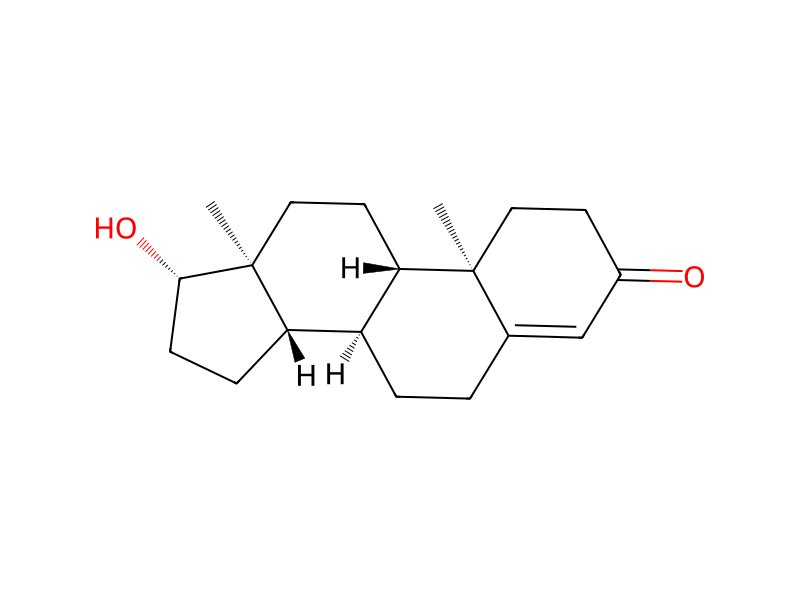
- Standard-SMILES
C[C@]12CC[C@H]3[C@@H](CCC4=CC(=O)CC[C@@]43C)[C@@H]1CC[C@@H]2O- InChIKey
MUMGGOZAMZWBJJ-DYKIIFRCSA-N- Summenformel
- C19H28O2
- Durchschnittliche Molmasse
- 288,4 g/mol
- Monoisotopische Masse
- 288,20893014
Überblick
Testosterone is an androstanoid having 17beta-hydroxy and 3-oxo groups, together with unsaturation at C-4C-5.. It has a role as an androgen, a mouse metabolite, a human metabolite and a Daphnia magna metabolite. It is a C19-steroid, a 17beta-hydroxy steroid, a 3-oxo-Delta(4) steroid and an androstanoid.
Namen und Bezeichner
- Bevorzugter Name
- Testosterone
- IUPAC
- (8R,9S,10R,13S,14S,17S)-17-hydroxy-10,13-dimethyl-1,2,6,7,8,9,11,12,14,15,16,17-dodecahydrocyclopenta[a]phenanthren-3-one
Namen und Synonyme
testosterone58-22-0VirosteroneHomosteroneMertestateTestimAndrodermTestosteronAndrolinSustanonTesticulosteroneOrquisteron
Weitere Namen anzeigen
PrimotestonTestosteroidAndrusolHomosteronPrimotestSustanoneTestobaseTestoderm
Datenbank-Bezeichner
- CAS
58-22-0- PubChem CID
- 6013
- DTXSID
DTXSID8022371- ChEMBL
CHEMBL386630- ChEBI
CHEBI:17347- UNII
- 3XMK78S47O
- EC Number
- 200-370-5
- Nikkaji
- J4.590J
Eigenschaften
Berechnete Struktureigenschaften
- XLogP
- 3,3
- Polarare Oberfläche (TPSA)
- 37,3 Ų
- H-Brücken-Donoren
- 1
- H-Brücken-Akzeptoren
- 2
- Frei drehbare Bindungen
- 0
- Schwere Atome
- 21
- Formalladung
- 0
- Komplexität
- 508
Experimentelle und physikochemische Eigenschaften
Chemical ClassesHormone
Drugs
DEA NFLIS-Drug Category -> Steroids
DEA Schedule III Controlled Substance -> Anabolic steroids
Pharmaceuticals -> Listed in ZINC15
Pharmaceuticals -> Synthetic Cannabinoids or Psychoactive Compounds
LipidsLipids -> Sterol Lipids [ST] -> Steroids [ST02] -> C19 steroids (androgens) and derivatives [ST0202]
SpringerMaterials PropertiesChemical shift
LogP
log Kow = 3.32
3.32
3.13
OdorOdorless
Color/Form
White needles from dilute acetone
Needles from dilute acetone
White or slightly cream-white crystals or crystalline powder
Solubility
In water, 23.4 mg/L at 25 °C
Freely soluble in dehydrogenated alcohol, chloroform; soluble in vegetable oils, alcohol, dioxane and other organic solvents; slightly soluble in ether
Insoluble in water
Soluble in ethanol, ethyl ether, acetone
In ethanol: 1 in 5; in chloroform: 1 in 2; in diethyl ether: 1 in 100; in ethyl oleate: 1 in 150. Sol in acetone, dioxane and fixed oils
Human Drugs
Breast Feeding; Lactation; Milk, Human; Androgens; Hormones
FDA approved drugs -> Active ingredient
FDA approved drugs -> Active ingredient
Androgens
Animal Drugs
Active Ingredients (Testosterone) -> FDA Greenbook
Pharmaceuticals -> Animal Drugs -> Approved in Taiwan
Endocrine DisruptorsPotential endocrine disrupting compound
DecompositionWhen heated to decomposition it emits acrid smoke and irritating fumes.
Sicherheit und Regulatorisches
GHS-Klassifizierung
GHS Classification
Danger
H302 (64.9%): Harmful if swallowed [Warning Acute toxicity, oral]
P203, P260, P263, P264, P270, P273, P280, P301+P317, P318, P319, P330, P391, P405, and P501 (click each P-code to see the statement)
Aggregated GHS information provided per 231 reports by companies from 17 notifications to the ECHA C&L Inventory. Each notification may be associated with multiple companies.
Danger
H302: Harmful if swallowed [Warning Acute toxicity, oral]
Gefahrenhinweise
Regulatory Information
Hazard Traits - Carcinogenicity
DEA schedule III controlled substance
Directive (EC) No 74/2003
Status: Active Update: 22-11-2022 https://echa.europa.eu/registration-dossier/-/registered-dossier/25237
Testosterone: Does not have an individual approval but may be used under an appropriate group standard
Other Safety InformationIMAP assessments - Androst-4-en-3-one, 17-hydroxy-, (17.beta.)-: Human health tier I assessment
FDA Requirements
The Approved Drug Products with Therapeutic Equivalence Evaluations identifies currently marketed prescription drug products, including testosterone, approved on the basis of safety and effectiveness by FDA under sections 505 of the Federal Food, Drug, and Cosmetic Act.
The Approved Drug Products with Therapeutic Equivalence Evaluations identifies currently marketed prescription drug products, including testosterone cypionate, approved on the basis of safety and effectiveness by FDA under sections 505 of the Federal Food, Drug, and Cosmetic Act. /Testosterone cypionate/
The Approved Drug Products with Therapeutic Equivalence Evaluations identifies currently marketed prescription drug products, including testosterone enanthate, approved on the basis of safety and effectiveness by FDA under sections 505 of the Federal Food, Drug, and Cosmetic Act. /Testosterone enanthate/
The Approved Drug Products with Therapeutic Equivalence Evaluations identifies currently marketed prescription drug products, including testosterone undecanoate, approved on the basis of safety and effectiveness by FDA under sections 505 of the Federal Food, Drug, and Cosmetic Act. /Testosterone undecanoate/
For more FDA Requirements (Complete) data for Testosterone (10 total), please visit the HSDB record page.
Toxic Combustion ProductsSpecial hazards arising from the substance or mixture: Carbon oxides.
Hazard Classes and CategoriesAcute Tox. 4 (64.9%)
Hazardous Reactivities and IncompatibilitiesIncompatible materials: Strong oxidizing agents.
Sicherheit und Schutzausrüstung
Fire Fighting Procedures
Suitable extinguishing media: Use water spray, alcohol-resistant foam, dry chemical or carbon dioxide.
Advice for firefighters: Wear self-contained breathing apparatus for firefighting if necessary.
Storage Conditions
Keep container tightly closed in a dry and well-ventilated place. Storage class (TRGS 510): Non-combustible, acute toxic Cat.3 / toxic hazardous materials or hazardous materials causing chronic effects.
Commercially available testosterone preparations should be stored at a temperature less than 40 °C, preferably between 15-30 °C; freezing of the sterile suspension and injections should be avoided. A precipitate may form if the injections are stored at a low temperature; however, this will dissolve after shaking and warming to room temperature. Use of a wet needle or syringe may cause the parenteral solutions to become cloudy; however, this will not affect potency.
Cleanup Methods
ACCIDENTAL RELEASE MEASURES: Personal precautions, protective equipment and emergency procedures: Use personal protective equipment. Avoid dust formation. Avoid breathing vapors, mist or gas. Ensure adequate ventilation. Evacuate personnel to safe areas. Avoid breathing dust. Environmental precautions: Prevent further leakage or spillage if safe to do so. Do not let product enter drains. Discharge into the environment must be avoided. Methods and materials for containment and cleaning up: Pick up and arrange disposal without creating dust. Sweep up and shovel. Keep in suitable, closed containers for disposal.
Disposal Methods
SRP: Expired or waste pharmaceuticals shall carefully take into consideration applicable DEA, EPA, and FDA regulations. It is not appropriate to dispose by flushing the pharmaceutical down the toilet or discarding to trash. If possible return the pharmaceutical to the manufacturer for proper disposal being careful to properly label and securely package the material. Alternatively, the waste pharmaceutical shall be labeled, securely packaged and transported by a state licensed medical waste contractor to dispose by burial in a licensed hazardous or toxic waste landfill or incinerator.
Product: Offer surplus and non-recyclable solutions to a licensed disposal company. Contact a licensed professional waste disposal service to dispose of this material. Dissolve or mix the material with a combustible solvent and burn in a chemical incinerator equipped with an afterburner and scrubber; Contaminated packaging: Dispose of as unused product.
Preventive Measures
ACCIDENTAL RELEASE MEASURES: Personal precautions, protective equipment and emergency procedures: Use personal protective equipment. Avoid dust formation. Avoid breathing vapors, mist or gas. Ensure adequate ventilation. Evacuate personnel to safe areas. Avoid breathing dust. Environmental precautions: Prevent further leakage or spillage if safe to do so. Do not let product enter drains. Discharge into the environment must be avoided.
Precautions for safe handling: Avoid contact with skin and eyes. Avoid formation of dust and aerosols. Further processing of solid materials may result in the formation of combustible dusts. The potential for combustible dust formation should be taken into consideration before additional processing occurs. Provide appropriate exhaust ventilation at places where dust is formed.
Appropriate engineering controls: Handle in accordance with good industrial hygiene and safety practice. Wash hands before breaks and at the end of workday.
Use proper glove removal technique (without touching glove's outer surface) to avoid skin contact with this product. Dispose of contaminated gloves after use in accordance with applicable laws and good laboratory practices. Wash and dry hands.
SRP: Local exhaust ventilation should be applied wherever there is an incidence of point source emissions or dispersion of regulated contaminants in the work area. Ventilation control of the contaminant as close to its point of generation is both the most economical and safest method to minimize personnel exposure to airborne contaminants. Ensure that the local ventilation moves the contaminant away from the worker.
Personal Protective Equipment (PPE)
Eye/face protection: Safety glasses with side-shields conforming to EN166. Use equipment for eye protection tested and approved under appropriate government standards such as NIOSH (US) or EN 166(EU).
Skin protection: Handle with gloves.
Body Protection: Complete suit protecting against chemicals. The type of protective equipment must be selected according to the concentration and amount of the dangerous substance at the specific workplace.
Respiratory protection: Where risk assessment shows air-purifying respirators are appropriate use a full-face particle respirator type N100 (US) or type P3 (EN 143) respirator cartridges as a backup to engineering controls. If the respirator is the sole means of protection, use a full-face supplied air respirator. Use respirators and components tested and approved under appropriate government standards such as NIOSH (US) or CEN (EU).
Toxikologische Informationen
Interactions
Concomitant use of anabolic androgenic steroids and cocaine has increased in the last years. However, the effects of chronic exposure to these substances during adolescence on cardiovascular function are unknown. Here, we investigated the effects of treatment for 10 consecutive days with testosterone and cocaine alone or in combination on basal cardiovascular parameters, baroreflex activity, hemodynamic responses to vasoactive agents, and cardiac morphology in adolescent rats. Administration of testosterone alone increased arterial pressure, reduced heart rate (HR), and exacerbated the tachycardiac baroreflex response. Cocaine-treated animals showed resting bradycardia without changes in arterial pressure and baroreflex activity. Combined treatment with testosterone and cocaine did not affect baseline arterial pressure and HR, but reduced baroreflex-mediated tachycardia. None of the treatments affected arterial pressure response to either vasoconstrictor or vasodilator agents. Also, heart to body ratio and left and right ventricular wall thickness were not modified by drug treatments. However, histological analysis of left ventricular sections of animals subjected to treatment with testosterone and cocaine alone and combined showed a greater spacing between cardiac muscle fibers, dilated blood vessels, and fibrosis. These data show important cardiovascular changes following treatment with testosterone in adolescent rats. However, the results suggest that exposure to cocaine alone or combined with testosterone during adolescence minimally affect cardiovascular function.
Topical administration of 0.1% triamcinolone cream prior to application of a testosterone transdermal system did not alter absorption of testosterone; however, pretreatment with topical administration of triamcinolone ointment substantially reduced absorption of testosterone.
Administration of IM testosterone cypionate resulted in increased clearance of propranolol in one study. It is not known whether there is a potential for this interaction with topically administered testosterone gel. /Testosterone cypionate/
Testosterone may potentiate the action of oral anticoagulants, causing bleeding in some patients. When testosterone therapy is initiated in patients receiving oral anticoagulants, dosage reduction of the anticoagulant may be required to prevent an excessive hypoprothrombinemic response. In patients receiving concomitant therapy with testosterone and anticoagulants, more frequent monitoring of INR and prothrombin time is recommended, especially during initiation or discontinuance of therapy.
For more Interactions (Complete) data for Testosterone (10 total), please visit the HSDB record page.
Health Effects
In women, excess testosterone may cause decreased breast size, a deep voice, increased genital size, irregular periods, oily skin, and unnatural hair growth. In men, excess testosterone may cause aggression, breast tenderness or enlargement, decreased testes size, and urinary urgency. Chronically high levels of testosterone are associated with at least 2 inborn errors of metabolism including: Adrenal Hyperplasia Type 3 and Aromatase deficiency.
Ecotoxicity Values
EC50; Species: Acartia tonsa (Calanoid Copepod) eggs; Conditions: saltwater, renewal; Concentration: 1500 ug/L for 5 days (95% confidence interval: 1400-1800 ug/L); Effect: development, decreased larval development, slowed, retarded, delayed or non-development
LC50; Species: Acartia tonsa (Calanoid Copepod) adult age 10-12 days; Conditions: saltwater, static, 20 °C; Concentration: 5600 ug/L for 48 hr (95% confidence interval: 4700-6600 ug/L)
LC50; Species: Neomysis integer (Opossum Shrimp) juvenile, length 2-4 mm; Conditions: saltwater, renewal, 15 °C; Concentration: 1950 ug/L for 96 hr (95% confidence interval: 550-9080 ug/L) /formulated product/
LC50; Species: Dugesia japonica (Flatworm) 0.8 cm body length; Conditions: freshwater, static, 25 °C, pH 7.8, hardness 136.5 mg/L CaCO3; Concentration: 14800 ug/L for 24 hr />99% purity/
For more Ecotoxicity Values (Complete) data for Testosterone (7 total), please visit the HSDB record page.
Environmental Fate
TERRESTRIAL FATE: Based on a classification scheme(1), a measured log Koc range of 3.25-3.52(2), corresponding to an average Koc of 2200(SRC), indicates that testosterone is expected to have low mobility in soil(SRC). Volatilization of testosterone from moist soil surfaces is not expected to be an important fate process(SRC) given an estimated Henry's Law constant of 3.5X10⁻⁹ atm-cu m/mole(SRC), using a fragment constant estimation method(3). Testosterone is not expected to volatilize from dry soil surfaces(SRC) based upon an estimated vapor pressure of 1.7X10⁻⁸ mm Hg at 25 °C(SRC), determined from a fragment constant method(4). A 63% mineralization in 5 days using a sandy soil(5) suggests that biodegradation may be an important environmental fate process in soil(SRC). However, it has been reported that when swine slurry or municipal slurry is added to a loam soil at 10% v/w, mineralization of testosterone is suppressed(6).
AQUATIC FATE: Based on a classification scheme(1), a measured log Koc range of 3.25-3.52(2), corresponding to an average Koc of 2200(SRC), indicates that testosterone is expected to adsorb to suspended solids and sediment(SRC). Volatilization from water surfaces is not expected(3) based upon an estimated Henry's Law constant of 3.5X10⁻⁹ atm-cu m/mole(SRC), developed using a fragment constant estimation method(4). According to a classification scheme(5), an estimated BCF of 72(SRC), from its log Kow of 3.32(6) and a regression-derived equation(7), suggests the potential for bioconcentration in aquatic organisms is moderate(SRC). A biodegradation half-life of 32 days in four municipal treatment plants exhibiting 55-65% mineralization of testosterone in 24 hours(8) suggests that biodegradation may be a moderate environmental fate process in water(SRC).
ATMOSPHERIC FATE: According to a model of gas/particle partitioning of semivolatile organic compounds in the atmosphere(1), testosterone, which has an estimated vapor pressure of 1.7X10⁻⁸ mm Hg at 25 °C(SRC), determined from a fragment constant method(2), is expected to exist solely in the particulate phase in the ambient atmosphere. Particulate-phase testosterone may be removed from the air by wet and dry deposition(SRC). Testosterone contains chromophores that absorb at wavelengths >290 nm(3) and, therefore, may be susceptible to direct photolysis by sunlight(SRC).
Exposure RoutesEndogenous, Injection
Toxicity Summary
IDENTIFICATION AND USE: Testosterone is an anabolic steroid for systemic use. It consists of odorless or almost odorless crystals or crystalline powder. Naturally-occuring anabolic steroids are synthesized in the testis, ovary and adrenal gland. Anabolic steroids are listed as Schedule III controlled substances. HUMAN EXPOSURE AND TOXICITY: The main risks associated with testosterone are those of excessive androgens: menstrual irregularities and virilization in women and impotence, premature cardiovascular disease and prostatic hypertrophy in men. Both men and women can suffer liver damage with oral anabolic steroids containing a substituted 17-alpha-carbon. Psychiatric changes can occur during use or after cessation of these agents. Acute overdosage can produce nausea and gastrointestinal upset. Chronic usage is thought to cause an increase in muscle bulk, and can cause an exaggeration of male characteristics and effects related to male hormones. There is no clear evidence that anabolic steroids enhance overall athletic performance. Precocious prostatic cancer has been described after long-term anabolic steroid abuse. Cases where hepatic cancers have been associated with anabolic steroid abuse have been reported. Testosterone may cause fetal harm when administered to pregnant women due to the potential for virilization of a female fetus. Androgenic effects including clitoral hypertrophy, labial fusion of the external genital fold to form a scrotal-like structure, abnormal vaginal development, and persistence of a urogenital sinus have occurred in the female offspring of women who were given androgens during pregnancy. The degree of masculinization is related to the amount of drug given to the woman and the age of the fetus; masculinization is most likely to occur in a female fetus when exposure to androgens occurs during the first trimester. ANIMAL STUDIES: The effect of testosterone on the prostate of castrated rats was described as a significant increase in prostatic weight which occurred after 6 wk treatment with testosterone. In female mice injected subcutaneously with 25 ug testosterone daily for the first five days after birth, 7/9 developed hyperplastic epithelial lesions, resembling epidermoid carcinomas at about 71 weeks of age. Chronic treatment of rats with testosterone produced a low prostate carcinoma incidence. A high carcinoma incidence can only be produced by chronic treatment with testosterone following administration of carcinogens. Daily subcutaneous injections for 4-8 days of total doses of 0.5-80 mg testosterone into rats between days 10 and 20 of gestation and of total doses of 1-55 mg testosterone propionate between days 12 and 19 of gestation resulted in resorptions, necrosis, lethality, post-partum mortality and various degrees of masculinization in female offspring. Deposteron (testosterone cypionate) was genotoxic and cytotoxic in mice. Testosterone acted both as a mitogenic and genotoxic agent in L929 cells.
Testosterone is considered an anabolic steroid. It plays a key role in the development of male reproductive tissues such as the testis and prostate as well as promoting secondary sexual characteristics such as increased muscle, bone mass, and the growth of body hair. High levels of testosterone can lead to masculinization in females or premature puberty in young boys. Chronically high levels in adults increase the incidence of heart attack, stroke and blood clots by lowering the level of HDL (good cholesterol) and increasing the level of LDL (bad cholesterol). Chronic high use of anabolic steroids (such as testosterone) appears to lead to cardiac myopathy and weakening the left ventricle. The development of breast tissue in males, a condition called gynecomastia (which is usually caused by high levels of circulating estradiol), arises because of increased conversion of testosterone to estradiol by the enzyme aromatase. Reduced sexual function and temporary infertility can also occur in males. The mechanism of testosterone’s action is as follows: Free testosterone is transported into the cytoplasm of target tissue cells, where it can bind to the androgen receptor, or can be reduced to 5α-dihydrotestosterone (DHT) by the cytoplasmic enzyme 5-alpha reductase. DHT binds to the same androgen receptor even more strongly than testosterone, so that its androgenic potency is about 5 times that of testosterone. Once bound, the ligand-receptor complex undergoes a structural change that allows it to move into the cell nucleus and bind directly to specific nucleotide sequences of the chromosomal DNA. The areas of binding are called hormone response elements (HREs), and influence transcriptional activity of certain genes, producing the androgen effects.
Ecotoxicity Excerpts
/AQUATIC SPECIES/ Endocrine disruptors are known to alter endogenous free and esterified levels of androgenic and estrogenic steroid hormones in aquatic mollusks. The origin of steroids in these animals, however, remains controversial. In the present study, free and esterified testosterone concentrations were measured in the hermaphroditic aquatic gastropod Lymnaea stagnalis exposed to molecules known for their androgenic (testosterone and tributyltin), anti-androgenic (cyproterone-acetate), and estrogenic (chlordecone) properties, by reference to their mode of action in vertebrates. In parallel, snail oviposition and fecundity were followed over a 21-day exposure period. Testosterone exposure resulted in increased esterified testosterone levels, whereas free testosterone concentrations remained stable. In contrast, cyproterone-acetate significantly increased the free form of testosterone with no changes in the esterified form, whereas chlordecone showed a tendency to reduce (though not significantly) esterified testosterone concentrations without changing free testosterone levels. Finally, tributyltin did not alter testosterone homeostasis. The production of egg clutches and eggs was significantly reduced only in the snails exposed to the highest concentrations of chlordecone (19.6 ug/L) and tributyltin (94.2 ng Sn/L). Overall, the present study demonstrates that uptake of testosterone from the exposure medium occurs in L. stagnalis. Moreover, it shows that cyproterone-acetate and, to a lesser extent, chlordecone can alter endogenous testosterone levels in this freshwater snail. However, the relationship between hormonal changes and snail reproduction has not been established.
Signs and Symptoms
In women, testosterone may cause decreased breast size, a deep voice, increased genital size, irregular periods, oily skin, and unnatural hair growth. In men, excess testosterone may cause aggression, premature baldness, breast tenderness or enlargement, decreased testes size, and urinary urgency.
Ongoing Test Status
EPA has released the Interactive Chemical Safety for Sustainability (iCSS) Dashboard. The iCSS Dashboard provides an interactive tool to explore rapid, automated (or in vitro high-throughput) chemical screening data generated by the Toxicity Forecaster (ToxCast) project and the federal Toxicity Testing in the 21st century (Tox21) collaboration. /The title compound was tested by ToxCast and/or Tox21 assays/[USEPA; ICSS Dashboard Application; Available from, as of December 8, 2016: http://actor.epa.gov/dashboard/]
Effluent Concentrations
Testosterone was detected in constructed water treatment plant effluents in Maryland in concentrations of 2.1 and 1.6 ng/L for wetland effluent and peat effluent, respectively(1). Testosterone was detected in raw sewage effluent water sampled in Tel Aviv, Israel in 1991 at concentrations ranging from 208-320 ng/L (third year of a drought); lower concentrations were measured in 1992 after the drought was over(2). The testosterone level in secondary effluent from a Tel Aviv, Israel treatment plant was 50 ng/L(2).
Medical Surveillance
SRP: Workers exposed to testosterone during its manufacture as well as patients receiving androgen therapy should be monitored for gynecomastia, hepatic, renal, and cardiac dysfunction, aggressive or antisocial behavior, lipoprotein profiles and priapism.
Soil Adsorption/Mobility
The soil absorption of testosterone was measured in several different soil samples(1). Log Koc values ranging from 3.25-3.52 were measured; the average log Koc was 3.32(1), corresponding to a Koc value of 2,188(SRC). According to a classification scheme(2), this Koc value suggests that testosterone is expected to have low mobility in soil. In another study, 69-74% of applied C14-testosterone (0.406 and 0.738 mg/L) was retained in the top 5 cm of soil in a column experiment using an undisturbed, agricultural soil (Hamar sandy soil: 2.23% organic matter; 14.0% clay; 10.0% silt, 67% sand)(3).
Regulatorische Informationen
FDA Requirements
The Approved Drug Products with Therapeutic Equivalence Evaluations identifies currently marketed prescription drug products, including testosterone, approved on the basis of safety and effectiveness by FDA under sections 505 of the Federal Food, Drug, and Cosmetic Act.
The Approved Drug Products with Therapeutic Equivalence Evaluations identifies currently marketed prescription drug products, including testosterone cypionate, approved on the basis of safety and effectiveness by FDA under sections 505 of the Federal Food, Drug, and Cosmetic Act. /Testosterone cypionate/
The Approved Drug Products with Therapeutic Equivalence Evaluations identifies currently marketed prescription drug products, including testosterone enanthate, approved on the basis of safety and effectiveness by FDA under sections 505 of the Federal Food, Drug, and Cosmetic Act. /Testosterone enanthate/
The Approved Drug Products with Therapeutic Equivalence Evaluations identifies currently marketed prescription drug products, including testosterone undecanoate, approved on the basis of safety and effectiveness by FDA under sections 505 of the Federal Food, Drug, and Cosmetic Act. /Testosterone undecanoate/
For more FDA Requirements (Complete) data for Testosterone (10 total), please visit the HSDB record page.
Chemie und Industrie
Pharmakologische Informationen
ATC Code
G03BA03
G - Genito urinary system and sex hormones
QG - Genito urinary system and sex hormones
G03BA03
Bionecessity
Androgens are responsible for the growth spurt that occurs during adolescence and for the eventual termination of linear growth that results from fusion of the epiphyseal growth centers. ...
Testosterone, like other androgenic anabolic hormones, also produces retention of nitrogen, potassium, sodium, and phosphorus; increases protein anabolism; and decreases amino acid catabolism and urinary calcium concentrations. Nitrogen balance is improved only when there is sufficient intake of calories and protein.
Testosterone is the principal endogenous androgen. Endogenous androgens are essential hormones that are responsible for the normal growth and development of the male sex organs and for maintenance of secondary sex characteristics, including the growth and maturation of the prostate, seminal vesicles, penis, and scrotum; development of male hair distribution, such as beard, pubic, chest, and axillary hair; laryngeal enlargement and thickening of the vocal cords; and alterations in body musculature and fat distribution.
Testosterone is a key hormone in the pathology of metabolic diseases such as obesity. Low testosterone levels are associated with increased fat mass (particularly central adiposity) and reduced lean mass in males. These morphological features are linked to metabolic dysfunction, and testosterone deficiency is associated with energy imbalance, impaired glucose control, reduced insulin sensitivity and dyslipidaemia. A bidirectional relationship between testosterone and obesity underpins this association indicated by the hypogonadal-obesity cycle and evidence weight loss can lead to increased testosterone levels. Androgenic effects on enzymatic pathways of fatty acid metabolism, glucose control and energy utilization are apparent and often tissue specific with differential effects noted in different regional fat depots, muscle and liver to potentially explain the mechanisms of testosterone action. Testosterone replacement therapy demonstrates beneficial effects on measures of obesity that are partially explained by both direct metabolic actions on adipose and muscle and also potentially by increasing motivation, vigour and energy allowing obese individuals to engage in more active lifestyles. The degree of these beneficial effects may be dependent on the treatment modality with longer term administration often achieving greater improvements. Testosterone replacement may therefore potentially be an effective adjunctive treatment for weight management in obese men with concomitant hypogonadism.
Protein BindingTestosterone is 40% bound to sex hormone binding globulin, 2% unbound, and the remainder is bound to albumin and other proteins.
Pharmacodynamics
Testosterone antagonizes the androgen receptor to induce gene expression that causes the growth and development of masculine sex organs and secondary sexual characteristics. The duration of action of testosterone is variable from patient to patient with a half life of 10-100 minutes. The therapeutic index is wide considering the normal testosterone levels in an adult man range from 300-1000ng/dL. Counsel patients regarding the risk of secondary exposure of testosterone topical products to children.
Mechanism of Action
The androgen receptor exists in the cytoplasm bound to the heat shock proteins HSP90, HSP70, and other chaperones. After binding to an androgen, the androgen receptor dissociates from HSP90 and undergoes a conformational change to slow the rate of dissociation from the androgen receptor. The androgen-receptor complex is transported into the nucleus where it binds to DNA and recruits other transcriptional regulators to form a pre-initiation complex and eventually induce expression of specific genes. Testosterone and its active metabolite dihydrotestosterone (DHT) act as an agonist of the androgen receptor to activate the receptor and upregulate the expression of androgen receptors, promoting the development of masculine sex organs including the prostate, seminal vesicles, penis, and scrotum. Agonism of the androgen receptor is also responsible for the development of secondary sexual characteristics including facial and body hair, enlargement of the larynx, thickening of the vocal cords, and changes in muscle and fat distribution.
Low-grade chronic inflammation is commonly found in patients with polycystic ovary syndrome (PCOS) who exhibit hyperandrogenism or hyperandrogenemia. Clinical studies have shown that hyperandrogenemia is closely correlated with low-grade chronic inflammation. However, the mechanism underlying this correlation remains unclear. Recent studies have suggested that adipocytes increase the production of proinflammatory mediators such as interleukin-6 (IL-6) and macrophage chemotactic protein-1 (MCP-1) when the inflammatory signal transduction cascade system is activated by external stimuli. The present study aimed to evaluate the effects of testosterone on the innate signalling and expression of proinflammatory mediators in 3T3-L1 adipocytes, which were or were not induced by lipopolysaccharide (LPS). The effects of testosterone on the expression of proinflammatory mediators, nuclear factor-kappaB (NF-kappaB), and extracellular signal-regulated kinase 1/2 (ERK1/2) signalling pathways were investigated using an enzyme-linked immunosorbent assay, reverse transcriptase-polymerase chain reaction, western blot analysis and an electrophoresis mobility shift assay. Testosterone induces IL-6 and MCP-1, and enhances LPS-induction of IL-6 and MCP-1. However, the effects are not simply additive, testosterone significantly enhanced the effects of LPS-induced inflammation factors. Testosterone induces the phosphorylation of ERK1/2 and NF-kappaB. The effect of testosterone on the expression of IL-6 and MCP-1 is inhibited by PD98059, an ERK1/2 inhibitor, and PDTC, an NF-kappaB inhibitor. The results indicate that testosterone enhances LPS-induced IL-6 and MCP-1 expression by activating the ERK1/2/NF-kappaB signalling pathways in 3T3-L1 adipocytes.
Androgens reportedly stimulate the production of erythrocytes, apparently by enhancing the production of erythropoietic stimulating factor.
Biological Half-Life
The half life of testosterone is highly variable, ranging from 10-100 minutes.
The plasma half-life of testosterone reportedly ranges from 10-100 minutes. The plasma half-life of testosterone cypionate after IM injection is approximately 8 days. Following removal of an Androderm transdermal system, plasma testosterone concentrations decline with an apparent half-life of approximately 70 minutes ... .
Metabolism/Metabolites
Testosterone is metabolized to 17-keto steroids through two different pathways. The major active metabolites are estradiol and dihydrotestosterone (DHT). Testosterone can be hydroxylated at a number of positions by CYP3A4, CYP2B6, CYP2C9, and CYP2C19; glucuronidated by UGT2B17; sulfated; converted to estradiol by aromatase; converted to dihydrotestosterone (DHT) by 5α-reductase; metabolized to androstenedione by CYP3A4, CYP2C9, and CYP2C19; or converted to DHT glucuronide. Androstenedione undergoes metabolism by aromatase to form estrone, which undergoes a reversible reaction to form estradiol. Androstenedione can also be converted to 5α-androstanedione by 5α-reductase, which can be further metabolized to 5α-androsterone. DHT can be glucuronidated or sulfated, or metabolized to 5α-androstanediol, androstane-3α,17β-diol, or androstane-3β,17β-diol. DHT can also be reversibly converted to 5α-androstanedione.
Extensive reductive metabolism of testosterone occurs not only in the liver, but also in a variety of extrahepatic tissues, especially in target organs of the sex hormones; the ultimately effective physiological androgen is formed in the target tissues. Testosterone metabolism occurs not only in the prostate and seminal vesicles but also in rat uterus, rabbit placenta, rodent testis and primate brain. In rats, the small intestine is also capable of metabolizing testosterone.
It is transformed to 5-alpha-dehydrotestosterone in target organs such as the prostate, sebaceous glands and seminal vesicles; only the latter compound binds to the androgen-receptor site in these target organs.
Large quantitative differences in testosterone metabolism are evident between female and male rats. The reason for this phenomenon is that many steroid-metabolizing enzymes in rats are either androgen- or estrogen-dependent; the sex hormones thus act in an inductive or a repressive manner.
Esters of testosterone, such as the propionate, the heptanoate, the cypionate, the valerate, the isovalerate, the enanthate and the undecanoate, are partially cleaved in vivo to release the parent compound. This has been demonstrated by oral administration of testosterone undecanoate in oily solution to rats: most of the compound is converted within the intestinal wall, the first step being partial splitting off of the fatty acid moiety. The non-metabolized portion, however, and the metabolite 5-alpha-dihydrotestosterone undecanoate, are absorbed via the lymphatic system and made available for androgenic action to the organism. /Testosterone esters/
For more Metabolism/Metabolites (Complete) data for Testosterone (6 total), please visit the HSDB record page.
FDA Pharmacological Classification
3XMK78S47O
TESTOSTERONE
Established Pharmacologic Class [EPC] - Androgen
Mechanisms of Action [MoA] - Androgen Receptor Agonists
Chemical Structure [CS] - Androstanes
Testosterone is an Androgen. The mechanism of action of testosterone is as an Androgen Receptor Agonist.
MeSH Pharmacological Classification
Compounds that interact with ANDROGEN RECEPTORS in target tissues to bring about the effects similar to those of TESTOSTERONE. Depending on the target tissues, androgenic effects can be on SEX DIFFERENTIATION; male reproductive organs, SPERMATOGENESIS; secondary male SEX CHARACTERISTICS; LIBIDO; development of muscle mass, strength, and power.
Absorption, Distribution and Excretion
A single 100mg topical dose of testosterone has an AUC of 10425±5521ng\*h/dL and a Cmax of 573±284ng/dL. Testosterone is approximately 10% bioavailable topically.
90% of an intramuscular dose is eliminated in urine, mainly as glucuronide and sulfate conjugates. 6% is eliminated in feces, mostly as unconjugated metabolites.
The volume of distribution of testosterone in elderly men is 80.36±24.51L.
The mean metabolic clearance in middle aged men is 812±64L/day.
Testosterone is absorbed systemically through the skin following topical application as a gel or transdermal system. Following topical application of a hydroalcoholic gel formulation of testosterone (AndroGel, Testim) to the skin, the gel quickly dries on the skin surface, which serves as a reservoir for sustained release of the hormone into systemic circulation. Approximately 10% of a testosterone dose applied topically to the skin as a 1% gel is absorbed percutaneously into systemic circulation. The manufacturer of AndroGel states that increases in serum testosterone concentrations were apparent within 30 minutes of topical application of a 100-mg testosterone dose of the 1% gel, with physiologic concentrations being achieved in most patients within 4 hours (pretreatment concentrations were not described); percutaneous absorption continues for the entire 24-hour dosing interval. Serum testosterone concentrations approximate steady-state levels by the end of the initial 24 hours and are at steady state by the second or third day of dosing of the 1% gel. With daily topical application of the 1% gel (AndroGel), serum testosterone concentrations 30, 90, and 180 days after initiating treatment generally are maintained in the eugonadal range. Administration of 10 or 5 g of AndroGel daily results in average daily serum testosterone concentrations of 794 or 566 ng/dL, respectively, at day 30. Following discontinuance of such topical therapy, serum testosterone concentrations remain within the normal range for 24-48 hours but return to pretreatment levels by the fifth day after the last application.
With topical application of a transdermal preparation, the extent of percutaneous testosterone absorption varies according to the site of application, possibly secondary to regional differences in skin permeability, cutaneous blood flow, and/or degree of adhesion between the transdermal system and skin. In one study in which transdermal systems were applied to the abdomen, back, chest, shin, thigh, or upper arm, serum hormone profiles were qualitatively similar with each site, but steady-state serum concentrations showed significant differences, decreasing in order with the back, thigh, upper arm, abdomen, chest, and shin. Application of Androderm transdermal systems to the abdomen, back, thighs, or upper arms results in achievement of similar serum testosterone concentration profiles, and these sites are recommended as optimal for rotation of application sites during chronic therapy. Daily nighttime (at approximately 10 p.m.) application of Androderm transdermal system results in a serum testosterone concentration profile that mimics the endogenous diurnal pattern in healthy young men. In one study, showering 3 hours after application of Androderm decreased peak plasma concentrations of testosterone by 0.4% compared with not showering 3 hours after application of the transdermal system. In addition, showering 3 hours after transdermal system application did not substantially alter the systemic exposure of testosterone.
Tissue LocationsBrain
Cellular LocationsCytoplasm
Verwendung und Herstellung
Uses
Androgens
Anabolic steroids are listed as Schedule III controlled substances (DEA Code #: 400). /Anabolic steroid means any drug or hormonal substance, chemically and pharmacologically related to testosterone (other than estrogens, progestins, corticosteroids, and dehydroepiandrosterone)/
Schedule III Controlled Substance: (A) The drug or other substance has a potential for abuse less than the drugs or other substances in schedules I and II. (B) The drug or other substance has a currently accepted medical use in treatment in the United States. (C) Abuse of the drug or other substance may lead to moderate or low physical dependence or high psychological dependence.
Biochemical research
For more Uses (Complete) data for Testosterone (6 total), please visit the HSDB record page.
Use (kg) in Switzerland (2009): >50
Methods of Manufacturing
First isolated in crystalline form by Laquer in 1935 who obtained it from animal testes. Although small amounts of testosterone may be extracted from testicular material, the synthetic commercial supply is derived from cholesterol. The key intermediate in the synthesis is dehydroepiandrosterone, which can be treated further, by either chemical or microbiological processes, to yield testosterone.
Isolation from extract of testis, synthesis from cholesterol or from the plant steroid diosgenin.
Testosterone is synthesized from androstenolone acetate which is reduced to the 17beta-alcohol with Raney nickel and then esterified with benzoyl chloride in pyridine. This protecting ester group permits partial saponification of the 3-acetate with methanolic sodium hydroxide solution to yield the 3-hydroxy compound. Subsequent Oppenauer oxidation produces the testosterone benzoate, which is then subjected to alkaline hydrolysis to give testosterone.
Formulations/Preparations
Parenteral: Injection (in oil): 200 mg/mL Delatestryl (C-III, with chlorobutanol), (Indevus and also available from one or more manufacturer, distributor, and/or repackager by generic (nonproprietary) name) /Testosterone enanthate/
Parenteral: Injection (in oil): 200 mg/mL Testosterone Cypionate, C-III (Watson and also available from one or more manufacturer, distributor, and/or repackager by generic (nonproprietary) name). /Testosterone cypionate/
Grade: National Formulary
Powder (C-III); (Available from one or more manufacturer, distributor, and/or repackager by generic (nonproprietary) name). /Testosterone propionate/
Table: Testosterone Preparations [Table#4565]
Use Classification
Animal Drugs -> FDA Approved Animal Drug Products (Green Book) -> Active Ingredients
Veterinary Drug -> PRODUCTION_AID -> JECFA Functional Classes
Pharmaceuticals -> Animal Drugs -> Approved in Taiwan
General Manufacturing Information
Androst-4-en-3-one, 17-hydroxy-, (17.beta.)-: ACTIVE
An androgenic steroid; the male sex hormone produced by the testis. It has six times the androgenic activity of its metabolic product, androsterone.
Principal hormone of the testes, produced by the interstitial cells.
Zugehörige Reaktionen
42




Verknüpfte Notizen
Wird geladen…