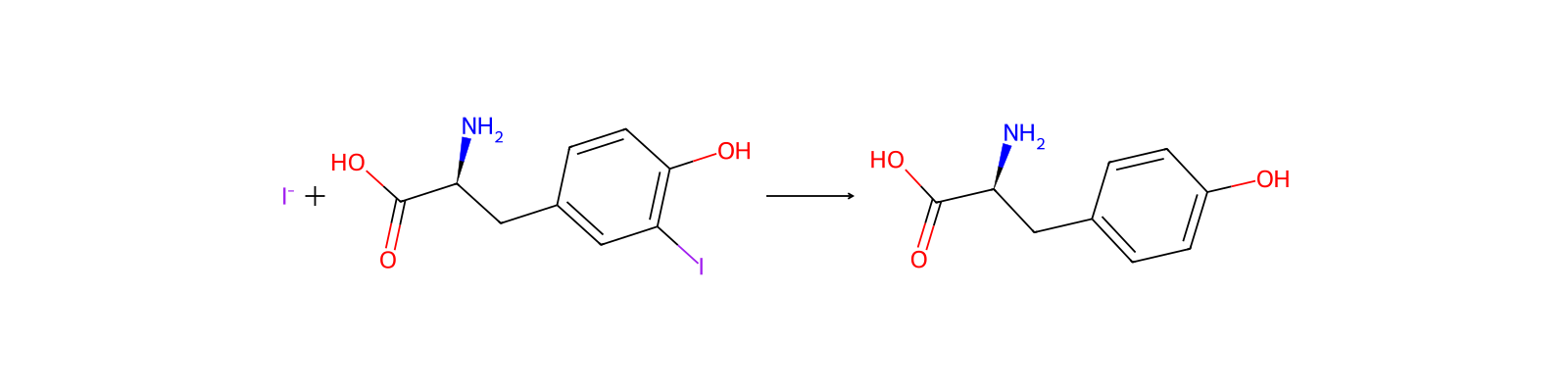

Grundinformationen
- Standard-SMILES
N[C@@H](Cc1ccc(O)cc1)C(=O)O- InChIKey
OUYCCCASQSFEME-QMMMGPOBSA-N- Summenformel
- C9H11NO3
- Durchschnittliche Molmasse
- 181,19 g/mol
- Monoisotopische Masse
- 181,07389321
Überblick
L-tyrosine is an optically active form of tyrosine having L-configuration. It has a role as a micronutrient, a nutraceutical, an EC 1.3.1.43 (arogenate dehydrogenase) inhibitor and a fundamental metabolite. It is a L-alpha-amino acid, a tyrosine, an erythrose 4-phosphate/phosphoenolpyruvate family amino acid and a proteinogenic amino acid. It is functionally related to a L-tyrosinal. It is a conjugate base of a L-tyrosinium. It is a conjugate acid of a L-tyrosinate(1-). It is an enantiomer of a D-tyrosine. It is a tautomer of a L-tyrosine zwitterion.
Namen und Bezeichner
- Bevorzugter Name
- L-Tyrosine
- IUPAC
- (2S)-2-amino-3-(4-hydroxyphenyl)propanoic acid
- Englischer Name
- POLY-L-TYROSINE
- Summenformel
- C9H11NO3
- Molmasse
- 181.18854
Namen und Synonyme
L-tyrosinetyrosine60-18-4(S)-Tyrosine(2S)-2-amino-3-(4-hydroxyphenyl)propanoic acidp-TyrosineL-p-Tyrosine4-Hydroxy-L-phenylalaninetirosinaTyrosinumL-Phenylalanine, 4-hydroxy-beta-(p-Hydroxyphenyl)alanine
Weitere Namen anzeigen
POLY-L-TYROSINEpoly(L-Tyrosine)-100000poly-L-tyrosine mol wt 40000-100000POLY-L-TYROSINE, MW : 12,000 - 35,000poly-L-tyrosine mol. wt. 10,000-40,000POLY-L-TYROSINE MOL WT GREATER*THAN 1000 00
(-)-alpha-Amino-p-hydroxyhydrocinnamic acidFEMA No. 3736(S)-alpha-Amino-4-hydroxybenzenepropanoic acid(S)-(-)-Tyrosine(S)-3-(p-Hydroxyphenyl)alanineL-TyrosinDTXSID1023730L-Tyr
Datenbank-Bezeichner
- CAS
25619-78-7、556-03-6、60-18-4- PubChem CID
- 6057
- DTXSID
DTXSID1023730- ChEMBL
CHEMBL925- ChEBI
CHEBI:17895- UNII
- 42HK56048U
- EC Number
- 200-460-4
- Nikkaji
- J9.173A
Eigenschaften
Berechnete Struktureigenschaften
- XLogP
- -2,3
- Polarare Oberfläche (TPSA)
- 83,6 Ų
- H-Brücken-Donoren
- 3
- H-Brücken-Akzeptoren
- 4
- Frei drehbare Bindungen
- 3
- Schwere Atome
- 13
- Formalladung
- 0
- Komplexität
- 176
Experimentelle und physikochemische Eigenschaften
Chemical ClassesBiological Agents -> Amino Acids and Derivatives
DrugsPharmaceuticals -> Listed in ZINC15
Cosmetics
Cosmetic ingredients (Tyrosine) -> CIR (Cosmetic Ingredient Review)
Hair conditioning; Skin conditioning; Antistatic
pH5.66 (at isoelectric point)
LogP
log Kow= 2.26
-2.26
Food AdditivesFLAVORING AGENT OR ADJUVANT, NUTRIENT SUPPLEMENT -> FDA Substance added to food
Flavoring AgentsEU Flavoring substances
Color/Form
FINE SILKY NEEDLES
White crystals
Solubility
SOLUBILITY IN WATER 0.453 G/L @ 25 °C; INSOL IN ABSOLUTE ALCOHOL, ETHER, ACETONE; SOL IN ALKALINE SOLN
SLIGHTLY SOL IN ACETIC ACID
0.479 mg/mL
Soluble in water and dilute mineral acid and alkali hydroxide solutions
Slightly soluble (in ethanol)
Human Drugs
FDA approved drugs -> Active ingredient
FDA approved drugs -> Active ingredient
Boiling PointBOILING POINT: SUBLIMES
Melting Point
344 °C
343 °C
Physikochemische Eigenschaften
- storage temp.
- 20 °C · −20°C
Sicherheit und Regulatorisches
GHS-Klassifizierung
GHS Classification
This chemical does not meet GHS hazard criteria for 84.3% (226 of 268) of all reports.
Warning
H315 (14.9%): Causes skin irritation [Warning Skin corrosion/irritation]
P261, P264, P264+P265, P271, P280, P302+P352, P304+P340, P305+P351+P338, P319, P321, P332+P317, P337+P317, P362+P364, P403+P233, P405, and P501 (click each P-code to see the statement)
Aggregated GHS information provided per 268 reports by companies from 15 notifications to the ECHA C&L Inventory. Each notification may be associated with multiple companies.
Gefahrenhinweise
Regulatory Information
Chemical: L-Tyrosine
Regulation (EC) No 1831/2003 (amended)
L-Tyrosine is listed on the EPA's Chemical Data Reporting (CDR) system. Manufacturers and importers of L-Tyrosine are required to report information about their production and use of this chemical to the EPA under the Toxic Substances Control Act (TSCA). (40 eCFR Part 711)
Status: Active Update: 31-08-2021 https://echa.europa.eu/registration-dossier/-/registered-dossier/24422
L-Tyrosine: Does not have an individual approval but may be used under an appropriate group standard
Other Safety InformationIMAP assessments - L-Tyrosine: Environment tier I assessment
Hazards SummarySafe when used as a flavoring agent in food; [JECFA] A skin and strong eye irritant; [Sigma-Aldrich MSDS]
FDA RequirementsTyrosine used as a nutrient and/or dietary supplement in animal drugs, feeds, and related products is generally recognized as safe when used in accordance with good manufacturing or feeding practice.
Hazard Classes and CategoriesSkin Irrit. 2 (14.9%)
Shipment Methods and Regulations
No person may /transport,/ offer or accept a hazardous material for transportation in commerce unless that material is properly classed, described, packaged, marked, labeled, and in condition for shipment as required or authorized by ... /the hazardous materials regulations (49 CFR 171-177)./
Toxikologische Informationen
Environmental Fate
TERRESTRIAL FATE: With pK values of 2.20, 9.11 and 10.07 for the acid, base and phenol groups, respectively(1), tyrosine will exist in soil as series of ions in varying proportions that are pH dependent(2). Ions are not expected to volatilize and the soil adsorption of organic molecules with both negative and positive charges is difficult to predict(2,SRC). Soil grab sample data, using radiolabeled tyrosine(3), and several aqueous aerobic biological screening studies, which utilized settled waste water, sewage, or activated sludge for inocula, have demonstrated that tyrosine is readily biodegradable(4-6). The tyrosine molecule contains the amine functional group which may be susceptible to hydrolysis(2), but does not contain a chromophore that absorbs UV light in the environmentally significant range (>290 nm)(4). Therefore, it is not susceptible to direct photolysis in sunlit soil surfaces(SRC).
AQUATIC FATE: With pK values of 2.20, 9.11 and 10.07 for the acid, base and phenol groups, respectively(1), tyrosine will exist in natural waters as a series of ions in varying proportions that are pH dependent(2). Ions are not expected to volatilize from water and the adsorption of organic molecules with both negative and positive charges is unpredictable(2,SRC). The potential for tyrosine to bioconcentrate in aquatic organisms is also low. Soil grab sample data, using radiolabeled tyrosine(3), and several aqueous aerobic biological screening studies, which utilized settled waste water, sewage, or activated sludge for inocula, have demonstrated that tyrosine is readily biodegradable(4-6).
AQUATIC FATE: The tyrosine molecule does not contain a chromophore that absorbs UV light in the environmentally significant range (>290 nm)(1) and should not be susceptible to direct photolysis in sunlit surface waters. Measured rate constants averaged 1.3X10+10 L/mole-sec(2) for the photochemical reaction of tyrosine with hydroxyl radicals in water at room temperatures and pH 4-7, which corresponds to a calculated half-life of 62 days assuming the hydroxyl radical concentration in full intensity sunlit natural water is 1.0X10⁻¹⁷ mole/L(3).
ATMOSPHERIC FATE: The rate constant for the vapor-phase reaction of tyrosine with photochemically produced hydroxyl radicals in air has been estimated to be 8.20X10⁻¹¹ cu cm/molecule-sec at 25 °C(2,SRC). Based upon a average yearly atmospheric hydroxyl radical concentration of 5.0X10+5 molecules/cu cm in a typical atmosphere(2), the corresponding half-life for tyrosine would be about 5 hrs(SRC). However if released to the atmosphere, it will exist mainly in the particulate phase. Tyrosine is not expected to undergo direct photolysis in ambient air because its molecule does not contain a chromophore that absorbs UV light in the environmentally significant range (>29 nm)(1). Physical removal from air by dry and wet deposition (rainfall, dissolution in clouds) may be important removal mechanisms(SRC).
Food Survey ValuesTyrosine is used in foods as a growth factor or dietary supplement(1).
Exposure RoutesL-tyrosine is absorbed from the small intestine by a sodium-dependent active transport process.
Toxicity Summary
Safe in the present practices of use and concentration. Ingredient, concentration, and use information are available in documents discoverable at https://cir-reports.cir-safety.org
Tyrosine is produced in cells by hydroxylating the essential amino acid phenylalanine. This relationship is much like that between cysteine and methionine. Half of the phenylalanine required goes into the production of tyrosine; if the diet is rich in tyrosine itself, the requirements for phenylalanine are reduced by about 50%. The mechanism of L-tyrosine's antidepressant activity can be accounted for by the precursor role of L-tyrosine in the synthesis of the neurotransmitters norepinephrine and dopamine. Elevated brain norepinephrine and dopamine levels are thought to be associated with antidepressant effects.
Soil Adsorption/Mobility
Tyrosine is a nonessential amino acid. With pK values of 2.20, 9.11 and 10.07 for the acid, base and phenol groups, respectively, tyrosine will exist in environmental media as series of ions in varying proportions that are pH dependent(1). The adsorption of organic molecules in soil with both negative and positive charges is difficult to predict(2,SRC).
Natural Pollution Sources
NATURAL OCCURRENCE OF TYROSINE (G/100 G PROTEIN): GELATINS 0.7; CASEIN 6.3; GAMMA GLOBULIN 6.8; HEMOGLOBIN: HORSE HEMOGLOBIN 3.0; INSULIN 13.0; CLOSTRIDIUM BOTULINUM TOXIN 13.5 (G/16 G TOTAL NITROGEN): MILK: MIXED PROTEINS 6.0; SERUM ALBUMIN 5.5. /FROM TABLE/
Tyrosine is a non-essential amino acid involved in microbial, plant and animal metabolism(1).
Human Toxicity Excerpts
In human beings there are four or more systemic diseases involving excessive tyrosine (tyrosinosis or tyrosinemia), but apparently only one of these diseases affects the eyes. The Richner-Hanhart syndrome, first described in 1938 consists of bilateral pseudo-dendritic keratitis, hyperkeratotic lesions of the palms and soles, and usually some mental retardation. From the first month of life the patient may have photophobia and painful eyes with branching corneal lesions resembling dentritic figures, limited to the epithelium in some cases, but involving anterior stroma in others. The figures stain less with fluorescein than do real herpes simplex ulcers, and they are unresponsive to antiviral and antimicrobial treatments. Circumscribed round areas of keratosis develop on the palms and soles, and these are tender, and may make walking uncomfortable.
In human beings an abnormally high concentration of tyrosine in the blood, caused by an inborn defect in metabolism of dietary tyrosine, can be associated with development of a special type of keratitis at an early age. ... Most important, the keratitis in human beings can be dramatically relieved by changing to a diet with a specially low tyrosine content.
Artificial Pollution SourcesTyrosine may be released to the environment via effluents at sites where it is produced and used in biochemical research or as a growth factor or dietary supplement in nutrition(1).
Environmental Biodegradation
Tyrosine is a non-essential amino-acid found in both proteins and the free form in most living organisms(1). Soil grab sample data, using radiolabeled tyrosine and an acidic and basic Mollic Haploxeralf soils (Steinbeck loam and Greenfield sandy loam), demonstrated that tyrosine should biodegrade rapidly in the environment(2). Tests were incubated for 12 weeks at a temperature of 22 °C. In Greenfield sandy loam, mineralization rates (CO2 evolved) in 1, 8 and 12 weeks were 83, 90 and 92%, respectively. In Steinbeck loam, mineralization rates (CO2 evolved) in 1, 8 and 12 weeks were 80, 89 and 91%, respectively. Microbial uptake was also measured with overall utilization of the substrate. About 6.1% was incorporated into the microbial population of the Greenfield sandy loam. In Steinbeck loam. 2.9% was reported as microbial biomass. A number of aerobic biological screening studies, which utilized settled waste water, sewage, or activated sludge for inocula, have also demonstrated that tyrosine is readily biodegradable(2-5). A 5 day BOD was 64.7%(3). In 24 hrs, the BOD ranged from 22.6 to 30.7%(4-5).
Carcinogen ClassificationNo indication of carcinogenicity to humans (not listed by IARC).
Environmental Bioconcentration
Tyrosine is a non-essential amino-acid found in both proteins and the free form in most living organisms(1). It is involved in microbial, plant and animal metabolism and metabolic processes tend to regulate amino acid concentrations within the cell(1). Therefore, it is not likely to bioconcentrate in aquatic organisms(SRC).
Volatilization from Water/SoilWith pK values of 2.20, 9.11 and 10.07 for the acid, base and phenol groups, respectively, tyrosine will exist in environmental media as series of ions in varying proportions that are pH dependent(1). Ions will not volatilize from water(2).
Regulatorische Informationen
FDA RequirementsTyrosine used as a nutrient and/or dietary supplement in animal drugs, feeds, and related products is generally recognized as safe when used in accordance with good manufacturing or feeding practice.
Sicherheitsdaten
- wgk
- 3
Chemie und Industrie
Pharmakologische Informationen
Bionecessity
Experiments were conducted with immature Beagle dogs to determine the dietary requirement for phenylalanine. With purified L-amino acid diets the requirement for this aromatic amino acid to optimize growth, feed efficiency and nitrogen balance was found to be 0.8%. Dietary limitations in the quantity of phenylalanine resulted in an increase in plasma and urinary urea. Breakpoint analysis of plasma phenylalanine concentrations also indicated a dietary requirement of 0.8%. The present data indicate that the dietary requirement for phenylalanine can be met by supplying approximately 195 mg per 100 kcal metabolizable energy or 518 mg/kg body weight per day. In a separate study, tyrosine was found to meet approximately 46% of the phenylalanine requirement of the immature dog. Consumption of diets containing tyrosine in the presence of optimal phenylalanine did not further stimulate growth, feed efficiency or nitrogen balance.
Pharmacodynamics
Tyrosine is a nonessential amino acid synthesized in the body from phenylalanine. Tyrosine is critical for the production of the body's proteins, enzymes and muscle tissue. Tyrosine is a precursor to the neurotransmitters norepinephrine and dopamine. It can act as a mood elevator and an anti-depressant. It may improve memory and increase mental alertness. Tyrosine aids in the production of melanin and plays a critical role in the production of thyroxin (thyroid hormones). Tyrosine deficiencies are manifested by hypothyroidism, low blood pressure and low body temperature. Supplemental tyrosine has been used to reduce stress and combat narcolepsy and chronic fatigue.
Mechanism of Action
Tyrosine is produced in cells by hydroxylating the essential amino acid phenylalanine. This relationship is much like that between cysteine and methionine. Half of the phenylalanine required goes into the production of tyrosine; if the diet is rich in tyrosine itself, the requirements for phenylalanine are reduced by about 50%. The mechanism of L-tyrosine's antidepressant activity can be accounted for by the precursor role of L-tyrosine in the synthesis of the neurotransmitters norepinephrine and dopamine. Elevated brain norepinephrine and dopamine levels are thought to be associated with antidepressant effects.
Metabolism/Metabolites
In the liver, L-tyrosine is involved in a number of biochemical reactions, including protein synthesis and oxidative catabolic reactions. L-tyrosine that is not metabolized in the liver is distributed via the systemic circulation to the various tissues of the body.
/METABOLIC PATHWAY FOR L-TYROSINE:/ /TYROSINE GIVES/ P-HYDROXYPHENYLPYRUVIC ACID GIVES CO2 + HOMOGENTISIC ACID GIVES MALEYLACETOACETIC ACID GIVES FUMARYLACETOACETIC ACID GIVES FUMARATE + ACETOACETATE; TYROSINE GIVES 3,4-DIHYDROXYPHENYLALANINE GIVES CO2 + 3,4-DIHYDROXYPHENYLETHYLAMINE GIVES NORADRENALIN GIVES ADRENALIN.
L-TYROSINE GIVES N-ACETYL-L-TYROSINE IN MAN; GIVES 3-CARBOXY-L-TYROSINE IN RESEDA; GIVES P-COUMARIC ACID IN SUGAR CANE, L-TYROSINE GIVES PARA-CRESOL IN PROTEUS; GIVES 3,4-DIHYDROXY-L-PHENYLALANINE IN HAMSTER; GIVES 3,4-DIHYDROXYSTILBENE-2-CARBOXYLIC ACID IN HYDRANGEA, L-TYROSINE GIVES 2,7-DIMETHYLNAPHTHOQUINONE IN CHIMAPHILA; GIVES L-DITYROSINE IN BEEF; GIVES PARA-HYDROXYMANDELONITRILE IN SORGHUM, L-TYROSINE GIVES PARA-HYDROXYPHENYLACETALDOXIME IN AUBRETIA; GIVES PARA-HYDROXYPHENYLPYRUVIC ACID IN RAT; GIVES 3-IODO-L-TYROSINE IN BEEF; L-TYROSINE GIVES LACHNANTHOSIDE IN LACHNANTHES; LOPHOCERINE IN LOPHOCERUS; MESEMBRINE IN SCELETIUM; NARWEDINE IN DAFFODIL, L-TYROSINE GIVES NOVOBIOCIN IN STREPTOMYCES; PHENOL IN RAT; BETA-TOCOPHEROL IN ANABAENA; TYLOPHORINE IN TYLOPHORA, L-TYROSINE GIVES TYRAMINE IN RAT; GIVES BETA-TYROSINE IN BACILLUS; GIVES L-TYROSINE HYDROXAMATE IN BEEF. L-TYROSINE GIVES L-TYROSINE-4-PHOSPHATE IN FLY; GIVES XANTHOCILLIN IN PENICILLIUM. /FROM TABLE/
Metabolism of tyrosine was impaired after chronic alcoholization of rats with 10% ethanol within 10 months. Within the first 3-4 months activation of tyrosine aminotransferase and a decrease in phenylalanine hydroxylase activity were found in liver tissue. Activity of tyrosine aminotransferase was not increased during the long term alcohol intoxication. At the same time, activity of tyrosine aminotransferase was decreased within 5-6 months simultaneously with activation of phenylalanine hydroxylase. An increase in the alcohol dehydrogenase activity was also observed in rat liver tissue during the initial period of intoxication. The enzymatic activity was decreased beginning from the 3-4 months of the alcoholization and maintained at the low level. Hyperthermia augmented these alterations observed in chronic alcoholization of rats.
Spontaneous behavior subsequent to acute oral administration of high doses of aspartame, phenylalanine, or tyrosine was analyzed using a computer pattern recognition system. Spraque Dawley male rats (250-300 g) were dosed orally with aspartame (500 or 100 mg/kg), phenylalanine (281 or 562 mg/kg), or tyrosine (309 or 618 mg/kg), and their behavior was analyzed 1 hr after dosing. The computer pattern recognition system recorded and classifed 13 different behavioral acts performed by the animals during the first 15-min exploration of a novel environment. These doses of aspartame, phenylalanine, and tyrosine did not induce any significant changes in spontaneous behavior. Unlike low doses of amphetamine and despite high plasma concentrations of phenylalanine and tyrosine, no behavioral alteration was detected by the computer pattern recognition system.
For more Metabolism/Metabolites (Complete) data for L-TYROSINE (7 total), please visit the HSDB record page.
Absorption, Distribution and Excretion
L-tyrosine is absorbed from the small intestine by a sodium-dependent active transport process.
Semi-chronic exposure of ICR male Mice to Aflatoxin B1 in non-toxic doses results in elevated lung tryptophan levels without change in serotonin or 5-hydroxyindole-3-acetic acid levels. This change is organ specific in that tryptophan levels are not altered in spleen, duodenum, heart or central nervous system. Acute (48 hr) flunixin treatment decreases lung tryptophan levels and reverses the Aflatoxin B1 mediated increase in lung tryptophan levels. On the other hand, flunixin treatment decreases central nervous system tryptophan levels in control mice but not in Aflatoxin B1 treated mice. Aflatoxin B1 treated mice have an increase in splenic serotonin content. Acute (48 hr) treatment of mice with E. coli lipopolysaccharide also increases splenic serotonin, and Aflatoxin B1 treatment followed by lipopolysaccharide have a slightly additive effect on spleen serotonin content. Treatment of mice with lipopolysaccharide increases heart serotonin, an effect which is not altered in Aflatoxin B1 pretreated mice. Both lipopolysaccharide and Aflatoxin B1 per se increases lung tyrosine levels although the combination of treatments is not significantly different from the control value. Flunixin treatment increases lung tyrosine levels, an effect which is not altered by Aflatoxin B1 pretreatment. Acute treatment with either lipopolysaccharide or flunixin decreases the central nervous system tryptophan/tyrosine ratio; pretreatment with Aflatoxin B1 prevents those changes in the central nervous system tryptophan/tyrosine ratio. Central nervous system catecholamines are reduced in Aflatoxin B1 pretreated mice. However, central nervous system catecholamine changes in Aflatoxin B1 treated mice are normalized by vitamin E supplementation during the treatment period.
Male Wistar rats were divided in free choice conditions into heavy-drinkers consuming greater than 3.5 g/kg of ethanol daily, and light-drinkers consuming less than 2.0 g/kg/day. Subsequent 30 day intragastric administration of 25% ethanol (8-11 g/kg/day) caused an increase in permeability of the blood brain barrier to 14(C)-tyrosine, 14(C)-tryptophan and 14(C)-DOPA at all the stages of alcoholization. All the changes were more pronounced in light-drinkers than in heavy- drinker rats. Disulfiram, and to a lesser extent phenazepam and diazepam, when repeatedly injected (for 16-30 days) together with ethanol aggravated its effects.
Effects of mercury chloride (100 uM) para-chloromercuribenzene sulfonate (1 uM), and oxophenylarsine (250 uM) were determined on (a) the rate of sodium pump activity in intact winter flounder intestine; (b) activity of sodium potassium ATPase in tissue homogenates; and (c) sodium-dependent and sodium independent uptake of tyrosine in brush border membrane vesicles. All three agents decreased cell potassium, although effects on cell potassium lagged behind those for inhibition of the ATPase. At the concentrations used in the Ussing chamber (or at one-tenth concentration), all agents completely inhibited sodium potassium ATPase activity in enzyme assays performed with tissue homogenates. In contrast, only mercury chloride decreased sodium dependent uptake of tyrosine by brush border membrane vesicles. These results suggest that mercurial and arsenical effects on tyrosine absorption are due to inhibition of the sodium potassium ATPase thus decreasing the driving force for the cellular uptake by the sodium tyrosine cotransport system. Direct effects on sodium tyrosine cotransport may play a role in the inhibition observed with mercury chloride, but not for para-chloromercuribenzene sulfonate or oxophenylarsine.
Female Sprague-Dawley rats were treated acutely (12-hr) with aflatoxin B1 (100 ug/kg ip) or vehicle (10% acetone in 0.9% sodium chloride) and regional brain levels of tryptophan, serotonin and tyrosine were assayed. Brainstem but not cerebellar or cortical tyrosine levels were decreased in aflatoxin B1-treated rats. Brain tryptophan was increased in all 3 brain regions by acute aflatoxin B1 treatment, while serotonin levels were unaltered in the cerebellum and cortex and decreased in the brainstem. These experiments indicate that acute aflatoxin B1 treatment differentially alters brain amino acids and serotonin and that changes in brain tryptophan, the serotonin precursor, do not parallel changes in brain serotonin.
For more Absorption, Distribution and Excretion (Complete) data for L-TYROSINE (10 total), please visit the HSDB record page.
Tissue LocationsAll Tissues
Cellular LocationsCytoplasm
Metabolite PathwaysAlkaptonuria
Verwendung und Herstellung
Uses
CIR ingredient: Tyrosine
Non-essential amino acid; Used in biochemical research; [Merck Index] Used as a flavoring agent and nutritional supplement; [FDA]
NUTRIENT &/OR DIETARY SUPPLEMENT
Use (kg; approx.) in Germany (2009): >750
Tyrosine is claimed to act as an effective antidepressant, however results are mixed. Tyrosine has also been claimed to reduce stress and combat narcolepsy and chronic fatigue, however these claims have been refuted by some studies.
U.S. Production2023: 50,000 - <250,000 lb
Industry UsesOther
Methods of ManufacturingISOLATION FROM SILK WASTE; FROM CASEIN; FROM CORN.
Use Classification
Flavoring Agents -> JECFA Flavorings Index
Flavouring Agent -> FLAVOURING_AGENT -> JECFA Functional Classes
Cosmetics -> Hair conditioning; Skin conditioning; Antistatic
General Manufacturing Information
All Other Chemical Product and Preparation Manufacturing
L-Tyrosine: ACTIVE
Tyrosine: ACTIVE
A WIDELY DISTRIBUTED AMINO ACID, CLASSIFIED AS NON-ESSENTIAL IN RESPECT TO THE GROWTH EFFECT IN RATS.
POLYPHENOL OXIDASES (TYROSINASE) OCCUR WIDELY IN PLANTS & MANY CAN OXIDIZE TYROSINE FORMING CMPD WHICH POLYMERIZE TO GREY-BLACK COLOR BODIES. FOODS SUCH AS MUSHROOM & POTATOES CONTAIN SUFFICIENT TYROSINE TO BE A SIGNIFICANT SOURCE OF COLOR PROBLEMS /IN FOOD INDUSTRY/.
TYROSINE IS PRESENT AT VARYING CONCN DURING VARIOUS PHASES OF BREAD PRODUCTION.
Anbieter4 Anbieter
武汉易泰科技有限公司上海分公司18930552037 · [email protected]
安耐吉化学&3A(安徽泽升科技有限公司)021-58432009 400-005-6266 · [email protected]
BOC Sciences+1-631-485-4226 · [email protected]
DAYANG CHEM (HANGZHOU) CO.,LTD+86-88938639 +86-17705817739 · [email protected]
Zugehörige Reaktionen
276




Verknüpfte Notizen
Wird geladen…