Rutheniumtrichlorid
Ruthenium trichloride

Grundinformationen
- CAS
10049-08-8- Standard-SMILES
[Cl][Ru]([Cl])[Cl]- InChIKey
YBCAZPLXEGKKFM-UHFFFAOYSA-K- Summenformel
- Cl3Ru
- Durchschnittliche Molmasse
- 207,4 g/mol
- Monoisotopische Masse
- 206,81090734
Namen und Bezeichner
- Bevorzugter Name
- Ruthenium trichloride
- IUPAC
- trichlororuthenium
- Lokaler Name
- Rutheniumtrichlorid
- Englischer Name
- Ruthenium(III) chloride
- Summenformel
- RuCl3
- Molmasse
- 207.43
Namen und Synonyme
DTXSID101014308Ruthenium MuriaticumRefChem:57881DTXCID80227091233-167-510049-08-8Ruthenium chloride (RuCl3)Ruthenium trichlorideRY8V1UJV23TrichlororutheniumRuthenium chlorideruthenium (iii) chloride
Weitere Namen anzeigen
RUTHENIUM(III) CHLORIDE ANHYDROUSRuthenic chlorideRuthenium(III) chLRuthenium(III) chlorRuthenium triehlorideRuthenium (Ⅲ) chlorideRUTHENIUM(III) CHLORIDE
Cl3Ru12648-62-3MFCD00011208RuCl3Ruthenium trichiorideRuCl3.xH2ORuthenium (III)chlorideRuthenium Chloride Powder
Datenbank-Bezeichner
- CAS
10049-08-8、14898-67-0- PubChem CID
- 61850
- DTXSID
DTXSID101014308- EC Number
- 233-167-5
Eigenschaften
Berechnete Struktureigenschaften
- Polarare Oberfläche (TPSA)
- 0 Ų
- H-Brücken-Donoren
- 0
- H-Brücken-Akzeptoren
- 0
- Frei drehbare Bindungen
- 0
- Schwere Atome
- 4
- Formalladung
- 0
- Komplexität
- 8
Experimentelle und physikochemische Eigenschaften
Chemical ClassesMetals -> Metals, Inorganic Compounds
SpringerMaterials Propertiescrystal structure
Density3.11 @25 °C
Physical Descriptionalpha form: Black lustrous solid; beta form: Dark brown solid; [Merck Index] Black hygroscopic crystals with a pungent odor; [Alfa Aesar MSDS]
Physikochemische Eigenschaften
- Schmelzpunkt
- 500 °C · 500 °C
- Dichte
- 3.11 g/mL · 3.11 g/mL at 25 °C (lit.)
- storage temp.
- Keep in dark place,Inert atmosphere,Room temperature
- Löslichkeit
- 2 O; · insoluble in H2O; slightly soluble in ethanol
- Aggregatzustand
- Powder or Crystals
- Farbe
- Black
- PH
- 1 · 1-2
- Wasserlöslichkeit
- INSOLUBLE
- Merck
Sicherheit und Regulatorisches
Sicherheitsangaben dienen nur zur Orientierung und ersetzen weder das Sicherheitsdatenblatt (SDB) des Lieferanten noch geltende Vorschriften oder eine fachliche Bewertung.
GHS-Klassifizierung
GHS Classification
Danger
H290 (18.5%): May be corrosive to metals [Warning Corrosive to Metals]
P234, P260, P264, P264+P265, P270, P273, P280, P301+P317, P301+P330+P331, P302+P361+P354, P304+P340, P305+P354+P338, P316, P317, P321, P330, P363, P390, P391, P405, P406, and P501 (click each P-code to see the statement)
Aggregated GHS information provided per 205 reports by companies from 18 notifications to the ECHA C&L Inventory. Each notification may be associated with multiple companies.
Gefahrenhinweise
Regulatory Information
Chemical: Ruthenium chloride (RuCl3)
Ruthenium chloride (RuCl3): Does not have an individual approval but may be used under an appropriate group standard
Ruthenium (III) chloride: Does not have an individual approval but may be used under an appropriate group standard
Other Safety InformationIMAP assessments - Ruthenium chloride (RuCl3): Human health tier I assessment
Hazards SummaryIntraperitoneal LD50 (rat) = 360 mg/kg; [RTECS] Causes burns; Inhalation may cause corrosive injuries to upper respiratory tract and lungs; [Alfa Aesar MSDS]
Hazard Classes and CategoriesMet. Corr. 1 (18.5%)
Sicherheit und Schutzausrüstung
Protective Action Criteria (PAC)
2.2 [mg/m3]
24 [mg/m3]
140 [mg/m3]
Chemie und Industrie
Verwendung und Herstellung
General Manufacturing InformationRuthenium chloride (RuCl3): ACTIVE
Anwendungen
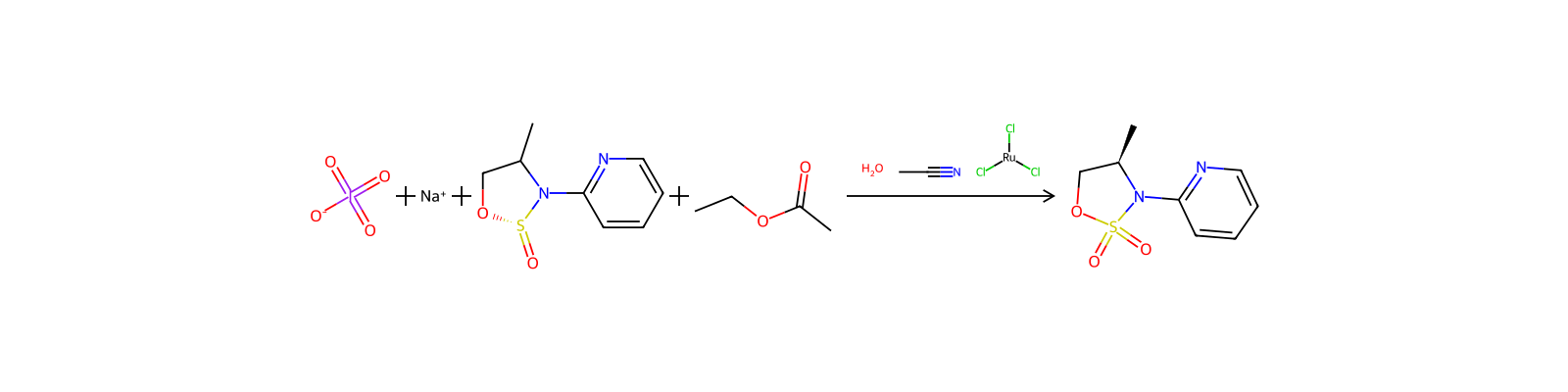
VerwendenRuthenium(III) chloride is widely used as a starting material of ruthenium complexes. It acts as a catalyst used in the oxidative cyclization of 1,7-dienes to oxepane diols. It is used in the hydroxylation of tertiary hydrocarbons in combination of periodate or bromate. It is involved as a catalyst in the synthesis of 2,3-pyridinedicarboxylic acid-13C3, 15N, where the unlabelled analog is an inhibitor of glucose synthesis.
Vor- und nachgelagerte Produkte
Vorgelagerte Rohstoffe
Nachgelagerte Produkte
Zugehörige Reaktionen
177







Notizen zur Verbindung
Wird geladen…