StartseiteMCPWorkbenchSkills
StartseiteWorkbenchBenachrichtigungenMein Bereich
llms.txt · MCP-AnleitungDatenschutz · Nutzungsbedingungen · Supportv1.8.0
  1. Startseite
  2. /Verbindung

Hexachloroplatinsure

Chloroplatinic acid

HCID 61859
Neue NotizNeue ReaktionAnfrage stellen
Druckvorschau

Daten werden ergänzt – lade die Seite später neu, um den aktuellen Stand zu sehen

GrundinformationenÜberblickNamen und BezeichnerEigenschaftenSicherheit und RegulatorischesChemie und IndustrieZugehörige ReaktionenNotizen zur Verbindung
TeilstruktursucheÄhnliche Strukturen suchen

Grundinformationen

CAS
16941-12-1
Standard-SMILES
[Cl][Pt-2]([Cl])([Cl])([Cl])([Cl])[Cl].[H+].[H+]
InChIKey
GBFHNZZOZWQQPA-UHFFFAOYSA-J
Summenformel
Cl6Pt.2H
Durchschnittliche Molmasse
409,8 g/mol

Überblick

Chloroplatinic acid, is a reddish-brown solid. It is soluble in water and will yield a mildly acidic solution. It may cause illness from inhalation of the dust and it is irritating to skin and eyes. When heated to high temperatures it may decompose to toxic chloride fumes. It may burn, but may be difficult to ignite. It is used for manufacturing indelible ink and in electroplating processes.

Namen und Bezeichner

Bevorzugter Name
Chloroplatinic acid
IUPAC
hexachloroplatinum(2-);hydron
Lokaler Name
Hexachloroplatinsure
Englischer Name
Chloroplantinic acid
Summenformel
Cl6H2Pt
Molmasse
409.81

Namen und Synonyme

Hexachloroplatinic acidSpeier's catalystDihydrogen hexachloroplatinateHYDROGEN HEXACHLOROPLATINATE(IV)Chloroplatinic(IV) acidPlatinum chloride (H2PtCl6)Hydrogen hexachloroplatinate(4+)Dihydrogen hexachloroplatinate(2-)Platinate(2-), hexachloro-, dihydrogenQ65224GJ7FRefChem:863765DTXCID90809564
Weitere Namen anzeigen
CPAChloroplatinic acid hexahydratePLATINUM CHLORIDEDihydrogen hexachloroplatinate(IV) solutionHEXACHLOROPLATINIC ACID HYDRATEHydrogen hexachloroplatinate(IV) solutionPL 50Tnsc4958
Hydrogen platinum chloride (H2PtCl6)241-010-716941-12-1Acid platinic chlorideChloroplatinic acidDTXSID30858819Hexachloroplatinic(IV) acidNa2PtCl6

Datenbank-Bezeichner

Eigenschaften

Berechnete StruktureigenschaftenWird ergänzt

Polarare Oberfläche (TPSA)
0 Ų
H-Brücken-Donoren
2
H-Brücken-Akzeptoren
1
Frei drehbare Bindungen
0
Schwere Atome
7
Formalladung
0
Komplexität
62,7

Experimentelle und physikochemische Eigenschaften

Chemical Classes · 2 Einträge

Metals -> Metals, Inorganic Compounds

Corrosives

Density2.431 @25 °C
Melting Point60 °C
Physical Description · 3 Einträge

Chloroplatinic acid, is a reddish-brown solid. It is soluble in water and will yield a mildly acidic solution. It may cause illness from inhalation of the dust and it is irritating to skin and eyes. When heated to high temperatures it may decompose to toxic chloride fumes. It may burn, but may be difficult to ignite. It is used for manufacturing indelible ink and in electroplating processes.

Dry Powder; Liquid; Liquid

Reddish-brown solid; Soluble in water; [CAMEO] Brownish or yellow crystals; Deliquescent; Odorless or mild odor of hydrogen chloride; [GFS Chemicals MSDS] Exists as hexahydrate; [Merck Index]

Physikochemische Eigenschaften

Schmelzpunkt
60 °C · 60 °C(lit.)
Dichte
2.43 g/mL · 2.43 g/mL at 25 °C(lit.)
Dampfdruck
0 Pa · 0Pa at 20℃

Sicherheit und Regulatorisches

Sicherheitsangaben dienen nur zur Orientierung und ersetzen weder das Sicherheitsdatenblatt (SDB) des Lieferanten noch geltende Vorschriften oder eine fachliche Bewertung.

GHS-Klassifizierung

GHS Classification · 6 Einträge

Danger

H301: Toxic if swallowed [Danger Acute toxicity, oral]

P233, P260, P261, P264, P270, P271, P272, P280, P284, P301+P316, P301+P330+P331, P302+P352, P302+P361+P354, P304+P340, P305+P354+P338, P316, P321, P330, P333+P317, P342+P316, P362+P364, P363, P403, P405, and P501 (click each P-code to see the statement)

Danger

H290 (65.8%): May be corrosive to metals [Warning Corrosive to Metals]

P233, P234, P260, P261, P264, P264+P265, P270, P271, P272, P273, P280, P284, P301+P316, P301+P330+P331, P302+P352, P302+P361+P354, P304+P340, P305+P354+P338, P316, P317, P319, P321, P330, P333+P317, P342+P316, P362+P364, P363, P390, P391, P403, P405, P406, and P501 (click each P-code to see the statement)

Gefahrenhinweise

Regulatory Information · 6 Einträge

Chemical: Platinate(2-), hexachloro-, dihydrogen, (OC-6-11)-

Hazard Traits - Respiratory Toxicity

Hazard Traits - Respiratory Toxicity

Platinate(2-), hexachloro-, hydrogen (1:2), (OC-6-11)- is listed on the EPA's Chemical Data Reporting (CDR) system. Manufacturers and importers of Platinate(2-), hexachloro-, hydrogen (1:2), (OC-6-11)- are required to report information about their production and use of this chemical to the EPA under the Toxic Substances Control Act (TSCA). (40 eCFR Part 711)

Status: Active Update: 05-10-2022 https://echa.europa.eu/registration-dossier/-/registered-dossier/21738

Hexachloroplatinic acid: Does not have an individual approval but may be used under an appropriate group standard

Other Safety InformationIMAP assessments - Platinate(2-), hexachloro-, dihydrogen, (OC-6-11)-: Environment tier I assessment
DOT LabelCorrosive
Fire Hazards · 2 Einträge

Chemie und Industrie

Verwendung und Herstellung

Uses · 2 Einträge

Used in plating, photography, mirrors, indelible inks, luster on glass, and acetic acid manufacturing; Also used for platinizing pumice stone, catalyzing sulfur trioxide production, relief etching of zinc (artistic and commercial applications), and fixing microscope preparations; [Merck Index] Used in electroplating; [CAMEO]

Electroplating [Category: Plate]

U.S. Production2023: 250,000 - <550,000 lb
Consumer UsesNot Known or Reasonably Ascertainable
Industry UsesIntermediate
General Manufacturing Information · 2 Einträge

Electrical Equipment, Appliance, and Component Manufacturing

Platinate(2-), hexachloro-, hydrogen (1:2), (OC-6-11)-: ACTIVE

Anwendungen · 1 Eintrag

VerwendenChloroplantinic acid (H2PtCl6) is one of the most commercially important compounds of platinum. Its many uses include etching on zinc, making indelible ink, plating, and coloring in fine porcelains and use in photography, in mirrors, and as a catalyst.

Vor- und nachgelagerte Produkte

Vorgelagerte Rohstoffe

PlatinPT-CAmmoniumchloroplatinatAmmoniumchloridSalpetersure

Nachgelagerte Produkte

Zugehörige Reaktionen

136
Reaktionsaufzeichnung erstellen
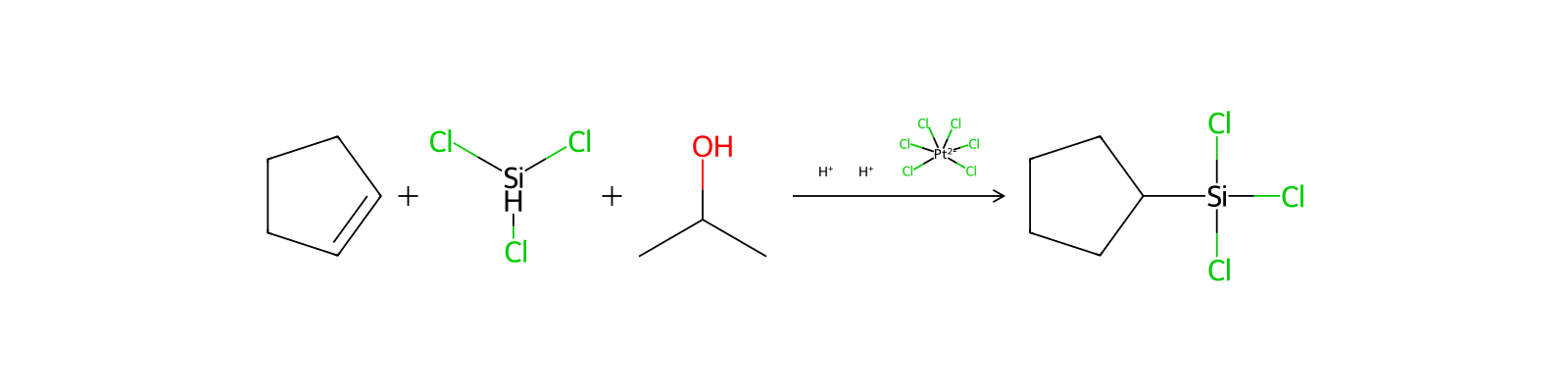
Reaktionsgleichung von HRID 2355
HRID 2355als Katalysatoruspto-grants-1998_03
Reaktionsgleichung von HRID 6444
HRID 6444als Katalysatoruspto-grants-1993_09
Reaktionsgleichung von HRID 6447
HRID 6447als Katalysatoruspto-grants-1993_09
Reaktionsgleichung von HRID 6449
HRID 6449als Katalysatoruspto-grants-1993_09
Reaktionsgleichung von HRID 6451
HRID 6451als Katalysatoruspto-grants-1993_09
Reaktionsgleichung von HRID 37599
HRID 37599als Katalysatoruspto-grants-1995_05
Reaktionsgleichung von HRID 37600
HRID 37600als Katalysatoruspto-grants-1995_05
Reaktionsgleichung von HRID 37601
HRID 37601als Katalysatoruspto-grants-1995_05
Seite 1 von 17

Notizen zur Verbindung

Wird geladen…

Auf dieser SeiteGrundinformationenÜberblickNamen und BezeichnerEigenschaftenSicherheit und RegulatorischesChemie und IndustrieZugehörige ReaktionenNotizen zur Verbindung
Weitere Aktionen
Neue NotizNeue ReaktionAnfrage stellen
CAS
16941-12-1
PubChem CID
61859
EC Number
241-010-7
Brechungsindex
20 · n20/D 1.347
storage temp.
2 · 2-8°C
Löslichkeit
2 O: · H2O: 0.5 M at 20 °C, clear, orange
Aggregatzustand
powder and chunks
Farbe
orange
Wasserlöslichkeit
soluble
Merck
14 · 14,7526
Stabilität
May decompose on exposure to light, air or moisture.
Kosmetik-Inhaltsstoffe Funktionen
SURFACTANT - CLEANSING
InChI
InChI=1S/6ClH.Pt/h6*1H;/q;;;;;;+4/p-4
InChIKey
GBFHNZZOZWQQPA-UHFFFAOYSA-J
SMILES
[Pt](Cl)(Cl)(Cl)Cl.Cl.Cl
EPA chemische Informationen
Platinate(2-), hexachloro-, hydrogen (1:2), (OC-6-11)- (16941-12-1)

Excerpt from ERG Guide 154 [Substances - Toxic and/or Corrosive (Non-Combustible)]:

· Non-combustible, substance itself does not burn but may decompose upon heating to produce corrosive and/or toxic fumes.

Health Hazards · 2 Einträge

Excerpt from ERG Guide 154 [Substances - Toxic and/or Corrosive (Non-Combustible)]:

· TOXIC and/or CORROSIVE; inhalation, ingestion or skin contact with material may cause severe injury or death.

Hazards Summary · 1 Eintrag

May cause asthma or dermatitis; [Merck Index] A skin and eye irritant; [CAMEO] Hydrate is CAS# 26023-84-7; A skin and eye irritant; Harmful by ingestion and inhalation; Chronic exposure may cause sensitivity; [GFS Chemicals MSDS] Solution: Causes burns; Inhalation may cause corrosive injuries to upper respiratory tract and lungs; May cause respiratory sensitization; Toxic by ingestion; [Sigma-Aldrich MSDS] See Platinic chloride hexahydrate.

DOT ID and Guide2507 154
Reactive GroupAcids, Weak
Reactivity Profile · 1 Eintrag

Oxidizing acids are generally soluble in water with the release of hydrogen ions. The resulting solutions have pH's of less than 7.0. Materials in this group react with chemical bases (for example: amines and inorganic hydroxides) to form salts. These neutralization reactions occur as the base accepts hydrogen ions that the acid donates. Neutralizations can generate dangerously large amounts of heat in small spaces. The dissolution of acids in water or the dilution of their concentrated solutions with water may generate significant heat. The addition of water acids often generates sufficient heat in the small region of mixing to boil some of the water explosively. The resulting "bumping" spatters acid widely. These materials have significant ability as oxidizing agents. but that ability varies (for example, from high for nitric acid to low for sulfuric acid and most sulfonic acids). They can react with active metals, including iron and aluminum, and also many less active metals, to dissolve the metal and liberate hydrogen and/or toxic gases. Like other acids, materials in this group can initiate polymerization in certain classes of organic compounds. Their reactions with cyanide salts and compounds release gaseous hydrogen cyanide. Flammable and/or toxic gases are also often generated by their reactions with dithiocarbamates, isocyanates, mercaptans, nitrides, nitriles, sulfides, and weak or strong reducing agents. Additional gas-generating reactions occur with sulfites, nitrites, thiosulfates (to give H2S and SO3), dithionites (SO2), and even carbonates: the carbon dioxide gas from the last is nontoxic but the heat and spattering from the reaction can be troublesome. Acids often catalyze (increase the rate) of chemical reactions.

DOT Hazard Classification · 4 Einträge

Chloroplatinic acid, solid

UN2507

Class 8 Corrosive material (49 eCFR § 173.136)

PG III: the degree of danger presented by the material is minor

Air and Water ReactionsSoluble in water.
Hazard Classes and Categories · 6 Einträge

Met. Corr. 1 (65.8%)

Acute toxicity - category 3

Respiratory sensitization - Category 1

Serious eye damage/eye irritation - Category 1

Corrosives, Reactive agents - 1st degree

Acute Tox. 3 *

Sicherheit und Schutzausrüstung

Fire FightingExcerpt from ERG Guide 154 [Substances - Toxic and/or Corrosive (Non-Combustible)]:
Accidental Release Measures · 2 Einträge

· CALL 911. Then call emergency response telephone number on shipping paper. If shipping paper not available or no answer, refer to appropriate telephone number listed on the inside back cover.

· ELIMINATE all ignition sources (no smoking, flares, sparks or flames) from immediate area.

First Aid · 2 Einträge

Excerpt from ERG Guide 154 [Substances - Toxic and/or Corrosive (Non-Combustible)]:

General First Aid:

Exposure Control and Personal Protection· Wear positive pressure self-contained breathing apparatus (SCBA).
Nonfire Spill ResponseExcerpt from ERG Guide 154 [Substances - Toxic and/or Corrosive (Non-Combustible)]:
Isolation and Evacuation · 2 Einträge

Excerpt from ERG Guide 154 [Substances - Toxic and/or Corrosive (Non-Combustible)]:

Immediate precautionary measure

Threshold Limit Values (TLV)0.002 [mg/m3], as Pt
Permissible Exposure Limit (PEL)0.002 [mg/m3], as Pt
Protective Action Criteria (PAC) · 3 Einträge

0.013 [mg/m3]

3.2 [mg/m3]

19 [mg/m3]

Personal Protective Equipment (PPE)Excerpt from ERG Guide 154 [Substances - Toxic and/or Corrosive (Non-Combustible)]:
Emergency Response Planning GuidelinesSmall Fire
Immediately Dangerous to Life or Health (IDLH)4 mg Pt/m3 (NIOSH, 2024)

Toxikologische Informationen

Adverse EffectsDermatotoxin - Skin burns.

Sicherheitsdaten

F
3-8-10
wgk
1
tsca
TSCA listed
ridadr
UN 2507
hs_code
28439000
RTECS-Nr.
TP1510000
risk_code
25-34-42/43-36/38-36/37/38-22
hazard_code
T,C,Xi
safety_code
26-27-36/37/39-45-22-23
hazard_class
8
packing_group
III
Speicherklasse
6.1B - Non-combustible acute toxic Cat. 1 and 2very toxic hazardous materials
Hazard Classifications
Acute Tox. 3 OralAquatic Chronic 2Eye Dam. 1Met. Corr. 1Resp. Sens. 1Skin Corr. 1BSkin Sens. 1STOT RE 2
hydrofining catalysts for raffinate oil

Ergänzende Hinweise

Definitionchloroplatinic acid: A reddish crystallinecompound, H2PtCl6, made bydissolving platinum in aqua regia.