2,3-Dinitrophenol
Daten werden ergänzt – lade die Seite später neu, um den aktuellen Stand zu sehen

Grundinformationen
- CAS
66-56-8- Standard-SMILES
O=[N+]([O-])c1cccc(O)c1[N+](=O)[O-]- InChIKey
MHKBMNACOMRIAW-UHFFFAOYSA-N- Summenformel
- C6H4N2O5
- Durchschnittliche Molmasse
- 184,11 g/mol
- Monoisotopische Masse
- 184,01202123
Überblick
2,3-dinitrophenol is a dinitrophenol.
Namen und Bezeichner
- Bevorzugter Name
- 2,3-Dinitrophenol
- IUPAC
- 2,3-dinitrophenol
- Lokaler Name
- 2,3-Dinitrophenol
- Englischer Name
- 2,3-DINITROPHENOL
- Summenformel
- C6H4N2O5
- Molmasse
- 184.11
Namen und Synonyme
2,3-DINITROPHENOL66-56-8Phenol, 2,3-dinitro-2,3-DNPDTXSID2075261NSC-156083735M30625HCHEBI:39354RefChem:81872DTXCID7044685200-628-725550-58-7
Weitere Namen anzeigen
2,3-dinitro-phenoDinitrophenol, 2,3-2,3-dinitrophenolmoistenedwithwater(h2o~20%)2,3-Dinitrophenol moistened with water, >=98.0% (HPLC)
2,3-Dinitrofenol [Czech]2,3-DinitrofenolCCRIS 3101EINECS 200-628-7NSC 156083BRN 2213580Phenol,3-dinitro-NSC156083
Datenbank-Bezeichner
- CAS
66-56-8- PubChem CID
- 6191
- DTXSID
DTXSID2075261- ChEMBL
CHEMBL3347393- ChEBI
CHEBI:39354- UNII
- 735M30625H
- EC Number
- 200-628-7
- Nikkaji
- J53.754C
Eigenschaften
Berechnete StruktureigenschaftenWird ergänzt
- XLogP
- 1,9
- Polarare Oberfläche (TPSA)
- 112 Ų
- H-Brücken-Donoren
- 1
- H-Brücken-Akzeptoren
- 5
- Frei drehbare Bindungen
- 0
- Schwere Atome
- 13
- Formalladung
- 0
- Komplexität
- 220
Experimentelle und physikochemische Eigenschaften
Chemical ClassesNitrogen Compounds -> Nitrophenols
SpringerMaterials PropertiesBoiling point
Density1.681 @ 20°C
Melting Point144.5 °C
Vapor Pressure0.000012 [mmHg]
Physical DescriptionYellow needles or crystals
Physikochemische Eigenschaften
- Schmelzpunkt
- 141 · 141-145 °C
- Siedepunkt
- 329 ℃ · 329℃
- Dichte
- 1.65 · 1.650
- Brechungsindex
- 1.4738 · 1.4738 (estimate)
- Flammpunkt
- 151 ℃ · 151℃
- Löslichkeit
- Solubility Sparingly soluble in water; soluble in ethanol, ether
Sicherheit und Regulatorisches
Sicherheitsangaben dienen nur zur Orientierung und ersetzen weder das Sicherheitsdatenblatt (SDB) des Lieferanten noch geltende Vorschriften oder eine fachliche Bewertung.
GHS-Klassifizierung
GHS Classification
Danger
H301: Toxic if swallowed [Danger Acute toxicity, oral]
P260, P261, P262, P264, P270, P271, P273, P280, P301+P316, P302+P352, P304+P340, P316, P319, P321, P330, P361+P364, P391, P403+P233, P405, and P501 (click each P-code to see the statement)
Danger
H301 (100%): Toxic if swallowed [Danger Acute toxicity, oral]
P260, P261, P262, P264, P270, P271, P273, P280, P301+P316, P302+P352, P304+P340, P316, P319, P321, P330, P361+P364, P391, P403+P233, P405, and P501 (click each P-code to see the statement)
Gefahrenhinweise
Hazards SummaryMay cause irritation, disruption of oxidative phosphorylation, liver injury, and dermatitis; Highly toxic by inhalation; Toxic by ingestion and skin absorption; [Aldrich MSDS]
See Dinitrophenol.
Hazard Classes and Categories
Acute Tox. 3 (100%)
Acute toxicity - category 3
Acute Tox. 3 *
Sicherheit und Schutzausrüstung
Protective Action Criteria (PAC)
1.5 [mg/m3]
13 [mg/m3]
75 [mg/m3]
Toxikologische Informationen
Adverse EffectsOccupational hepatotoxin - Secondary hepatotoxins: the potential for toxic effect in the occupational setting is based on cases of poisoning by human ingestion or animal experimentation.
Chemie und Industrie
Verwendung und Herstellung
UsesA minor constituent of commercial dinitrophenol mixtures, which are used to make dyes, wood preservatives, photographic developers, explosives, insecticides, and other chemicals; [ATSDR ToxProfiles]
Anwendungen
Verwenden2,3-Dinitrophenol may be employed as nitrogen supplement for the bacterial culture medium.
Vor- und nachgelagerte Produkte
Nachgelagerte Produkte
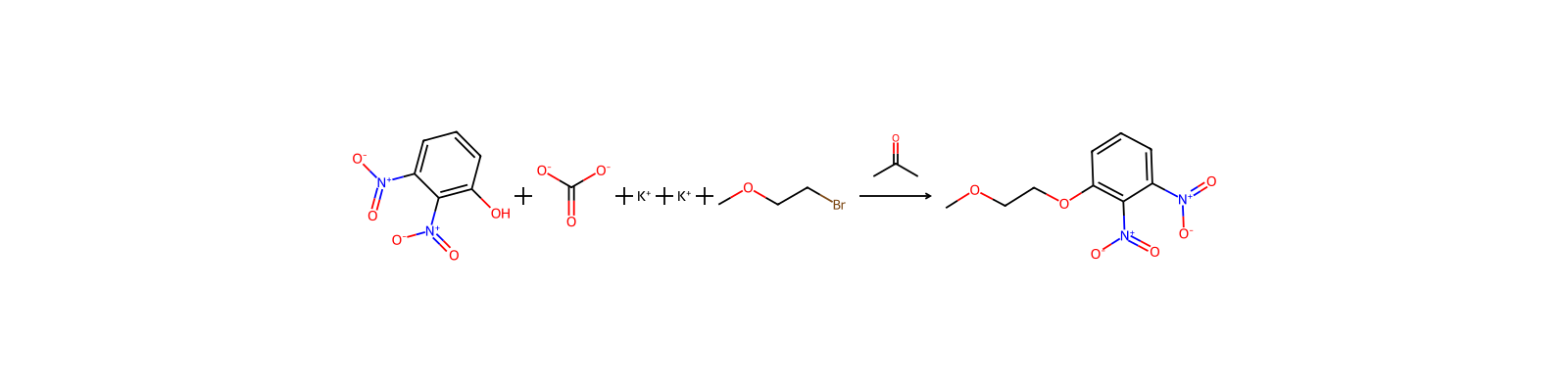
Zugehörige Reaktionen
18


Notizen zur Verbindung
Wird geladen…