

Grundinformationen
- Standard-SMILES
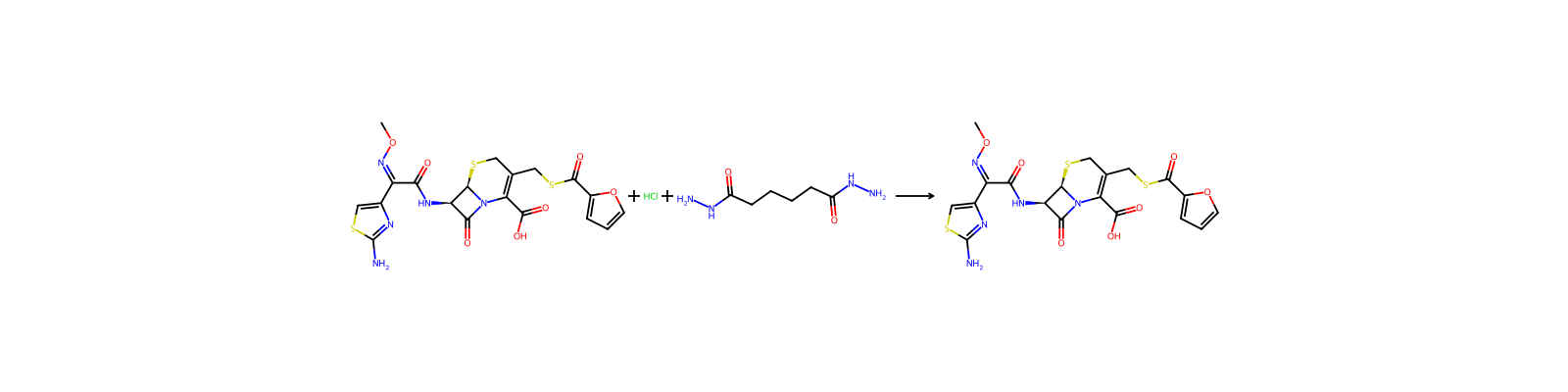
CO/N=C(\C(=O)N[C@@H]1C(=O)N2C(C(=O)O)=C(CSC(=O)c3ccco3)CS[C@H]12)c1csc(N)n1- InChIKey
ZBHXIWJRIFEVQY-IHMPYVIRSA-N- Summenformel
- C19H17N5O7S3
- Durchschnittliche Molmasse
- 523,6 g/mol
- Monoisotopische Masse
- 523,02901088
Überblick
Ceftiofur is a third generation cephalosporin antibiotic, first described in 1987, and now used in veterinary medicine. It is marketed by pharmaceutical company Zoetis as Excenel, and is the active ingredient in that company's Specramast LC (lactating cow formula) product. It is resistant to hydrolysis by beta-lactamase, and has activity against both Gram-positive and Gram-negative bacteria. E. coli strains resistant to ceftiofur have been reported. The metabolite desfurolyceftiofur also has antibiotic activity, consequently the two compounds are measured together to monitor for antibiotic activity in the milk.
Namen und Bezeichner
- Bevorzugter Name
- Ceftiofur
- IUPAC
- (6R,7R)-7-[[(2Z)-2-(2-amino-1,3-thiazol-4-yl)-2-methoxyiminoacetyl]amino]-3-(furan-2-carbonylsulfanylmethyl)-8-oxo-5-thia-1-azabicyclo[4.2.0]oct-2-ene-2-carboxylic acid
Namen und Synonyme
Ceftiofur80370-57-6NaxcelCeftiofurumCeftiofur crystalline free acidDTXSID704670283JL932I1CDTXCID5026702Excede(6R,7R)-7-[(2Z)-2-(2-amino-1,3-thiazol-4-yl)-2-(methoxyimino)acetamido]-3-[(furan-2-carbonylsulfanyl)methyl]-8-oxo-5-thia-1-azabicyclo[4.2.0]oct-2-ene-2-carboxylic acid5-Thia-1-azabicyclo(4.2.0)oct-2-ene-2-carboxylic acid, 7-(((2Z)-(2-amino-4-thiazolyl)(methoxyimino)acetyl)amino)-3-(((2-furanylcarbonyl)thio)methyl)-8-oxo-, (6R,7R)-Ceftiofur Free Acid
Weitere Namen anzeigen
Excede Sterile(6R,7R)-7-((2Z)-2-(2-amino-1,3-thiazol-4-yl)-2-(methoxyimino)acetamido)-3-((furan-2-carbonylsulfanyl)methyl)-8-oxo-5-thia-1-azabicyclo(4.2.0)oct-2-ene-2-carboxylic acidEXCEDE FOR SWINERefChem:54736Excede for Swine SterileCeftiofur (INN)CEFTIOFUR [INN](6R,7R)-7-(2-(2-Amino-4-thiazolyl)glyoxylamido)-3-(mercaptomethyl)-8-oxo-5-thia-1-azabicyclo(4.2.0)oct-2-ene-2-carboxylic acid, 7(sup 2)-(Z)-(O-methyloxime), 2-furoate (ester)
Datenbank-Bezeichner
- CAS
80370-57-6- PubChem CID
- 6328657
- DTXSID
DTXSID7046702- ChEMBL
CHEMBL222913- UNII
- 83JL932I1C
- EC Number
- 688-302-4
- Nikkaji
- J33.126K
Eigenschaften
Berechnete Struktureigenschaften
- XLogP
- 0,2
- Polarare Oberfläche (TPSA)
- 256 Ų
- H-Brücken-Donoren
- 3
- H-Brücken-Akzeptoren
- 13
- Frei drehbare Bindungen
- 9
- Schwere Atome
- 34
- Formalladung
- 0
- Komplexität
- 945
Experimentelle und physikochemische Eigenschaften
DrugsPharmaceuticals -> Antibiotics
Animal Drugs
EMA approved medicines: Veterinary medicine
Active Ingredients (Ceftiofur Crystalline Free Acid) -> FDA Greenbook
Pharmaceuticals -> UK Veterinary Medicines Directorate List
Pharmaceuticals -> Animal Drugs -> Approved in Taiwan
Other Experimental Properties
Mol wt: 545.55 /Monosodium salt/
Mol wt: 560.03 /Monohydrochloride/
Sicherheit und Regulatorisches
GHS-Klassifizierung
GHS Classification
This chemical does not meet GHS hazard criteria for 66.7% (2 of 3) of all reports.
Danger
H317 (33.3%): May cause an allergic skin reaction [Warning Sensitization, Skin]
P233, P260, P261, P271, P272, P280, P284, P302+P352, P304+P340, P321, P333+P317, P342+P316, P362+P364, P403, and P501 (click each P-code to see the statement)
Aggregated GHS information provided per 3 reports by companies from 2 notifications to the ECHA C&L Inventory. Each notification may be associated with multiple companies.
Gefahrenhinweise
Regulatory InformationCeftiofur: Does not have an individual approval but may be used under an appropriate group standard
FDA Requirements
Implantation or injectable dosage form new animal drugs. Ceftiofur crystalline free acid. ... (1) Swine. Indications for use: For the treatment of swine respiratory disease (SRD) associated with Actinobacillus pleuropneumoniae, Pasteurella multocida, Haemophilus parasuis, and Streptococcus suis. ... (2) Cattle. Indications for use. For the treatment of bovine respiratory disease (BRD, shipping fever, pneumonia) associated with Mannheimia haemolytica, Pasteurella multocida, and Histophilus somni in beef, non-lactating dairy, and lactating dairy cattle. For the control of respiratory disease in beef and non-lactating dairy cattle which are at high risk of developing BRD associated with M. haemolytica, P. multocida, and H. somni. /Ceftiofur crystalline free acid/
Implantation or injectable dosage form new animal drugs. Ceftiofur hydrochloride. ... (1) Swine. Indications for use: For treatment and control of swine bacterial respiratory disease (swine bacterial pneumonia) associated with Actinobacillus pleuropneumoniae, Pasteurella multocida, Salmonella choleraesuis, and Streptococcus suis. ... (2) Cattle. Indications for use: For treatment of bovine respiratory disease (BRD, shipping fever, pneumonia) associated with Mannheimia haemolytica, P. multocida, and Histophilus somni; acute bovine interdigital necrobacillosis (foot rot, pododermatitis) associated with Fusobacterium necrophorum and Bacteroides melaninogenicus; and acute metritis (0 to 14 days post-partum) associated with bacteria susceptible to ceftiofur. /Ceftiofur hydrochloride/
Implantation or injectable dosage form new animal drugs. Ceftiofur sodium. ... (1) Swine. Indications for use: For treatment and control of swine bacterial respiratory disease (swine bacterial pneumonia) associated with Actinobacillus pleuropneumoniae, Pasteurella multocida, Salmonella choleraesuis, and Streptococcus suis. ... (2) Cattle. Indications for use: For treatment of bovine respiratory disease (shipping fever, pneumonia) associated with Mannheimia haemolytica, P. multocida, and Histophilus somni in beef and dairy cattle; and for treatment of acute bovine interdigital necrobacillosis (foot rot, pododermatitis) associated with Fusobacterium necrophorum and Bacteroides melaninogenicus. ... (3) Sheep. Indications for use: For treatment of sheep respiratory disease (pneumonia) associated with M. haemolytica and P. multocida. ... (4) Goats. Indications for use: For treatment of caprine respiratory disease (goat pneumonia) associated with M. haemolytica and P. multocida. ... (5) Chickens. Indications for use: For control of early mortality associated with Escherichia coli organisms susceptible to ceftiofur in day-old chicks. ... (6) Turkeys. Indications for use: For control of early mortality associated with E. coli organisms susceptible to ceftiofur in day-old poults. ... (7) Horses. Indications for use: For treatment of respiratory infections in horses associated with Streptococcus zooepidemicus. ... (8) Dogs. Indications for use: For treatment of canine urinary tract infections associated with E. coli and Proteus mirabilis. /Ceftiofur sodium/
Intramammary dosage forms. Ceftiofur. ... (1) Lactating cows. Indications for use. For the treatment of clinical mastitis in lactating dairy cattle associated with coagulase-negative staphylococci, Streptococcus dysgalactiae, and Escherichia coli. ... (2) Dry cows. For the treatment of subclinical mastitis in dairy cattle at the time of dry off associated with Staphylococcus aureus, Streptococcus dysgalactiae, and Streptococcus uberis.
For more FDA Requirements (Complete) data for CEFTIOFUR (6 total), please visit the HSDB record page.
Hazard Classes and CategoriesSkin Sens. 1 (33.3%)
Sicherheit und Schutzausrüstung
Storage Conditions
Store unreconstituted product at controlled room temperature, 20 to 25 °C (68 to 77 °F), unless otherwise specified by manufacturer. Store reconstituted product either in a refrigerator at 2 to 8 °C (36 to 46 °F) for up to seven days or at controlled room temperature, 20 to 25 °C (68 to 77 °F), for up to twelve hours, unless otherwise specified by manufacturer. Protect from light. /Ceftiofur sodium for injection/
Store below 40 °C (104 °F), preferably between 15 and 30 °C (59 and 86 °F), unless otherwise specified by manufacturer. Protect from freezing. /Ceftiofur hydrochloride injection/
Disposal Methods
SRP: At the time of review, criteria for land treatment or burial (sanitary landfill) disposal practices are subject to significant revision. Prior to implementing land disposal of waste residue (including waste sludge), consult with environmental regulatory agencies for guidance on acceptable disposal practices.
Allowable Tolerances
Tolerances-(1) Poultry, and sheep. A tolerance for residues of ceftiofur in edible tissue is not required. (2) Swine. The tolerances for desfuroylceftiofur (marker residue) are: (i) Kidney (target tissue). 0.25 parts per million (ppm). (ii)Liver. 3 ppm. (iii) Muscle. 2 ppm. (3) Cattle. The tolerances for desfuroylceftiofur (marker residue) are: (i) Kidney (target tissue). 0.4 ppm. (ii) Liver. 2 ppm. (iii)Muscle. 1 ppm. (iv) Milk. 0.1 ppm.
Toxikologische Informationen
Environmental Fate
TERRESTRIAL FATE: Based on a classification scheme(1), an estimated Koc value of 3,700(SRC), determined from a structure estimation method(2), indicates that ceftiofur is expected to have slight mobility in soil(SRC). An estimated pKa of 3.7 (carboxylic acid)(SRC), calculated using a method based on linear free energy relationships and perturbed molecular orbital theory(3), indicates that this compound will exist primarily as an anion in the environment and anions generally have higher mobility in soils than their neutral counterparts(4). Volatilization of ceftiofur from moist soil surfaces is not expected to be an important fate process(SRC) since anions do not volatilize. Ceftiofur is not expected to volatilize from dry soil surfaces(SRC) based upon an estimated vapor pressure of 6X10-20 mm Hg(SRC), determined from a fragment constant method(6). Half-lives reported for the aerobic biodegradation of cefiofur sodium in clay loam at pH 5, sand at pH 7, and silty clay loam at pH 9 were 22.2, 49, and 41.1 days, respectively(7-9).
AQUATIC FATE: Based on a classification scheme(1), an estimated Koc value of 3,700(SRC), determined from a structure estimation method(2), indicates that ceftiofur is expected to adsorb to suspended solids and sediment(SRC). However, an estimated pKa of 3.7 (carboxylic acid)(SRC), calculated using a method based on linear free energy relationships and perturbed molecular orbital theory(3), indicates that this compound will exist primarily as an anion in the environment, and anions do not adsorb to sediment as strongly as their neutral counterparts(4). Volatilization from water surfaces is not expected because anions do not volatilize. According to a classification scheme(5), an estimated BCF of 3(SRC), from an estimated log Kow of 1.6(6) and a regression-derived equation(7), suggests the potential for bioconcentration in aquatic organisms is low(SRC). Half-lives reported for the aqueous hydrolysis of ceftiofur sodium were 22.2 days at pH 5, 49 days at pH 7, and 41.1 days at pH 9(8,9). Half-lives reported for the aerobic biodegradation of ceftiofur sodium in clay loam at pH 5, sand at pH 7, and silty clay loam at pH 9 were 22.2, 49, and 41.1 days, respectively(8-10).
ATMOSPHERIC FATE: According to a model of gas/particle partitioning of semivolatile organic compounds in the atmosphere(1), ceftiofur, which has an estimated vapor pressure of 6X10-20 mm Hg(SRC), determined from a fragment constant method(2), is expected to exist solely in the particulate phase in the ambient atmosphere. Particulate-phase ceftiofur may be removed from the air by wet or dry deposition(SRC). Ceftiofur contains chromophores that absorb at wavelengths >290 nm indicating that this substance may be susceptible to direct photolysis by sunlight(3); however photodegradation of ceftiofur sodium has been reported to be minimal(4).
Soil Adsorption/Mobility
Using a structure estimation method based on molecular connectivity indices(1), the Koc of ceftiofur can be estimated to be 3,700(SRC). According to a classification scheme(2), this estimated Koc value suggests that ceftiofur is expected to have slight mobility in soil. However, an estimated pKa of 3.7 (carboxylic acid)(SRC), calculated using a method based on linear free energy relationships and perturbed molecular orbital theory(3), indicates that this compound will exist primarily as an anion in the environment and anions generally have higher mobility in soils than their neutral counterparts(4).
Artificial Pollution SourcesCeftiofur's production and use as a veterinary antibacterial medicine(1,2) may result in its release to the environment through various waste streams(SRC).
Environmental BiodegradationAEROBIC: Half-lives reported for the aerobic biodegradation of cefiofur sodium in clay loam at pH 5, sand at pH 7, and silty clay loam at pH 9 were 22.2, 49, and 41.1 days, respectively(1-3).
Environmental Bioconcentration
An estimated BCF of 3 was calculated for ceftiofur(SRC), using an estimated log Kow of 1.6(1) and a regression-derived equation(2). According to a classification scheme(3), this BCF suggests the potential for bioconcentration in aquatic organisms is low(SRC).
Volatilization from Water/Soil
An estimated pKa of 3.7 (carboxylic acid)(1), calculated using a method based on linear free energy relationships and perturbed molecular orbital theory(2), indicates that this compound will exist primarily as an anion in the environment. Volatilization from moist soil or water surfaces is not expected(SRC) since anions do not volatilize. Ceftiofur is not expected to volatilize from dry soil surfaces(SRC) based upon an estimated vapor pressure of 6X10-20 mm Hg(SRC), determined from a fragment constant method(3).
Non-Human Toxicity Excerpts
/LABORATORY ANIMALS: Acute Exposure/ In an inhalation study, ceftiofur was administered at an aerosol concentration of 8.3 mg/L to a group of 5 male and 5 female Sprague-Dawley rats for a 4-hr exposure period. During exposure, rats exhibited salivation, nasal discharge and dyspnea; these signs virtually disappeared within 1 hr after exposure. Post-exposure signs included diarrhea in 6 rats, and 1 rat exhibited a red encrusted material around the nares. Both gross and microscopic examination did not reveal any treatment-related changes.[Joint FAO/WHO Expert Committee on Food Additives; WHO Food Additive Series 36: Toxicological Evaluation of Certain Veterinary Drug Residues in Food: Ceftiofur (1996). Available from, as of July 17, 2006: http://www.inchem.org/documents/jecfa/jecmono/v36je01.htm]
/LABORATORY ANIMALS: Acute Exposure/ In an acute oral study, ceftiofur was administered as a single dose of up to 7800 mg/kg bw to groups of Sprague-Dawley rats (10/sex). Treatment-related diarrhea was noted at the 2 highest dose levels. No other treatment-related signs were observed.[Joint FAO/WHO Expert Committee on Food Additives; WHO Food Additive Series 36: Toxicological Evaluation of Certain Veterinary Drug Residues in Food: Ceftiofur (1996). Available from, as of July 17, 2006: http://www.inchem.org/documents/jecfa/jecmono/v36je01.htm]
/LABORATORY ANIMALS: Acute Exposure/ In studies in which cattle were given daily intramuscular injections of up to 55 mg/kg bw/day for 5 days and pigs were given dally intramuscular injections of up to 125 mg/kg bw/day for 5 days, transient injection site reactions were the most notable findings.[European Medicines Agency (EMEA), The European Agency for the Evaluation of Medicinal Products, Veterinary Medicines Evaluation Unit, Committee for Veterinary Medicinal Products; Ceftiofur, Summary Report (2). EMEA/MRL/498/98-Final (July 1999). Available from, as of July 21, 2006: http://www.ema.europa.eu/ema/index.jsp?curl=pages/document_library/landing/document_library_search.jsp&murl=menus/document_library/document_library.jsp&mid]
/LABORATORY ANIMALS: Acute Exposure/ The acute toxicity of ceftiofur was studied in groups of 5 female mice per dose, which were treated via the iv and im routes. In the iv study, convulsions preceded death while in the im study, mild prostration was noted.[Joint FAO/WHO Expert Committee on Food Additives; WHO Food Additive Series 36: Toxicological Evaluation of Certain Veterinary Drug Residues in Food: Ceftiofur (1996). Available from, as of July 17, 2006: http://www.inchem.org/documents/jecfa/jecmono/v36je01.htm]
For more Non-Human Toxicity Excerpts (Complete) data for CEFTIOFUR (20 total), please visit the HSDB record page.
Environmental Abiotic Degradation
Half-lives reported for the aqueous hydrolysis of cefiofur sodium were 22.2 days at pH 5, 49 days at pH 7, and 41.1 days at pH 9(1,2). Ceftiofur contains chromophores that absorb at wavelengths >290 nm indicating that this substance may be susceptible to direct photolysis by sunlight(3); however photodegradation of ceftiofur sodium has been reported to be minimal(4); data supporting this conclusion were not provided by the authors.
Probable Routes of Human Exposure
Occupational exposure to ceftiofur may occur through dermal contact with this compound at workplaces where ceftiofur is produced or used. Exposure of the general population is expected to be limited to those who administer this substance to animals and those who eat foods made from animals containing residues of this substance. (SRC)
Environmental Fate/Exposure Summary
Ceftiofur's production and use as a veterinary antibacterial medicine may result in its release to the environment through various waste streams. If released to air, an estimated vapor pressure of 6X10-20 mm Hg at 25 °C indicates ceftiofur will exist solely in the particulate phase in the atmosphere. Particulate-phase ceftiofur will be removed from the atmosphere by wet or dry deposition. Ceftiofur contains chromophores that absorb at wavelengths >290 nm indicating that this substance may be susceptible to direct photolysis by sunlight; however photodegradation of centiofur sodium has been reported to be minimal. If released to soil, ceftiofur is expected to have slight mobility based upon an estimated Koc of 3,700. An estimated pKa of 3.7 (carboxylic acid) indicates that this compound will exist primarily as an anion in the environment and anions generally have higher mobility in soils than their neutral counterparts. Volatilization from moist soil surfaces is not expected to be an important fate process because anions do not volatilize. Volatilization from dry soil surfaces is not expected based on the estimated vapor pressure. Half-lives reported for the aerobic biodegradation of cefiofur sodium in clay loam at pH 5, and at pH 7, and silty clay loam at pH 9 were 22.2, 49, and 41.1 days, respectively. If released into water, ceftiofur is expected to adsorb to suspended solids and sediment based upon the estimated Koc; however, adsorption may be less than this Koc indicates since ceftiofur exists primarily as an anion in the environment and anions generally do not adsorb to sediments as strongly as their neutral counterparts. Volatilization is not expected to be an important fate process in water since anions do not volatilize. An estimated BCF of 3 suggests the potential for bioconcentration in aquatic organisms is low. Half-lives reported for the aqueous hydrolysis of ceftiofur sodium were 22.2 days at pH 5, 49 days at pH 7, and 41.1 days at pH 9. Occupational exposure to ceftiofur may occur through dermal contact with this compound at workplaces where ceftiofur is produced or used. Exposure of the general population is expected to be limited to those who administer this substance to animals and those who eat foods made from animals containing residues of this substance. (SRC)
Antidote and Emergency Treatment
/SRP:/ Basic treatment: Establish a patent airway (oropharyngeal or nasopharyngeal airway, if needed). Suction if necessary. Watch for signs of respiratory insufficiency and assist ventilations if needed. Administer oxygen by nonrebreather mask at 10 to 15 L/min. Monitor for pulmonary edema and treat if necessary ... . Monitor for shock and treat if necessary ... . Anticipate seizures and treat if necessary ... . For eye contamination, flush eyes immediately with water. Irrigate each eye continuously with 0.9% saline (NS) during transport ... . Do not use emetics. For ingestion, rinse mouth and administer 5 ml/kg up to 200 ml of water for dilution if the patient can swallow, has a strong gag reflex, and does not drool ... . Cover skin burns with dry sterile dressings after decontamination ... . /Poisons A and B/
/SRP:/ Advanced treatment: Consider orotracheal or nasotracheal intubation for airway control in the patient who is unconscious, has severe pulmonary edema, or is in severe respiratory distress. Positive-pressure ventilation techniques with a bag valve mask device may be beneficial. Consider drug therapy for pulmonary edema ... . Consider administering a beta agonist such as albuterol for severe bronchospasm ... . Monitor cardiac rhythm and treat arrhythmias as necessary ... . Start IV administration of D5W /SRP: "To keep open", minimal flow rate/. Use 0.9% saline (NS) or lactated Ringer's if signs of hypovolemia are present. For hypotension with signs of hypovolemia, administer fluid cautiously. Watch for signs of fluid overload ... . Treat seizures with diazepam or lorazepam ... . Use proparacaine hydrochloride to assist eye irrigation ... . /Poisons A and B/
Acceptable Daily Intakes
Acceptable daily intake and acceptable single-dose intake-(1) Acceptable daily intake (ADI). The ADI for total residues of ceftiofur is 30 micrograms per kilogram of body weight per day. (2) Acceptable single-dose intake (ASDI). The ASDI total residues of ceftiofur is 0.830 milligrams per kilogram of body weight. The ASDI is the amount of total residues of ceftiofur that may safely be consumed in a single meal. The ASDI is used to derive the tolerance for residues of desfuroylceftiofur at the injection site.
Regulatorische Informationen
FDA Requirements
Implantation or injectable dosage form new animal drugs. Ceftiofur crystalline free acid. ... (1) Swine. Indications for use: For the treatment of swine respiratory disease (SRD) associated with Actinobacillus pleuropneumoniae, Pasteurella multocida, Haemophilus parasuis, and Streptococcus suis. ... (2) Cattle. Indications for use. For the treatment of bovine respiratory disease (BRD, shipping fever, pneumonia) associated with Mannheimia haemolytica, Pasteurella multocida, and Histophilus somni in beef, non-lactating dairy, and lactating dairy cattle. For the control of respiratory disease in beef and non-lactating dairy cattle which are at high risk of developing BRD associated with M. haemolytica, P. multocida, and H. somni. /Ceftiofur crystalline free acid/
Implantation or injectable dosage form new animal drugs. Ceftiofur hydrochloride. ... (1) Swine. Indications for use: For treatment and control of swine bacterial respiratory disease (swine bacterial pneumonia) associated with Actinobacillus pleuropneumoniae, Pasteurella multocida, Salmonella choleraesuis, and Streptococcus suis. ... (2) Cattle. Indications for use: For treatment of bovine respiratory disease (BRD, shipping fever, pneumonia) associated with Mannheimia haemolytica, P. multocida, and Histophilus somni; acute bovine interdigital necrobacillosis (foot rot, pododermatitis) associated with Fusobacterium necrophorum and Bacteroides melaninogenicus; and acute metritis (0 to 14 days post-partum) associated with bacteria susceptible to ceftiofur. /Ceftiofur hydrochloride/
Implantation or injectable dosage form new animal drugs. Ceftiofur sodium. ... (1) Swine. Indications for use: For treatment and control of swine bacterial respiratory disease (swine bacterial pneumonia) associated with Actinobacillus pleuropneumoniae, Pasteurella multocida, Salmonella choleraesuis, and Streptococcus suis. ... (2) Cattle. Indications for use: For treatment of bovine respiratory disease (shipping fever, pneumonia) associated with Mannheimia haemolytica, P. multocida, and Histophilus somni in beef and dairy cattle; and for treatment of acute bovine interdigital necrobacillosis (foot rot, pododermatitis) associated with Fusobacterium necrophorum and Bacteroides melaninogenicus. ... (3) Sheep. Indications for use: For treatment of sheep respiratory disease (pneumonia) associated with M. haemolytica and P. multocida. ... (4) Goats. Indications for use: For treatment of caprine respiratory disease (goat pneumonia) associated with M. haemolytica and P. multocida. ... (5) Chickens. Indications for use: For control of early mortality associated with Escherichia coli organisms susceptible to ceftiofur in day-old chicks. ... (6) Turkeys. Indications for use: For control of early mortality associated with E. coli organisms susceptible to ceftiofur in day-old poults. ... (7) Horses. Indications for use: For treatment of respiratory infections in horses associated with Streptococcus zooepidemicus. ... (8) Dogs. Indications for use: For treatment of canine urinary tract infections associated with E. coli and Proteus mirabilis. /Ceftiofur sodium/
Intramammary dosage forms. Ceftiofur. ... (1) Lactating cows. Indications for use. For the treatment of clinical mastitis in lactating dairy cattle associated with coagulase-negative staphylococci, Streptococcus dysgalactiae, and Escherichia coli. ... (2) Dry cows. For the treatment of subclinical mastitis in dairy cattle at the time of dry off associated with Staphylococcus aureus, Streptococcus dysgalactiae, and Streptococcus uberis.
For more FDA Requirements (Complete) data for CEFTIOFUR (6 total), please visit the HSDB record page.
Chemie und Industrie
Pharmakologische Informationen
ATC Code
QJ - Antiinfectives for systemic use
QJ - Antiinfectives for systemic use
Mechanism of Action
Ceftiofur sodium is a third generation broad-spectrum cephalosporin, formulated as an intramuscular injection, which is used to treat respiratory diseases in swine, ruminants and horses. The thioester bond on ceftiofur is rapidly cleaved to give desfuroylceftiofur which is further metabolized to a disulfide dimer and various desfuroylceftiofur-protein and amino acid conjugates.
Cephalosporins ... bind to penicillin-binding proteins located beneath the cell wall and thereby interfere with the action of transpeptidase and other cell-wall enzymes. A residual antibacterial effect is also evident with the cephalosporins. /Cephalosporins/
Biological Half-Life
Six Friesian calves (3/sex) were treated with ceftiofur according to different protocols including one single im and iv injection at 1 mg/kg bw, and 5 i.m. injections at 1 mg/kg bw at 24 hr intervals. ... The half life (0.07 hr) was short due to rapid metabolism to desfuroylceftiofur. The t1/2 of desfuroylceftiofur after im and iv administration were similar (9.7 and 8.6 hr, respectively).
A study of 4 calves (sex and breed unspecified) administered ceftiofur intramuscularly daily for 4 days at 2 dose levels (2.2 or 4.4 mg/kg bw/day) demonstrated a plasma half life of 3.5 hr. ... Plasma half life of the metabolite desfuroylceftiofur was 9.7 h after im administration.
A study of 4- to 5-month old Yorkshire-Hampshire pigs (6/sex) treated with 3 daily im injections of (14)C-ceftiofur (5.2 mg/kg bw) produced similar results to those observed in rats and cattle. ... The half life of desfuroylceftiofur was 13.5 hr after im treatment and 12.2 hr after iv treatment. /Desfuroylceftiofur/
Metabolism/Metabolites
A study of 4 male and 4 female Sprague-Dawley rats treated intramuscularly with (14)C-ceftiofur (2 mg/kg bw) revealed that 55% of the administered dose was excreted in the urine and about 30% in the GI tract and faeces. The major urinary metabolite was desfuroylceftiofur (DFC). The metabolism of ceftiofur was similar in calves administered (14)C-ceftiofur (2 mg/kg bw) via the i.m. route. Unmetabolized ceftiofur was also present in the urine (4.4-21% of total radioactivity).
A group of Sprague-Dawley rats (7/sex) received single oral doses of (14)C-ceftiofur (200 mg/kg bw) in a comparative study with calves. Approximately 55% of the total dose was recovered in the urine and the rest was present in the feces and GI tract. ... The major urinary metabolite was ceftiofursulfoxide cysteine thioester.
HPLC analysis of metabolites of (14)C-ceftiofur formed by arochlor-induced rat liver S-9 fractions in vitro revealed that desfuroylceftiofur was the major metabolite. Low doses (119 mg/kg bw) of ceftiofur were completely metabolized within 15 minutes. Higher doses (857 mg/kg bw) were converted to desfuroylceftiofur after 60 minutes of incubation.
A study in 8-week old Sprague-Dawley rats (7/sex) treated with (14)C-ceftiofur (800 mg/kg bw/day) by oral gavage for 5 days revealed several urinary metabolites, including desfuroylceftiofur, ceftiofur sulfoxide, and cysteine disulfide.
For more Metabolism/Metabolites (Complete) data for CEFTIOFUR (15 total), please visit the HSDB record page.
MeSH Pharmacological ClassificationSubstances that inhibit the growth or reproduction of BACTERIA.
Absorption, Distribution and Excretion
A study of 4 male and 4 female Sprague-Dawley rats treated intramuscularly with (14)C-ceftiofur (2 mg/kg bw) revealed that 55% of the administered dose was excreted in the urine and about 30% in the GI tract and feces. The major urinary metabolite was desfuroylceftiofur (DFC). The metabolism of ceftiofur was similar in calves administered (14)C-ceftiofur (2 mg/kg bw) via the i.m. route. Unmetabolized ceftiofur was also present in the urine (4.4-21% of total radioactivity).
A group of Sprague-Dawley rats (7/sex) received single oral doses of (14)C-ceftiofur (200 mg/kg bw) in a comparative study with calves. Approximately 55% of the total dose was recovered in the urine and the rest was present in the feces and GI tract. Plasma concentration at 6 hr was 1 mg/kg and trace amounts of ceftiofur were present in all tissues (i.e. liver, muscle and fat). The highest residue levels (0.7 mg/kg) were present in kidney.
A study of lactating cows treated with (14)C-ceftiofur (2.3 mg/kg bw/day for 5 days) revealed that 32-38% of the radioactivity was present in the milk as free metabolites. The major metabolite was desfuroylceftiofur cysteine disulfide representing 7-9% of the total radioactivity. No parent compound was detected in the milk.
A study of im administration of (14)C-ceftiofur in a bull revealed that 55% of the administered dose was excreted in the urine and approximately 30% in the GI tract and feces. The initial metabolite in both urine and plasma was desfuroylceftiofur. HPLC analysis of radioactive metabolites was similar to the results found in the rat studies. A number of metabolites were produced, the major metabolite (87% of total urinary metabolites) being desfuroylceftiofur acetamide conjugates. No parent compound was observed in the urine.
For more Absorption, Distribution and Excretion (Complete) data for CEFTIOFUR (13 total), please visit the HSDB record page.
Verwendung und Herstellung
Uses
Vet: Antibacterial ... moderatley active against gram-positive bacteria ... are active against gram-negative bacteria ... highly resistant to beta-lactamase enzymes /Third-generation cephalosporins/
Mesh Heading: anti-bacterial agents
Methods of Manufacturing... B. Labeeuw, A. Salhi, European patent 36812; ... US patent 4464367 (1981, 1984 both to Sanofi).
Formulations/Preparations
Veterinary-labeled product(s): 50 mg per mL (Rx) (Naxcel). /Ceftiofur sodium for injection/
Veterinary-labeled product(s): 50 mg per mL (Rx) (Excenel RTU). /Ceftiofur hydrochloride injection/
Use Classification
Animal Drugs -> FDA Approved Animal Drug Products (Green Book) -> Active Ingredients
Veterinary Drug -> ANTIMICROBIAL_AGENT -> JECFA Functional Classes
Pharmaceuticals -> Animal Drugs -> Approved in Taiwan
General Manufacturing Information... approved for use in cows and dogs
Zugehörige Reaktionen
7



Verknüpfte Notizen
Wird geladen…