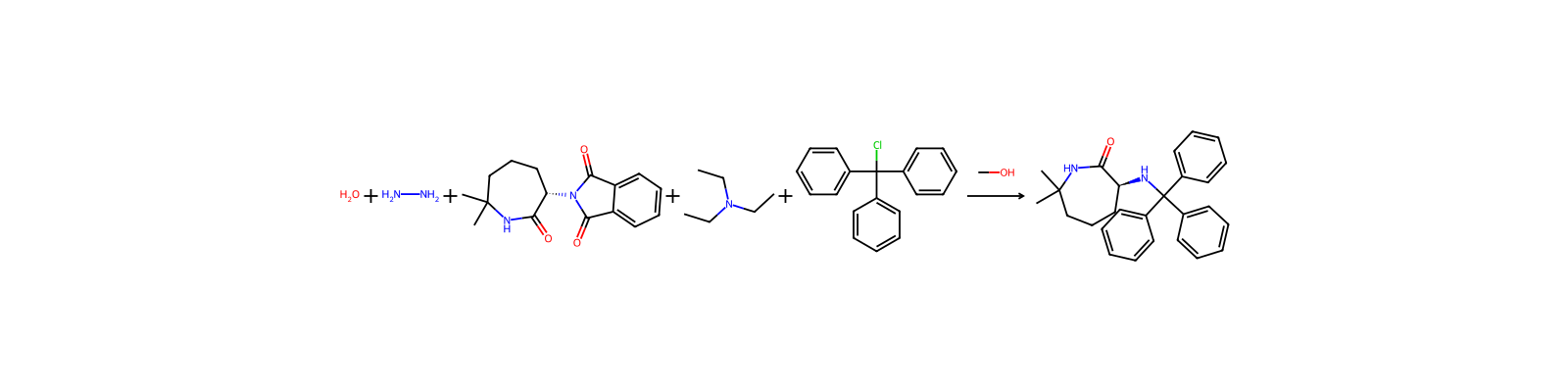
Chlortriphenylmethan
Trityl chloride

Grundinformationen
- CAS
76-83-5- Standard-SMILES
ClC(c1ccccc1)(c1ccccc1)c1ccccc1- InChIKey
JBWKIWSBJXDJDT-UHFFFAOYSA-N- Summenformel
- C19H15Cl
- Durchschnittliche Molmasse
- 278,8 g/mol
- Monoisotopische Masse
- 278,0862282
Namen und Bezeichner
- Bevorzugter Name
- Trityl chloride
- IUPAC
- [chloro(diphenyl)methyl]benzene
- Lokaler Name
- Chlortriphenylmethan
- Englischer Name
- Triphenylmethyl Chloride
- Summenformel
- C19H15Cl
- Molmasse
- 278.78
Namen und Synonyme
76-83-5Trityl chlorideTriphenylchloromethaneCHLOROTRIPHENYLMETHANEtriphenylmethylchlorideMethane, chlorotriphenyl-Benzene, 1,1',1''-(chloromethylidyne)tris-DTXSID30525111,1',1''-(Chloromethylidyne)trisbenzene1D9GZ8QQXNNSC-435DTXCID7031084
Weitere Namen anzeigen
TRT-CLTRITY CHLORIDETRIPHENYLCHLORMETHANEchlorotriphenyl-methanNSC 435
RefChem:575983200-986-4Triphenylmethyl chloride(chloromethanetriyl)tribenzene(chlorodiphenylmethyl)benzeneTrityl Chloride Resin[Chloro(diphenyl)methyl]benzenetritylchloride
Datenbank-Bezeichner
- CAS
76-83-5- PubChem CID
- 6456
- DTXSID
DTXSID3052511- ChEMBL
CHEMBL261393- UNII
- 1D9GZ8QQXN
- EC Number
- 200-986-4
- Nikkaji
- J62.557D
Eigenschaften
Berechnete Struktureigenschaften
- XLogP
- 5
- Polarare Oberfläche (TPSA)
- 0 Ų
- H-Brücken-Donoren
- 0
- H-Brücken-Akzeptoren
- 0
- Frei drehbare Bindungen
- 3
- Schwere Atome
- 20
- Formalladung
- 0
- Komplexität
- 235
Experimentelle und physikochemische Eigenschaften
PolymersOther Classes -> Halogenated Polyaromatics
SpringerMaterials PropertiesCrystal structure
Color/FormNEEDLES OR PRISMS FROM BENZENE OR PETROLEUM ETHER
SolubilityINSOL IN WATER, SLIGHTLY SOL IN ALCOHOL, SOL IN ACETONE; VERY SOL IN ETHER, BENZENE, CHLOROFORM, CARBON DISULFIDE, CARBON TETRACHLORIDE
Boiling Point310 °C @ 760 MM HG
Melting Point113-114 °C
Vapor Pressure0.00000387 [mmHg]
Physical DescriptionSolid; [HSDB] Off-white powder with a pungent odor; Hydrolyzed with water; [MSDSonline]
Collision Cross Section162.5 Ų [M+H]+ [CCS Type: DT; Buffer gas: N2; Ionization: APCI+; Dataset: TOXCAST; Source Identifier: DTXSID3052511]
Sicherheit und Regulatorisches
Sicherheitsangaben dienen nur zur Orientierung und ersetzen weder das Sicherheitsdatenblatt (SDB) des Lieferanten noch geltende Vorschriften oder eine fachliche Bewertung.
GHS-Klassifizierung
GHS Classification
Danger
H314 (77.4%): Causes severe skin burns and eye damage [Danger Skin corrosion/irritation]
P260, P261, P264, P264+P265, P271, P273, P280, P301+P330+P331, P302+P352, P302+P361+P354, P304+P340, P305+P354+P338, P316, P317, P319, P321, P332+P317, P362+P364, P363, P391, P403+P233, P405, and P501 (click each P-code to see the statement)
Aggregated GHS information provided per 137 reports by companies from 13 notifications to the ECHA C&L Inventory. Each notification may be associated with multiple companies.
Gefahrenhinweise
Regulatory Information
Chemical: Benzene, 1,1',1''-(chloromethylidyne)tris-
REACH registered substance: Chlorotriphenylmethane (EC: 200-986-4)
Chlorotriphenylmethane: Does not have an individual approval but may be used under an appropriate group standard
Hazards SummaryA corrosive substance that can cause injury to the skin, eyes, and respiratory tract; Inhalation may cause chemical pneumonitis; [MSDSonline]
Hazard Classes and CategoriesSkin Corr. 1B (77.4%)
Toxikologische Informationen
Adverse EffectsDermatotoxin - Skin burns.
Non-Human Toxicity Excerpts
POTENCY OF TRIPHENYL DERIV OF GROUP IV ELEMENTS IN INHIBITING GROWTH OF 1ST & 4TH INSTAR T CASTANEUM LARVAE WAS MUCH GREATER FOR PH3SNCL & PH3PBCL THAN FOR PH3CCL. IN HIGH CONCN PH3CCL WAS INACTIVE IN INHIBITING IN VITRO INVERTASE, AMYLASE & PROTEASE ACTIVITIES.
Chemie und Industrie
Verwendung und Herstellung
General Manufacturing Information
Benzene, 1,1',1''-(chloromethylidyne)tris-: ACTIVE
TRIARYL CHLOROALKANE IMPROVED ADHESION OF FAST-SETTING POLYURETHANE PREPOLYMER TO TISSUE.
Anwendungen
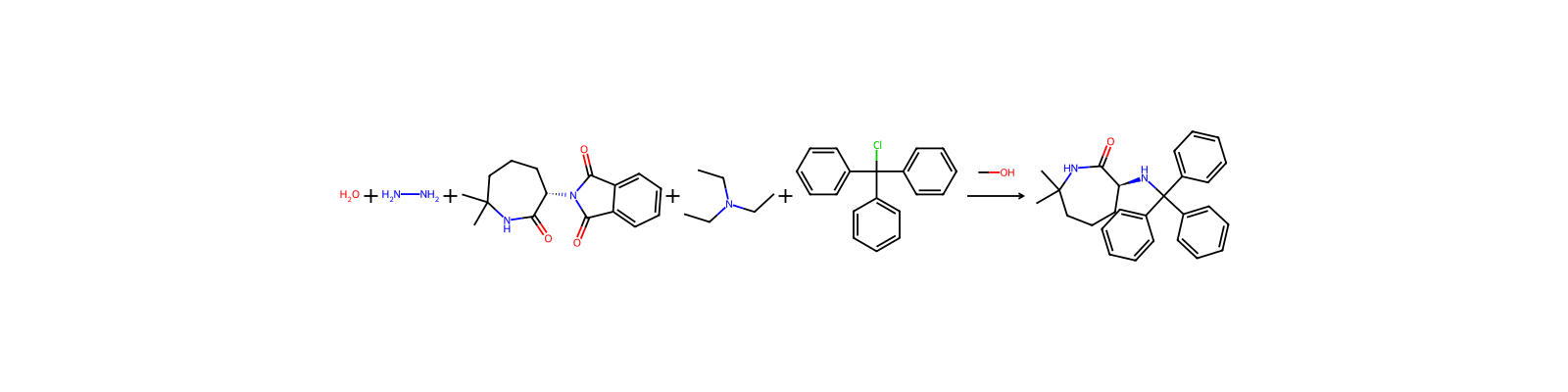
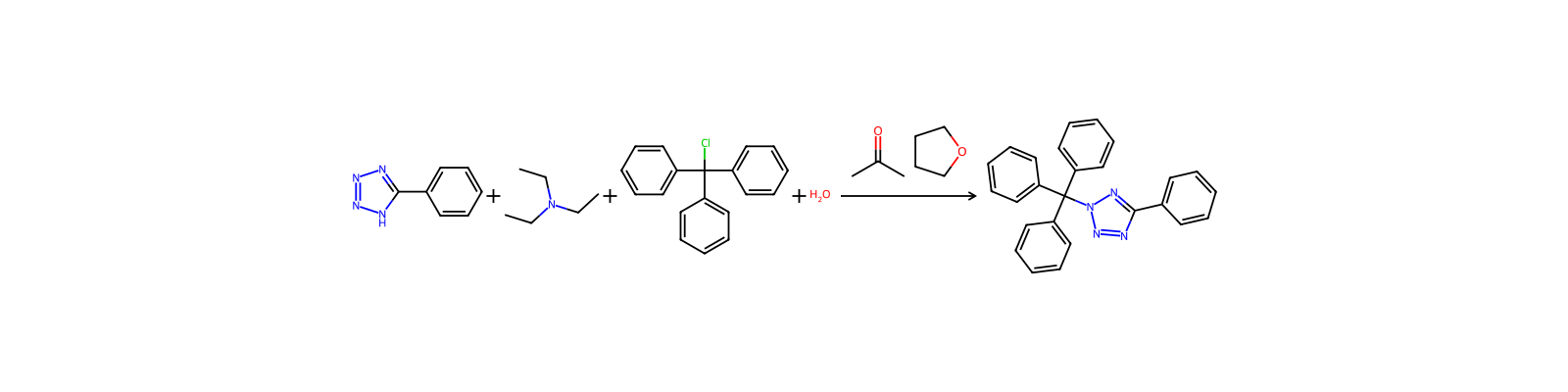
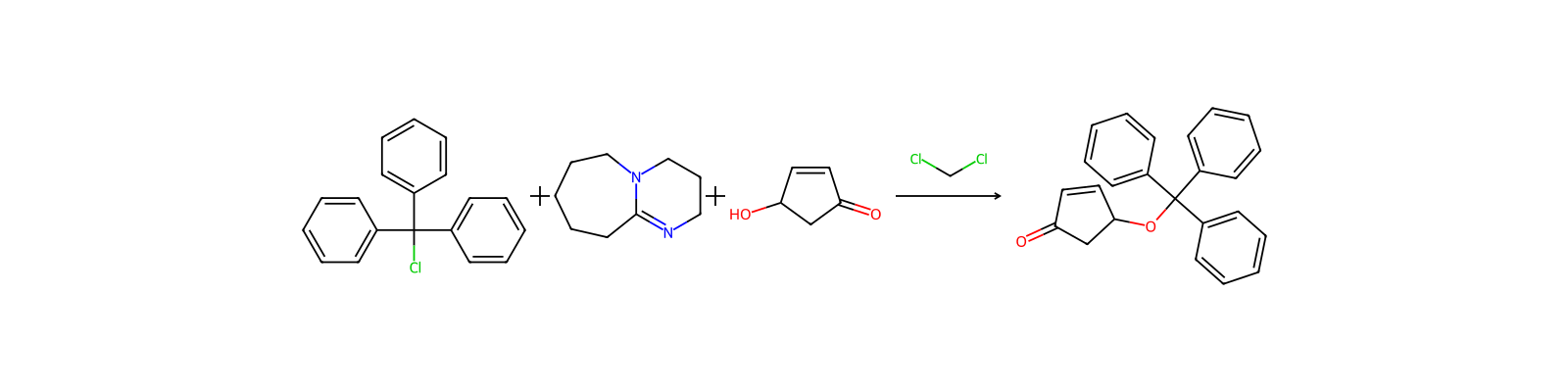
VerwendenTrityl Chloride is an alkyl halide commonly used in organic synthesis to introduce the trityl protecting group. Trityl Chloride is used in the preparation of S-trityl-L-cysteine (STLC), a tight-bindin g inhibitor of Eg5 that prevents mitotic progression.
Vor- und nachgelagerte Produkte
Vorgelagerte Rohstoffe
Nachgelagerte Produkte
Zugehörige Reaktionen
1.682


Notizen zur Verbindung
Wird geladen…