StartseiteMCPWorkbenchSkills
StartseiteWorkbenchBenachrichtigungenMein Bereich
llms.txt · MCP-AnleitungDatenschutz · Nutzungsbedingungen · Supportv1.8.3
  1. Startseite
  2. /Verbindung

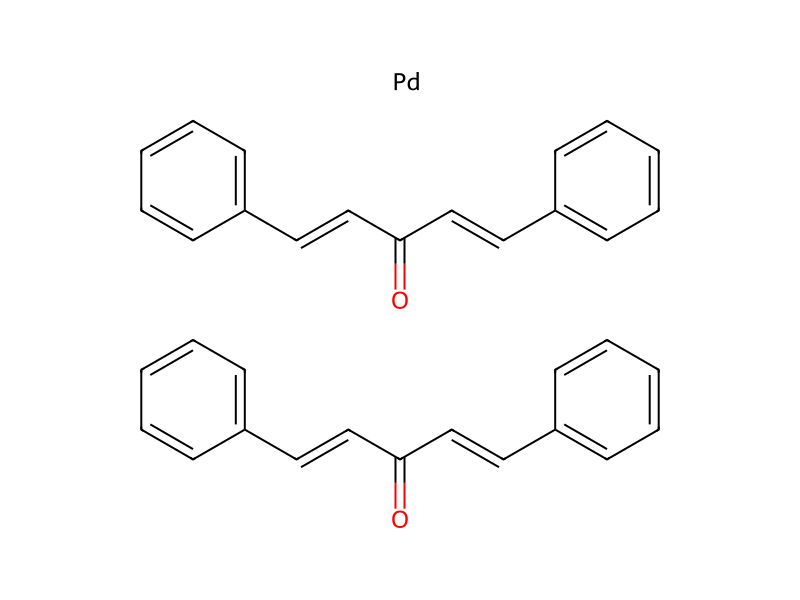
(1E,4E)-1,5-diphenylpenta-1,4-dien-3-one; palladium

HCID 6505921
Neue Reaktion
Drucken
GrundinformationenÜberblickNamen und BezeichnerEigenschaftenSicherheit und RegulatorischesChemie und IndustrieZugehörige ReaktionenNotizen zur Verbindung
TeilstruktursucheÄhnliche Strukturen suchen

Grundinformationen

CAS
52409-22-0
Standard-SMILES
O=C(/C=C/c1ccccc1)/C=C/c1ccccc1.O=C(/C=C/c1ccccc1)/C=C/c1ccccc1.[Pd]
InChIKey
UKSZBOKPHAQOMP-SVLSSHOZSA-N
Summenformel
C34H28O2Pd
Durchschnittliche Molmasse
575 g/mol
Monoisotopische Masse
574,11241

Überblick

Bis(1,5-diphenyl-1,4-pentadien-3-one) palladium(0) is a chemical compound of palladium. Palladium is a chemical element with the chemical symbol Pd and an atomic number of 46. It is found as a free metal alloyed with gold and other platinum group metals and in the rare minerals cooperite and polarite. (L794)

Namen und Bezeichner

Bevorzugter Name
(1E,4E)-1,5-diphenylpenta-1,4-dien-3-one; palladium
IUPAC
bis((1E,4E)-1,5-diphenylpenta-1,4-dien-3-one);palladium
Englischer Name
Tris(dibenzylideneacetone)dipalladium
Summenformel
C51H42O3Pd2
Molmasse
915.71738

Namen und Synonyme

52409-22-0(1E,4E)-1,5-diphenylpenta-1,4-dien-3-one; PalladiumRefChem:392699620-687-632005-36-0Bis(dibenzylideneacetone)palladium(0)PD(DBA)2(1E,4E)-Bis(dibenzylideneacetone)palladiumMFCD00051942C34H28O2PdBis(dibenzylideneacetone)palladium (Technical Grade)190385-99-0
Weitere Namen anzeigen
Pd(dba)3PALLADIUM(0) BIS(DIBENZYLIDENEACETONE)Bis(dibenzylideneacetone)dipalladiumTris(dibenzylideneacetone)diplalladium(I)tris(dibenzylideneacetone)dipalladium(o)(pd2(dba)3)Tris(dibenzylideneacetoneTris(dibenzylideneacetone)dipalladiumBIS(DIBENZYLIDENEACETONE) PALLADIUM(0)Tris(dibenzilideneacetone)dipalladium(0)
60748-47-2bis(dibenzylideneactone)palladiumTRIS(DIBENZYLIDENEACETONE)DIPALLADIUM(O)bis (dibenzylideneacetone)palladiumbis(dibenzilideneacetone)Palladium(0)tris(dibenzylideneaceton)dipalladium(O)SCHEMBL2438441bis(dibenzylidene acetone)palladium

Eigenschaften

Berechnete Struktureigenschaften

Polarare Oberfläche (TPSA)
34,1 Ų
H-Brücken-Donoren
0
H-Brücken-Akzeptoren
2
Frei drehbare Bindungen
8
Schwere Atome
37
Formalladung
0
Komplexität
272

Physikochemische Eigenschaften

Schmelzpunkt
152 · 152-155 °C(lit.)
storage temp.
2 · Keep in dark place,Inert atmosphere,2-8°C
InChI
InChI=1S/2C17H14O.Pd/c2*18-17(13-11-15-7-3-1-4-8-15)14-12-16-9-5-2-6-10-16;/h2*1-14H;/b2*13-11+,14-12+;
InChIKey
UKSZBOKPHAQOMP-SVLSSHOZSA-N
SMILES
[Pd].C(=C/C1=CC=CC=C1)\C(/C=C/C1=CC=CC=C1)=O.C(=C/C1=CC=CC=C1)\C(/C=C/C1=CC=CC=C1)=O
CAS Datenbank
52409 · 52409-22-0(CAS DataBase Reference)

Sicherheit und Regulatorisches

Sicherheitsangaben dienen nur zur Orientierung und ersetzen weder das Sicherheitsdatenblatt (SDB) des Lieferanten noch geltende Vorschriften oder eine fachliche Bewertung.

GHS-Klassifizierung

GHS Classification · 4 Einträge

Danger

H228 (50%): Flammable solid [Danger Flammable solids]

P210, P240, P241, P261, P264, P264+P265, P270, P271, P280, P301+P317, P302+P352, P304+P340, P305+P351+P338, P317, P321, P330, P332+P317, P337+P317, P362+P364, P370+P378, and P501 (click each P-code to see the statement)

Aggregated GHS information provided per 4 reports by companies from 3 notifications to the ECHA C&L Inventory. Each notification may be associated with multiple companies.

Gefahrenhinweise

Hazard Classes and CategoriesFlam. Sol. 1 (50%)

Toxikologische Informationen

Health EffectsContact with palladium may cause palladium sensitivity and allergy. Animal studies have shown that palladium may damage the liver and kidney. (L798)
Toxicity Summary · 1 Eintrag

Due to their ability to form strong complexes with both inorganic and organic ligands, palladium ions can disturb cellular equilibria, replace other essential ions, and interact with functional groups of macromolecules, such as proteins or DNA. Palladium complexes binding to DNA and RNA leads to strand breakage. Palladium ions are able to inhibit most major cellular functions, including DNA and RNA synthesis. Palladium compounds have been shown to bind to and inhibit various enzymes, including creatine kinase and prolyl hydroxylase. (L798)

Signs and SymptomsSkin contact with palladium may cause contact dermatitis, erythema, and oedema. (L798)
Carcinogen Classification

Chemie und Industrie

Pharmakologische Informationen

Metabolism/Metabolites · 1 Eintrag

Palladium may be absorbed through oral, dermal, and inhalation exposure. Once in the body it distributes to the kidney, liver, spleen, lymph nodes, adrenal gland, lung and bone. Palladium's ability to form complexes allows it the bind to amino acids, proteins, DNA, and other macromolecules. Palladium and its metabolites are excreted in the urine and faeces. (A21)

Anwendungen · 1 Eintrag

VerwendenTris(dibenzylideneacetone)dipalladium is used as a source of soluble Pd(0), in particular as a catalyst for various coupling reactions. Examples of reactions using this reagent are the Negishi coupling, Suzuki coupling, Carroll rearrangement, and Trost asymmetric allylic alkylation, as well as Buchwald–Hartwig amination

Zugehörige Reaktionen

835
Reaktionsaufzeichnung erstellen
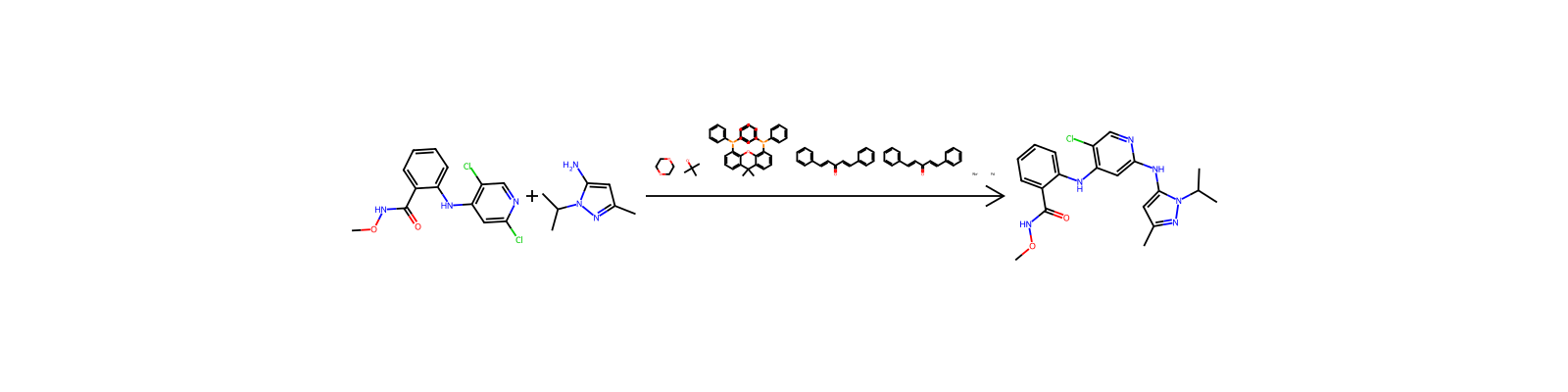
Reaktionsgleichung von HRID 39
HRID 39als Katalysator
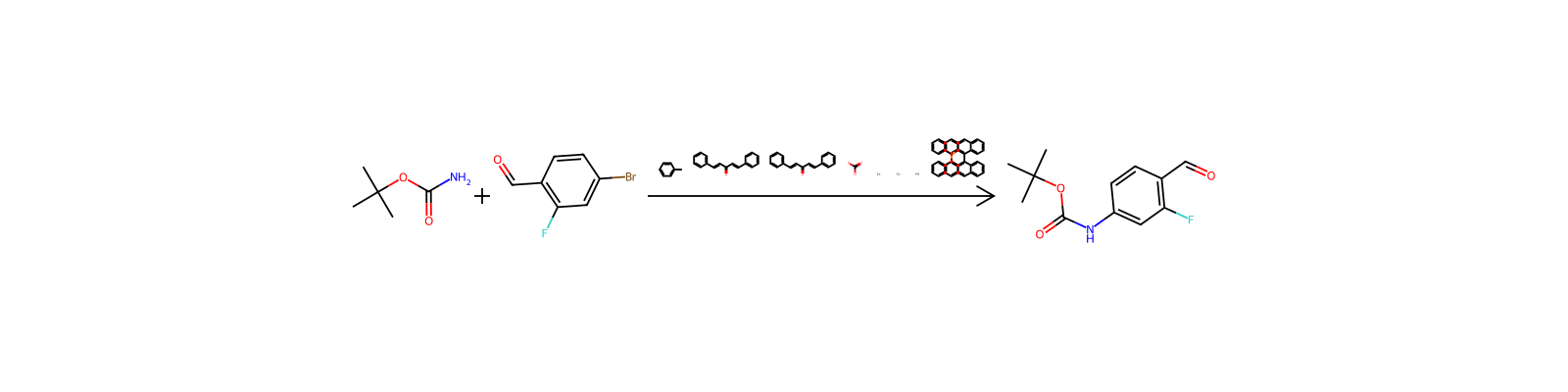
Reaktionsgleichung von HRID 103
HRID 103als Katalysator
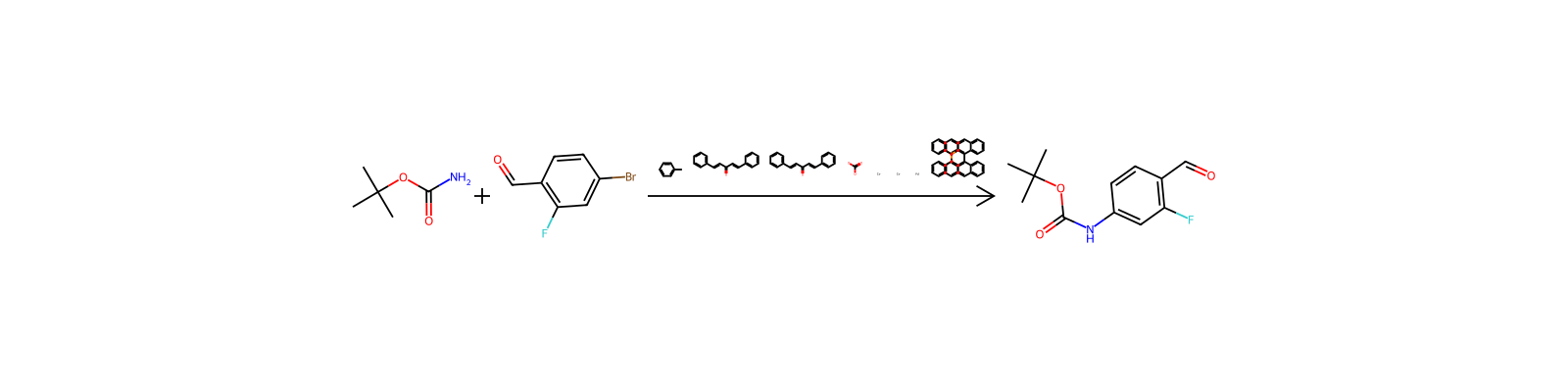
Reaktionsgleichung von HRID 131
HRID 131als Katalysator
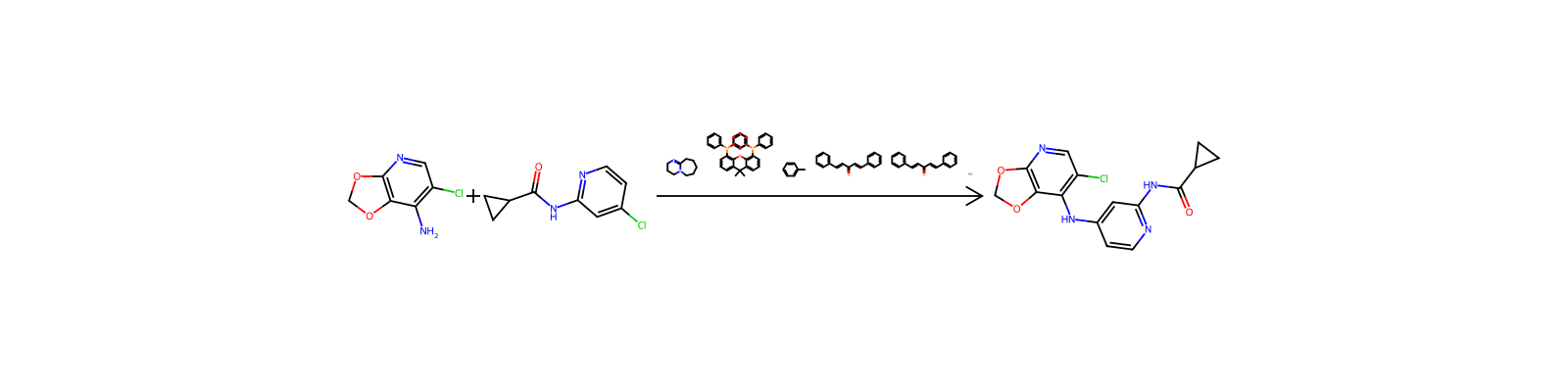
Reaktionsgleichung von HRID 132
HRID 132als Katalysator
Reaktionsgleichung von HRID 172
HRID 172als Katalysator
Reaktionsgleichung von HRID 178
HRID 178als Katalysator
Reaktionsgleichung von HRID 219
HRID 219als Katalysator
Reaktionsgleichung von HRID 220
HRID 220als Katalysator
ZurückSeite 1 von 105

Notizen zur Verbindung

Auf dieser SeiteGrundinformationenÜberblickNamen und BezeichnerEigenschaftenSicherheit und RegulatorischesChemie und IndustrieZugehörige ReaktionenNotizen zur Verbindung

Datenbank-Bezeichner

CAS
52409-22-0
PubChem CID
6505921
EC Number
620-687-6
No indication of carcinogenicity to humans (not listed by IARC).

Sicherheitsdaten

wgk
3
risk_code
36/38
hazard_code
Xi
safety_code
22-24/25