
Propylendiamin
Propylenediamine
Daten werden ergänzt – lade die Seite später neu, um den aktuellen Stand zu sehen
Grundinformationen
- CAS
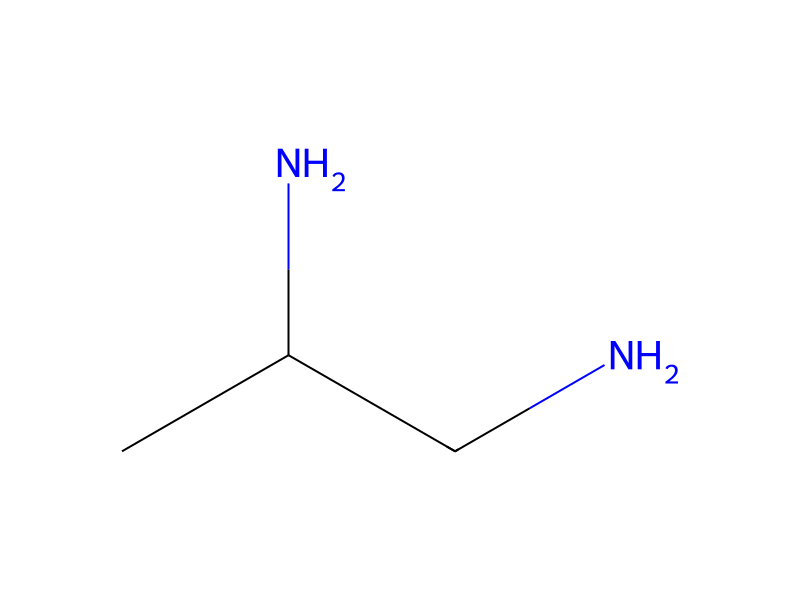
78-90-0- Standard-SMILES
CC(N)CN- InChIKey
AOHJOMMDDJHIJH-UHFFFAOYSA-N- Summenformel
- C3H10N2
- Durchschnittliche Molmasse
- 74,13 g/mol
- Monoisotopische Masse
- 74,08439832
Überblick
1,2-propylenediamine appears as a colorless liquid with an ammonia-like odor. Strongly irritates skin and tissue.
Namen und Bezeichner
- Bevorzugter Name
- Propylenediamine
- IUPAC
- propane-1,2-diamine
- Lokaler Name
- Propylendiamin
- Englischer Name
- 1,2-Diaminopropane
- Summenformel
- C3H10N2
- Molmasse
- 74.12
Namen und Synonyme
1,2-DIAMINOPROPANEPropylenediamine78-90-01,2-Propanediamine2,3-DiaminopropaneDTXSID40217612A4P522UGODL-1,2-PropanediamineNSC-1757311-Methyl-1,2-diaminoethaneDTXCID701761CHEBI:30630
Weitere Namen anzeigen
DIAMINOPROPANEPROPANEDIAMINE12APrac 1,2-Diaminopropane-d6NSC 175731
RefChem:411509201-155-9propane-1,2-diamine1,2-PropylenediaminePropylene diamine1-methylethylenediamine10424-38-11,2 Diaminopropane
Datenbank-Bezeichner
- CAS
78-90-0- PubChem CID
- 6567
- DTXSID
DTXSID4021761- ChEMBL
CHEMBL1319459- ChEBI
CHEBI:30630- UNII
- 2A4P522UGO
- EC Number
- 201-155-9
- Nikkaji
- J4.225K
Eigenschaften
Berechnete StruktureigenschaftenWird ergänzt
- XLogP
- -1,2
- Polarare Oberfläche (TPSA)
- 52 Ų
- H-Brücken-Donoren
- 2
- H-Brücken-Akzeptoren
- 2
- Frei drehbare Bindungen
- 1
- Schwere Atome
- 5
- Formalladung
- 0
- Komplexität
- 20,9
Experimentelle und physikochemische Eigenschaften
Chemical Classes
Nitrogen Compounds -> Amines, Aliphatic
Corrosives
LogP-1.8
Density
0.8584 (NTP, 1992) - Less dense than water; will float
Relative density (water = 1): 0.9
0.9 @25 °C
Solubility
Very soluble (NTP, 1992)
Solubility in water: miscible
Flash Point
92 °F (NFPA, 2010)
33 °C c.c.
Boiling Point
248.9 °F at 760 mmHg (NTP, 1992)
119 °C
118.9 °C @760 [mm Hg]
Melting Point
-35 °F (NTP, 1992)
-12 °C
Vapor Density
2.6 (NTP, 1992) - Heavier than air; will sink (Relative to Air)
Sicherheit und Regulatorisches
Sicherheitsangaben dienen nur zur Orientierung und ersetzen weder das Sicherheitsdatenblatt (SDB) des Lieferanten noch geltende Vorschriften oder eine fachliche Bewertung.
GHS-Klassifizierung
GHS Classification
Danger
H226: Flammable liquid and vapor [Warning Flammable liquids]
P210, P233, P240, P241, P242, P243, P260, P264, P270, P280, P301+P317, P301+P330+P331, P302+P352, P302+P361+P354, P303+P361+P353, P304+P340, P305+P354+P338, P316, P317, P321, P330, P362+P364, P363, P370+P378, P403+P235, P405, and P501 (click each P-code to see the statement)
Danger
H226 (100%): Flammable liquid and vapor [Warning Flammable liquids]
P210, P233, P240, P241, P242, P243, P260, P261, P262, P264, P264+P265, P270, P271, P272, P280, P284, P301+P317, P301+P330+P331, P302+P352, P302+P361+P354, P303+P361+P353, P304+P340, P305+P354+P338, P316, P317, P321, P330, P333+P317, P342+P316, P361+P364, P362+P364, P363, P370+P378, P403, P403+P235, P405, and P501 (click each P-code to see the statement)
Gefahrenhinweise
Regulatory Information
Chemical: 1,2-Propanediamine
Status: Active Update: 01-02-2023 https://echa.europa.eu/registration-dossier/-/registered-dossier/2163
1,2-Diaminopropane: Does not have an individual approval but may be used under an appropriate group standard
The New Jersey Worker and Community Right to Know Act requires public and private employers to provide information about hazardous substances at their workplaces. (N.J.S.A. 34:5A-1 et. seq.)
DOT LabelCorrosive Flammable Liquid
Fire Hazards
Excerpt from ERG Guide 132 [Flammable Liquids - Corrosive]:
· Flammable/combustible material.
Flammable. Gives off irritating or toxic fumes (or gases) in a fire. Above 33 °C explosive vapour/air mixtures may be formed.
Health Hazards
Excerpt from ERG Guide 132 [Flammable Liquids - Corrosive]:
Chemie und Industrie
Verwendung und Herstellung
Uses
Used with cupric sulfate as reagent for mercury; [Merck Index] Used to make medicines, dyes, and rubber accelerators; Also used in electroplating and as analytical reagent; [NTP]
Electroplating [Category: Plate]
General Manufacturing Information1,2-Propanediamine: ACTIVE
Anwendungen
Beschreibung1,2-Diaminopropane is a colorless liquid that is very hygroscopic and miscible with water and most organic solvents. It forms azeotropes with butanol, 2-methylpropanol, and toluene and has a strong ammoniacal odor.
Verwenden1,2-Diaminopropane was used as model precursor in the electron induced deposition of amorphous carbon nitride films.
Vor- und nachgelagerte Produkte
Vorgelagerte Rohstoffe
Nachgelagerte Produkte
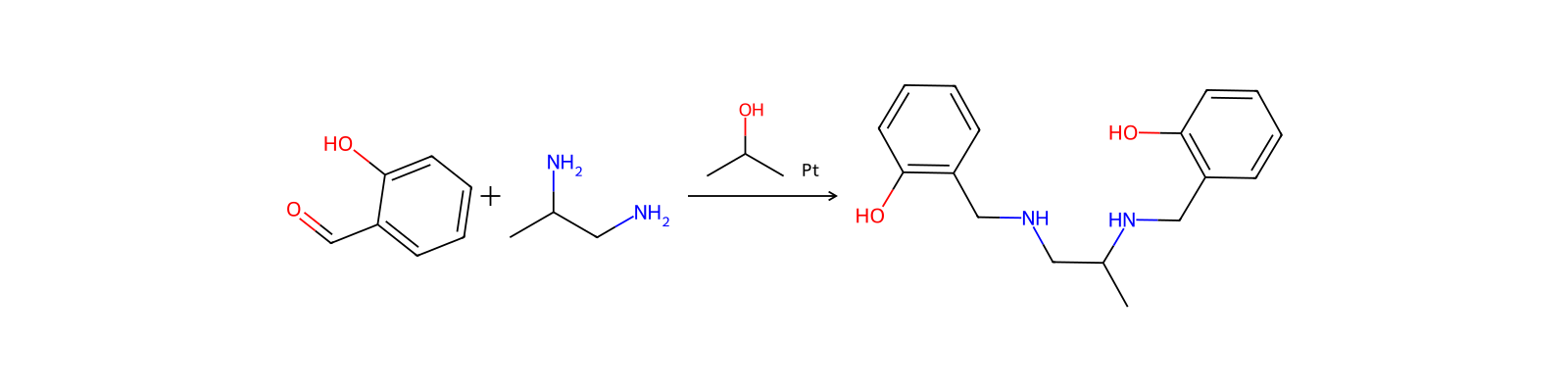
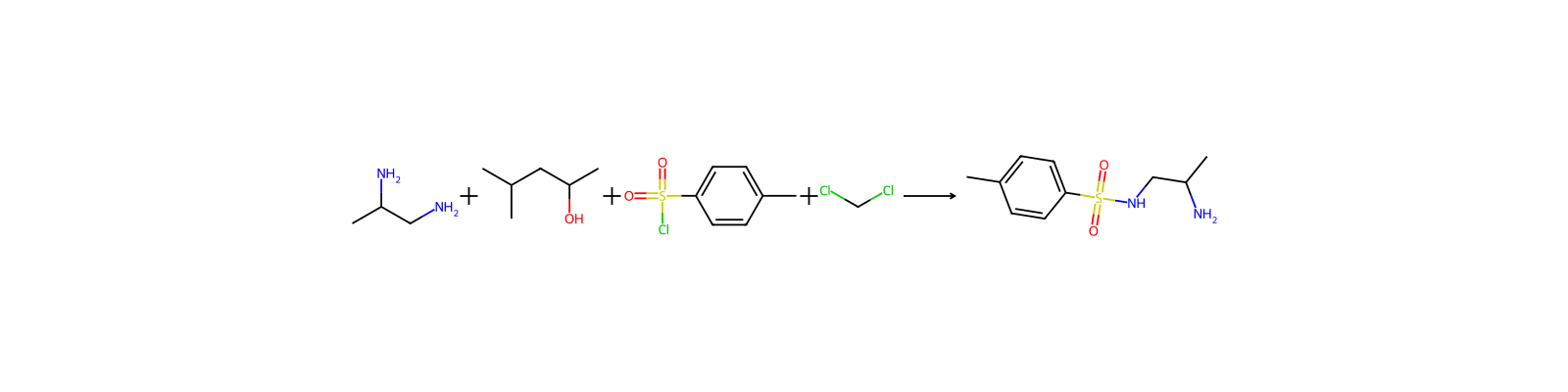
Zugehörige Reaktionen
93




Notizen zur Verbindung
Wird geladen…