
Grundinformationen
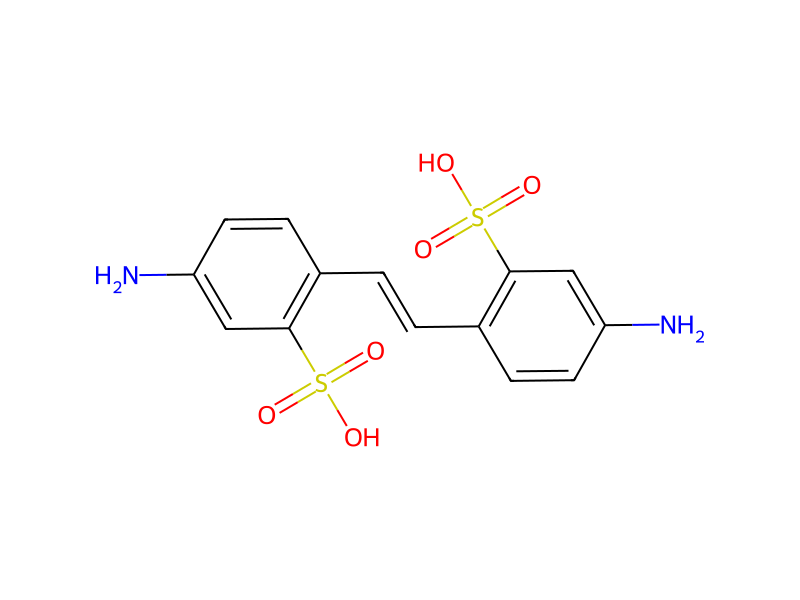
- Standard-SMILES
Nc1ccc(C=Cc2ccc(N)cc2S(=O)(=O)O)c(S(=O)(=O)O)c1- InChIKey
REJHVSOVQBJEBF-UHFFFAOYSA-N- Summenformel
- C14H14N2O6S2
- Durchschnittliche Molmasse
- 370,4 g/mol
- Monoisotopische Masse
- 370,02932817
Überblick
4,4'-diamino-2,2'-stilbenedisulfonic acid appears as odorless yellowish microscopic needles or cream-colored powder. pH approximately 4.3 at 30 g/L water (suspension). (NTP, 1992)
Namen und Bezeichner
- Bevorzugter Name
- Diaminostilbenedisulfonic acid
- IUPAC
- 5-amino-2-[2-(4-amino-2-sulfophenyl)ethenyl]benzenesulfonic acid
Namen und Synonyme
4,4'-DIAMINO-2,2'-STILBENEDISULFONIC ACIDAmsonic acidDTXSID5024926AmsonsaeureDiaminostilbenedisulfonic acidBenzenesulfonic acid, 2,2'-(1,2-ethenediyl)bis[5-amino-NCI-C60162DTXCID2049262,2'-(1,2-Ethylenediyl)bis(5-aminobenzenesulfonic acid)Benzenesulfonic acid, 2,2'-(1,2-ethenediyl)bis(5-amino-NSC-163899GJ5MP05
Weitere Namen anzeigen
DADSDASSARefChem:9200034,4'-diacetamido-2,2'-stilbene disulfonate201-325-22,2'-Disulfo-4,4'-stilbenediamine2,2'-Stilbenedisulfonic acid, 4,4'-diamino-4,4-diaminostilbene-2,2'-disulfonic acid
Datenbank-Bezeichner
- CAS
81-11-8- PubChem CID
- 6668
- DTXSID
DTXSID5024926- ChEMBL
CHEMBL3185470- EC Number
- 201-325-2
Eigenschaften
Berechnete Struktureigenschaften
- XLogP
- 0,3
- Polarare Oberfläche (TPSA)
- 178 Ų
- H-Brücken-Donoren
- 4
- H-Brücken-Akzeptoren
- 8
- Frei drehbare Bindungen
- 4
- Schwere Atome
- 24
- Formalladung
- 0
- Komplexität
- 606
Experimentelle und physikochemische Eigenschaften
Chemical ClassesNitrogen Compounds -> Aminobenzoic Acids
LogP-1.7
Color/FormYELLOW NEEDLES
Solubility
less than 1 mg/mL at 73 °F (NTP, 1992)
VERY SLIGHTLY SOL IN WATER
SOL IN ALCOHOL & ETHER
Endocrine DisruptorsPotential endocrine disrupting compound
Melting Pointgreater than 617 °F (NTP, 1992)
Physical Description
4,4'-diamino-2,2'-stilbenedisulfonic acid appears as odorless yellowish microscopic needles or cream-colored powder. pH approximately 4.3 at 30 g/L water (suspension). (NTP, 1992)
Dry Powder; Large Crystals; Liquid
Yellow solid; [Merck Index]
Other Experimental PropertiesFORMS SPARINGLY WATER SOL CRYSTALLINE SALTS WITH MANY BISQUATERNARY AMMONIUM BASES
Sicherheit und Regulatorisches
GHS-Klassifizierung
GHS Classification
This chemical does not meet GHS hazard criteria for 1% (2 of 210) of reports.
Warning
H302 (18.6%): Harmful if swallowed [Warning Acute toxicity, oral]
P264, P270, P273, P301+P317, P330, and P501 (click each P-code to see the statement)
Aggregated GHS information provided per 210 reports by companies from 10 notifications to the ECHA C&L Inventory. Each notification may be associated with multiple companies.
Gefahrenhinweise
Regulatory Information
Chemical: Benzenesulfonic acid, 2,2'-(1,2-ethenediyl)bis[5-amino-
Benzenesulfonic acid, 2,2'-(1,2-ethenediyl)bis[5-amino- is listed on the EPA's Chemical Data Reporting (CDR) system. Manufacturers and importers of Benzenesulfonic acid, 2,2'-(1,2-ethenediyl)bis[5-amino- are required to report information about their production and use of this chemical to the EPA under the Toxic Substances Control Act (TSCA). (40 eCFR Part 711)
Status: Cease Manufacture Update: 15-02-2020 https://echa.europa.eu/registration-dossier/-/registered-dossier/30493
Fire HazardsFlash point data for this chemical are not available; however, it is probably combustible. (NTP, 1992)
Health Hazards
SYMPTOMS: Symptoms of exposure to this compound include irritation, burning, reddening, tearing and possible swelling of the eyes, irritation of the respiratory tract, runny nose, sore throat, coughing, chest discomfort and shortness of breath. Persons with impaired pulmonary function or with preexisting eye conditions may be more susceptible to the effects of this compound.
Hazards Summary
An eye and respiratory tract irritant; [CAMEO] There have been reports of decreased libido in male workers handling this chemical; [REPROTOX] An irritant; Effects in high-dose animal studies include abnormal liver and kidney function tests; [MSDSonline]
Reactive GroupHydrocarbons, Aliphatic Unsaturated
Reactivity Profile4,4'-DIAMINO-2,2'-STILBENEDISULFONIC ACID is incompatible with iron. It forms sparingly water-soluble, crystalline salts with many bisquaternary ammonium bases. (NTP, 1992)
Air and Water ReactionsInsoluble in water.
Hazard Classes and CategoriesAcute Tox. 4 (18.6%)
Sicherheit und Schutzausrüstung
Fire FightingFires involving this material can be controlled with a dry chemical, carbon dioxide or Halon extinguisher. A water spray may also be used. (NTP, 1992)
First Aid
EYES: First check the victim for contact lenses and remove if present. Flush victim's eyes with water or normal saline solution for 20 to 30 minutes while simultaneously calling a hospital or poison control center. Do not put any ointments, oils, or medication in the victim's eyes without specific instructions from a physician. IMMEDIATELY transport the victim after flushing eyes to a hospital even if no symptoms (such as redness or irritation) develop.
Nonfire Spill Response
SMALL SPILLS AND LEAKAGE: If you spill this chemical, you should dampen the solid spill material with water, then transfer the dampened material to a suitable container. Use absorbent paper dampened with water to pick up any remaining material. Seal your contaminated clothing and the absorbent paper in a vapor-tight plastic bag for eventual disposal. Wash all contaminated surfaces with a soap and water solution. Do not reenter the contaminated area until the Safety Officer (or other responsible person) has verified that the area has been properly cleaned.
Personal Protective Equipment (PPE)
RECOMMENDED RESPIRATOR: Where the neat test chemical is weighed and diluted, wear a NIOSH-approved half face respirator equipped with an organic vapor/acid gas cartridge (specific for organic vapors, HCl, acid gas and SO2) with a dust/mist filter. (NTP, 1992)
Toxikologische Informationen
Adverse EffectsOccupational hepatotoxin - Secondary hepatotoxins: the potential for toxic effect in the occupational setting is based on cases of poisoning by human ingestion or animal experimentation.
Ongoing Test Status
The following link will take the user to the National Toxicology Program (NTP) Test Agent Search Results page, which tabulates all of the "Standard Toxicology & Carcinogenesis Studies", "Developmental Studies", and "Genetic Toxicity Studies" performed with this chemical. Clicking on the "Testing Status" link will take the user to the status (i.e., in review, in progress, in preparation, on test, completed, etc.) and results of all the studies that the NTP has done on this chemical. /4,4'-Diamino-2,2'-stilbenedisulfonic acid, disodium salt/ [http://ntp-apps.niehs.nih.gov/ntp_tox/index.cfm?fuseaction=ntpsearch.searchresults&searchterm=7336-20-1]
Human Toxicity Excerpts
RESULTS OF MEDICAL SURVEYS & STUDIES ON SAFETY OF FLUORESCENT WHITENING AGENTS (FWA'S) CONTAINING DIAMINOSTILBENE DISULFONATE WERE COMPILED & CRITICIZED. CONCLUSION THAT FWA'S ARE PRACTICALLY NONTOXIC.
HAZARD: TOXIC BY INGESTION.
Non-Human Toxicity Excerpts
4,4'-Diamino-2,2'-stilbenedisulfonic acid was evaluated for mutagenicity in the Salmonella/microsome preincubation assay using a standard protocol approved by the National Toxicology Program. Doses of 0, 100, 333, 3333, 4000, 4500, and 5000 ug/plate were tested in four Salmonella typhimurium strains (TA98, TA100, TA1535, and TA1537) in the presence and absence of Aroclor-induced rat or hamster liver S9. These tests were negative and the highest ineffective dose level tested in any Salmonella tester strain was 5000 ug/plate.
Chemie und Industrie
Verwendung und Herstellung
Uses
Used as a chemical intermediate for dyes, bleaching agents, and fluorescent brighteners; [HSDB]
IN MFR OF DYES, BLEACHING AGENTS
CHEM INT FOR DYES (EG, CI DIRECT YELLOW 12) & FLUORESCENT BRIGHTENERS
U.S. Exports
(1977) No Data
(1979) No Data
U.S. Imports
(1977) 4.74X10+8 GRAMS (PRINCPL CUSTMS DISTS)
(1979) 4.42X10+8 GRAMS (PRINCPL CUSTMS DISTS)
U.S. Production
2023: 1,000,000 - <5,000,000 lb
(1977) PROBABLY GREATER THAN 9.08X10+6 GRAMS
(1979) PROBABLY GREATER THAN 6.81X10+6 GRAMS
Consumption PatternsESSENTIALLY 100% AS A CHEM INT
Industry UsesIntermediate
Methods of Manufacturing
CATALYTIC REDUCTION OF 4,4'-DINITRO-2,2'-STILBENEDISULFONIC ACID
BENDER, SCHULTZ, BER 19, 3234 (1886); HE FIERZ-DAVID, L BLANGEY, GRUNDLEGENDE OPERATONEN DER FARBENCHEMIE (SPRINGER-VERLAG, VIENNA, 7TH ED, 1947) P 161; SPIEGLER, US PATENT 2,784,220 (1957 TO DUPONT).
BOILING SODIUM SALT OF PARA-NITROTOLUENE-ORTHO-SULFONATE IN WATER WITH CAUSTIC SODA & REDN WITH ZINC DUST.
Household ProductsInformation on 13 consumer products that contain Diaminostilbenedisulfonic acid in the following categories is provided:
General Manufacturing Information
Paper Manufacturing
Benzenesulfonic acid, 2,2'-(1,2-ethenediyl)bis[5-amino-: ACTIVE
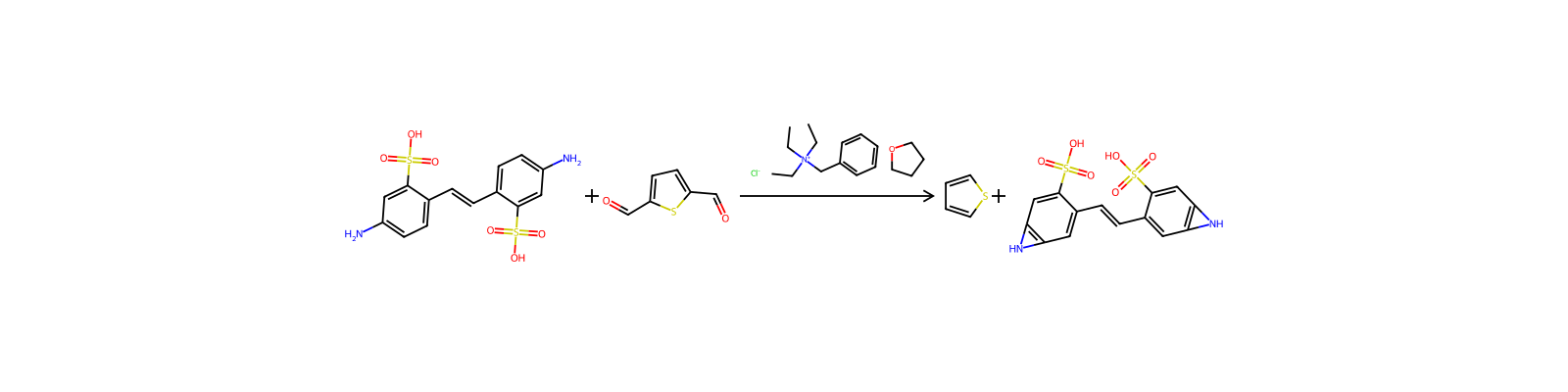
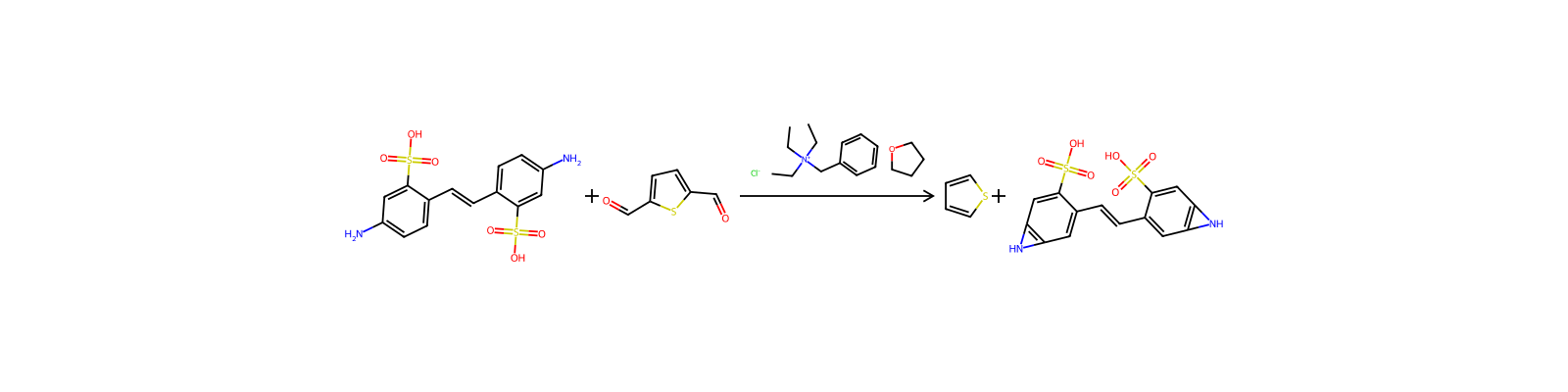
Zugehörige Reaktionen
7




Verknüpfte Notizen
Wird geladen…