StartseiteMCPWorkbenchSkills
StartseiteWorkbenchBenachrichtigungenMein Bereich
llms.txt · MCP-AnleitungDatenschutz · Nutzungsbedingungen · Supportv1.8.0
  1. Startseite
  2. /Verbindung

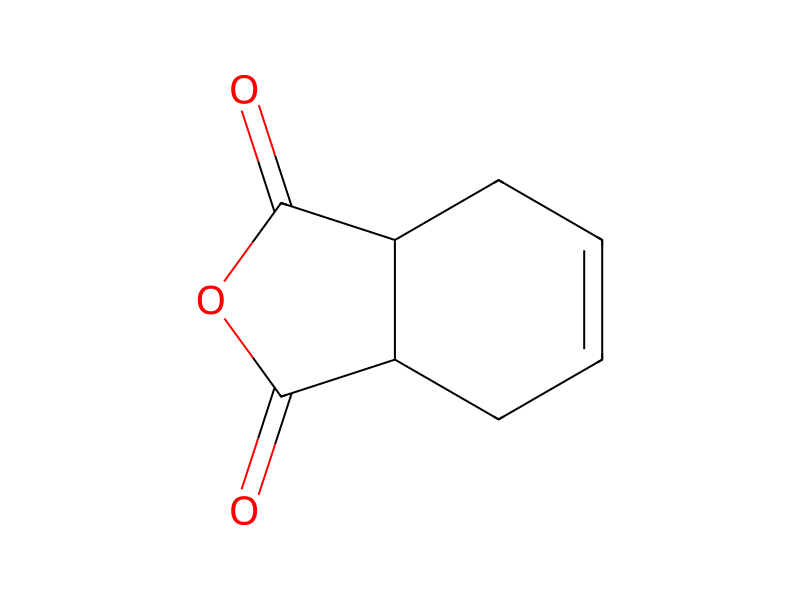
1,2,3,6-Tetrahydrophthalsureanhydrid

Tetrahydrophthalic anhydride

HCID 6810
Neue NotizNeue ReaktionAnfrage stellen
Druckvorschau

Daten werden ergänzt – lade die Seite später neu, um den aktuellen Stand zu sehen
GrundinformationenÜberblickNamen und BezeichnerEigenschaftenSicherheit und RegulatorischesChemie und IndustrieZugehörige ReaktionenNotizen zur Verbindung
TeilstruktursucheÄhnliche Strukturen suchen

Grundinformationen

CAS
13149-03-6
Standard-SMILES
O=C1OC(=O)C2CC=CCC12
InChIKey
KMOUUZVZFBCRAM-UHFFFAOYSA-N
Summenformel
C8H8O3
Durchschnittliche Molmasse
152,15 g/mol
Monoisotopische Masse
152,04734412

Überblick

Memtetrahydrophthalic anhydride is a clear colorless to light yellow slight viscous liquid. Highly toxic and a strong irritant to skin, eyes and mucous membranes. Corrosive to skin and metal. Used in making polyester, alkyd resins, and plasticizers.

Namen und Bezeichner

Bevorzugter Name
Tetrahydrophthalic anhydride
IUPAC
3a,4,7,7a-tetrahydro-2-benzofuran-1,3-dione
Lokaler Name
1,2,3,6-Tetrahydrophthalsureanhydrid
Englischer Name
1,2,3,6-Tetrahydrophthalic anhydride
Summenformel
C8H8O3
Molmasse
152.15

Namen und Synonyme

85-43-81,2,3,6-Tetrahydrophthalic anhydrideTETRAHYDROPHTHALIC ANHYDRIDETetrahydroftalanhydridRikacid THTetrahydrophthalic acid anhydrideMemtetrahydro phtalic anhydride4-Cyclohexene-1,2-dicarboxylic acid anhydride1,3-Isobenzofurandione, 3a,4,7,7a-tetrahydro-4-Cyclohexene-1,2-dicarboxylic anhydrideAnhydrid kyseliny tetrahydroftalove1,2,3,6-Tetrahydrophthalic acid anhydride
Weitere Namen anzeigen
tetrahydrophthalicthpa[qr]rikacidth[qr]1,2,3,6-TetrahydrophthaL3,6-Cyclopropylene-ΔTetrahydrophthalsureanhydridanhydridetetrahydrophtaliquetetrahydrophthalicanhydrides
1,3-Isobenzofurandione, tetrahydro-NSC 82642Tetrahydroftalanhydrid [Czech]HSDB 846DTXSID3026516Phthalic anhydride, 1,2,3,6-tetrahydro-1,3,3a,4,7,7a-hexahydro-2-benzofuran-1,3-dioneEINECS 201-605-4

Eigenschaften

Berechnete StruktureigenschaftenWird ergänzt

XLogP
0,8
Polarare Oberfläche (TPSA)
43,4 Ų
H-Brücken-Donoren
0
H-Brücken-Akzeptoren
3
Frei drehbare Bindungen
0
Schwere Atome
11
Formalladung
0
Komplexität
218

Experimentelle und physikochemische Eigenschaften

Chemical ClassesCorrosives
PolymersPlastics & Rubber -> Acid Anhydrides, Cyclic
SpringerMaterials PropertiesFusion temperature
Density · 3 Einträge

1.20 at 105 °C

1.4 g/cm³

1.2 @ 105°C

Color/FormWhite crystalline powder
Solubility · 2 Einträge

Slightly soluble in petroleum ether and ethyl ether; soluble in benzene

Solubility in water, g/l at 20 °C: 29.4 (reaction)

Flash Point · 2 Einträge

315 °F (157 °C) Open cup

157 °C o.c.

Boiling Pointat 6.7kPa: 195 °C
DecompositionWhen heated to decomposition it emits acrid smoke and fumes.

Sicherheit und Regulatorisches

Sicherheitsangaben dienen nur zur Orientierung und ersetzen weder das Sicherheitsdatenblatt (SDB) des Lieferanten noch geltende Vorschriften oder eine fachliche Bewertung.

GHS-Klassifizierung

GHS Classification · 6 Einträge

Danger

H317: May cause an allergic skin reaction [Warning Sensitization, Skin]

P233, P260, P261, P264+P265, P271, P272, P273, P280, P284, P302+P352, P304+P340, P305+P354+P338, P317, P321, P333+P317, P342+P316, P362+P364, P403, and P501 (click each P-code to see the statement)

Danger

H317: May cause an allergic skin reaction [Warning Sensitization, Skin]

P233, P260, P261, P264+P265, P271, P272, P273, P280, P284, P302+P352, P304+P340, P305+P354+P338, P317, P321, P333+P317, P342+P316, P362+P364, P403, and P501 (click each P-code to see the statement)

Gefahrenhinweise

Regulatory Information · 6 Einträge

Chemical: 1,3-Isobenzofurandione, 3a,4,7,7a-tetrahydro-

Chemical: 1,3-Isobenzofurandione, tetrahydro-

Hazard Traits - Respiratory Toxicity

Hazard Traits - Respiratory Toxicity

1,3-Isobenzofurandione, 3a,4,7,7a-tetrahydro- is listed on the EPA's Chemical Data Reporting (CDR) system. Manufacturers and importers of 1,3-Isobenzofurandione, 3a,4,7,7a-tetrahydro- are required to report information about their production and use of this chemical to the EPA under the Toxic Substances Control Act (TSCA). (40 eCFR Part 711)

Status: Active Update: 10-03-2022 https://echa.europa.eu/registration-dossier/-/registered-dossier/14373

Other Safety Information · 2 Einträge

IMAP assessments - Tetrahydrophthalic anhydrides and analogues: Human health tier II assessment

IMAP assessments - Tetrahydrophthalic anhydrides and analogues: Human health tier II assessment

DOT Label · 2 Einträge

Corrosive

Corrosive

Fire Hazards · 4 Einträge

Chemie und Industrie

Pharmakologische Informationen

Metabolism/Metabolites · 1 Eintrag

... 3-hydroxycyclohexane-1,2-carboximide (OHHPI-1/2)2 and and 1-hydroxy-1,2-cyclohexanedicarboxylic-acid (OHHPA) were detected in urine and feces samples from noncannulated rats and in bile and urine samples from cannulated rats. 1,2-cyclohexanedicarboxylic-acid (TCDA) was detected only in urine and feces samples from noncannulated rats administered 3,4,5,6-tetrahydrophthalimide (TPI) orally. Following 3,4,5,6-tetrahydrophthalic-acid (THPA) administration, OHHPA was detected in all excreta except in feces from bile duct cannulated rats injected intravenously. TCDA was detected in feces samples from noncannulated rats administered THPA intravenously and in all excreta from bile duct cannulated rats administered THPA orally. No OHHPA was detected in rats administered TCDA. Liver, stomach, intestinal tissues plus contents, and kidneys, lung, spleen, and pancreas, plasma and blood cell samples obtained from untreated male Sprague-Dawley-rats were incubated with 40 nanomoles C14 labeled TPI or THPA for 1 hour. The mixtures were analyzed for metabolites as before. cis-1,2-Cyclohexanedicarboximide was detected in supernatants from blood cells following incubation with TPI. THPA and 3,4,5,6-tetrahydrophthalic-anhydride (TPA) were detected in the plasma and other tissues. Following incubation with THPA, trans-TCDA was detected in the intestinal tissues, OHHPA was detected in the intestine and liver, and TPA was detected in the other tissues, blood cells, and plasma.

Verwendung und Herstellung

Uses · 5 Einträge

Used as an intermediate for light-colored alkyds, polyesters, plasticizers, adhesives, and pesticides; Also used as a hardener for resins, an anti-scorching agent in the rubber industry, and to make paints, lacquers, and varnishes; [HSDB]

Painting (Pigments, Binders, and Biocides) [Category: Paint]

Paints, lacquers and varnishes industry ... polymer industry ...

Chemical intermediate for light-colored alkyds, polyesters, plasticizers & adhesives; intermediate for pesticides; hardener for resins.

Used as anti-scorching agent in the rubber industry.

U.S. Production · 3 Einträge

Zugehörige Reaktionen

21
Reaktionsaufzeichnung erstellen
Reaktionsgleichung von HRID 34893
HRID 34893als Eduktuspto-grants-1988_08
Reaktionsgleichung von HRID 208624
HRID 208624als EduktTraining data from https://doi.org/10.1039/C8SC04228D (6/10)
Reaktionsgleichung von HRID 344592
HRID 344592als Eduktuspto-grants-1991_10
Reaktionsgleichung von HRID 344595
HRID 344595als Eduktuspto-grants-1991_10
Reaktionsgleichung von HRID 566418
HRID 566418als Eduktuspto-grants-2001_01
Reaktionsgleichung von HRID 566431
HRID 566431als Eduktuspto-grants-2001_01
Reaktionsgleichung von HRID 666042
HRID 666042als EduktTraining data from https://doi.org/10.1039/C8SC04228D (3/10)
Reaktionsgleichung von HRID 815382
HRID 815382als EduktTest data from https://doi.org/10.1039/C8SC04228D
Seite 1 von 3

Notizen zur Verbindung

Wird geladen…

Auf dieser SeiteGrundinformationenÜberblickNamen und BezeichnerEigenschaftenSicherheit und RegulatorischesChemie und IndustrieZugehörige ReaktionenNotizen zur Verbindung
Weitere Aktionen
Neue NotizNeue ReaktionAnfrage stellen

Datenbank-Bezeichner

CAS
13149-03-6、2426-02-0、26266-63-7、85-43-8
PubChem CID
6810
DTXSID
DTXSID3026516
ChEMBL
CHEMBL8001
ChEBI
CHEBI:180650
EC Number
201-605-4、247-570-9、603-489-4
Nikkaji
J34.015D
Melting Point · 2 Einträge

Crystals from petroleum ether. MP: 103.5 °C. Soluble in ethanol, acetone, chloroform, benzene; slightly soluble in petroleum ether. /cis-1,2,3,6-Tetrahydrophthalic anhydride/

102 °C

Vapor DensityRelative vapor density (air = 1): 5.3
Vapor Pressure · 3 Einträge

0.05 [mmHg]

Vapor pressure, Pa at 20 °C: 1

0.057 [mm Hg] @25 °C

Physikochemische Eigenschaften

Schmelzpunkt
101 · 101-102°C
Siedepunkt
195 °C · 195°C 5mm
Dichte
1 · 1,375 g/cm3
Dampfdruck
0.021 Pa · 0.021Pa at 20℃
Brechungsindex
1.481 · 1.4810 (estimate)
Flammpunkt
157 °C · 157°C
storage temp.
30 °C · Store below +30°C.
Löslichkeit
soluble in DCM, Ethyl Acetate, Toluene
Aggregatzustand
Solid
pka
3.84 · 3.84[at 20 ℃]
Farbe
Off-White to Light Tan
PH
2.1 · 2.1 (20°C, 10g/L in H2O)
Wasserlöslichkeit
29.4 g/L · 29.4g/L at 20℃
InChI
1S/C8H8O3/c9-7-5-3-1-2-4-6(5)8(10)11-7/h1-2,5-6H,3-4H2
InChIKey
KMOUUZVZFBCRAM-UHFFFAOYSA-N
SMILES
O1C(=O)C2C(CC=CC2)C1=O
LogP
1.29 at · 1.29 at 40℃
CAS Datenbank
85 · 85-43-8(CAS DataBase Reference)
EPA chemische Informationen
Tetrahydrophthalic anhydride (85-43-8)

Excerpt from ERG Guide 154 [Substances - Toxic and/or Corrosive (Non-Combustible)]:

Excerpt from ERG Guide 156 [Substances - Toxic and/or Corrosive (Combustible / Water-Sensitive)]:

· Combustible material: may burn but does not ignite readily.

Combustible. Finely dispersed particles form explosive mixtures in air.

Fire PotentialCombustible when exposed to heat of flame.
Health Hazards · 3 Einträge

Excerpt from ERG Guide 154 [Substances - Toxic and/or Corrosive (Non-Combustible)]:

Excerpt from ERG Guide 156 [Substances - Toxic and/or Corrosive (Combustible / Water-Sensitive)]:

· TOXIC and/or CORROSIVE; inhalation, ingestion or contact (skin, eyes) with vapors, dusts or substance may cause severe injury, burns or death.

Hazards Summary · 1 Eintrag

Decomposed by hot surfaces or flames forming corrosive vapors; Reacts with water evolving heat and tetrahydrophthalic acid; A skin, eye, and respiratory tract irritant; May cause skin sensitization and asthma after prolonged contact; [ICSC] Corrosive to skin, eye, and respiratory tract; [HSDB] Reacts exothermically with water producing tetrahydrophthalic acid; A strong skin, eye, and mucous membrane irritant; Corrosive to skin; [CAMEO] May be irritating or corrosive to eyes, based on animal studies; [CHEMINFO] Corrosive to eyes; May cause skin and respiratory sensitization after prolonged contact; [eChemPortal: ERMA; ESIS] A corrosive substance that can cause injury to the skin, eyes, and respiratory tract; Inhalation may cause chemical pneumonitis and pulmonary edema; [MSDSonline]

DOT ID and Guide2698 156
Reactive Group · 2 Einträge

Hydrocarbons, Aliphatic Unsaturated

Hydrocarbons, Aliphatic Unsaturated

UN ClassificationUN Hazard Class: 8; UN Pack Group: III
Special Reports · 1 Eintrag

European Chemicals Bureau; IUCLID Dataset, 1,2,3,6-Tetrahydrophthalic anhydride (CAS No. 85-43-8) (2000 CD-ROM edition). Describes information on usage patterns, toxicity, and ecoogical effects provided by industry to the European Union. Available from the database query page: http://ecb.jrc.it/esis/esis.php as of August 29, 2006.

Reactivity Alerts · 2 Einträge

Water-Reactive

Water-Reactive

Sicherheit und Schutzausrüstung

Fire Fighting · 3 Einträge

Excerpt from ERG Guide 154 [Substances - Toxic and/or Corrosive (Non-Combustible)]:

Excerpt from ERG Guide 156 [Substances - Toxic and/or Corrosive (Combustible / Water-Sensitive)]:

Use water spray, powder, foam, carbon dioxide.

First Aid Measures · 4 Einträge

Fresh air, rest. Refer for medical attention.

Wear protective gloves when administering first aid. Remove contaminated clothes. Rinse skin with plenty of water or shower for at least 15 minutes.

First rinse with plenty of water for several minutes (remove contact lenses if easily possible), then refer for medical attention.

Rinse mouth. Do NOT induce vomiting. Give one or two glasses of water to drink. Refer for medical attention .

Accidental Release Measures · 2 Einträge

· CALL 911. Then call emergency response telephone number on shipping paper. If shipping paper not available or no answer, refer to appropriate telephone number listed on the inside back cover.

· ELIMINATE all ignition sources (no smoking, flares, sparks or flames) from immediate area.

First Aid · 3 Einträge

Excerpt from ERG Guide 154 [Substances - Toxic and/or Corrosive (Non-Combustible)]:

Excerpt from ERG Guide 156 [Substances - Toxic and/or Corrosive (Combustible / Water-Sensitive)]:

General First Aid:

Safe StorageSeparated from food and feedstuffs and oxidants. Store only in original container. Dry. Well closed. Store in an area without drain or sewer access.
Firefighting Hazards · 2 Einträge

The substance can be absorbed into the body by inhalation of its aerosol. Evaporation at 20 °C is negligible; a harmful concentration of airborne particles can, however, be reached quickly when dispersed.

The substance decomposes on contact with hot surfaces or flames producing corrosive fumes.

Exposure Control and Personal Protection· Wear positive pressure self-contained breathing apparatus (SCBA).
Fire Fighting Procedures · 2 Einträge

Powder, water spray, foam, carbon dioxide.

If material on fire or involved in fire: Use water in flooding quantities as fog. Solid streams of water may be ineffective. Cool all affected containers with flooding quantities of water. Apply water from a s far a distance as possible. Use "alcohol" foam, dry chemical or carbon dioxide. Use water spray to knock-down vapors.

Storage ConditionsSeparated from food and feedstuffs. Dry. Well closed.
Cleanup Methods · 1 Eintrag

Sweep spilled substance into containers; if appropriate, moisten first to prevent dusting. Carefully collect remainder, then remove to safe place. Do NOT let this chemical enter the environment. (Extra personal protection: P2 filter respirator for harmful particles.)

Nonfire Spill Response · 2 Einträge

Excerpt from ERG Guide 154 [Substances - Toxic and/or Corrosive (Non-Combustible)]:

Excerpt from ERG Guide 156 [Substances - Toxic and/or Corrosive (Combustible / Water-Sensitive)]:

Disposal Methods · 1 Eintrag

SRP: The most favorable course of action is to use an alternative chemical product with less inherent propensity for occupational exposure or environmental contamination. Recycle any unused portion of the material for its approved use or return it to the manufacturer or supplier. Ultimate disposal of the chemical must consider: the material's impact on air quality; potential migration in soil or water; effects on animal, aquatic, and plant life; and conformance with environmental and public health regulations.

Toxikologische Informationen

Ecotoxicity Values · 5 Einträge

EC50 Scenedesmus subspicatus (algae) 65.7 mg/L/72 hr; Effect: growth rate /Conditions of bioassay not specified in source examined/

LC50 Leuciscus idus (orfe) 610 mg/L/48 hr; static

LC50; Species: Bufo bufo japonicus (Toad); Conditions: freshwater; static; Concentration: > 40000 ug/L for 24 hr at 25 °C, pH 5.0 °C /formulated product/

LC50; Species: Bufo bufo japonicus (Toad); Conditions: freshwater; static; Concentration: > 40000 ug/L for 24 hr at 25 °C, pH 6.0 °C /formulated product/

For more Ecotoxicity Values (Complete) data for TETRAHYDROPHTHALIC ANHYDRIDE (8 total), please visit the HSDB record page.

Environmental Fate · 3 Einträge

TERRESTRIAL FATE: Based on the structural similarities to phthalic anhydride, tetrahydrophthalic anhydride is expected to have a similar hydrolysis rate(SRC). Phthalic anhydride has been reported to hydrolyze rapidly in water(1) and estimated half-lives of approximately 1.5 minutes and 2.7 minutes were calculated(SRC) using reported observed rate constants of 7.9X10⁻³/sec(2) and 4.3X10⁻³/sec(3), respectively. Based upon this hydrolysis rate, tetrahydrophthalic anhydride is expected to hydrolyze in moist soils(SRC). Volatilization from soil surfaces and adsorption to soil are not expected to be important processes because of hydrolysis(SRC). Biodegradation data were not available(SRC, 2006).

AQUATIC FATE: Based on the structural similarities to phthalic anhydride, tetrahydrophthalic anhydride is expected to have a similar hydrolysis rate(SRC). Phthalic anhydride has been reported to hydrolyze rapidly in water(1) and estimated half-lives of approximately 1.5 minutes and 2.7 minutes were calculated(SRC) using reported observed rate constants of 7.9X10⁻³/sec(2) and 4.3X10⁻³/sec(3), respectively. Therefore, volatilization from water surfaces, adsorption to suspended solids and sediments, biodegradation, and bioconcentration are not expected to be important in aquatic systems based on hydrolysis(SRC).

ATMOSPHERIC FATE: According to a model of gas/particle partitioning of semivolatile organic compounds in the atmosphere(1), tetrahydrophthalic anhydride, which has an estimated vapor pressure of 5.75X10⁻² mm Hg at 25 °C(SRC), determined from a fragment constant method(2), is expected to exist solely as a vapor in the ambient atmosphere. Vapor-phase tetrahydrophthalic anhydride is degraded in the atmosphere by reaction with photochemically-produced hydroxyl radicals(SRC); the half-life for this reaction in air is estimated to be 6.4 hours(SRC), calculated from its rate constant of 6X10-11 cu cm/molecule-sec at 25 °C(SRC) that was derived using a structure estimation method(3). The rate constant for the vapor-phase reaction of tetrahydrophthalic anhydride with ozone has been estimated as 2X10-16 cu cm/molecule-sec at 25 °C(SRC) that was derived using a structure estimation method(3). This corresponds to an atmospheric half-life of about 1.4 hours at an atmospheric concentration of 7X10+11 ozone molecules per cu cm(4).

Adverse EffectsDermatotoxin - Skin burns.
Exposure RoutesThe substance can be absorbed into the body by inhalation of its aerosol and by ingestion.
Plant ConcentrationsTetrahydrophthalic anhydride has been detected in peaches and strawberries(1).
Signs and Symptoms · 4 Einträge

Cough. Sore throat. Wheezing. Shortness of breath.

Redness. Burning sensation.

Redness. Pain. Blurred vision. Corneal damage.

Burning sensation. Abdominal pain.

ICSC Environmental DataThe substance is harmful to aquatic organisms.
Medical Surveillance · 1 Eintrag

Workers who are handling phthalic derivatives must be under medical supervision. Special attention should be paid to asthma-like symptoms and skin sensitization. If any such symptoms are noticed, the worker should be moved to another job. ...Pre-employment examinations are necessary to ensure that persons with bronchial asthma, eczema, or other allergic diseases are not exposed to phthalic anhydride. /phthalic derivatives/

Soil Adsorption/Mobility · 1 Eintrag

Based upon the rapid hydrolysis of structurally analogous phthalic anhydride(1), half-lives of 1.5 and 2.7 minutes(SRC) from rate constants of 6.9X10⁻³/sec(2) and 4.3X10⁻³/sec(3), respectively, adsorption of tetrahydrophthalic anhydride is not expected to be an important environmental fate process(SRC).

Natural Pollution SourcesTetrahydrophthalic anhydride has been detected in peaches and strawberries(1).
Human Toxicity Excerpts · 4 Einträge

/SIGNS AND SYMPTOMS/ ACUTE ... SYMPTOMS: Inhalation--cough, sore throat, wheezing, shortness of breath. Skin--redness, burning sensation. Eyes--redness, pain, blurred vision, severe deep burns. Ingestion--burning sensation.

/SIGNS AND SYMPTOMS/ ... Various structurally related anhydrides ... caused irritation of skin and mucous membranes as well as sensitization. The observed effects were described with: skin, eye, nose and throat irritation; pulmonary effect like bronchitis; general symptoms like anemia, headache, fever, dizziness. Hypersensitivity effects included asthma, urticaria, contact dermatitis, fever, chills, hemolysis, late respiratory systemic syndrome. Allergic asthma was found to be the major form of hypersensitivity effect. Most forms appeared to be immunologically (IgE) mediated ... It is assumed that tetrahydrophthalic anhydride has the potential to cause similar health effects.

/BIOMONITORING/ To investigate whether methyltetrahydrophthalic acid (MTHP acid) in urine can be used as a biomarker for exposure to methyltetrahydrophthalic anhydride (MTHPA). ..workers occupationally exposed to MTHPA were studied in combination with one of the authors, who was experimentally exposed to MTHPA. Air levels of MTHPA were determined by personal sampling in the breathing zone. The MTHPA in air was sampled by silica gel and analyzed by gas chromatography (GC) with electron-capture detection. Urinary levels of MTHP acid, a metabolite of MTHPA, were determined in 15 subjects in total. Urine was collected from 14 workers immediately before the start of the work shift and then after 4 and 8 hr, and from one of the authors at intervals during 24 hr. MTHP acid in urine was analyzed by GC with mass spectrometric detection. ... The time-weighted average (TWA) air levels ranged from 1.0 ug to 200 ug MTHPA/m3 during 8 hr work shifts. The urinary levels of MTHP acid increased during exposure and decayed after the end of exposure, with an estimated half-time of about 3 hr. A close correlation was found between the TWA air levels of MTHPA and creatinine-adjusted MTHP acid levels in urine collected at the end of the shift (r = 0.955; P < 0.0001). The current occupational exposure limit of 50 microg MTHPA/m3 (Japan Society for Occupational Health) corresponded to about 1300 ug MTHP acid/g creatinine, which was equivalent to about 900 nmol/mmol creatinine in the International System of Units (SI). ... These results indicate that the determination of MTHP acid in urine is suitable for use in the biological monitoring of MTHPA exposure. /Methyltetrahydrophthalic anhydride/

/IMMUNOTOXICITY/ Repeated or prolonged contact may cause skin sensitization. Repeated or prolonged inhalation exposure may cause asthma ... The symptoms of asthma often do not become manifest until a few hours have passed and they are aggravated by physical effort.

Artificial Pollution Sources · 1 Eintrag

Tetrahydrophthalic anhydride production and use as a chemical intermediate for alkyds, polyesters, plasticizers and adhesives, as an intermediate for pesticides and as a hardener for resins(1) may result in its release to the environment through various waste streams(SRC).

Regulatorische Informationen

Atmospheric Standards · 1 Eintrag

This action promulgates standards of performance for equipment leaks of Volatile Organic Compounds (VOC) in the Synthetic Organic Chemical Manufacturing Industry (SOCMI). The intended effect of these standards is to require all newly constructed, modified, and reconstructed SOCMI process units to use the best demonstrated system of continuous emission reduction for equipment leaks of VOC, considering costs, non air quality health and environmental impact and energy requirements. Tetrahydrophthalic anhydride is produced, as an intermediate or a final product, by process units covered under this subpart.

Sicherheitsdaten

wgk
WGK 1
tsca
TSCA listed
ridadr
UN 2698 (TETRAHYDROPHTHALIC ANHYDRIDES with more than 0.05 % of maleic anhydride)
risk_code
41-42/43-52/53
safety_code
26-36/37/39
hazard_class
8
packing_group
III
Speicherklasse
8A - Combustible, corrosive hazardous materials
Giftige Stoffe Daten
85-43-8(Hazardous Substances Data)
Hazard Classifications
Aquatic Chronic 3Eye Dam. 1Resp. Sens. 1Skin Sens. 1
Selbstentzündungstemperatur
400°C

2023: 10,000,000 - <25,000,000 lb

This chemical is listed as a High Production Volume (HPV) (65FR81686). Chemicals listed as HPV were produced in or imported into the U.S. in >1 million pounds in 1990 and/or 1994. The HPV list is based on the 1990 Inventory Update Rule. (IUR) (40 CFR part 710 subpart B; 51FR21438).

Production volumes for non-confidential chemicals reported under the Inventory Update Rule. [Table#2280]

Consumer UsespH regulating agent
Industry UsespH regulating agent
Methods of ManufacturingDiels-alder reaction of butadiene and maleic anhydride.
General Manufacturing Information · 3 Einträge

Utilities

1,3-Isobenzofurandione, 3a,4,7,7a-tetrahydro-: ACTIVE

1,3-Isobenzofurandione, tetrahydro-: ACTIVE

Anwendungen

VerwendenChemical intermediate for light-colored alkyds, polyesters, plasticizers, and adhesives; intermediate for pesticides; hardener for resins.

Vor- und nachgelagerte Produkte

Vorgelagerte Rohstoffe

Buta-1,3-dienMaleinsäureanhydrido-Xyloldimethyl cyclohex-3-ene-1,6-dicarboxylateTridecanCyclohex-4-en-1,2-dicarbonsure2,5-Dihydrothiophen-1,1-dioxidMethanolButa-1,2-dien

Nachgelagerte Produkte

Captan3,4,5,6-TetrahydrophthalsaeureanhydridTetramethrin3,4,5,6-Tetrahydro-N-(hydroxymethyl)phthalimidCyclohexan-1,2-dicarbonsureanhydridcis-Cyclohex-4-en-1,2-dicarbonsure1,2,3,6-Tetrahydrophthalimiddiethyl cyclohex-4-ene-1,2-dicarboxylatedimethyl cyclohex-3-ene-1,6-dicarboxylate

Ergänzende Hinweise

DefinitionChEBI: 1,2,3,6-tetrahydrophthalic anhydride is a cyclic dicarboxylic anhydride that is 1,3,3a,4,7,7a-hexahydro-2-benzofuran carrying oxo groups at positions 1 and 3. It is a cyclic dicarboxylic anhydride and a tetrahydrofurandione.