Grundinformationen
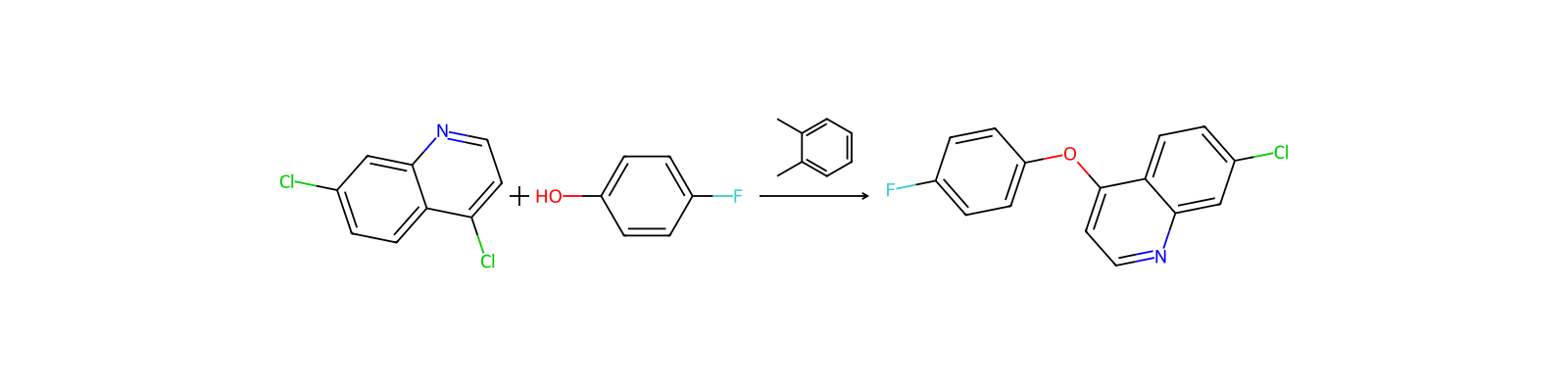
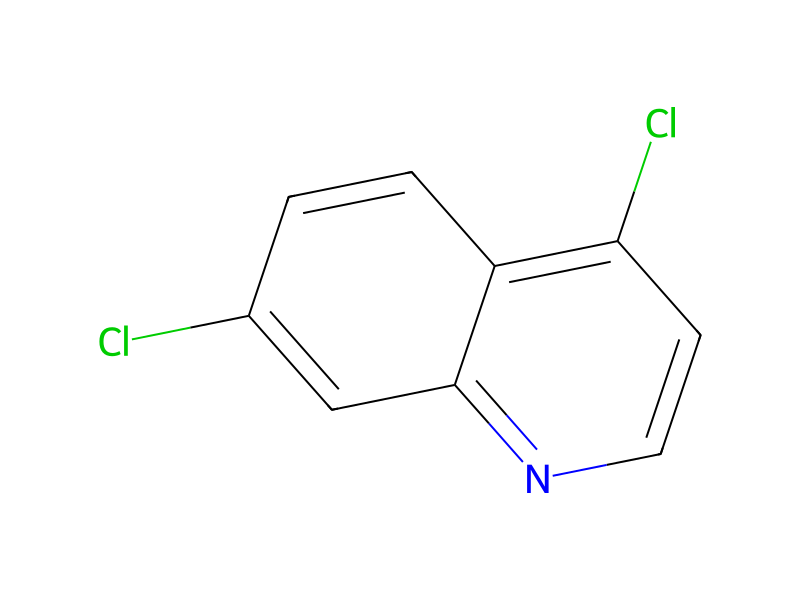
- Standard-SMILES
Clc1ccc2c(Cl)ccnc2c1- InChIKey
HXEWMTXDBOQQKO-UHFFFAOYSA-N- Summenformel
- C9H5Cl2N
- Durchschnittliche Molmasse
- 198,05 g/mol
- Monoisotopische Masse
- 196,9799046
Namen und Bezeichner
- Bevorzugter Name
- 4,7-Dichloroquinoline
- IUPAC
- 4,7-dichloroquinoline
- Lokaler Name
- 4,7-Dichlorchinolin
- Englischer Name
- 4,7-Dichloroquinoline
- Summenformel
- C9H5Cl2N
- Molmasse
- 198.05
Namen und Synonyme
4,7-Dichloroquinoline86-98-6QUINOLINE, 4,7-DICHLORO-DTXSID0052590NSC-593Z61O2HEQ2JDTXCID7031163RefChem:96722201-714-7Amodiaquine Impurity 1MFCD000067744,7-Dichloro-quinoline
Weitere Namen anzeigen
COPPER SEBACATESulfate Impurity4,7-dichloro-quinolinChloroquine Related CoMpound Atl14734, 7-dichloroquine7-DichloroquinolineChloroquine USP RC AAmodiaquine Impurity
TL 1473BRN 01253594,7-Dichloroquinoline, 97%NSC5931138471-54-15-20-07-00316 (Beilstein Handbook Reference)Tox21_303863AM81211
Datenbank-Bezeichner
- CAS
86-98-6- PubChem CID
- 6866
- DTXSID
DTXSID0052590- ChEMBL
CHEMBL319828- UNII
- Z61O2HEQ2J
- EC Number
- 201-714-7
- Nikkaji
- J3.898I
Eigenschaften
Berechnete Struktureigenschaften
- XLogP
- 3,6
- Polarare Oberfläche (TPSA)
- 12,9 Ų
- H-Brücken-Donoren
- 0
- H-Brücken-Akzeptoren
- 1
- Frei drehbare Bindungen
- 0
- Schwere Atome
- 12
- Formalladung
- 0
- Komplexität
- 163
Experimentelle und physikochemische Eigenschaften
Vapor Pressure0.00077 [mmHg]
Physical DescriptionCrystals; [Alfa Aesar MSDS]
Physikochemische Eigenschaften
- Schmelzpunkt
- 81 · 81-83 °C (lit.)
- Siedepunkt
- 298.4 °F · 298.4 °F (148°C)
- Dichte
- 1.4178 · 1.4178 (rough estimate)
- Dampfdruck
- 0.103 Pa · 0.103Pa at 25℃
- Brechungsindex
- 1.63 · 1.6300 (estimate)
- Flammpunkt
- 164 °C · 164 °C
- storage temp.
- 2 · 2-30°C
- Löslichkeit
- 50 mg/mL, · chloroform: soluble50mg/mL, clear, colorless to greenish-yellow
- pka
- 1.99 · 1.99±0.27(Predicted)
- Aggregatzustand
- Powder
- Farbe
- White to pale brown
- PH
- 3.86 · 3.86 (24.9°C)
- Biologische Quelle
- synthetic
- Wasserlöslichkeit
- insoluble
- BRN
- 125359 · 125359
- Henry's Law Constant
- 2.6 · 2.6×101 mol/(m3Pa) at 25℃, Zhang et al. (2010)
- InChI
- 1S/C9H5Cl2N/c10-6-1-2-7-8(11)3-4-12-9(7)5-6/h1-5H
- InChIKey
- HXEWMTXDBOQQKO-UHFFFAOYSA-N
- SMILES
- Clc1ccc2c(Cl)ccnc2c1
- LogP
- 3.193 at · 3.193 at 25℃
- CAS Datenbank
- 86 · 86-98-6(CAS DataBase Reference)
- NIST chemische Informationen
- 4 · Quinoline, 4,7-dichloro-(86-98-6)
- EPA chemische Informationen
- 4 · 4,7-Dichloroquinoline (86-98-6)
Sicherheit und Regulatorisches
GHS-Klassifizierung
GHS Classification
Warning
H315 (91.2%): Causes skin irritation [Warning Skin corrosion/irritation];H317 (20.6%): May cause an allergic skin reaction [Warning Sensitization, Skin];H319 (83.8%): Causes serious eye irritation [Warning Serious eye damage/eye irritation];H335 (66.2%): May cause respiratory irritation [Warning Specific target organ toxicity, single exposure; Respiratory tract irritation];H411 (14.7%): Toxic to aquatic life with long lasting effects [Hazardous to the aquatic environment, long-term hazard]
P261, P264, P264+P265, P271, P272, P273, P280, P302+P352, P304+P340, P305+P351+P338, P319, P321, P332+P317, P333+P317, P337+P317, P362+P364, P391, P403+P233, P405, and P501 (click each P-code to see the statement)
Aggregated GHS information provided per 68 reports by companies from 12 notifications to the ECHA C&L Inventory. Each notification may be associated with multiple companies.;Information may vary between notifications depending on impurities, additives, and other factors. The percentage value in parenthesis indicates the notified classification ratio from companies that provide hazard codes. Only hazard codes with percentage values above 10% are shown. For more detailed information, please visit ECHA C&L website.
Gefahrenhinweise
Regulatory Information
Chemical: Quinoline, 4,7-dichloro-
Status: Active Update: 14-12-2021 https://echa.europa.eu/registration-dossier/-/registered-dossier/21034;Status: Active Update: 21-05-2018 https://echa.europa.eu/registration-dossier/-/registered-dossier/22661
Hazards SummarySubcutaneous LDLo (mouse) = 80 mg/kg; [RTECS] A skin and strong eye irritant; [Alfa Aesar MSDS] See Quinoline.
Hazard Classes and CategoriesSkin Irrit. 2 (91.2%);Skin Sens. 1B (20.6%);Eye Irrit. 2 (83.8%);STOT SE 3 (66.2%);Aquatic Chronic 2 (14.7%)
Regulatorische Informationen
Regulatory Information
Chemical: Quinoline, 4,7-dichloro-
Status: Active Update: 14-12-2021 https://echa.europa.eu/registration-dossier/-/registered-dossier/21034;Status: Active Update: 21-05-2018 https://echa.europa.eu/registration-dossier/-/registered-dossier/22661
Sicherheitsdaten
- wgk
- 3
- tsca
- TSCA listed
- hs_code
- 29334910
- RTECS-Nr.
- VB4200000
- risk_code
- 36/37/38
- hazard_code
- Xi
- hazard_note
- Irritant
- safety_code
- 26-36-22
- Speicherklasse
- 13 - Non Combustible Solids
- Hazard Classifications
- Aquatic Chronic 2Eye Irrit. 2Skin Irrit. 2Skin Sens. 1
Chemie und Industrie
Verwendung und Herstellung
General Manufacturing InformationQuinoline, 4,7-dichloro-: ACTIVE
Anwendungen
Verwenden4,7-Dichloroquinoline is used in the synthesis of hybrid aminoquinoline-triazine derivatives that show anti-microbial activity. In addition, it is used in the synthesis of novel oxazolidinones as anti -microbial agents showing efficacy against common bacterial strains. Chloroquinoline impurity.
Vor- und nachgelagerte Produkte
Vorgelagerte Rohstoffe
Nachgelagerte Produkte
Anbieter50 Anbieter
国药集团化学试剂有限公司86-21-63210123 · [email protected]
梯希爱(上海)化成工业发展有限公司021-67121386 · [email protected]
郑州鸿晟医药科技有限公司0371-55695890 15637198702 · [email protected]
韶远科技(上海)有限公司021-50795510 4000665055 · [email protected]
Syntechem Co.,Ltd[email protected]
Ark Pharm, Inc.847-367-3680 · [email protected]
上海迈瑞尔生化科技有限公司4006356688 18621169109 · [email protected]
阿法埃莎(中国)化学有限公司400-6106006 · [email protected]
太原市瑞和丰科贸有限公司+86 351 7031519 · [email protected]
上海德默医药科技有限公司400-021-7337 2355568890 · [email protected]
上海瀚鸿科技股份有限公司021-54306202 13764082696 · [email protected]
上海柯维化学技术有限公司021-64609169 18901607656 · [email protected]
上海景颜化工科技有限公司13817811078 · [email protected]
上海尚饮思生化医药有限公司021-021-57872719 13761402923 · [email protected]
Pure Chemistry Scientific Inc.001-857-928-2050 or 1-888-588-9418 · [email protected]
上海攀鸿化工科技有限公司021-56491756 13512199871 · [email protected]
孝感深远化工有限公司15527621225; 15527621225 · [email protected]
玛雅试剂+86 (573) 82222445 (0)18006601000 452520369 · [email protected]
天津希恩思生化科技有限公司400 638 7771 · [email protected]
艾科试剂4008-755-333 18080918076 · [email protected]
深圳菲斯生物科技有限公司0755-83725681-603
赛默飞世尔科技(中国)有限公司800-810-5118 · [email protected]
上海特伯化学科技有限公司+86-21-60341587 · [email protected]
上海拓莱化学科技有限公司021-31137757-00; 18121466954;18121466954 · [email protected]
TCI AMERICA800-4238616 · [email protected]
TOKYO CHEMICAL INDUSTRY CO., LTD.03-36680489 · [email protected]
TCI Europe320-37350700 · [email protected]
深圳振强药物研发有限公司0755-66853366 13670046396 · [email protected]
上海仁曲医药科技有限公司18171398856 2968382473 · [email protected]
越林试剂021-62960152 · [email protected]
上海睿升化工科技有限公司+86-021-50935922
山东博洛达生物科技有限公司0531-68659041 · [email protected]
宁波台康化工有限公司0574-87365517 18074210286 · [email protected]
上海湄水化工科技有限公司021-60549325 18616193163
安徽科迪达化工有限公司0554-2106669 · [email protected]
日照力德士化工有限公司010-51268198 · [email protected]
郑州鸿晟医药科技有限公司0371-0371-13526885213 15637198702 · [email protected]
美岚实业(上海)有限公司021-58958189 · [email protected]
上海爱蝶实业有限公司021-58957966 18930537195 · [email protected]
成都零六生物科技有限公司400-1166-196 13458535857 · [email protected]
广拓化学(上海)有限公司021-60899189-8001 18918189673 · [email protected]
上海永叶生物科技有限公司86-021-61559134 15921386130 · [email protected]
上海洽凡生化科技有限公司+86-021-61654350 · [email protected]
上海有朋化工有限公司021-69005955 13701776567 · [email protected]
北京海力扬化学科技有限公司13718199399 · [email protected]
北京欣赛维化学科技有限公司010-56218822 13717722232 · [email protected]
四川海诺威科技有限公司13708085536 13708085536 · [email protected]
江苏艾康生物医药研发有限公司025-66028182 17714375163 · [email protected]
杭州拉凯生物技术有限公司0571-86403260 86403970 · [email protected]
上海凯赛化工有限公司021-33516722 13701817765 · [email protected]
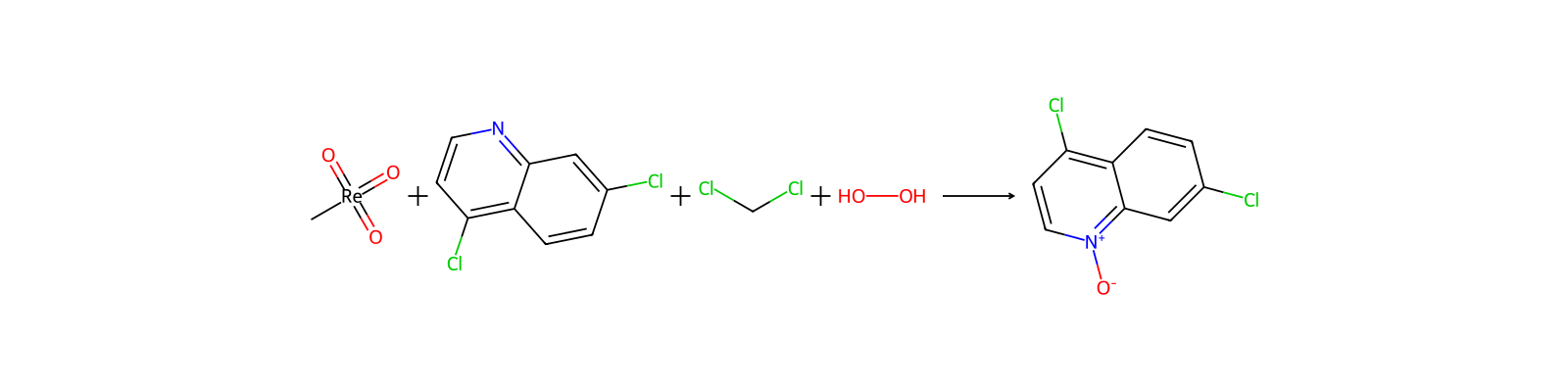
Zugehörige Reaktionen
183




Verknüpfte Notizen
Wird geladen…