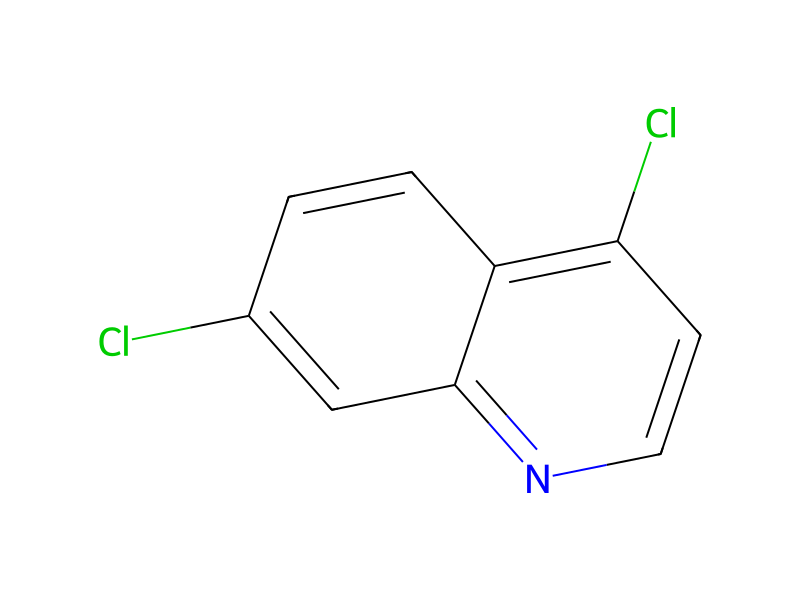
4,7-Dichloroquinoline → 7-Chloro-4-(4-fluorophenoxy)quinoline
Reaktionsgleichung

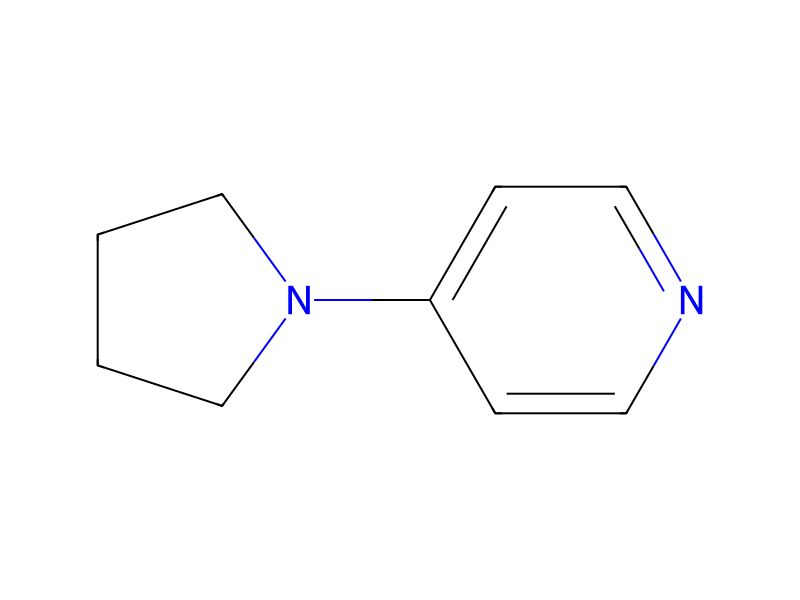
Cl[C:2]1[C:11]2[C:6](=[CH:7][C:8]([Cl:12])=[CH:9][CH:10]=2)[N:5]=[CH:4][CH:3]=1.[F:13][C:14]1[CH:19]=[CH:18][C:17]([OH:20])=[CH:16][CH:15]=1.N1(C2C=CN=CC=2)CCCC1>C1(C)C(C)=CC=CC=1>[F:13][C:14]1[CH:19]=[CH:18][C:17]([O:20][C:2]2[C:11]3[C:6](=[CH:7][C:8]([Cl:12])=[CH:9][CH:10]=3)[N:5]=[CH:4][CH:3]=2)=[CH:16][CH:15]=1Komponenten
5
Edukt 3

Produkt 1

Reagenzien, Katalysatoren, Lösungsmittel 1

Versuchsvorschrift
To a 50 mL flask equipped with a condenser, drying tube and thermometer, was added 1.98 g (0.01 moles) of 4,7-dichloroquinoline, 1.57 g (0.0014 moles) of 4-fluorophenol, 0.22 g (0.0015 moles) of 4-pyrrolidinopyridine and 20 mL of xylene. The reaction mixture was heated to reflux and reaction progress was monitored by TLC. After 18 hr, the mixture was cooled and washed with 50 mL of 5 N NaOH. The caustic layer was extracted with 3×20 mL of diethyl ether. The xylene and the ether layers were combined and dried over Na2SO4. Removal of the solvent provided 2.49 g (91 percent yield) of product, mp=88°-91° C.