Anthron
Anthrone
Daten werden ergänzt – lade die Seite später neu, um den aktuellen Stand zu sehen
Grundinformationen
- CAS
90-44-8- Standard-SMILES
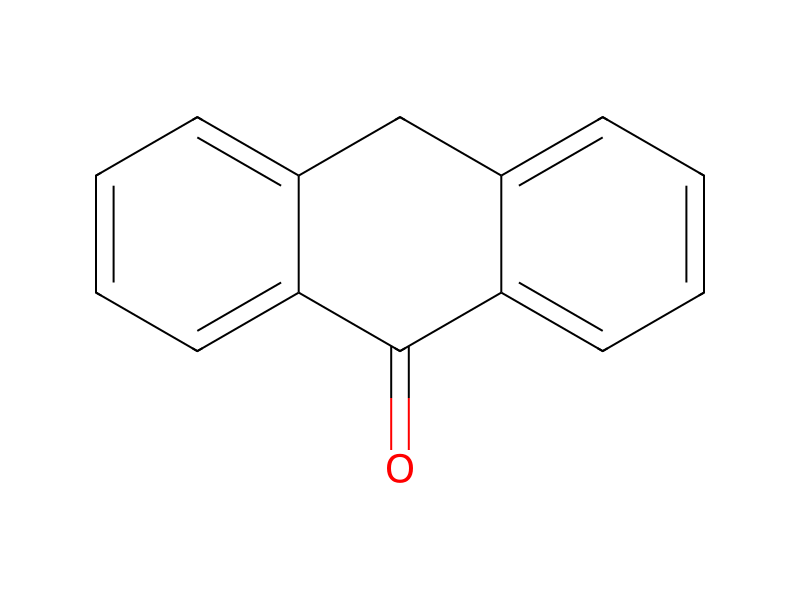
O=C1c2ccccc2Cc2ccccc21- InChIKey
RJGDLRCDCYRQOQ-UHFFFAOYSA-N- Summenformel
- C14H10O
- Durchschnittliche Molmasse
- 194,23 g/mol
- Monoisotopische Masse
- 194,07316494
Überblick
Anthrone is a member of the class of anthracenes that is 9,10-dihydroanthracene carrying an oxo group at C-9. It has a role as a radical scavenger. It is a tautomer of a 9-anthrol.
Namen und Bezeichner
- Bevorzugter Name
- Anthrone
- IUPAC
- 10H-anthracen-9-one
- Lokaler Name
- Anthron
- Englischer Name
- Anthrone
- Summenformel
- C14H10O
- Molmasse
- 194.23
Namen und Synonyme
ANTHRONE90-44-89(10H)-AnthracenoneCarbothroneanthracen-9(10H)-oneAnthranone9-Oxoanthracene9,10-Dihydro-9-oxoanthraceneAnthracene, 9,10-dihydro-9-oxo-DTXSID1049431FP0FJ7K744CHEBI:33835
Weitere Namen anzeigen
Anthron(10H)-9-AnthracenoneAnthroneGrANTHRACENONEAnthrone,97%
NSC-1965DTXCID0029391RefChem:113082201-994-010H-anthracen-9-oneAz-OMFCD000011879,10-DIHYDROANTHRACEN-9-ONE
Datenbank-Bezeichner
- CAS
90-44-8- PubChem CID
- 7018
- DTXSID
DTXSID1049431- ChEMBL
CHEMBL124440- ChEBI
CHEBI:33835- UNII
- FP0FJ7K744
- EC Number
- 201-994-0
- Nikkaji
- J3.916K
Eigenschaften
Berechnete StruktureigenschaftenWird ergänzt
- XLogP
- 3,7
- Polarare Oberfläche (TPSA)
- 17,1 Ų
- H-Brücken-Donoren
- 0
- H-Brücken-Akzeptoren
- 1
- Frei drehbare Bindungen
- 0
- Schwere Atome
- 15
- Formalladung
- 0
- Komplexität
- 234
Experimentelle und physikochemische Eigenschaften
PolymersOther Classes -> Polycyclic Aromatic Hydrocarbons
SpringerMaterials PropertiesAngular frequency
LogP
Log Kow = 3.66
3.46
Color/Form
ORTHORHOMBIC NEEDLES FROM BENZENE AND PETROLEUM ETHER
COLORLESS NEEDLES
Solubility
SOL IN MOST ORG SOLVENTS WITHOUT FLUORESCENCE
SOL IN ACETONE, HOT BENZENE, CONCN SULFURIC ACID, HOT DIL ALKALI
Melting Point155 °C
Vapor Pressure0.0000183 [mmHg]
Physical DescriptionColorless solid; [Hawley] Colorless crystalline powder; [Alfa Aesar MSDS]
Stability/Shelf LifeTENDENCY TO CHANGE TO ANTHRAQUINONE /IN SOLN/
Sicherheit und Regulatorisches
Sicherheitsangaben dienen nur zur Orientierung und ersetzen weder das Sicherheitsdatenblatt (SDB) des Lieferanten noch geltende Vorschriften oder eine fachliche Bewertung.
GHS-Klassifizierung
GHS Classification
This chemical does not meet GHS hazard criteria for 3.9% (2 of 51) of reports.
Warning
H315 (96.1%): Causes skin irritation [Warning Skin corrosion/irritation]
P261, P264, P264+P265, P271, P280, P302+P352, P304+P340, P305+P351+P338, P319, P321, P332+P317, P337+P317, P362+P364, P403+P233, P405, and P501 (click each P-code to see the statement)
Aggregated GHS information provided per 51 reports by companies from 9 notifications to the ECHA C&L Inventory. Each notification may be associated with multiple companies.
Gefahrenhinweise
Regulatory Information
Chemical: 9(10H)-Anthracenone
9(10H)-Anthracenone: Does not have an individual approval but may be used under an appropriate group standard
Hazards SummaryA skin and severe eye irritant; [Alfa Aesar MSDS] See POLYCYCLIC AROMATIC HYDROCARBONS.
Hazard Classes and CategoriesSkin Irrit. 2 (96.1%)
Sicherheit und Schutzausrüstung
Disposal Methods
SRP: At the time of review, criteria for land treatment or burial (sanitary landfill) disposal practices are subject to significant revision. Prior to implementing land disposal of waste residue (including waste sludge), consult with environmental regulatory agencies for guidance on acceptable disposal practices.
Toxikologische Informationen
Chemie und Industrie
Pharmakologische Informationen
Metabolism/MetabolitesYIELDS ANTHRAQUINONE & 9-HYDROXYANTHRACENE IN RATS. /FROM TABLE/
Verwendung und Herstellung
Uses
Used in the colorimetric determination of sugar and animal starch in body fluids, as a general reagent for carbohydrates, in the determination of animal starch in liver tissue, and in organic synthesis; [HSDB]
IN COLORIMETRIC DETERMINATION OF SUGAR AND ANIMAL STARCH IN BODY FLUIDS; IN ORG SYNTHESIS
GENERAL REAGENT FOR CARBOHYDRATES; DETERMINATION OF ANIMAL STARCH IN LIVER TISSUE
Derivatives: melitracen
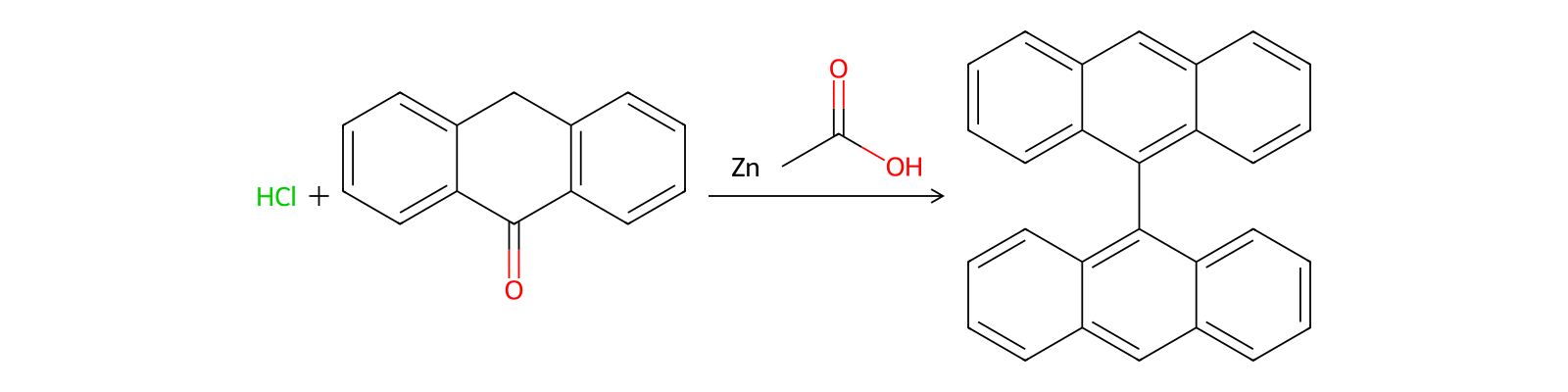
Methods of ManufacturingFROM ANTHRAQUINONE BY REDN WITH TIN, GLACIAL ACETIC ACID AND HYDROCHLORIC ACID. BY CYCLIZATION OF O-BENZYLBENZOIC ACID WITH LIQ HF.
General Manufacturing Information9(10H)-Anthracenone: ACTIVE
Anwendungen
BeschreibungAnthron bildet blaßgelbe, wasserunlösliche Nadeln. Es ist leicht löslich in Benzol. Die Verbindung wird zur kolorimetrischen Bestimmung von Kohlenhydraten und zur Herstellung von Küpenfarbstoffen verwendet. In der Biochemie wird Anthron zur Hemmung der Prostaglandinsynthese in Zellen verwendet.
VerwendenAnthrone is a tricyclic aromatic ketone and related compound of anthracene. Anthrone is used as a reagent in the colorometric determination of carbohydrates.
Vor- und nachgelagerte Produkte
Vorgelagerte Rohstoffe
Zugehörige Reaktionen
22


Notizen zur Verbindung
Wird geladen…