

Grundinformationen
- Standard-SMILES
C=C(Cl)C#N- InChIKey
OYUNTGBISCIYPW-UHFFFAOYSA-N- Summenformel
- C3H2ClN
- Durchschnittliche Molmasse
- 87,51 g/mol
- Monoisotopische Masse
- 86,98757674
Überblick
2-chloroacrylonitrile appears as a liquid. Boiling point 190-192 °F (88-89 °C). Density 1.096 g / cm3. Flash point 44 °F. Highly toxic.
Namen und Bezeichner
- Bevorzugter Name
- 2-Chloroacrylonitrile
- IUPAC
- 2-chloroprop-2-enenitrile
- Lokaler Name
- 2-Chloracrylonitril
- Englischer Name
- 2-Chloroacrylonitrile
- Summenformel
- C3H2ClN
- Molmasse
- 87.51
Namen und Synonyme
2-Chloroacrylonitrile920-37-6Chloroacrylonitrile2-Propenenitrile, 2-chloro-2-Chloro-2-propenenitrileAcrylonitrile, 2-chloro-alpha-Chloroacrylonitrile2-chloropropenenitrile1-Chloro-1-cyanoethene1-Cyanovinyl chloride1-Cyano-1-chloroethene1-Chloro-1-cyanoethylene
Weitere Namen anzeigen
2-Chloroacrylonitrile ,99%oroacryLNSC 5117142-PROPENONITRLLE2-CHLORACRYLONITRIL2-chloropylenitrile2-chloroacrylnitrile2-CHLOROCYANOETHYLENE
FFJ1QHD154NSC-511714DTXSID6052613RefChem:86441DTXCID0031186213-055-22-chloroprop-2-enenitrile.alpha.-Chloroacrylonitrile
Datenbank-Bezeichner
- CAS
920-37-6- PubChem CID
- 70198
- DTXSID
DTXSID6052613- UNII
- FFJ1QHD154
- EC Number
- 213-055-2
- Nikkaji
- J55.139B
Eigenschaften
Berechnete Struktureigenschaften
- XLogP
- 1,4
- Polarare Oberfläche (TPSA)
- 23,8 Ų
- H-Brücken-Donoren
- 0
- H-Brücken-Akzeptoren
- 1
- Frei drehbare Bindungen
- 0
- Schwere Atome
- 5
- Formalladung
- 0
- Komplexität
- 86,3
Experimentelle und physikochemische Eigenschaften
Chemical ClassesNitrogen Compounds -> Nitriles
SpringerMaterials PropertiesSchoenflies notation
Flash Point
44 °F (NTP, 1992)
44 °F
Boiling Point190 to 192 °F at 760 mmHg (NTP, 1992)
Melting Point-85 °F (NTP, 1992)
Physical Description
2-chloroacrylonitrile appears as a liquid. Boiling point 190-192 °F (88-89 °C). Density 1.096 g / cm3. Flash point 44 °F. Highly toxic.
Highly toxic liquid with boiling point of 88-89 deg C; [CAMEO]
Physikochemische Eigenschaften
- Schmelzpunkt
- 65 °C · −65 °C(lit.)
- Siedepunkt
- 88 · 88-89 °C(lit.)
- Dichte
- 1.096 g/mL · 1.096 g/mL at 25 °C(lit.)
- Brechungsindex
- 20 · n20/D 1.429(lit.)
- Flammpunkt
- 44 °F · 44 °F
- storage temp.
- 2 · Inert atmosphere,2-8°C
- Löslichkeit
- Chloroform, Ethyl Acetate, Methanol (Very Slightly)
- Aggregatzustand
- Liquid
- Farbe
- Clear colorless to yellow
- BRN
- 773744 · 773744
- InChI
- InChI=1S/C3H2ClN/c1-3(4)2-5/h1H2
- InChIKey
- OYUNTGBISCIYPW-UHFFFAOYSA-N
- SMILES
- C(#N)C(Cl)=C
- CAS Datenbank
- 920 · 920-37-6(CAS DataBase Reference)
- NIST chemische Informationen
- 2 · 2-Propenenitrile, 2-chloro-(920-37-6)
- EPA chemische Informationen
- 2 · 2-Chloroacrylonitrile (920-37-6)
Sicherheit und Regulatorisches
GHS-Klassifizierung
GHS Classification
Danger
H225 (100%): Highly Flammable liquid and vapor [Danger Flammable liquids]
P203, P210, P233, P240, P241, P242, P243, P260, P262, P264, P270, P271, P273, P280, P284, P301+P316, P301+P330+P331, P302+P352, P302+P361+P354, P303+P361+P353, P304+P340, P305+P354+P338, P316, P318, P320, P321, P330, P342+P316, P361+P364, P363, P370+P378, P391, P403, P403+P233, P403+P235, P405, and P501 (click each P-code to see the statement)
Aggregated GHS information provided per 46 reports by companies from 6 notifications to the ECHA C&L Inventory. Each notification may be associated with multiple companies.
Gefahrenhinweise
Regulatory InformationChemical: 2-Propenenitrile, 2-chloro-
DOT LabelFlammable Liquid
Fire HazardsExcerpt from ERG Guide 128 [Flammable Liquids (Water-Immiscible)]:
Health HazardsExcerpt from ERG Guide 128 [Flammable Liquids (Water-Immiscible)]:
Hazards SummaryHighly toxic; [Quick CPC] Polymerizable and highly flammable; [CAMEO] Lachrymator and skin irritant; Possible skin sensitizer; May be metabolized to cyanide; [MSDSonline]
Reactive GroupHalogenated Organic Compounds
Reactivity AlertsHighly Flammable
Reactivity Profile2-CHLOROACRYLONITRILE readily polymerizes, and copolymerizes with other unsaturated monomers (NTP, 1992).
Air and Water ReactionsHighly flammable.
Hazard Classes and CategoriesFlam. Liq. 2 (100%)
Sicherheit und Schutzausrüstung
Fire FightingFires involving this compound can be controlled with a dry chemical, carbon dioxide, foam, or Halon extinguisher. (NTP, 1992)
First Aid
EYES: First check the victim for contact lenses and remove if present. Flush victim's eyes with water or normal saline solution for 20 to 30 minutes while simultaneously calling a hospital or poison control center. Do not put any ointments, oils, or medication in the victim's eyes without specific instructions from a physician. IMMEDIATELY transport the victim after flushing eyes to a hospital even if no symptoms (such as redness or irritation) develop.
Nonfire Spill ResponseSTORAGE PRECAUTIONS: You should store this material in a refrigerator. (NTP, 1992)
Isolation and EvacuationExcerpt from ERG Guide 128 [Flammable Liquids (Water-Immiscible)]:
Personal Protective Equipment (PPE)MINIMUM PROTECTIVE CLOTHING: If Tyvek-type disposable protective clothing is not worn during handling of this chemical, wear disposable Tyvek-type sleeves taped to your gloves.
Toxikologische Informationen
Adverse EffectsOther Poison - Chemical Asphyxiant
Toxicity DataLC50 (mice) = 105 mg/m3/2h
Sicherheitsdaten
- wgk
- 3
- tsca
- TSCA listed
- ridadr
- UN 3383 6.1/PG 1
- hs_code
- 29269095
- RTECS-Nr.
- AT5525000
- risk_code
- 45-24-26/28-34-43-50-40-36/37/38-28-23/24-11
- hazard_code
- F,T+,T,N
- hazard_note
- Flammable/Very Toxic
- safety_code
- 53-26-36/37/39-45-61-28A-16-1-28
- hazard_class
- 3.1
- packing_group
- II
Chemie und Industrie
Verwendung und Herstellung
General Manufacturing Information2-Propenenitrile, 2-chloro-: ACTIVE
Anwendungen
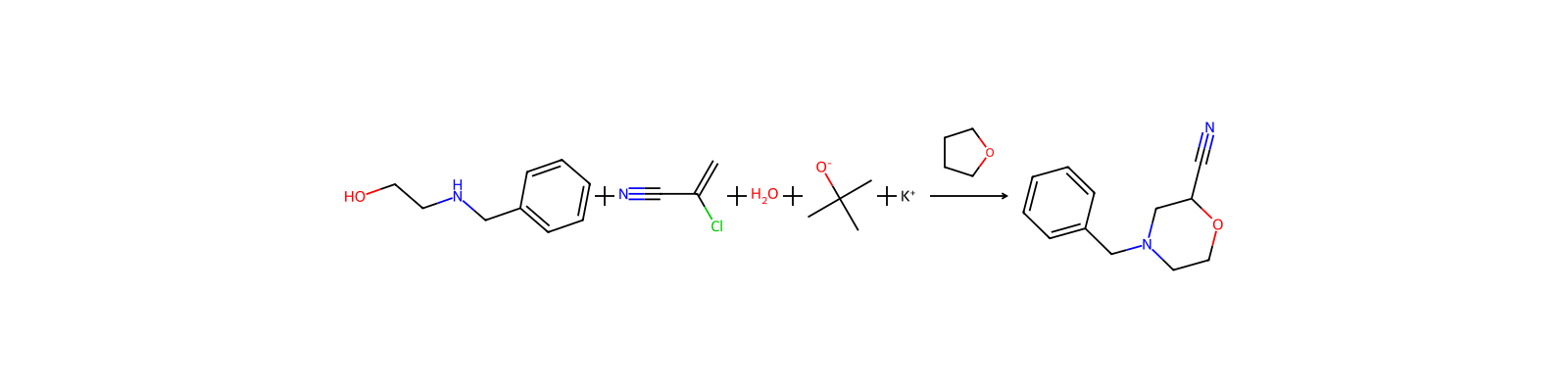
Verwenden2-Chloroacrylonitrile (cas# 920-37-6) is a compound useful in organic synthesis.
Vor- und nachgelagerte Produkte
Vorgelagerte Rohstoffe
Nachgelagerte Produkte
Anbieter50 Anbieter
国药集团化学试剂有限公司86-21-63210123 · [email protected]
梯希爱(上海)化成工业发展有限公司021-67121386 · [email protected]
衢州润东化工有限公司0570-8789886 18892685668 · [email protected]
上海阿拉丁生化科技股份有限公司400-6206333 13167063860 · [email protected]
山东铭宇供应链管理有限公司0531-18615601 18615601385
爱斯特(成都)生物制药股份有限公司+86-28-85122536 85324413 · [email protected]
Baoji Guokang Healthchem co.,ltd+8615604608665 15604608665 · [email protected]
武汉科美沃化工有限公司+86-2785736489 +8618171418573 · [email protected]
Dayang Chem (Hangzhou) Co.,Ltd.+86-0571-88938639 17705817739 · [email protected]
韶远科技(上海)有限公司021-50795510 4000665055 · [email protected]
科瑞迪化学400-821-5857 021-64326257 · [email protected]
上海欧堃化学有限公司(QQ 39130253)021-68712331 39130253 · [email protected]
Syntechem Co.,Ltd[email protected]
上海迈瑞尔生化科技有限公司4006356688 18621169109 · [email protected]
武汉易泰科技有限公司上海分公司18930552037 · [email protected]
北京东华力拓科技发展有限公司010-88425576 · [email protected]
上海德默医药科技有限公司400-021-7337 2355568890 · [email protected]
安耐吉化学&3A(安徽泽升科技股份有限公司)400-0056266 · [email protected]
山东煜坤化工有限公司18660690289 · [email protected]
上海瀚鸿科技股份有限公司021-54306202 13764082696 · [email protected]
上海相辉医药科技有限公司13761987713 · [email protected]
上海景颜化工科技有限公司13817811078 · [email protected]
上海瀚扬化工产品有限公司13356258271
山东铭耀化工有限公司13287741688
山东西亚化学有限公司13355009207 13355009207 · [email protected]
玛雅试剂+86 (573) 82222445 (0)18006601000 452520369 · [email protected]
四川库利南科技有限公司400-1166-196 18981987031 · [email protected]
天津希恩思生化科技有限公司400 638 7771 · [email protected]
武汉科美沃化工有限公司027-85736489 · [email protected]
上海思域化工科技有限公司86-21-34053660 · [email protected]
苏州思变化学技术有限公司0512-65617459 18915409046 · [email protected]
赛默飞世尔科技(中国)有限公司800-810-5118 · [email protected]
上海遐瑞医药科技有限公司+86 21 61551611
江苏艾康生物医药研发有限公司025-66113011 13913916777 · [email protected]
上海健超生物科技有限公司150-2103-5486 18017383231 · [email protected]
TOKYO CHEMICAL INDUSTRY CO., LTD.03-36680489 · [email protected]
TCI Europe320-37350700 · [email protected]
上海贤鼎生物科技有限公司4009209199 · [email protected]
越林试剂021-62960152 · [email protected]
苏州安尼康药物研发有限公司0512-69369885 · [email protected]
上海汇凯化学科技有限公司021-61995394 18916691159 · [email protected]
上海倍卓生物科技有限公司021-61119791,13386096464 · [email protected]
HBCChem, Inc.+1-510-219-6317 · [email protected]
日照力德士化工有限公司010-51268198 · [email protected]
上海爱蝶实业有限公司021-58957966 18930537195 · [email protected]
成都零六生物科技有限公司400-1166-196 13458535857 · [email protected]
广拓化学(上海)有限公司021-60899189-8001 18918189673 · [email protected]
上海御略医药科技有限公司021-60345187 13671753212 · [email protected]
上海麦克林生化科技股份有限公司15221275939 15221275939 · [email protected]
上海乾劲化工科技有限公司021-20900665 17321230821 · [email protected]
Zugehörige Reaktionen
157


Verknüpfte Notizen
Wird geladen…