StartseiteMCPWorkbenchSkills
StartseiteWorkbenchBenachrichtigungenMein Bereich
llms.txt · MCP-AnleitungDatenschutz · Nutzungsbedingungen · Supportv1.8.0
  1. Startseite
  2. /Verbindung

4-Chlor-1,2-diamino-benzol

4-Chloro-1,2-diaminobenzene

HCID 7263
Neue NotizNeue ReaktionAnfrage stellen
Druckvorschau
GrundinformationenÜberblickNamen und BezeichnerEigenschaftenSicherheit und RegulatorischesChemie und IndustrieZugehörige ReaktionenNotizen zur Verbindung
TeilstruktursucheÄhnliche Strukturen suchen

Grundinformationen

CAS
95-83-0
Standard-SMILES
Nc1ccc(Cl)cc1N
InChIKey
BXIXXXYDDJVHDL-UHFFFAOYSA-N
Summenformel
C6H7ClN2
Durchschnittliche Molmasse
142,58 g/mol
Monoisotopische Masse
142,0297759

Überblick

4-Chloro-o-phenylenediamine can cause cancer according to an independent committee of scientific and health experts.

Namen und Bezeichner

Bevorzugter Name
4-Chloro-1,2-diaminobenzene
IUPAC
4-chlorobenzene-1,2-diamine
Lokaler Name
4-Chlor-1,2-diamino-benzol
Englischer Name
4-Chloro-o-phenylenediamine
Summenformel
C6H7ClN2
Molmasse
142.59

Namen und Synonyme

95-83-04-chlorobenzene-1,2-diamine4-Chloro-o-phenylenediamine4-Chloro-1,2-diaminobenzene4-Chloro-1,2-phenylenediamine1,2-Diamino-4-chlorobenzene4-CHLORO-1,2-BENZENEDIAMINEUrsol Olive 6G1,2-Benzenediamine, 4-chloro-2-Amino-4-chloroaniline3,4-Diaminochlorobenzenep-Chloro-o-phenylenediamine
Weitere Namen anzeigen
ci76015c.i.76015ursololive6gJACS-95-83-0oro-o-phenyL
o-Phenylenediamine, 4-chloro-NCI-C032923,4-Diamino-1-chlorobenzeneMFCD000116914-Cl-o-PD4-Chloro-ortho-phenylenediamineNSC 6157C.I. 76015

Datenbank-Bezeichner

CAS
95-83-0
PubChem CID
7263
DTXSID
DTXSID5020283
ChEMBL
CHEMBL552741
ChEBI
CHEBI:82301
UNII

Eigenschaften

Berechnete Struktureigenschaften

XLogP
1,3
Polarare Oberfläche (TPSA)
52 Ų
H-Brücken-Donoren
2
H-Brücken-Akzeptoren
2
Frei drehbare Bindungen
0
Schwere Atome
9
Formalladung
0
Komplexität
97,1

Experimentelle und physikochemische Eigenschaften

Chemical Classes · 2 Einträge

Nitrogen Compounds -> Amines, Aromatic

Carcinogens

LogP · 2 Einträge

log Kow = 1.28

1.28

Color/FormCrystals
Solubility · 3 Einträge

less than 1 mg/mL at 66 °F (NTP, 1992)

Soluble in benzene, very soluble in ethanol, ether.

Slightly soluble in water

Melting Point · 2 Einträge

153 to 158 °F (NTP, 1992)

76 °C

Vapor Pressure0.00206 [mmHg]
Physical Description · 2 Einträge

4-chloro-o-phenylenediamine appears as brown crystalline solid or powder. (NTP, 1992)

Brown solid; May be sensitive to prolonged exposure to air and light; [CAMEO] Deep brown powder; [MSDSonline]

Physikochemische Eigenschaften

Sicherheit und Regulatorisches

Sicherheitsangaben dienen nur zur Orientierung und ersetzen weder das Sicherheitsdatenblatt (SDB) des Lieferanten noch geltende Vorschriften oder eine fachliche Bewertung.

GHS-Klassifizierung

GHS Classification · 6 Einträge

Warning

H302 (10%): Harmful if swallowed [Warning Acute toxicity, oral]

P203, P261, P264, P264+P265, P270, P271, P280, P301+P317, P302+P352, P304+P340, P305+P351+P338, P318, P319, P321, P330, P332+P317, P337+P317, P362+P364, P403+P233, P405, and P501 (click each P-code to see the statement)

Aggregated GHS information provided per 50 reports by companies from 8 notifications to the ECHA C&L Inventory. Each notification may be associated with multiple companies.

Warning

H341: Suspected of causing genetic defects [Warning Germ cell mutagenicity]

Gefahrenhinweise

Regulatory Information · 3 Einträge

Chemical: 1,2-Benzenediamine, 4-chloro-

Hazard Traits - Carcinogenicity

The New Jersey Worker and Community Right to Know Act requires public and private employers to provide information about hazardous substances at their workplaces. (N.J.S.A. 34:5A-1 et. seq.)

Other Safety InformationIMAP assessments - Chemicals with limited data availability that may be used in hair dyes overseas: Human health tier II assessment
DOT LabelPoison
Fire HazardsFlash point data for this chemical are not available. It is probably combustible. (NTP, 1992)
Health HazardsSYMPTOMS: Symptoms of exposure to this compound may include irritation.
Hazards SummaryHarmful by inhalation, ingestion, and skin absorption; [CAMEO] An irritant; May induce methemoglobinemia; [MSDSonline]

Chemie und Industrie

Verwendung und Herstellung

Uses · 5 Einträge

Used as an ingredient in hair dyes, a curing agent for epoxy resins, a reagent in gas chromatographic analyses, and a chemical intermediate for dyes; [HSDB]

Plastic Composites Manufacturing [Category: Industry]

OXIDATION BASE; CHEM INT FOR CI VAT BROWN 22 & 5-CHLOROBENZOTRIAZOLE; INGREDIENT IN HAIR DYES; CURING AGENT FOR EPOXY RESINS; REAGENT IN GAS CHROMATOGRAPHIC ANALYSES

4-Chloro-ortho-phenylenediamine has been used as a dye intermediate ... However, no evidence was found that it is presently employed commercially in the US as a dye or as a dye intermediate. 4-Chloro-ortho-phenylenediamine is believed to be used to produce 5-chlorobenzotriazole ... ortho-Phenylenediamines (including 4-chloro-ortho-phenylenediamine) and their salts are permitted for use in cosmetics in the European Communities as oxidizing coloring agents in hair dyes, only if the concn in the finished product is below 6% (calculated as the free base) ... .

GAS CHROMATOGRAPHIC METHOD WAS DEVELOPED FOR DETERMINATION OF SELENIUM IN VARIOUS SAMPLES. SE WAS EXTRACTED WITH HOT HCL & REACTED WITH 4-CHLORO-O-PHENYLENEDIAMINE.

U.S. Production · 3 Einträge

The 1979 TSCA Inventory identified one US firm producing 6,000 lb in 1977 ... It has been produced commercially in the US since 1941 ... .

... Production in 1977 was 0.45-4.5 thousand kg ... .

1977: 450-4500 kg

Formulations/Preparations · 2 Einträge

4-Chloro-ortho-phenylenediamine is available in the US as a crystalline powder containing maxima of 2% ash and 2% moisture and with a melting-range of 70-73 deg /unit unspecified/ ... .

Available in the US as a crystalline powder containing maxima of 2% ash and 2% moisture and with a melting-range of 70-73 °C.

General Manufacturing Information · 3 Einträge

1,2-Benzenediamine, 4-chloro-: ACTIVE

It is available in the US containing maxima of 2% ash and 2% moisture.

Produced commercially in US since 1941-1943. One US producer in 1977.

Anwendungen · 1 Eintrag

Zugehörige Reaktionen

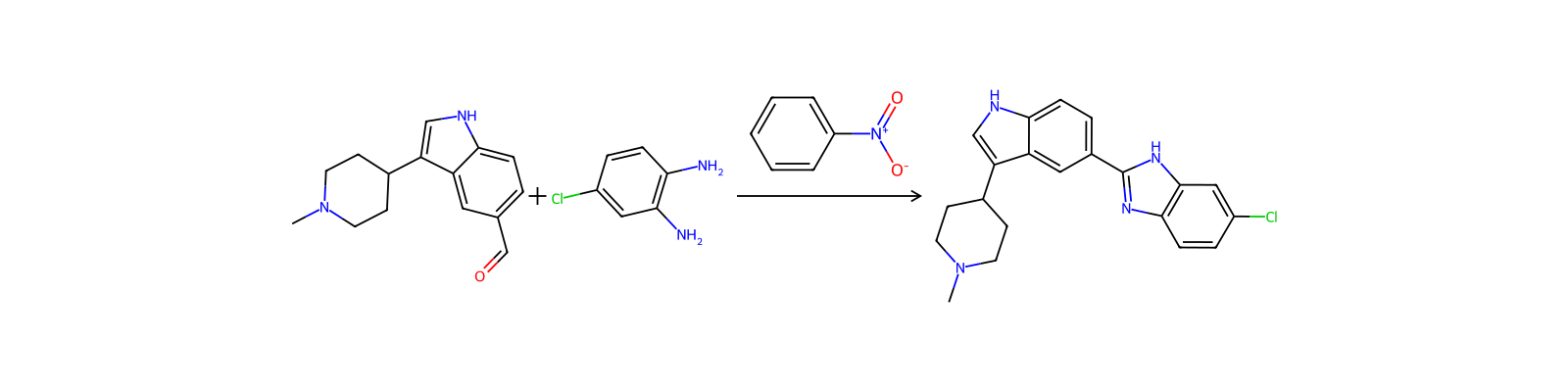
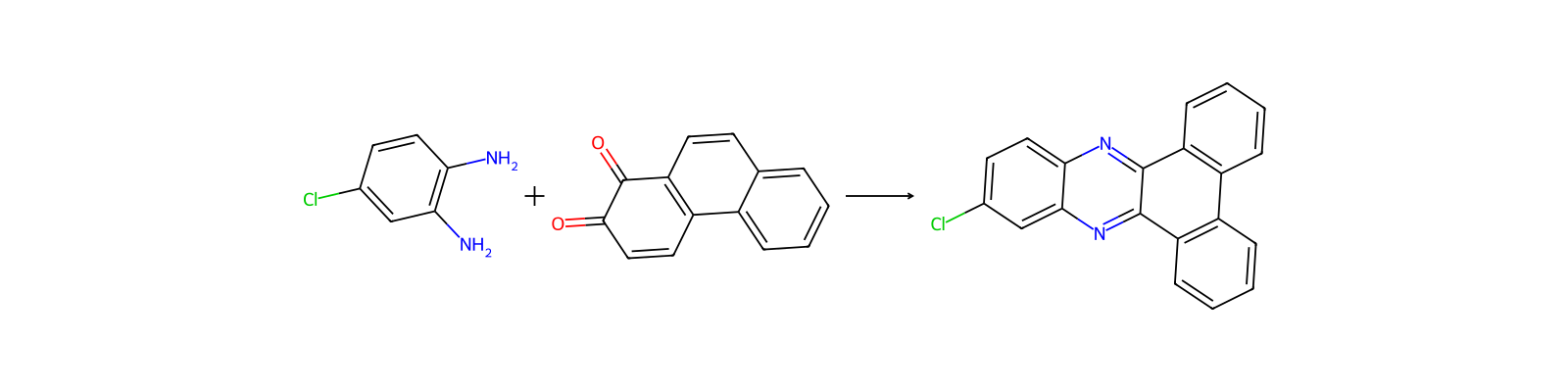
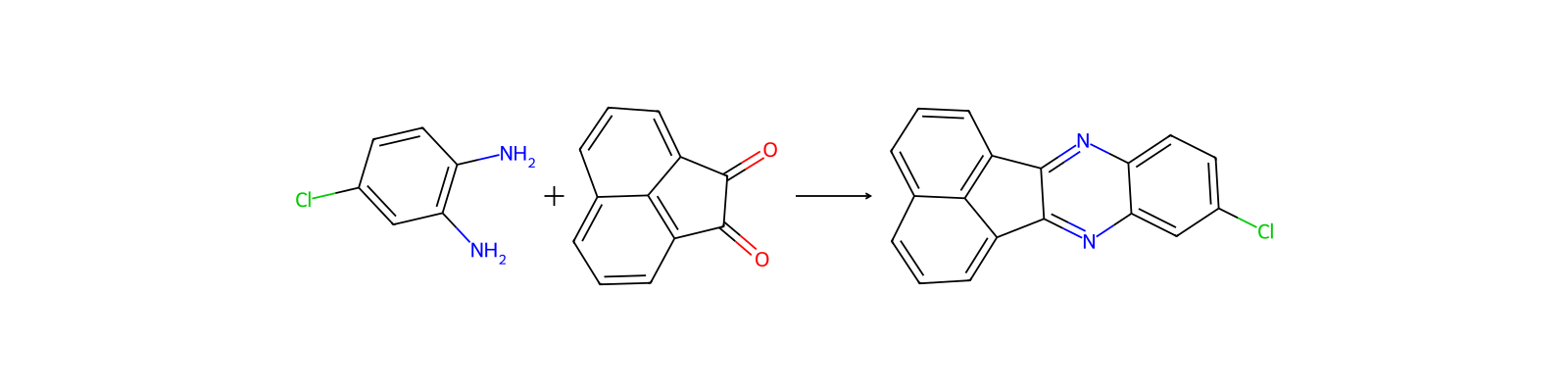
69
Reaktionsaufzeichnung erstellen
Reaktionsgleichung von HRID 12271
HRID 12271als Eduktuspto-grants-2010_06
Reaktionsgleichung von HRID 77079
HRID 77079als Eduktuspto-grants-2014_09
Reaktionsgleichung von HRID 185339
HRID 185339als EduktTraining data from https://doi.org/10.1039/C8SC04228D (6/10)
Reaktionsgleichung von HRID 251668
HRID 251668als Eduktuspto-grants-2011_01
Reaktionsgleichung von HRID 278023
HRID 278023als Eduktuspto-grants-2002_03
Reaktionsgleichung von HRID 375645
HRID 375645als Produktuspto-grants-1996_01
Reaktionsgleichung von HRID 461668
HRID 461668als Eduktuspto-grants-1977_12
Reaktionsgleichung von HRID 461669
HRID 461669als Eduktuspto-grants-1977_12
Seite 1 von 9

Notizen zur Verbindung

Wird geladen…

Auf dieser SeiteGrundinformationenÜberblickNamen und BezeichnerEigenschaftenSicherheit und RegulatorischesChemie und IndustrieZugehörige ReaktionenNotizen zur Verbindung
Weitere Aktionen
Neue NotizNeue ReaktionAnfrage stellen
8E72QRZ33H
EC Number
202-456-8
Nikkaji
J4.713I
Schmelzpunkt
70 · 70-73 °C(lit.)
Siedepunkt
232.49 °C · 232.49°C (rough estimate)
Dichte
1.2124 · 1.2124 (rough estimate)
Brechungsindex
1.4877 · 1.4877 (estimate)
storage temp.
Keep in dark place,Inert atmosphere,Room temperature
Löslichkeit
Chloroform (Slightly), Methanol (Slightly)
Aggregatzustand
Solid
pka
3.52 · 3.52±0.10(Predicted)
Farbe
White to off-white
Wasserlöslichkeit
16 g/L · 16 g/L (20 ºC)
BRN
508472 · 508472
Stabilität
Stable. Combustible. Incompatible with strong oxidizing agents.
InChI
1S/C6H7ClN2/c7-4-1-2-5(8)6(9)3-4/h1-3H,8-9H2
InChIKey
BXIXXXYDDJVHDL-UHFFFAOYSA-N
SMILES
Nc1ccc(Cl)cc1N
CAS Datenbank
95 · 95-83-0(CAS DataBase Reference)
NIST chemische Informationen
1 · 1,2-Benzenediamine, 4-chloro-(95-83-0)
EPA chemische Informationen
4 · 4-Chloro-1,2-phenylenediamine (95-83-0)
Reactive Group
Aryl Halides
Special Reports · 2 Einträge

National Toxicology Program. Eleventh Report on Carcinogens (2005). The Report on Carcinogens is an informational scientific and public health document that identifies and discusses substances (including agents, mixtures, or exposure circumstances) that may pose a carcinogenic hazard to human health. 4-Chloro-o-phenylenediamine (95-83-0) is listed as reasonably anticipated to be a human carcinogen.[Available from, as of July 31, 2009: http://ntp.niehs.nih.gov/ntp/roc/eleventh/profiles/s0414cop.pdf]

DHEW/NCI; Bioassay of 4-Chloro-o-phenylenediamine for Possible Carcinogenicity (1978) Technical Rpt Series No. 63 DHEW Pub No. (NIH) 78-1313

TSCA Requirements · 2 Einträge

Section 8(a) of TSCA requires manufacturers of this chemical substance to report preliminary assessment information concerned with production, use, and exposure to EPA as cited in the preamble in 51 FR 41329.

Pursuant to section 8(d) of TSCA, EPA promulgated a model Health and Safety Data Reporting Rule. The section 8(d) model rule requires manufacturers, importers, and processors of listed chemical substances and mixtures to submit to EPA copies and lists of unpublished health and safety studies. 4-chloro-1,2-benzenediamine is included on this list.

Reactivity Profile4-CHLORO-O-PHENYLENEDIAMINE is incompatible with strong oxidizers. It reacts with alpha-ketoacids to form quinoxalones. (NTP, 1992)
Air and Water ReactionsThis chemical may be sensitive to prolonged exposure to air and light. Insoluble in water.
Hazard Classes and Categories · 4 Einträge

Acute Tox. 4 (10%)

Germ cell mutagenicity - Category 2

Skin corrosion/irritation - Category 2

Carcinogens

Sicherheit und Schutzausrüstung

Fire FightingFires involving this material can be controlled with a dry chemical, carbon dioxide or Halon extinguisher. (NTP, 1992)
First Aid · 1 Eintrag

EYES: First check the victim for contact lenses and remove if present. Flush victim's eyes with water or normal saline solution for 20 to 30 minutes while simultaneously calling a hospital or poison control center. Do not put any ointments, oils, or medication in the victim's eyes without specific instructions from a physician. IMMEDIATELY transport the victim after flushing eyes to a hospital even if no symptoms (such as redness or irritation) develop.

Storage Conditions · 1 Eintrag

PRECAUTIONS FOR "CARCINOGENS": Storage site should be as close as practical to lab in which carcinogens are to be used, so that only small quantities required for ... expt need to be carried. Carcinogens should be kept in only one section of cupboard, an explosion-proof refrigerator or freezer (depending on chemicophysical properties ...) that bears appropriate label. An inventory ... should be kept, showing quantity of carcinogen & date it was acquired ... Facilities for dispensing ... should be contiguous to storage area. /Chemical Carcinogens/

Cleanup Methods · 1 Eintrag

PRECAUTIONS FOR "CARCINOGENS": A high-efficiency particulate arrestor (HEPA) or charcoal filters can be used to minimize amt of carcinogen in exhausted air ventilated safety cabinets, lab hoods, glove boxes or animal rooms ... Filter housing that is designed so that used filters can be transferred into plastic bag without contaminating maintenance staff is avail commercially. Filters should be placed in plastic bags immediately after removal ... The plastic bag should be sealed immediately ... The sealed bag should be labelled properly ... Waste liquids ... should be placed or collected in proper containers for disposal. The lid should be secured & the bottles properly labelled. Once filled, bottles should be placed in plastic bag, so that outer surface ... is not contaminated ... The plastic bag should also be sealed & labelled. ... Broken glassware ... should be decontaminated by solvent extraction, by chemical destruction, or in specially designed incinerators. /Chemical Carcinogens/

Nonfire Spill Response · 1 Eintrag

SMALL SPILLS AND LEAKAGE: Should a spill occur while you are handling this chemical, FIRST REMOVE ALL SOURCES OF IGNITION, then you should dampen the solid spill material with 60-70% ethanol and transfer the dampened material to a suitable container. Use absorbent paper dampened with 60-70% ethanol to pick up any remaining material. Seal the absorbent paper, and any of your clothes, which may be contaminated, in a vapor-tight plastic bag for eventual disposal. Solvent wash all contaminated surfaces with 60-70% ethanol followed by washing with a soap and water solution. Do not reenter the contaminated area until the Safety Officer (or other responsible person) has verified that the area has been properly cleaned.

Disposal Methods · 5 Einträge

SRP: At the time of review, criteria for land treatment or burial (sanitary landfill) disposal practices are subject to significant revision. Prior to implementing land disposal of waste residue (including waste sludge), consult with environmental regulatory agencies for guidance on acceptable disposal practices.

PRECAUTIONS FOR "CARCINOGENS": There is no universal method of disposal that has been proved satisfactory for all carcinogenic compounds & specific methods of chem destruction ... published have not been tested on all kinds of carcinogen-containing waste. ... summary of avail methods & recommendations ... /given/ must be treated as guide only. /Chemical Carcinogens/

PRECAUTIONS FOR "CARCINOGENS": ... Incineration may be only feasible method for disposal of contaminated laboratory waste from biological expt. However, not all incinerators are suitable for this purpose. The most efficient type ... is probably the gas-fired type, in which a first-stage combustion with a less than stoichiometric air:fuel ratio is followed by a second stage with excess air. Some ... are designed to accept ... aqueous & organic-solvent solutions, otherwise it is necessary ... to absorb soln onto suitable combustible material, such as sawdust. Alternatively, chem destruction may be used, esp when small quantities ... are to be destroyed in laboratory. /Chemical Carcinogens/

PRECAUTIONS FOR "CARCINOGENS": HEPA (high-efficiency particulate arrestor) filters ... can be disposed of by incineration. For spent charcoal filters, the adsorbed material can be stripped off at high temp & carcinogenic wastes generated by this treatment conducted to & burned in an incinerator. ... LIQUID WASTE: ... Disposal should be carried out by incineration at temp that ... ensure complete combustion. SOLID WASTE: Carcasses of lab animals, cage litter & misc solid wastes ... should be disposed of by incineration at temp high enough to ensure destruction of chem carcinogens or their metabolites. /Chemical Carcinogens/

For more Disposal Methods (Complete) data for 4-CHLORO-1,2-BENZENEDIAMINE (6 total), please visit the HSDB record page.

Preventive Measures · 5 Einträge

PRECAUTIONS FOR "CARCINOGENS": Smoking, drinking, eating, storage of food or of food & beverage containers or utensils, & the application of cosmetics should be prohibited in any laboratory. All personnel should remove gloves, if worn, after completion of procedures in which carcinogens have been used. They should ... wash ... hands, preferably using dispensers of liq detergent, & rinse ... thoroughly. Consideration should be given to appropriate methods for cleaning the skin, depending on nature of the contaminant. No standard procedure can be recommended, but the use of organic solvents should be avoided. Safety pipettes should be used for all pipetting. /Chemical Carcinogens/

PRECAUTIONS FOR "CARCINOGENS": In animal laboratory, personnel should remove their outdoor clothes & wear protective suits (preferably disposable, one-piece & close-fitting at ankles & wrists), gloves, hair covering & overshoes. ... Clothing should be changed daily but ... discarded immediately if obvious contamination occurs ... /also,/ workers should shower immediately. In chemical laboratory, gloves & gowns should always be worn ... however, gloves should not be assumed to provide full protection. Carefully fitted masks or respirators may be necessary when working with particulates or gases, & disposable plastic aprons might provide addnl protection. If gowns are of distinctive color, this is a reminder that they should not be worn outside of lab. /Chemical Carcinogens/

PRECAUTIONS FOR "CARCINOGENS": ... Operations connected with synth & purification ... should be carried out under well-ventilated hood. Analytical procedures ... should be carried out with care & vapors evolved during ... procedures should be removed. ... Expert advice should be obtained before existing fume cupboards are used ... & when new fume cupboards are installed. It is desirable that there be means for decreasing the rate of air extraction, so that carcinogenic powders can be handled without ... powder being blown around the hood. Glove boxes should be kept under negative air pressure. Air changes should be adequate, so that concn of vapors of volatile carcinogens will not occur. /Chemical Carcinogens/

PRECAUTIONS FOR "CARCINOGENS": Vertical laminar-flow biological safety cabinets may be used for containment of in vitro procedures ... provided that the exhaust air flow is sufficient to provide an inward air flow at the face opening of the cabinet, & contaminated air plenums that are under positive pressure are leak-tight. Horizontal laminar-flow hoods or safety cabinets, where filtered air is blown across the working area towards the operator, should never be used ... Each cabinet or fume cupboard to be used ... should be tested before work is begun (eg, with fume bomb) & label fixed to it, giving date of test & avg air-flow measured. This test should be repeated periodically & after any structural changes. /Chemical Carcinogens/

For more Preventive Measures (Complete) data for 4-CHLORO-1,2-BENZENEDIAMINE (9 total), please visit the HSDB record page.

Isolation and EvacuationExcerpt from ERG Guide 151 [Substances - Toxic (Non-Combustible)]:
Personal Protective Equipment (PPE) · 2 Einträge

MINIMUM PROTECTIVE CLOTHING: If Tyvek-type disposable protective clothing is not worn during handling of this chemical, wear disposable Tyvek-type sleeves taped to your gloves.

PRECAUTIONS FOR "CARCINOGENS": ... Dispensers of liq detergent /should be available./ ... Safety pipettes should be used for all pipetting. ... In animal laboratory, personnel should ... wear protective suits (preferably disposable, one-piece & close-fitting at ankles & wrists), gloves, hair covering & overshoes. ... In chemical laboratory, gloves & gowns should always be worn ... however, gloves should not be assumed to provide full protection. Carefully fitted masks or respirators may be necessary when working with particulates or gases, & disposable plastic aprons might provide addnl protection. ... Gowns ... /should be/ of distinctive color, this is a reminder that they are not to be worn outside the laboratory. /Chemical Carcinogens/

Toxikologische Informationen

Adverse EffectsMethemoglobinemia - The presence of increased methemoglobin in the blood; the compound is classified as secondary toxic effect
Ongoing Test Status · 1 Eintrag

The following link will take the user to the National Toxicology Program (NTP) Test Agent Search Results page, which tabulates all of the "Standard Toxicology & Carcinogenesis Studies", "Developmental Studies", and "Genetic Toxicity Studies" performed with this chemical. Clicking on the "Testing Status" link will take the user to the status (i.e., in review, in progress, in preparation, on test, completed, etc.) and results of all the studies that the NTP has done on this chemical. [http://ntp-apps.niehs.nih.gov/ntp_tox/index.cfm?fuseaction=ntpsearch.searchresults&searchterm=95-83-0]

Medical Surveillance · 1 Eintrag

PRECAUTIONS FOR "CARCINOGENS": Whenever medical surveillance is indicated, in particular when exposure to a carcinogen has occurred, ad hoc decisions should be taken concerning ... /cytogenetic and/or other/ tests that might become useful or mandatory. /Chemical Carcinogens/

Carcinogen Classification · 6 Einträge

4-Chloro-ortho-phenylenediamine

Group 2B: Possibly carcinogenic to humans

Volume 27: (1982) Some Aromatic Amines, Anthraquinones and Nitroso Compounds, and Inorganic Fluorides Used in Drinking-water and Dental Preparations

1987

1987

4-Chloro-o-phenylenediamine

Non-Human Toxicity Excerpts · 5 Einträge

4-CHLORO-O-PHENYLENEDIAMINE ADMIN TO RATS @ 1.0 & 0.5% TIME-WEIGHTED AVG DIETARY CONCN FOR 78 WK. INCR INCIDENCE OF NEOPLASMS OF BLADDER OCCURRED. COMPD IS BLADDER CARCINOGEN IN MALE & FEMALE FISCHER 344 RATS.

4-CHLORO-O-PHENYLENDIAMINE ADMIN TO MICE @ 1.4 & 0.7% TIME-WEIGHTED AVG DIETARY CONCN FOR 78 WK. INCR INCIDENCE OF HEPATOCELLULAR CARCINOMAS OCCURRED. COMPD IS HEPATOCARCINOGEN IN MALE & FEMALE B6C3F1 MICE.

IN BOTH MALE & FEMALE FISCHER RATS, FEEDING 4-CHLORO-O-PHENYLENEDIAMINE @ 0.5 OR 1% IN DIET LED TO SIGNIFICANT INCREASE IN HYPERPLASIA, PAPILLOMA & CARCINOMA OF URINARY BLADDER.

When administered in the diet, technical-grade 4-chloro-o-phenylenediamine induced carcinomas of the urinary bladder in rats of both sexes and hepatocellular carcinomas of the liver in mice of both sexes.

For more Non-Human Toxicity Excerpts (Complete) data for 4-CHLORO-1,2-BENZENEDIAMINE (7 total), please visit the HSDB record page.

Evidence for Carcinogenicity · 2 Einträge

No data are available in humans. Sufficient evidence of carcinogenicity in animals. OVERALL EVALUATION: Group 2B: The agent is possibly carcinogenic to humans.

4-Chloro-o-phenylenediamine: reasonably anticipated to be a human carcinogen.

Probable Routes of Human Exposure · 2 Einträge

The primary routes of potential human exposure to 4-chloro-o-phenylenediamine are ingestion, inhalation, and dermal contact during its production. Exposure could occur if accidental releases of the cmpd into the work environ took place. Potential exposure is limited to the single production site.

Consumer exposure could potentially occur from residues in hair dyes or in products made from 5-chlorobenzotriazole.

RAIS Toxicity Values · 4 Einträge

4.6e-06

CALEPA

0.016

CALEPA

Regulatorische Informationen

TSCA Requirements · 2 Einträge

Section 8(a) of TSCA requires manufacturers of this chemical substance to report preliminary assessment information concerned with production, use, and exposure to EPA as cited in the preamble in 51 FR 41329.

Pursuant to section 8(d) of TSCA, EPA promulgated a model Health and Safety Data Reporting Rule. The section 8(d) model rule requires manufacturers, importers, and processors of listed chemical substances and mixtures to submit to EPA copies and lists of unpublished health and safety studies. 4-chloro-1,2-benzenediamine is included on this list.

Sicherheitsdaten

F
8
wgk
3
tsca
TSCA listed
ridadr
2811
hs_code
29215900
RTECS-Nr.
SS8850000
risk_code
36/37/38-40
hazard_code
Xn
hazard_note
Irritant
safety_code
26-36/37
Speicherklasse
11 - Combustible Solids
Giftige Stoffe Daten
95-83-0(Hazardous Substances Data)
Hazard Classifications
Carc. 2Eye Irrit. 2Skin Irrit. 2STOT SE 3

Verwenden4-Chloro-o-phenylenediamine can be used as an oxidation base for dye preparation, as a chemical intermediate to produce 5-chlorobenzotriazole, as a curing agent for epoxy resins, as a reagent in gas chromatography, and to synthesize experimental pharmaceuticals. It has been used as a chemical intermediate in dye production and was patented as a hair-dye component, but there is no evidence that it is currently used in the United States for these purposes (IARC 1982, HSDB 2009).

Vor- und nachgelagerte Produkte

Vorgelagerte Rohstoffe

5-Chlor-2-nitroanilinStannous chloride dihydrateEthanolDiethyletherNatriumhydroxid4-Chlor-2-nitroanilinHydrazine hydrateMethanolHolzkohle, aktiviertPalladium

Nachgelagerte Produkte

Vat Brown 5R8-Chlor-1-phenyl-1H-1,5-benzodiazepin-2,4(3H,5H)-dion5-Chlorobenzo-2,1,3-thiadiazole2,3,6-TrichlorchinoxalinBisbenzimidazobenzo[lmn][3,8]phenanthrolindion, Dichlor-3-(6-Chloro-1H-benzoimidazol-2-yl)-propionic acid5-Chloro-2-(4-fluorophenyl)-benzimidazole3-(5-Chloro-1H-benzimidazol-2-yl)propan-1-amine

Ergänzende Hinweise

DefinitionChEBI: 4-Chloro-ortho-phenylenediamine is a member of monochlorobenzenes. Undergoes cyclizations and cyclocondensations to form benzimidazoles.